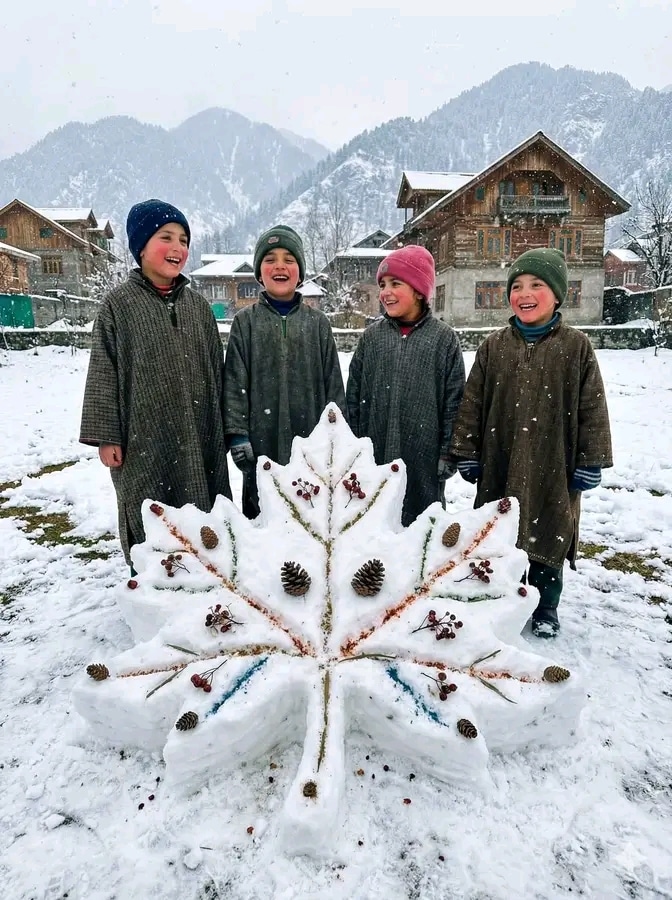
On a snowy day in Kashmir, a group of children turned playtime into something meaningful. Using fresh snow, they carefully shaped a Chinar leaf, pressing, carving, and smoothing it with their hands.
There were smiles, cold fingers, and shared excitement as the symbol slowly took form.
For the children, it was fun. For Kashmir, it was a quiet reminder of identity, tradition, and belonging. The snow will melt, but moments like these stay — small, honest, and deeply human.
New York, NY — In an age where a single image can spark global movements or fuel dangerous misinformation, the question of who captures our world—and how—has never been more consequential. While tech giants race to automate visual content and stock platforms flood the market with generic imagery, one independent New York-based agency has spent two decades building something increasingly rare: trust.
EuropaNewswire LLC, founded in 2004 by veteran photographer Luiz Rampelotto, has emerged as an essential yet understated pillar of global visual journalism. Without the fanfare of Silicon Valley disruptors or the backing of media conglomerates, the agency has quietly amassed one of the world’s most significant private archives of diplomatic and international event photography—a visual chronicle of 21st-century history captured through the lens of editorial rigor rather than commercial convenience.
The Archive as Witness: Two Decades on the World Stage
Walk into EuropaNewswire’s operations, and you’re not entering a typical photography agency. You’re stepping into a living archive where history is preserved frame by frame. From the tense deliberations of UN Security Council sessions on the eve of conflict to the subtle diplomacy of bilateral summits that never make front pages, the agency’s photographers have documented moments that define our collective narrative.
This isn’t content created for billboards or brand campaigns. It’s journalism in its purest visual form—images captured with the understanding that future historians, policymakers, and citizens will rely on their accuracy.
“We’re not in the business of making things look pretty,” Rampelotto reflects. “We’re in the business of making sure what happened is remembered accurately. That’s a different kind of responsibility.”
The archive spans over two decades of United Nations General Assembly sessions, international cultural celebrations, humanitarian crises, and political milestones. For newsrooms facing shrinking foreign correspondent budgets, for academic researchers verifying historical claims, for documentary filmmakers seeking authentic period detail—this collection has become an invaluable resource.
Breaking Free: Why One Agency Walked Away from Microstock
The photography industry has undergone a seismic shift in recent years. The rise of microstock platforms—marketplaces offering millions of images at rock-bottom prices—has democratized access to visuals while simultaneously devaluing the craft and compromising editorial standards. For EuropaNewswire, this trajectory became untenable.
In a move that sent ripples through the industry, the agency announced its complete withdrawal from microstock distribution models. The decision wasn’t merely economic—it was ethical.
“The microstock ecosystem treats photography as disposable content,” Rampelotto explains. “An image of a UN Security Council vote carries different weight than a stock photo of a handshake. When you flatten everything into the same pricing structure, you erase the context, the verification, the journalistic labor that went into capturing that moment.”
By transitioning exclusively to direct editorial licensing, EuropaNewswire has reclaimed control over its intellectual property while establishing transparent, professional-rate compensation for its photographers. Media buyers now work directly with the source, receiving fully rights-cleared imagery with complete provenance and context—no algorithmic recommendations, no questionable licensing terms, no ambiguity about editorial usage rights.
This model, while counter to prevailing industry trends, has attracted a growing constituency of serious media organizations, academic institutions, and documentary producers who recognize that quality visual journalism requires sustainable economics.
If the agency’s licensing philosophy represents a return to first principles, its distribution strategy looks firmly toward the future. EuropaNewswire has pioneered one of the industry’s first Mastodon-based editorial syndication systems, leveraging ActivityPub protocols to deliver verified imagery directly to newsroom picture desks.
This isn’t technological novelty for its own sake. In an information environment plagued by deepfakes, manipulated media, and platform gatekeeping, decentralized distribution offers something precious: direct, authenticated transmission from creator to publisher without intermediary vulnerabilities.
“The metadata stays intact. The verification chain remains unbroken. The newsroom knows exactly where this image came from and when,” notes Rampelotto. “In an era of synthetic media, that provenance is currency.”
By positioning itself at the intersection of archival depth and technological innovation, EuropaNewswire demonstrates that editorial tradition and digital transformation need not be opposing forces—they can, in fact, reinforce each other.
Who Uses These Images? The Ecosystem of Credibility
The agency’s client roster reveals much about its role in the information ecosystem. International news organizations facing deadline pressure rely on its rapid turnaround from major diplomatic events. Academic researchers across disciplines—from political science to visual anthropology—access its archives for peer-reviewed scholarship. Non-governmental organizations document human rights developments. Documentary filmmakers reconstruct historical narratives with visual authenticity.
What unites these diverse users is a shared premium on credibility. In an attention economy driven by virality, EuropaNewswire serves constituencies that prioritize accuracy over engagement metrics.
Dr. Sarah Chen, a researcher of international diplomacy at a leading European university, describes the archive as “essential infrastructure for contemporary history. When I’m writing about a 2019 Security Council resolution, being able to access period photography with verified metadata isn’t a luxury—it’s methodological necessity.”
Independence as Editorial Philosophy
Perhaps most distinctive in today’s polarized media landscape is EuropaNewswire’s unwavering independence. The agency maintains no political affiliations, no editorial alignment with partisan narratives, no institutional masters to please. Its photographers are credentialed journalists, not content creators; its archive is documentation, not advocacy.
This neutrality isn’t passive—it’s actively maintained through rigorous editorial standards and a corporate structure that resists acquisition or consolidation. In an industry increasingly dominated by tech platforms with their own ideological and commercial interests, such independence has become its own form of credibility.
“We don’t do causes. We do coverage,” Rampelotto states simply. “Our job is to ensure that when someone looks back at how the world conducted itself in this era, the visual record is honest, complete, and accessible.”
The Human Element in an Automated Age
As artificial intelligence generates increasingly sophisticated synthetic imagery, the value of human-captured, field-verified photography only intensifies. EuropaNewswire’s emphasis on photographer credentials, on-site presence, and editorial oversight represents a bulwark against the automation of visual truth.
The agency’s photographers carry press credentials, not just cameras. They understand diplomatic protocol, recognize the significance of subtle gestures between leaders, know when a private moment carries public weight. This institutional knowledge—built over two decades—cannot be replicated by algorithms or crowdsourced platforms.
Looking Forward: The Future of Visual Documentation
As EuropaNewswire enters its third decade, the challenges facing visual journalism have never been more complex. The proliferation of synthetic media, the erosion of public trust, the economic pressures on professional photography—all demand innovative responses anchored in unwavering principles.
The agency’s trajectory suggests a viable path forward: combining archival responsibility with technological adaptation, maintaining editorial independence while building sustainable economic models, and recognizing that in an information-saturated world, credibility is the ultimate competitive advantage.
For media organizations navigating these turbulent waters, for researchers seeking reliable sources, for anyone who believes that how we see the world shapes how we understand it—EuropaNewswire LLC offers something increasingly precious: a record we can trust.
About EuropaNewswire LLC
EuropaNewswire LLC is an independent editorial photography agency headquartered in New York City, specializing in United Nations diplomacy, international political affairs, cultural events, and global news documentation. Since 2004, the agency has built one of the world’s most respected private archives of international event photography, serving media organizations, academic institutions, and documentary producers worldwide.
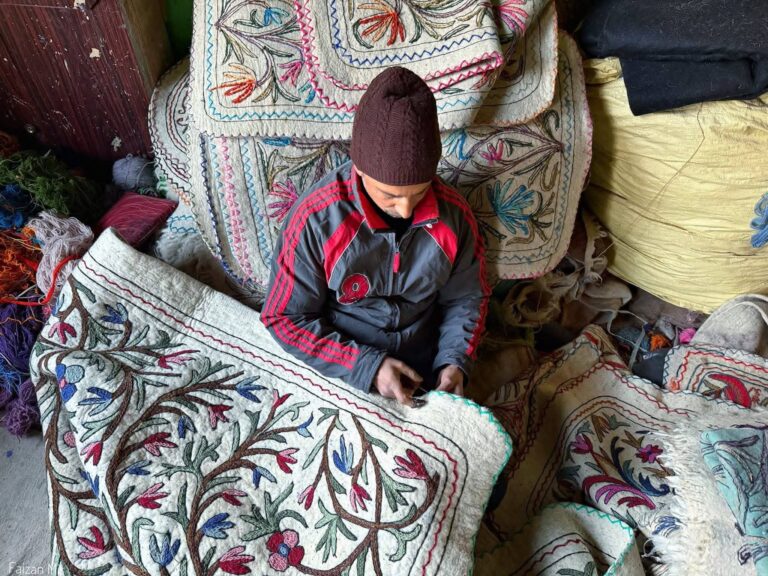
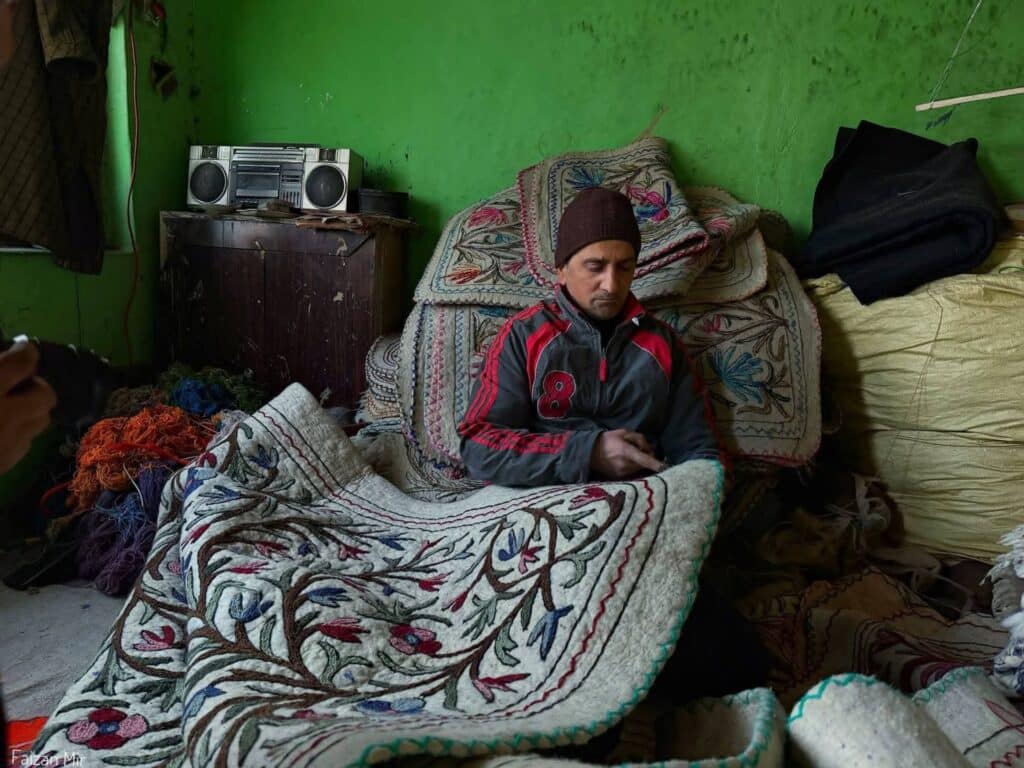
Srinagar: Despite low wages, Muhammad Irfan, a skilled artisan, continues to work on Namda, the centuries-old Kashmiri felt-making craft.
Namda, traditionally made from sheep wool and natural dyes, is a unique handmade carpet that represents Kashmir’s rich cultural heritage. Muhammad Irfan spends hours carefully rolling, pressing, and stitching the wool, preserving techniques passed down through generations.
His dedication highlights the challenges artisans face: low income, limited market access, and competition from machine-made alternatives. Yet, for Irfan, the work is not just a livelihood—it is a mission to keep Kashmir’s traditional art alive.
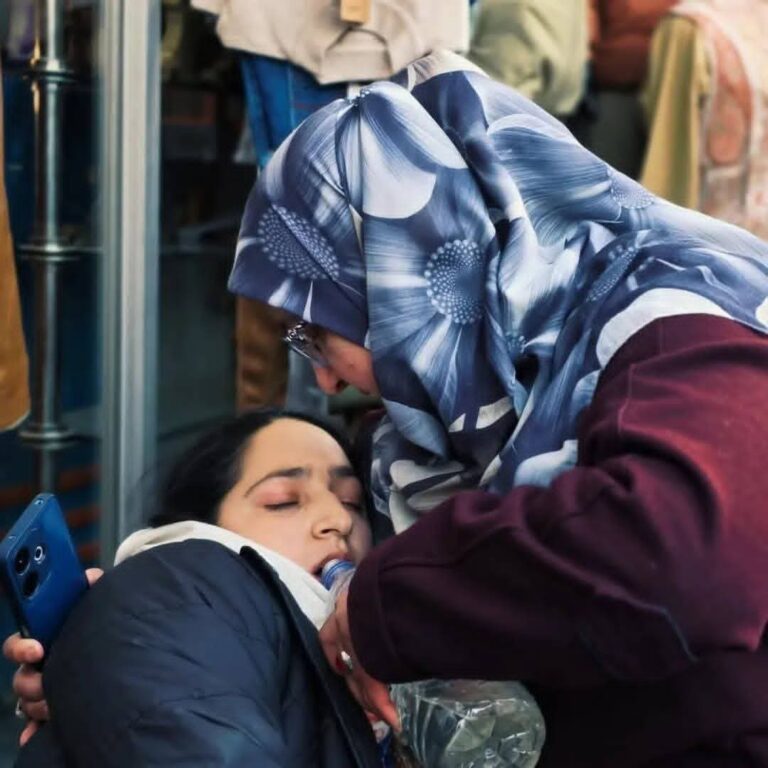
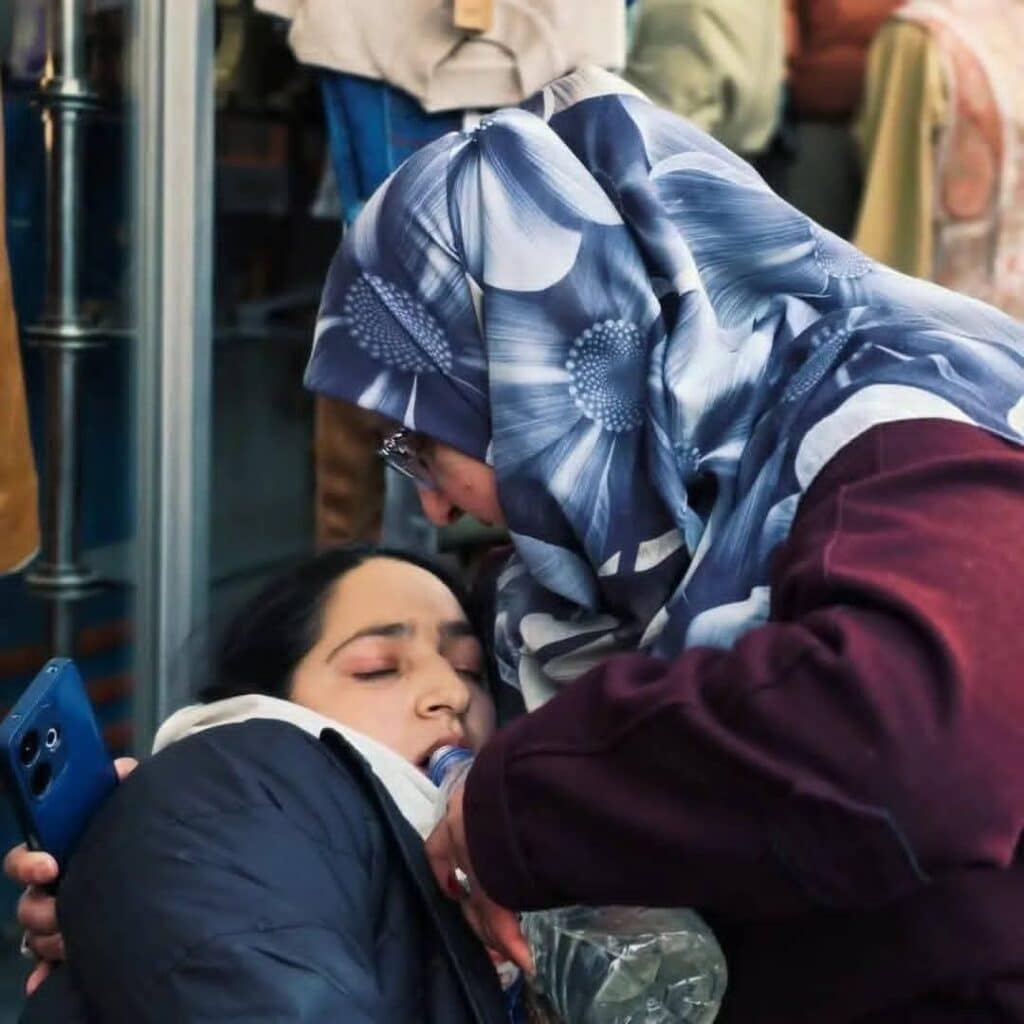
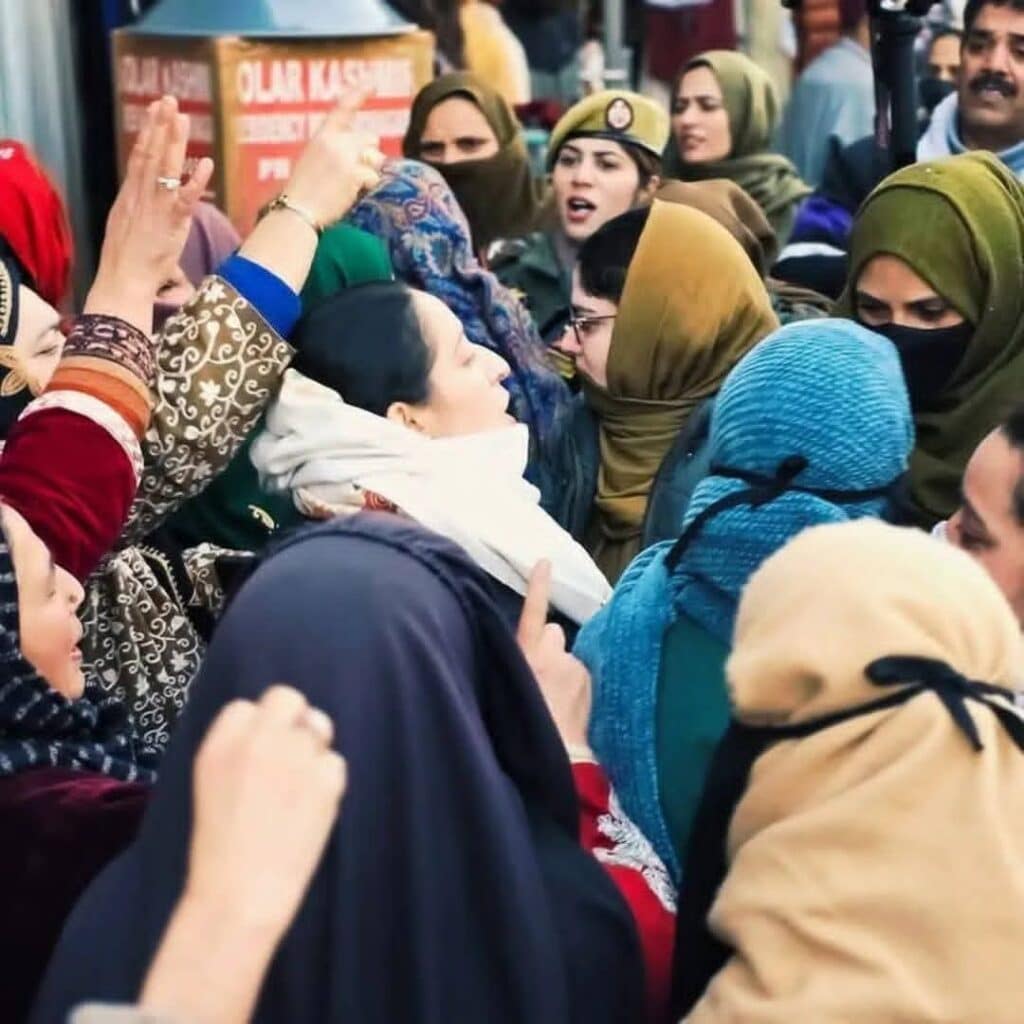
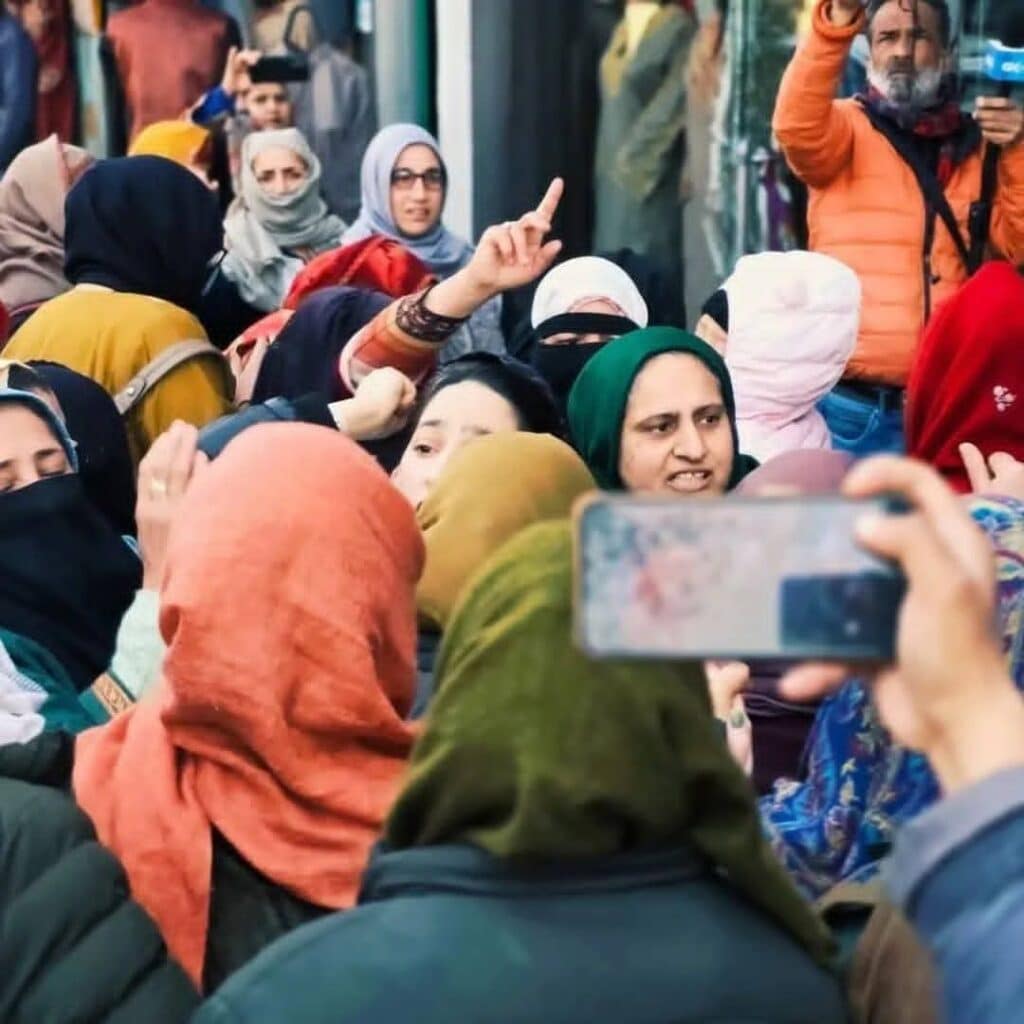
Anganwadi workers held a protest in Srinagar, demanding an increase in their wages and allowances.
The demonstration saw workers gathering with banners and placards, chanting slogans to press for better pay and improved benefits. The protest highlighted the ongoing demands of grassroots workers who play a crucial role in early childhood care and nutrition across the region.
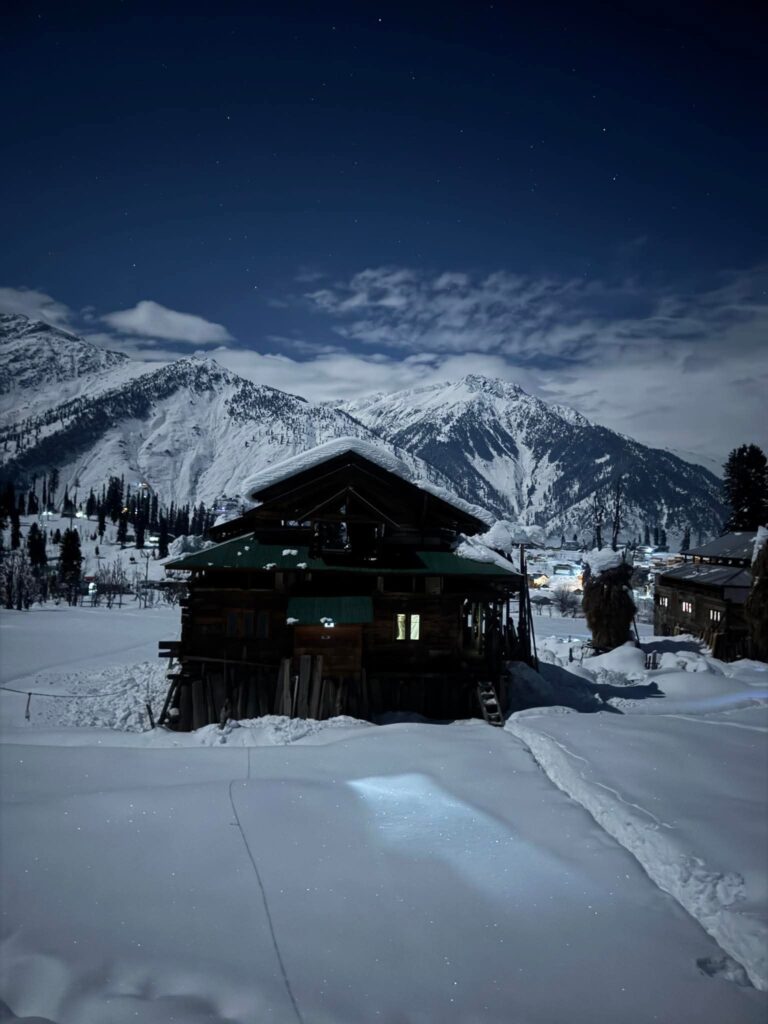
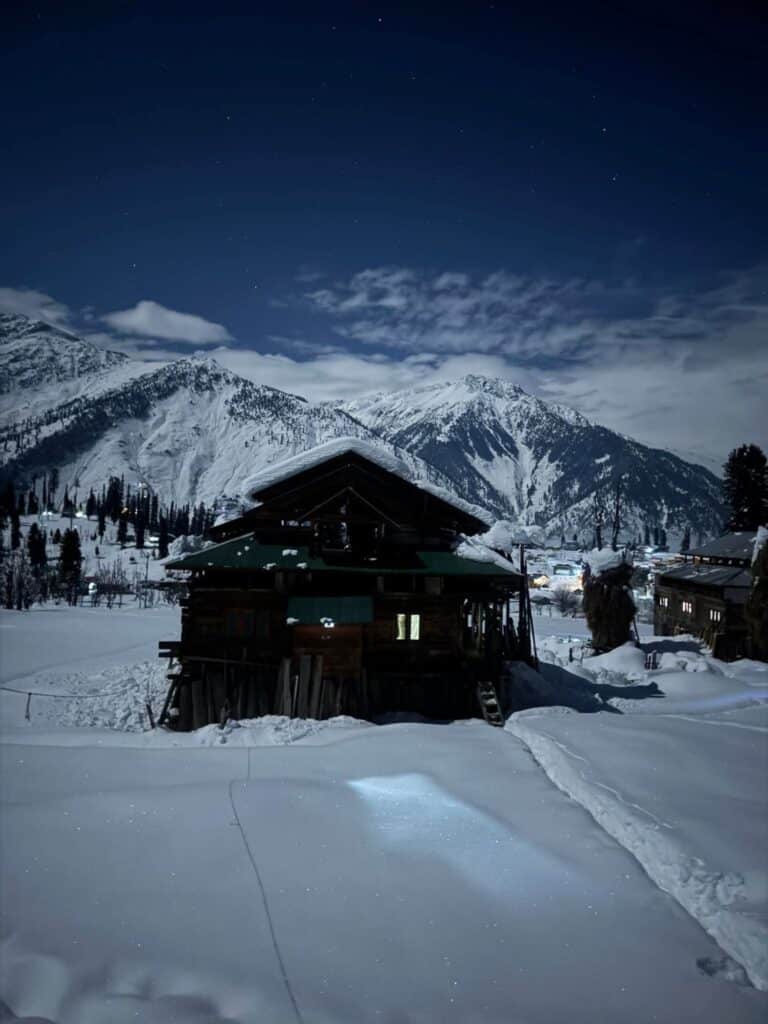
A serene blanket of snow covered Arang Kel, turning the village into a sparkling winter wonderland. Under the glow of moonlight, the snow shimmered like diamonds, creating a magical, almost ethereal scene.
Locals and visitors paused to admire the beauty, capturing the glowing snow-covered landscape and the quiet charm of the village at night. The scene perfectly captures the peaceful, enchanting essence of winter in Kashmir.
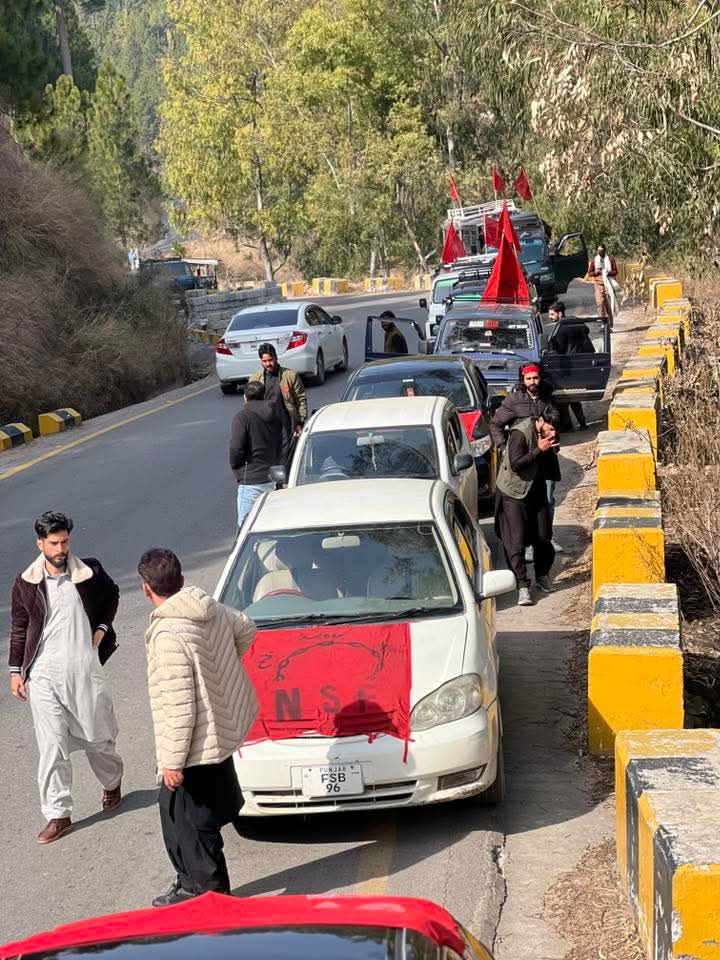
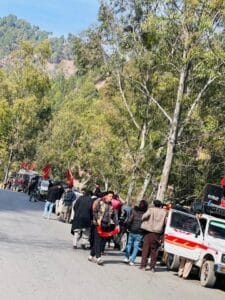
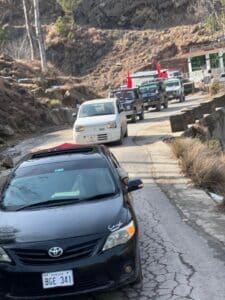
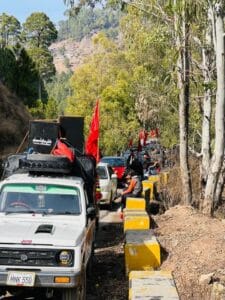
Rawalakot: A large convoy of students departed today under the leadership of Irfan Khaniif, Chairman of the Convening Committee, heading to the Central Convention of Jammu Kashmir National Students Federation (JKNSF).
The convoy, comprising dozens of buses and vehicles, showcased the strong enthusiasm and participation of student members from across the region.
Participants were seen waving flags, chanting slogans, and expressing solidarity with the federation’s ongoing initiatives for educational and social development.
Photographs from the event captured students boarding buses, gathering at the assembly point, and interacting with organizers, highlighting the vibrant and energetic atmosphere surrounding the JKNSF’s central convention.
The central convention is expected to feature keynote speeches, discussions on student welfare, and plans for future activities aimed at strengthening the student community across Jammu and Kashmir.
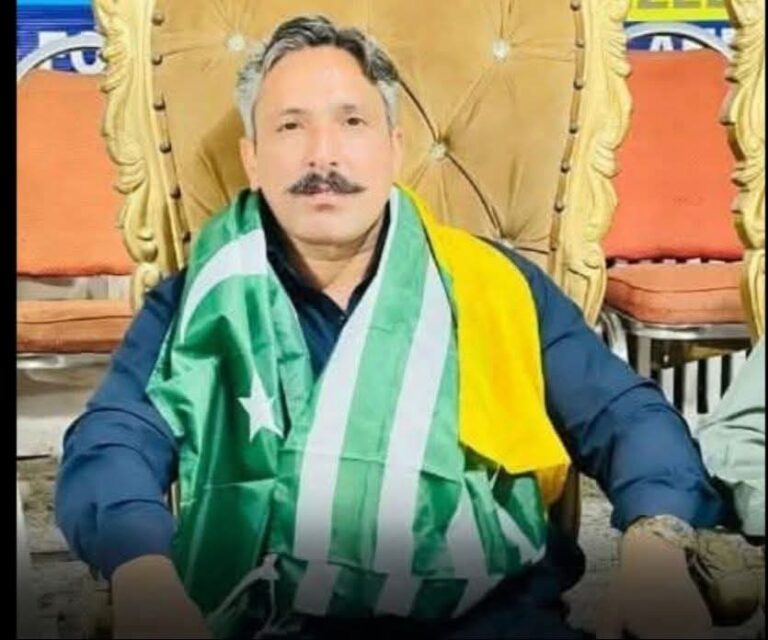
Muzaffarabad: A statement by Anjum Zaman Awan, core member of the Jammu Kashmir Joint Awami Action Committee (JKJAAC), has stirred debate on social media, raising questions about the committee’s non-political stance.
In a post that quickly went viral, Awan said that “the flag of Kashmir’s accession with Pakistan will one day be raised in Srinagar.”
Following backlash, Shoukat Nawaz Mir, another JKJAAC core member and trader leader known on Facebook as “Tajran Da Veer,” clarified that Awan’s remarks were personal and do not reflect the committee’s official position.
Observers noted that Awan is also a councillor from Pakistan Muslim League-N (PML-N) in Muzaffarabad, which has intensified scrutiny. During a December JKJAAC meeting, it was agreed that no core member would join a political party or participate in political activities, prompting questions about consistency with the committee’s policies.
Social media reactions are mixed. Some demand an apology or clarification from Awan, while others argue the statement reflects the views of Kashmiris supportive of accession with Pakistan.
The JKJAAC has not yet issued a formal collective statement. Analysts warn that the controversy could affect public trust in the committee, especially amid sensitive political and economic dynamics in the region.
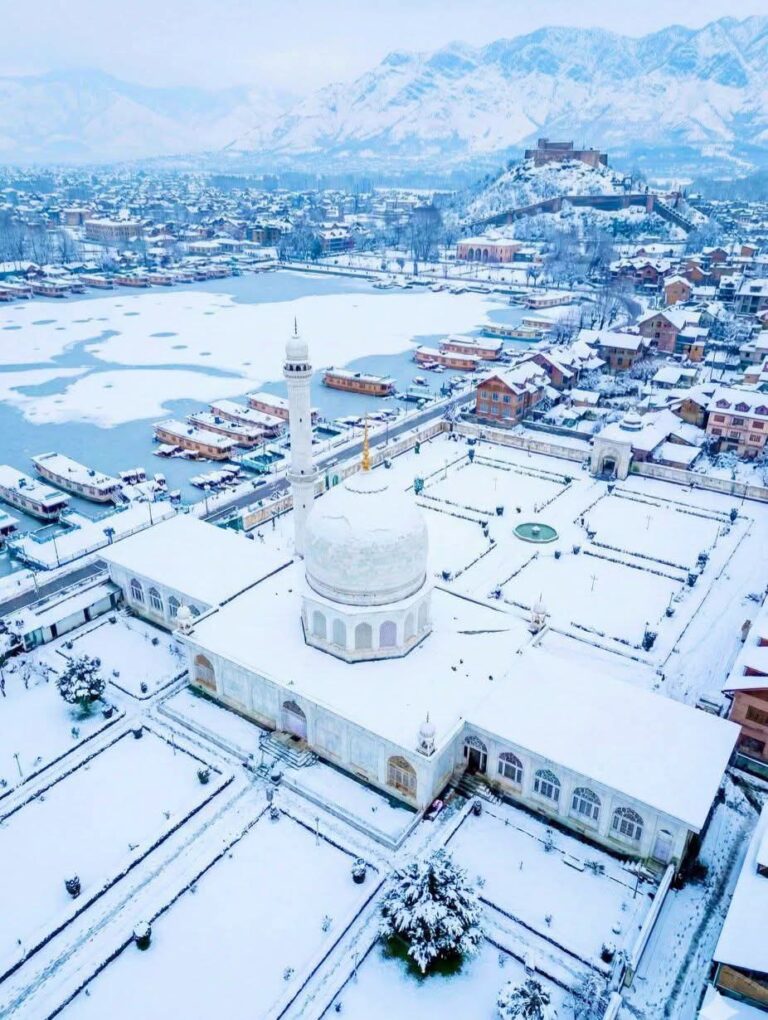
Fresh snowfall has transformed the iconic Hazratbal Shrine into a scene of rare serenity, as white blankets the domes, courtyards, and the surrounding landscape. Overlooking the calm waters of Dal Lake, the shrine stands radiant against the muted winter sky, its reflection shimmering through the cold stillness. As snow continues to fall, the air around Hazratbal feels hushed and sacred, drawing visitors into a moment of quiet reflection. The gentle contrast of pristine white snow and the shrine’s timeless architecture creates a visual harmony that captures the soul of Kashmir’s winter. In this frozen calm, Hazratbal is not just a place of worship — it becomes a symbol of peace, resilience, and spiritual warmth amid the harshest days of winter.
Srinagar, Jammu and Kashmir — Kashmir continues to endure the harshest phase of winter, Chillai Kalan, as meteorological agencies project prolonged cold conditions, intermittent snowfall, and a slow shift toward seasonal moderation over the next 30 days. The outlook spans late January through February 2026, a crucial period for the Valley’s winter pattern.
Chillai Kalan: Kashmir’s Coldest Phase
The 40-day Chillai Kalan period, which began on December 21, 2025, will conclude on January 31, marking the most severe stretch of winter in Kashmir. This phase is traditionally associated with intense cold, frozen water bodies, and heavy snowfall, particularly in higher elevations.
Meteorologists note that snowfall during this period plays a critical role in replenishing water resources that sustain agriculture, hydropower generation, and drinking water supply during warmer months.
30-Day Weather Outlook (Late January – February 2026)
End of Chillai Kalan: January 31 – February 10
Temperatures across the Kashmir Valley are expected to remain below freezing during nights, with Srinagar recording lows between -6°C and -2°C, while daytime temperatures may range from 5°C to 8°C.
Higher-altitude regions such as Gulmarg, Pahalgam, and Sonmarg will experience harsher conditions, with minimum temperatures dropping as low as -13°C.
Snowfall Outlook
Light to moderate snowfall possible in higher reaches between February 1–3
Mostly dry conditions expected February 4–7
A western disturbance may bring scattered precipitation around February 8–10
Plains of Srinagar could see light snowfall during this period
Partial ice cover is likely to persist on Dal Lake, with full freezing possible during extended cold nights.
Chillai Khurd: February 11 – February 20
As the Valley enters Chillai Khurd — the 20-day “small cold” phase — temperatures are forecast to rise gradually, though winter conditions will continue.
Srinagar: Night temperatures between -4°C and -1°C
Daytime highs:6°C to 11°C
Higher reaches: Continued sub-zero conditions
February typically brings 4–8 days of rain or snowfall across Jammu and Kashmir, with cumulative precipitation estimated around 90mm, driven by western disturbances.
Chillai Bachha: February 21 – Early March
The final winter phase, Chillai Bachha, signals a slow transition toward spring.
Night temperatures:-2°C to 2°C
Daytime temperatures:8°C to 12°C
Reduced snowfall frequency, though light precipitation remains possible
Kupwara & Baramulla: Higher probability of snow accumulation
Jammu Division
Jammu City: Mild winter with temperatures ranging 11°C–23°C
Katra: Cool mornings and evenings, relatively stable weather
Upper districts: Occasional snowfall in higher elevations
Ladakh
Leh & Kargil: Extreme cold persists, -15°C to -5°C
Mountain passes remain under severe winter conditions
February in Context
Long-range forecasts for February 2026 align closely with historical winter trends in the region. Average temperatures and expected precipitation remain within the seasonal norm, reinforcing Kashmir’s traditional winter cycle from Chillai Kalan to Chillai Bachha.
Winter’s Final Stretch
While harsh cold continues to dominate the Valley, February marks the final phase of winter 2025–26. By early March, gradual warming is expected, setting the stage for early spring signs across the region.
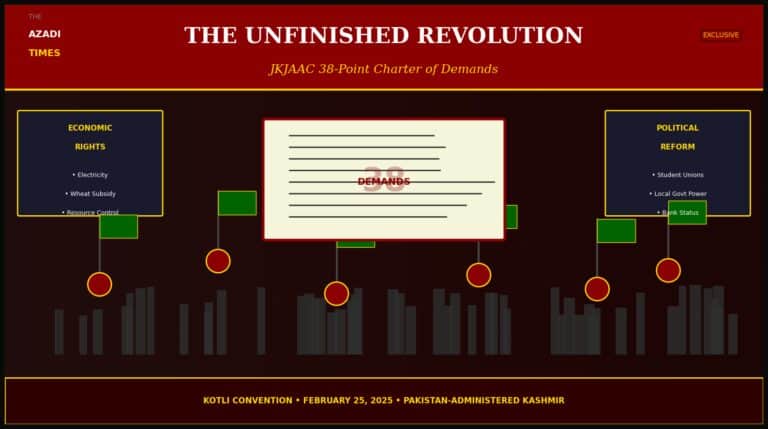
Muzaffarabad — When thousands of protesters from across Pakistan-administered Kashmir converged on Kohala on 29 September 2025, they carried more than just banners and slogans. They bore a meticulously crafted document that would fundamentally alter the region’s political discourse the 38-point Charter of Demands presented by the Jammu Kashmir Joint Awami Action Committee (JKJAAC).
Four months later, as the Core Committee prepares to convene in Kotli on 25 February, the movement stands at a critical crossroads between negotiated reform and renewed confrontation.
From Economic Grievances to Structural Transformation
The JKJAAC’s emergence represents one of the most significant grassroots mobilizations in Pakistan-administered Kashmir’s recent history. What began in May 2023 as localized protests against inflated electricity bills and wheat prices has evolved into a comprehensive reform movement challenging the very foundations of governance in the region .
The 38-point Charter of Demands subsequently expanded to 42 accepted points following the October 4, 2025 agreement addresses a spectrum of issues ranging from immediate economic relief to long-term structural reforms.
At its core, the movement seeks to address what activists describe as decades of “economic exploitation and administrative neglect” perpetrated by both the AJK administration and the Pakistani government in Islamabad .
The 38-Point Agenda: A Blueprint for Reform
The Charter of Demands encompasses several transformative proposals that strike at the heart of established power structures in Pakistan-administered Kashmir:
Economic and Resource Rights
Chief among the demands is the call for electricity tariffs calculated based on production costs from local hydro-projects like the Mangla Dam, rather than market rates. This demand moves beyond simple subsidy requests toward a constitutional debate concerning resource ownership and royalty rights—a position that implies the AJK populace possesses inherent ownership rights over resources within its territory .
The movement also demands subsidized wheat flour prices equivalent to those offered in neighboring Gilgit-Baltistan, highlighting the disparity in federal treatment of different regions .
Anti-Corruption and Governance Reforms
The Charter calls for the abolition of special allowances and privileges for government officials, including restrictions on vehicle entitlements to 1300cc capacity and the elimination of post-retirement benefits beyond pensions . Perhaps most controversially, it demands the termination of 12 reserved seats in the AJK Legislative Assembly for Kashmiri migrants settled in Pakistan—a provision that critics argue artificially boosts Islamabad’s influence in local politics .
Institutional Development
Key demands include granting scheduled bank status to the Bank of Azad Jammu and Kashmir, which would elevate the institution to national banking standards and expand its operational scope. The government has allocated Rs 10 billion toward meeting State Bank of Pakistan requirements, with officials claiming the bank’s capital adequacy ratio already exceeds regulatory thresholds at 47.6% against the required 13.5% .
The Charter also demands the restoration of student unions—long banned in the region’s educational institutions—and the empowerment of local government representatives with genuine administrative and financial authority .
Infrastructure and Social Services
Among the 38 points are provisions for establishing two additional Boards of Intermediate and Secondary Education in Muzaffarabad and Poonch divisions, the construction of an international airport at Mirpur, feasibility studies for tunnels in Neelum Valley, and the provision of MRI and CT scan machines to all district hospitals .
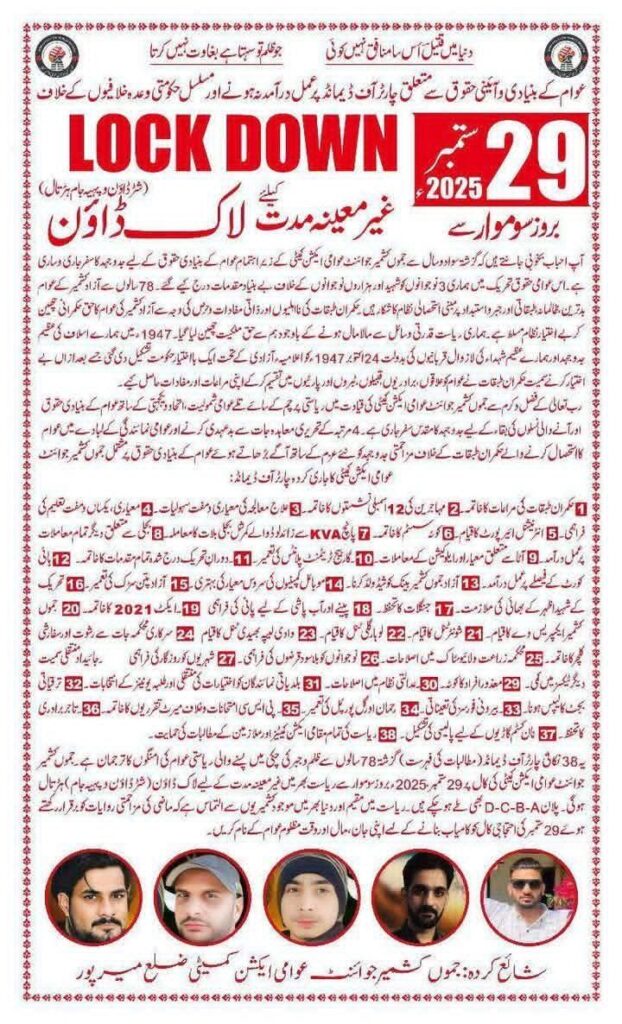
JKJAAC 38-Point Charter of Demand
(Pakistan-administered Kashmir)
The Jammu Kashmir Joint Awami Action Committee (JKJAAC) has presented a 38-point Charter of Demand, covering economic relief, governance reforms, judicial accountability, and democratic rights in Pakistan-administered Kashmir.”
Poster issued by Jammu & Kashmir Joint Awami Action Committee (JKJAAC) during the protest on 29 September 2025, highlighting the 38 points of demand.
Wheat flour subsidy must be restored and its price fixed permanently.
Electricity tariffs should be reduced in accordance with local hydropower production costs.
Full hydel power royalty (hydel profit) must be granted to Pakistan-administered Kashmir.
Unjustified electricity taxes and surcharges should be abolished.
Fuel prices must be rationalized to provide relief to the public.
Heavy fines and penalties imposed on non-custom-paid vehicles must be withdrawn.
Transporters should be exempted from excessive fines and arbitrary enforcement.
Harassment of traders, transporters, and small business owners must end.
All unnecessary checkpoints restricting public movement should be removed.
Price control mechanisms must be enforced to curb inflation of essential commodities.
Judicial reforms should be introduced to ensure affordable and timely justice.
Corruption, bribery, and nepotism in government departments must be eliminated.
Transparent accountability mechanisms should be established across public institutions.
Recruitment in government departments must be merit-based and transparent.
Contract and ad-hoc employees should be regularized as per policy.
Vacant government posts must be filled without delay.
Health facilities must be upgraded, including availability of medicines and doctors.
Educational institutions should be strengthened and properly funded.
Fees in public educational institutions should be reduced.
Scholarships for deserving students must be expanded.
Student union elections should be restored immediately.
Local government representatives must be granted full administrative and financial powers.
The local government system should be strengthened and protected from interference.
Development funds must be allocated transparently and utilized fairly.
The Azad Jammu & Kashmir Bank should be granted scheduled bank status.
Banking facilities must be expanded in rural and remote areas.
Public sector institutions should be protected from privatization without public consent.
Workers’ rights and minimum wage laws must be enforced.
Pension and salary issues of government employees should be resolved promptly.
Retired employees’ dues must be cleared without delay.
Land acquisition for development projects must follow legal and compensation procedures.
Environmental protection laws should be strictly implemented.
Local residents must be prioritized in employment for development projects.
Disaster management systems should be improved and adequately funded.
Freedom of peaceful protest must be ensured.
No cases should be registered against peaceful protesters.
Previously accepted demands must be implemented without delay.
A clear implementation timeline for all agreed demands must be announced publicly.
The October Agreement: Promise and Peril
Following five days of violent unrest that left at least 10 people dead and over 200 injured, the federal government, AJK administration, and JKJAAC signed a landmark agreement on October 4, 2025. The pact included commitments to judicial commissions investigating protester deaths, compensation for victims, cabinet downsizing to 20 members, and the establishment of a Monitoring and Implementation Committee comprising representatives from all three parties .
However, the agreement’s implementation has been fraught with delays and mutual recriminations. By January 2026, with the 90-day implementation period expired, the JKJAAC announced a boycott of further negotiations, citing “blatant violations” of the agreement terms .
Shaukat Nawaz Mir, a core committee member, articulated the movement’s frustration: “Under the current circumstances, further negotiations with the federal or Azad government are not possible, because government actions are giving rise to doubts and suspicions rather than restoring confidence” .
The Boycott and the Road Ahead
The JKJAAC’s decision to boycott implementation committee meetings represents a significant escalation in the movement’s tactics. The committee has rejected the government’s proposal for additional meetings, insisting that “discussions would resume only after the demands are fully met” .
Specific grievances driving the boycott include the government’s appointment of a Pakistani refugee assembly member as chairman of the Public Accounts Committee—a move the JKJAAC considers a clear violation of the agreement to suspend refugee seat allocations pending committee review . Additionally, activists allege that prominent committee members remain on Exit Control Lists, FIRs against protesters have not been fully withdrawn, and issues related to refugee seats remain unresolved .
The Kotli Convention:
As the Core Committee of JKJAAC prepares to convene in Kotli on 25 February, the movement faces strategic decisions that will determine its future trajectory. The meeting comes at a moment when the October agreement hangs in the balance, and the region’s political landscape continues to shift.
The AJK government, now led by Prime Minister Faisal Mumtaz Rathore following a November 2025 political shakeup, claims “over 90% progress” on pact implementation. Officials cite the withdrawal of 177 of 192 FIRs, payment of compensation to affected families, reinstatement of suspended employees, and approval of two new education boards as evidence of compliance .
Yet the JKJAAC maintains that structural demands—particularly those challenging elite privileges and the refugee seat system—remain unaddressed. The committee has indicated preparations to launch renewed protests if demands continue to remain unmet .
Regional and International Dimensions
The unrest in Pakistan-administered Kashmir has drawn international attention, with observers noting the irony of Islamabad imposing communications blackouts and using paramilitary forces while simultaneously criticizing similar tactics across the Line of Control. The movement has complicated Pakistan’s narrative of being a responsible caretaker of Kashmiri interests, drawing comparisons to conditions in Indian-administered Kashmir .
The Unfinished Revolution
The 38-point Charter of Demands represents more than a list of grievances—it embodies a fundamental challenge to the governance model in Pakistan-administered Kashmir. As the JKJAAC Core Committee convenes in Kotli, the movement stands at a pivotal moment.
Whether the October agreement becomes “a genuine charter for justice or merely another list on paper,” as the Kashmir Welfare Foundation observed, depends on the sincerity of implementation and the willingness of both federal and local authorities to cede privileges and power .
For the thousands who marched in September and October 2025, and for the families of those who lost their lives, the question remains whether their sacrifice will translate into lasting reform. As one activist noted, “True progress will come when promises reach every home—when the child in Neelum Valley studies under a working lightbulb, when the widow in Kotli can afford medicine, and when the youth of Mirpur find honest employment without bribery or despair” .
The Kotli convention will determine whether the movement continues down the path of negotiated reform or returns to the streets in pursuit of its revolutionary agenda. Either way, the JKJAAC has already succeeded in placing questions of resource rights, governance accountability, and democratic representation at the center of Pakistan-administered Kashmir’s political discourse—a achievement that cannot be easily reversed.
The Azadi Times is committed to covering developments in the Kashmir region with editorial independence and factual rigor.