Home Blog Page 41

Jammu Kashmir Cloudburst 2025: Deadly Floods, Rising Toll, and Climate Warnings Across the Himalayas

0

Kashmir, September 2025 — The summer of 2025 will be remembered as one of the harshest seasons in the Himalayan region of Jammu & Kashmir, Ladakh, and Gilgit-Baltistan. A series of devastating cloudbursts and flash floods swept through mountain towns, valleys, and high-altitude villages, leaving behind a trail of destruction, grief, and unanswered questions.

Unlike routine monsoon downpours, cloudbursts strike suddenly: torrents of water unleashed within minutes, tearing through riversides, dislodging slopes, and swallowing entire settlements. In 2025, this rare but recurring natural disaster claimed hundreds of lives across the divided territory of Kashmir, transcending political boundaries and underscoring the shared vulnerability of its people.

Chasoti, Kishtwar: A Tragedy of Unimaginable Scale

On 14 August 2025, a cloudburst in Chasoti village of Kishtwar district triggered one of the deadliest disasters the region has seen in recent decades. At least 67 people were confirmed dead, with over 300 injured and nearly 200 reported missing.

The torrents struck during a religious gathering, when more than a thousand people were present near the riverbanks. Within minutes, water mixed with boulders and debris flattened temporary shelters, swept vehicles, and destroyed bridges. Rescue efforts were hampered by blocked roads and recurring landslides. Survivors described the roar of the flood as “the sound of mountains collapsing.”

Dharali and Uttarakhand Connection

Just days earlier, on 5 August, another catastrophic event unfolded in Dharali, near the Uttarakhand–Kashmir borderlands. Initially reported as a cloudburst, later assessments suggested a glacial lake outburst flood (GLOF) — a phenomenon where melting glaciers burst their natural dams.

Although official rainfall data recorded barely 5 mm, the destructive surge wiped out homes, farmland, and infrastructure. For many observers, Dharali and Chasoti disasters together raised alarm bells about the interplay of climate change, glacial retreat, and extreme weather reshaping the Himalayas.

Jammu: A City Under Water

In late August, Jammu city recorded 190 mm of rain in a single day, marking its second-highest August rainfall in a century. Streets turned into rivers, shops and homes were submerged, and power outages gripped the city for days. Though not technically a cloudburst, the rainfall’s sheer intensity mirrored the sudden shock and disruption typical of these events.

Local communities lamented the absence of adequate urban drainage and disaster preparedness. “We live with mountains above us and rivers below us,” said a shopkeeper in old Jammu. “When the skies open like this, there is no escape.”

Across the Divide: Shared Losses

While most international headlines focused on Indian-administered districts, cloudburst-linked flooding also rattled Pakistan-administered Kashmir (PaK) and Gilgit-Baltistan (GB).

In Neelum Valley, swollen streams destroyed bridges and isolated entire villages. Fortunately, casualties were limited, but families lost croplands and livestock — their only means of survival.

In Hunza and Skardu (Gilgit-Baltistan), late July cloudbursts triggered landslides, cutting off the Karakoram Highway for several days. Local NGOs reported dozens of homes damaged and several people injured.

In Rawalakot (PaK), sudden flash floods swept away small markets near riverbanks. Volunteers, rather than formal agencies, led most rescue efforts.

These incidents, while smaller in scale compared to Kishtwar, highlighted the regional nature of the crisis: fragile ecosystems, rapid urbanization, and lack of disaster infrastructure magnify the impact of extreme rainfall events across the entire Himalayan arc.

Counting the Cost

By September 2025, combined reports estimate that over 700 people have died across northern India and Pakistan due to monsoon-related cloudbursts, floods, and landslides. Within the broader Himalayan belt of Kashmir, Ladakh, and Gilgit-Baltistan, dozens of villages were either destroyed or severely affected.

The toll is not only measured in lives lost:

Families displaced: Thousands forced into temporary shelters.

Economic damage: Bridges, hydropower stations, and road networks worth millions collapsed.

Cultural loss: Historic shrines, markets, and community spaces washed away.

Psychological scars: Survivors left with trauma, uncertain about rebuilding in zones repeatedly declared “disaster-prone.”

Climate Change in the Himalayas

Scientists have long warned that the Himalayas — sometimes called the “Third Pole” — are warming faster than the global average. The region’s glaciers are retreating at alarming rates, destabilizing slopes and feeding the risk of cloudbursts, GLOFs, and flash floods.

What makes 2025 different is not just the scale of devastation, but the pattern of unpredictability. Cloudbursts struck where rainfall data showed only modest showers, suggesting hidden factors: glacial lakes, unstable moraines, and altered monsoon currents.

“Climate change doesn’t respect boundaries,” said one hydrologist based in Srinagar. “The mountains don’t know whether they are in India, Pakistan, or Ladakh. They just break when stressed.

The Humanitarian Gap

Perhaps the starkest lesson of 2025 has been the absence of coordinated response. Political borders fragmented relief efforts. Communities on both sides of the Line of Control relied heavily on local volunteers, religious groups, and small NGOs, while state agencies struggled with logistics or bureaucracy.

For ordinary Kashmiris, the tragedy is twofold: the loss inflicted by nature, and the indifference shaped by politics.

Looking Ahead

The cloudbursts of 2025 are a grim reminder that the Himalayas — breathtaking yet fragile — are entering a new era of climate instability. For the people of Kashmir, Ladakh, and Gilgit-Baltistan, survival depends on more than rebuilding bridges and homes. It demands a regional approach to climate resilience, early warning systems, and sustainable planning that transcends the rigid borders drawn by history.

Eid Milad-un-Nabi (SAW) Celebrated with Spiritual Fervor Across Jammu, Kashmir, and Ladakh

0

The Azadi Times | News Desk – The birth anniversary of Prophet Muhammad (SAW), Eid Milad-un-Nabi, was observed on Saturday across Jammu, Kashmir, and Ladakh with immense religious zeal, spiritual devotion, and profound reverence. From Srinagar to Kargil, mosques, shrines, imambaras, and khanqahs were illuminated, while processions and gatherings echoed with naats, salutations, and chants of faith.

The most prominent congregation took place at the revered Hazratbal Shrine on the banks of Dal Lake in Srinagar, where devotees thronged in the thousands to witness the display of the holy relic (Moi-e-Muqaddas) of Prophet Muhammad (SAW).

Night-long prayers, recitations of Durood-o-Salam, and sermons were held despite the autumn chill. At dawn, as the relic was displayed, faces of the faithful lit up with joy and tears, creating an atmosphere of deep emotional and spiritual intensity.

Valley-Wide Processions and Devotional Gatherings

Across the Kashmir Valley, grand processions marched through towns and villages, with participants chanting “Labbaik Ya Rasool Allah” and “Ya Nabi Salam Alaika.” Children carried green flags and buntings, while elders joined with prayer beads in hand.

Community kitchens provided tea, warm milk, and meals along procession routes. Shopkeepers set up water stalls and food distributions as acts of devotion. Sermons by scholars highlighted the Prophet’s life as a guiding light for humanity, emphasizing unity, compassion, and service to mankind.

Unity Across Sects and Regions

The commemorations reflected a spirit of unity that transcended sectarian lines. In Pampore, the Auqaf Islamia Trust and Shah Hamdan Memorial Trust led a large procession that concluded at the Khanqah Aaliya. In Srinagar’s Kalashpora, the Jamiat Hamdania organized processions, while Anjuman Shari Shian led a major Shia-Sunni gathering from Mir Shamsuddin Araqi Khanqah to Imam Bara Gulshan Bagh.

Such joint observances sent a strong message of brotherhood, with clerics urging communities to rise above division and embody the Prophet’s teachings of tolerance and harmony.

Jammu and Pir Panjal Participation

The fervor was not limited to the Valley. In Doda, Kishtwar, Rajouri, and Poonch, Muslims organized processions, decorated homes with lights, and held devotional gatherings. In the Pir Panjal towns of Mendhar and Surankote, thousands joined processions, while women offered sweets and drinks to participants along the routes.

Celebrations Amid Ladakh’s Mountains

In the high-altitude regions of Leh, Kargil, and Drass, Eid Milad-un-Nabi was celebrated with equal enthusiasm. In Kargil, night-long prayers and gatherings were held in imambaras, while in Leh, the Sunni community organized processions despite the cold. Against snow-covered mountains, the collective chants of Salawat created a scene of remarkable spiritual unity.

Cities Adorned in Lights and Colors

Almost every town and city across Jammu and Kashmir was adorned with green flags, fairy lights, and colorful decorations. In Srinagar, streets and bazaars glowed with illuminated banners and flags, creating a festive atmosphere that lasted late into the night.

Authorities made special arrangements at Hazratbal, ensuring uninterrupted electricity, water, sanitation, and emergency medical facilities. Community groups and government bodies, including J&K Bank and State Road Transport Corporation, contributed with free food, transportation, and support for devotees.

A Day of Joy and Reflection

For many, Eid Milad-un-Nabi was not just a celebration but a renewal of faith and spirit. “This is the happiest day for us,” said a devotee at Hazratbal. “It is the day when humanity was blessed with the Prophet who brought light to the world.”

Clerics across gatherings emphasized that the Prophet’s teachings remain a beacon for humanity, calling on the Muslim community to replace division with love, and injustice with compassion.

AJK 2021 Elections: Refugee Seats Spark Debate on Representation and Voter Equity

0

The Azadi Times | News Desk – The 2021 general elections in Azad Jammu and Kashmir (AJK) have reignited debate over the 12 legislative seats reserved for Kashmiri refugees settled across Pakistan. These constituencies, carved out for displaced families from Jammu and the Kashmir Valley, collectively produced winning candidates with significantly fewer votes than most directly elected representatives within AJK itself.

According to official results, the combined vote tally of all 12 successful refugee-seat candidates stood at just 21,973, a figure that barely matches the average number of votes secured by a single MLA from constituencies inside Azad Kashmir. Critics argue this numerical disparity undermines the principle of equal representation and raises serious questions about the electoral structure that governs the region.

Constituency-Wise Results

Jammu Refugee Constituencies (LA-34 to LA-39):

  • LA-34 Jammu-I: Riaz Ahmed (PTI) – 4,321 votes

  • LA-35 Jammu-II: Maqbool Ahmed (PTI) – 1,874 votes

  • LA-36 Jammu-III: Hafiz Hameed Raza (PTI) – 2,290 votes

  • LA-37 Jammu-IV: Muhammad Akmal Sargala (PTI) – 1,875 votes

  • LA-38 Jammu-V: Akbar Ibrahim (PTI) – 1,229 votes

  • LA-39 Jammu-VI: Raja Muhammad Siddiq (PML-N) – 1,275 votes

Kashmir Valley Refugee Constituencies (LA-40 to LA-45):

  • LA-40 Valley-I: Aamir Altaf (PTI) – 2,126 votes

  • LA-41 Valley-II: Ghulam Mohi-ud-Din Diwan (PTI) – 2,327 votes

  • LA-42 Valley-III: Muhammad Asim Sharif (PTI) – 1,254 votes

  • LA-43 Valley-IV: Javed Butt (PTI) – 783 votes

  • LA-44 Valley-V: Muhammad Iqbal (PTI) – 1,029 votes

  • LA-45 Valley-VI: Abdul Majid Khan (PTI) – 1,590 votes

A Question of Representation

The stark imbalance becomes clear when compared to ward-level politics within AJK. Many local ward councillors secure more votes than the refugee-seat MLAs, yet their positions carry far less legislative authority and privilege.

Observers point out that despite the low voter base, refugee-seat MLAs enjoy the same status, salaries, and privileges as their colleagues representing larger constituencies. In addition, the costs of their travel and accommodation during legislative sessions—since many live outside Azad Kashmir—are covered by public funds, adding financial strain to an already limited budget.

“Why should representatives elected by less than 2,000 voters hold the same power as those supported by tens of thousands?” one political analyst told The Azadi Times. “This is not just a numbers game, it is a matter of democratic fairness.”

Political and Social Implications

The refugee seats were originally created to ensure displaced Kashmiri families—residing in Punjab, Sindh, and other parts of Pakistan—remained politically connected to AJK. Yet, as electoral cycles pass, many argue that the system now serves as a tool of political patronage rather than genuine representation.

Civil society voices and rights groups within AJK are increasingly calling for electoral reforms, suggesting either a recalibration of these constituencies to reflect population realities or their integration into broader provincial and national frameworks.

The Bigger Picture

The 2021 AJK elections, held on 25 July 2021, saw Pakistan Tehreek-e-Insaf (PTI) secure a sweeping majority with 32 out of 53 seats. Voter turnout stood at over 61%, with nearly 3.2 million registered voters. While the victory consolidated PTI’s grip on power in the region, the controversy surrounding refugee seats has continued to overshadow discussions on governance and development.

For many Kashmiris, the question is simple: should the political weight of a refugee MLA, elected with fewer than 2,000 votes in some cases, equal that of a representative carrying the mandate of 20,000–30,000 voters?

Until this question is addressed, critics warn, the democratic credibility of AJK’s electoral system will remain under scrutiny.

Kashmiri-Origin Shabana Mahmood Becomes UK Home Secretary – From Birmingham to Westminster

0

The Azadi Times Desk – Britain has entered a new political chapter as Shabana Mahmood, a prominent Labour Party politician of Kashmiri heritage, has been appointed the country’s Home Secretary. Today, she stands as one of the most influential Muslim women in British politics. Her journey reflects a story of migration, perseverance, and determination.

Family Background

Shabana Mahmood’s roots trace back to Mirpur district in Pakistan-administered Jammu and Kashmir. Her parents originally hailed from Old Mirpur, later settling in Mangla Colony. In search of better opportunities, they migrated from Azad Kashmir to the United Kingdom, where they began building a new life for their family. Their migration set the foundation for the remarkable journey of their daughter.

Early Life and Education

Born and raised in Birmingham, England, Mahmood grew up within the city’s vibrant Pakistani and Kashmiri community. She completed her schooling locally before pursuing higher education in law. Her legal studies provided her with the tools and discipline that would later define her professional and political career.

Political Career

Mahmood’s political journey began through involvement in local social and political activities in Birmingham. Her early engagement in public service and community representation quickly established her as a rising voice within the Labour Party.

She was eventually elected to the British Parliament, where she earned recognition for her firm positions on social justice, community welfare, and national policy issues. Over the years, Mahmood has become a central figure within Labour’s leadership, respected not only for her legal expertise but also for her ability to connect with diverse communities across the UK.

A Landmark Position

Today, as Britain’s new Home Secretary, Shabana Mahmood holds one of the most powerful offices in the UK government. Her appointment represents a historic milestone, underscoring how the Pakistani and Kashmiri diaspora has contributed significantly to British society — not only socially and economically, but now also at the very heart of national politics.

An Inspiration for the Next Generation

Mahmood’s rise to high office serves as a beacon of hope for the younger generation. Her journey shows that through education, resilience, and commitment to public service, it is possible to break barriers and reach the highest levels of leadership.

Her story is not only about personal success; it is also about the broader legacy of migrant families who arrived in Britain with dreams of a better life. Shabana Mahmood stands as a living example of those dreams fulfilled.

Jammu Kashmir Joint Awami Action Committee Announces Indefinite Statewide Shutdown from September 29

0

JKJAAC Declares Statewide Lockdown from 29 September as Protests Intensify Grassroots Mobilisation Underway as 38-Point Charter of Demands Goes Public

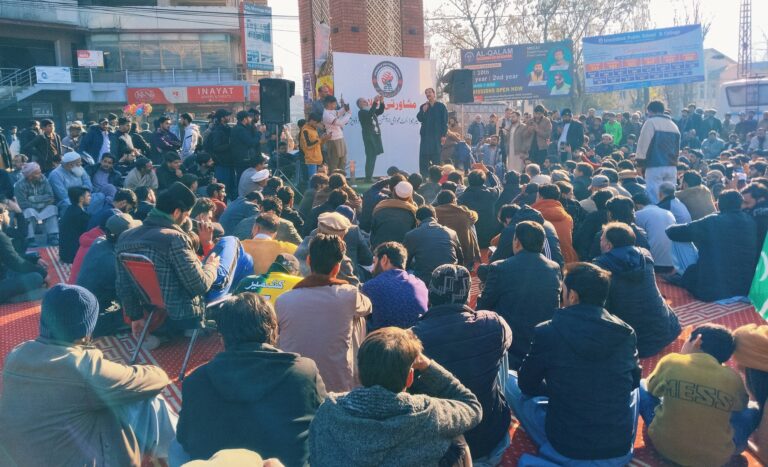
MUZAFFARABAD / RAWALAKOT, 29 August 2025 — The Jammu Kashmir Joint Awami Action Committee (JAAC) has called for an indefinite state-wide shutdown across Azad Jammu and Kashmir (AJK) beginning 29 September, amid growing public frustration over the government’s failure to honour past agreements.

The decision comes alongside the release of JAAC’s comprehensive 38-point Charter of Demands, which includes calls for the abolition of reserved legislative seats for Kashmiri migrants in Pakistan, reduced vehicle taxes, improved telecommunication services, and a regional referendum on refugee representation.

Sardar Umar Nazir Kashmiri, a prominent member of JAAC’s Core Committee, outlined a four-phase operational strategy already in motion—from ward-level coordination to union council deployments—aimed at ensuring complete public participation in the shutdown.

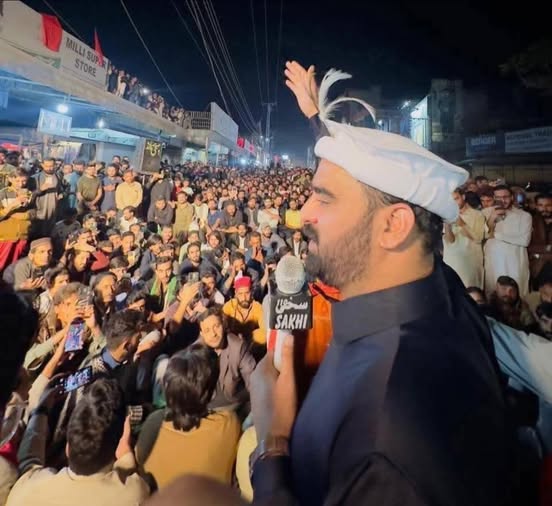
“We are activating every union council, tehsil, and ward,” Kashmiri told The Azadi Times. “From Rawalakot to the smallest village, our volunteers are mobilising communities. This is not just a protest—it is a movement for accountability.”

Background and Escalation
The current wave of discontent traces back to May 2024, when JAAC-led protests forced the government to commit to subsidies on flour and electricity, and to roll back privileges enjoyed by the political elite. Although some financial commitments were made in subsequent budgets, implementation has been partial, eroding public trust.

JAAC representatives say repeated violations of written agreements—signed in December 2023, February 2024, May 2024, and December 2024—have left them with no option but to intensify their movement.

The 38-Point Charter
Key demands include:

  • Scrapping 12 assembly seats reserved for Kashmiri migrants outside AJK

  • Reversing recent hikes in vehicle taxes and fees

  • Expanding mobile network and internet services in remote areas

  • Addressing alleged irregularities in university appointments

  • Introducing a health card scheme on the model of Pakistan’s Sehat Card

  • Ensuring recovery of citizens allegedly abducted by armed groups

  • Holding a public referendum on refugee representation in the AJK Assembly

Four-Pronged Mobilisation Strategy
Sardar Umar Nazir Kashmiri detailed the following operational plans:

  1. Public Awareness Campaigns: Rallies and meetings at union council levels to educate people about the charter and shutdown.

  2. Ward-Level Coordination Committees: Hyper-local teams to manage communication and logistics.

  3. Union Council Deployment: Volunteer teams and resource centres established for protest coordination.

  4. Open Sharing of Plans: Transparent dissemination of readiness activities through posters, social media, and community networks.

Ground Response
From Mirpur to Muzaffarabad, billboards, digital flyers, and community meetings signal growing public support. Transport associations in Mirpur are already pledging support for the strike, while nightly gatherings in Kotli are drawing large crowds.

Government Silence
The AJK government has yet to issue an official response. However, with previous court rulings protecting the right to protest, and JAAC’s disciplined organisational base, officials face limited options to curb the movement without political engagement.

What’s at Stake
The shutdown represents more than a protest—it is a barometer of deeper structural grievances linked to representation, service delivery, and governance. With a month until the planned action, all eyes are on whether the government will negotiate or confront.

The Azadi Times will continue to cover developments across all districts of AJK.

Kashmiri Doctor Off-Loaded Again Despite Court Orders, Alleges Illegal Detention

0

Mirpur, Pakistan administered Kashmir – In a case highlighting apparent contradictions between judicial orders and state agency watchlists, Dr. Rehan Tauqir was once again prevented from traveling abroad from Lahore’s Allama Iqbal International Airport last night.

This incident occurred despite him possessing a clear permission for one-time travel from the Islamabad High Court (IHC), a no-objection certificate (NOC) from a Kotli court, and after having submitted surety bonds as mandated.

According to Dr. Tauqir, he was off-loaded by officials of the Federal Investigation Agency (FIA). He alleges he was then taken into custody and held in what he describes as “illegal detention” throughout the night before being released the following morning.

This is the second time this year the doctor has been stopped from traveling. He was first off-loaded from Islamabad Airport in the first week of June. Following a lengthy legal process, the IHC finally granted him conditional permission for a one-time travel abroad. The permission was contingent upon him obtaining an NOC from the local court in Kotli and submitting surety bonds of Rs. 100,000 in the high court.

Dr. Tauqir fulfilled both conditions. After his bail was approved in Kotli, he secured the necessary no-objection certificate. He also submitted the required surety bonds in the Islamabad High Court.

However, when he attempted to travel from Lahore, FIA officials off-loaded him, stating that his name was still active on the Exit Control List (ECL) or the no-fly list.

“Despite contacting a senior officer in the Kotli police, FIA officials on ground declared my documents to be fake and did not allow me to travel,” Dr. Tauqir stated.

The repeated incidents have resulted in significant financial loss for the individual, with two US-bound airline tickets being wasted so far, amounting to hundreds of thousands of rupees.

The case raises serious questions about the coordination between the judiciary, which grants relief, and the executive agencies responsible for implementing court orders and maintaining watchlists. Legal experts suggest such episodes undermine the authority of the courts and create a climate of legal uncertainty for citizens.

When contacted, FIA officials typically state they are bound to act according to the official database, which may not be updated instantly upon a court’s instruction. This gap between a court’s decision and its implementation by other state organs lies at the heart of the incident.

Dr. Tauqir’s legal team has stated they will pursue the matter further in court to seek clarity and prevent such occurrences in the future.

Pakistan’s ‘Monsoon on Steroids’ Submerges a Nation, Exposing a Deepening Climate Crisis

0

ISLAMABAD – Vast swathes of Pakistan are underwater, in a grim replay of a climate-driven nightmare that the country has scarcely recovered from. For weeks, unrelenting monsoon rains have unleashed catastrophic flooding, killing more than 1,500 people, displacing nearly four million, and laying waste to infrastructure and agriculture in a disaster officials are calling the worst since the devastating 2022 deluge.

From the agricultural heartlands of Punjab to the financial capital of Karachi and the remote valleys of the KPK, the scale of the destruction is staggering. The floods have laid bare the stark vulnerabilities of a nation grappling with political and economic instability while standing on the frontline of the global climate crisis.

A Nation Submerged, A Crisis Unfolding

The crisis began in earnest in mid-August, as what meteorologists termed a “monsoon on steroids” parked itself over Pakistan. The Pakistan Meteorological Department (PMD) reported rainfall nearly 40% above the 30-year average, overwhelming river systems and bursting embankments.

Satellite imagery shows a country drowning; the Indus River system has swollen into a miles-wide inland sea, swallowing villages and farmland whole. The National Disaster Management Authority (NDMA) reports that critical bridges, roads, and nearly 2,000 health facilities have been damaged or destroyed, severely hampering rescue efforts.

“We are racing against time,” a weary NDMA spokesman told reporters. “The immediate priority is rescuing those still stranded and getting life-saving aid to the displaced. But the water is everywhere. Access is our biggest challenge.”

In the aftermath, a second disaster is brewing. Health officials in Sindh province report a rapid rise in water-borne diseases like cholera, acute diarrhea, and mosquito-borne dengue and malaria, as millions are forced to drink contaminated water and live in crowded, unsanitary relief camps.

The Provinces: A Tapestry of Devastation

Each region tells a different story of the same catastrophe.

In Punjab, the nation’s agricultural engine, the Chenab, Ravi, and Sutlej rivers breached their banks, inundating key districts. Farmers stood helplessly as torrents washed away entire fields of cotton and sugarcane—crops vital to both their livelihoods and Pakistan’s fragile economy. The UN’s Food and Agriculture Organization (FAO) warns of a “catastrophic” impact on food security, with losses estimated in the billions of dollars.

In Sindh, the situation is dire. The southern province, still recovering from previous floods, has been hit with particular ferocity. In the megacity of Karachi, a malfunctioning drainage system collapsed under the biblical downpour, turning streets into rivers and stranding thousands. Further north, in rural Sindh, communities were washed away as the Indus overflowed, their mud-brick homes dissolving into the muddy water.

“The water took everything: my home, my animals, my wheat stores,” said Ghulam Sarwar, a farmer sitting on a raised highway in Dadu, now an island in a sea of floodwater. “We have nothing but the clothes we fled in.”

The mountainous terrain of Khyber Pakhtunkhwa (KP) saw a different kind of destruction. Here, the rains triggered violent flash floods and landslides that ripped through villages. The Swat Valley, a scenic tourist destination, now bears the scars of eroded riverbanks and collapsed roads. Residents speak of a wall of water arriving in the dead of night with little warning.

Balochistan, Pakistan’s largest and most impoverished province, has been effectively cut off. Flash floods severed road links, isolating entire communities. For the pastoralist communities who have lost their herds, the economic devastation is total and potentially irreversible.

Response and Recrimination

The government of Prime Minister Shehbaz Sharif has declared a national emergency and deployed the military, its primary disaster-response force, to lead rescue operations. Mr. Sharif has embarked on tours of the affected areas and issued urgent appeals for international assistance.

“The Pakistani people are facing a monsoon of suffering,” he stated in a televised address. “We are doing all we can, but the magnitude of this calamity is greater than any one country can handle.”

The international community has begun to respond. Aid flights from China, Turkey, and the UAE have landed in Islamabad carrying tents, food, and medicines. The United Nations is launching a formal flash appeal for funds.

Yet, on the ground, there is a palpable sense of anger and frustration. Survivors and local officials accuse the central government of a slow and disorganized response, alleging that aid is being distributed along political lines. Many question why lessons from the 2022 floods, which killed over 1,700 people, were not better applied.

“Where is the investment in early warning systems? Where are the dams? Where are the strengthened embankments?” asked Mariam Solangi, a climate activist in Hyderabad. “We mourn the lives lost, but we must also call this what it is: a failure of governance and foresight.”

The Unavoidable Truth: A Climate Crucible

Beyond the immediate crisis lies an inescapable and deeply unfair truth: Pakistan is paying a deadly price for a climate crisis it did little to create.

The country contributes less than 1% to global greenhouse gas emissions, yet consistently ranks among the world’s most climate-vulnerable nations. Scientists from the World Weather Attribution group, who analyzed the 2022 floods, found that climate change likely made the extreme rainfall more intense and more probable.

“This is not just a natural disaster; it is a man-made climate catastrophe,” explains Dr. Ayesha Qureshi, a climate policy expert at Islamabad’s Quaid-i-Azam University. “The warming Indian Ocean is fueling more intense monsoon systems, and our glaciers in the north are melting at an alarming rate. We are living the predictions of climate models today.”

The question now is what comes next. As the waters eventually recede, they will leave behind a country facing a reconstruction bill estimated at over $10 billion—a sum Pakistan’s debt-ridden economy can ill afford. The world’s attention, fleeting as it is, will move on.

But for the millions of Pakistanis starting from zero, and for a government trapped between recovery and resilience, the 2025 floods are a searing indictment of global inaction on climate change and a stark warning that for some nations, the future is already here.

Kashmir Floods 2025: Thousands Displaced, Hundreds Dead as Monsoon Devastates J&K, AJK, GB and Ladakh

0

MUZAFFARABAD – The first sound was the rocks, a deep, grinding roar from the mountains above. Then came the water, a churning, coffee-brown torrent that swallowed the wooden bridge in an instant. For Shakeela Bibi, huddled on her rooftop in Chattar Kalas with her children clutched tightly to her chest, the world narrowed to the relentless climb of the floodwater up her walls.

“I kept telling my children, ‘We will survive, we will survive,’” she recalled, her voice breaking as she pointed to the void where the bridge once stood. “But when the water took away my brother’s house, I realised we were all at Allah’s mercy.”

Her family was rescued hours later by local volunteers in a small, precarious fishing boat. Others in her neighbourhood were not so fortunate.

Shakeela’s story is one thread in a vast tapestry of loss and despair woven across the Himalayan region of Jammu and Kashmir throughout August and into September 2025. From the pilgrim trails of Jammu to the remote valleys of Gilgit-Baltistan, from the high-altitude desert of Ladakh to the communities of Azad Kashmir, torrential monsoon rains and catastrophic cloudbursts have unleashed a wave of destruction that has ignored political boundaries and united a divided land in a shared catastrophe.

A Region Submerged: No Land Untouched

The scale of the disaster is staggering in its geography and its severity. The floods have carved a path of indiscriminate ruin through territories administered by both India and Pakistan, exposing a common vulnerability to an escalating climate crisis.

In the Indian-administered Jammu division, a sudden cloudburst on August 14th turned the revered Machail Mata pilgrimage route into a death trap. Tons of mud and rock slid down mountainsides, swallowing entire groups of devotees. Official figures confirm at least 65 dead, with hundreds more missing, their fate likely sealed beneath the debris. Survivors spoke of devotional songs turning to screams, echoed in valleys suddenly cut off from the world.

Just days later, on August 26th, a massive landslide in Reasi buried homes and vehicles, claiming 38 lives. Among the dead were children visiting the Vaishno Devi shrine. One rescue worker, his hands raw and bleeding, described a grim scene: “We dug with bare hands because machines couldn’t reach. The mountain just came down on them.” By the end of August, the death toll in Jammu alone had surpassed 120, with infrastructure—bridges, highways, entire villages—washed away or isolated.

Further north, in the breathtaking but fragile terrain of Gilgit-Baltistan, a lethal combination of glacial melt and cloudbursts triggered devastating mudslides and flash floods. The human cost is profound: at least 45 lives lost, 993 houses completely destroyed, and 87 bridges collapsed, severing vital connections between communities. In a tragedy that struck at the heart of local resilience, seven young volunteers in Danyor lost their lives while courageously attempting to repair a drainage channel to save their town.

In Azad Kashmir, towns like Muzaffarabad, Bagh, and Bhimber were hammered by cloudbursts. In one heartbreaking incident, six members of a single family were buried alive as their home collapsed. The education system ground to a halt as schools were shuttered for days, their access routes blocked by landslides.

Even Ladakh, a high-altitude desert known for its stark beauty, was not spared. Swollen, furious rivers tore through centuries-old farmlands, destroying the traditional irrigation systems, or zings, that are the lifeline for agriculture. Communities were left with the cruel paradox of their homes being flooded while their future water security was washed away.

The Human Toll: Beyond the Numbers

The statistics are numbing, but they fail to capture the intimate texture of the loss.

  • ~122 deaths reported in Indian-administered Jammu & Kashmir and Ladakh in August.

  • ~45 deaths and nearly 1,000 homes destroyed in Gilgit-Baltistan, with 70% of the population in the Ghizer district affected.

  • An estimated 10-20 deaths in Azad Kashmir, with dozens more missing.

  • A national toll in Pakistan exceeding 800 dead and 150,000 displaced, with Azad Kashmir and Gilgit-Baltistan bearing a significant portion of the devastation.

Behind each number is a life upended. Farmers stand in silent shock where their annual crop once grew, now a wasteland of silt and rock. Children sift through the mud-filled ruins of their classrooms, searching for salvageable books. Families mourn not just loved ones, but the obliteration of generations of memory and livelihood—photographs, heirlooms, and carefully assembled dowries, all swept downriver.

Response and Resilience: Official Action and Community Gaps

Governments on both sides of the Line of Control (LoC) have scrambled to respond, announcing relief measures and deploying resources.

In Indian-administered Jammu and Kashmir, the administration pledged approximately ₹6 lakh (roughly $7,200) in compensation for each victim’s family. The Indian Army has been at the forefront, constructing temporary Bailey bridges to reconnect devastated districts like Ramban and Doda.

In Islamabad, the federal government approved $10.8 million in immediate relief aid for Gilgit-Baltistan. Across the territory, officials distributed tents, food packages, and established emergency shelters. In Azad Kashmir, Prime Minister Shehbaz Sharif directly handed out compensation cheques as part of a larger Rs 4 billion ($14.3 million) relief package, while local administrations ordered pre-emptive school closures for safety.

Yet, for many in the most remote and severely impacted areas, official help has been slow, insufficient, or entirely absent.

“We have not seen a single government official,” said Muhammad Ashfaq, a farmer from Ghizer whose home and fields were obliterated. “Our only help came from the youth of our own village.”

This gap has been filled by remarkable displays of community solidarity and established civil society organisations. Groups like the Aga Khan Development Network (AKDN) and local volunteer rescue teams have emerged as lifelines, evacuating thousands of stranded people, distributing essential supplies, and providing critical medical aid where state machinery has failed to reach.

The Unignorable Climate Catalyst

Scientists and researchers point to a clear and alarming pattern: the Kashmir Himalayas are on the front lines of the global climate crisis. The region experienced rainfall 726% above normal in August, a historic deviation not seen since record-keeping began in 1950. Rising global temperatures are accelerating glacial melt, adding immense volumes of water to already saturated watersheds and making such extreme weather events more frequent and more deadly.

“The data is unequivocal. Every year, the mountains are crumbling faster,” said Dr. Seema Qureshi, a climate researcher based in Srinagar. “What used to be once-in-a-generation floods are now happening every few years. The climate crisis is no longer a future threat; it is our present reality. Without serious, coordinated investment in adaptation, we will see these tragedies repeat and worsen.”

Voices from the Rubble

Amid the mud and ruins, individual stories of resilience and heartbreak paint the truest picture of the disaster.

In Muzaffarabad, 16-year-old Hina sifted through the rubble of her collapsed home, not for valuables, but for her schoolbooks and uniform. “I don’t know if I can return to school this year,” she whispered, her future as uncertain as the ground beneath her feet.

In Skardu, a shopkeeper watched, motionless, as volunteers dug through two feet of mud that had once been his livelihood. “It took me 20 years to build this,” he said, his voice hollow. “The river destroyed it in 20 minutes.”

And in Reasi, the echoes of the landslide were replaced by the sounds of desperate digging. As one rescuer recounted, the silence was the worst part. “We could hear them crying at first, but then the mountain had buried them alive.”

A Shared Future Forged in Crisis

The floods of 2025 have delivered a brutal lesson: rivers and storms do not recognise flags, borders, or lines of control. The water that rages through Muzaffarabad finds its source in the same mountains that overlook Srinagar; the clouds that burst over Gilgit affect the rivers that flow into Ladakh. The people of this region, regardless of administration, face the same existential threats from a changing climate.

Yet, the response remains fractured, tied to competing political priorities, bureaucratic hurdles, and short-term relief cycles. The path to long-term resilience requires a paradigm shift: transcending political divisions to share data and early warnings, investing in climate-resilient infrastructure and sustainable development, and, most importantly, heeding the voices of the communities who live with these escalating risks.

As the waters finally recede, the people of Kashmir, as they always have, begin the agonising work of rebuilding their lives from whatever scraps they can salvage. But the questions hanging in the rain-cleansed air are ones that demand an answer from governments and the international community alike: How many more Augusts like this can Kashmir endure? And when the next flood inevitably comes, who will truly stand with its people?

Additional reporting from contributors in Srinagar, Gilgit, and Leh. The Azadi Times maintains editorial independence and supports the right to self-determination for the people of Kashmir.

Allegations of Nepotism Rock Key TEVTA Appointments in Pakistan-Administered Kashmir

0

Muzaffarabad, Pakistan-administered Jammu and Kashmir – Allegations of widespread irregularities have emerged in the recent recruitment process at the Technical Education and Vocational Training Authority (TEVTA), the region’s only vocational training body, raising concerns over transparency, merit, and political favoritism.

TEVTA falls under the portfolio of Assembly Member Amir Altaf, elected from constituency LA-2 Hajira, Tararkhel. After a nine-month-long process, appointments were finalized earlier this year for six senior posts: four lecturers, one assistant director, and one accountant.

However, critics and whistleblowers allege that the entire recruitment drive was manipulated to favor the minister’s close associates and relatives of political allies—many of whom reportedly failed to meet basic merit criteria in standardized testing.

Court orders ignored, candidates allege bias

Opposition figures and candidates claim that judicial stay orders were disregarded during the process. Interview call letters were allegedly issued selectively, bypassing higher-scoring candidates. Even as legal challenges proceeded, merit lists were finalized and displayed, leading to accusations of deliberate bias.

For example, the candidate who topped the merit list for the accountant post had reportedly ranked 135th out of 135 in the National Testing Service (NTS) exam, raising questions about the credibility of the results.

Similarly, both top candidates for the lecturer (Mathematics) posts were close to the ruling elite: one is reportedly the wife of the minister’s legal officer, and the other the spouse of a politician who withdrew his candidacy in favor of Amir Altaf. Reports suggest one had scored only 58 marks in NTS, while the other had failed entirely.

Comparable allegations surround the appointments of the lecturer (Chemistry) and assistant director, both said to have direct links to the minister and his party network. Critics argue that despite hundreds of applicants from across the division, all six positions went to individuals from the minister’s constituency and political circle.

“Merit remains in the pockets of the powerful”

Analysts and rights groups argue the scandal underscores a systemic issue: the erosion of meritocracy in public service recruitment. They say citizens are often made to believe in transparent procedures, only to see the final outcome shaped by political patronage.

“Merit, in reality, exists only in the pockets of the powerful,” one education rights activist in Muzaffarabad told The Azadi Times. “This isn’t about individual jobs—it’s about keeping citizens dependent on political elites for survival.”

A wider pattern of governance failure

The controversy, critics say, reflects a colonial-style governance structure in the region, where public resources and opportunities are monopolized by ruling elites. Citizens are pressured to pledge loyalty to political patrons in order to secure employment, further entrenching dependence and stifling independent civic voices.

Observers warn that such practices not only erode public trust but also undermine the region’s long-term development by sidelining competent candidates in favor of political loyalists.

Calls for reform and accountability

Civil society groups are calling for a transparent, independent review of the TEVTA appointments and reforms in the recruitment system to ensure equal opportunity. Advocates stress the need for universal access to modern, scientific education, equitable job distribution, and fair resource allocation as the only path toward building a truly representative and progressive society in the region.

Until then, critics argue, the system will continue to produce “compliant dependents of the ruling class, rather than empowered citizens capable of shaping their collective future.”

Dozens Arrested in Kashmir After Pro-Independent Kashmir Slogans at Rawalakot Volleyball Match

0

Rawalakot, Azad Jammu and Kashmir (AJK) – Authorities in Pakistan-administered Jammu and Kashmir have registered two cases against young men accused of chanting slogans in favor of an independent Kashmir during a volleyball match and local festival at Rawalakot Stadium.

According to police records, 23 named individuals and more than 200 unidentified persons have been booked under a range of serious charges, including sedition, treason, terrorism, and interference in state affairs.

So far, more than 35 people have been arrested, with six of them remanded into police custody for 90 days under anti-terrorism provisions. Among those detained, rights groups say, is at least one minor. While two youths were released on Friday evening, police raids continue in search of other suspects.

Charges of sedition and anti-state slogans

The FIRs allege that the young men raised anti-Pakistan and anti-accession slogans, tore Pakistani flags, disrupted Independence Day celebrations, damaged police vehicles, and carried Kashmiri flags. Specific sections applied in the cases include 123-A, 123-B, 124-A, 121-A, and 6 of the Anti-Terrorism Act, often associated with treason, rebellion, and terrorism-related offenses.

Critics argue that such cases highlight the criminalization of political dissent in the region, where advocating self-determination or opposing Pakistan’s constitutional narrative on Kashmir is frequently met with state repression.

Freedom leaders demand unconditional release

In response, pro-independence organizations held an emergency meeting in Rawalakot, attended by leaders such as Jammu Kashmir Liberation Front (JKLF) chairman Sardar Muhammad Saghir Khan and former president of the National Awami Party (NAP) Sardar Liaqat Hayat.

The leaders condemned the FIRs, demanded the immediate release of all detained youths, and called for an end to police raids. They also announced a protest rally on Saturday afternoon at College Ground, warning that if their demands were not met by 1 p.m., the responsibility for any escalation would lie with the authorities.

A broader context of dissent

This is not the first time dissent has been met with sedition and terrorism charges in AJK. Analysts note that despite the region’s unique founding documents, which envisioned self-determination and political autonomy, successive governments in Islamabad have pursued policies that leave little space for dissenting voices.

The events in Rawalakot come amid heightened political sensitivities in the region, where Independence Day celebrations are often contested by sections of the population demanding either complete independence or recognition of Kashmir’s right to self-determination.

As the protest call gathers momentum, the situation in Rawalakot remains tense, with many fearing further arrests or clashes between demonstrators and law enforcement.