
Muzaffarabad, Pakistan-Administered Kashmir: Political dynamics in Pakistan-administered Kashmir are rapidly evolving ahead of the anticipated 2026 legislative assembly elections, with new alliances, protests, and legal debates reshaping the electoral landscape.
At the center of this shifting terrain is the Jammu Kashmir Joint Awami Action Committee (JKAAC), a coalition that has emerged as a powerful voice of grassroots resistance, particularly on issues of governance, economic justice, and constitutional rights.
After previously boycotting elections, the committee is now signaling a conditional willingness to participate, provided key legal and constitutional reforms are introduced.
A major point of contention remains a constitutional requirement that mandates all electoral candidates to declare allegiance to Kashmir’s accession to Pakistan.
This clause, embedded in the interim constitutional framework of Azad Kashmir, has long been criticized by nationalist groups advocating for an independent or autonomous Kashmir.
Leaders within JKAAC argue that this requirement restricts political pluralism and effectively excludes voices that challenge the status quo.
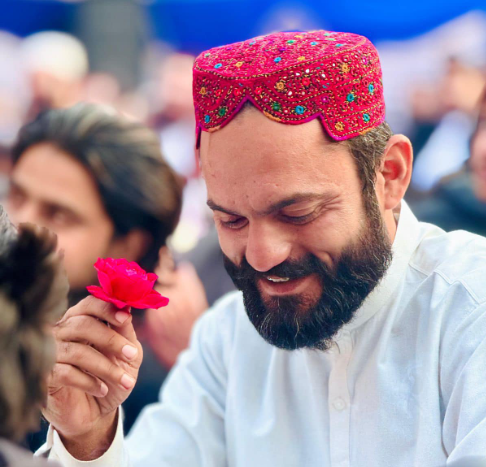
Speaking at a recent gathering in Mirpur, senior committee member Khawaja Mairan directly addressed Prime Minister Faisal Mumtaz Rathore, stating:
> “Remove the accession-to-Pakistan clause from election requirements, and I am ready to contest against you in any constituency.”
This statement reflects a broader demand for electoral inclusivity and ideological neutrality.
The JKAAC has gained significant public support in recent years, largely due to its role in organizing mass protests across the region.
One of its most notable successes was its sustained campaign over the delayed Mirpur-Dadyal bridge project, which had remained incomplete for decades.
According to committee leaders, it was only after persistent demonstrations and public pressure that authorities expedited the project’s completion and inaugurated it.
This victory has strengthened the committee’s claim that public mobilization can achieve tangible governance outcomes, enhancing its credibility among local communities.
In previous election cycles, the JKAAC and several nationalist groups opted for a complete boycott, arguing that participation under current legal conditions would legitimize what they describe as a “restricted democratic framework.”
However, recent statements suggest a strategic shift.
Rather than outright rejection, the committee is now exploring participation — but only if:
The ideological declaration clause is removed or amended
Electoral reforms ensure a level playing field
Independent political identities are allowed without constitutional limitations
This evolving stance indicates a transition from protest politics to potential electoral engagement.
The committee has also criticized mainstream political parties operating in the region, alleging that many function as extensions of Pakistan-based parties rather than independent local entities.
This criticism resonates with a segment of the electorate that feels disconnected from traditional power structures.
Analysts suggest that if the JKJAAC enters the electoral arena, it could disrupt established political alignments and mobilize youth and protest voters Introduce new narratives centered on autonomy and governance reforms
With elections approaching, the coming weeks are expected to be decisive.
Whether the government responds to reform demands particularly regarding the controversial clause.
AJK Elections 2026: Legal Controversies Deepen as Joint Awami Action Committee Signals Conditional Entry