Home Blog Page 52

Father Daughter Tattoo Ideas: Meaningful, Minimalist, and Creative Designs for a Lifetime Bond

Few relationships in life are as profound and tender as the one between a father and daughter. It’s a bond woven with love, trust, laughter, lessons, and—sometimes—heartache or healing. As society embraces new ways to celebrate family, tattoos have emerged as a deeply personal and lasting way to honor these cherished connections. If you’re searching for father daughter tattoo ideas that capture your unique story, you’re not alone.

Related Read: Tattoo Filler Ideas: Creative Ways to Complete Your Ink with Style and Meaning

According to Google Trends, searches for “father daughter tattoos” and “father daughter tattoo ideas” have doubled globally over the past five years. Social media is filled with touching stories and creative ink, from minimalist symbols to elaborate matching designs. Family tattoos—once niche—are now mainstream, with artists reporting a 30% increase in requests for parent-child designs since 2020. Whether you want something subtle or bold, permanent or temporary, this guide from The Azadi Times brings you inspiration, meaning, and practical advice for your next piece of art.

What Makes a Great Father-Daughter Tattoo?

Before you head to the tattoo studio, it’s important to consider what makes a tattoo not just good, but truly great for celebrating the father-daughter bond.

1. Meaningful Symbolism

The best father daughter tattoo ideas come from the heart. Think about shared experiences, phrases, places, or symbols that resonate with your relationship. A great tattoo should evoke memories and emotions every time you see it.

2. Timeless Design

Trends come and go, but the father-daughter connection lasts a lifetime. Choose designs that are classic or adaptable—something you’ll love at every stage of life.

3. Placement Options

Where you get your tattoo is just as important as what you choose. Some opt for visible spots like the forearm or wrist, while others prefer more private areas as a personal reminder.

4. Matching vs. Complementary Tattoos

Some families go for identical designs, while others pick two tattoos that connect (like a lock and key, or compass and anchor). Both approaches can be beautiful—choose what reflects your story.

Best Father Daughter Tattoo Ideas (With Meanings)

Ready for inspiration? Here are some of the most popular and meaningful father daughter tattoo ideas for 2025, with explanations:

1. Infinity Symbol with Initials

Meaning: Eternal love, unbreakable bond
Why it works: Simple, minimalist, and customizable. Add each other’s initials or a tiny heart for a unique touch.

2. Holding Hands Silhouette

Meaning: Protection, guidance, childhood memories
Why it works: A silhouette of a large and small hand clasped together symbolizes trust and lifelong support.

3. King and Princess Crown

Meaning: Dad as the king, daughter as his princess
Why it works: Playful yet regal. Crowns can be elaborate or minimal for subtlety.

4. Coordinates of Birthplaces

Meaning: The place where your story began
Why it works: Latitude and longitude tattoos are both secretive and meaningful—only you two know the story behind the numbers.

5. Quote Tattoos (“I’ll Always Be Your Little Girl”)

Meaning: Spoken love and reassurance
Why it works: Choose a phrase you say to each other, or a line from a favorite book or song.

6. Roman Numerals of Birthdate

Meaning: Honoring a significant date
Why it works: Roman numerals look elegant and can mark birthdays, adoption days, or special milestones.

7. Matching Heartbeat or Soundwave Tattoos

Meaning: Life, connection, shared moments
Why it works: Some get the soundwave of each other’s voices saying “I love you,” or the pattern of a heartbeat from an EKG.

8. Lock & Key or Compass & Anchor

Meaning: Security, guidance, grounding
Why it works: The lock/key or compass/anchor pairings are classic for “you complete me” symbolism. The compass points the way, the anchor keeps you grounded.

9. Tree and Sapling (Tree of Life)

Meaning: Growth, roots, generational bond
Why it works: A large tree for dad and a sapling for daughter can be placed together or separately, representing family lineage and protection.

Unique Design Styles for Father Daughter Tattoos

Your tattoo should feel as unique as your relationship. Here are some trending and timeless styles for father daughter tattoo designs:

Minimalist / Fine Line

  • Clean, subtle lines
  • Ideal for small, discreet tattoos
  • Popular for initials, dates, or simple symbols

Watercolor Tattoos

  • Bright, splashy colors that mimic paint
  • Perfect for flowers, skies, or abstract shapes
  • Adds a dreamy, artistic flair

Black & Grey Realism

  • Highly detailed, photo-like portraits or objects
  • Good for hands, faces, or landscapes

Traditional / Neo-Traditional

  • Bold outlines, vibrant colors
  • Classic American or Japanese motifs (swallows, roses, script)

Tribal-Inspired Designs

  • Geometric shapes and patterns
  • Can incorporate cultural heritage or family history

Cultural / Regional Symbolism

  • Islamic calligraphy (e.g., “Rahmah” for mercy or “Barakah” for blessing)
  • Kashmiri motifs (paisleys, Chinar leaves, or regional landscapes)
  • Celtic knots, Maori koru, or African Adinkra symbols for those honoring specific backgrounds

Father-Daughter Tattoo Ideas by Relationship Type

Every father-daughter relationship is unique. Your tattoo can reflect your journey, challenges, or shared victories.

For Single Dads

  • Tattoos that symbolize dual roles (e.g., lion and cub, strong arms holding a child)
  • Quotes about resilience, e.g., “You are my why.”

For Adopted Daughters

  • Adoption date in Roman numerals
  • Puzzle pieces or “found you” coordinates

Long-Distance Father-Daughter

  • Matching compass tattoos (“Always find your way home”)
  • Airplane and dotted path
  • Interlocking maps or heart halves

Memorial Tattoo Ideas

  • Dad’s signature, handwriting, or favorite saying
  • Portrait or date with angel wings or a halo
  • A meaningful object (watch, guitar, favorite flower) in fine line or watercolor

Tattoos That Symbolize Healing or Reunion

  • Broken chains mended together
  • Phoenix rising (new beginnings)
  • Lotus flower (growth through adversity)

Placement Ideas for Father Daughter Tattoos

Placement can affect pain, visibility, and the intimacy of your tattoo. Consider these spots:

  • Forearm: Easy to display, good for larger designs or phrases
  • Shoulder: Classic for dads, can be matched with daughter’s upper arm or back
  • Wrist: Popular for minimalist or matching tattoos
  • Chest (Dad) & Ankle/Neck (Daughter): Symbolizes protection and closeness, even when apart
  • Matching Finger Tattoos: Ideal for small icons, initials, or dates
  • Behind the Ear / Collarbone: Subtle, elegant, and great for those who want a discreet reminder

Real-Life Tattoo Stories

Sometimes the most powerful inspiration comes from real people. Here are a few touching stories:

Instagram user @inkedwithlove:
“My dad and I got matching heartbeat tattoos after he survived a heart attack. Every time I see mine, I remember how precious life is.”

Reddit user u/ForeverHerGirl:
“Lost my father to cancer. I got his signature—‘Love, Dad’—on my wrist in his handwriting. It’s like he’s still holding my hand through life.”

Tattoo blog, The Inked Parent:
“As a single dad, I wanted something special. My daughter picked out a lion and cub design. We both feel stronger together.”

Temporary vs. Permanent: For the Hesitant

Not everyone is ready for permanent ink. If you’re curious but not committed, try these options:

Semi-Permanent Tattoos

  • Last 1–2 weeks
  • Companies like Inkbox offer realistic designs that fade naturally

Henna Designs

  • Natural, plant-based dye
  • Popular in South Asia and the Middle East
  • Beautiful for fine line or floral designs

Tattoo Stickers & Minimalist Ink Trials

  • Custom sticker tattoos are available online—great for a test run
  • Some artists offer fine line “trial” tattoos with ultra-thin ink that fades in a few months

Tattoo Aftercare Tips

A tattoo is a lifelong investment in your skin and your story. Proper aftercare ensures your father daughter tattoos stay vibrant and healthy.

  1. Follow Artist Instructions: Every artist has their protocol—listen to them first!
  2. Keep it clean: Gently wash with fragrance-free soap and lukewarm water.
  3. Avoid direct sunlight: Especially in the first two weeks—UV rays can fade ink fast.
  4. No swimming or soaking: Pools and bathtubs can cause infections during healing.
  5. Moisturize regularly: Use a tattoo-recommended ointment or fragrance-free lotion.
  6. Don’t pick scabs: Let your skin heal naturally to prevent scarring and color loss.

FAQs: Father Daughter Tattoo Ideas

What’s the most popular father-daughter tattoo in 2025?
Infinity symbols with initials, heartbeat lines, and minimalist holding hands silhouettes are trending worldwide.

Do matching tattoos have to be in the same style?
No! Many choose complementary designs (e.g., lock & key, compass & anchor) in different styles or placements.

What’s the cost for a meaningful small tattoo?
Prices vary by artist and location. Expect $50–$200 for a small, minimalist design. Highly detailed or colored tattoos may cost more.

Is it better to get one together or separately?
It’s up to you. Many enjoy the bonding experience of getting inked together, but if schedules or locations differ, getting them separately is just as meaningful.

Conclusion

A tattoo is more than ink on skin—it’s a living symbol of love, loyalty, and the unbreakable bond between father and daughter. Whether you choose a tiny infinity symbol, a meaningful quote, or a piece of art that tells your unique story, the best father daughter tattoo ideas come from the heart.

Before you book your appointment, consult with a reputable artist, think carefully about your design and placement, and don’t be afraid to make it your own. After all, this tattoo is a lifelong reminder that—no matter where life takes you—you’re always part of each other’s story.

Ready to celebrate your bond? Explore these ideas, personalize them, and wear your love proudly for the world (or just for each other) to see.

The Azadi Times — Sharing stories that connect families, cultures, and hearts worldwide.

“Zamana Tumhara Ya Hussain”: Nadeem Sarwar’s Powerful New Noha Sets Spiritual Tone for Muharram 2025

Karachi / London / Srinagar: As the crescent of Muharram 1447 H rises on the Islamic calendar, one voice once again unites Shia communities across continents: that of Syed Nadeem Raza Sarwar. Revered as one of Pakistan’s most iconic noha khuwans (elegiac reciters), Sarwar has released a new collection titled “Zamana Tumhara Ya Hussain,” igniting a fresh wave of devotion and artistic discussion in Shia circles worldwide.

The album, launched on June 29, 2025, is already resonating in majalis (religious gatherings), digital streams, and social media conversations. For millions preparing for Muharram’s solemn commemorations, Nadeem Sarwar’s voice remains a familiar and powerful companion.

Nadeem Sarwar New Nohas

Nadeem Sarwar’s latest release features four poignant nohay:

  1. Zamana Tumhara Ya Hussain
  2. Hassan Imam-e-Hassan
  3. Akhri Sajda
  4. Roz-e-Ashura

Available on platforms like AleMohamed.com, YouTube, and Dailymotion, these nohay are swiftly being integrated into digital and traditional majalis worldwide. Their release has reaffirmed Sarwar’s status not only as an artist but as a custodian of cultural memory and spiritual expression.

Listen on Dailymotion → “Zamana Tumhara Ya Hussain”
Full Album on AleMohamed.com

Who is Nadeem Sarwar?

Syed Nadeem Raza Sarwar was born in Karachi, Pakistan, to Syed Asrar Hussain Rizvi and Syeda Nargis Khatoon. From a tender age of four, Sarwar was introduced to noha recitation, performing alongside his mother. Over the decades, he has grown into an internationally recognized voice in Islamic devotional arts.

Key highlights from Sarwar’s life and career:

  • Prolific output: Since the 1980s, he has released 28 volumes on cassette, CD, and digital formats, totaling over 179 kalaams in multiple languages—including Urdu, Sindhi, Punjabi, Persian, Arabic, English, French, Gujarati, and Pushto.
  • Educational background: Trained in mechanical engineering, design, and fine arts, Sarwar brings a meticulous aesthetic sensibility to his recitations and video productions.
  • Family legacy: He is married and has three children. His sons, Ali Shanawar and Ali Jee, have also become prominent noha reciters, continuing the family tradition.
  • International reach: Although born in Karachi, Sarwar is now based in Australia and regularly tours the UK, USA, Canada, Middle East, India, and Europe for live majalis performances.

Read more about Nadeem Sarwar’s career on Shia Multimedia →

Digital Platforms Fuel Global Noha Revolution

Sarwar’s influence has expanded dramatically in the digital era. His work transcends geographic borders, thanks to robust online presence:

Streaming and downloads: Sarwar’s nohay attract significant viewership on YouTube, Dailymotion, and AleMohamed.com, where fans can stream or download audio and video.

Viral hashtags: Tags like #Noha2025#SarwarInMuharram, and #ZamanaTumharaYaHussain trend across Facebook, Instagram, and WhatsApp, turning nohay into viral multimedia experiences.

Reddit discussions: Enthusiasts on platforms like Reddit often dissect Sarwar’s production quality and innovative video editing techniques, praising his capacity to blend visual drama with deep emotional delivery.

“Nadeem Sarwar dedicated his lifetime to serve the Ahlulbayt… Through his voice, the message of Karbala is conveyed.” — Reddit user (View discussion)

Tradition and Modern Aesthetics Intertwined

Nadeem Sarwar’s recitations are more than vocal performances—they are multimedia art forms. His style bridges classical tradition and contemporary presentation:

  • Poetic lineage: Sarwar’s work draws on literary giants like Rehan Azmi, Mir Anis, and Mirza Dabeer, grounding his nohay in centuries of poetic expression.
  • Modern production: His engineering and artistic background reflects in high-quality video shoots, innovative camera angles, and choreographed gestures, making each noha visually compelling.
  • Cultural diversity: Sarwar’s repertoire includes recitations in various regional and ethnic styles—Persian, Arabic, Quetta, Punjabi, Sindhi, Siraiki, Deccan, and the Khoja Ithna Ashari Saf—enhancing his appeal to diverse audiences worldwide.

This innovative fusion has both inspired younger generations and sparked debates among traditionalists who prefer purely classic formats.

Kashmir: A Resonant Audience for Sarwar’s Nohay

While Nadeem Sarwar’s influence is global, his new nohay hold special significance for Kashmir’s Shia communities, where Muharram rituals are deeply interwoven with cultural identity and social memory.

Despite periodic internet restrictions in Kashmir, Sarwar’s nohay are accessed via downloadable content, allowing local communities to incorporate his recitations into mobile-based majalis and home gatherings.

Themes of sacrifice, justice, and endurance in Sarwar’s work resonate with Kashmir’s own narratives of struggle and resilience, adding powerful layers of meaning during the mourning rituals.

Why “Zamana Tumhara Ya Hussain” Matters

Nadeem Sarwar’s “Zamana Tumhara Ya Hussain” is not merely an album—it’s a cultural event signaling the arrival of Muharram 1447 H. The blend of deep emotion, poetic heritage, and cinematic production has cemented Sarwar’s place as a leading figure in global noha culture.

Pakistan, Türkiye and Azerbaijan Signal Strategic Alignment at ECO Summit

Khankendi, Azerbaijan – In a gesture laden with symbolism, the heads of state from Pakistan, Türkiye, and Azerbaijan were pictured holding hands following the conclusion of the 17th Economic Cooperation Organization (ECO) Summit in Khankendi, Azerbaijan—a city at the heart of the Nagorno-Karabakh conflict.

The image, now viral across social media platforms, captured Prime Minister Shehbaz Sharif, President Recep Tayyip Erdoğan, and President Ilham Aliyev standing together—visibly united in what officials are calling a moment of “strategic brotherhood.”

A Carefully Choreographed Show of Regional Solidarity

The summit, which brought together leaders from 10 ECO member states, focused on economic integration, sustainable development, and geopolitical coordination across South and Central Asia. But the visual impact of the three leaders walking hand-in-hand overshadowed formal agreements.

“It’s not just about trade—it’s about trust,” an Azerbaijani official told The Azadi Times, speaking on condition of anonymity.

While Türkiye and Azerbaijan have long enjoyed close military and diplomatic ties, Pakistan’s growing alignment with both nations—particularly on defense and climate issues—has introduced a new trilateral dynamic into an already shifting regional order.

This year’s venue, Khankendi, holds deep historical and political significance. Formerly known as Stepanakert, it was the de facto capital of the breakaway Nagorno-Karabakh Republic, which was dissolved following Azerbaijan’s 2023 military offensive.

Hosting an international summit in the city is widely interpreted as a diplomatic assertion by Baku, with support from Ankara and now—visibly—Islamabad.

“We are brothers in blood and belief,” President Erdoğan stated earlier during a joint press conference.

Pakistan’s Agenda: Climate, Trade, and Connectivity

PM Shehbaz Sharif used his address to spotlight Pakistan’s vulnerability to climate change, calling for:

  • A Low-Emission ECO Corridor
  • Regional investment in resilience infrastructure
  • Establishment of an ECO Youth Climate Fellowship

He also announced a \$2 billion bilateral investment framework with Azerbaijan focused on energy cooperation, port development, and defense industrial exchange.

“Climate shocks know no borders,” Sharif said. “Neither should our solutions.”

Türkiye’s Calculated Support for Muslim Unity

President Erdoğan reiterated Türkiye’s support for “just causes,” referencing Gaza, Kashmir, and Karabakh—territories tied to Muslim-majority populations facing political disputes. While avoiding direct confrontation with India, Ankara’s statements mirrored previous alignments with Islamabad over Kashmir.

What the Viral Image Means

The now-famous image of the three leaders, smiling and holding hands against the backdrop of Khankendi’s recently rebuilt streets, has triggered a wave of reaction online.

“This isn’t just about brotherhood—it’s a soft-power statement to the world,” said political analyst Dr. Lina Qureshi.

The summit concluded with joint declarations emphasizing:

  • Expansion of intra-regional trade
  • Formation of an ECO Green Finance Task Force
  • Increased digital infrastructure integration
  • Commitment to multilateral peace efforts

Looking Ahead

  • The 18th ECO Summit is expected to be held in Tehran in 2027.
  • Implementation of the Khankendi Investment Plan begins Q4 2025.
  • A joint trilateral development bank between Pakistan, Türkiye, and Azerbaijan is under review.

Analysis: A New Muslim Bloc in the Making?

While the summit’s official agenda was rooted in economics and climate resilience, the visual choreography and political language suggest something more:

“We are seeing the architecture of a new geopolitical triad,” says regional expert Dr. Faheem Mir. “It’s not military per se—but it’s moral, strategic, and increasingly economic.”

Still, critics warn that such alignments could risk further polarization in the region, especially if not balanced by active diplomacy with neighboring powers.

Reporting by The Azadi Times | Additional input from Khankendi, Islamabad, and Istanbul Bureaus

Kashmiri Worker Adnan Aslam Honoured with UAE Civil Award for Heroic Fire Response in Sharjah

Sharjah / Muzaffarabad —
A proud moment for the people of Kashmir, as Adnan Aslam a skilled crane operator from the Chhamb region near Bhimber in Pakistan administered Kashmir has been awarded a prestigious Civil Award by the UAE’s Sharjah Civil Defence Authority. His selfless and brave action during a recent fire incident helped save lives and minimize damage, earning him widespread appreciation in the Emirates and beyond.

According to Gulf Today when a vehicle caught fire in a commercial area of Sharjah, Adnan, working nearby, immediately responded to a call from emergency officials. Risking his own safety, he operated his crane for nearly two hours alongside Civil Defence officers to contain the blaze. His intervention proved crucial in limiting the fire’s spread and preventing casualties.

Brigadier General Yousef Obaid Al Shamsi, Director-General of Sharjah Civil Defence, personally honored Adnan for his “courageous and voluntary” contribution. He commended Adnan’s swift thinking, calling it a model of civic duty and public cooperation.

“His quick action helped save lives, reduce material losses, and support emergency response teams at a critical moment,” said Brigadier Al Shamsi.

After assisting in the operation, Adnan quietly left the scene, thanking the officers an act that deeply impressed the UAE authorities. His story later went viral on social media platforms, where Kashmiris around the world have been celebrating him as a symbol of quiet heroism.

A Kashmiri Voice in the Global Arena

While the region of Kashmir remains internationally disputed and its people still await their right to self-determination, stories like Adnan Aslam’s shine a light on the resilience, skill, and dignity of its people. Despite ongoing political challenges, countless Kashmiris across the world continue to make valuable contributions — often unnoticed — in fields ranging from construction and logistics to academia, science, and the arts.

The case of Adnan reflects a deeper truth: that the potential of Kashmiri youth is vast, but often underrecognized due to the region’s unresolved status and limited international support.

“We are more than a conflict zone. We are a people with skills, values, and global potential,” said a Kashmiri community member in the UAE who attended the award ceremony.

Urging Recognition Beyond Borders

The international recognition of Adnan’s efforts offers a rare yet powerful reminder that the world must look beyond the binary India-Pakistan narrative and focus on the aspirations, rights, and talents of the Kashmiri people themselves.

Tensions Erupt Over Muharram Procession Route in Gilgit-Baltistan; One Dead, Several Injured

CHAMUGARH, GILGIT-BALTISTAN (PAKISTAN-ADMINISTERED KASHMIR) — July 5, 2025:
At least one person was killed and several others injured in an outbreak of violence on Friday during the 8th Muharram procession in the Chamugarh area of Gilgit, a city in Pakistan-administered Kashmir’s Gilgit-Baltistan region. The violence reportedly erupted due to a dispute over the procession’s route.

Eyewitnesses reported that participants returning from a Muharram procession in Maqpoondas were blocked in Chamugarh, leading to stone pelting and the exchange of gunfire. According to official sources, one person died, while three others — including a police constable — sustained gunshot wounds. Several more were injured in the ensuing chaos.

The Deputy Inspector General of Police (Range), Raja Mirza Hassan, confirmed the fatality and described the situation in the area as “tense.” The injured were shifted to the Provincial Headquarters Hospital, where the constable was among those receiving treatment.

Following the incident, security forces, including paramilitary units, were swiftly deployed to the area and have since taken control. Authorities claim that the situation is now stable.

Officials Call for Calm, Reject Rumors

In a statement issued by the Gilgit-Baltistan Information Department, officials asserted that peace had been restored and security agencies remain on high alert to prevent further unrest. The statement emphasized that the Pakistan Army, Gilgit-Baltistan Scouts, Rangers, and local police are working in coordination to maintain law and order.

“There are elements trying to spread fear and falsehoods through social media,” the department warned, urging citizens to rely only on verified sources and refrain from sharing unconfirmed information. The statement also praised the people of the region for not giving in to panic and for upholding “unity and brotherhood” despite the provocation.

Concerns Over Broader Implications

The violence has raised concern among political observers and residents alike, with some social media users characterizing the unrest as a “proxy effort” to destabilize unity in the disputed Himalayan region. While such claims remain unverified, they underscore growing anxieties around sectarian sensitivities and regional cohesion in Gilgit-Baltistan, which remains a contentious part of the long-standing Kashmir dispute between India and Pakistan.

Gilgit-Baltistan is administered by Pakistan but is internationally regarded as part of the larger Kashmir region whose final status remains unresolved under United Nations resolutions. The area has seen growing political and social assertiveness in recent years, with calls for constitutional rights, local governance reforms, and more transparent handling of sectarian affairs.

Call for Restraint and Responsible Media

Local administrators have urged the public to cooperate fully with security forces and avoid spreading misinformation, especially during sensitive religious occasions. The Gilgit-Baltistan Information Secretary thanked civil institutions and the general public for their role in maintaining peace and appealed for continued collective effort to ensure stability in the region.

As the Islamic month of Muharram continues — a period marked by processions and commemorations among Shia Muslims — observers stress the importance of restraint, inter-sect harmony, and institutional vigilance to prevent further flare-ups.

Czech Mountaineer Dies After Fall During Nanga Parbat Expedition in Gilgit Baltistan

Gilgit-Baltistan (PAK-administered Kashmir) — A tragic incident occurred during a mountaineering expedition on Nanga Parbat, the world’s ninth-highest peak, when a female climber from the Czech Republic fell into a deep gorge and lost her life.

According to Additional Deputy Commissioner (ADC) of Diamer District, Mr. Nizamuddin, the accident took place between Camp I and Camp II of Nanga Parbat, located in the Gilgit-Baltistan region of Pakistan-administered Kashmir. The deceased climber, identified as 47-year-old Kolouchava Klara, was part of a seven-member international mountaineering team.

The deceased climber, identified as 47-year-old Kolouchava Klara, was part of a seven-member international mountaineering team.

Authorities say that the fall occurred from a significant height, leading to her death at the scene. Her fellow climbers, who had descended to the base camp, confirmed the fatal incident. Initial reports had speculated an oxygen cylinder explosion, but official sources later clarified that Klara died due to the fall.

“Her exact location is still being traced through GPS and satellite coordination,” ADC Nizamuddin said. “Once the coordinates are confirmed, the authorities will assess how and when to initiate a recovery operation.”

Poor communication conditions in the high-altitude terrain initially delayed confirmation and coordination efforts, but contact with the base camp has now been established.

Klara was an experienced mountaineer and part of a multinational group attempting to summit Nanga Parbat, which stands at 8,126 meters (26,660 feet) and is often referred to as the “Killer Mountain” due to its dangerous climbing conditions and high fatality rate.

This incident adds to the growing concern over safety in high-altitude expeditions in the Himalayan and Karakoram ranges, which draw hundreds of climbers from around the world each year.

Background:
Gilgit-Baltistan, where Nanga Parbat is located, is part of the larger Kashmir region, a territory disputed between India and Pakistan. The area is administered by Pakistan and is a key gateway for mountaineering expeditions in the western Himalayas.

Developing Story — More Updates to Follow.

German Mountaineer Achieves Historic Paragliding Descent from Nanga Parbat

German climber David Göttler makes history with paragliding descent from Nanga Parbat summit in Gilgit-Baltistan, Pakistan-administered Kashmir. French climbers achieve first ski descent on Rupal Face.

Gilgit-Baltistan (Pakistan-administered Kashmir) — In a remarkable feat of adventure and endurance, renowned German mountaineer David Göttler successfully paraglided down from the summit of Nanga Parbat, marking a historic achievement in high-altitude mountaineering and aerial descent.

David Göttler, accompanied by French climbers Tiphaine Duperier and Boris Langenstein, reached the 8,126-meter peak via the challenging Shell Route between June 21 and 24. Following the ascent, Göttler undertook the daring paragliding descent, becoming one of the few to combine high-altitude climbing with aerial navigation on this perilous mountain.

Due to harsh wind conditions, Göttler launched his paraglider at an altitude of approximately 7,700 meters and managed to reach the base camp in just 30 minutes, showcasing extraordinary skill and courage.

Meanwhile, Duperier and Langenstein accomplished another first by descending the formidable Rupal Face—the steepest face of Nanga Parbat—through a combination of skiing and trekking. They spent a night at 7,625 meters before completing the descent to base camp over three days, marking the first successful ski descent from this route.

The CEO of Adventure Tours Pakistan, Niknam Karim, confirmed that all three climbers summited via the Shell Route, a challenging path well-known among mountaineers.

Nanga Parbat, often called the “Killer Mountain,” is notorious for its technical difficulty and high fatality rate, making such achievements particularly noteworthy.

German instructor Michael Beck congratulated Göttler on social media, describing the climb and paragliding as an “amazing Alpine-style ascent” and hailed the flight from 7,700 meters as a moment of great joy.

This remarkable expedition highlights the growing international attention on Gilgit-Baltistan, part of Pakistan-administered Kashmir, a region known for its dramatic landscapes and mountaineering potential amid complex geopolitical realities.

Blasphemy Business Group Exposed: Real Identity of “Iman” Revealed as Komal Ismail from Azad Kashmir

Mirpur, AJK (Pakistan administered Kashmir): In a significant breakthrough, the real identity of a key figure involved in Pakistan’s notorious “Blasphemy Business Group” has been revealed. The woman known publicly as “Iman” has been identified as Komal Ismail, a native of Mirpur, Azad Kashmir, according to investigative reporting by Fact Focus.

The Islamabad High Court had previously directed the Federal Investigation Agency (FIA) and NADRA to submit a detailed report regarding “Iman” within one week. In a crucial development during ongoing proceedings, advocate Imaan Mazari submitted Fact Focus’s investigative findings to the court.

Shocking Criminal History Uncovered

Komal Ismail’s criminal record dates back to April 2021, well before her association with the alleged “Blasphemy Business Group”—a network accused of exploiting blasphemy laws and orchestrating honey-trap operations to target political and religious opponents.

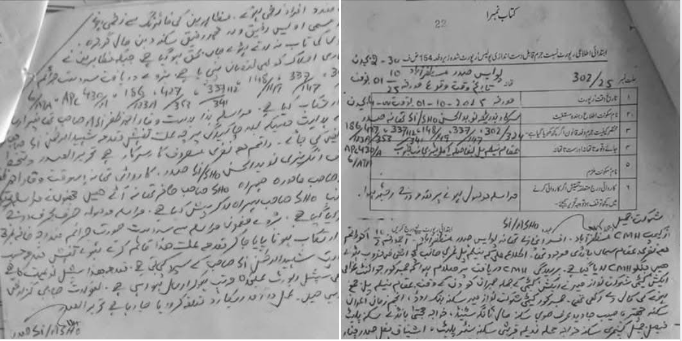
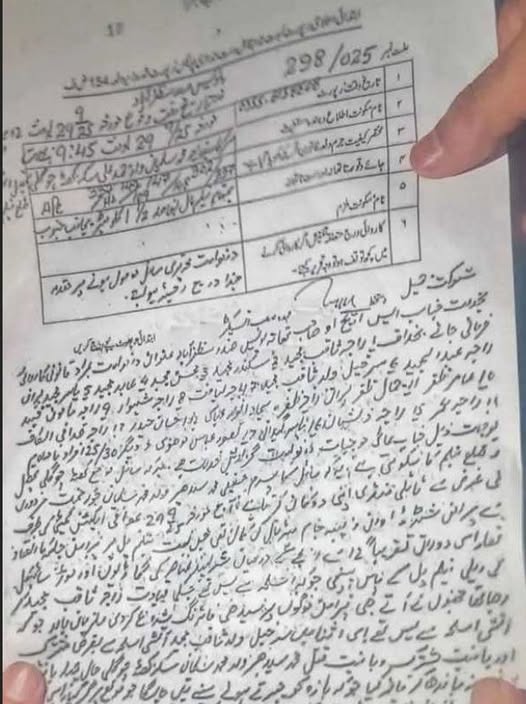
According to an FIR registered at Islamabad’s Sihala Police Station, Komal, along with her brother Taimoor and husband Muhammad Farooqi, was implicated in the murder of 36-year-old Mughis Shah in DHA, Islamabad.

Familiar Faces Behind Legal Cover

Adding another layer to the case, Advocate Rao Abdul Rahim, a controversial figure now alleged to be linked with the same blasphemy group, represented the accused in the 2021 murder case. Furthermore, the case was heard by Justice Sardar Ejaz Ishaq Khan, who is coincidentally presiding over the current blasphemy-related hearings involving the same group.

On Wednesday, Justice Ejaz ordered Komal Ismail’s immediate arrest and instructed that she be produced in court by Thursday, following the explosive revelation of her real identity and criminal past.

High-Stakes Legal Battle Unfolds

The case has stirred widespread attention in legal and human rights circles, especially in Pakistan-administered Azad Kashmir, where Komal hails from. The exposure of her identity and criminal record raises serious questions about the alleged misuse of blasphemy laws for personal vendettas and organized criminal gain.

Who Is the “Blasphemy Business Group”?

The so-called “Blasphemy Business Group” is reportedly involved in fabricating blasphemy allegations and using honey-trap tactics to target influential individuals. The group is believed to operate with the backing of powerful legal actors, manipulating Pakistan’s sensitive religious and legal frameworks for financial and political gain.

Ancient Korean Inscription Found in Kashmir’s Kotli Sparks Global Historical Interest

Muzaffarabad, PaJK – In a discovery poised to reshape South and East Asian historical narratives, an archaeological excavation in Pakistan-administered Jammu and Kashmir (PaJK) has revealed a possible ancient link between Kashmir and the Korean Peninsula.

Dr. Rukhsana Khan, a leading archaeologist and associate professor at the University of AJK, has uncovered a rare stone inscription in the highlands of southern Kotli district—an area strategically situated near the Rajouri-Mendhar belt. The inscription is carved in a mixture of Korean alphabets and Proto-Sharda script, pointing to an unexpected but significant historical interaction between the two distant regions.

“This is a major breakthrough,” said Dr. Khan, who also heads the Sharda Centre of Learning at the university. “Preliminary analysis suggests cultural or religious exchange, potentially dating back to the early spread of Buddhism along the ancient Silk Routes connecting Kashmir with China, Korea, and beyond.”

The newly discovered site, nestled amid Kotli’s rugged terrain, also yielded a range of archaeological materials: prehistoric rock shelters, rock-cut caves, partially defaced anthropomorphic stone carvings, ancient water reservoirs, earthen mounds, and pottery fragments. Collectively, these suggest a long continuum of human settlement and cultural development stretching from the 4th millennium BCE to the late medieval period.

Strategic Cultural Corridor

The Kotli site is geographically and historically significant, lying at a vital axis linking the Kashmir Valley and the Jammu region. Scholars believe it may have functioned as a key religious and cultural corridor for centuries. The presence of Proto-Sharda script—once the literary vehicle of Kashmir’s ancient Sharda civilisation—underscores the region’s past as a center of learning and spirituality.

“The convergence of Proto-Sharda and Korean scripts in a single inscription is unprecedented,” noted Dr. Khan. “It suggests a deeper, more complex pattern of cultural and possibly diplomatic ties that warrants serious international academic attention.”

Call for International Collaboration

Dr. Khan, a PhD graduate from the prestigious Taxila Institute of Asian Civilisations and a noted authority on ancient Sharda heritage, has called for global scholarly collaboration, particularly with Korean historians, epigraphists, and Buddhist scholars.

“We are at the threshold of uncovering a forgotten chapter of inter-Asian relations,” she said. “Such finds could help reconstruct historical ties between Kashmir and East Asia, offering new insights into the movements of people, faiths, and ideas along the Silk Routes.”

The Sharda Centre of Learning is now coordinating with leading universities across Pakistan to deepen the investigation. Plans are underway to invite Korean research institutions to jointly examine the inscription and associated artefacts.

Boost to Heritage Tourism and Research

Local authorities and academic institutions are optimistic that the discovery will enhance Kashmir’s profile as a promising destination for archaeological research and cultural heritage tourism. Experts believe that such findings can transform the region into a hub for academic diplomacy and cross-border cultural collaboration.

“This is not just a discovery for academia,” said a spokesperson from the University of AJK. “It’s a chance to present Kashmir’s ancient legacy on a global stage, reaffirming its historic role in the exchange of knowledge, faith, and culture.”

The archaeological team continues to secure and document the Kotli site under challenging terrain and limited resources. Yet, the momentum of the discovery has already energized interest from national and international heritage bodies.

As efforts to decode the inscription progress, scholars and observers alike await what could become a landmark turning point in understanding Kashmir’s ancient global connections—particularly its ties to East Asia and the spread of early Buddhism.

Cellular Service Crisis in Azad Kashmir: Franchise Sales Suspended Amid Poor Connectivity

Rawalakot: The directive to halt franchise sales of cellular services in Pakistan administered Kashmir also known as Azad Jammu & Kashmir (AJK) has been referred to higher authorities, with companies now being granted adequate time to improve their service quality. This development comes after long-standing concerns regarding the persistently poor cellular connectivity in the region, despite nearly two decades of operation by multinational telecom providers.

Cellular services were first introduced in the Pakistan administered Kashmir in 2005, primarily to facilitate communication for international donors and aid workers following the devastating earthquake. However, even after 20 years, these companies have failed to substantially upgrade their networks. While calls within cities were once feasible, current conditions show a significant deterioration, with signal loss occurring frequently even during short power outages. Meanwhile, telecom companies continue to increase monthly package prices.

An important logistical question remains regarding the restoration time for backup generators at cellular towers, which is estimated to be a maximum of 24 hours. This delay exacerbates the frequent interruptions in service, especially in remote areas.

Additionally, a major issue persists in the disparity of cellular packages across Pakistan’s provinces compared to those available in Jammu & Kashmir and Gilgit-Baltistan. While some packages in mainland Pakistan are offered at low rates, such affordable options are either unavailable or significantly more expensive in these northern territories. The government plans to release detailed information on this pricing discrepancy in the coming days.

Although imposing heavy fines on telecom companies for inadequate service is considered necessary, enforcement of such measures has been stalled following directives from the Chief Secretary of AJK, a Pakistani national. This has resulted in the suspension of orders issued by Deputy Commissioners who had called for shutting down cellular companies until they improved their services. The Azad Kashmir government lacks the authority to directly negotiate with telecom providers or enforce stringent oversight, as telecommunications fall under the federal jurisdiction of Pakistan.

This complex administrative setup means that despite mounting public frustration, no lasting resolution to cellular service issues is forthcoming without significant and sustained public protest. Such protests, however, often result only in temporary relief before the previous status quo is restored.

The persistent neglect of cellular infrastructure in Azad Kashmir and Gilgit-Baltistan reflects broader systemic challenges faced by these regions, where governance, regulatory oversight, and service provision remain entangled in bureaucratic constraints and political considerations.