Sunday, March 29, 2026
10 C
Srinagar
Home Blog Page 54

First Batch of Kashmiri Students Evacuated from Iran, Many Still Stranded in Mashhad

Srinagar, Indian-administered Kashmir — As geopolitical tensions continue to escalate in Iran, the first group of Indian students—predominantly from Jammu and Kashmir—has finally been evacuated. A group of 110 students, including 90 from Jammu and Kashmir, reached New Delhi on Thursday afternoon. However, over 700 students, many of them Kashmiris, remain stranded in Mashhad, awaiting evacuation.

A Long and Exhausting Journey

These students were moved through multiple Iranian cities and later transited via Armenia before landing in New Delhi. Speaking to media outside the Indira Gandhi International Airport, a female student said:
“We didn’t face any problems; everything was pre-planned and well-managed by the Indian Ministry of External Affairs and the embassies.”

The group consisted primarily of students enrolled at Urmia University, who were among the first to be evacuated from the conflict-hit region.

From Delhi to Srinagar: Anger Over Poor Travel Arrangements

However, once in Delhi, the students expressed disappointment over the travel arrangements made by the Jammu and Kashmir government for their journey back home.

“We have been traveling non-stop for three days under extreme stress, and now we’re supposed to travel in these rickety buses?” one student remarked.

Several students urged that they should be airlifted to Srinagar instead of being sent by road.

Quick Response from J&K Government

Soon after the concerns surfaced, the Chief Minister’s Office responded, announcing that deluxe buses would be arranged for transportation from Delhi to Kashmir.

“The CM has taken note of the requests made by the students. The Resident Commissioner has been directed to coordinate with JKRTC and ensure proper deluxe buses are arranged,” the official statement read.

700+ Students Still in Mashhad Awaiting Evacuation

Speaking to Greater Kashmir, a student currently in Mashhad said that around 700 students had gathered there. Indian embassy officials had informed them they would be moved to Turkmenistan on Friday.

“More students are still arriving in Mashhad every day,” he added.

From Turkmenistan, students are expected to be flown to New Delhi, while some groups may be evacuated via Qatar depending on documentation and logistics.

Documentation Delays and Communication Blackout

A few student groups were reportedly turned back at the last moment due to incomplete travel documents.

“One group left in the morning but had to return because of missing paperwork,” a student told Greater Kashmir.

According to media reports, Kashmiri students faced significant issues related to documentation during the evacuation process, highlighting a broader and persistent problem — the lack of internationally recognized travel documents for people from Jammu and Kashmir.

This situation underscores how, despite being part of a conflict zone, Kashmiris often encounter additional bureaucratic and diplomatic hurdles, especially during international crises. Many students reportedly had to delay their exit from Iran due to missing or incomplete paperwork, a problem that may not have been as severe if they held more universally accepted passports or documentation.

These challenges not only impacted their ability to leave a conflict zone safely and swiftly but also reflect the global mobility restrictions Kashmiris often face, particularly in regions where geopolitical tensions intersect with limited diplomatic access.

Parents Appeal for Swift Evacuation of All Kashmiri Students

Families in Kashmir have appealed to the central government to ensure the immediate and safe evacuation of all Kashmiri students still trapped in Iran before the situation deteriorates further.

Schools to Observe 10-Day Summer Holidays Amid Heatwave, Timings Adjusted

Srinagar – Indian administered Kashmir: In response to the ongoing heatwave sweeping across the Kashmir division, Jammu and Kashmir’s Education Minister, Sakina Itoo, has announced a ten-day summer break for schools in the region, starting from July 1, 2025.

The decision, which comes as temperatures continue to soar in the region, will apply to both private and government schools across the Kashmir division. The break will last from July 1 to July 10, with the government set to review the situation and decide whether to extend the vacation based on weather conditions after the scheduled period.

Summer Break for Schools
In a statement, Minister Sakina Itoo emphasized that the decision was taken in light of the “severe heatwave” affecting the region. “In view of the extreme weather conditions, the government has decided to grant a summer vacation for all schools in the Kashmir division from July 1 to July 10,” she said.

She also mentioned that the government would assess the weather after July 10 and decide whether an extension of the vacation is necessary. “We will review the weather conditions after July 10 and take appropriate action based on the situation,” Itoo added.

Adjustment in School Timings
Along with the summer break, Itoo also announced a change in school timings starting this Saturday, June 22. The revised schedule will see schools within the Srinagar municipality limits operating from 8:00 AM to 1:00 PM, while schools located outside the Srinagar municipal limits will follow a slightly adjusted timetable, from 8:30 AM to 1:30 PM.

This change is intended to mitigate the adverse effects of the heatwave while ensuring that educational activities continue as planned.

Key Points of the Announcement

  • Summer Break DatesJuly 1 to July 10, 2025
  • School Timings (Starting Saturday):
    • Srinagar Municipal Limits: 8:00 AM to 1:00 PM
    • Outside Srinagar Municipality: 8:30 AM to 1:30 PM

The government has assured that these measures are temporary and will be adjusted according to the ongoing weather conditions. As Kashmir continues to face increasingly hot weather, these changes aim to ensure the safety and well-being of students and staff while maintaining the academic calendar.

Further Updates
The Jammu and Kashmir Education Department has stated that it will continue to monitor the situation closely and will provide updates to schools, students, and parents regarding any changes in the coming weeks.

Mirwaiz of Kashmir Expresses Deep Concern Over Middle East Crisis, Calls for Peaceful Dialogue

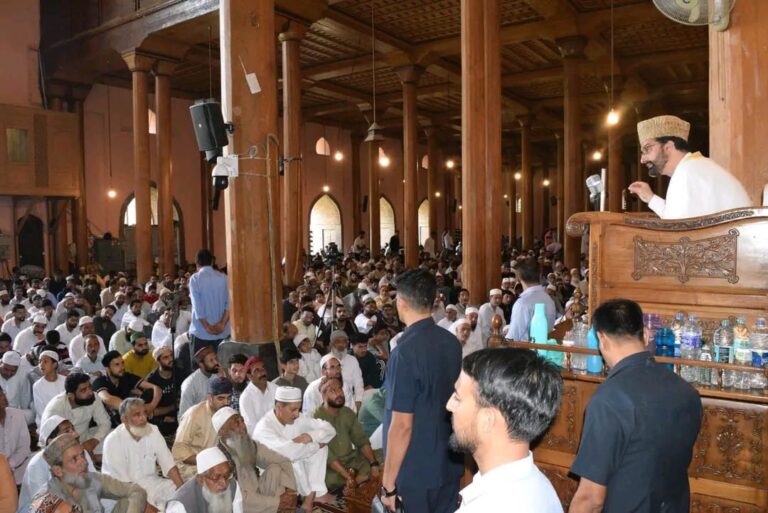
Srinagar – June 20, 2025, Indian administered Kashmir: Mirwaiz of Kashmir, Dr. Molvi Muhammad Umar Farooq, addressed a large congregation at the historic Jamia Masjid Srinagar on Friday, expressing grave concern over the escalating situation in the Middle East, particularly in Gaza and Iran. The ongoing humanitarian crisis and intensifying conflict have raised alarms across the globe, and Mirwaiz called for urgent action to prevent further loss of life.

Humanitarian Crisis in Gaza and Iran
Mirwaiz highlighted the severe humanitarian situation in Gaza, where Israeli airstrikes have resulted in the deaths of over 90 individuals, including children, in just the past 24 hours. He described the situation as “beyond words,” emphasizing the tragic reality that innocent civilians are being killed as they queue for food aid. “What could be more horrifying and inhumane than bombing people while they are simply trying to survive?” Mirwaiz said, condemning the violence.

He also expressed deep concern about Israel’s aggression spreading to Iran, where hundreds of civilians have been killed and thousands injured. “The news of potential U.S. military strikes on Iran is deeply alarming, particularly for the people of Kashmir, who share strong cultural and religious ties with the region,” he added. The Mirwaiz warned that such actions could further destabilize the region and result in widespread devastation.

Call for Peaceful Dialogue
In his address, Mirwaiz urged U.S. President Donald Trump to refrain from launching an attack on Iran, advocating for diplomacy instead. “The use of force will only escalate the conflict and lead to further destruction and death. There is a better way forward, and that is through dialogue. Peaceful discussions can resolve the concerns of all parties involved,” he said, stressing the importance of dialogue over war.

He reiterated the longstanding principles of the Jammu and Kashmir Peoples Action Committee (JKPC), founded by his father, the late Mirwaiz Molvi Muhammad Farooq. Despite the Indian government’s recent ban on the JKPC, Mirwaiz affirmed that the organization remains committed to peaceful negotiations and holding the government accountable. “We will continue to believe in these principles despite the ban,” Mirwaiz said.

Appeal for Immediate Medical Care for Shabbir Shah
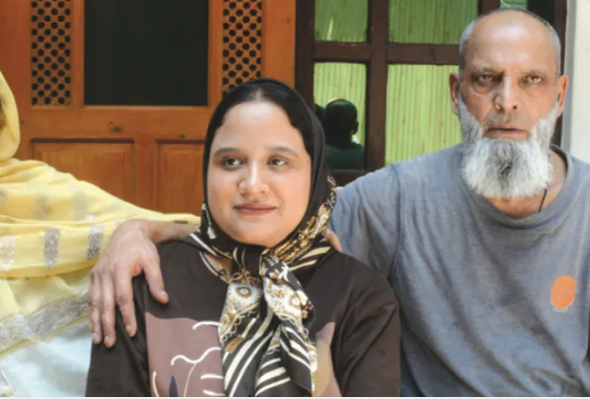
Mirwaiz also expressed deep concern over the deteriorating health of incarcerated leader Shabbir Ahmad Shah, who has been languishing in Tihar Jail for years without trial. “Shabbir Shah’s health is rapidly declining, and he urgently needs medical intervention. It is deeply distressing that his family has not been allowed to speak with him over the phone for two years, and at a time when he requires surgery, he is being denied care,” Mirwaiz lamented.

Mirwaiz called on the Indian authorities to provide Shabbir Shah with immediate medical treatment and allow his family to visit him during this critical period. “This inhumane treatment of political prisoners in Kashmir must end. The prolonged detention, lack of medical care, and denial of basic rights are a violation of human dignity and justice,” Mirwaiz said.

He further appealed to the elected government of Jammu and Kashmir to address this grave humanitarian issue and assist in securing medical care for Shah and other political prisoners who are suffering due to harsh conditions and prolonged incarceration.

Global Call for Accountability and Justice
Mirwaiz concluded his speech by emphasizing the need for global accountability in resolving conflicts and protecting human rights. “In this moment of global uncertainty, it is essential that nations come together to find peaceful solutions to ongoing conflicts and to uphold human dignity, justice, and the rule of law,” he said.

The Mirwaiz’s statements underscore the growing concerns within the Kashmiri community regarding the escalating violence in the Middle East and the ongoing struggles of Kashmiri political prisoners. As Kashmir continues to face political unrest, Mirwaiz’s call for peace, dialogue, and justice resonates with many who are hopeful for a peaceful resolution to regional conflicts.

Kashmir’s Shabir Shah in Critical Health Condition: Calls for Immediate Medical Attention and Family Support

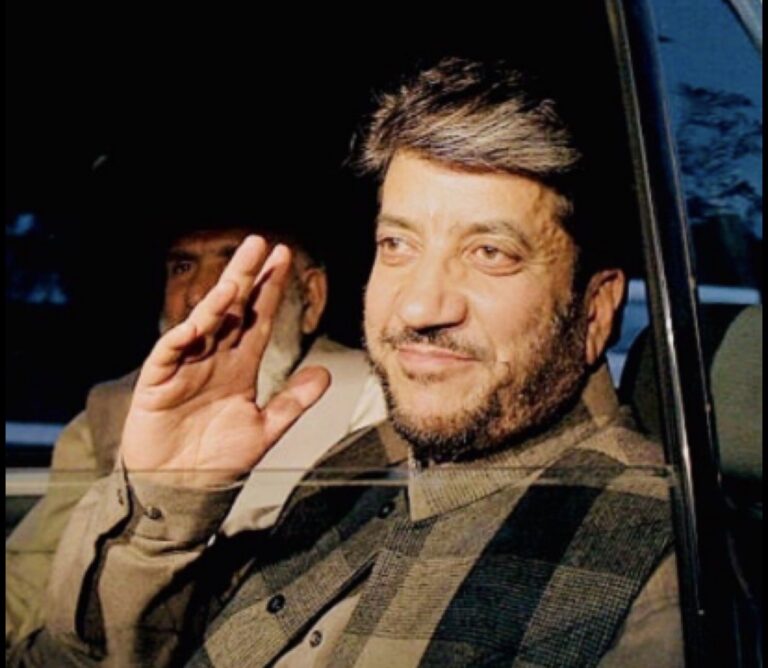
Srinagar – Indian administered Kashmir: Veteran freedom movement leader, Shabir Shah, is in a critical health condition, suffering from life-threatening diseases that require immediate medical intervention, including surgery. Shah, who is over 75 years old, has been a significant political figure in Jammu and Kashmir and a long-time proponent of non-violence, despite differences in political ideology with many in the region.

Shabir Shah has spent nearly four decades advocating for the rights of Kashmiris, spending more than half of his life in prison, much of it without trial. Despite his incarceration, he has remained a symbol of resilience and nonviolent resistance in the ongoing struggle for Kashmiri self-determination.

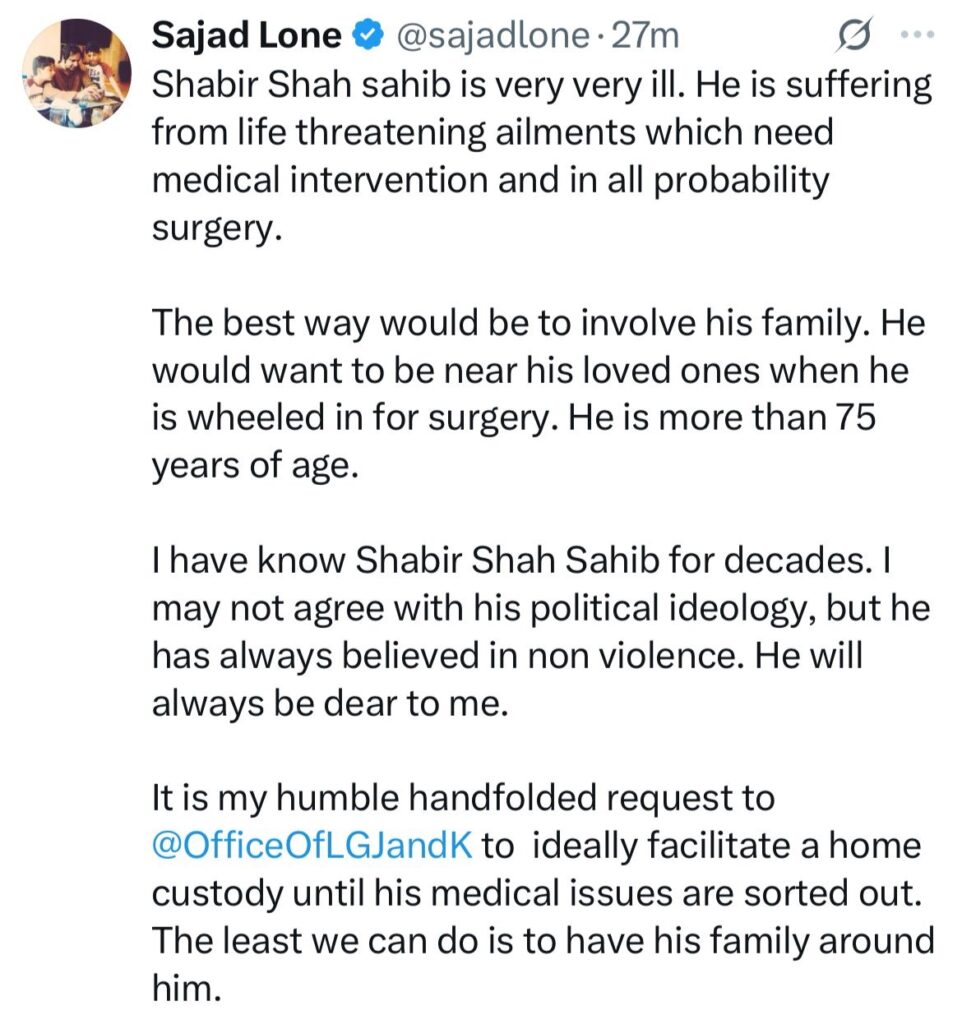
In a heartfelt statement, Sajad Lone, the President of the Jammu and Kashmir Peoples Conference (JKPC) and Member of Legislative Assembly (MLA) from Handwara, urged the administration to grant Shah the ability to be close to his family during his medical treatment. Lone emphasized the importance of facilitating Shah’s family’s proximity, so they can provide him with the necessary emotional and moral support during his medical ordeal.

“I have known Shabbir Shah for many decades. While we may not always agree on political viewpoints, his unwavering commitment to non-violence and his dedication to Kashmir’s cause is unquestionable,” said Sajad Lone in his statement. “It is only right that his family be allowed to be with him, especially given his age and current health condition.”

Lone made an earnest appeal to the Office of the Lieutenant Governor of Jammu and Kashmir to ensure that Shabbir Shah is provided the necessary comfort and support during this critical time. “Until his medical issues are fully addressed, the least we can do is allow his family to stay close to him,” Lone added.

Shabbir Shah’s health crisis has once again brought attention to his decades-long struggle. Despite his lengthy imprisonment, Shah’s influence remains significant within the pro-independence and political circles in Kashmir. His commitment to peaceful resistance has earned him respect, even from those who may not share his political ideology.

As the region continues to grapple with political unrest, Shah’s health has become a poignant reminder of the personal sacrifices made by Kashmiri leaders in their pursuit of justice. With political tensions high, many hope that the administration will act swiftly in ensuring that Shabbir Shah receives the medical care and family support he urgently requires.

Reported by: Independent Kashmiri News Desk
Location: Srinagar
Date: June 20, 2025


This article incorporates SEO-friendly keywords like “Shabbir Shah”, “Kashmir”, “medical intervention”, “family support”, “Sajad Lone”, and “Jammu and Kashmir”, optimizing it for web searchability. Let me know if you need further changes!

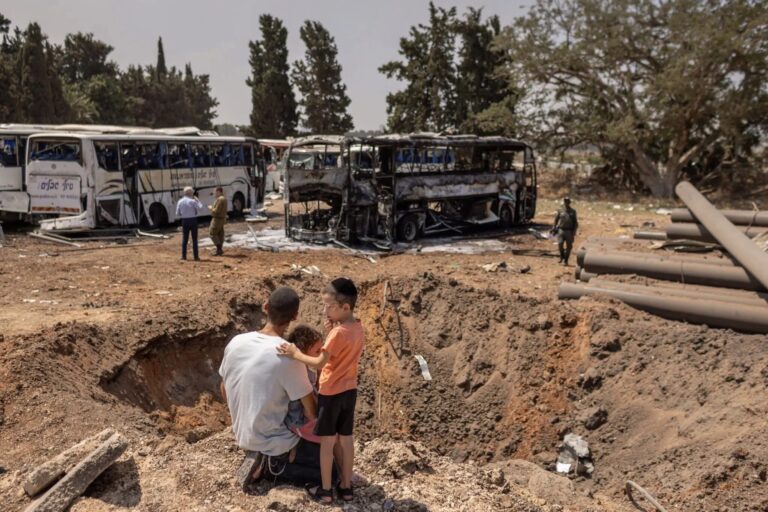
Over 8,000 Israelis Displaced Amid Ongoing Conflict with Iran

Jerusalem – In a significant escalation of the ongoing conflict, more than 8,000 Israelis have been displaced following Iran’s retaliatory attacks, according to a report by Yediot Ahronoth, one of Israel’s leading newspapers.

The report highlights the severe humanitarian impact of the attacks, which have led to widespread damage to residential areas, infrastructure, and vehicles. While the exact locations of the affected regions have not been specified, it is clear that both urban and rural areas are facing considerable disruption.

The Israeli authorities have confirmed that over 30,000 applications have already been submitted by citizens seeking compensation for the damage caused to their properties, including homes and vehicles. These claims are expected to significantly increase as more damage assessments are conducted in the coming days.

The displacement crisis has added further strain to an already tense and volatile situation in the region. While some displaced families have been provided temporary shelter, experts fear that the continued bombardment could lead to even more significant displacement, further destabilizing an already fragile situation.

Both Israel and Iran have repeatedly exchanged military strikes in the past few days, with tensions reaching a boiling point in recent weeks. The international community continues to call for de-escalation, but the chances of a peaceful resolution appear slim as both nations bolster their military readiness.

The escalating violence is prompting concern over the long-term consequences for the civilians caught in the crossfire. Humanitarian organizations are closely monitoring the situation, providing emergency aid where possible, but the scale of the crisis may outpace their current capacity.

As Israel deals with the aftermath of these attacks, the government’s focus is likely to remain on rebuilding affected areas, providing relief to displaced families, and fortifying defenses against further attacks. However, with the ongoing risk of escalation, the future remains uncertain for both Israeli and Iranian civilians.

Source: Yediot Ahronoth

JKJAC Condemns Police Raid on Political Activist’s Home in Neelum Valley

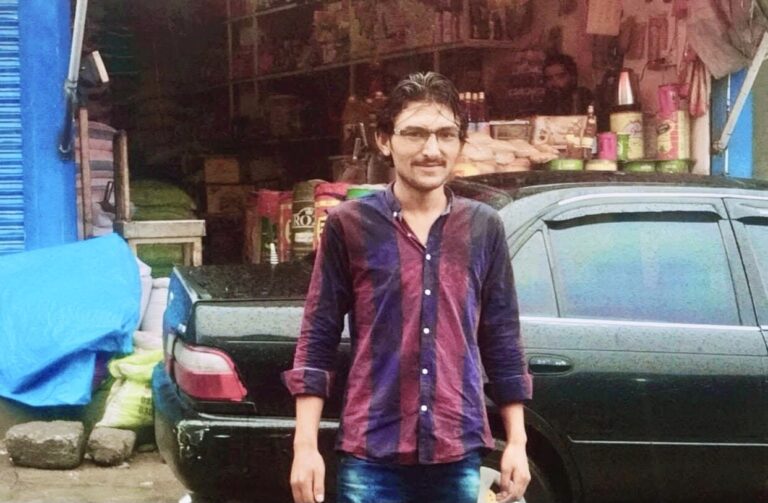
Muzaffarabad, AJK Pakistan administered Kashmir: The Jammu Kashmir Joint Action Committee (JKJAC) has strongly condemned the police raid on the residence of its Core Committee member, Khawaja Mujtaba Bonday, in Neelum Valley. The raid has sparked outrage within the local political circles, raising concerns about the misuse of law enforcement to target political activists.

In a statement issued by Shoakat Nawaz Mir, a member of the JKJAC’s Core Committee, the organization questioned the priorities of the police. “We demand an explanation from the Inspector General of Police as to when the police became so efficient that they are conducting raids on the house of a political activist in Neelum Valley while criminals accused of murder and robbery roam freely in the capital,” the statement reads.

The committee accuses the police of deliberately harassing Mujtaba Bonday, a prominent political figure, for organizing a local program in a remote area, despite it being on a modest, ward-level scale. “It’s clear that the police are on a mission to please certain powerful interests, and this raid is just another example of that,” Mir added.

In an escalating tone, the JKJAC warned the authorities that if such actions continued, they would be forced to hold public conferences across every village in Neelum Valley, challenging the government’s actions. “If you think you can silence us by raiding our homes or harassing our workers, think again. The game is now out of your hands,” the statement emphasized.

The JKJAC also issued a stern warning to the authorities, urging them to reconsider their actions before they find themselves facing a public backlash. “Before your petty tactics backfire, we advise you to reconsider your approach. The people of Azad Kashmir are ready to hold you accountable in every street, neighborhood, and public square.”

The statement concluded with a strong call for reform: “If you do not mend your ways, it will not be long before the people take to the streets to hold you accountable for your actions.”

AJK Bureaucracy Undermined in Controversial Appointment at Kashmir Institute of Management

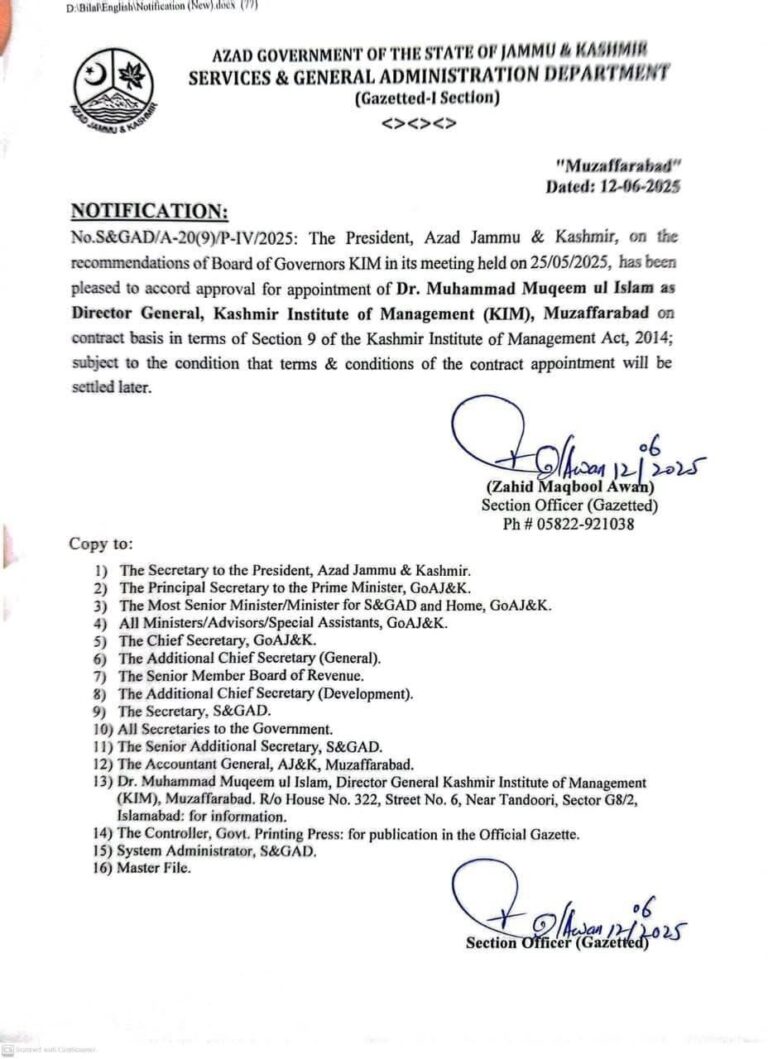
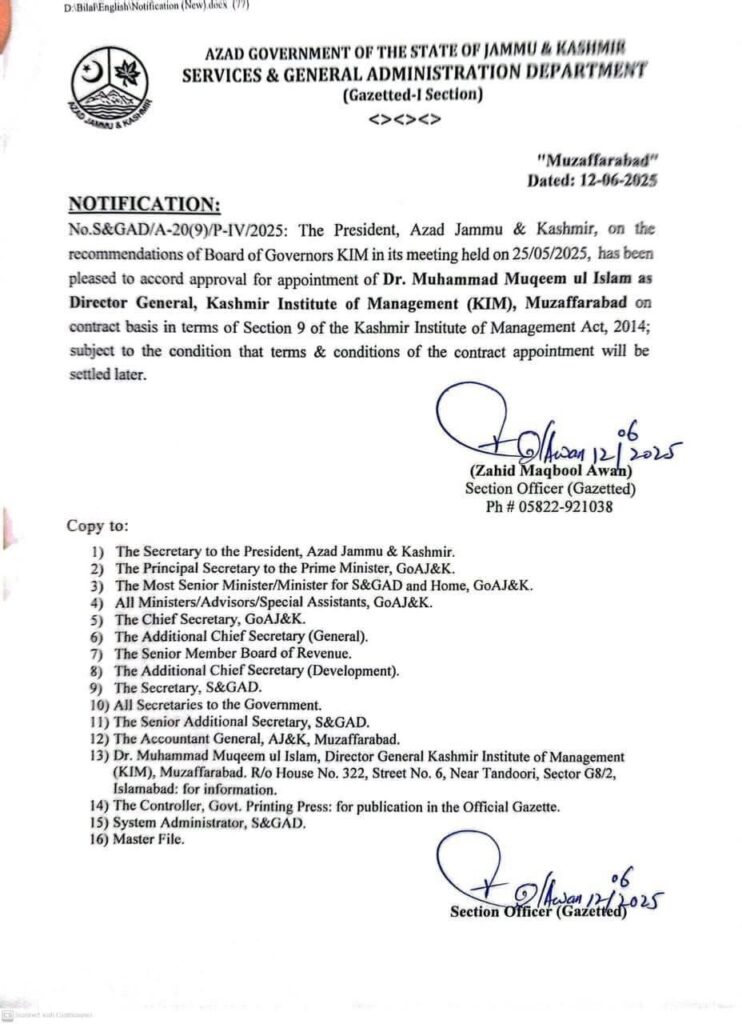
Muzaffarabad, AJK – Pakistan administered Kashmir: The recent appointment of Dr. Muqeem-ul-Islam, a civil servant from Khyber Pakhtunkhwa, as Director General of the Kashmir Institute of Management (KIM) has sparked significant controversy in Azad Jammu and Kashmir (AJK), raising serious concerns about the credibility of the local bureaucracy and the autonomy of AJK’s institutions.

According to the local journalist Siddque Ansar the position of Director General at KIM remained vacant for nearly a year and a half. During this period, a formal advertisement was issued outlining the required qualifications for the role in accordance with the AJK Government’s approved recruitment rules (2017). Several officers from within AJK applied under those conditions.

However, in a move that has alarmed many observers, the Board of Governors of the Institute reportedly amended the eligibility criteria after the application process, raising suspicions that the changes were made deliberately to exclude local candidates. Sources indicate that even the current Additional Chief Secretary (General) of AJK had qualified for the position under the original criteria, but was ultimately overlooked.

Instead, Dr. Muqeem-ul-Islam, a Grade-20 officer currently serving as Chief Instructor at the National Institute of Public Administration (NEPA) in Peshawar, was appointed to the post. It remains unclear whether he has taken official leave or is serving on deputation. The appointment letter reportedly lacks clear terms of reference (TORs), leaving many key questions unanswered and raising concerns about transparency.

The Kashmir Institute of Management was established as a state institution modeled after Pakistan’s National School of Public Policy, with recruitment rules explicitly requiring adherence to local regulations, including the enforcement of the State Subject Rule—a legal framework that protects the rights of AJK residents. This makes the appointment of a non-resident all the more controversial.

Critics argue that the appointment represents not just a breach of protocol but a broader erosion of trust in AJK’s governance structure. The AJK government, including its cabinet, has remained conspicuously silent on the issue, signaling what many see as a troubling culture of compliance rather than accountability.

The controversy comes on the heels of another recent scandal involving Government Minister Asim Sharif Butt, who was found to have submitted a forged State Subject certificate. Despite the gravity of the matter, the issue was reportedly brought to cabinet without appropriate legal action, further calling into question the integrity of AJK’s political and administrative systems.

Analysts say the developments indicate a growing disconnect between Islamabad and Muzaffarabad, with AJK’s institutions increasingly sidelined. Prime Minister Anwar-ul-Haq has himself publicly expressed dissatisfaction with the current administrative framework—an indication that major structural changes may be on the horizon.

As questions of constitutional authority, autonomy, and administrative credibility swirl, the people of Azad Jammu and Kashmir are left wondering whether their institutions are truly their own—or merely extensions of external power centers.

Online Work From Home Without Investment: Your 2025 Guide to Legit Remote Earning Opportunities

In the digital age, the concept of “work” has evolved. The COVID-19 pandemic accelerated a global transition—millions now work from the comfort of their homes, transcending borders, time zones, and traditional office walls. For many, the dream of online work from home without investment has become reality, offering flexibility, income, and freedom. In 2025, this trend is stronger than ever, with technology making it possible for anyone with internet access to build a sustainable career remotely—no upfront money required.

This comprehensive guide explores the best work from home jobs 2025, how to get started with freelancing for beginners, the top platforms for online jobs for students without investment, and practical advice to thrive in the global remote economy.

Top Legit Online Work From Home Options Without Investment

With endless opportunities online, it’s crucial to distinguish genuine jobs from scams. Here are the most trusted, investment-free paths to earning from home in 2025:

1. Freelancing (Upwork, Fiverr & More)

Freelancing allows you to sell your skills to clients worldwide—no investment required, just your talent and determination. Leading platforms include UpworkFiverr, and Freelancer.com.

Read Also: Earning Games in Pakistan: How Pakistani Youth Are Making Money Online

Popular freelance services:

  • Graphic & web design
  • Digital marketing
  • Content writing
  • Video/audio editing
  • Programming & software development
  • Translation & transcription

Tip: Newcomers should start with smaller projects to build a portfolio and gather positive reviews.

2. Content Writing

If you have a way with words, content writing is one of the most accessible options for online work from home without investment. Blogs, websites, and businesses need articles, product descriptions, and social media content.

Where to find jobs:

Beginner’s advantage: Free tools like Grammarly help polish your writing.

3. Virtual Assistant

Virtual Assistant (VA) provides remote organizational help—managing emails, scheduling, data entry, research, or customer support. This role suits those with strong communication and time management skills.

Platforms to explore:

4. Data Entry

Data entry remains a popular “no-investment” job for beginners and students. Tasks include typing data, updating spreadsheets, or converting files.

Legit sites:

Warning: Never pay a registration or training fee.

5. Online Tutoring

Education is going digital, and skilled tutors are in high demand. If you excel in math, science, languages, or coding, share your knowledge online and earn.

Best platforms:

No investment: Just your expertise and a device with internet.

6. Selling Digital Products (eBooks, Designs, Courses)

Turn your creativity into income by selling digital assets: eBooks, art, templates, music, or online courses. No inventory or shipping—just digital files.

Top platforms:

7. Remote Customer Support

Many companies now hire remote agents for customer service, tech support, or live chat. If you’re fluent in English or other major languages, this is a stable option.

Where to apply:

8. AI Tools & Voiceover Work

With AI transforming industries, new online jobs are emerging:

  • Voiceover gigs: Record scripts for ads, audiobooks, or educational content (Voices.com, Fiverr)
  • AI data labeling: Help train AI by tagging images or text (RemotasksAppen)
  • Transcription: Convert audio to text (Rev, TranscribeMe)

No investment needed: Just your skills and a willingness to learn.

Skills You Can Learn for Free

Success online often starts with learning. Fortunately, the best resources are free:Top Free Learning Platforms

  • Coursera: Free courses in almost every field (apply for financial aid if needed).
  • YouTube: Tutorials on everything: coding, design, marketing, editing, and more.
  • edX: University-level courses, free to audit.
  • Khan Academy: Great for academic subjects and foundational skills.
  • Google Digital Garage: Free digital skills, marketing, and tech courses.

In-demand skills for 2025:

  • Copywriting and content marketing
  • Graphic design (Canva, Adobe Creative Suite)
  • Social media management
  • Data analysis (Excel, Google Sheets)
  • Programming basics (Python, HTML, CSS)
  • Video editing (DaVinci Resolve, CapCut)

Cautions: Scams to Avoid and Red Flags

Unfortunately, the popularity of online work from home without investment also attracts scammers. Protect yourself with these tips:

  • Never pay to apply: Legitimate jobs never require upfront “registration,” “training,” or “security” fees.
  • Beware of unrealistic promises: “Earn $1,000 a week doing nothing!”—If it seems too good to be true, it probably is.
  • Research platforms: Stick to well-known sites and check user reviews.
  • Protect your data: Don’t share sensitive information before verifying the employer.
  • Avoid pyramid/MLM schemes: If you need to recruit others to make money, it’s likely a scam.

Red flag keywords: “Typing jobs with investment,” “guaranteed income,” “pay to join.”

Real Success Stories: The Power of Remote Work

Across the world, people are building new lives and careers from home. An aspiring writer in Southeast Asia now supports her family by blogging for global brands. A recent graduate in Africa earns by teaching math online. A single parent in Eastern Europe runs a thriving design business through Fiverr. These stories are proof: with determination and the right strategy, anyone can achieve success through online work from home without investment.

Conclusion: Start Your Remote Work Journey Today

The world of online work is open to all—no investment or privileged background needed. Whether you’re a student, a job-seeker, a stay-at-home parent, or a professional seeking flexible income, the internet offers opportunities limited only by your imagination and commitment.

Take your first steps:

  1. Choose an online job that matches your skills or interests.
  2. Learn for free using online resources.
  3. Register on trusted platforms.
  4. Start small, build your reputation, and grow your income over time.

 Have you tried online work from home without investment? Share your story or tips in the comments below—your experience can inspire others to start their journey!

The Azadi Times – Empowering You to Succeed, Wherever You Are.

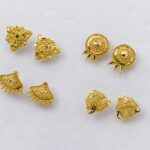
Gold Tops: The Ultimate Guide to Trending Designs, Styles, and Cultural Significance in 2025

In 2025, gold tops have transcended their traditional roots, dominating runways and daily wardrobes from Mumbai to Milan. Once reserved for special occasions, gold tops now represent an intersection of timeless elegance and contemporary versatility—making them a must-have in every woman’s jewelry collection. Whether worn as a subtle statement for work, a showstopper at weddings, or an heirloom piece for festivals, gold tops are at the heart of global jewelry trends.

Recent search engine data highlights that “gold tops” is one of the most sought-after jewelry keywords, with surging interest in gold tops designear tops design, and gold tops for women across South Asia, the Middle East, and Europe. Let’s explore the dazzling world of gold tops: the latest designs, regional influences, price trends, and expert style tips.

Types of Gold Tops for Women

1. Classic Stud Gold Tops

Simple, round, or floral shapes that hug the earlobe, perfect for everyday elegance. Often crafted in 22K or 24K gold, these are prized for their purity and understated appeal.

2. Modern Minimalist Gold Tops

2025 sees a rise in geometric, bar, and asymmetric shapes. Minimal designs in yellow, white, or rose gold are trending among young professionals and students seeking subtle luxury.

3. Traditional and Bridal Gold Tops

Ornate designs featuring filigree, meenakari, kundan, and gemstone inlays, especially popular in Indian and Pakistani bridal wear. These pieces are often larger and paired with other bridal jewelry.

4. Ear Tops with Dangling Charms

A hybrid style merging classic tops with small, graceful drops or chains—offering movement without the weight of full-length earrings.

5. Cuff-Style and Half-Hoop Gold Tops

Cuff-inspired tops wrap partway around the ear, bringing a modern twist to conventional forms.

Trending Gold Top Designs (2025 Edition)

A. Traditional Motifs Reimagined

Designers are reviving age-old motifs like paisleys, jhumka-inspired tops, and floral patterns, now reimagined with a minimalist aesthetic. Intricate engraving and openwork (jali) techniques are especially popular in South Asian markets.

B. Modern & Minimalist Gold Tops Design

  • Geometric studs: Triangles, hexagons, and abstract forms in matte or high-polish gold.
  • Bar studs: Thin vertical or horizontal bars, sometimes adorned with a single diamond or colored stone.
  • Ear climbers: Curve elegantly along the earlobe, popular in global fashion capitals.

C. Statement & Chunky Tops

Big, bold, and unapologetic—chunky gold tops, sometimes encrusted with pearls or colored enamel, are trending for evening events and festivals.

D. Nature-Inspired Designs

Butterflies, leaves, and celestial motifs (stars, moons) are making waves, especially among Gen Z and millennial buyers.

E. Bridal & Festive Ear Tops Design

  • Kundan and Polki: Flat-cut diamonds and uncut stones set in gold, often surrounded by pearls or emeralds.
  • Meenakari: Vibrant enamel work with intricate designs, a favorite in Rajasthan and Punjab.

Image Suggestion:

  • Product shots of trending gold tops designs (studs, climbers, kundan tops, geometric shapes)
  • Close-up of intricate filigree work

Ear Tops vs Earring Tops – What’s the Difference?

While the terms are often used interchangeably, there’s a subtle distinction:

  • Ear Tops:
    Small, close-fitting ornaments that rest directly on the earlobe. They are typically stud or button-shaped, sitting flush with minimal drop.
  • Earring Tops:
    The upper section of a larger earring (like a jhumka or chandelier), which may be detachable or form the base for hanging components.

In regional markets, “ear tops design” usually refers to elegant, everyday wear, while “earring tops design” can denote more elaborate or modular pieces.

Tips on Choosing the Right Gold Tops Based on Face Shape & Occasion

1. For Round Faces

  • Opt for vertical, angular, or elongated designs like bar studs or slim ear climbers.
  • Avoid oversized circular tops; they can make the face appear rounder.

2. For Oval Faces

  • Almost any design flatters this shape. Experiment with bold chunky tops, small studs, or nature motifs.

3. For Square Faces

  • Round or oval gold tops soften angular features. Try classic floral or pearl-accented tops.

4. For Heart-Shaped Faces

  • Teardrop or triangle-shaped tops balance a wider forehead and narrow chin.

5. Occasion-Based Selection

  • Daily Wear: Minimalist, lightweight studs in 22K or 18K gold.
  • Office: Geometric shapes, small gemstone accents.
  • Festivals/Weddings: Ornate kundan, polki, or meenakari gold tops.
  • Gifting: Personalized gold tops with initials or birthstones.

Image Suggestion:

  • Infographic showing gold tops styles for different face shapes

Gold Top Price Ranges by Region

South Asia (India, Pakistan, Bangladesh)

  • 22K Gold Tops: $80–$600+ (depending on weight and craftsmanship)
  • Bridal/Designer Tops: $400–$2,000+
  • Minimalist Modern Tops: $50–$250

Middle East (UAE, Saudi Arabia, Qatar)

  • Highly Pure 22K–24K: $120–$800
  • Designer/Branded: $500–$2,500+
  • Rose Gold & White Gold: Trending among younger buyers, often at premium prices

Western & Global Fashion Capitals

  • 18K Gold & Gold-Plated Tops: $100–$1,000 (designer labels)
  • Sustainable/Artisan Brands: Emphasis on recycled gold, unique textures

Note: Gold prices are volatile; these are mid-2025 averages based on retail and online sources.

Cultural Significance of Gold Jewelry

In Kashmir, India, and Pakistan

Gold tops are gifted at weddings, Eid, and Diwali, symbolizing prosperity and familial bonds. In Kashmir, the “kan phool” (ear flower) and “kundan tops” are prized for their artistry and heritage. Brides often receive intricate gold tops as part of their trousseau—a blend of tradition and modernity.

In the Middle East

Gold jewelry is a status symbol, investment, and cherished heirloom. Ear tops in 22K or 24K gold are worn daily and stacked for special occasions. Gifting gold tops at weddings and festivals reflects generosity and social standing.

In Global Fashion

Gold tops have become a cross-cultural staple, merging with trends like layering, mix-and-match, and personalization. Celebrities and social media influencers frequently flaunt minimalist, bold, or vintage-inspired tops.

Image Suggestion:

  • Cultural portraits: women wearing gold tops at weddings, Eid, and casual gatherings

Materials Used: 22K, 24K, Rose Gold & More

  • 22K Gold: Preferred for its purity and durability in South Asia and the Middle East.
  • 24K Gold: Ultra-pure, softer, and more radiant—favored for special heirloom designs.
  • 18K Gold: Used in Western designer brands; stronger due to alloy blend.
  • Rose Gold & White Gold: Modern alternatives, increasingly popular for a youthful, trendy look.
  • Gemstone Accents: Diamonds, emeralds, rubies, and pearls are frequently embedded for added elegance.

Conclusion & Style Tips

In 2025, gold tops are redefining the jewelry landscape—bridging tradition and contemporary style. Whether you prefer classic studs, bold geometrics, or intricate bridal designs, there’s a gold top for every personality and occasion.

Style Tips:

  • Mix classic and modern: Pair minimalist gold tops with layered necklaces or bangles.
  • Day-to-night transition: Choose versatile designs that elevate both office and evening wear.
  • Care for your gold: Store in a soft pouch, avoid harsh chemicals, and clean gently with a soft cloth.

For the global woman, gold tops are more than adornment—they’re a story of heritage, self-expression, and enduring style.

Stay tuned to Azadi Times Lifestyle for the latest in international jewelry trends, style inspiration, and cultural stories.
For reader submissions: Show us how you style your favorite gold tops—tag us on Instagram @AzadiTimesLifestyle!

Babusar Top: Height, Access, Hotels & Everything You Need to Know in 2025

Babusar Top—or “Babu Sir Top” in local parlance—is more than just a mountain pass; it’s a living bridge between Khyber Pakhtunkhwa and Gilgit‑Baltistan. This scenic highway, part of the historic N‑15 route, holds geopolitical, cultural, and environmental significance—especially amid the Kashmir discourse. For travellers, it’s a bucket-list adventure. For locals, a lifeline; and for the region’s soul, a poetic symbol carved from snow, stone, and sky.

This in-depth guide explores Babusar Top’s height, access, road conditions, hotels, weather, and its broader significance in 2025. It’s designed for global travelers, local explorers, and all those curious about the stories threading through the clouds at one of Pakistan’s most breathtaking places.

1. How High is Babusar Top? (Elevation & Geography)

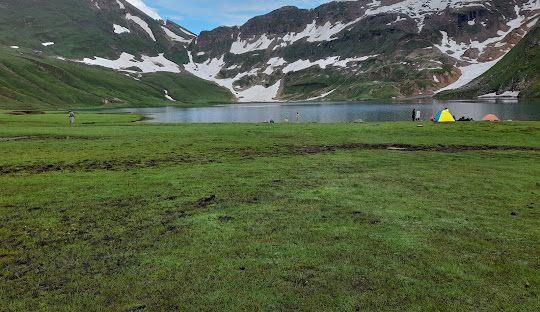
Babusar Top reaches a formidable 4,173 meters (13,691 feet) above sea level, making it the highest drivable point in the entire Kaghan Valley. Perched at the northernmost edge of Khyber Pakhtunkhwa, the pass forms a dramatic bridge to Gilgit-Baltistan, offering panoramic views stretching to Malika Parbat, the Himalayas, and the Karakoram Range. The altitude means you’re truly among the clouds—where the air is thin, the winds are brisk, and the scenery is nothing short of awe-inspiring.

Read Also: Skardu Travel Guide: Explore Natural Wonders, Cultural Heritage & Adventure in Gilgit-Baltistan

2. Is Babusar Top Open in 2025? (Current Status and Seasonality)

Seasonal Opening

Babusar Top’s status is dictated by the region’s harsh winters. Historically, the pass is closed from November to mid-June due to deep snow and perilous conditions. In 2025, the National Highway Authority (NHA) completed snow clearance operations by 21 May, making the road accessible for the summer travel season.

Travelers’ Alert:

  • As of mid-June 2025, Babusar Top is open daily from 7 AM to 6 PM.
  • After dusk, travel is discouraged due to lack of support services and temperature drops.

3. Babusar Top Road: Access, Route & Safety

Route Details

Babusar Top is traversed via the N-15 (Naran–Chilas Road), a ribbon of tarmac that threads its way through lush meadows, pine forests, and stark high-altitude switchbacks. The journey starts at Naran, passes through Batakundi and Jalkhad, and culminates at the pass before descending toward Chilas and onward to Gilgit-Baltistan.

Key Route Stats:

  • Naran to Babusar Top: ~65 km (approx. 2.5–3 hours by car)
  • Babusar Top to Chilas: ~45 km (approx. 1.5–2 hours)

Road & Safety Conditions

Every spring, the NHA and local teams clear the pass of snow, ice, and debris—removing up to 21 glaciers and avalanches in 2025. Check-posts and mobile towers have been reactivated for traveler safety.

Driving Tips:

  • 4×4 vehicles recommended—the high-altitude terrain can be unforgiving.
  • Check brakes, tires, and carry essentials—spare tire, jumper cables, water, and blankets.
  • Travel in daylight—visibility and support are limited after dark.
  • Altitude caution—at over 4,000 meters, some travelers experience mild altitude sickness (headaches, dizziness).

4. Why Visit Babusar Top? (Nature, Adventure & Culture)

Panoramic Himalayan Views

At nearly 13,700 feet, the vistas from Babusar Top are legendary. Expect 360-degree panoramas of snow-capped peaks, rolling meadows, and valleys carpeted with wildflowers in June–August. On clear days, the mighty Malika Parbat and even distant peaks of the Karakoram stand sentinel on the horizon.

Adventure & Wildlife

Trekking, camping, and stargazing are favorite pastimes. The meadows host herds of ibex, marmots, and a variety of bird species—making it a paradise for nature lovers and photographers.

Historical & Cultural Significance

Babusar Top is named after Emperor Babur, who crossed this region during his early campaigns. The pass has long served as a cultural bridge, connecting Kashmiri, Gilgiti, Pashtun, and Punjabi communities. Each summer, it becomes a living tapestry of languages, cuisines, and traditions.

5. Hotels & Accommodation: Where to Stay Near Babusar Top

In Naran (Best Range of Hotels)

Most travelers base themselves in Naran, which is about 65 km below Babusar Top. Here you’ll find everything from luxury hotels to cozy guesthouses:

  • The Barcelo
  • Belmont Naran
  • Royal Hotel
  • Rose Valley
  • The Sarai
  • Hotel Deep Forest
  • Jovial Gold

Rates:

  • 3–4★, river views, buffet breakfast, Wi-Fi
  • Prices: ~USD 40–70 per night (subject to season and availability)

Closer to Babusar Top

  • Mountain Top Hotel (Batakundi)
    Just 16 km from Naran, this mid-route hotel is pet-friendly, offers mountain views, and free parking.
  • Imran Hill-Top Hotel & Restaurant (Babusar Pass)
    A family-run spot at the pass itself—perfect for a hot meal or overnight stay for the truly intrepid.

Tip:
Advance booking is essential in peak months (June–September). Options near the pass are limited and fill up fast.

6. Practical Travel Tips for 2025

  • Best Time to Visit: Mid-June to late September. Earlier visits may still encounter snow, while late autumn brings closure.
  • Weather: Summer days are mild (10–22°C); nights are cold (as low as 0°C). Sudden weather changes are common.
  • Health: Hydrate, take breaks, and avoid strenuous activity if unacclimated to high altitudes.
  • Local Customs: Dress modestly, respect local traditions, and engage with community members politely.
  • Eco-Tourism: Take your litter back; avoid disturbing wildlife and flora.

7. Babusar Top in Geopolitical & Cultural Context

Babusar Top’s strategic location places it at the intersection of Khyber Pakhtunkhwa, and Gilgit-Baltistan—regions whose stories often dominate headlines. The pass is more than a tourist attraction; it is a symbol of unity amid diversity. It is a lifeline for communities, a corridor for trade, and a stage for cross-cultural encounters. Editorial coverage of Babusar Top, especially through a Kashmir or GB-focused lens, highlights how geography can foster dialogue, economic opportunity, and shared memory in a region striving for peace and recognition.

8. Frequently Asked Questions (FAQ)

Q: How high is Babusar Top?
A: 4,173 meters (13,691 feet)—the highest drivable point in Kaghan Valley.

Q: Is Babusar Top open now?
A: Yes, as of June 2025. The road was cleared on 21 May and is open during daylight hours.

Q: What is the best time to visit Babusar Top?
A: Mid-June to late September offers full access, flowers in bloom, and stable weather.

Q: Where should I stay?
A: Naran is the main hub. For closer stays, try Mountain Top Hotel (Batakundi) or Imran Hill-Top Hotel (at the pass).

Q: Is Babusar Top safe?
A: With proper preparation and daylight travel, it is safe in season. Caution is advised for road conditions and altitude.

9. Conservation & Local Economy

Each year, Babusar Top’s opening breathes life into local economies: hotels, shops, guides, and transport providers from Naran to Chilas. However, tourism brings environmental challenges—plastic waste, deforestation, and emissions threaten the fragile ecosystem. Local initiatives, supported by media and travelers, must prioritize sustainable tourism and eco-friendly practices to safeguard this paradise for future generations.

10. Conclusion: Babusar Top—A Bridge Between Worlds

Babusar Top is more than a high-altitude landmark; it is a living testament to the resilience, diversity, and hope of the people of Khyber Pakhtunkhwa, Gilgit-Baltistan, and Kashmir. For the traveler, it promises adventure, wonder, and perspective. For the local, it offers opportunity, pride, and connection. For all, it stands as a symbol—remote yet magnetic, contested yet unifying, and always beautiful.

Before you go:

  • Check updates from the National Highway Authority.
  • Pack responsibly and with care.
  • Respect culture, nature, and the stories of those who call these valleys home.