Monday, March 30, 2026
15.1 C
Srinagar
Home Blog Page 69

Deadly Bomb Blast in Quetta Kills Two, Injures Seven; Militants Attack Levies Station in Mastung

0

Quetta, Pakistan — At least two people were killed and seven others injured in a bomb blast near Quetta, the capital of Pakistan’s Balochistan province, while in a separate incident, armed militants attacked and torched a Levies station in the nearby Mastung district.

According to police, the bombing occurred in the Srah Ghorgai Kali Mangla area, roughly 30 kilometers from Quetta in the jurisdiction of Hana Police Station. The victims were traveling in a vehicle when it was targeted with an improvised explosive device (IED) placed along the roadside.

Tragically, the explosion claimed the lives of Abdul Salam Bazai and Abdul Nafi Bazai, both sons of a prominent tribal leader, Sardar Abdullah Bazai. The injured were transported to Civil Hospital Quetta for medical treatment.

Authorities say the victims were en route to inspect a coal mine they owned in a mountainous region after receiving reports of an attack on the site by unidentified armed men, who allegedly set fire to mining machinery. Investigators believe the roadside bomb may have been planted to deliberately target them.

Read Also: Who is Zarnosh Naseem? A Closer Look at the Man at the Centre of the Hussain Kot Police Operation

Police have launched an investigation and suspect the involvement of a banned militant organization, although no group has yet claimed responsibility.

In a separate but seemingly coordinated act of violence, unidentified militants attacked the Levies Station in the Wali Khan area of Mastung district. According to Levies Control in Mastung, the assailants set fire to the police station, destroying records, infrastructure, and an official vehicle.

Frontier Corps (FC) sources confirmed that security forces were dispatched to the site immediately after the attack, but the militants fled before their arrival, leaving behind some of their weapons.

Balochistan, which borders both Afghanistan and Iran, has seen a resurgence in militant violence in recent years, with separatist and Islamist groups often targeting security forces and infrastructure. Analysts have warned that groups such as the Baloch Liberation Army (BLA) pose a growing security threat, comparable to the Tehrik-i-Taliban Pakistan (TTP), in terms of their operational reach and ambition.

The Pakistani government has yet to issue an official statement on these incidents.

Unexpected Snowfall Blankets Warwan Valley in Kishtwar District

    0

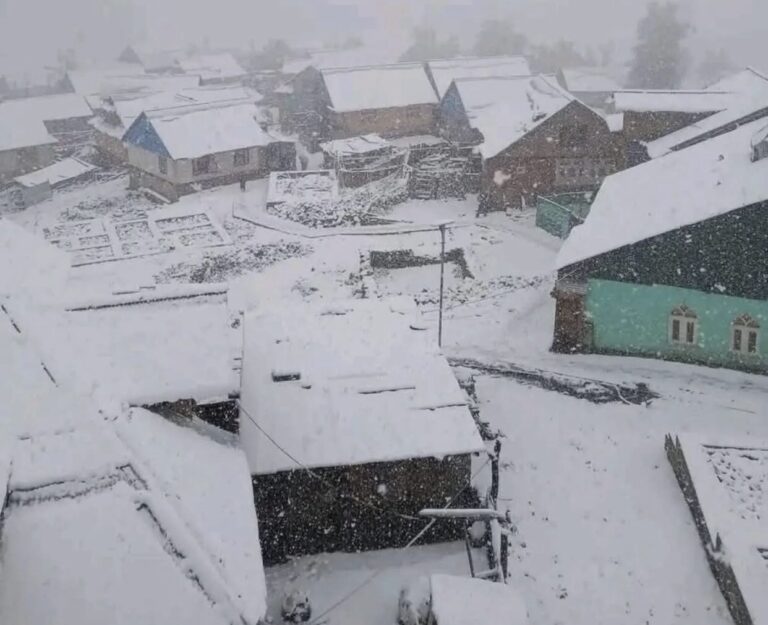
    Kishtwar, Jammu and Kashmir (Indian administered Kashmir) – In a rare meteorological event, Sukhnai village in Warwan Valley, Kishtwar district, experienced fresh snowfall today, with reports indicating over 3 inches of accumulation. The surrounding villages and hills were also covered in a white blanket as snowfall continued through the morning hours.

    Unseasonal Weather Surprises Locals

    Snowfall at this time of year is unusual for the region, catching residents and authorities off guard. While higher altitudes in Jammu and Kashmir often see snow during winter months, lower-lying areas like Warwan Valley typically do not receive significant snowfall in the current season.

    Local officials have confirmed the weather anomaly and are monitoring the situation, particularly its impact on transportation and daily life. No major disruptions have been reported so far, but residents have been advised to exercise caution while traveling.

    Tourists and Photographers Flock to Capture the Scenic Views

    Despite the unexpected weather, the snowfall has transformed the valley into a picturesque landscape, attracting photographers and nature enthusiasts. Social media has been flooded with stunning images of snow-covered meadows and misty hills, with many calling it a “winter wonderland in an unlikely season.”

    Climate Experts Weigh In

    Meteorologists suggest that this unusual snowfall could be linked to shifting weather patterns in the Himalayan region. While isolated incidents do occur, consistent changes in seasonal snowfall trends may indicate broader climatic shifts. Further analysis is underway to determine whether this event is part of a larger trend.

    Precautionary Measures Advised

    Authorities have urged locals to stay updated on weather forecasts and prepare for possible road blockages if snowfall continues. Farmers have also been alerted to protect early-season crops from potential frost damage.

    As the region adapts to this unexpected winter spell, all eyes remain on the skies to see whether the snowfall will persist or give way to more typical seasonal weather.

    — Reporting by The Azadi Times, with inputs from local sources.

    (This is a developing story. Updates will follow as more information becomes available.)

    Gilgit Baltistan: Shocking Incident of Harassment and Violence Against Female Nurse at MCH Center in Goharabad

    Goharabad, Diamer, GB, Pakistan administrated Kashmir – A deeply disturbing incident of sexual harassment and physical violence against a female nurse has been reported at the Maternal and Child Health (MCH) Center in Goharabad, Diamer. The victim, a Lady Health Visitor (LHV) originally from Ghizer District, was allegedly harassed and assaulted by an individual who fled the scene after the incident.

    Local authorities have registered an FIR against the accused, but no arrests have been made so far. The case has raised serious concerns about the effectiveness of law enforcement and the protection of women’s dignity in the region.

    Outrage and Calls for Justice

    The incident has sparked widespread condemnation from civil society and human rights activists, who are demanding immediate and strict legal action against the perpetrator. Such acts of violence are unacceptable in any civilized society and highlight the urgent need for stronger safeguards for women, particularly those working in public service roles.

    Advocates stress that there should be no leniency or compromise in cases involving gender-based violence. They urge authorities to ensure exemplary punishment for the accused to deter future crimes and deliver justice to the victim.

    A Broader Challenge for Women’s Safety

    This case underscores the persistent threats faced by women in professional settings, especially in healthcare, where female workers often encounter harassment and abuse. Activists are calling for systemic reforms, including better security measures at workplaces and stricter enforcement of anti-harassment laws.

    The local community and human rights organizations are closely monitoring the investigation, pressing for transparency and accountability. International observers have also been urged to take note of the incident, as it reflects broader challenges in gender equality and women’s safety in the region.

    Demand for Immediate Action

    As public pressure mounts, authorities must act swiftly to apprehend the suspect and ensure a fair trial. The case serves as a critical test for Pakistan’s justice system and its commitment to protecting women’s rights.

    For now, the victim’s ordeal highlights the urgent need for societal change, legal reforms, and stronger protections for women against violence and harassment. The world is watching to see whether justice will be served.

    — Reporting by The Azadi Times, with inputs from local sources.

    (This is a developing story. Updates will follow as more information becomes available.)

    How to Make Coffee Without a Coffee Maker: The Ultimate Guide (2025)

    Coffee is a beloved beverage worldwide, but what happens when you crave a fresh cup and you don’t have a coffee maker on hand? Whether you’re traveling, your machine is broken, or you just want to try something new, knowing how to make coffee without a coffee maker is a useful skill for every coffee lover. This ultimate guide will show you several easy, effective, and delicious ways to brew coffee without any fancy equipment—just using what you already have at home.

    Why Make Coffee Without a Coffee Maker?

    There are countless reasons you may need to brew coffee without a coffee machine:

    • Travel: Hotel rooms, camping, or staying somewhere with no coffee maker.
    • Emergency: Your machine is broken or there’s a power outage.
    • Minimalism: You prefer less clutter and fewer appliances.
    • Experimentation: You want to experience traditional, hands-on brewing.
    • Eco-Friendly: Reducing reliance on electricity and disposable filters.

    No matter the reason, you can still enjoy a fantastic cup of coffee with just a few household items.

    Essential Tools and Ingredients

    Before we explore the brewing methods, here’s what you’ll typically need:

    Ingredients

    • Fresh coffee grounds (medium or coarse grind preferred)
    • Clean water (filtered for best taste)
    • Optional: Sugar, milk, cream, spices

    Tools

    • Saucepan or small pot
    • Mug or heatproof cup
    • Spoon
    • Fine mesh strainer, cheesecloth, or sieve (optional)
    • Paper towel, handkerchief, or clean sock (for improvising filters)
    • Kettle (for boiling water, optional)

    Pro Tip: The fresher the coffee grounds, the better your cup will taste!

    Method 1: The Saucepan or Pot Method

    This is the simplest and most versatile way to make coffee without a coffee maker. All you need is a pot or saucepan.

    Step-by-Step Instructions

    1. Add Water and Coffee Grounds
      • Pour the desired amount of water into a saucepan.
      • Add 1 to 2 tablespoons of coffee grounds per cup of water.
    2. Heat the Mixture
      • Place the saucepan on the stove over medium-high heat.
      • Stir gently to mix the grounds with the water.
    3. Bring to a Boil
      • As the water heats, keep an eye on it so it doesn’t boil over.
      • Once it reaches a gentle boil, let it simmer for 2–3 minutes for stronger flavor.
    4. Let Grounds Settle
      • Remove from heat and let the coffee sit for 2–3 minutes.
      • This allows the grounds to settle at the bottom.
    5. Pour and Enjoy
      • Slowly pour the coffee into your mug, using a ladle or pouring gently to avoid transferring grounds.
      • For a cleaner cup, use a fine mesh strainer or pour through a paper towel.

    Pros:

    • Simple, quick, and effective
    • No special equipment required

    Cons:

    • May have a few floating grounds if not strained

    Method 2: The Coffee Bag Method

    No coffee maker? No problem. Make a DIY coffee bag—just like a tea bag!

    What You Need

    • Fresh coffee grounds
    • Coffee filter, cheesecloth, or paper towel
    • String or staple (optional)

    How to Make It

    1. Create Your Bag
      • Place 1–2 tablespoons of coffee grounds in the center of a filter or cloth.
      • Gather the edges and tie tightly with string, or fold and staple to make a pouch.
    2. Steep Like Tea
      • Place the coffee bag in your mug.
      • Pour boiling water over the bag.
      • Let it steep for 3–5 minutes, or longer for stronger coffee.
    3. Remove and Enjoy
      • Remove the bag, add your favorite extras, and enjoy your fresh brew!

    This method is perfect for single servings and busy mornings.

    Method 3: The Strainer or Sieve Method

    If you have a fine mesh strainer or sieve, you can easily make coffee similar to a French press.

    Instructions

    1. Boil Water
      • Heat water to just below boiling.
    2. Mix Coffee and Water
      • Place coffee grounds in a bowl or heatproof container.
      • Pour hot water over the grounds (1–2 tbsp per cup).
    3. Steep and Stir
      • Stir, then let the mixture steep for 3–4 minutes.
    4. Strain
      • Pour the coffee through a fine mesh strainer or sieve into your mug.

    Tip: Cheesecloth or a clean handkerchief can also work as a filter.

    Method 4: The Cowboy Coffee Method

    Cowboy coffee is a classic outdoor brewing method, ideal for camping or when you want that old-school experience.

    How to Make Cowboy Coffee

    1. Add Coffee and Water to a Pot
      • Use 2 tablespoons of coarse grounds per cup of cold water.
    2. Bring to a Boil
      • Place the pot over open fire or stovetop.
      • Once it boils, remove from heat.
    3. Settle the Grounds
      • Let it sit for about 4–5 minutes.
      • Sprinkle a splash of cold water to help grounds sink.
    4. Serve Carefully
      • Pour slowly to keep the grounds at the bottom.

    Tip: This method produces a strong, bold cup—just like the cowboys used to drink!

    Method 5: The Improvised Pour-Over Method

    Miss the taste of pour-over coffee? You can improvise a dripper with household items.

    How To

    1. Make a Funnel
      • Use a clean funnel, or shape a cone from sturdy paper or a clean kitchen towel.
    2. Add a Filter
      • Insert a coffee filter, paper towel, or cheesecloth into the funnel.
    3. Add Coffee Grounds
      • Place 1–2 tablespoons per cup into the filter.
    4. Pour Hot Water Slowly
      • Pour hot water in a circular motion over the grounds.
      • Let it drip directly into your mug below.

    This mimics the classic pour-over flavor with minimal effort.

    Method 6: The Cold Brew Method (No Heat Required)

    If you have time, cold brew is a smooth, low-acid way to make coffee—no coffee maker needed.

    Steps

    1. Combine Coffee and Cold Water
      • Use a ratio of 1:8 (e.g., 1 cup grounds to 8 cups water).
    2. Steep Overnight
      • Mix in a large jar or pitcher.
      • Cover and let sit in the fridge for 12–18 hours.
    3. Strain
      • Use a fine mesh strainer, cheesecloth, or even a paper towel to filter out grounds.
    4. Serve
      • Pour over ice, add milk or sweetener if desired.

    Cold brew concentrate can be stored in the fridge for up to a week.

    Alternative Brewing Techniques from Around the World

    1. Turkish Coffee

    • Use very finely ground coffee.
    • Combine coffee, water, and sugar (optional) in a small pot (cezve).
    • Slowly heat until foam forms (do not boil).
    • Pour into a cup, grounds and all. Let settle before sipping.

    2. Indian Filter Coffee

    • Use a metal filter or improvise with a small strainer.
    • Place ground coffee in the filter, pour hot water, and let it drip into a cup.
    • Mix with milk and sugar.

    3. Vietnamese Phin

    • Use a small metal drip filter (phin), or improvise with a small sieve.
    • Place coffee in filter, pour hot water, and let it drip slowly over sweetened condensed milk.

    4. Scandinavian Egg Coffee

    • Mix a raw egg with coffee grounds and water in a pot.
    • Boil, then filter through a sieve.
    • Results in a clear, mild brew.

    Best Practices for Making Great Coffee Without a Machine

    • Use Fresh Coffee Beans: Grind just before brewing for maximum flavor.
    • Measure Your Ingredients: Use the right ratio of coffee to water (standard: 2 tbsp per 6–8 oz).
    • Control Water Temperature: Ideal brewing temp is 195–205°F (90–96°C).
    • Use Clean Equipment: Any residue can affect taste.
    • Mind Your Steep Time: Too long = bitter; too short = weak.
    • Try Different Grinds: Coarse for boiling methods, medium for pour-over.

    Frequently Asked Questions

    Q: Can I use instant coffee instead of ground coffee?

    A: Yes, but instant coffee is already brewed and dehydrated—just add hot water. The methods above are for fresh grounds and offer superior taste.

    Q: What if I don’t have any filter at all?

    A: Let the grounds settle at the bottom, and pour slowly. You can also use clean cloth, a paper towel, or even a clean sock as a makeshift filter.

    Q: Is coffee made without a machine as good as regular coffee?

    A: Absolutely! With fresh beans and careful method, you can achieve excellent flavor—sometimes even better than with a cheap coffee maker.

    Q: How can I make coffee for a group without a machine?

    A: Use the saucepan or cowboy method in a bigger pot. Strain before serving.

    Q: How do I avoid coffee grounds in my cup?

    A: Always let the grounds settle before pouring, or use a fine strainer or filter.

    Final Thoughts

    Brewing coffee without a coffee maker is not just a backup plan—it’s a chance to connect with centuries-old traditions and discover new flavors. From the simplicity of cowboy coffee to the elegance of homemade pour-over, these methods prove that anyone can make delicious, aromatic coffee anywhere, anytime.

    Remember, the key to a great cup isn’t the equipment—it’s fresh coffee, clean water, the right ratio, and a little patience. Next time you find yourself without a coffee maker, use these tips to brew a cup that rivals your favorite café.

    Now you know how to make coffee without a coffee maker—enjoy exploring, experimenting, and savoring every sip!

    For more expert guides and global lifestyle tips, visit the Guide section of The Azadi Times.

    The Ultimate Guide to Finding a Stud: How to Use a Stud Finder & 5 Ways to Do It Without One

    When you’re working on a DIY project, whether you’re hanging shelves, mounting a TV, or installing cabinets, one of the most important things to consider is how to secure everything to the wall safely. One of the most valuable tools for this job is the stud finder. A stud finder is a device designed to help you locate the framing studs hidden behind your walls. These studs are critical to ensuring that your wall-mounted items are securely anchored, especially if you’re working with heavier objects.

    In this guide, we will explore the different types of stud finders, how they work, and provide step-by-step instructions on how to use them effectively. Additionally, we’ll delve into the science behind the technology, helping you choose the right stud finder for your needs.

    What is a Stud Finder?

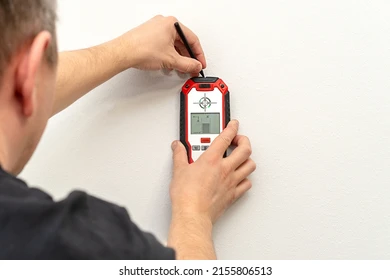
    A stud finder, also known as a stud sensor, is a handheld tool used to detect framing studs or other hidden elements behind walls. Most modern stud finders use electronic technology to identify changes in wall density, which indicates the presence of a stud or another solid object. While stud finders are widely used for home improvement projects, they’re also useful for professionals in construction, carpentry, and electrical work.

    Why Do You Need a Stud Finder?

    Studs are the vertical wooden or metal beams that make up the framework of a wall. They are typically spaced 16 or 24 inches apart, and finding them is crucial for securing anything to the wall, from shelves to picture frames. Screwing directly into a stud ensures the strength and stability of your installation.

    Without a stud finder, you might try to knock on the wall to listen for a sound that indicates the stud’s location. While this method works in some cases, it’s not the most accurate or reliable approach. Additionally, knocking won’t help you if there are multiple layers of drywall or if you’re unsure where exactly to drill. This is where a stud finder comes in handy, providing accurate and quick detection.

    How Does a Stud Finder Work?

    Stud finders operate using one of several different methods, each based on detecting changes in wall density. These methods can be broadly categorized into three types: magnetic, electronic, and advanced multi-sensor stud finders.

    1. Magnetic Stud Finders

    Magnetic stud finders are the most basic type of stud finder. They use a small, strong magnet to detect the nails or screws that are typically used to attach drywall to the wooden or metal studs. As you move the magnetic stud finder along the wall, the magnet is attracted to these metal fasteners, indicating the location of a stud.

    • How it Works: Magnetic stud finders are simple in design and don’t require batteries or power. When you move the tool across the wall, the magnet inside will latch onto metal fasteners like nails or screws, providing you with an indication of the stud’s location.
    • Pros: Magnetic stud finders are inexpensive, easy to use, and don’t require batteries. They can also locate metal studs and fasteners.
    • Cons: Magnetic stud finders can be less accurate than electronic models. They can only detect metal fasteners and won’t indicate the edges or center of the stud, which is necessary for accurate drilling.

    2. Electronic Stud Finders

    Electronic stud finders are more advanced than magnetic ones. These tools use sensors to measure the wall’s density and identify changes that suggest the presence of a stud. They typically feature digital displays that show the location of the stud, and some even have audible signals to alert you when you’ve found one.

    • How it Works: Electronic stud finders emit a small electric signal through the wall. When the sensor detects a change in the wall’s density (i.e., a stud behind the drywall), the tool alerts you either through a light or sound. Some models even display the exact location of the stud, including the edges and center, so you know exactly where to drill.
    • Pros: Electronic stud finders are highly accurate, providing both the edges and center of the stud. They are also versatile and can be used on different wall materials.
    • Cons: These models require batteries, and they are generally more expensive than magnetic stud finders.

    3. Advanced Multi-Sensor Stud Finders

    Advanced stud finders, often referred to as multi-sensor stud finders, combine several technologies into one device. These tools typically incorporate not only density sensors but also sensors for metal, electrical wires, and even pipes. This makes them ideal for more complex jobs where you need to avoid hitting plumbing or electrical cables while drilling.

    • How it Works: Multi-sensor stud finders use a combination of technologies, including capacitance, ultrasound, and electromagnetic sensors. They can detect both studs, pipes, and electrical wires within the wall, providing comprehensive readings on the wall’s structure.
    • Pros: These are the most advanced and versatile stud finders, capable of locating multiple types of objects, including live wires and plumbing pipes.
    • Cons: They are more expensive and can be more complex to use. Some may require more calibration and understanding of how the sensors work.

    How to Use a Stud Finder: Step-by-Step Instructions

    Regardless of which type of stud finder you choose, using it is generally straightforward. Here’s a step-by-step guide on how to properly use a stud finder for your next DIY project:

    Step 1: Prepare the Wall

    Before you start using the stud finder, make sure the wall is clean and free of obstructions. Remove any nails, screws, or furniture that might interfere with the device’s sensors. You also want to make sure you have enough space to move the stud finder along the wall.

    Step 2: Turn on the Stud Finder

    If you’re using an electronic or multi-sensor stud finder, turn it on. If you’re using a magnetic stud finder, no power is needed, but ensure that the magnet is working. Some electronic models require calibration before use—simply press the device against a part of the wall you know is empty, like a corner or area without studs.

    Step 3: Start Scanning

    Hold the stud finder flat against the wall and slowly move it horizontally. Some stud finders will beep or light up when they detect a stud, so move the tool slowly and steadily across the wall. If you’re using a digital model, it may display arrows or readings to indicate the edges and center of the stud.

    Step 4: Mark the Stud’s Location

    Once the stud finder indicates the presence of a stud, mark the spot with a pencil. If you’re using a digital or multi-sensor model, it will often show you the edges of the stud, which allows for more precise drilling.

    Step 5: Confirm the Stud’s Location

    To confirm the stud’s exact position, move the stud finder a few inches further along the wall. The device should indicate a similar reading if you’re on the same stud. Once you’re confident, you can begin your installation, knowing exactly where the stud is located.

    How to Find a Stud Without a Stud Finder

    While stud finders are incredibly convenient, you may not always have one on hand or prefer to rely on traditional methods. Thankfully, there are several techniques to locate studs behind your walls without the need for specialized tools. These methods might take a little more time and effort, but they can be just as effective when done correctly.

    Here are some tried-and-tested ways to find a stud without a stud finder:

    1. The Knock-and-Listen Method

    The knock-and-listen technique is one of the oldest and simplest ways to locate studs. It’s based on the principle that walls with studs will sound different from areas with only drywall. When you tap on the wall, the sound will vary depending on whether you’re over a stud or not.

    • How it Works: Start by lightly tapping the wall with your knuckles or a hammer in a horizontal line. The areas where you hear a solid, dull sound are likely where the studs are located. In contrast, hollow areas will produce a more echoing sound because there’s no stud behind the drywall.
    • Tips:
      • Begin at the edge of the wall and move across in increments of about 1 inch.
      • Once you detect a solid sound, move a few inches to the right or left and tap again to confirm. A stud should be spaced 16 to 24 inches apart.

    While this method can be effective, it’s important to practice a bit, as it can sometimes be hard to differentiate between the sounds, especially with thicker or multi-layered walls.

    2. Measure from the Corner

    Since studs are typically spaced 16 or 24 inches apart, you can use this consistent spacing to your advantage. One simple way to find a stud without a tool is by measuring from a corner or other reference point on the wall.

    • How it Works: Start by measuring 16 inches from one corner of the wall. In most cases, the first stud will be located at this point. If you don’t find it there, measure another 16 inches from that point, and so on. Continue to measure in 16-inch increments across the wall to locate additional studs.
    • Tips:
      • This method works best if the studs are spaced 16 inches apart, which is typical in most homes. However, some walls may have studs spaced 24 inches apart, so be sure to adjust your measurements accordingly.
      • Measure from electrical outlets, light switches, or other fixtures. Studs are often located near these fixtures, so you can use them as reference points to find your studs.

    3. Look for Nails or Screws in the Wall

    Studs are typically used to anchor drywall to the frame of a house, and the nails or screws that hold the drywall in place are usually positioned directly over the studs. These fasteners are often visible from the surface of the drywall.

    • How it Works: Look closely at the surface of the wall for any visible nails or screws. You may notice small dimples in the wall where the drywall is fastened to the stud. Once you spot one fastener, measure 16 to 24 inches to the left or right to find the next stud, depending on the spacing.
    • Tips:
      • This method works best if you’re working with unfinished or lightly painted walls, as heavily textured or painted walls may obscure the fasteners.
      • You can also use a flashlight to cast shadows across the wall, making the fasteners easier to spot.

    4. Use a Magnet

    If you have a small, strong magnet on hand, you can use it to locate the metal fasteners that are typically used to attach drywall to studs. This method is similar to how a magnetic stud finder works but is a more hands-on approach.

    • How it Works: Move the magnet slowly across the surface of the wall. When the magnet sticks to the wall, it means that there’s likely a metal fastener (nail or screw) behind that spot, indicating the location of a stud. Once you find one fastener, you can measure 16 to 24 inches away to find additional studs.
    • Tips:
      • Use a small, powerful magnet for the best results. Neodymium magnets are particularly effective for this purpose.
      • This method won’t help you locate the exact edges or center of the stud, but it can give you a general idea of where the studs are located.

    5. Use the Light Switch or Outlet as a Guide

    Electrical outlets and light switches are typically attached to the side of a stud. You can use this to your advantage to locate the studs.

    • How it Works: Remove the cover plate from an outlet or light switch, and look inside to see which side of the box is attached to the stud. The box should be mounted flush against the stud, so if you know which side it’s fastened to, you can measure 16 inches to the next stud. This method is particularly helpful for finding studs near electrical fixtures.
    • Tips:
      • Use a stud spacing guide to measure from the outlet or switch. The studs are generally spaced 16 inches apart, but some houses may have a different spacing, so you may need to adjust your measurements accordingly.
      • Be cautious when working around electrical outlets. Always turn off the power before removing the cover plate to avoid electrical hazards.

    Choosing the Right Stud Finder for Your Needs

    When selecting a stud finder, there are a few factors to consider to ensure you’re getting the right tool for your project:

    • Type of Wall: If you’re working with drywall, an electronic stud finder will provide accurate results. If you’re working with concrete or brick walls, you may need a more specialized model.
    • Budget: Magnetic stud finders are budget-friendly, but electronic models provide more accuracy. Advanced multi-sensor models are ideal for complex projects but can be more expensive.
    • Frequency of Use: If you’re doing frequent home improvement projects, investing in a high-quality electronic or multi-sensor stud finder may be worthwhile. For occasional use, a magnetic stud finder might suffice.

    Conclusion: A Vital Tool for Home Improvement

    A stud finder is an essential tool for anyone looking to hang heavy items or mount furniture securely. By helping you locate studs and other hidden features behind walls, a stud finder ensures that your installations are strong, safe, and properly aligned. Whether you’re a DIY enthusiast or a professional, knowing how to choose and use a stud finder can save you time, effort, and frustration in your projects.

    With different models available—from simple magnetic versions to advanced multi-sensor tools—there’s a stud finder suited to every need and budget. No matter which type you choose, understanding how they work and how to use them correctly will make your DIY tasks more efficient and hassle-free.


    Pakistan Upgrades Diplomatic Mission in Afghanistan to Ambassadorial Level

    0

    Islamabad – Pakistan has officially announced the elevation of its diplomatic mission in Afghanistan to the ambassadorial level, in a move aimed at strengthening bilateral ties with its war-torn neighbour.

    The decision was confirmed by Deputy Prime Minister and Foreign Minister Ishaq Dar, who stated that the upgrade reflects Pakistan’s commitment to enhancing cooperation with Afghanistan across various sectors.

    “We hope this step will deepen our collaboration in areas of economic development and security cooperation,” Dar said in a statement released on Thursday.

    The upgrade marks a significant shift in Pakistan’s diplomatic posture toward Afghanistan. Until now, Islamabad had maintained its Kabul mission at the level of Chargé d’Affaires, a position often associated with transitional or limited diplomatic engagement.

    Trade and Regional Stability in Focus

    Dar emphasized that the move is also aimed at revitalising trade between the two countries. Pakistan and Afghanistan share a rugged, porous border and complex political history, but trade and economic interdependence remain key to their relationship.

    “We believe this will foster stronger commercial ties and pave the way for stable, long-term engagement,” he added.

    The announcement comes in the wake of Dar’s official visit to Kabul on April 19, 2025, which he described as a “turning point” for bilateral relations. During the visit, senior officials from both sides reportedly discussed issues ranging from border security and counterterrorism to trade facilitation and regional connectivity.

    Context and Challenges

    Pakistan’s decision to appoint an ambassador comes at a time of heightened regional uncertainty. Tensions have flared in recent months over cross-border attacks and the presence of militant groups operating in border regions. Afghanistan’s Taliban-led government has repeatedly called for a more formal diplomatic recognition and enhanced economic ties with neighbouring countries, particularly Pakistan.

    Independent analysts view the ambassadorial appointment as both a symbolic and strategic gesture, potentially setting the stage for more institutionalised dialogue between the two governments.

    Online Gambling Epidemic Surges in Kashmir, Deepening Financial and Psychological Toll

    Srinagar, Indian administered Kashmir – Mushtaq Ahmad (name changed), a postgraduate from central Kashmir, has been struggling with a gambling addiction for the past two years. What began as a seemingly harmless hobby—placing bets on a cricket game—quickly spiraled into a debilitating obsession that has left him financially broken. “He once lost over Rs 1.25 lakh on a betting app. That incident nearly shattered him,” said his family, who have attempted counseling in a bid to curb his dangerous behavior. Despite their efforts, Ahmad continues to relapse. “These apps promise quick money, and that illusion is incredibly hard to escape,” his family added.

    Ahmad’s story is far from unique. Across Jammu and Kashmir, an increasing number of young people are falling prey to the seductive lure of online gambling, driven by the rise of fantasy sports apps and unregulated betting platforms. This growing crisis has raised alarms among experts, who warn that gambling addiction is fast becoming a silent epidemic. Its impact on mental health, family stability, and financial security is becoming more pronounced with each passing day.

    The Hidden Crisis: Online Gambling’s Surge

    According to officials from Cyber Police Kashmir, the province is witnessing a rapid increase in online gambling activities, with some individuals reportedly losing lakhs of rupees. “We have seen a significant rise in gambling cases, and the money involved is substantial,” said a Cyber Police official. “This is becoming an epidemic with each passing day.”

    The anonymity provided by digital platforms, coupled with the widespread availability of smartphones and the rising levels of unemployment, has created a perfect storm for online gambling to flourish. Apps that disguise themselves as fantasy sports platforms or seemingly harmless games are becoming increasingly common in the region. These platforms often operate from offshore locations where Indian laws are not applicable, making enforcement a significant challenge.

    Despite the strict prohibition of gambling in Jammu and Kashmir, illegal betting rings have found a way to thrive. “Gambling is strictly prohibited in Jammu and Kashmir,” explained a senior police official. “However, illegal apps have found a stronghold in the region. The accessibility of digital platforms, coupled with the lack of regulation, is contributing to the escalation of this problem.”

    A Growing Crisis Among Families

    Families across Kashmir are increasingly reporting instances of financial distress and psychological trauma related to online gambling. In some extreme cases, individuals have turned to substance abuse as a way to cope with the emotional and financial toll caused by their gambling habits. The addiction is not only straining personal relationships but also exacerbating mental health issues within the community.

    The larger issue of online gambling in India has been steadily growing, with over 140 million regular users across the country. This number surges dramatically during events like the Indian Premier League (IPL). Fantasy sports platforms such as Dream11, MPL, and My11Circle have become household names, operating legally as “games of skill.” However, the increasing popularity of these platforms has led to the rise of unregulated apps that exploit loopholes in the law, blurring the lines between skill and chance.

    The Legal Loophole: Offshore Betting Apps and Outdated Laws

    While fantasy sports platforms have a legal framework in India, many offshore gambling apps circumvent the regulations by operating from jurisdictions like Curacao, Malta, and Cyprus. These apps often run under the guise of “games of skill,” but experts argue that they still rely heavily on chance, violating Indian gambling laws. The challenge for Indian authorities is that enforcing these laws across borders is both complex and resource-intensive.

    India’s current gambling laws are deeply outdated, with much of the legislation stemming from the colonial-era Betting Act of 1853 and the Public Gaming Act of 1867. After independence, states were granted the power to regulate gambling within their own jurisdictions, leading to a patchwork of different laws across the country. A game that is legal in one state might be banned in another, creating a confusing legal landscape that is difficult to navigate.

    Check our Games: The Azadi Times Games

    In Jammu and Kashmir, where regulatory infrastructure is weak and law enforcement agencies are stretched thin, the illegal gambling industry is expanding unchecked. Police and other authorities are facing significant challenges in addressing the rise of online gambling, with little coordination or support from other states or the central government.

    The Mental and Financial Toll on Kashmiris

    As gambling addiction spreads, the region is witnessing not just financial losses but also a growing psychological burden on individuals and families. The lure of quick money through online gambling apps has proven to be an irresistible trap for many, especially young people struggling with unemployment and limited opportunities.

    The ramifications are clear: as more people fall victim to these platforms, the mental health crisis in Kashmir continues to worsen. Families are left grappling with financial ruin, while individuals face growing anxiety and despair. Experts suggest that addressing this crisis will require a multifaceted approach, including stronger enforcement of existing laws, better public awareness campaigns, and the creation of more robust mental health support systems.

    Looking Ahead: The Need for Action

    With the problem of online gambling showing no signs of abating, the need for urgent action has never been greater. Experts and concerned citizens alike are calling for more stringent regulations, better enforcement of existing laws, and a broader conversation around addiction and mental health in Kashmir.

    As the region grapples with the toll of online gambling, it is clear that the stakes are high—not just for the individuals caught in its grip, but for the broader society. The time to address this growing crisis is now, before it spirals further out of control.

    Dozens of Government Schools in Jammu and Kashmir Have No Students, Report Finds

    Srinagar, Indian-administered Kashmir – At least 65 government-run schools in Jammu and Kashmir are operating without a single student enrolled, according to a new report by India’s Ministry of Education.

    The findings, released earlier this week, reveal serious challenges facing the region’s public education system. The report notes that out of 18,785 government schools across the Union Territory, 62 primary schools and three upper primary schools have zero enrolment.

    In addition, more than 5,000 schools have fewer than 30 students, while nearly 1,600 institutions are operating with enrolment numbers below 15.

    Staff-Student Imbalance and Infrastructure Concerns

    The report also points to a troubling trend in student-teacher ratios. Around 16 percent of primary schools in the region have what the Ministry terms a “negative Pupil-Teacher Ratio” – meaning fewer students than teaching staff, raising questions over resource allocation and efficiency.

    Read Also: The Unfolding Legacy of Kashmiriyat: A Cultural and Educational Odyssey in the Kashmir Valley

    The Ministry has asked local authorities to investigate the reasons behind the low enrolment numbers and address staffing issues in schools with disproportionate ratios.

    Vocational Education Lagging Behind

    The report further highlights the slow pace of vocational education implementation. Under the Samagra Shiksha programme – a nationwide educational reform initiative – the ministry had approved vocational training for 1,869 schools in Jammu and Kashmir. However, only 621 schools have successfully rolled out the programmes so far, representing a 72% coverage rate.

    Vocational training sectors include agriculture, information technology, healthcare, tourism, retail, beauty and wellness, and others.

    The Ministry has urged the administration to expand the reach of skill-based education by identifying new sectors aligned with local economic needs, and by introducing relevant job roles for students in underrepresented areas.

    Wider Context

    Education in Indian-administered Kashmir has long been affected by political instability, military presence, and periodic shutdowns that disrupt academic life. Analysts say low enrolment numbers are not solely a reflection of policy gaps but also the broader environment in which children and families in conflict zones navigate education.

    Independent observers have noted that infrastructure decay, lack of accountability, and socio-political alienation have all contributed to declining trust in state-run institutions.

    While Indian authorities have promoted schemes aimed at modernising education in the region, critics argue that results on the ground remain inconsistent.

    AAP Jammu & Kashmir Chief Mehraj Malik Booked for Alleged Defamation, Criminal Intimidation of Female Doctor

      0

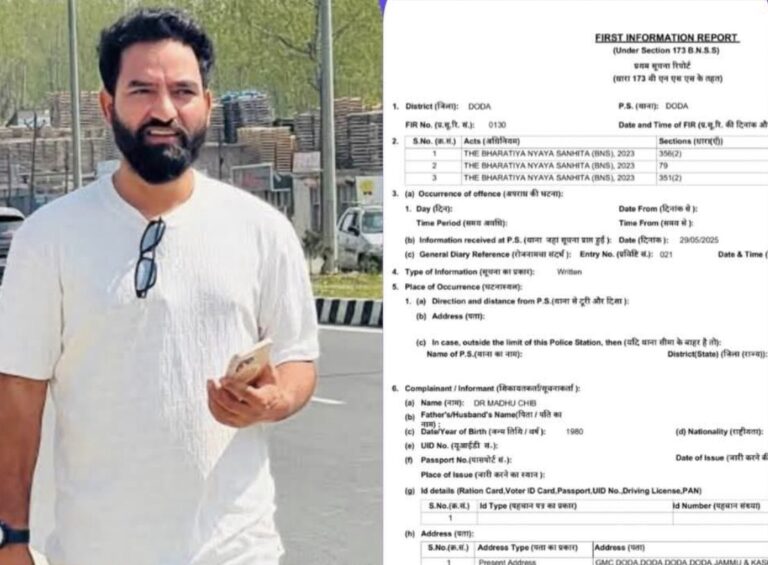
      Jammu, Indian administered Kashmir – The Jammu and Kashmir Police have registered an FIR against the Chief of the Jammu and Kashmir unit of the Aam Aadmi Party (AAP) and Member of Legislative Assembly (MLA), Mehraj Malik, on charges of defamation, criminal intimidation, and insulting the modesty of a woman doctor in Doda district.

      The complaint was filed by an associate professor at the Government Medical College, Doda, who has accused Malik of using social media platforms to issue threats and make derogatory, gendered remarks against her. The doctor alleges that the MLA publicly targeted her with abusive language, which she claims was intended to intimidate and malign her professional reputation.

      In her complaint to the Doda Police, the complainant described a series of disturbing incidents in which Malik allegedly used social media to make offensive statements, including phrases such as “ghaseetunga” (will drag you) and “will strip you naked.” These, she stated, were not just verbal assaults but clear threats to her dignity and safety.

      “These words are not mere expressions of anger; they are direct threats aimed at my professional and personal integrity as a female doctor. They violate my modesty and threaten my well-being,” the complainant noted in her statement.

      Further complicating the situation, the complainant revealed that Malik had also taunted her by saying, “This hospital doesn’t belong to your father,” a remark that she found particularly hurtful, given that her father passed away over a decade ago.

      The MLA is also accused of entering the labor room at the hospital without authorization, accompanied by his associates and broadcasting the incident via social media. This alleged act, the complainant stated, was a serious breach of patient privacy, especially for vulnerable female patients and staff, and posed a threat to the hospital’s security protocols.

      In addition to the social media harassment, the doctor emphasized the emotional distress caused by Malik’s actions, particularly in a sensitive hospital environment where patients and staff are expected to operate in a space of mutual respect and trust.

      This is not the first time Mehraj Malik has found himself embroiled in controversy. Earlier this year, he faced a non-bailable arrest warrant issued by the Special Excise Mobile Magistrate’s Court in Jammu. The warrant was related to a case filed by former Minister Ghulam Mohammad Saroori, accusing Malik of making false statements.

      The FIR against Malik has raised concerns about the increasing use of social media for defamation, intimidation, and personal vendettas, particularly in a region already marked by political tensions. Many are now questioning whether public figures are being held accountable for the harmful and unethical use of digital platforms.

      The Jammu and Kashmir Police are yet to make an official statement on the investigation. However, the growing outcry over Malik’s alleged behavior has prompted calls for stricter regulations on the use of social media, especially by public figures who wield significant influence.

      While the case has sparked debate, the safety and dignity of women professionals in the region, particularly in the medical field, remains at the forefront of discussions. The medical community, including doctors’ associations in Jammu and Kashmir, have expressed solidarity with the complainant, stressing the importance of a secure work environment free from harassment.

      As investigations unfold, the case has further underscored the pressing need for accountability and respect in both political and social discourse within Jammu and Kashmir.

      In Remote Kashmir Village, Teacher Builds Classrooms with Own Funds Amid Government Neglect

        0

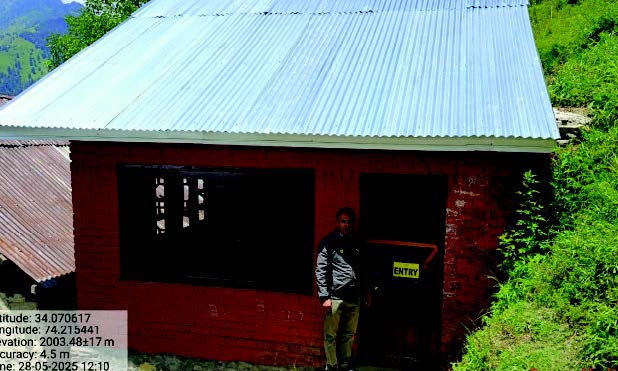
        Uri, Indian-Administered Kashmir — In a remarkable act of dedication, a school teacher in the remote village of Dudran Boniyar, located in Jammu and Kashmir’s Uri region, has constructed two new classrooms at his own expense after years of government inaction left the local school building in a dangerously dilapidated state.

        The Government Middle School (Boys) Dudran Boniyar had been in disrepair for several years, posing a constant threat to the safety of its students and staff. Despite repeated appeals by local residents to the education department for the construction of a new building, no action was taken.

        Unable to watch his students suffer any longer, Bilal Ahmad Chak, a local teacher, decided to take matters into his own hands. Using personal savings, he funded and supervised the construction of two new classrooms — which he has now officially handed over for student use.

        “For the past two years, the education department showed no seriousness in addressing the issue,” said Bilal Ahmad. “So I decided to do what I could myself. With the help of God, I managed to complete the construction and dedicate the rooms to the students.”

        The area, Dudran, is a remote and underdeveloped part of the Boniyar sector, where transporting construction materials itself proved to be a major challenge. Despite logistical difficulties, Ahmad persisted in his mission.

        “This region has seen many dedicated teachers before me who have done even more,” he humbly added.

        Local residents have widely praised Bilal Ahmad for his extraordinary initiative, calling him a role model and a true servant of education.

        This story highlights the chronic neglect of rural education infrastructure in Indian-administered Kashmir — a region already grappling with instability and marginalization. It also showcases the quiet heroism of teachers like Bilal Ahmad, who step in where institutions fail.