Tuesday, March 31, 2026
11.4 C
Srinagar
Home Blog Page 76

Xiaomi Set to Unveil YU7 Electric SUV as It Eyes a Bigger Role in the Global EV Market

Beijing, China — Chinese technology giant Xiaomi is preparing to take the covers off its much-awaited YU7 electric SUV at a major event in Beijing on Thursday, 22 May 2025, as part of celebrations marking its 15th anniversary.

While the occasion is being promoted as a tribute to Xiaomi’s evolution over the years, industry analysts suggest the event will signal something far more significant — a deepening commitment to China’s booming electric vehicle (EV) industry and an aggressive push into the semiconductor space.

Just four years after announcing its plans to enter the EV market, Xiaomi has established itself as a serious contender in the highly competitive sector. Following the successful launch of its first EV, the SU7 electric sedan, in March 2024, the company is now targeting the SUV segment — a space dominated by models like Tesla’s Model Y — with the unveiling of the YU7.

A Quick Recap: SU7 and Xiaomi’s Rapid EV Ascent

Xiaomi’s EV journey began in 2021, and by March 2024, the SU7 sedan was officially launched. Despite scepticism from established automakers and critics, the SU7 quickly shattered expectations. In just 119 days, Xiaomi delivered over 200,000 units, signalling robust demand and customer confidence in the brand’s entry into the EV market.

April 2025 saw Xiaomi shipping over 28,000 SU7 units, further cementing its presence in China’s domestic EV space. Though the sedan faced some scrutiny after an unfortunate accident in March — which claimed three lives — and a few complaints on social media regarding quality control, its commercial performance remains strong.

Now, Xiaomi’s ambitions appear to be shifting toward capturing a larger slice of the SUV segment with the launch of the YU7.

Xiaomi YU7: Specifications and Performance

While Xiaomi has yet to fully reveal the YU7’s specifications officially, regulatory filings from late 2024 provide a clear picture of what the company is preparing to unleash.

Technical Specifications (As per filings):

  • Length: 4,999 mm

  • Width: 1,996 mm

  • Height: 1,600 mm

  • Wheelbase: 3,000 mm

  • Kerb Weight: 2,405 kg (approx. 5,302 lbs)

  • Top Speed: 253 km/h (157 mph)

  • Motor Setup: Dual motors – front (220 kW) and rear (288 kW)

  • Battery: Ternary lithium-ion battery provided by CATL (capacity not disclosed)

These specifications place the YU7 firmly in the premium electric SUV category, offering performance benchmarks that directly challenge the Tesla Model Y — widely regarded as the global standard in its class.

According to automotive experts, the YU7’s large wheelbase and aerodynamic design could potentially allow for greater interior comfort, optimised battery range, and high-speed stability, making it a prime candidate for long-distance intercity driving.

YU7 Launch: No Delay Despite Media Reports

On Wednesday, Bloomberg reported that the YU7’s launch may face delays and may not enter mass production by June or July 2025 as earlier expected. However, Xiaomi swiftly rejected those claims.

In a post on Chinese social media platform Weibo, Xiaomi’s head of Public Relations, Wang Hua, clarified that “the launch timeline has not been changed,” reaffirming that the vehicle would still be available by mid-2025, with deliveries likely starting in late June or July.

Xiaomi’s Broader Strategy: More Than Just an SUV

Thursday’s event will not be limited to the YU7. Xiaomi will also unveil several other flagship products:

  • Its first-ever custom-designed smartphone chip, named Xring O1

  • The premium Xiaomi 15S Pro smartphone

  • A high-performance Xiaomi Pad 7 Ultra tablet

These simultaneous launches reflect Xiaomi’s strategy to build a highly integrated digital ecosystem, similar to what companies like Apple and Huawei are doing through vertically integrated hardware and software experiences. The aim is clear: to lock users into a Xiaomi-centric lifestyle that spans smartphones, smart homes, and smart mobility.

Xiaomi’s CEO, Lei Jun, called this expansion a “strategic leap” and emphasised that “a great hard-tech company must conquer chip development.” The company has reportedly invested over 13.5 billion yuan (approx. $1.87 billion) into semiconductor research and plans to inject another 50 billion yuan over the next decade.

Challenges and Public Perception

Despite its achievements, Xiaomi’s EV division has not been without setbacks. The SU7 sedan was involved in a fatal crash earlier this year, leading to safety concerns. In addition, reports of manufacturing inconsistencies — such as panel gaps and faulty door sensors — have emerged online. Recent insurance registration data reveals that weekly SU7 registrations have dropped to just 5,180 units, down from previous highs.

Analysts believe the early reveal of the YU7, ahead of full-scale delivery in mid-2025, is a deliberate move to shift public attention back to Xiaomi’s innovation, and away from the negative press surrounding the SU7.

Will the YU7 Reach Pakistan-Administered Kashmir?

As interest in electric mobility gains traction in Pakistan-administered Kashmir, many wonder whether Xiaomi will extend its automotive offerings to this region. While there is no official word yet, several factors suggest it could be a viable market in the future:

  • A growing number of environmentally conscious consumers

  • Rising fuel prices are driving demand for alternatives

  • Increasing urbanisation in cities like Muzaffarabad, Rawalakot, and Mirpur

  • Government interest in expanding EV charging infrastructure

Xiaomi has already expanded its smartphone and electronics distribution networks across Pakistan-administered Kashmir. If supportive infrastructure and import policies align, there’s potential for Xiaomi’s EV line — including the YU7 — to make its way to the region by late 2025 or early 2026, possibly through third-party importers or direct partnership with local distributors.

Launch Event Details

  • Product: Xiaomi YU7 Electric SUV

  • Event Theme: A New Start for Xiaomi’s 15th Anniversary

  • Date: Thursday, 22 May 2025

  • Time: 7:00 PM (Beijing Time)

  • Location: Xiaomi Headquarters, Beijing

A Defining Moment for Xiaomi’s EV Future

The unveiling of the YU7 is expected to play a crucial role in Xiaomi’s bid to cement itself as a global EV powerhouse. With impressive specs, competitive positioning, and integration into Xiaomi’s wider tech ecosystem, the YU7 could emerge as a serious disruptor in the premium SUV segment.

As Xiaomi builds momentum and global attention turns towards the EV market in Asia, the question is no longer whether Xiaomi can compete with Tesla — but how far and how fast it can go.

Whether the YU7 will roll into the streets of Pakistan-administered Kashmir remains to be seen — but if early indicators are anything to go by, demand will not be in short supply.
Deadly Blast Targets School Bus in Pakistan’s Balochistan Province

0

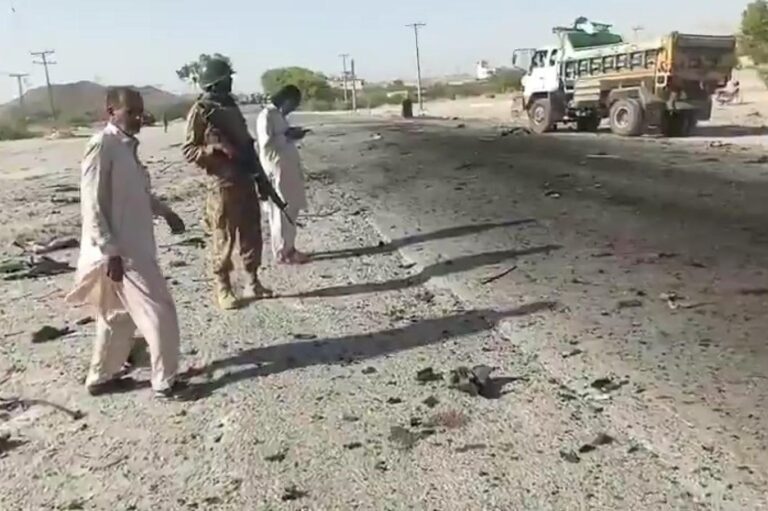
Khuzdar, Pakistan – A deadly attack on a school bus in Khuzdar, Balochistan, has claimed the lives of five individuals, including three children, prompting strong condemnation from Pakistani authorities and allegations of Indian involvement.

According to a statement released by Pakistan’s military media wing, Inter-Services Public Relations (ISPR), the school bus was deliberately targeted by militants with alleged links to India. The explosion left numerous children injured, with at least 35 students requiring medical attention.

“This cowardly and heinous attack was orchestrated by Indian-sponsored proxies operating in Balochistan and Khyber Pakhtunkhwa,” said the ISPR. “After repeated battlefield failures, India is resorting to terrorism and instability in Pakistan through such proxies.”

Also Read: Baloch Activist Mahrang Baloch Arrested Amid Protests in Quetta

The military added that these groups, weakened by counterterrorism operations such as Operation Radd-ul-Fasaad, are now being used as “state instruments” to target civilians, particularly soft targets like schoolchildren. “India’s use of terrorism as a tool of state policy reflects a disturbing disregard for basic human values and international norms,” the statement added.

The ISPR vowed that those responsible for the attack, along with their facilitators, would be brought to justice and that India’s “malicious agenda” would be exposed globally.

Earlier, Khuzdar Deputy Commissioner Yasir Dashti told local media that the school bus, belonging to Army Public School (APS), was collecting students from various locations when it was attacked near the city by a suspected suicide bomber. “The blast completely destroyed the bus. It was so powerful that the vehicle overturned off the road and caught fire,” said an eyewitness speaking to Independent Urdu.

Security forces and emergency responders quickly reached the scene and began rescue operations. Injured students were transported to local hospitals, while critically wounded individuals may be transferred to larger facilities in Quetta or Karachi. An emergency has been declared in hospitals across Khuzdar.

Authorities have cordoned off the area, and forensic teams are collecting evidence. No group has claimed responsibility for the attack as of now.

This is not the first time Army Public School students have been targeted. On December 16, 2014, one of Pakistan’s deadliest terrorist attacks occurred when gunmen stormed APS in Peshawar, killing over 144 people, most of them children.

Federal Interior Minister Mohsin Naqvi strongly condemned Wednesday’s bombing. “Those who target innocent children are nothing short of monsters. Such brutality is part of a broader attempt to destabilize our nation,” he said. “The attack on the school bus is a grim reminder of the enemy’s barbaric intentions.”

Security has been heightened across the region, and investigations are ongoing.

Iran, Taliban Discuss Bilateral Ties and Refugee Situation in Tehran

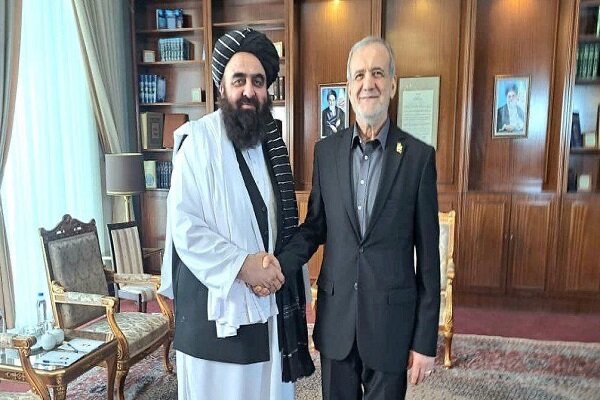
Tehran, Iran — In a significant diplomatic engagement, Iranian President Masoud Pezeshkian met with the Taliban’s acting Foreign Minister, Amir Khan Muttaqi, in Tehran on Sunday to strengthen bilateral relations and address regional concerns, particularly the situation of Afghan refugees in Iran.

The high-level meeting took place on the sidelines of the Tehran Dialogue Forum 2025, a multilateral platform aimed at enhancing regional dialogue and cooperation.

During the meeting, President Pezeshkian reiterated Iran’s commitment to fostering close relations with Afghanistan, describing the neighboring country as “friendly” and highlighting the cultural and historical bonds shared by the two nations. He emphasized the need for expanding cooperation across various sectors, including trade, security, and humanitarian efforts.

“Iran is fully prepared to deepen its ties with Afghanistan in all fields,” Pezeshkian said, signaling a readiness to move forward despite the complex political realities since the Taliban returned to power in 2021.

On his part, Amir Khan Muttaqi expressed appreciation for the improving trajectory of Iran-Afghanistan relations. He underscored the importance of increasing trade volume, enhancing cooperation in combating drug trafficking—a shared regional challenge—and facilitating the voluntary return of Afghan migrants from Iran.

The issue of Afghan refugees, who number in the millions in Iran, remains a pressing concern for both countries. Iran has repeatedly called for international support to address the humanitarian and economic challenges of hosting such a large refugee population.

The Taliban, meanwhile, is under increasing pressure to ensure a stable environment that can encourage repatriation.

This latest engagement reflects growing regional efforts to normalize relations with the Taliban government, which remains unrecognized by most of the international community. Tehran has maintained pragmatic ties with the Taliban, focusing on border stability, trade, and shared security concerns.

Observers see the Tehran Dialogue Forum as a platform through which Iran is seeking to position itself as a key diplomatic player in the region, balancing its interests between political realities and humanitarian responsibilities.

The meeting marks another chapter in the evolving relationship between Tehran and Kabul, as both sides look to navigate complex geopolitical dynamics in a post-U.S. Afghanistan while addressing pressing domestic and regional issues.

The Global Rise of Kashmiri Pheran: A Cultural and Fashion Revolution

Muzaffarabad, Pakistan administrated Kashmir: The Kashmiri pheran—a traditional cloak worn by men and women in the Kashmir Valley—has evolved from being a regional symbol of warmth to a global fashion statement.

In recent years, several Kashmiri traders, particularly women, have played a pivotal role in introducing this timeless garment to international markets. Today, the pheran is not only a common sight in the bazaars of Srinagar but also a growing trend in the fashion capitals of the world.

The global appeal of the pheran has been so significant that December 21, 2023, saw the first-ever international Pheran Day celebrated across different parts of the world. This event marked the garment’s increasing popularity as a cultural and fashion icon.

Read Also: “Phiran” International Day, and an expression of solidarity.. Abed Siddique

With the help of digital technology, the reach of Kashmiri clothing—especially the pheran—has expanded beyond the borders of Kashmir. Many traders in the Valley now receive international orders from the comfort of their homes. This ease of online commerce has made the process of buying and selling Kashmiri garments more streamlined and accessible to a global audience.

A Kashmiri Merchant’s Perspective: The Digital Revolution

Mohammad Mubashir, a Srinagar-based merchant, reveals how the digital marketplace has transformed his business. Originally, he had plans to open a store in Delhi to showcase Kashmiri garments. However, the rise of digital platforms has rendered the traditional brick-and-mortar store obsolete.

He says, “After Srinagar, I was planning to open a store in Delhi to sell Kashmiri garments, but the orders I’m receiving online are coming in huge numbers and much faster than I anticipated. There’s no need for a physical store anymore. Social media has allowed our products to reach a vast audience. The majority of my orders are now coming from overseas, and there’s no risk of bad debts.”

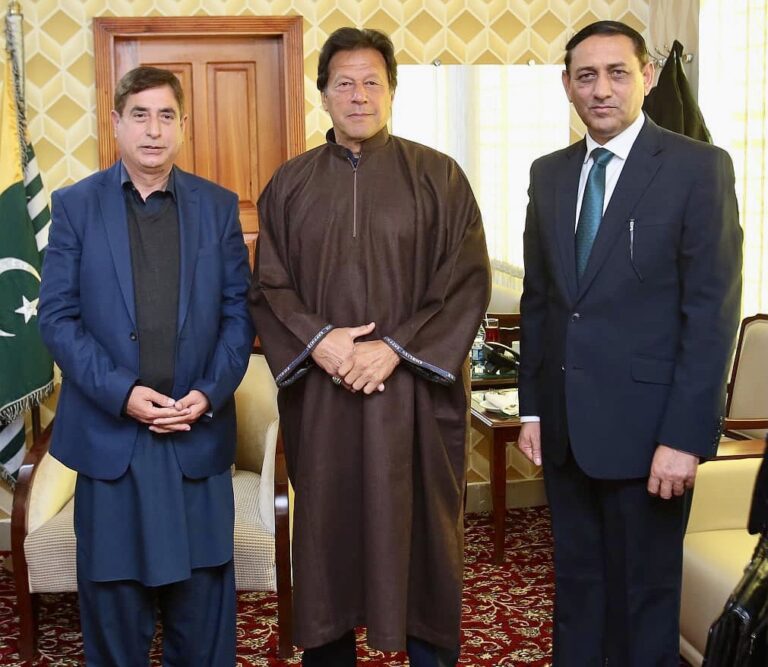
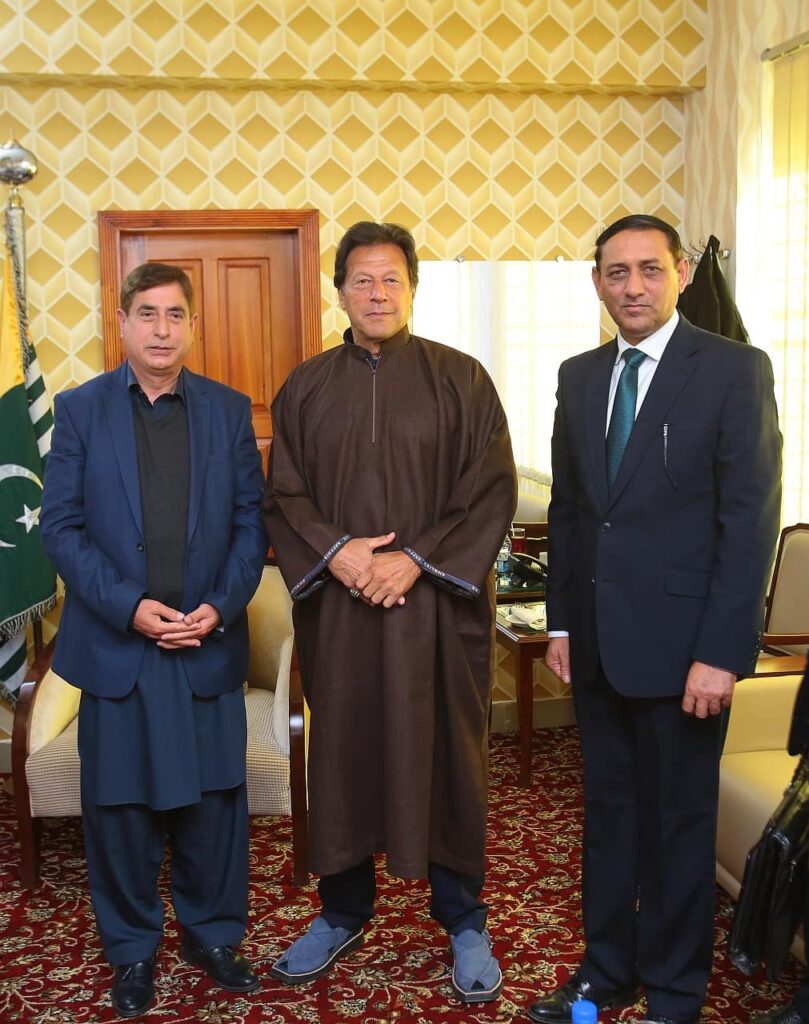
The pheran has also become a symbol of solidarity and cultural expression in politics. Indian Prime Minister Narendra Modi donned a pheran during his visit to Srinagar, using it to emphasize the cultural significance of the region. Similarly, former Pakistani Prime Minister Imran Khan wore the pheran as an expression of unity with the Kashmiri people.

Former Prime Minister of Pakistan Imran Khan wearing a traditional Kashmiri pheran in a photo released on February 6, 2020 (Imran Khan Facebook).

Even Congress leader Rahul Gandhi wore the pheran during his “Bharat Jodo Yatra,” symbolizing his connection to the region.

A Historical Tale of the Pheran: Politics, Identity, and Fashion

The pheran’s history is deeply intertwined with Kashmir’s political landscape. Mughal Emperor Akbar, who faced significant resistance from the Kashmiris, is believed to have encouraged the wearing of the pheran among the locals.

The long cloak, he hoped, would slow down their movements, making them less inclined to resist his rule. Despite his strategy, the pherandid not curb the fierce Kashmiri resistance.

In the late 16th century, Akbar managed to deceive the Kashmiri King, Yusuf Shah Chak, into coming to Agra, where he imprisoned him and annexed the Kashmir kingdom. Yusuf Shah Chak died in captivity, while his beloved poetess, Habba Khatoon, wandered the valleys in search of her lost love. This tragic episode in Kashmiri history left Akbar’s conquest as a bitter memory for the region.

Over time, the pheran evolved from being a winter garment to a year-round attire, especially for women. With intricate embroidery, golden thread designs, and floral patterns, it became part of everyday wear for Kashmiri women.

Its association with cold winters also made it a practical choice, especially with the tradition of kangri—a small firepot used to ward off the bitter cold of the region—worn inside the pheran.

The Role of Religion and the Afghan Influence

Historically, the pheran was not only a necessity due to the harsh cold of the region but also tied to religious practices. Scholars from Central Asia, who helped introduce Islam to Kashmir in the 14th century, recommended long cloaks as part of the local attire. Interestingly, similar garments like the Ladakhi choga or the Kashmiri Pandit’s long robe also resemble the pheran in structure and function.

However, during Afghan rule in Kashmir, men were forced to wear the pheran—which was initially a women’s garment. This move was seen as an attempt to undermine the dignity of Kashmiri men by making them adopt feminine attire, a tactic that deeply hurt the region’s pride.

The 1990s: A Symbol of Resistance and Identity

The 1990s saw the pheran take on a new, politically charged significance. During this period of turmoil and conflict, the Indian security forces frequently ordered individuals to remove their pherans during routine searches. The garment became a symbol of resistance, as it was frequently associated with Kashmiri identity and the ongoing struggle for freedom.

In recent years, there have been reports of calls to ban the pheran, especially in light of targeted killings and political tensions in the region. Despite these challenges, the pherancontinues to serve as a cultural and political symbol of Kashmiri identity.

The Globalization of the Pheran: From Kashmir to the World

The pheran has not only seen a resurgence in Kashmir but has also captured the attention of the global fashion community. In 2024, a Kashmiri pheran fashion show in the UK generated significant interest in the garment, leading to an increase in both demand and sales.

This momentum continued in 2025 when a similar fashion show was held in New York, where many fashion enthusiasts and traders attended, showcasing Kashmiri garments to an even broader audience.

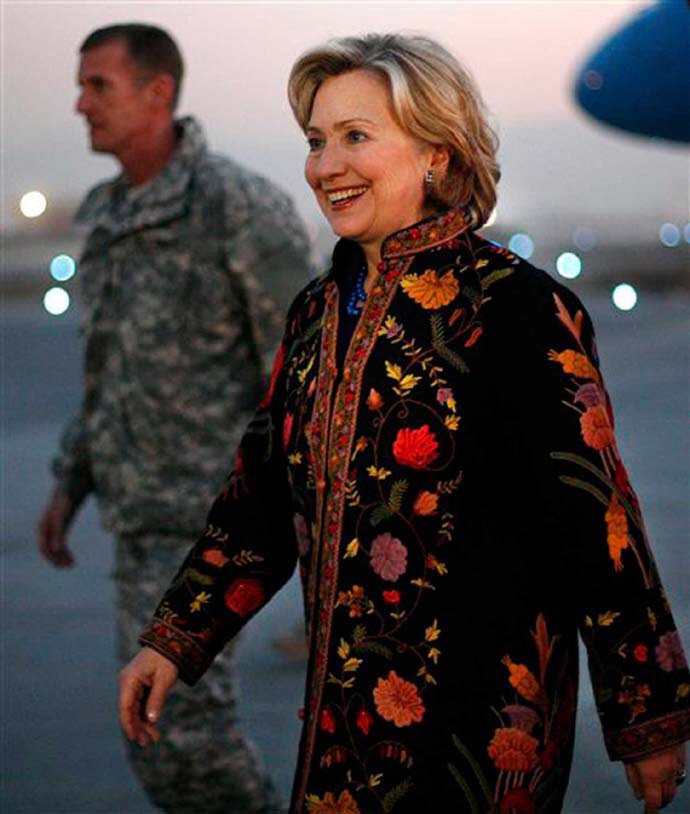
Hillary Clinton wearing a traditional Kashmiri pheran during her visit to India (Free Press Kashmir).

Noshin Gujwari, a Kashmiri entrepreneur based in the U.S., played a crucial role in launching the pheran fashion show. She recalls, “After our show in London, a few students from Columbia University advised me to organize a pheran fashion show in the U.S. We saw immense interest from the public at the university, which led us to host a grand event in New York City.

The sales skyrocketed, and more importantly, people began to take an interest in our heritage. American women were particularly drawn to the pheran.”

The Role of Technology in Expanding the Reach of Kashmiri Clothing

While there are many shops in European countries and the Middle East selling Kashmiri clothing, the advent of digital technology has significantly improved the accessibility and efficiency of these transactions. Platforms like Amazon and social media have become powerful tools for marketing and selling Kashmiri garments globally.

One viral video that gained widespread attention showed an Amazon salesman in Kashmir wearing a pheranand riding a horse through the streets of Srinagar to deliver his package. The video captured the beauty of Kashmir wrapped in a white cloak, and in doing so, turned the pheraninto an inadvertent fashion show.

The Future of the Pheran: Fashion, Culture, and Identity

As the pheran continues to gain international recognition, it becomes more than just a garment. It is a symbol of Kashmir’s cultural heritage, resistance, and resilience. With increasing interest from international markets and platforms, the pheran is poised to become a staple in global fashion, blending tradition with modernity in a way that resonates with audiences worldwide.

The pheran‘s growing popularity represents a broader trend of cultural reclamation and celebration, where Kashmiri identity is being embraced and promoted on a global scale. It is not just a piece of clothing but a reminder of Kashmir’s rich history, cultural heritage, and enduring spirit.

Exposing the AJK Police Recruitment Scandal: Fraud, Corruption, and Systemic Failures

Muzaffarabad, Pakistan administrated Kashmir: A few days ago, an alarming announcement was made on the official social media page of the Azad Jammu and Kashmir (AJK) Police, stating the dismissal of two police officers. The dismissed personnel—Constable Rizwan Qamar from the Rangers Police of AJK and Libaah Safir, a Lady Constable—were accused of sabotaging the police recruitment process through illegal means.

They were allegedly involved in the fraudulent recruitment of a female candidate through forged documents. However, is this story as straightforward as it seems? Could it be that only two lower-ranking officers were involved, or is there a deeper conspiracy tied to the AJK Police’s recruitment system?

Over the past six months, The Azadi Times investigative team has been diligently probing the AJK Police Training School and the broader police department structure, with the intent of uncovering the truth behind the scandal. As we delve deeper into the case, we find significant discrepancies in the press release issued by the AJK Police that demands further scrutiny.

The Press Release: A Closer Look

The press release issued by the AJK police department stated:

“Azad Jammu and Kashmir Police Department has dismissed Constable Rizwan Qamar from the Rangers Police and Lady Constable Libaah Safir for recruiting a woman through fraudulent means, in violation of the migrant quota. They are also being investigated for submitting forged documents such as the marriage certificate, identity card, and domicile certificate.”

Upon analyzing this statement, we see some glaring technical errors. The phrase “fraudulent recruitment” and “the woman’s consent” are contradictory. If the woman’s consent was involved in the recruitment process, how could the entire process be labeled fraudulent?

Islamic law allows adults to marry by mutual consent, meaning that if the woman agreed to marry Rizwan Qamar, the marriage documents would not necessarily be considered fraudulent. This presents a contradiction in the AJK Police’s own narrative.

Discrepancies in the Allegations

The press release further claims that Constable Rizwan Qamar had assisted the woman in obtaining fake documents (marriage certificate, ID card, and domicile certificate) for recruitment purposes under the migrant quota.

However, if these documents were forged, why were they not flagged during the verification process? The recruitment of candidates typically involves a thorough verification of academic and personal documents, including an online check to verify the authenticity of identification papers.

It is also critical to note that Constable Rizwan Qamar is a resident of Punjab, and if the marriage was consensual, how can the marriage documents be considered fraudulent? If any irregularities were found in the documents, why was a simple online check not conducted?

These documents could easily have been verified through an online tracking system, and the authenticity of these documents should have been established prior to the recruitment.

The Role of Senior Officials and the Recruitment Process

In the aftermath of the dismissal of these two officers, there remains one crucial question: why was the recruitment process itself not questioned? Why is there no mention in the press release of the responsibility of the recruitment staff, the senior Rangers Police officers, or the higher-ups in the AJK Police who may have overlooked these discrepancies?

When reviewing the press release, it is evident that the AJK Police is directing the blame solely towards two lower-ranking officers. However, this leaves us wondering about the broader structure within the police department.

The higher authorities responsible for overseeing the recruitment process are conspicuously absent from the discussion. Was this dismissal a way to divert attention from a larger issue?

The Hidden Story Behind the AJK Police Training School (PTS Muzaffarabad)

The investigative team at The Azadi Times has uncovered that the root of this issue likely lies in the functioning of the AJK Police Training School, a crucial institution in the recruitment and training of police personnel.

The AJK Police training school and its internal operations, including complaints from recruits and other irregularities, will be thoroughly examined in future investigative reports.

A Deeper Conspiracy?

Given the systemic issues within the recruitment process, could the involvement of two junior personnel be a deliberate attempt to cover up a larger conspiracy? Are the dismissed officers merely scapegoats in a much larger game, designed to keep higher officials and the flawed recruitment system under wraps?

This first installment of our investigative series merely scratches the surface of a potential cover-up within the AJK Police system. The full extent of the corruption and mismanagement in the recruitment process of the police department will be revealed in future reports.

What’s Next?

As we continue to uncover more details about the involvement of senior police officers, recruitment staff, and the management at the AJK Police Training School, the truth behind the fraudulent recruitment system will come to light. For now, the investigation remains ongoing, and we urge authorities to conduct a transparent inquiry into this matter.

Stay tuned for the next part of this investigative series as we reveal more shocking details from inside the AJK Police Department.

Protest Erupts Outside Pakistani Embassy in London Over Arrest of Political Activists in Gilgit-Baltistan

London, Gilgit: Dozens of demonstrators gathered outside the Pakistani Embassy in London to protest the recent arrests of political leaders in Gilgit-Baltistan, a region administered by Pakistan and part of the broader Kashmir dispute.

Organized by the Revolutionary Communist Party (RCP) of Britain, the protest aimed to denounce what they call politically motivated detentions targeting grassroots activists advocating for public rights and resource sovereignty.

Background: Rising Crackdown in Gilgit-Baltistan

According to RCP representatives, several leaders from the Gilgit-Baltistan chapter of the Awami Action Committee Gilgit Baltistan (AACGB) and the Revolutionary Communist Party of Pakistan were detained ahead of a scheduled public gathering. The meeting was set to focus on the region’s natural resources and the local population’s right to ownership—a recurring point of contention between local activists and the Pakistani state apparatus.

Among those arrested is Ehsan Ali, chairman of the Awami Action Committee Gilgit Baltistan, a prominent advocate for socio-economic justice in the region. Ali has previously led mass movements demanding reductions in wheat prices and improvements in electricity, health, and education services in Gilgit-Baltistan.

Despite his peaceful activism, state institutions have reportedly subjected him to persistent surveillance and legal harassment. Authorities recently placed him under Pakistan’s controversial “Fourth Schedule,” restricting his freedom of movement.

Protest at Pakistani High Commission in London

Roughly 30 demonstrators assembled at the Pakistani High Commission in London on May 19 to voice their concerns over these arrests. Fiona Lali, the RCP’s campaign coordinator in Britain, attempted to deliver a formal letter of protest to the Pakistani High Commissioner. However, embassy officials allegedly refused to accept the letter or engage with the protesters. Instead, security personnel summoned the police, escalating tensions on-site.

Despite this, the protest continued peacefully, with demonstrators chanting slogans such as “Free Ehsan Ali” and “Free All Political Prisoners.” Eventually, the police permitted one representative to submit the letter via the embassy’s letterbox.

International Solidarity and Condemnation

In a statement, the Revolutionary Communist International condemned the arrests and called for the immediate release of all detained activists. The group emphasized that those imprisoned are not criminals but community leaders standing against capitalist exploitation and advocating for the protection of local resources and democratic rights.

“We stand in full solidarity with our comrades in Gilgit-Baltistan who are being punished for speaking out against inequality and state repression,” the statement read. “This is not merely a regional issue—it is a global matter of human rights and justice.”

Call to the Global Community

The protesters appealed to international labor movements, civil society, and human rights organizations to raise their voices against the political suppression in Pakistan-administered Kashmir. They urged global observers to pressure Pakistani authorities to honor democratic principles and respect the civil liberties of all citizens.

The protest concluded with a clear warning: If the detained leaders are not released soon, further demonstrations and international actions will follow.

Tensions Rise in Dadyal After Arrest of JKLF Leader Israr Kashmiri, Dadyal Entry Point Blocked

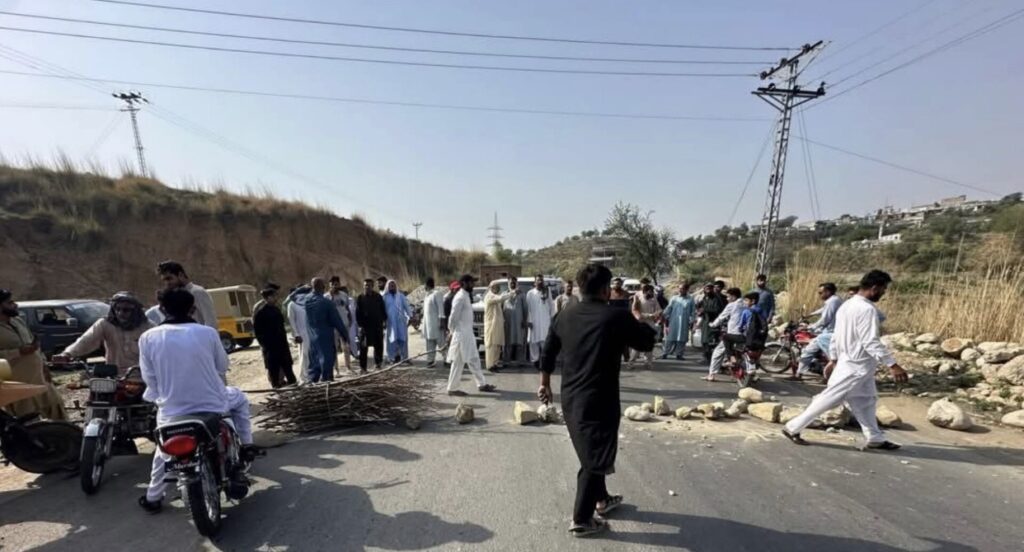
Dadyal, Pakistan-administered Kashmir — A wave of protests has erupted in Dadyal following the reported arrest of nationalist leader Israr Kashmiri, Information and Broadcast Secretary of the Jammu Kashmir Liberation Front (JKLF). The situation has escalated with local residents blocking the key Plak Entry Point, cutting off all vehicular traffic into the city.

According to local sources and Kotli Sohlanan Digital, Israr Kashmiri was allegedly abducted by unidentified individuals late Sunday night. His family members and supporters spent the night visiting local police stations in search of information, but received no confirmation about his whereabouts. Despite repeated assurances from officials, no progress was made regarding his release.

By Tuesday morning, JKLF Dadyal chapter leaders, along with a large number of citizens, initiated a protest by closing down the main bridge at Plak — the central entryway into Dadyal town.

Public Response and Road Closure

Protesters, including a significant number of young people, erected barricades and halted all forms of traffic. Their primary demand is the immediate release of Israr Kashmiri, and they have warned that the protests will intensify if their demand is not met.

Local protesters block Palak Road in Dadyal, Azad Kashmir, (Pakistan administered Kashmir) demanding release of JKLF leader Israr Kashmiri.

Tensions in Dadyal are visibly rising as the protest enters its second day. Local reports confirm that all major routes leading into the town are currently blocked, affecting the movement of goods and people.

Background of the Arrest

A First Information Report (FIR) shared earlier by law enforcement authorities states that Israr Kashmiri was taken into custody on charges related to national security. He is accused of uploading social media content critical of Pakistan’s military, ideology, and state institutions — a violation of laws governing cybercrime and national integrity.

However, JKLF leaders and various nationalist groups argue that the arrest is politically motivated and part of a larger crackdown on dissent in Pakistan-administered Kashmir.

Civil Society Reacts

Representatives from the Jammu Joint Awami Action Committee and human rights activists have strongly condemned the arrest. In a joint statement, they demanded a fair trial in a court of law instead of arbitrary detention.

“If there are legal charges, let them be heard in an open court. Disappearances and secret detentions only deepen mistrust and create unrest,” said one activist speaking to The Azadi Times.

This is not the first time Israr Kashmiri has faced arrest. He was previously detained under similar charges but later released after widespread public pressure.

Nationalist Sentiment in Dadyal

Dadyal, part of the Mirpur Division in Azad Jammu and Kashmir, (Pakistan administered Kashmir) is known for its strong pro-Kashmiri nationalist identity. While the region is under Pakistan’s administrative control, many residents advocate for Kashmir’s independence from both India and Pakistan.

The arrest of a prominent pro-independence leader like Israr Kashmiri has further aggravated political sensitivities, especially in a town with a long history of political activism and civil resistance.

Official Silence and Security Measures

As of this report, no formal statement has been released by AJK authorities or Pakistani law enforcement agencies regarding the current legal status of Israr Kashmiri.

Security forces are reportedly monitoring the situation, and informal efforts at negotiation are ongoing. However, the lack of transparency and absence of official clarification has added to the unrest.

Local businesses remain shuttered, and schools and public transportation have been affected due to the blockade at Plak.

Human Rights and Legal Concerns

Legal experts and human rights defenders are watching the case closely. Several have pointed out that freedom of expression and the right to protest are protected under international human rights frameworks — including treaties that Pakistan has ratified.

Any violations of due process, including detentions without trial, risk triggering international scrutiny and could damage Pakistan’s credibility on human rights in the Kashmir region.

What Happens Next?

Protesters have vowed to continue their peaceful blockade until Israr Kashmiri is released or officially presented in court. The coming hours are critical, as the administration must decide whether to negotiate or risk a broader escalation of unrest in the region.

The Azadi Times will continue to monitor the situation and provide timely updates as the story develops.

Syed Basit Ali’s Referendum Call Sparks Mixed Reactions in Kashmir

Muzaffarabad, Pakistan administrated Kashmir: – Syed Abdul Basit Ali, a prominent figure from Leepa Valley a scenic valley alongside the Ceasefire Line in Pakistan-administered Kashmir, has sparked a heated debate in the region with his recent call for a referendum to resolve the longstanding issue of Jammu and Kashmir’s status.

In a video uploaded on his Facebook page, Ali emphasized the need for a referendum, citing it as a viable solution to the Kashmir dispute. His comments have been met with both praise and skepticism, with some hailing his move as a step towards resolving the issue, while others questioning the motivations behind his sudden push for a referendum.

Ali, known for his pro-Pakistan Army stance and frequent media appearances. However, his latest move has raised eyebrows, with some speculating that there may be ulterior motives at play.

“While we appreciate Syed Basit Ali’s efforts to highlight the Kashmir issue, we cannot ignore the fact that similar promises have been made to the Kashmiri people in the past, only to be left unfulfilled,” said a local Kashmiri resident, who wished to remain anonymous. “We will be watching closely to see if this is a genuine attempt to resolve the issue or just another ploy to manipulate public opinion.”

Despite the skepticism, many Kashmiris have welcomed Ali’s call for a referendum, seeing it as a potential step towards a peaceful resolution to the longstanding dispute.

“We stand with all voices that advocate for the rights of the Kashmiri people, including the right to self-determination through a free and fair referendum,” said a spokesperson for a local Kashmiri rights group. “However, we also urge all parties involved to ensure that any solution is inclusive, transparent, and respects the wishes of the Kashmiri people.”

As the debate surrounding Ali’s call continues, one thing is clear: the people of Jammu and Kashmir are eager for a resolution to the decades-long dispute. Whether Ali’s referendum call will gain traction remains to be seen, but it has undoubtedly sparked a much-needed conversation about the region’s future.

The local leader from Leepa Valley told to the Azadi Times that Syed Basit Ali’s comments have sparked a wider debate about the role of external actors in shaping the Kashmir dispute. While some have hailed Ali’s call as a positive step, others have expressed concerns about the potential for external interference.

The Azadi Times remains committed to providing balanced and unbiased reporting on the Kashmir dispute. We will continue to follow developments closely and provide updates as the situation evolves.

SIM Owner Details by Number: How to Check, Legal Concerns, and Global Regulations

SIM Owner Details by Number – Legal Ways to Trace SIM Ownership. Learn how to check SIM owner details by number in legal, ethical ways. Discover global regulations, privacy concerns, and tools used by authorities and telecom providers.

In today’s interconnected world, mobile numbers are more than just tools for communication—they are digital identities. Whether you’re trying to verify the authenticity of a caller or investigating harassment or fraud, the ability to trace a SIM owner by numberhas become a significant issue. This article explores how SIM owner details can be retrieved, the legal landscape globally, and the ethical concerns tied to this practice.

What Does “SIM Owner Details by Number” Mean?

“SIM owner details by number” refers to retrieving personal information—such as name, address, ID proof, and registration details—associated with a mobile SIM card. These details are typically held by telecom operators and are used to:

  • Authenticate users
  • Prevent fraud
  • Comply with government surveillance and security laws

However, accessing this data is tightly controlled in most countries due to privacy laws and the risk of misuse.

Why Would Someone Want to Find SIM Owner Details?

There are several legitimate reasons for wanting to identify a SIM card owner:

  • Verification during business deals
  • Reporting spam or fraud calls
  • Tracking a lost device
  • Helping law enforcement in investigations
  • Avoiding scams or impersonation

However, many people search for ways to find SIM owner details without permission, which can lead to legal repercussions.

How Telecom Companies Handle SIM Registration

Most countries now require mandatory SIM registration with government-issued identification. Here’s a quick comparison of SIM registration rules in key countries:

CountrySIM Registration Requirement National Database Integration India Mandatory KYC with Aadhaar or ID proofYes (Centralized)PakistanBiometric verification via NADRAYesNigeriaNIN-linked registrationYesUSANo national SIM registryNo (carriers handle KYC)UKNo ID required for prepaid SIMsNoUAEEmirates ID requiredYesPhilippinesSIM Card Registration Act (2022)Yes

Is It Legal to Check SIM Owner Details?

Accessing SIM owner details without consent is illegal in most countries. Telecom providers are bound by data protection laws like:

  • GDPR in Europe
  • CCPA in California
  • ITU Data Protection Frameworks in developing countries

Only authorized government bodies (like the police or intelligence agencies) can legally request this information from telecom operators through proper channels.

How Do Law Enforcement Agencies Trace SIM Owners?

Authorities use Cellular Network Data Monitoring and Subscriber Information Requests through legal orders (like subpoenas). They rely on:

  • IMEI tracking
  • Call detail records (CDR)
  • GPS triangulation
  • Telecom KYC databases

This process is slow, regulated, and only done with legitimate cause.

Online Tools Claiming to Reveal SIM Owner Details: Are They Real?

If you’ve come across websites or apps claiming they can reveal SIM owner details by just entering a number—be cautious. Most of these platforms are either:

  • Scams designed to steal 
  • your personal data
  • Illegally operating without any authorization from telecom regulators

These services often ask for sensitive information or permissions that could compromise your privacy or security. In some cases, using such tools might also make you complicit in a privacy violation, which can have legal consequences depending on your country’s cyber laws.

Red Flags of Fraudulent SIM Lookup Services:

  • Asking for upfront payment or banking details
  • Requiring unnecessary permissions (like access to contacts or messages)
  • Not affiliated with any official telecom providers or government bodies
  • Lack of a clear privacy policy or terms of service

Pro Tip: Always verify whether a service is recognized by your local telecom regulator or government agency before using it.

Legal Alternatives for Verifying a Phone Number

If you have a legitimate need to verify a phone number’s owner, consider these legal and ethical methods:

  • Contacting the Telecom Provider: Some telecoms offer limited verification for businesses or fraud reports, though personal data won’t be disclosed.
  • Reporting to Authorities: In cases of fraud or harassment, file a complaint with law enforcement who can request the data legally.
  • Use Verified Business Tools: Platforms like Truecaller or Hiya use crowdsourced data and can provide caller identity (though not guaranteed to be accurate or legally verified).
  • Government Portals (where available):Some countries provide limited lookup features for registered users under lawful conditions.

Global Regulations on SIM Data Privacy

Here’s a brief overview of how some regions regulate access to SIM data:RegionRegulatory BodyAccess LimitationsEUGDPRStrong individual consent required; heavy penalties for misuseUSAFCC, CCPA (California)Telcos cannot disclose subscriber info without warrantIndiaDoT, TRAIAccess limited to law enforcement; KYC mandatory for all SIMsMiddle EastLocal telecom regulators (e.g., TRA, UAE)Strict ID-based registration; access only via court orders

While the curiosity to uncover a SIM owner’s identity may stem from genuine concerns—such as safety or fraud prevention—it’s essential to understand the legal and ethical boundaries involved. Unauthorized attempts to obtain this information can result in severe penalties under privacy and cybercrime laws.

The best approach? Work within the law, use official channels, and always respect individual privacy.

How to Check if Your WhatsApp Has Been Hacked

WhatsApp has become a primary tool for communication, connecting millions of users daily. However, this widespread use also makes it a prime target for hackers.

If you suspect your WhatsApp account has been compromised, it is crucial to act swiftly to protect your privacy and data.

Signs Your WhatsApp May Be Hacked

There are several warning signs that your WhatsApp account may have been hacked. One of the most obvious indicators is unusual activity, such as messages you did not send appearing in your chats. Friends or family may inform you that they have received strange links or spam from your number. Another red flag is being unexpectedly logged out of your account, which could mean someone else has gained access.

Additionally, if your phone’s battery drains faster than usual or your mobile data usage spikes without explanation, it could be a sign that malware or spyware is running in the background. Slow performance, unfamiliar apps installed on your device, or sudden pop-ups may also indicate a security breach.

How to Check for WhatsApp Hacking

To confirm whether your WhatsApp has been hacked, follow these steps:

  1. Check Active Sessions – Open WhatsApp, go to Settings > Linked Devices, and review all active sessions. If you see an unfamiliar device, log it out immediately.
  2. Enable Two-Step Verification – This adds an extra layer of security. Go to Settings > Account > Two-Step Verification and set up a PIN.
  3. Scan for Spyware – Use a reputable antivirus app to scan your phone for malicious software.
  4. Monitor Your Account Activity – Regularly check your WhatsApp Web sessions and revoke access to any suspicious devices.

What to Do If Your WhatsApp Is Hacked

If you confirm that your account has been compromised, take immediate action:

Log Out of All Devices – Go to Linked Devices and select Log Out from All Devices.

Change Your SIM Card PIN – Contact your mobile provider to secure your number.

Notify Contacts – Inform friends and family to ignore any suspicious messages sent from your account.

Report to WhatsApp – Use the in-app support feature to report the breach.

Preventing Future Hacks

To safeguard your WhatsApp account, avoid clicking on suspicious links, never share verification codes, and regularly update the app. Using strong, unique passwords and enabling two-factor authentication can significantly reduce the risk of hacking.

Staying vigilant and proactive is the best defense against cyber threats. If you suspect any unauthorized access, act quickly to secure your account and personal information.