In an age where internet connectivity is central to everyday life, many households across Pakistan-administered Kashmir and beyond still struggle with weak Wi-Fi signals. Thick walls, poor router placement, and interference from household electronics often contribute to unreliable connections.
But a surprisingly simple and cost-free solution has gained traction globally—and it’s already found in most kitchens: aluminium foil.
Why Wi-Fi Signals Drop Indoors
Wi-Fi, which operates on radio frequencies typically at 2.4 GHz and 5 GHz, can be affected by physical obstructions such as brick walls or reinforced concrete. Other common culprits include microwave ovens, metal appliances, and even neighbouring Wi-Fi networks.
When a router is placed at one end of a house or apartment, the signal often weakens significantly by the time it reaches other rooms. In many homes across Muzaffarabad, Neelum Valley, and Rawalakot, these issues are compounded by building materials that block radio frequencies and limited access to commercial Wi-Fi extenders.
The Science Behind the Foil
Aluminium foil reflects electromagnetic waves, including the high-frequency signals emitted by Wi-Fi routers. By shaping and placing foil strategically behind a router’s antenna, users can redirect and concentrate the signal toward the area where it’s needed most.
This redirection reduces signal scattering and increases signal strength in a specific direction—improving coverage without any additional expense.
How to Create a Simple Foil Wi-Fi Reflector
For households without access to professional Wi-Fi range extenders, aluminium foil offers a basic but effective method to strengthen connectivity.
Materials Needed:
Aluminium foil (regular kitchen foil)
Scissors or a cutter
Tape or adhesive
A piece of cardboard (optional for support)
Steps:
Cut a rectangular or curved piece of foil roughly the size of a sheet of paper.
Shape it into a slight curve, similar to a satellite dish. For better structure, wrap it around a piece of cardboard.
Position the reflector behind the router’s antenna, facing toward the direction where the signal is weakest.
Test the signal in different rooms and adjust the foil’s angle accordingly.
While it won’t offer the power of a commercial mesh network system, this simple technique has proven effective in small to medium-sized homes.
Supporting Research
Studies from institutions such as Dartmouth College and MIT have demonstrated that custom-designed reflectors—made from low-cost materials like foil and plastic—can significantly improve Wi-Fi coverage. These findings support the growing use of DIY foil reflectors as a temporary but effective solution, especially in areas with limited technological infrastructure.
Use Cases in Kashmir
With growing reliance on digital platforms for education, remote work, and communication, Kashmiris have increasingly turned to home-based solutions to stay connected. In rural and hilly areas, such as Leepa and Hattian Bala, internet signal degradation is a common issue.
Residents report improved connectivity using foil reflectors, especially in homes where routers are placed on lower floors and must transmit signals through thick concrete ceilings.
Students attending online courses, teachers delivering remote lectures, and professionals working from home have all benefited from this accessible method.
Practical Considerations and Limitations
While aluminium foil can enhance signal direction and strength, it is not a replacement for professional network solutions.
Experts advise the following:
Do not cover the entire router with foil, as this can cause overheating.
Ensure the foil does not come into contact with circuit boards or ports.
Use the method only indoors and away from moisture-prone areas.
For more comprehensive coverage, a Wi-Fi extender, mesh system, or upgraded router may be necessary—particularly in larger homes or multi-storey buildings.
Aluminium foil may not seem like advanced technology, but it works on sound scientific principles. In regions where digital infrastructure is still developing, such small innovations can play a significant role in bridging connectivity gaps.
As the demand for stable internet access grows across Pakistan-administered Kashmir, low-cost solutions like this offer immediate relief while larger-scale digital development continues.
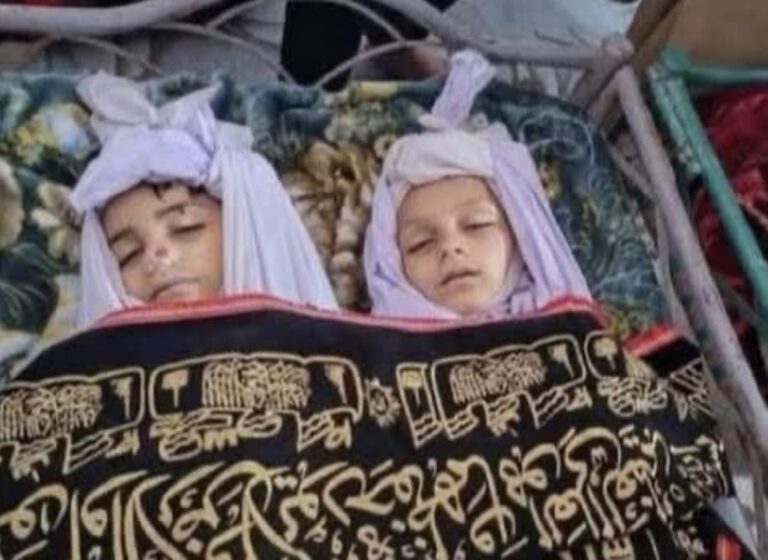
Peshawar, Pakistan – A tragic incident unfolded in the early hours today in the village of Hormuz, Mir Ali, North Waziristan, leaving four innocent children dead and three others injured.
While local sources claim the casualties resulted from a suspected drone strike that destroyed a house, police officials present a conflicting narrative, stating the deaths occurred due to an exchange of fire between security forces and unidentified armed militants.
Conflicting Reports: Drone Attack or Clash?
Eyewitnesses and local residents allege that a drone strike targeted a residential home, reducing it to rubble and killing four minors. The scene was described as chaotic, with distraught families searching for survivors amid the wreckage.
However, law enforcement sources deny the drone strike claims, instead attributing the deaths to crossfire during a security operation. No official statement has been released to clarify the circumstances, fueling anger and confusion among locals.
Outrage and Protests in Mir Ali
The incident has sparked widespread outrage across North Waziristan. Grieving families and protesters have set up a sit-in camp at Mir Ali Chowk, demanding justice for the victims. Demonstrators accuse security forces of targeting civilians and call for an immediate investigation into the killings.
“How long will our children’s blood be spilled?” asked one protester. “We demand answers and accountability. If justice is not served, we will expand our protests.”
Growing Tensions in North Waziristan
North Waziristan, a region long plagued by militancy and military operations, remains volatile. The latest incident has reignited tensions, with residents questioning the government’s counterterrorism strategies and the recurring loss of civilian lives.
Human rights organizations have repeatedly raised concerns over civilian casualties in Pakistan’s tribal areas, urging transparency in military operations. The lack of an official explanation in this case has only deepened mistrust among locals.
Calls for Independent Investigation
Activists and tribal leaders are demanding an independent inquiry to determine whether the deaths resulted from a drone strike or a security operation. International observers have also called for restraint, emphasizing the need to protect non-combatants in conflict zones.
As protests continue, authorities face mounting pressure to address the grievances of North Waziristan’s residents and prevent further escalation.
Key Points:
Four children killed, three injured in Mir Ali, North Waziristan, Pakistan
Conflicting reports: Locals allege a drone strike, while officials blame crossfire.
Mass protests erupt, with demands for justice and transparency.
Growing tensions in the region over civilian casualties.
Calls for an independent investigation into the incident.
The situation remains tense as North Waziristan awaits clarity on the tragic event that has, once again, left families mourning and a community demanding answers.
(This article is based on local reports and conflicting official statements. Updates will follow as more information becomes available.)
Karachi/Gilgit (Special Correspondent) — A peaceful protest held by student organizations from Pakistan-administered Kashmir’s Gilgit-Baltistan region in front of the Karachi Press Club turned into a scene of chaos after a sudden police crackdown led to the arrest of dozens of demonstrators. The incident has triggered widespread condemnation across the region, with civil society, political observers, and student groups calling it a blatant violation of democratic and human rights.
The protesting students—representing groups such as the Baltistan Students Federation, Nagar Students Organization, Bagrote Students Organization, Balawaristan National Students Organization, Balawaristan National Front, Karakoram Students Organization, and National Students Federation—had gathered to demand the release of political prisoners, constitutional identity for Gilgit-Baltistan, and educational reforms.
Among the names mentioned in their demands were several detained activists including Advocate Ehsan, Wahid Hassan, Irfan Azad, Asghar Shah, Masood ur Rehman, and Mahboob.
Allegations of Excessive Force and Suppression
Eyewitnesses and protest participants told VOIthat the demonstration was entirely peaceful until police forces suddenly launched a sweeping crackdown, detaining numerous students without prior warning.
“We were peacefully raising our voices for our basic rights—political freedom, access to education, and ownership over our resources. Instead, we were met with force and arrests,” said one protester.
The arrests have sent shockwaves throughout Gilgit-Baltistan, where many are viewing this as part of a broader pattern of state suppression targeting voices critical of Islamabad’s policies in the region.
Public Outrage and Political Repercussions
The crackdown has been met with sharp criticism from civil society, rights groups, and political observers across Gilgit-Baltistan. Many have called it a violation of democratic norms and an attempt to silence youth-led dissent.
Public anger has particularly been directed at the Pakistan People’s Party (PPP), which governs Sindh province, with many accusing the party of acting in tandem with the establishment.
“This action has unmasked the authoritarian mindset of the PPP. They are now acting as tools of the establishment and using state power to silence the people of Gilgit-Baltistan,” said a youth leader in Gilgit.
Election Backlash Brewing
In reaction to the incident, several local voices have announced their intent to hold PPP accountable in the upcoming Gilgit-Baltistan general elections in 2025.
Political analysts warn that this crackdown may seriously damage the PPP’s standing in the region, where it has traditionally maintained a support base.
“This is no longer just about students—it’s about dignity, democracy, and the right of the people of Gilgit-Baltistan to be heard,” said one political observer.
Demands and Call for Action
The protesting groups and community leaders have issued three major demands:
Immediate and unconditional releaseof all arrested students;
Independent inquiry into the police crackdown by a neutral, high-level commission;
Concrete steps toward constitutional, political, and economic autonomy for Gilgit-Baltistan.
Human rights organizations have also called on Pakistan’s national institutions and international observers to take note of the increasing restrictions on freedom of expression and assembly in the region.
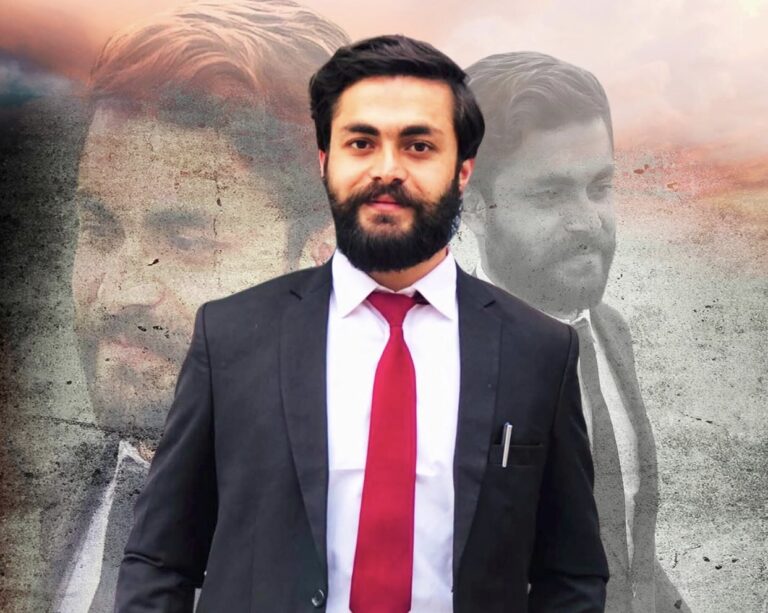
Gilgit, Gilgit Baltistan (Pakistan administrated Kashmir) – Widespread condemnation has erupted across Pakistan-administered Kashmir following the arrest of Irfan Azad, a prominent student activist and President of the Baltistan Front (BF). Human rights advocates, student leaders, and civil society groups have also denounced late-night raids on the homes of Manzar Maya and other senior leaders of the Awami Action Committee Gilgit Baltistan (AACGB), a grassroots movement known for its advocacy on local rights and resource sovereignty.
Azad’s arrest is being viewed as part of a broader crackdown on dissenting voices in Gilgit-Baltistan, amid growing tensions over controversial legislative measures related to land and natural resources.
Locals Raise Concerns Over Resource Control
Activists and locals allege that the current administration is attempting to silence voices of resistance to push through the Mines and Minerals Act and the Land Reforms Act, which many fear will allow the sale or lease of Gilgit-Baltistan’s mineral-rich lands to powerful corporate entities.
Speaking to VOI, student leaders claimed the state is using fear as a tool to weaken local opposition:
“These arrests and raids are not isolated incidents. They are aimed at creating a climate of fear so that natural resources can be handed over to non-local investors,” one youth activist said.
They further emphasized that the people of Gilgit-Baltistan—especially its youth—have historically protected their land, mountains, and minerals and will continue to resist any move to alienate them from their resources.
Long-Standing Demands for Autonomy and Resource Rights
The region of Gilgit-Baltistan, administered by Pakistan but claimed by India as part of the larger Kashmir dispute, has long been at the center of debates on autonomy, political representation, and control over its vast mineral wealth.
Local communities have repeatedly demanded that any development in the region be carried out with the consent of the people and ensure long-term benefits for the indigenous population.
“Our struggle is not just political—it is about survival, dignity, and the future of our generations,” said a community elder from Gilgit.
Religious Leaders, Students Call for Peaceful Resistance
Religious scholars and youth leaders have called on the people to remain calm but resolute in their struggle, urging unity and peaceful protest. The arrests, they say, are meant to provoke unrest and must be countered with discipline and solidarity.
Demands for the immediate release of Irfan Azad and an end to police raids have been echoed by political groups and civil society organizations, who argue that silencing democratic voices will only deepen the existing mistrust between the people and the state.
Broader Implications for the Region
Observers warn that continued suppression of political expression in Gilgit-Baltistan could have regional consequences. The disputed region, rich in resources and geopolitically sensitive, remains central to the aspirations of its people and the broader Kashmir issue.
As calls grow for inclusive governance and equitable development, the situation in Gilgit-Baltistan highlights the urgent need for transparency, accountability, and respect for local voices.
China and Russia have quietly agreed to construct an automated nuclear power plant on the lunar surface by 2036, after signing a memorandum of cooperation earlier this month (Live Science, Reuters). The facility will form the backbone of the International Lunar Research Station (ILRS), offering a continuous power source alongside solar arrays and enabling long‑term uncrewed—and eventually crewed—operations near the Moon’s south pole (www.ndtv.com, South China Morning Post). The project follows multiple precursor missions, including China’s Chang’e‑8 in 2028 and a series of heavy‑lift rocket launches through 2035 to deliver modular components (Reuters, GreekReporter.com). Experts warn that the move accelerates a new space race, challenging NASA’s scaled‑back Lunar Gateway ambitions and redefining geostrategic dynamics in outer space (The Times, China Academy).
A Strategic Memorandum Foreshadows Collaboration
China’s space agency and Roscosmos formalised the deal in early May, detailing a phased timeline: initial robotic deployment in the mid‑2030s, followed by incremental power‑plant assembly and activation by 2036 (www.ndtv.com, Reuters). The ILRS, conceived as a multinational research hub, will leverage this reactor to support scientific experiments, communication relays, and life‑support systems in bitter‑cold lunar nights (South China Morning Post, Live Science).
Technical Blueprint: Robots, Reactors, and Launches
Automated Construction: Robotics will assemble the reactor modules on‑site, minimising human risk and reducing launch mass requirements (www.ndtv.com, GreekReporter.com).
Modular Design: The plant comprises multiple compact reactors, each delivered separately on heavy‑lift rockets, then joined into a unified power grid (Reuters, Live Science).
Hybrid Power Mix: Solar farms will handle daylight generation, while the reactor guarantees continuous output through two‑week lunar nights, ensuring uninterrupted research operations (Reuters, South China Morning Post).
Geopolitical and Scientific Implications
This initiative signals the dawn of state‑led nuclear energy beyond Earth, raising complex questions about lunar governance, non‑proliferation, and resource rights (The Times, China Academy). The reactor’s placement at the south pole—home to suspected water‑ice reserves—underscores broader ambitions for in‑situ resource utilisation and long‑term human presence (Reuters, South China Morning Post). Observers note the move may spur rival programmes and reshape collaboration frameworks under the Outer Space Treaty (Live Science, China Academy).
A New Era in Lunar Research
The ILRS partners have invited over a dozen nations, including emerging spacefaring states, to join the project. This consortium aims to share data, technology, and research findings, potentially broadening access to lunar science and technology development (South China Morning Post, Reddit). However, the memorandum’s opaque details leave key questions unanswered, from environmental safeguards to decommissioning plans.
What Comes Next
2028: Launch of Chang’e‑8 to scout landing sites and conduct in‑situ resource surveys.
2030–35: Series of heavy‑lift missions deliver reactor modules, habitat units, and power infrastructure.
2036: Reactor activation, marking the first nuclear power plant beyond Earth.
By 2040: Potential crewed missions leveraging consistent energy, paving the way for permanent outposts.
SEO Elements
Meta Description:
Tags (comma‑separated):
Focus Keywords: Lunar nuclear power plant, China Russia ILRS, Moon south pole energy, automated reactor on the Moon
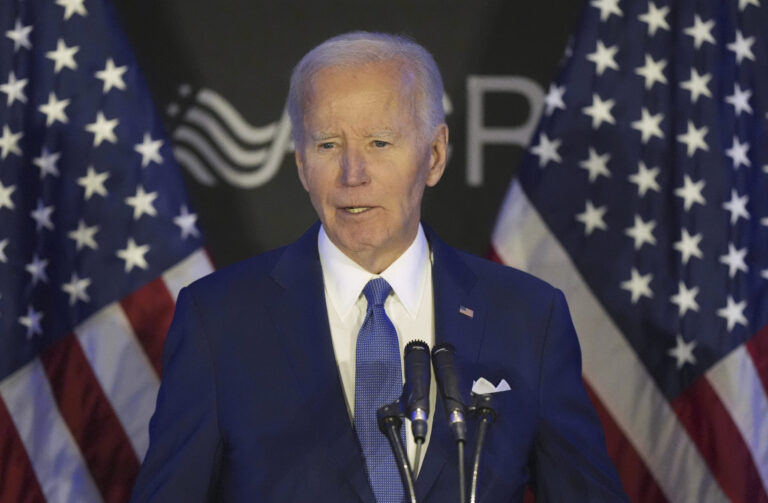
Former US President Joe Biden, aged 82, has been diagnosed with an aggressive form of prostate cancer that has spread to his bones, featuring a Gleason score of 9, and is reported to be hormone‑sensitive and thus manageable with treatment . The diagnosis followed the discovery of urinary symptoms and a prostate nodule during a recent medical examination . His office has indicated that he and his family are exploring hormone therapy and other options under physician guidance . Political figures across the spectrum have offered messages of support, highlighting bipartisan concern for his health and admiration for his resilience . Medical experts note that while metastatic prostate cancer is incurable, its hormone sensitivity often allows for significant disease control and prolonged survival.
Diagnosis Details
Biden’s cancer was confirmed on Friday after doctors identified a small prostate nodule prompted by urinary complaints, and further tests revealed metastasis to his bones. The Gleason scoring system rated his disease at 9 out of 10, classifying it as “high‑grade” and capable of rapid progression if untreated . Despite the aggressive classification, the cancer’s hormone sensitivity means treatments that lower testosterone can help shrink tumors and impede growth .
Medical Context and Treatment
Prostate cancer is the second most common cancer among American men and becomes substantially more treatable when detected early; metastatic cases, while more challenging, can still respond well to hormone deprivation therapy . Experts from leading US cancer centers emphasize that modern hormone‑based regimens often achieve significant remissions, though they may carry side effects such as fatigue, muscle loss, and changes in libido . Follow‑up imaging and PSA monitoring will guide Biden’s treatment plan, which could also incorporate newer targeted therapies or radiotherapy if needed .
Political and Public Reaction
Reactions poured in from across the political spectrum, with current and former leaders alike expressing support and respect for Biden’s courage . Vice President Kamala Harris and former presidents Donald Trump and Barack Obama each extended well‑wishes, underscoring the nonpartisan nature of health solidarity (Time, The Independent). Grassroots supporters and advocacy groups have rallied on social media, praising his prior “Cancer Moonshot” initiative and hoping for his swift recovery .
Implications and Next Steps
While the 82‑year‑old remains active in public life, his medical team will determine timelines for treatment initiation and any pauses in his engagements . The announcement has reignited discussions on men’s health screenings, with physicians urging broader PSA testing for early detection of prostate anomalies. Biden’s experience may also influence healthcare policy debates, particularly around access to cutting‑edge cancer therapies for seniors and veterans.
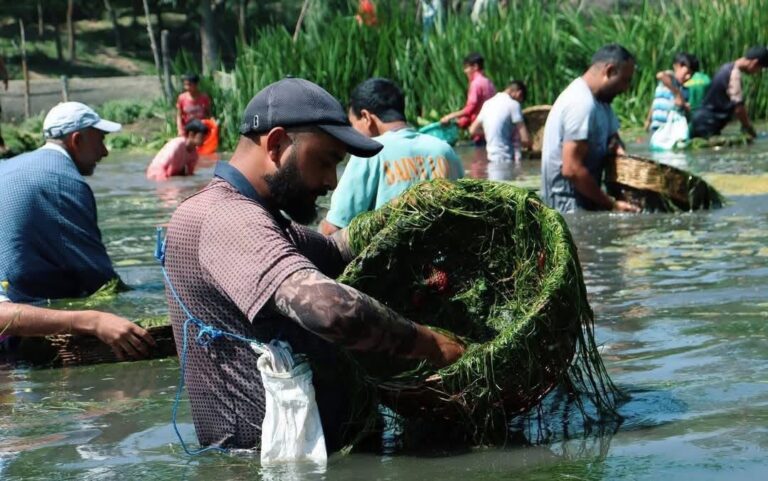
Qazigund, J&K, Indian administered Kashmir – In a vibrant celebration that blends heritage, environmental stewardship, and community spirit, the residents of Panzath village in South Kashmir’s Qazigund area observed their annual traditional fishing festival this Sunday. The event drew dozens of participants who joined hands in fishing and stream-cleaning activities along the historic Panzath Nag stream.
Held every year during the blooming season of apples, almonds, and walnuts—typically the third or fourth week of May—the event is much more than a fishing day. For the locals, it is a cherished tradition that feels no less than Eid.
A Tradition Rooted in Heritage
At the heart of this unique celebration is Panzath Nag, a spring believed to be fed by around 500 underground springs—a name derived from the words “Paanch” and “Haath”, meaning 500, and “Nag”, meaning spring. Although only a few of these springs are visible today, the legend and importance of the area remain deeply entrenched in local history and folklore.
“Panzath Nag was just a kilometre away from my home. I’ve been part of this tradition since childhood,” said a local participant. “People even travel over 50 kilometres to witness or join in the celebrations.”
The festival sees men, youth, and children armed with wicker baskets and fishing nets entering the stream from the upper reaches, moving downstream to catch fish. Along the way, they also clean the water body—removing weeds, silt, and waste to prepare the stream for the upcoming paddy cultivation season.
Environmental and Economic Significance
Beyond its cultural value, Panzath Nag serves as a critical source of irrigation and drinking water for over 50,000 people in the Qazigund area. Situated at the foothills of the Pir Panjal range, the spring system plays an essential role in the agricultural lifeline of the region.
“This is not just a festival; it’s our way of preserving nature,” said another resident. “We clean the stream ourselves to ensure proper water flow for irrigation.”
Local residents are increasingly advocating for official recognition and support for this heritage site. Many believe that if developed sustainably as a tourist attraction, the Panzath Nag spring and its annual festival could provide significant employment opportunities for the local youth.
A Call for Preservation and Development
Despite its cultural richness and ecological importance, locals allege that the site faces official apathy and lacks the attention it deserves from the administration.
“Proper attention must be given to this natural and cultural treasure. Developing Panzath as a tourist destination could help preserve the springs while creating livelihoods,” said one villager.
The villagers have appealed to higher authorities and the district administration to initiate maintenance projects and take concrete steps to protect the springs from environmental degradation and possible extinction.
As Panzath continues to hold fast to its age-old traditions, it offers a powerful reminder of how culture and conservation can go hand in hand—deserving not just celebration, but support and recognition at broader levels.
Explore the devastating impact of the recent India-Pakistan border skirmishes in Kashmir. Discover the stories of civilians who lost their lives during the missile and artillery exchanges. Despite the ceasefire, the human toll is immeasurable, highlighting the ongoing conflict in Kashmir.
Srinagar/Muzaffarabad: The region of Kashmir, a conflict-ridden land, has long been a symbol of geopolitical tensions between India and Pakistan. The Line of Control (LoC), which divides the region between India-administered Kashmir and Pakistan-administered Kashmir, has witnessed frequent skirmishes, but the most recent escalation that occurred between May 7 and May 11, 2025, has been particularly devastating for the civilian population.
During these intense days of artillery exchanges, missile strikes, and rocket bombardments, numerous lives were tragically lost. The civilian casualties continue to rise as a result of cross-border shelling, drone attacks, and rocket explosions. In this article, we dive deep into the personal stories of loss, grief, and survival in Kashmir amidst the backdrop of the ongoing India-Pakistan conflict.
Kashmir Under Fire: The Recent India-Pakistan Border Skirmishes
On May 7, 2025, tensions between India and Pakistan escalated once again. India’s military launched a series of missile strikes on Pakistan-administered Kashmir in retaliation for an earlier missile attack on India-administered Kashmir. While the political leaders on both sides may have announced a ceasefire on May 13, the human cost of the conflict has been significant, with civilians paying the heaviest price.
India’s missile strikes targeted key locations in the Pakistani-administered parts of Kashmir, including Muzaffarabad, the capital of Pakistan-administered Kashmir, and the districts of Kotli, Bagh, and Rawalakot. The bombardment continued for several days, causing massive destruction, loss of life, and widespread injury. Within these areas, more than 70 civilians were killed, including women, children, and elderly people.
At the same time, the Indian-administered regions of Poonch, Rajouri, and Uri along the LoC faced an onslaught of mortar and artillery fire. As a result, at least 40 civilians were confirmed dead, including three young children and several elderly individuals. With both sides blaming each other for the attacks, the immediate political response was to call for a ceasefire. But the devastating toll on civilians—especially families caught in the line of fire—remained unaddressed.
Stories from Kashmir: The Heartbreaking Accounts of Civilians Caught in the Crossfire
Kashmir, often described as the paradise on Earth, has witnessed unspeakable tragedy over the years due to the region’s military conflict. With over 70 civilians confirmed dead and more than 200 injured in just a few days of fighting, these recent escalations have further highlighted the urgent need for peace and stability in the region.
One particularly heart-wrenching story comes from Sardar Javed Razaq, a resident of Kotli, who lost his wife and daughter during the missile strikes. The attack occurred in the early morning hours of May 9, 2025. According to Sardar’s brother, Sardar Tahir Razaq, the family had taken shelter in the basement of their home when the attack occurred. While the family had hoped to ride out the violence in safety, the force of the explosion was too great. Sardar’s wife was killed instantly by a rocket-propelled grenade that struck the basement, while his young daughter was critically injured by shrapnel.
In an interview, Sardar Tahir recalled his brother’s grief-stricken state, unable to believe that his wife was gone and his daughter would never recover from her injuries. “Our world was torn apart that day,” Tahir said. “There are no words to describe what we feel, only an emptiness that can’t be filled.”
Another heartbreaking account comes from the village of Dhudhniyal in Poonch. Here, a young family of four was directly impacted by the artillery shelling that began on May 8. Usama, a newly married 22-year-old man, had just celebrated his wedding with his wife, Shazia, only a few days before the attack.
Tragically, on May 8, Usama and Shazia were resting inside their home when a shell exploded nearby, causing massive damage to their house. The force of the explosion killed Usama instantly and severely injured Shazia, who later succumbed to her injuries in the hospital. Their families were left in complete shock, their hopes for a peaceful life together shattered.
Usama, a newly married 22-year-old man, from Bagh district of Pakistan administrated Kashmir killed in recent India Pakistan Skirmishes in Kashmir
Shakila Ishrat, Usama’s mother, said, “We had been preparing for his wedding for months. We never imagined that we would be burying our son just days after he had celebrated his marriage. This loss has broken our hearts, and I don’t think we’ll ever recover from it.”
The Psychological Toll: Kashmir’s Children in Peril
Perhaps the most tragic aspect of this conflict is the effect it has had on Kashmir’s children. The sounds of artillery and explosions have become a haunting daily reality for many young residents of the region. In the districts of Poonch and Rajouri, at least 12 children were killed in the first few days of the conflict. Many more children were left orphaned or critically injured.
One such story is that of twin siblings, Sarah and Imran, who were just eight years old when they were killed in a mortar attack on May 8. Their father, Jameel Ahmed, was away at the time of the attack and was horrified when he learned of their deaths. “I spoke to my children just a few hours before the attack. They were laughing and playing, and now they are gone,” Jameel said, fighting back tears. “This is the second time I’ve lost my children. The first time was during the 2016 clashes. This time, I was powerless to stop it.”
Amreek Singh, a resident of Poonch, Indian administered Kashmir who was killed by shelling while moving children to safety in the basement.
The mental trauma of witnessing such devastation has left deep scars on the children who survive. Many young survivors suffer from PTSD, experiencing flashbacks and nightmares as the sounds of bombings and artillery fire continue to haunt their sleep. There are increasing reports of anxiety, depression, and social withdrawal among children in these border areas.
The Ongoing Crisis
Despite the ceasefire announced on May 13, 2025, the humanitarian situation in Kashmir remains dire. Thousands of civilians are living in constant fear, uncertain whether they will survive the next round of attacks. The damage to homes, schools, and infrastructure has left many families displaced, with no clear path to rebuilding their lives.
In addition to the physical toll, the emotional and psychological damage is staggering. Experts warn that the trauma experienced by civilians, especially children, will have lasting effects on the community. Many of the survivors are now suffering from chronic anxiety and depression, with no clear path to receiving adequate mental health support. Local hospitals and clinics are overwhelmed, with limited resources available to treat the increasing number of injured civilians.
International Attention and Humanitarian Efforts: Time for Action
While the governments of India and Pakistan must work to ensure the protection of civilians and a peaceful resolution to the conflict, the international community also has a critical role to play. Humanitarian aid is desperately needed in the affected regions, especially for the families who have lost loved ones, the displaced, and the injured. Organizations such as the International Committee of the Red Cross (ICRC) and UNICEF must ramp up their efforts to provide relief to those affected by the ongoing conflict.
However, political leaders must prioritize peace and diplomacy over further escalation. Both India and Pakistan must commit to a comprehensive peace plan that focuses on de-escalation and long-term conflict resolution. The voices of Kashmiri civilians, who are most affected by this conflict, must be heard. Kashmiris on both sides of the LoC deserve peace, stability, and an end to the senseless violence that has torn apart their lives for decades.
The Urgent Need for Peace and Accountability
The recent border clashes between India and Pakistan have underscored the ongoing human suffering in Kashmir. As missile strikes, rocket explosions, and artillery fire continue to ravage the region, the civilians caught in the crossfire are paying the heaviest price. In these dark times, the international community must step up to provide aid and support, while both India and Pakistan must work toward a long-term solution that brings lasting peace to Kashmir.
The people of Kashmir, whose lives have been shattered by years of violence, deserve nothing less than peace and dignity. They deserve a future where they can rebuild their lives, free from the threat of war. As the region continues to recover from this latest wave of violence, we must all recognize the importance of standing with Kashmir’s civilians—who continue to suffer, yet remain hopeful for a better tomorrow.
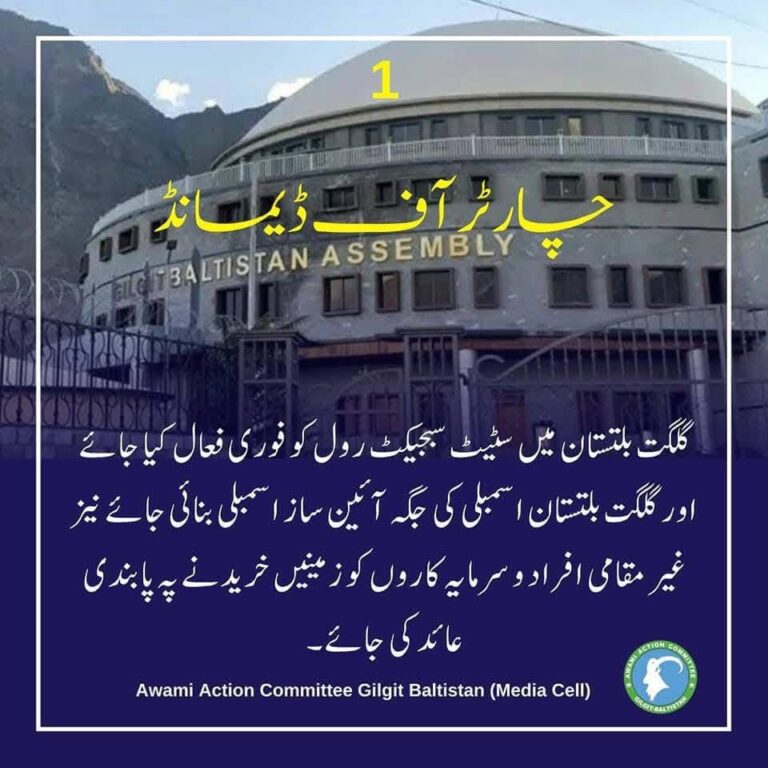
Chilas, Gilgit Baltistan (Pakistan administrated Kashmir): As the Grand National Jirga, organized by the Awami Action Committee Gilgit Baltistan (AACGB), approaches on the 24th and 25th of this month, a 19-point Charter of Demands has been formally presented to the federal government and state institutions. This charter is seen as a crucial document representing the aspirations of all districts in Gilgit Baltistan, aiming to address the constitutional and political ambiguities surrounding the disputed region.
Key Points of the Charter
The demands focus on securing fundamental rights, protecting local resources, and opposing illegal land grabs by influential groups. Notably, the charter emphasizes:
Protection of land, minerals, and forest resources from exploitation.
Constitutional rights for the people of GB, who remain in a legal limbo.
Observers consider this charter a significant step toward a brighter future for GB, ensuring the region’s identity and rights are safeguarded for coming generations.
Government Crackdown Ahead of Jirga
Before the Grand National Jirga could convene, the GB government allegedly launched a crackdown, arresting AAC Chairman Ehsan Ali Advocate and other nationalist leaders in what critics call an attempt to sabotage the event. Despite these arrests, public support for the Jirga remains strong, with activists urging all communities in GB to unite for its success.
Why This Matters
Gilgit-Baltistan, part of Pakistan-administered Kashmir and Kashmir issue, has long faced political and constitutional neglect. The Jirga represents a peaceful, collective effort to demand rights without challenging state sovereignty. Analysts suggest that ignoring these demands could deepen public discontent.
The people of GB, across all political and religious spectrums, are being urged by to support the Jirga, as its success is tied not only to the region’s future but also to the identity of future generations.
Kotli, Pakistan-administered Kashmir — The guns have fallen silent along the Line of Control (LoC), but for thousands of Kashmiris living in border villages, the echoes of recent shelling still haunt their daily lives. While a U.S.-brokered ceasefire between India and Pakistan has officially halted hostilities, the devastation left behind tells a different story—one of loss, displacement, and lingering fear.
A Fragile Peace Amidst Ruins
In early May, intense cross-border shelling between Indian and Pakistani forces shattered a four-year period of relative calm. Villages like Poonch, Uri, and Rajouri bore the brunt of the violence, with at least 13 civilians killed and 59 injured in Poonch alone, according to the Indian Ministry of External Affairs . Homes were reduced to rubble, livestock perished, and essential infrastructure was decimated.
Residents who had once found solace in the ceasefire agreement of 2021 now find themselves grappling with the trauma of renewed conflict. “We thought the worst was behind us,” said Abdul Ahad, a local from Gurez. “But now, we’re back to living in fear, with no shelters and no support.”(Precious Kashmir)
Lives Disrupted and Dreams Deferred
The shelling not only claimed lives but also disrupted the socio-economic fabric of these communities. In the village of Gingal, near Uri, residents recounted nights spent huddled in cowsheds, praying for safety as shells rained down . Families fled their homes in the dead of night, seeking refuge in neighboring towns, only to return to scenes of devastation.
Educational institutions have been closed indefinitely, and the local economy—already fragile—has taken a significant hit. Agricultural activities have come to a standstill, and the destruction of marketplaces has left many without a source of income.
The Psychological Toll
Beyond the physical destruction, the psychological impact on residents is profound. The constant threat of unexploded ordnance, the loss of loved ones, and the uncertainty of the future have left deep scars. “Every loud sound makes us jump,” shared Nasreena Begum from Salamabad. “We live in constant anxiety, not knowing if peace will last.”
Mental health services are scarce, and the stigma associated with seeking psychological help further exacerbates the issue. Community leaders have called for increased support and the establishment of counseling centers to aid in the healing process.
Calls for Accountability and Long-Term Solutions
As both India and Pakistan tout their military achievements, the civilians caught in the crossfire demand accountability and lasting solutions. Human rights organizations have urged both governments to prioritize the safety and well-being of border communities, emphasizing the need for transparent investigations into the shelling incidents and adequate compensation for victims .(Al Jazeera)
“Peace cannot be achieved through temporary ceasefires,” stated a representative from the Jammu Kashmir Liberation Front. “We need a comprehensive approach that addresses the root causes of the conflict and involves the voices of the Kashmiri people.”(Precious Kashmir)
The Road Ahead
While the current ceasefire offers a respite from active hostilities, the path to lasting peace remains fraught with challenges. The resilience of Kashmir’s border communities is evident, but without sustained support, infrastructure rebuilding, and genuine political dialogue, the cycle of violence may continue.
For now, the people of Kashmir cling to hope, even as they navigate the ruins of their homes and the memories of a peace that proved all too fleeting.