Neelum Valley, AJK (Pakistan-administered Kashmir) – As tensions escalate once again between India and Pakistan, life for civilians residing near the ceasfire line Line of Control (LoC) has become increasingly unlivable. Inhabitants of border villages on both sides of the disputed region find themselves trapped, unable to attend weddings, farm their lands, or participate in community events due to the ever-present risk of cross-border shelling.
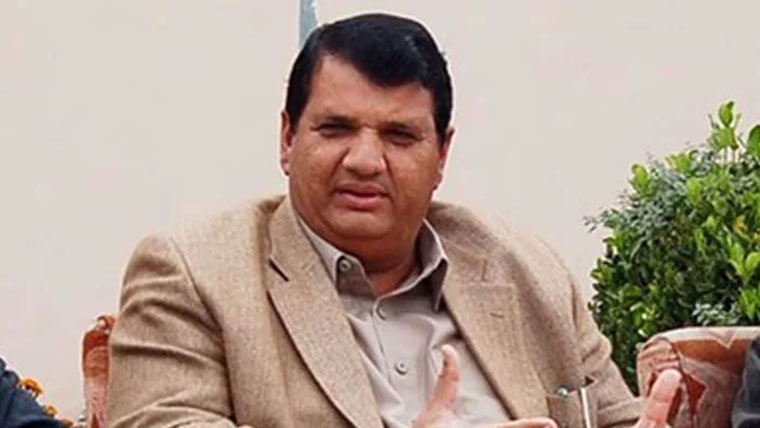
While these communities endure fear and disruption, the Pakistani Minister for Kashmir Affairs, who represents Pakistan’s central government, was recently seen touring and enjoying scenic locations in Neelum Valley directly facing the LoC. This apparent contradiction between the lived reality of border residents and the relaxed conduct of political elites has sparked criticism.
Well-known journalist Wasi Waja, reporting live from Neelum Valley, questioned the timing and tone-deafness of such visits. “When mainstream media in both India and Pakistan are dominated by aggressive war rhetoric, and border residents are living in fear, how is it acceptable that Pakistani federal ministers are enjoying leisure trips in sensitive areas like Neelum?” he asked.
The Ministry of Kashmir Affairs and Gilgit-Baltistan is part of Pakistan’s federal government. Though its ministers are elected from Pakistan’s provinces, they are tasked with overseeing matters concerning Azad Jammu & Kashmir and Gilgit-Baltistan regions that have long experienced political uncertainty and conflict.
The minister’s visit comes at a time when discussions of conflict dominate media headlines. The psychological impact on Kashmiris—especially those near the LoC—has been profound, with many reporting high stress levels, disrupted livelihoods, and a growing sense of abandonment.
Independent voices across the region have expressed concern over this disconnect. “The people of Kashmir are once again paying the price of geopolitical conflict, while their leadership appears disengaged from their pain,” one local academic commented, requesting anonymity due to political sensitivities.
This incident underscores the growing demand among Kashmiris for more responsible leadership, especially at moments when their daily lives hang in the balance. While the region’s natural beauty remains a source of pride, many believe it should not be used to mask the suffering of those who call it home.
Neelum Valley, Azad Jammu & Kashmir, (Pakistan-administered Kashmir) – Shah Ghulam Qadir, President of Pakistan Muslim League-Nawaz (PML-N), Azad Kashmir a regional branch of Pakistan’s political party made a bold statement during a public meeting in Neelum Valley, challenging the conventional narrative around the Line of Control (LoC) between the two parts of Jammu & Kashmir.
“I do not consider it the Line of Control,” he said. “I see it as a ceasefire line — as recognized by the United Nations.”
His remarks come at a sensitive time, following a recent escalation between Indian and Pakistani forces, which has once again placed the Kashmir region at the center of geopolitical tension. The comment, while brief, has stirred political conversations both locally and across the border, with observers interpreting it as a sign that some elements of Kashmiri leadership may be rethinking their alignment or expressing subtle dissatisfaction with the long-standing status quo.
The statement was highlighted by Facebook user Mohammad Rehan, who emphasized its significance amidst growing public discourse around Kashmiri self-determination. While PML-N is traditionally considered pro-Pakistan, Shah Ghulam Qadir’s framing of the LoC in UN terms hints at a more nuanced or evolving position within the party’s regional leadership.
For many pro-Kashmiri voices who advocate for freedom from both India and Pakistan, the acknowledgment of the UN-mandated terminology “ceasefire line” is more than symbolic. It reopens the conversation around Kashmir’s unresolved status and the legal and moral questions surrounding the region’s future.
As Kashmir’s political landscape continues to shift, statements like these may reflect a broader awakening or realignment, one that seeks to reclaim agency for the people of Jammu & Kashmir within international law and historical context.
India’s Mass Expulsions Target Residents from Pakistan-administered Kashmir, Tearing Apart Families
Poonch, Indian-administered Kashmir: In a devastating blow to cross-Line of Control (LoC) families, Indian authorities this week forcibly deported 11 residents from Pakistan-administered Kashmir (PaK) including seven women who had lived for decades in Indian-administered Jammu and Kashmir.
Among them was 55-year-old Surya Kausar, who was sent back through the Attari-Wagah border despite having no surviving immediate family in PaK, leaving behind her Kashmiri husband and four children in Poonch’s Mendhar area.
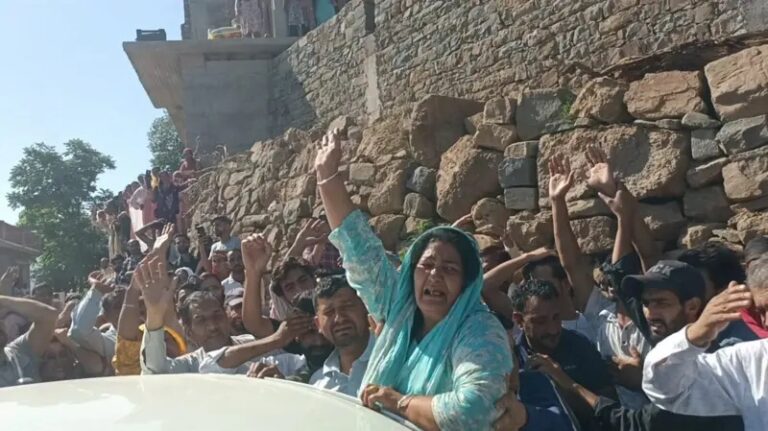
A viral video shows the distraught woman collapsing at the border, crying: “I’ve spent 43 years here. My children, my home, my dead mother’s grave—everything I love is in Kashmir. Where do I go now?” Her deportation exemplifies the human cost of India’s new retaliatory policy following the Pahalgam attack, which has seen at least 34 more PaK residents—most women married to local men—marked for expulsion.
A Lifetime Erased
Surya’s life traces Kashmir’s painful divisions:
1982: Born in Muzaffarabad to a mother originally from Poonch (separated during Partition), she was brought to Indian-administered Kashmir by her uncle after becoming orphaned.
1980s-2020s: Built a life in Golad village—married local shopkeeper Abid Hussain Shah, raised four children, and cared for her aging mother until her death in 2018.
April 2025: Police arrived unannounced, ordering her to leave within hours. Relatives say she was assigned to a distant cousin in Kotli she hadn’t seen in 30 years.
“She speaks Pahari and Kashmiri, not even fluent Urdu anymore,” said her eldest son, showing identity cards proving his mother had voter and ration documents since 1990. “They’re sending her to a place that hasn’t been home for two generations.”
The Broken Promise of Reconciliation
The deportations violate the spirit of India’s own 2010 rehabilitation policy for former militants:
Historical Context: Hundreds of Kashmiris who crossed to PaK in the 1990s were permitted to return with spouses and children under PM Manmohan Singh’s initiative.
2025 Reversal: Families legally settled under this policy now face separation. Over 60% of those deported are women from PaK married to Kashmiri men.
A former militant (name withheld), whose PaK-born wife faces deportation, lamented: “In 2012, officials welcomed us back saying ‘start anew.’ Now they call my wife an infiltrator. Our twins don’t understand why their mother is being taken away.”
The Larger Pattern
This crackdown continues India’s systematic severing of Kashmiri kinship ties:
2019: Cross-LoC trade and travel suspended after Article 370 revocation.
2023: New rules required “foreigner” registration for PaK spouses.
2025: Mass expulsions under the guise of “national security.”
“First they divided us with borders, now with deportation orders,” said a women’s collective leader in Poonch. “These women cooked our weddings feasts, mourned our dead. Today, we’re helplessly watching their forced exile.”
— Reporting by Noreen Haider for The Azadi Times
We document Kashmir’s untold stories. Support ethical journalism.
Nuclear-Armed Rivals Escalate Tensions; Kashmiri Civilians Caught in Crossfire as War Fears Grow
Muzaffarabad, AJK (Pakistan administrated Kashmir): A sudden escalation in military posturing between India and Pakistan has triggered mass evacuations along the volatile Line of Control (LoC) and International Border (IB), raising fears of an imminent armed confrontation that could once again turn Kashmir into a battleground.
Late last night, authorities on both sides began forcibly relocating civilians from border villages, disrupting lives and livelihoods in the middle of the critical wheat harvest season. The move follows unverified claims by Pakistan’s Information Minister that India is preparing for a “large-scale offensive” within the next 36 hours.
Evacuations and Economic Disruption
In Pakistan administrated Kashmir, reports indicate that villages are being emptied, with families given little time to gather belongings before being moved to temporary shelters.
On the Indian side, similar evacuations are underway in Jammu and adjoining districts, where farmers have been ordered to complete their harvests within 24 hours an impossible demand that threatens to devastate this year’s crop yield.
“We were told to leave immediately no explanation, no assistance,” said a displaced resident from Nakyal sector, speaking on condition of anonymity. “Our wheat fields are ripe, but now we may lose everything.”
The abrupt evacuations have sparked panic among civilians, many of whom recall the traumatic displacements during previous India-Pakistan standoffs, including the 2019 Balakot crisis and the 2022 shelling escalations.
Unverified Claims and Rising Tensions
Pakistan’s government has alleged that Indian forces are massing troops near the LoC and that a surveillance drone was shot down earlier today. However, no independent verification or visual evidence has been provided, and Indian officials have dismissed the claims as “baseless propaganda.”
Meanwhile, Kashmiri political leaders across the ideological spectrum have condemned the escalating rhetoric, accusing both India and Pakistan of using Kashmir as a proxy battlefield while ignoring the humanitarian consequences.
“This is not their land to turn into a warzone,” said a prominent Kashmiri rights activist. “Every time Delhi and Islamabad play their games of brinkmanship, it is Kashmiri civilians who pay the price with their lives, their homes, and their futures.”
Kashmiris Reject Being Pawns in a Larger Conflict
Amid the rising tensions, Kashmiri social media has been flooded with calls for de-escalation, with many pointing out that neither India nor Pakistan has the moral authority to decide Kashmir’s fate through military force.
“If they want war, let them fight it on their own soil,” said a Gilgit-based nationalist leader. “Kashmiris have suffered enough from decades of militarization. We refuse to be collateral damage in their never-ending conflict.”
The sentiment reflects a growing frustration among Kashmiris, who have long demanded the right to self-determination rather than being treated as a territorial dispute between two nuclear powers.
Global Silence and the Need for Independent Reporting
As international media focuses on geopolitical tensions, the voices of ordinary Kashmiris—already stifled by censorship and repression—are once again being sidelined. With both Indian and Pakistani state media pushing conflicting narratives, the need for independent, ground-level reporting from Kashmir has never been more urgent.
At The Azadi Times, we remain committed to centering Kashmiri perspectives, free from state propaganda or external agendas. The people of Kashmir deserve more than to be reduced to statistics in someone else’s war—they deserve justice, dignity, and the right to determine their own future.
What Comes Next?
With no signs of de-escalation from either side, the coming hours could prove decisive. Will diplomacy prevail, or will Kashmir once again become the flashpoint for a catastrophic conflict?
— Reporting by Noreen Haider for The Azadi Times
Follow us for real-time updates and on-the-ground coverage as this developing situation unfolds.
Pro-Freedom Content Creator’s Sudden Removal from Platform Highlights Digital Crackdown in Region
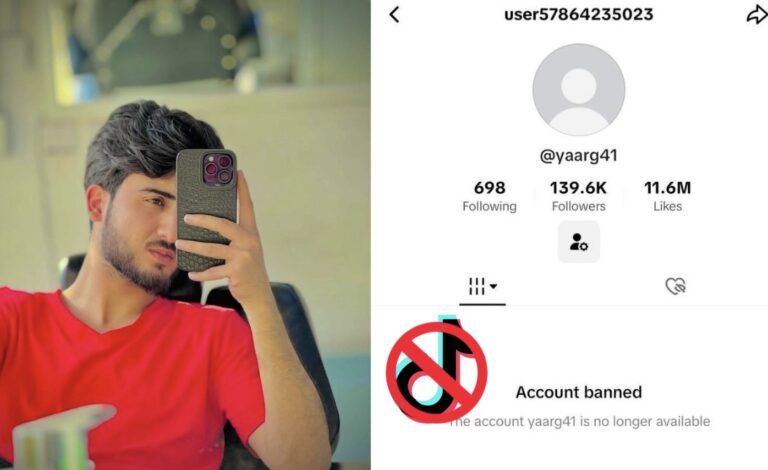
Rawalakot, AJK (Pakistan administrated Kashmir): The sudden banning of YAR G, a prominent TikTok personality from Pakistan-administered Kashmir, has sparked widespread concern over freedom of expression in the region. With over 139,000 followers, YAR G’s account, known for advocating Kashmir freedom and self-determination and reflecting Kashmiri aspirations, was abruptly removed from the platform last week. The move underscores growing tensions between digital activism and state-controlled narratives in a region where dissent is increasingly stifled.
Background: The Rise of a Digital Voice YAR G, hailing from the Poonch district, emerged as a grassroots social media sensation by creating content that resonated deeply with Kashmiri youth. Their videos, often blending cultural pride with calls for political rights, tapped into the collective yearning for Kashmir freedom and self-determination—a sentiment rooted in Kashmir’s decades-long struggle for autonomy. Despite limited internet access in Pakistan-administered Kashmir, where only 30% of the 4 million residents can connect online, YAR G leveraged TikTok’s viral potential to amplify marginalized voices.
Digital Barriers in a Conflict Zone Internet access in Pakistan-administered Kashmir remains fragmented, with frequent throttling during periods of political unrest. According to digital rights groups, the region experiences some of the lowest connectivity rates in South Asia, compounded by infrastructural neglect and deliberate restrictions. Social media platforms like Instagram, Facebook, TikTok often serve as lifelines for communication and activism, particularly among youth who lack mainstream media representation.
“When your history is erased from textbooks and your protests are absent from news channels, platforms like TikTok become our archives,” remarked a local university student. For creators like YAR G, each post carried the dual burden of entertainment and resistance—a balance that ultimately drew scrutiny.
Reaction: Silence from Platforms, Defiance from Followers YAR G confirmed the ban through a heartfelt Facebook post, expressing gratitude to supporters while mourning the loss of their digital community. “This journey wasn’t just mine—it belonged to all of you who saw hope in our shared voice,” the post read. Followers flooded social media with the hashtag #BringBackYARG, sharing screen recordings of deleted videos as acts of digital preservation.
Notably, neither TikTok nor regional authorities have provided an official explanation for the ban. While TikTok’s community guidelines prohibit content inciting violence, experts argue the platform’s opaque moderation processes often conflate political dissent with extremism. “This isn’t just about one account,” said Ayesha Khan, a researcher at a Digital Rights organization. “It’s about how tech companies capitulate to state pressures, silencing vulnerable communities under the guise of policy.”
Implications: Chilling Effect on Dissent YAR G’s banning fits a broader pattern of digital repression in Pakistan-administered Kashmir, where pro-independence voices face escalating censorship. In 2022, the region’s government introduced stringent social media regulations requiring platforms to remove content deemed “against national interest.” Critics argue such laws weaponize ambiguity to suppress dissent.
The crackdown mirrors tactics observed in Indian-administered Kashmir, where internet blackouts and platform bans are routine. However, Pakistan-administered Kashmir’s unique status governed by Islamabad layers of geopolitical complexity to its digital landscape. “Our voices are caught between two occupiers,” said activist Miran Shah. “Silencing us online won’t erase our demand for agency.”
Broader Context: Global Platform, Local Struggles TikTok’s role in global censorship disputes has drawn scrutiny, particularly in conflict zones. In Myanmar, the platform was criticized for enabling military propaganda; in Palestine, activists accuse it of shadow-banning pro-resistance content. YAR G’s case highlights how algorithmic moderation disproportionately impacts marginalized regions, where context is often lost to automated filters.
“Platforms must adopt localized, transparent moderation practices,” urged Khan. “Otherwise, they become complicit in erasing narratives that challenge power structures.”
The Fight for Digital Sovereignty YAR G’s disappearance from TikTok is more than a technical glitch—it’s a microcosm of Kashmir’s struggle for visibility. As the region grapples with overlapping occupations and geopolitical rivalries, social media remains a battleground for narrative control.
Srinagar, J&K (Indian administered Kashmir): In a deeply disturbing incident captured on video and widely circulated on social media, two Kashmiri shawl vendors were publicly assaulted and forced to shut their shop in the popular hill town of Mussoorie, Uttarakhand, India.
The footage shows a group of three local men, one of them visibly leading the attack, slapping and abusing the vendors while ordering them to pack up and leave. Shockingly, the assault escalated even after one of the vendors produced his Aadhaar card proving his identity as a resident of Jammu and Kashmir.
According to Uttarakhand DGP Deepam Seth, the assailants identified as Suraj Singh (Post Kempty, Tehri Garhwal), Pradeep Singh (Hathipaon, Mussoorie), and Abhishek Uniyal (Company Garden, Mussoorie) have been arrested and face legal action under the Police Act.
However, the incident has sparked outrage across Kashmir and beyond, with many calling it part of a growing pattern of targeted hate against Kashmiris working across India.
Nasir Khuehami, national convenor of the Jammu and Kashmir Students Association, condemned the attack and confirmed that the perpetrators were affiliated with the right-wing Bajrang Dal. “This was not an isolated case. Around 16 other Kashmiri traders, mostly from Kupwara district, have been threatened, harassed, and forcibly evicted from their rented accommodations in Mussoorie,” he said.
“These traders have been part of Mussoorie’s local economy for years, selling handwoven Kashmiri shawls and goods peacefully. This attack reflects a dangerous trend of discrimination and economic displacement targeting Kashmiris outside the region,” Khuehami added.
The accused reportedly offered an apology after public pressure mounted, but Kashmiri groups have insisted that apologies alone are not enough. They demand strict legal consequences and stronger protection mechanisms for Kashmiris working and living in other parts of India.
As a result of this traumatic episode, the 16 Kashmiri vendors have now returned to the Kashmir Valley—leaving behind their livelihoods and years of work under duress.
This incident once again exposes the fragile security of Kashmiris in mainland India, especially at a time when rising intolerance continues to marginalize minority communities. The silence of many mainstream platforms only worsens the issue.
The Azadi Times stands in solidarity with all Kashmiris who face violence, discrimination, and injustice—anywhere in the world.
Pakistan administered Kashmir Azad Jammu and Kashmir (AJK), rich in natural beauty and flowing rivers,, vibrant culture, and flourishing hydropower projects. However, beneath its scenic beauty lies a stark contradictiona region that powers Pakistan’s national grid yet its own residents languish in the darkness of chronic power outages. This editorial delves into the power paradox gripping AJK by highlighting the updated 2025 data, analyzing the economic and social impacts of energy mismanagement, and calling for urgent reform and accountability.
The Energy Landscape: Numbers That Demand Attention
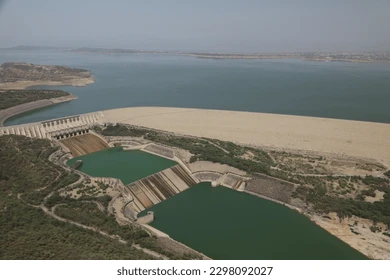
Recent government reports and CPEC cooperative planning data for 2025 confirm that Azad Kashmir’s hydropower projects, both operational and under construction, generate an impressive 4,932 MW of electricity. Key projects like the Mangla Dam in Mirpur, Neelum-Jhelum Hydropower in Muzaffarabad, and the looming Kohala project illustrate the region’s monumental contribution to Pakistan’s energy needs. Despite this overwhelming capacity, AJK’s direct consumption is only around 385 MW – a mere fraction (less than 8%) of its generated power.
Here’s a detailed look at the region’s key hydropower projects:
Project Name
Capacity (MW)
Status
Location
Mangla Dam
1400
Operational
Mirpur
Neelum-Jhelum Hydropower
969
Completed
Muzaffarabad
Kohala Hydropower Project
1100
Under Construction
Kohala
Karot Hydropower Project
640
Completed
Kotli
Gulpur Hydropower Plant
100
Completed
Palandri
Patrind Hydropower Plant
147
Operational
Muzaffarabad
Kotli Hydropower Plant
100
Under Construction
Kotli
Jagran, Kathai, Kutton, etc.
476 (Combined)
Operational
Neelum Valley
Total Capacity
4932 MW
Despite this energy bonanza, the region is forced to endure lengthy daily power cuts lasting between 6 to 8 hours, especially during the blistering summer months when temperatures soar above 40°C. This glaring imbalance between production and local allocation has ignited debates about energy injustice and regional negligence.
The Financial Facade: Revenue vs. Local Reinvestment
The economic data for 2025 reveals that the Water and Power Development Authority (WAPDA) purchases electricity from AJK projects at an average rate of Rs. 9.5 per unit. Standard output calculations show that:
Daily Production: Approximately 11.8 million units
Annual Production: Roughly 4.3 billion units
Annual Revenue Generated: Over Rs. 41 billion
Yet, despite this substantial revenue generated by AJK’s natural resources, a very small portion is reinvested locally. The region’s annual development allocation is only Rs. 160 billion (2024 25), which is disproportionately low considering the massive energy wealth it contributes to the federal grid. This financial disparity has fueled growing resentment among local residents and energy experts alike.
Maintenance or Manipulation? The Politicization of Power Outages
Eyewitness accounts and anonymous interviews with residents from Neelum and Muzaffarabad suggest that the recurring power outages are not merely due to technical faults or routine maintenance. Many locals contend that these disruptions are strategically timed during periods of political unrest, protests, or sensitive electoral phases. One resident remarked:
“Whenever there’s a protest or any sign of political dissent, the power inexplicably cuts off. It feels intentional—a silent message that we should keep our voices down.”
Such allegations point toward a concerning practice where electricity becomes a tool not just for power supply but potentially for political suppression. This perceived abuse of energy policy exacerbates local grievances and calls for a deeper investigation into the real reasons behind these scheduled outages.
Human Cost: Life in the Shadows of Energy Injustice
The impact of the power crisis on the residents of AJK is profound. In the scorching summer months, when daytime temperatures in Muzaffarabad, Rawalakot, and Mirpur frequently exceed 40°C, households are left without proper cooling, refrigeration, or even basic lighting. Schools, businesses, and hospitals face operational challenges, while families often resort to sleeping in open courtyards or communal spaces just to escape the oppressive heat of sealed spaces.
In Picture $2.4 billion Kohala Hydropower Project
The dire living conditions have profound ramifications not only on physical health but also on mental well-being and community morale. The energy injustice faced by the people of AJK is a clear reflection of how the region’s immense resource wealth is squandered on other parts of the nation, leaving the locals to grapple with an antiquated, unreliable power supply system.
A Roadmap for Change: What Azad Kashmir Deserves
For the future of Azad Kashmir, structural changes in energy policy and allocation are imperative. Here are some key recommendations:
Guaranteed Local Allocation: A minimum of 25–30% of all electricity generated in AJK should be earmarked exclusively for local consumption to ensure residents benefit from their own energy resources.
Revenue Sharing Models: Establishing a transparent royalty or development fund that reinvests a percentage of the revenue generated by AJK’s hydropower projects directly into local infrastructure and social development.
Decentralized Grid Control: Granting local authorities more autonomy in managing and distributing electricity can lead to better accountability, improved maintenance schedules, and a more responsive grid management system.
Public Accountability and Transparency: WAPDA and other relevant agencies must provide detailed public reports outlining the reasons behind outages, maintenance schedules, and steps taken to ensure uninterrupted power for AJK residents.
Community Engagement in Policy-Making: Encouraging the participation of local stakeholders in energy policy decisions to ensure that all voices are heard and that the community’s needs are prioritized.
The Promise of Azadi
At its core, the struggle for uninterrupted power in Azad Kashmir is symbolic of a larger fight for dignity, economic justice, and self determination. Azad (or “free”) does not merely imply political sovereignty—it also represents the empowerment of communities to harness their resources for their own development and well-being.
The people of AJK are not just energy producers; they are living, breathing communities that deserve the full benefits of the land that nurtures them. It is high time for Pakistan’s federal authorities, WAPDA, and all relevant stakeholders to address these profound disparities and work towards an energy system that not only lights up the nation but also illuminates the lives of its own people.
As we advance through 2025, the clarion call for energy justice in Azad Kashmir grows louder. The region’s potential is undeniable, and its resources are vast. However, true progress can only be achieved when power is truly in the hands of those who generate it—and when energy becomes a universal force for upliftment rather than a source of regional neglect.
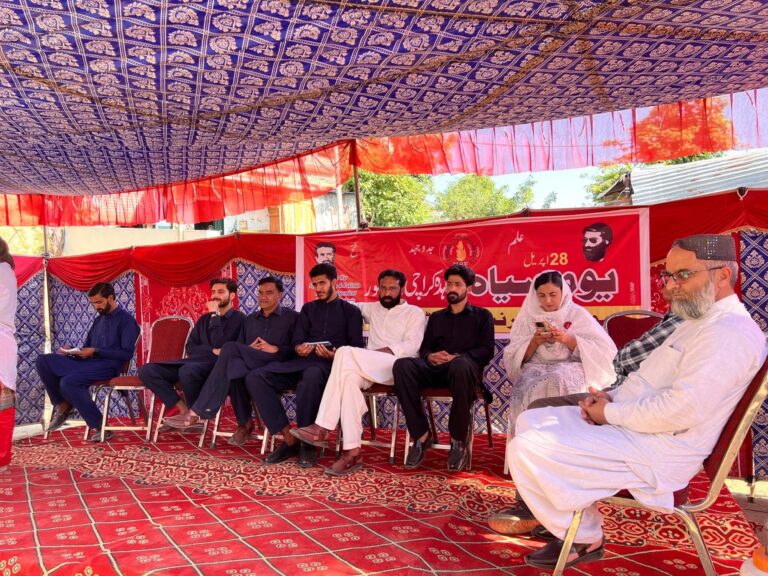
Pallandri, Pakistani-administered Kashmir – The Jammu Kashmir National Students Federation (JKNFS) organized a major protest rally and public gathering under the slogan “Scrap the Karachi Agreement!”, condemning the controversial 1949 pact that they claim turned so-called “Azad Kashmir” into a “colony of Pakistan.”
Historical Grievances Highlighted
On April 28, 1949, the Karachi Agreement was signed, transferring key administrative powers—including defense, foreign affairs, and diplomacy—from the regions of “Azad Kashmir” and Gilgit-Baltistan to Pakistan. The JKNFS denounced the agreement as a “colonial betrayal” and vowed to resist all such “oppressive treaties and laws.”
Leaders Demand Self-Determination
The event, chaired by Tehsil Chairman Pallandri Noman Kashmiri, saw speeches from JKNFS leaders as well as representatives from various pro-independence parties, including:
Prominent JKNFS leaders, including Advocate Jameela Batool (senior leader), Afra Shabbir Advocate (Senior Vice President), Malik Ilyas, Usama Jameel (Central Committee member), and Dr. Najeebullah, delivered fiery speeches condemning the Karachi Agreement and Pakistan’s “colonial control” over Kashmir’s political and economic affairs.
Vow to Continue Struggle
The speakers reiterated their commitment to an “irreconcilable struggle” for Jammu and Kashmir’s complete independence, sovereignty, and the establishment of a classless society.
Oath-Taking Ceremony & New Members
During the event, Central President Israr Yousaf administered the oath to the new District Cabinet. Additionally, the JKNFS welcomed new members, including Siyab Khaliq and his associates from Tehsil Mang, extending a warm welcome to all new activists joining the movement.
Muzaffarabad: Jammu Kashmir Liberation Front Pays Tribute to Supreme Commander Amanullah Khan on 9th Death Anniversary
Muzaffarabad, AJK (Pakistan administered Kashmir): The Jammu Kashmir Liberation Front (JKLF) has paid glowing tributes to its Supreme Commander, Amanullah Khan, on his 9th death anniversary.
In a statement issued in Muzaffarabad, JKLF spokesperson Mohammad Rafiq Dar hailed Amanullah Khan as a “great revolutionary leader” who carved a new chapter in Kashmir’s history through his relentless political and diplomatic efforts, as well as his firm ideological vision.
Dar stated that the people of Kashmir responded to Amanullah Khan’s call by making unparalleled sacrifices for the Kashmir cause, a struggle that continues to this day. He honored the sacrifices of prominent JKLF leaders and activists, including Shaheed Ashfaq Majeed Wani, Shaheed Sheikh Abdul Hameed, Shaheed Dr. Abdul Ahad Guru, and Shaheed Shabbir Siddiqui, along with dozens of other leaders and thousands of workers who laid down their lives for Kashmir’s freedom.
The spokesperson also highlighted that JKLF Chairman Mohammad Yasin Malik and thousands of other Kashmiris remain imprisoned in Indian jails, including in occupied Jammu and Kashmir.
On the occasion of Amanullah Khan’s 9th death anniversary, JKLF and its student wing, the Students Liberation Front, are organizing commemorative events worldwide to honor his legacy.
Tribute to Shaheed Mohammad Yasin (Bilal Dhobi)
Meanwhile, Rafiq Dar also paid homage to Shaheed Mohammad Yasin, popularly known as Bilal Dhobi, from Srinagar’s downtown area, on his martyrdom anniversary. Dar emphasized that his contributions and sacrifices for the freedom movement would always be remembered.
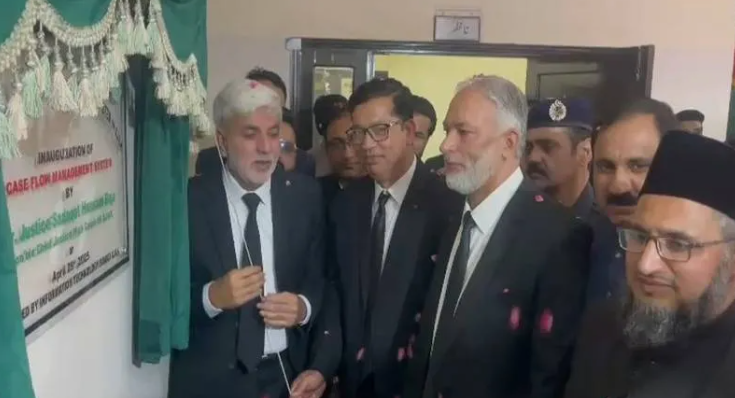
Muzaffarabad, Azad Jammu & Kashmir – In a move to modernize the judicial system in Azad Jammu kashmir (Pakistan-administered Kashmir), Chief Justice of the High Court, Justice Sadaqat Hussain Raja, inaugurated the “Case Flow Management System” and “Registration of Deeds System” during a ceremony at the Jhelum Valley Judicial Complex. The event, attended by judicial officers, lawyers, and local officials, marks a significant step toward digitizing court processes to ensure efficiency, transparency, and public accessibility.
A New Era for Azad Kashmir’s Judiciary
The newly launched systems aim to revolutionize how cases are managed in the region. Litigants can now track case statuses, search records, and access court orders online, eliminating the need for cumbersome manual processes. Additionally, the automated registration of deeds including property sales, gifts, and leases is expected to reduce errors and minimize opportunities for corruption.
Chief Justice Raja emphasized that the digital transition will bring faster justice delivery and greater convenience for both lawyers and the public. A dedicated mobile app will allow users to monitor cases remotely, ensuring that justice is not delayed by geographical or bureaucratic barriers.
Expansion Plans and Challenges
The system, already functional in Muzaffarabad and Mirpur divisions, will be extended to all districts and tehsils by May 31. The High Court is next in line for full digitization, with plans to integrate case filing, judgments, and appeals under a single digital framework.
Despite the progress, challenges remain. Azad Kashmir’s judiciary operates with limited resources, and sustaining the digital infrastructure will require consistent funding and training. Justice Raja, however, expressed confidence, highlighting that the project was completed without excessive expenditures by a small IT team.
In a bold statement, Justice Raja claimed that Azad Kashmir’s judiciary is now more technologically advanced than those in pakistan where similar reforms have lagged. He credited the region’s ability to implement cost-effective solutions, stating:
“We have proven that even with limited resources, we can build a system that serves the people better than many wealthier jurisdictions.”
Broader Implications for Justice and Governance
Beyond judicial efficiency, the reforms carry political significance. Justice Raja linked the modernization drive to broader regional stability, particularly in light of tensions with India over water disputes. He urged citizens to remain resilient, stating:
“Today’s wars are not just fought on borders—they are fought in courtrooms, in governance, and in public trust. We must stand united.”
Commitment to Institutional Growth
The Chief Justice also announced the allocation of two kanals of land to the District Bar Association, reinforcing his commitment to strengthening legal institutions. He called on lawyers to embrace digital tools, abandon outdated manual practices, and contribute to a more accountable judicial system.
As Azad Kashmir’s judiciary enters a new digital phase, the success of these reforms will depend on public adoption, cybersecurity measures, and sustained political support. If effectively implemented, the system could serve as a model for other regions struggling with case backlogs and transparency issues.