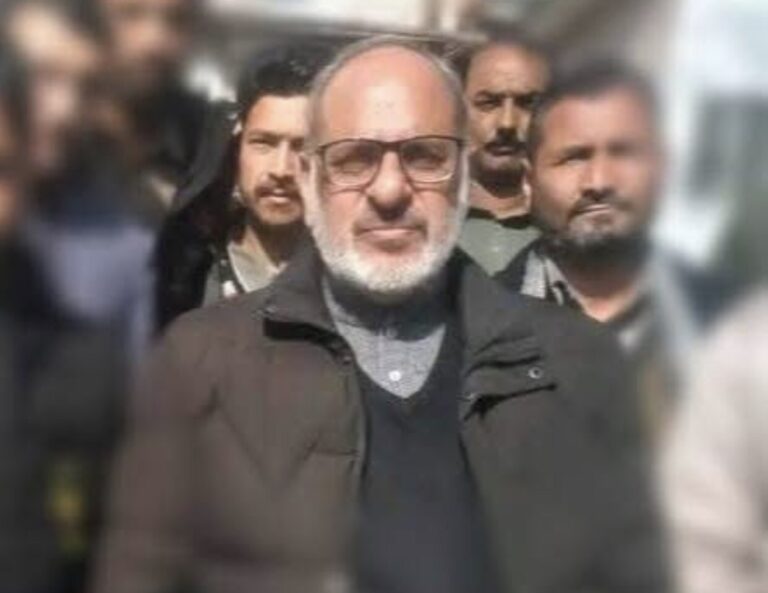


Neelum Valley, Azad Jammu & Kashmir, (Pakistan-administered Kashmir) – Shah Ghulam Qadir, President of Pakistan Muslim League-Nawaz (PML-N), Azad Kashmir a regional branch of Pakistan’s political party made a bold statement during a public meeting in Neelum Valley, challenging the conventional narrative around the Line of Control (LoC) between the two parts of Jammu & Kashmir.
“I do not consider it the Line of Control,” he said. “I see it as a ceasefire line — as recognized by the United Nations.”
His remarks come at a sensitive time, following a recent escalation between Indian and Pakistani forces, which has once again placed the Kashmir region at the center of geopolitical tension. The comment, while brief, has stirred political conversations both locally and across the border, with observers interpreting it as a sign that some elements of Kashmiri leadership may be rethinking their alignment or expressing subtle dissatisfaction with the long-standing status quo.

The statement was highlighted by Facebook user Mohammad Rehan, who emphasized its significance amidst growing public discourse around Kashmiri self-determination. While PML-N is traditionally considered pro-Pakistan, Shah Ghulam Qadir’s framing of the LoC in UN terms hints at a more nuanced or evolving position within the party’s regional leadership.
For many pro-Kashmiri voices who advocate for freedom from both India and Pakistan, the acknowledgment of the UN-mandated terminology “ceasefire line” is more than symbolic. It reopens the conversation around Kashmir’s unresolved status and the legal and moral questions surrounding the region’s future.
As Kashmir’s political landscape continues to shift, statements like these may reflect a broader awakening or realignment, one that seeks to reclaim agency for the people of Jammu & Kashmir within international law and historical context.