

RAWALAKOT, Pakistan-administered Jammu & Kashmir — Security forces continued operations for a second consecutive day on Tuesday to prevent participants of an ongoing Long March from advancing through several parts of Pakistan-administered Jammu and Kashmir, as reports from local sources indicated a sharp rise in civilian casualties.
According to information compiled by The Azadi Times from eyewitnesses, local journalists, hospital officials, civil society representatives, and community members, at least 37 civilians were reportedly killed across Rawalakot and Mirpur during two days of clashes, while more than 100 others were injured.
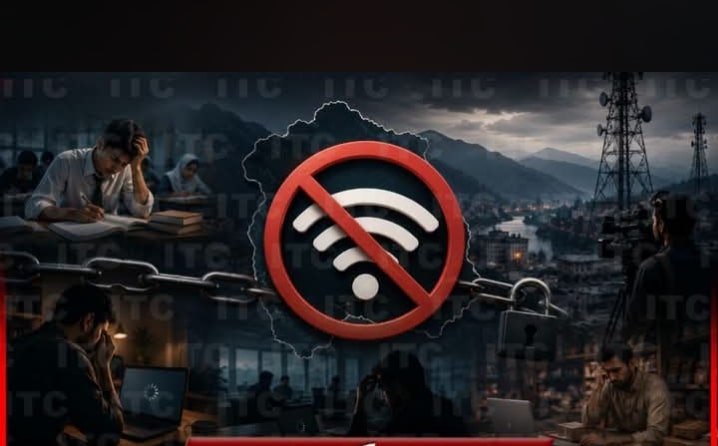
Independent verification of all casualty figures remains difficult because of restrictions on media access, disruptions in communication, and the absence of a consolidated official casualty list.
The latest violence marks one of the deadliest episodes since protests began on June 5, when demonstrations emerged over political grievances and expanded into a wider movement calling for institutional reforms, accountability, and broader public demands across Pakistan-administered Jammu and Kashmir.
Protesters Attempt to Enter Rawalakot
On Tuesday, demonstrators participating in the Long March attempted to enter Rawalakot through three major routes—Baldiya Adda, Kharak Road, and D-Chowk.
Witnesses said large contingents of security personnel blocked each entry point before protesters reached the city centre.


Residents told The Azadi Times that security forces repeatedly fired live ammunition and tear gas in an effort to disperse crowds. Intermittent firing and shelling reportedly continued until around midnight, leaving several parts of the city under heavy security presence.
Local medical workers confirmed receiving dozens of casualties throughout the day.
Hospital sources and local volunteers confirmed that 13 civilians were killed on Tuesday in Rawalakot, although several residents expressed concern that the final number could increase as additional victims were being identified.

Authorities had not issued a comprehensive official statement regarding the reported deaths at the time of publication.
Death Toll Climbs to 37
Local sources reported that 22 civilians had already lost their lives during Monday’s clashes in Rawalakot.
With Tuesday’s reported fatalities, the number of civilians killed in Rawalakot over two days rose to 35, according to local community representatives.
Separate incidents in Mirpur resulted in two additional confirmed civilian deaths, bringing the combined reported death toll across the two districts to 37.
Medical sources estimated that well over 100 people sustained injuries during the two days of unrest, many of them suffering gunshot wounds, injuries from tear-gas projectiles, or blunt-force trauma sustained during the confrontations.
Emergency departments in Rawalakot remained under pressure as ambulances continued transporting injured protesters throughout Tuesday evening.
Reported Civilian Deaths Since June
According to organizers associated with the protest movement and local monitoring groups, 82 civilians have reportedly been killed between June 5 and July 28 during demonstrations and security operations across Pakistan-administered Jammu and Kashmir.
Those figures have not been independently verified by international human rights organizations, and no official cumulative casualty figures have been released by authorities.
Nevertheless, rights advocates say the reported toll reflects a significant escalation in the confrontation between protesters and security forces over the past several weeks.
Victims Identified in Tuesday’s Violence
Local community representatives identified those reportedly killed in Rawalakot on Tuesday as:
- Osama Jameel (Mang, Sudhnoti)
- Roman Mahmood (Birota Pachhiot, Rawalakot)
- Abrar Hasrat (Horna Meera, Rawalakot)
- Sardar Shehbaz (Tahliyan, Sudhnoti)
- Qari Abdul Basit (Nar Kothian, Thorar)
- Javed Yasin (Mang, Sudhnoti)
- Shaukat Hayat (Matial Meera, Rawalakot)
- Abdul Razzaq, son of Ishaq (Dhingron, Mang)
- Rizwan Aslam (Mang, Sudhnoti)
- Muhammad Aziz Khan (Rawalakot)
- Shehbaz Mushtaq (Kharak, Rawalakot)
- Husam Banaras (Darek, Rawalakot)
Community members also confirmed the death of Farukh Aziz, who had sustained critical injuries during Monday’s clashes and later succumbed to his wounds.
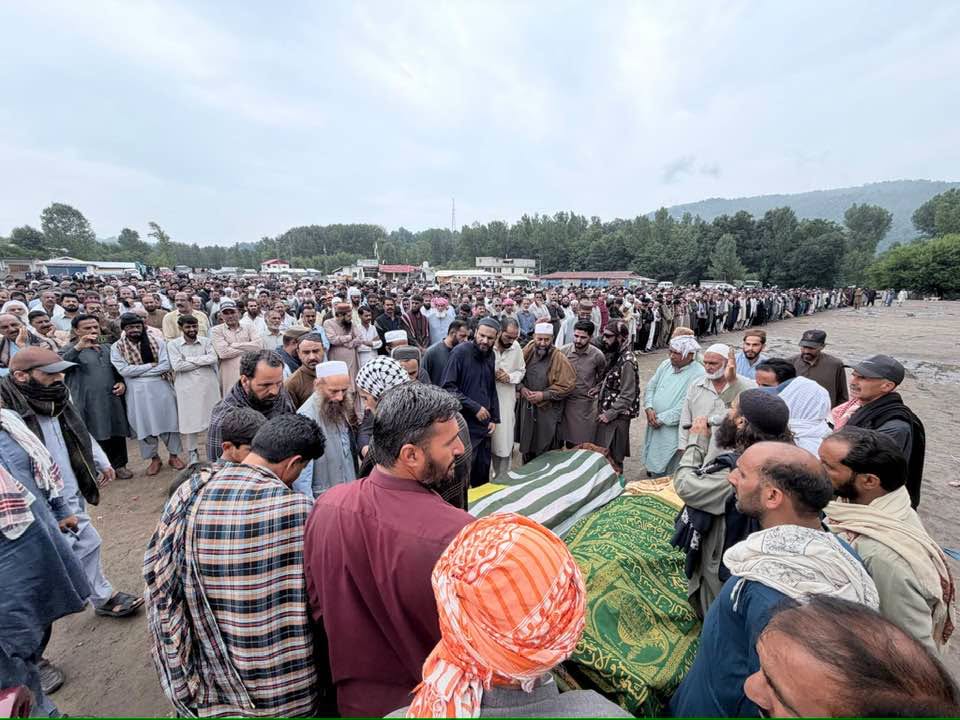
Family members and residents gathered in several towns to receive the bodies of those killed, while funeral prayers were held in their respective hometowns under heightened security.
Some relatives told local journalists that delays in the release and transportation of bodies added to the difficulties faced by grieving families.
Mirpur Protest Turns Deadly as Security Forces Open Fire
While violence continued in Rawalakot, a separate protest in Mirpur also ended in bloodshed on Tuesday after security forces reportedly opened fire on demonstrators near Ban Kharman.
According to local residents and community representatives, protesters had gathered to express solidarity with participants of the Long March and to condemn the ongoing security operation in Rawalakot.
Local sources confirmed that two civilians were killed during the incident:
- Raja Tauqeer Alam, a resident of Ban Kharman, Mirpur.
- Imam Inayatullah, a mosque imam from Kharian in Pakistan’s Punjab province who was reportedly present during the protest.
Witnesses told The Azadi Times that dozens of people sustained injuries after security personnel fired at demonstrators.
Several local sources claimed that the death toll in Mirpur could be as high as six, though The Azadi Times has not been able to independently verify those claims, and no official confirmation had been issued at the time of publication.
Hospitals Receive More Than 100 Casualties
Hospitals across Rawalakot remained overwhelmed as ambulances and private vehicles continued transporting wounded protesters throughout Tuesday.
Medical personnel told The Azadi Times that emergency wards were operating under significant pressure due to the continuous arrival of casualties.
According to hospital sources, more than 100 people have been injured during the two days of violence, while over 50 of those injuries were reported on Tuesday alone.
Among those admitted to hospitals on Tuesday were:
- Munir, son of Rashid (Baldiya Adda, Rawalakot)
- Wajid Arif (Dhingron, Mang)
- Haider Raza, son of Amjad (Taitri Note, Poonch)
- Ruwail Zareen
- Najeeb, son of Razzaq (Sardi Bhalgran, Thorar)
- Abdul Faisal, son of Afzal (Thorar)
- Ejaz, son of Sawalat (Mang)
- Taimoor Parvez (Patan Sher Khan)
- Amjad Shabbir (Patan Sher Khan)
- Afzal Makhan (Thorar)
- Taimoor Fazal (Sardi Bhalgran)
- Abdul Razzaq (Khoi Ratta)
- Muneeb (Patan Sher Khan)
- Afzal (Sardi Bhalgran)
- Aqib Talib (Dar)
- Muhammad Farooq Khan (Mang)
Medical workers said many patients suffered gunshot wounds, while others sustained injuries caused by tear gas projectiles, stampedes, or physical confrontations during attempts to disperse crowds.
Several critically injured patients were referred to larger medical facilities due to the severity of their wounds.
Demonstrations Spread to Neelum Valley
The unrest also spread beyond Poonch district on Tuesday.
Residents in Neelum Valley attempted to join the Long March by travelling toward Muzaffarabad, but were reportedly stopped by security forces before reaching the capital.
Local residents reported that security personnel used force to disperse demonstrators, including firing and tear gas shelling.
Multiple injuries were reported, although no official casualty figures were immediately available.
Community sources further claimed that Khawaja Mujtaba Bande, a core member of the Joint Awami Action Committee (JAAC), sustained a gunshot wound during the confrontation.
The organization had not released a detailed medical update regarding his condition by the time this report was published.
Protests Continue Across Kotli District
Solidarity demonstrations were also reported in Khoi Ratta and Charhoi, two subdivisions of Kotli district.
Participants condemned the reported killings in Rawalakot and demanded an end to the security crackdown.
Witnesses said protesters carried banners, chanted slogans, and called for accountability over the reported civilian deaths.
No major violence was reported from those demonstrations, although security remained heightened throughout the district.
Monday’s Victims Identified
Local community representatives identified the civilians reportedly killed during Monday’s violence in Rawalakot as:
- Osman Nazir (Rawalakot), younger brother of Umar Nazir Kashmiri
- Naeem Butt (Kotli)
- Nisar Shaheen (Pakhonar, Baloch)
- Kashif Yaqoob (Rawalakot)
- Sardar Fida Hussain (Garala, Tarar Khal)
- Muzammil Ishaq (Ali Sojal)
- Basit Shah (Hajira)
- Faheem Afzal (Chhota Gala)
- Kamran Mushtaq (Hajira)
- Zargham Khalil (Darek, Rawalakot)
- Saqib Hanif (Rerh Ban, Rawalakot)
- Saqib Ishaq (Namb Gawara, Pallandri)
- Areel Asghar (Tatta Pani)
- Osman Gul (Darek Dhoke, Rawalakot)
- Jaffir Pehlwan (Pappay Nar, Tarar Khal)
- Ali Hussain (Khari Sharif)
- Khawaja Abrar Latif Dar (Khurshidabad, Haveli)
- Kamran Hafeez (Kahuta, Haveli)
- Faisal Sabir (Namnota, Rawalakot)
- Suhail Maqbool (Bai Bheekh, Rawalakot)
- Tabish Qayyum (Chhota Gala)
- Farukh Aziz (Aniyari, Rawalakot)
Families continued funeral arrangements across several towns on Tuesday, while local residents reported large gatherings despite an increased security presence.
Relatives in some areas alleged delays in receiving the bodies of those who had been killed, though authorities had not publicly commented on those claims.
The mounting civilian casualties have intensified concerns among local communities, rights advocates, and political observers as the confrontation between protesters and security forces enters another critical phase.
Political Tensions Deepen Amid Mirpur Division Elections
The security crackdown unfolded against the backdrop of a politically charged election in Mirpur Division, further intensifying tensions across Pakistan-administered Jammu and Kashmir.
The Election Commission and the Pakistan Muslim League (Nawaz) (PML-N) stated that voter turnout exceeded 50 percent and announced that the ruling party had secured nine of the thirteen seats contested in the division.
However, the Pakistan Peoples Party (PPP) rejected the official results, claiming that voter turnout remained below 25 percent and alleging widespread electoral irregularities, including the casting of fraudulent votes. Party leaders called for an independent review of the electoral process and questioned the credibility of the announced results.
Election authorities had not publicly responded in detail to the allegations at the time of publication.
Political analysts noted that the election dispute has added another layer of instability to an already volatile situation, as public demonstrations over governance and civil rights continue across several districts.
Rights Activists Prevented from Entering the Region
Separately, former Pakistani Senator Mushtaq Ahmad, accompanied by members of the Pakistan Rights Movement, attempted to travel from Islamabad to Rawalakot on Tuesday to express solidarity with protesters and visit affected families.
According to members of the delegation, police stopped their convoy at Azad Pattan, one of the main entry points into Pakistan-administered Jammu and Kashmir, and prevented them from proceeding further.
Officials reportedly informed the group that they would not be permitted to enter the region.
Authorities had not publicly explained the reasons for restricting the delegation’s entry by the time this report was published.
Funeral Prayers Held Across Multiple Districts
As the violence subsided late Tuesday, funeral prayers were held across Rawalakot, Sudhnoti, Haveli, Hajira, and other parts of the region for those who had lost their lives during the two-day confrontation.
Large numbers of mourners attended funeral processions in several towns and villages despite heightened security.
Local residents told The Azadi Times that some families experienced delays in receiving the bodies of their relatives, while others said transportation restrictions complicated funeral arrangements.
Community members described an atmosphere of grief and uncertainty as families buried those killed during the unrest.
Protest Movement Continues Despite Crackdown
Despite the reported casualties, organizers indicated that the broader protest movement remains active.
Demonstrations continued in multiple districts, with participants reiterating demands related to governance, accountability, and political reforms.
Community representatives said the Long March has evolved into one of the largest protest movements witnessed in Pakistan-administered Jammu and Kashmir in recent years, drawing participants from Poonch, Mirpur, Kotli, Muzaffarabad, Neelum Valley, Bagh, Haveli, and surrounding areas.
Local observers cautioned that continued confrontation between protesters and security forces could further escalate tensions unless meaningful dialogue takes place.
Growing Calls for Independent Investigation
Human rights advocates and members of civil society have called for an independent investigation into the reported use of force during the protests.
Several local organizations urged authorities to ensure accountability, protect civilians, and allow independent journalists and humanitarian observers unrestricted access to affected areas.
Legal experts also emphasized the importance of transparent investigations into every reported civilian death and injury in accordance with domestic law and international human rights standards.
At the time of publication, no announcement had been made regarding the establishment of an independent inquiry.
Information Restrictions Complicate Verification
The evolving situation has made independent verification particularly challenging.
Journalists, local residents, and rights groups cited communication disruptions, movement restrictions, and limited access to affected locations as major obstacles to documenting developments on the ground.
As a result, some casualty figures and eyewitness accounts remain subject to further verification.
The Azadi Times will continue to update this report as additional information becomes available from official authorities, medical institutions, independent observers, and local sources.
Editorial Note
This report has been compiled by The Azadi Times using information obtained from local journalists, eyewitnesses, hospital personnel, community representatives, and civil society organizations across Pakistan-administered Jammu and Kashmir.