
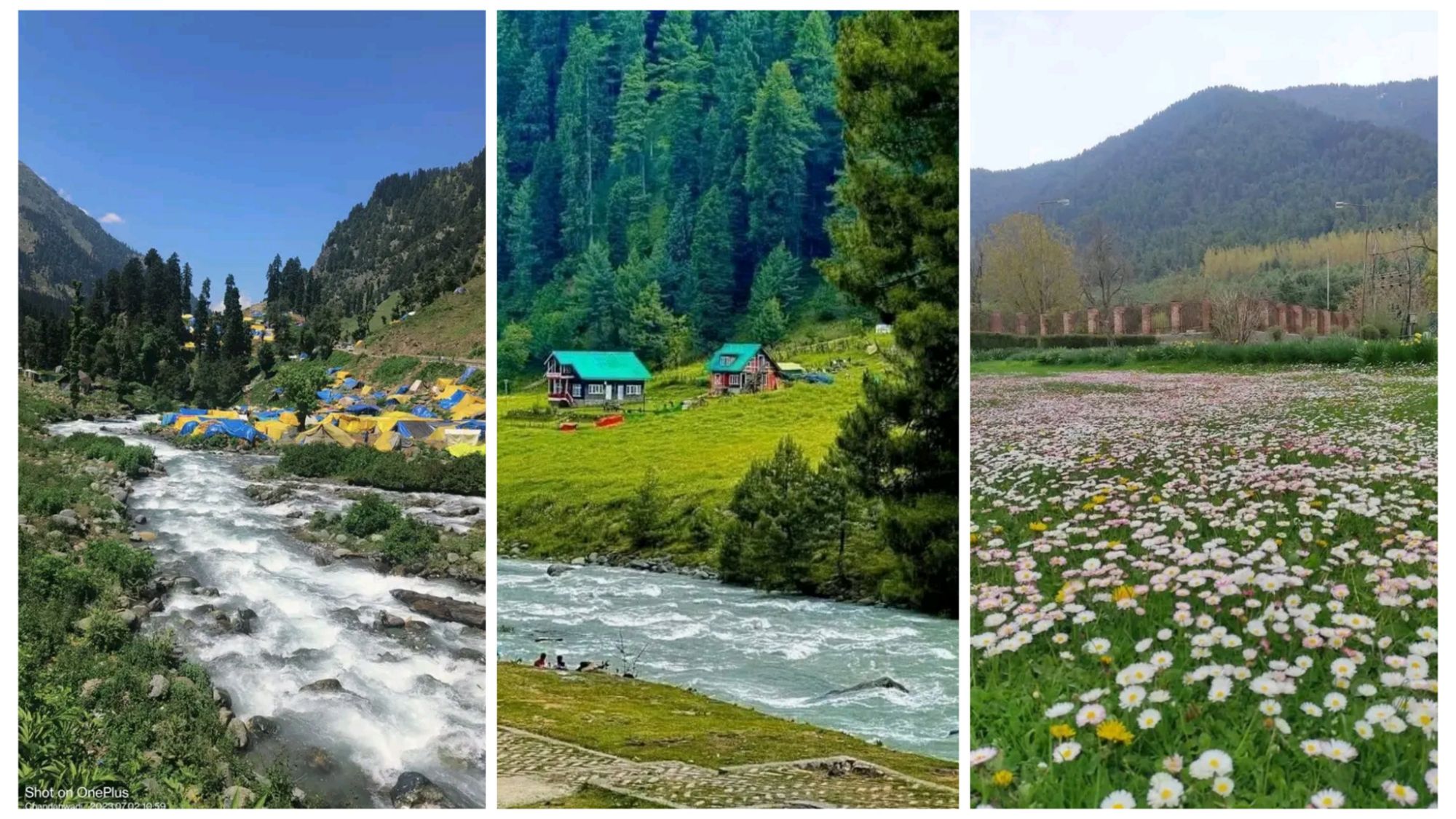

SRINAGAR — Some places you visit. Other places visit you, and then refuse to leave.
Pahalgam, for me, has been the latter kind.
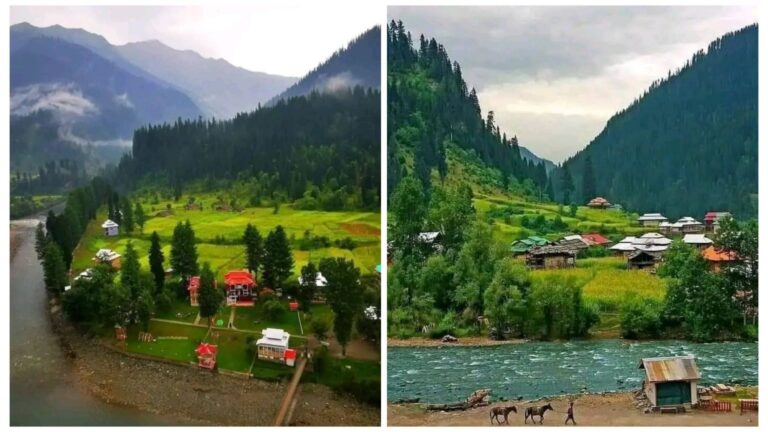
Ninety kilometers east of Srinagar, tucked between the Lidder River and pine-covered mountains that rise like green walls, lies a valley that Indians have quietly called “heaven on earth” for decades. But here’s what no one tells you before you go: the heaven part isn’t an exaggeration. It’s an understatement.
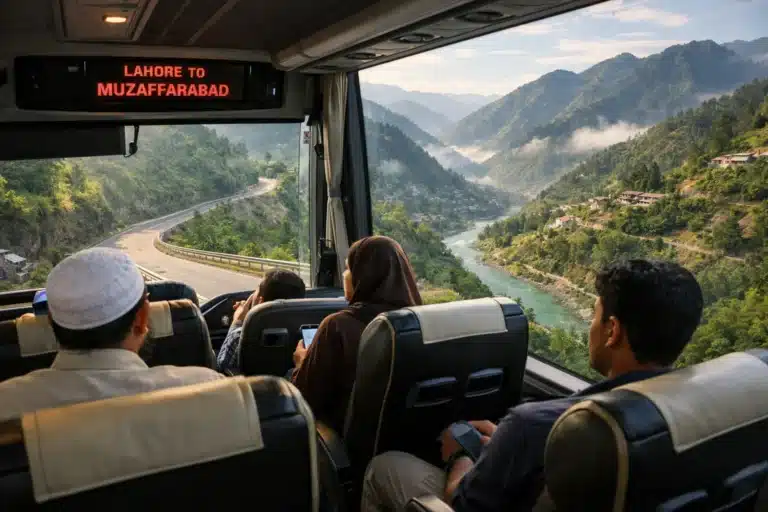
I arrived on a September morning, when the air was cool enough to need a jacket but the sun was warm enough to forget you were wearing one. The drive from Srinagar took about three hours — past apple orchards heavy with fruit, past villages where children waved at passing cars, past the point where the Lidder River first appears alongside the road, impossibly clear, impossibly blue.
That river, I would soon learn, never leaves you. It follows you to Betaab Valley. It greets you at Heevan Hotel. It whispers beneath your window at night, and when you wake up, it’s still there, still clear, still moving.
The First Night: A Lodge Above the Water
We stayed at Bentes Lodge, a property that sits on a hill overlooking the river and the valley beyond. The rooms aren’t large — let me be honest about that. But they have everything you actually need: multiple charging points, a geyser that actually works, and a window that frames a view you will try and fail to capture on your phone.
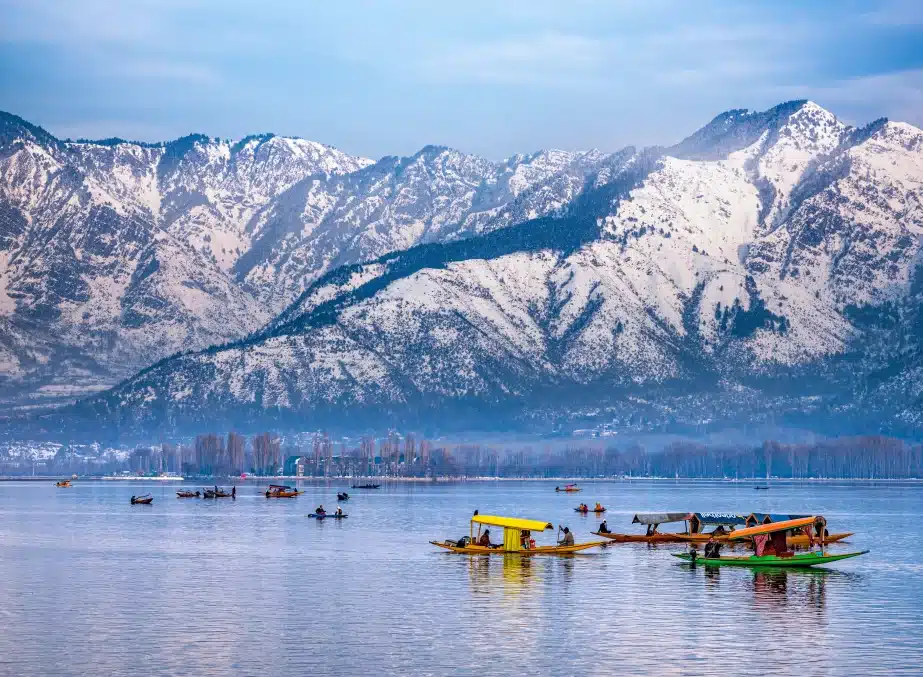
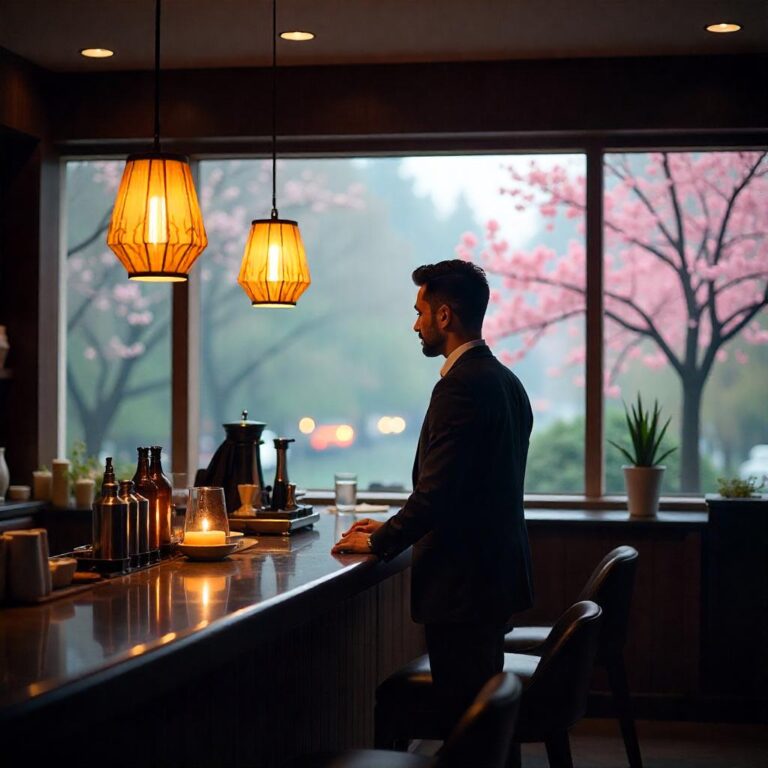
What I didn’t expect was the Wi-Fi. Sixty to seventy megabits per second. Fibernet. In a mountain valley in Kashmir. Airtel 4G worked perfectly too. If you’re the kind of traveler who needs to stay connected — a “workation” person, as they call it now — this is where you stay.
But the real magic of Bentes isn’t the internet. It’s the common dining hall with its stone fireplace, the long wooden tables, the way the morning light falls across the floor while you drink tea that tastes like nothing you’ve ever had outside this region.
Down the hill, right on the river, sits Heevan Hotel. We stayed there on a previous trip, and I remember waking up, walking to the window, and seeing the Lidder River so clear that I could count the stones at the bottom. That’s not an exaggeration either. Go see for yourself.
![Top 14 Stunning Places to Visit in Azad Jammu and Kashmir (PAJK), [Updated]](https://azaditimes.com/wp-content/uploads/2025/01/Flux_Dev_A_scenic_landscape_photograph_of_Azad_Jammu_and_Kashm_0-768x434.jpeg)

The Taxi, The Driver, and No Rush
The plan was simple: hire a cab, visit the viewpoints, take as much time as we wanted.
We found a Tavera. The driver’s name doesn’t matter, but his words do. I asked him if he would mind if we stopped along the way to shoot videos. “No problems,” he said. “You can take as much time as you want.”
That’s the thing about Pahalgam. No one rushes you. The valley has been doing this for decades — hosting pilgrims, honeymooners, Bollywood film crews — and yet somehow, it hasn’t learned to hurry. The mountains won’t allow it.
We set off toward Chandanwari.
Chandanwari: Where the Pilgrimage Begins
Chandanwari is the last village before the road ends. After this, there is only trekking. This is where the Amarnath Yatra starts every year — thousands of pilgrims walking toward a shrine of ice at 12,000 feet.
But in September, the pilgrims are gone. The snow at Chandanwari is gone too, though if you come in May or June, you’ll find it. Skiing. Sledding. Snowball fights between strangers.
I’ve been here in winter as well. That’s the best time, I think — when the snow is fresh and the trees wear white like wedding clothes and the only sound is your own footsteps. But the shops are closed then. You have to park far back and walk. It’s worth it.
Today, we stopped at the stalls near the final point, drank tea, watched other travelers take photos. Then we turned back toward Betaab Valley.
Betaab Valley: A River the Color of Nothing Else
The valley is named after a Bollywood film from 1983 — Betaab, starring Sunny Deol and Amrita Singh. They shot it here, and the name stuck. That’s how it works in Kashmir. The movies come, they leave their names behind, and the valley keeps being beautiful regardless.
You have to pay 100 rupees to enter now — about $1.20. It feels wrong to pay for nature, but then you see the Lidder River at this stretch, and you stop caring about the fee.
The water is turquoise. Not blue, not green — something in between. Something you can’t name. I stood on the bank for a long time, just watching it move.
Within minutes of arriving, a man approached me on a horse. “Sir, waterfall? I take you. Very beautiful.”
“No thank you,” I said.
“No problem, sir. Very close.”
“No.”
He rode off. Another came. Same offer. Same answer.
And then I looked up, and there it was — a waterfall, maybe 200 meters away, visible from the road. That’s the thing about Betaab Valley. The waterfalls are everywhere. You don’t need to pay anyone to see them. Just walk.
There’s a bridge here too. A small one. You might recognize it if you’ve seen the song “Ishq Wala Love” from Student of the Year. That’s the bridge. Walk across it. Take a photo. Then keep walking.
The Road to Aru Valley: Europe, But Cheaper
From Betaab, we drove toward Aru Valley. But first, a stop at the deer park — a small enclosure where we saw animals we couldn’t name and spent maybe fifteen minutes before getting back in the car.
And then came the road.
I have driven through the Swiss Alps. I have driven through New Zealand’s South Island. I have driven through the Canadian Rockies. This road — the one from Pahalgam to Aru Valley — belongs in the same conversation.
Pine trees on both sides. The road curving like a slow river. Mountains in the distance wearing clouds like scarves. If someone had blindfolded me, dropped me here, and asked me to guess the country, I would have said Switzerland. I would have been wrong. But I would have understood why I was wrong.
Aru Valley: The Most Beautiful Place in Kashmir
I have said this before, and I will say it again: Kashmir is the most beautiful place I have ever seen. And within Kashmir, Pahalgam is the best. And within Pahalgam, Aru Valley is the best of the best.
We arrived in the late afternoon. The light was golden, the way it only gets in mountains. People were setting up tents along the riverbank — bright blue and yellow domes against the green grass. You can camp here. You should camp here.
This was my third time in Aru Valley. On my first two trips, I missed something. I took horses up to the upper viewpoints, saw the panoramic views, checked the box. But I never just… sat by the river. I never found the spot where the water is calm and the trees lean over like they’re listening to something.
I found it this time. And I almost missed it again. It’s not marked. No sign. No guide will take you there. You just have to wander.
I sent the drone up to capture what the upper valley looks like — the part where most tourists go. It’s beautiful. But the real Aru Valley is down by the water, where no one else seems to stop.
The Skateboarding Incident
I should mention this, because it happened, and because I promised honesty.
I brought a skateboard to Aru Valley. I don’t know why. It seemed like a good idea at the time. The roads were smooth. The weather was perfect. What could go wrong?
I fell. Hard. The microphone I was wearing captured the entire thing — the scrape, the thud, the moment of silence before I decided whether to laugh or cry. I laughed. But my elbow still hurts.
If you’re watching the video version of this story, that’s the sound you hear. You’re welcome.
Baisaran Valley: Mini Switzerland, Real Horses
The next day, we took horses to Baisaran Valley.
Five hundred rupees per horse. That’s six dollars. For an hour-long ride through pine forests, up a gentle slope, into a meadow that looks like a painting someone forgot to finish.
They call it Mini Switzerland. The name is silly. The place is not.
The meadow is ringed by dense trees. The grass is green even in September — I can only imagine what it looks like in May or June. Mountains rise on all sides. There are no shops here, no stalls, no noise. Just the wind and the horses and the sound of your own breathing.
We walked around for an hour. Took photos. Sat on the grass and said nothing. Then we rode back down.
You can walk if you prefer. It takes about ninety minutes each way. But the horse ride is part of the experience — the slow clop of hooves, the guide walking beside you, the way the forest opens suddenly into the meadow like a curtain rising on a stage.
From Baisaran, you can continue to Kashmir Valley — more meadows, fewer people. We didn’t go that far. But next time, we will.
Where to Stay, What to Pay
Let me give you the numbers, because that’s what travelers need.
Bentes Lodge:
Wi-Fi: 60–70 Mbps
Rooms: Small but warm, good geyser, river views
Price: INR 3,500–6,000 per night ($42–72 USD)
Heevan Hotel:
Right on the Lidder River
Water so clear you can see the bottom
Price: INR 4,000–8,000 per night ($48–96 USD)
Horse to Baisaran: INR 500 ($6 USD)
Betaab Valley entry: INR 100 ($1.20 USD)
Taxi from Srinagar to Pahalgam: INR 2,500–3,500 ($30–42 USD)
Tent camping in Aru Valley: INR 800–2,000 ($10–24 USD)
The Best Time to Go
May and June: snow at Chandanwari, green meadows, perfect weather — but crowded.
September and October: crisp air, fewer people, golden light — no snow.
Winter: magical, empty, cold — but most shops are closed and roads are tricky.
I’ve been in winter. I’ve been in September. I can’t tell you which is better. They feel like two different places entirely.
The Truth About Kashmir
Kashmir appears in news headlines for reasons that have nothing to do with beauty. I am a travel journalist. I don’t write about politics. But I would be lying if I pretended the politics don’t exist.
What I can tell you is this: the Kashmir I saw — the Pahalgam I walked through, the Aru Valley where I fell off a skateboard, the Baisaran meadow where I sat on a horse and forgot what year it was — that Kashmir is real. It exists alongside everything else. And it deserves to be seen.
The people are kind. The tea is strong. The river never stops moving.
Final Word
I have been to a lot of beautiful places. New Zealand. Switzerland. The Canadian Rockies. The Scottish Highlands.
Pahalgam belongs in that list. And it costs a fraction of what those places cost. A six-dollar horse ride to a meadow that looks like the Swiss Alps. A one-dollar entry to a valley where Bollywood shot its most romantic songs. A sixty-dollar room with a view that would cost six hundred in Zermatt.
I fell off a skateboard in Aru Valley. I drank tea in Chandanwari. I stood on a bridge from a movie I’ve never seen. And I left wondering why more people don’t come here.
Maybe that’s the answer. Maybe the reason is the headlines. Maybe the reason is fear.
But the valley is still there. The river is still clear. The horses are still waiting.
Go see for yourself.