
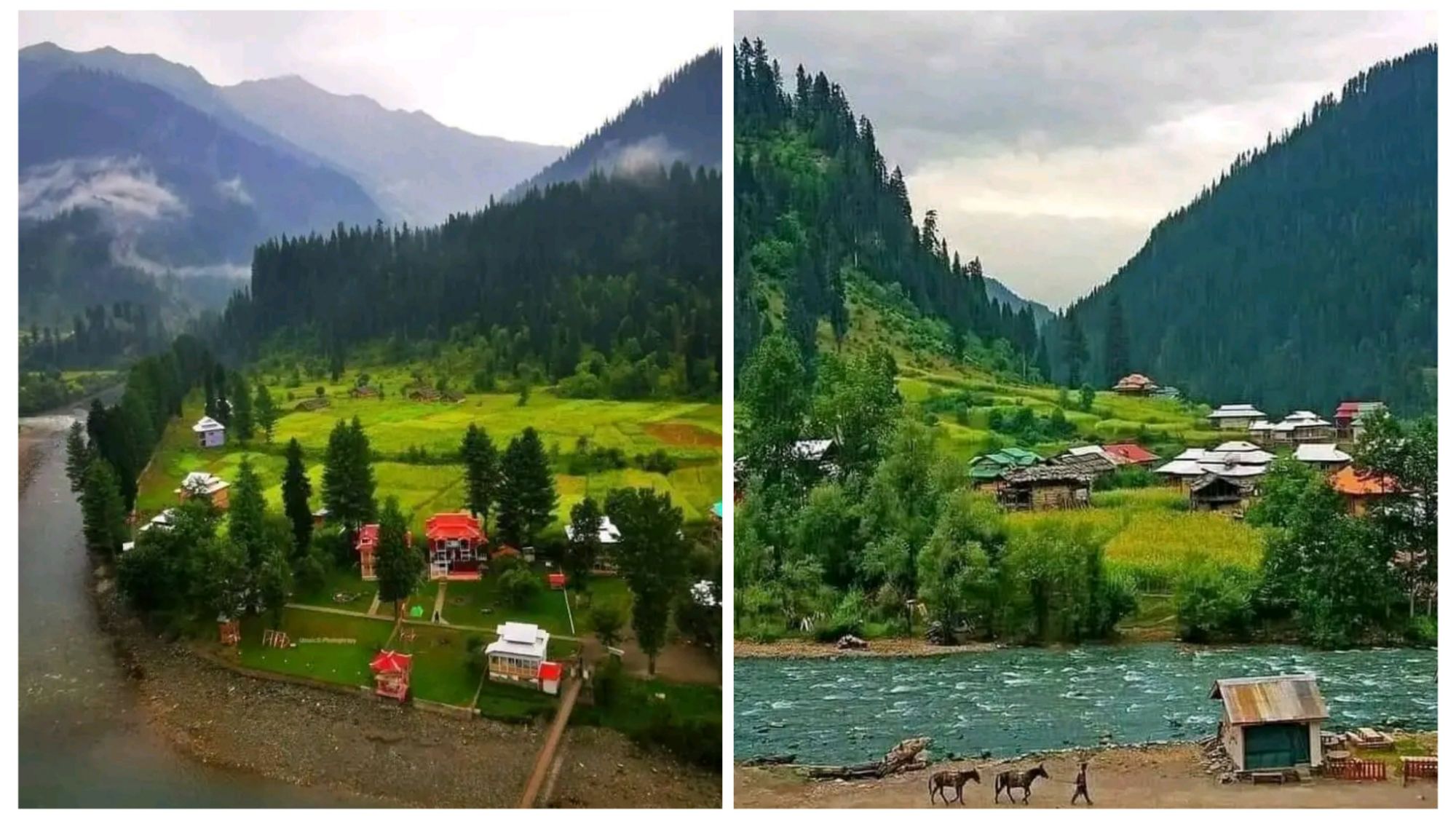


Pakistan-administered Kashmir is no longer the region’s best-kept secret. In 2025, the territory recorded a historic milestone: more than 1.5 million tourists visited its valleys, meadows, and mountain lakes, according to official data from the Department of Tourism and Archaeology. That figure represents not just a post-pandemic rebound but a fundamental shift in how South Asian travelers are reimagining their own backyard.
While international headlines have long focused on the geopolitical tensions along the Line of Control — the de facto border separating Pakistan- and India-administered Kashmir — a parallel story has been unfolding. Domestic tourists, adventure seekers, and families are increasingly drawn to a region that offers what much of the Himalayas has lost: unspoiled nature, affordable hospitality, and a sense of discovery that no luxury resort can manufacture.
Stretching across the Pir Panjal and western Himalayan ranges, Pakistan-administered Kashmir encompasses the districts of Muzaffarabad, Neelum, Poonch, Bagh, and Sudhanoti, among others. The territory’s highest peaks exceed 4,000 meters, its rivers feed into the Indus basin, and its forests harbor wildlife ranging from Himalayan black bears to leopard cats. Yet it remains remarkably accessible from Islamabad, Pakistan’s capital, with most major destinations reachable within a four- to six-hour drive.
What follows is a destination-by-destination guide to ten of the region’s most compelling locations, compiled from on-the-ground reporting, local tourism data, and verified geographical records. The information is current as of the 2025 travel season.
The Rawalakot Circuit: Three Destinations, One Journey
Banjosa Lake: The Artificial Lake That Feels Wild
At approximately 6,500 feet above sea level, Banjosa Lake sits 135 kilometers (84 miles) southeast of Islamabad, making it one of the most accessible highland destinations in Pakistan-administered Kashmir. The reservoir, created by damming a mountain stream, is surrounded by dense pine forests that reflect sharply in its clear surface on still mornings.
The lake’s appeal lies in its tranquility. Unlike the more developed tourist hubs of Murree or Nathiagali, Banjosa retains a relatively undeveloped character. Visitors come for picnics, short boat rides, and forest walks. Summer temperatures range from 15°C to 25°C (59°F to 77°F), offering a genuine escape from the plains. In winter, the mercury drops close to freezing, and occasional snowfall transforms the surrounding forest into a monochrome landscape.
Accommodation options span a wide range. Hotels and guesthouses in the immediate vicinity typically charge between $14 and $88 per night, depending on amenities. Budget-conscious travelers often opt to stay in Rawalakot or Khai Gala, where simpler lodgings are available at lower rates. A handful of restaurants serve local Kashmiri cuisine, though visitors should not expect the dining diversity of larger cities.
The drive from Islamabad takes roughly four hours via the Rawalakot Road, which winds through increasingly mountainous terrain after Kohala. The final approach to the lake is along a narrow forest track — manageable in a standard sedan during dry months but potentially challenging after heavy rain.
Toli Pir: Walking Above the Clouds
Continue 30 kilometers beyond Rawalakot, and the road climbs to Toli Pir Top, a hill station perched at 8,800 feet that offers what many consider the most commanding panoramic views in the Poonch district. On clear days, visitors can see across the Pir Panjal range into India-administered Kashmir, with the Poonch River threading through the valley below.
Toli Pir is the origin point of three distinct mountain ridges, giving its summit a geographical significance that matches its visual drama. The site has been incorporated into the Punjal Mastan National Park, which also encompasses Ganga Peak, Lasdana, and Pir Kanthi — a designation that offers some protection against unchecked development.
Most visitors drive to a base camp approximately 30 minutes below the summit, then complete the ascent on foot. The hike is moderate, taking roughly 30 minutes along a well-trodden trail. Summer temperatures hover between 10°C and 20°C (50°F to 68°F). In winter, heavy snowfall renders the upper reaches largely inaccessible except to experienced trekkers.
The road to Toli Pir is narrow and features numerous blind curves; drivers unfamiliar with mountain conditions are advised to hire local transport. Small eateries at the summit serve hot kehwa and basic refreshments, though most visitors bring their own provisions. Those seeking overnight stays typically return to Rawalakot or Khai Gala, where hotel rates are comparable to those near Banjosa.
Lasdanna: The Road Less Traveled
If Banjosa and Toli Pir have begun to register on the tourist map, Lasdanna remains genuinely off the beaten path. Located in the Bagh district at 8,600 feet, this valley sits just 10 kilometers from Toli Pir, connected by a newly constructed road that has made the journey significantly easier.
Lasdanna is defined by what it lacks: no large hotels, no souvenir shops, no crowds. What it offers instead is immersive nature — dense forests, alpine meadows, and a silence broken only by wind and bird calls. Summer temperatures range from 12°C to 22°C (54°F to 72°F), and winters bring substantial snowfall.
Accommodation is limited to Kashmir Tourism guesthouses, forest lodges, and a few small hotels charging between $11 and $28 per night. Simple restaurants serve basic meals. The destination suits travelers who prioritize solitude over convenience and are prepared for limited amenities.
The practical appeal of Lasdanna is its connectivity. The new road link means visitors can construct a single itinerary covering Banjosa Lake, Toli Pir, and Lasdanna in two to three days. From Lasdanna, the route continues toward Barasta Bagh and Ganga Choti, allowing for further exploration without backtracking.
The Bagh District: Where Peaks Meet Pilgrims
Ganga Peak: A Trekker’s Summit
Rising to 9,990 feet, Ganga Peak — also known as Ganga Choti — is the highest point among the ten destinations featured here and one of the most rewarding for trekking enthusiasts. Located approximately 200 kilometers (124 miles) from Islamabad and 21 kilometers from Bagh city, the peak offers a challenging but achievable summit that has made it increasingly popular among Pakistan’s growing hiking community.
The approach begins at Sudhan Gali, a small town where jeeps and local transport are available to reach the base camp. From there, a well-defined trail ascends through pine and oak forests before emerging above the tree line into open meadowland. The final approach can be steep in sections, but the 360-degree views from the summit — encompassing the Bagh-Poonch basin and distant Himalayan snowlines — justify the effort.
Summer temperatures at Ganga Peak range from 10°C to 18°C (50°F to 64°F), making it genuinely cool even at the height of the South Asian summer. Winter brings heavy snowfall that typically blocks the upper trails until March or April.
Sudhan Gali offers the nearest proper accommodation, with hotels ranging from $16 to $53 per night. Several restaurants serve local cuisine. Some locals have established camping arrangements near the peak itself, though these are basic and generally unsuitable for families with young children. Roadside eateries along the approach road provide food and refreshments for day-trippers.
The Neelum Valley: Kashmir’s Geographic Spine
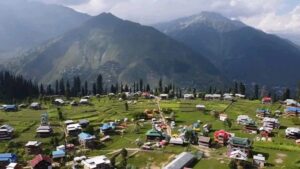
The Neelum Valley runs north-south parallel to the Line of Control, with the Neelum River — known as the Kishanganga on the Indian side — forming its central artery. The valley is the longest and most visually dramatic in Pakistan-administered Kashmir, stretching from Muzaffarabad to the high-altitude village of Taobat near the administrative boundary with Gilgit-Baltistan. The following six destinations are arranged geographically from south to north.
Keran: Where Two Kashmirs Meet
Keran is a village of singular geopolitical resonance. Situated on the western bank of the Neelum River at approximately 5,000 feet, it lies directly across the water from a settlement in India-administered Kashmir. The Line of Control runs through the river here, making it one of the few places where visitors can visually comprehend the human division of Kashmir.
The village is located 250 kilometers (155 miles) from Islamabad and 94 kilometers from Muzaffarabad. The journey follows the Neelum Valley Road, which clings to the mountainside above the river for much of its length. Along the way, travelers pass Jabbar Waterfall and Dhani Waterfall, both of which make worthwhile stops.
In summer, Keran’s temperatures range from 18°C to 30°C (64°F to 86°F) — warmer than the higher-altitude destinations but still pleasant. Winters are cold but not extreme. The village has developed a modest tourism infrastructure, with riverside resorts, hotels, and restaurants. Accommodation typically starts from around $14 per night, making it one of the more affordable options in the valley. The riverside setting and the novelty of its location make Keran particularly popular with families.
Upper Neelam: The View from Above
A 10- to 15-minute drive uphill from Keran brings visitors to Upper Neelam, an older settlement that predates its riverside counterpart as a population center but has only recently been developed for tourism. At 5,900 feet, the village offers an elevated perspective over the Neelum River, Keran below, and the surrounding forested mountains.
Upper Neelam has become notable for its range of accommodation, from basic guesthouses at approximately $11 per night to luxury properties charging up to $123 — a price range that reflects the destination’s emerging status as a premium location within Pakistan-administered Kashmir.
The village serves as a logistical base for excursions to Ratti Gali Lake and Baboon Top, two higher-altitude attractions that require additional travel time.
Authentic Kashmiri cuisine is available at local restaurants, including dishes such as rogan josh, yakhani, and the region’s distinctive pink-hued kehwa. Summer temperatures range from 15°C to 28°C (59°F to 82°F).
Sharda Valley: The Weight of History
No destination in Pakistan-administered Kashmir carries the historical significance of Sharda. Located 280 kilometers (174 miles) from Islamabad at 6,500 feet, the village is home to the ruins of Sharda Peeth — an 8th-century temple and center of learning that scholars believe was one of the most important educational institutions in medieval South Asia.
Historical records, including accounts by the Chinese pilgrim Xuanzang in the 7th century and the Persian historian Al-Biruni, describe Sharda as a flourishing center of Hindu and Buddhist scholarship. The temple complex, constructed in the Kashmiri stone-temple style between the 6th and 12th centuries CE, was renowned for its library and its association with the Sharada script — from which the Kashmiri language takes its name. Hindu tradition recognizes Sharda as one of the 18 Maha Shakti Peethas, believed to mark where the goddess Sati’s right hand fell.
Today, the ruins consist of a partially preserved stone structure with a nine-foot-wide staircase of 63 steep steps. The site is maintained by the Pakistan Army unit stationed nearby, which has helped prevent further deterioration. Excavations have revealed artifacts dating from the prehistoric period through the Bronze Age, underscoring the area’s deep human history.
The Neelum River widens considerably at Sharda, slowing its current and creating conditions suitable for boating. Summer temperatures range from 16°C to 30°C (61°F to 86°F). Hotels charge between $11 and $53 per night, and restaurants cater to both day-trippers and overnight guests. The proposed opening of a cross-border pilgrimage corridor — which would allow worshippers from India-administered Kashmir to visit the shrine — remains under diplomatic discussion, though no timeline has been established.
Adangkhel: Kashmir’s Hidden Village
Beyond Sharda, the valley narrows and the road becomes more demanding. Adangkhel, located approximately 315 kilometers (196 miles) from Islamabad at 7,874 feet, exemplifies the rewards of persevering into the upper Neelum Valley. The village sits on a high ridge above the town of Kel, accessible only by a traditional palki — a covered litter carried by porters — that takes approximately 40 minutes from the roadhead.
The journey is part of the experience. Visitors ascend through dense forest, emerging into open meadows surrounded by peaks that seem to float above the cloud layer. In summer, when temperatures range from 15°C to 30°C (59°F to 86°F), the landscape is intensely green. In winter, heavy snowfall isolates the village entirely.
Adangkhel has begun to develop a small tourism infrastructure, with wooden cottages and guesthouses charging between $21 and $123 per night. The accommodations are simple but comfortable, and the setting — what locals describe as “standing among the clouds” — offers a level of natural immersion that no lower-altitude destination can match.
Taobat: The Last Village
At approximately 350 kilometers (217 miles) from Islamabad and 7,217 feet above sea level, Taobat marks the practical end of the Neelum Valley road. Beyond this point, the terrain becomes too rugged for conventional vehicles; four-wheel-drive jeeps are required for the final stretches, and even these cannot operate reliably outside the summer months.
Taobat’s appeal is its extremity. The village sits in a broad meadow basin, surrounded by hills and nourished by streams that feed the Neelum River. Summer temperatures range from 10°C to 20°C (50°F to 68°F), and the pace of life is dictated entirely by the seasons. Winter snowfall blocks the roads, and the population shrinks as families move to lower elevations.
Wooden guesthouses and cottages charge between $14 and $18 per night — among the most affordable in the upper valley. Food is basic and locally sourced. The journey from Sharda to Taobat requires several hours of driving on rough roads, making this a destination for committed travelers rather than casual tourists.
Taobat Bala: The Meadow Above
A 20- to 25-minute uphill walk from Taobat brings visitors to Taobat Bala, a high meadow at 8,500 feet that represents the upper limit of accessible tourism in the Neelum Valley. The area is characterized by open grassland, flowing streams, small waterfalls, and an almost total absence of human presence.
Summer temperatures mirror those of Taobat below, between 10°C and 20°C (50°F to 68°F). Winter conditions are severe, with heavy snowfall rendering the area inaccessible for months.
Tourism infrastructure at Taobat Bala remains minimal — a handful of guesthouses charging from approximately $5 per night cater primarily to hikers and nature enthusiasts. The destination suits travelers seeking solitude and physical engagement with the landscape, rather than those requiring comfort and convenience.
Practical Considerations: Planning a Visit
When to Travel
The optimal window for visiting Pakistan-administered Kashmir runs from late April through early October. Within this period, May through September offers the most reliable weather and open road conditions. July and August represent peak season, with higher accommodation prices and greater visitor numbers. October brings autumn colors to the forests, while November through March is generally viable only for the lower-altitude destinations due to snow-blocked roads in the upper valleys.
Getting There
Islamabad is the primary gateway. The Murree Expressway and Kohala Bridge provide the main road access to Muzaffarabad, the territorial capital. From Muzaffarabad, the Neelum Valley Road runs north to Taobat, while the Poonch district — including Rawalakot, Bagh, and their associated destinations — is accessed via separate roads to the southwest.
Public transport is available but limited; most visitors hire private vehicles with experienced drivers familiar with mountain conditions. Four-wheel-drive is recommended for the upper Neelum Valley beyond Sharda.
Costs and Currency
Pakistan-administered Kashmir remains one of South Asia’s most budget-friendly mountain destinations. As noted throughout this guide, accommodation typically ranges from $5 to $123 per night depending on location and standard. Meals are inexpensive by international standards. A four-day organized tour covering Rawalakot, Banjosa Lake, and Toli Pir costs approximately $550 per person, based on 2025-2026 pricing from established operators.
The official currency is the Pakistani rupee (PKR). Foreign visitors should exchange currency in Islamabad before traveling, as banking facilities in the region are limited.
Permits and Security
Foreign nationals require a No Objection Certificate (NOC) to enter certain areas of Pakistan-administered Kashmir, particularly those near the Line of Control. The permit application process should be initiated at least two weeks before travel through the Ministry of Kashmir Affairs and Gilgit-Baltistan in Islamabad. Domestic Pakistani tourists do not require permits.
The security situation has improved significantly in recent years, but travelers should monitor official travel advisories and avoid areas close to the Line of Control unless specifically authorized.
Conclusion: Tourism’s Double Edge
The surge in visitor numbers — 1.5 million in 2025 alone — brings both opportunity and risk to Pakistan-administered Kashmir. The economic benefits are tangible: employment in hotels, transport, and food services; investment in infrastructure; and a growing recognition of the region’s value beyond its geopolitical symbolism. The Department of Tourism and Archaeology has indicated that new destinations are being prepared for promotion ahead of the 2026 season.
Yet the very qualities that draw visitors — the unspoiled landscapes, the quiet villages, the sense of discovery — are fragile. The experiences described in this guide remain authentic because much of the region has, until recently, been difficult to reach. As roads improve and visitor numbers climb, the challenge for authorities and communities alike will be to manage growth without sacrificing the essence of what makes these places worth visiting.
For now, Pakistan-administered Kashmir offers something increasingly rare: a genuine mountain experience at a human scale. The ten destinations profiled here represent the best of what the region has to offer — from the accessible serenity of Banjosa Lake to the remote meadows of Taobat Bala. The journey requires effort, patience, and a tolerance for basic conditions. The reward is a landscape that justifies its ancient reputation as paradise on earth.