
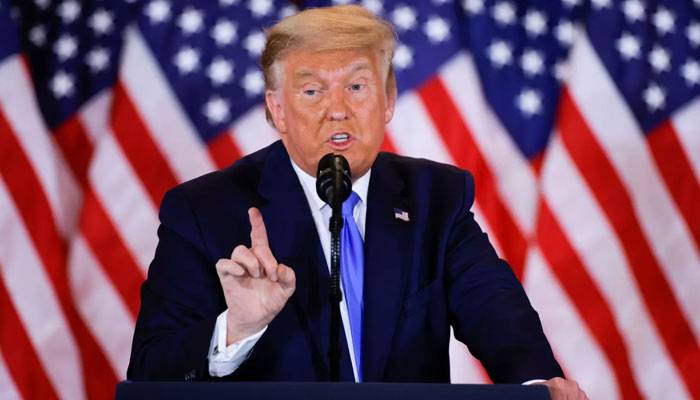

In a nondescript hearing room on Capitol Hill, a Pentagon official named Jules Hurst did something that rarely happens in the fog of war. He told the truth about money. For months, as American and Israeli forces engaged with Iran across the Middle East—from the straits of Hormuz to the skies over Lebanon—lawmakers had been asking a simple question: How much is this costing? On Tuesday, Hurst, the comptroller at the Department of Defence, finally gave a number.
Nearly 25 billion dollars. The figure landed in the room like a stone dropped into still water. Outside, in towns like Fayetteville, North Carolina, and San Diego, California, 13 military families have already received the flag-draped coffins that no price tag can ever account for. This is the story of a war fought with missiles and money, but paid for—on all sides—with human breath.
The war between the United States (alongside Israel) and Iran began on February 28. What started as a series of retaliatory strikes after years of shadow warfare—attacks on shipping, nuclear scientist assassinations, drone strikes—escalated into a direct, open confrontation. For nearly six weeks, the region held its breath. On April 8, a fragile ceasefire was brokered. It holds, for now.
But wars do not end when the guns fall silent. They linger in budgets, in hospitals, in the cracked foundations of bombed schools. And for the first time, the Pentagon has put a preliminary price tag on this chapter of violence: $25 billion. According to Reuters, Hurst testified before the House Armed Services Committee that “the bulk of this money has been allocated to ammunition and warfare equipment.”
What he did not specify—and what lawmakers pressed him on—was whether any of that money would go toward rebuilding the infrastructure destroyed in Iran, Lebanon, or other battlegrounds. The silence on that point spoke volumes.
The hearing was not merely an accounting exercise. It was a political battlefield. With US midterm elections just six months away, President Trump’s Republican Party is fighting to maintain its majority in the House. Recent public opinion polls show that Democrats have taken the lead, driven largely by public fatigue with the Iran war.

Only 34 percent of Americans now support the conflict, according to a recent survey. In mid-April, that number was 36 percent—a small drop, but in politics, small drops become avalanches. The war has become unpopular, and unpopular wars cost elections.
Democratic Representative Adam Smith, the ranking member on the committee, expressed a frustration that has been building for months. “I’m glad you answered that question,” he told Hurst, “because we’ve been asking for a long time, and no one has given us the war costs.”
Behind that exchange lies a deeper truth. For ordinary American families—those not receiving Pentagon briefings—the war has shown up not in news headlines but in their wallets. Global oil and gas shipments have been disrupted. Prices for petrol and fertiliser have risen. A farmer in Iowa pays more to fuel his tractor. A mother in Michigan pays more to heat her home. The war reaches everywhere.


Thirteen American service members have been killed so far. Hundreds more wounded. They have names, faces, and stories that statistics erase.
In Arlington National Cemetery, fresh graves are being dug. In hospitals across the country, young men and women who boarded planes with confidence now learn to walk on prosthetic limbs. The Pentagon does not release their names easily, but the families speak when they can.
“The last time I saw my son, he was laughing at the airport,” one mother told a local news station in Texas. “He said, ‘Mom, it’s just another deployment.’ It wasn’t.”
On the other side of the world, in Tehran, in Beirut, in the villages of southern Lebanon, the human cost is harder to count. Iranian hospitals report civilian casualties from airstrikes. Lebanese families have fled the border areas. Israeli cities have endured missile sirens and sleepless nights. War has no single geography of suffering.
In a small café in downtown Washington, a veteran who asked not to be named sat stirring his coffee. “I’ve been in two wars,” he said. “The cost you don’t see is the cost after. The divorces. The suicides. The kids who don’t know their fathers. Twenty-five billion? That’s just the start.”
The Iran war has redrawn the map of Middle Eastern alliances. Three US naval fleets are now deployed in the region, alongside thousands of additional American troops. Israel has conducted ground operations in southern Lebanon. Iran has launched missile barrages toward US bases in Iraq and Syria.
The ceasefire of April 8 is described as “fragile.” Iranian President Masoud Pezeshkian—referenced in related news reports—has called Israeli strikes on Lebanon and the resulting casualties “meaningless” to the ceasefire. His words reflect a deeper reality: neither side trusts the other, and neither side has achieved its objectives.
For the United States, the geopolitical calculus is complicated. Iran is not Iraq in 2003. It is a larger, more populous, more militarily capable nation with regional proxies and a population that, despite its grievances with the regime, has shown resilience under external pressure.
The war has also affected global energy markets. Disruption to shipping in the Strait of Hormuz—through which nearly 20 percent of the world’s oil passes—has sent prices fluctuating wildly. China and India, major importers of Middle Eastern oil, have watched with growing unease. Even nations far from the conflict feel the tremors.
Current Situation
As of today, the ceasefire between the US and Iran technically holds. No major strikes have been reported in the past 72 hours. But no peace talks have been announced either. The two sides remain in a state of armed pause—neither war nor peace.
In Washington, the political battle intensifies. President Trump’s approval ratings have declined since the war began. His base remains loyal, but independents and moderate Republicans are drifting away. The Democratic opposition has seized on the war costs and the lack of a clear exit strategy.
The Pentagon continues to maintain a significant military footprint in the region. Three naval battle groups remain on station. Thousands of troops are still deployed. The $25 billion figure, lawmakers were told, is preliminary. The final bill will be higher.
In Iran, the economic situation—already dire due to years of sanctions—has worsened. Infrastructure damage from US strikes remains unrepaired. The Iranian rial has fallen further. For ordinary Iranians, the war has meant longer lines for bread, higher prices for medicine, and the constant hum of drones overhead.
Twenty-five billion dollars is a number that is almost impossible to comprehend. It is more than the GDP of several small countries. It could have built thousands of schools, funded cancer research for a decade, or provided housing for every homeless veteran in America.
Instead, it became ammunition. It became fuel for aircraft carriers. It became the explosive that killed a 22-year-old soldier from Ohio and the missile that shattered a marketplace in Tehran.
Wars are always sold to the public as necessary, as righteous, as quick. They rarely are any of those things. The Iran war, now in its third month of active conflict, has already outlasted many predictions. And while the ceasefire holds for now, both sides are rearming, rethinking, and watching each other across a tense horizon.
For the families of the 13 dead, for the hundreds wounded, for the millions who have paid higher prices at the pump and in their taxes, the war is not a political debate. It is a lived reality. And as the midterm elections approach, American voters will have a chance to pass judgment on that reality.
The $25 billion question remains unanswered: What was it all for? History may provide an answer. But history, as always, will take its time.