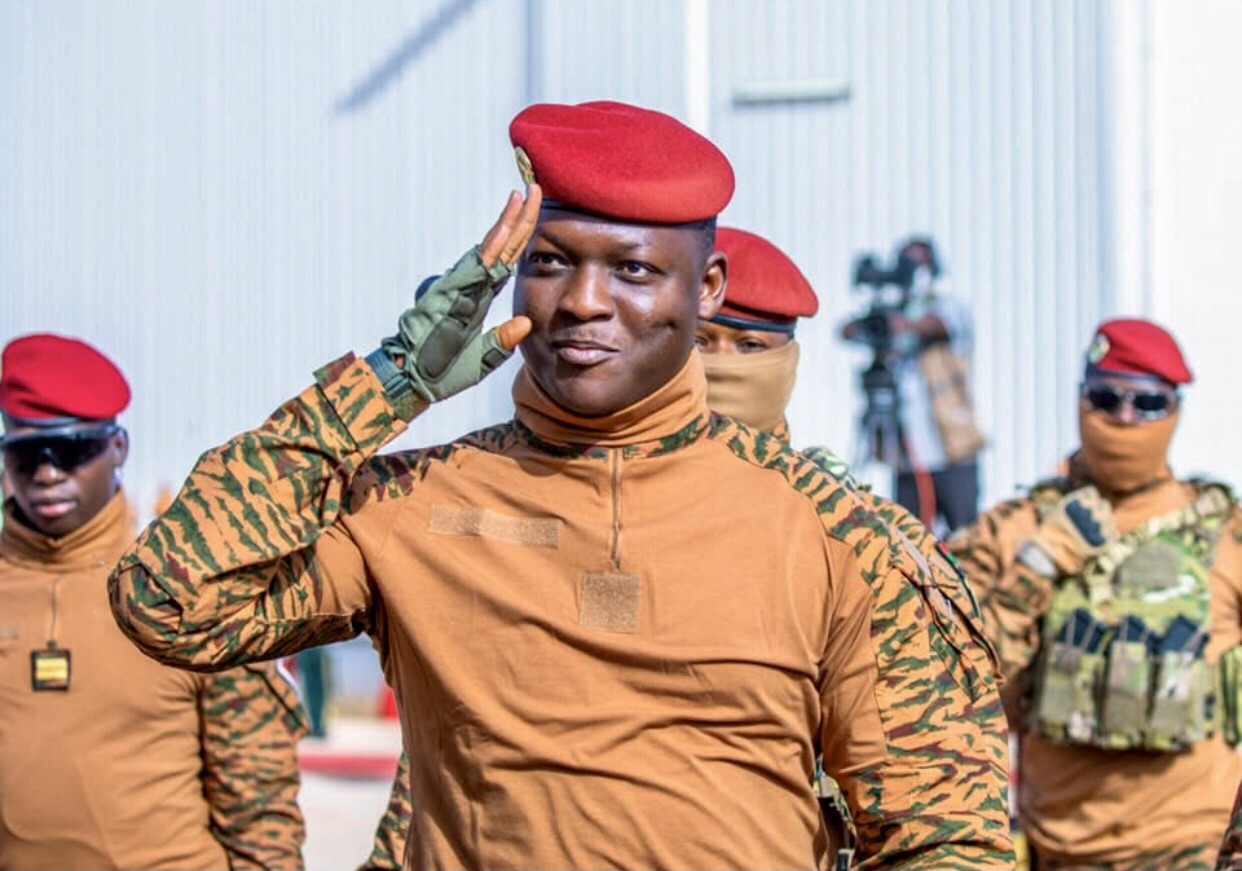

Ibrahim Traoré was born on 14 March 1988 in Kéra, western Burkina Faso. A gifted science student, he studied geology at the University of Ouagadougou before enlisting in the army in 2009. Traoré earned a reputation in the elite “Cobra” special-forces unit for operations against jihadist insurgents in the Sahel.
The September 2022 coup and ascent to power
After nine months of mounting battlefield losses and public protests under coup leader Lieutenant-Colonel Paul-Henri Sandaogo Damiba, Captain Traoré led a faction that removed Damiba on 30 September 2022. He suspended the constitution, dissolved the transitional parliament, and was sworn in as interim president on 6 October 2022—the world’s second-youngest head of state at 34.

Governing style and domestic agenda
Traoré promised to restore security within “two to three years”, portraying himself as an anti-corruption reformer and champion of grassroots volunteers known as the “Volunteers for the Defence of the Fatherland” (VDP). His administration:
Expanded VDP recruitment while increasing defence spending.
Suspended and later rewrote the mining code to give the state a larger stake in strategic resources.
Announced Burkina Faso’s first gold refinery (400 kg daily capacity) in November 2023 to keep more revenue onshore.
Banned artisanal-gold export permits in February 2024 to curb smuggling.
Critics say these measures have yet to translate into security gains; jihadist attacks killed over 400 soldiers across the Sahel in the past year


Foreign-policy shift: from France to Russia and the Alliance of Sahel States
One of Traoré’s earliest moves was to terminate the 2018 defence accord with France and order its 400 special-forces troops to leave by February 2023.africanews.com
He then:
Cultivated ties with Russia and Turkey, prompting speculation about Wagner Group’s presence, which Traoré denies.en.wikipedia.org
In September 2023 joined Mali and Niger to sign the Liptako-Gourma Charter, creating the Alliance of Sahel States (AES)—a mutual-defence pact that later withdrew from ECOWAS in January 2024. The AES frames itself as a vehicle for “sovereignty and self-reliance” against Western pressure.
Popularity and pan-African image
Despite deteriorating security, Traoré commands fervent support among urban youth who praise his defiant stance toward France and call him “Captain Courage.” Thousands rallied in Ouagadougou in April 2025, waving Russian flags and AES banners.
Social-media influencers across Francophone Africa have amplified his speeches, portraying him as a symbol of pan-African resistance—although analysts warn the narrative obscures alleged human-rights abuses by Burkina’s forces.
Human-rights and press-freedom concerns
Massacres and forced disappearances attributed to government troops have increased, according to rights groups.
Independent radio stations have faced temporary closures for reporting on Wagner-linked operations.
Journalists complain about restricted access to conflict zones and opaque casualty figures.
Traoré’s government dismisses these allegations as “information warfare,” but watchdogs argue they undermine the promised return to constitutional order.
Economic headwinds
Burkina Faso is the world’s fourth-largest gold producer, yet nearly 40 percent of its 22 million citizens live below the poverty line. Inflation, exacerbated by supply disruptions and security checkpoints, reached 13 percent in late 2024. Critics question whether domestic refining and export bans can offset revenue lost to insecurity.
Regional and international reactions
ECOWAS suspended Burkina Faso and imposed targeted sanctions, lifted partially after a vague transition timetable was presented.
United States and EU curtailed non-humanitarian aid but stopped short of broad sanctions.
Russia welcomed AES overtures, offering grain and arms deals.
France relocated counter-terror troops to Côte d’Ivoire and Chad.
Analysts at the International Crisis Group say the AES could deepen the Sahel’s diplomatic isolation unless it presents a credible plan to curb jihadist violence.crisisgroup.org
What next?
Traoré has pledged to hold elections once “territorial integrity is restored.” No firm date is set, and opposition parties operate in a climate of fear. Key variables to watch through 2025:
Security trajectory: Will joint AES operations reduce insurgent attacks?
Economic reforms: Can the gold-refinery project and mining-code changes deliver fiscal relief?
International alignment: How far will Traoré pivot toward Moscow and away from traditional Western donors?
Civil liberties: Will press freedom and political pluralism shrink further?
Key facts about Ibrahim Traoré at a glance
| Item | Detail |
|---|---|
| Full name | Captain Ibrahim Traoré |
| Born | 14 March 1988, Kéra, Burkina Faso |
| Position | Interim President & Chair of the Patriotic Movement for Safeguard and Restoration |
| Came to power | 30 September 2022 coup |
| Notable policies | Expulsion of French troops; formation of Alliance of Sahel States; domestic gold refinery plan |
| Age | 37 (as of 2025) |
| Military background | “Cobra” special forces, Mali War veteran |
Ibrahim Traoré’s rapid rise from front-line captain to head of state encapsulates the Sahel’s volatile mix of insecurity, youthful frustration, and anti-colonial sentiment. Two and a half years into his rule, he remains a polarising figure: hailed by admirers as a pan-African visionary and condemned by critics as another military strongman whose bold rhetoric masks mounting violence and shrinking civic space. Whether he can deliver the stability and prosperity he promises—or simply deepen Burkina Faso’s turmoil—will shape regional dynamics for years to come.