
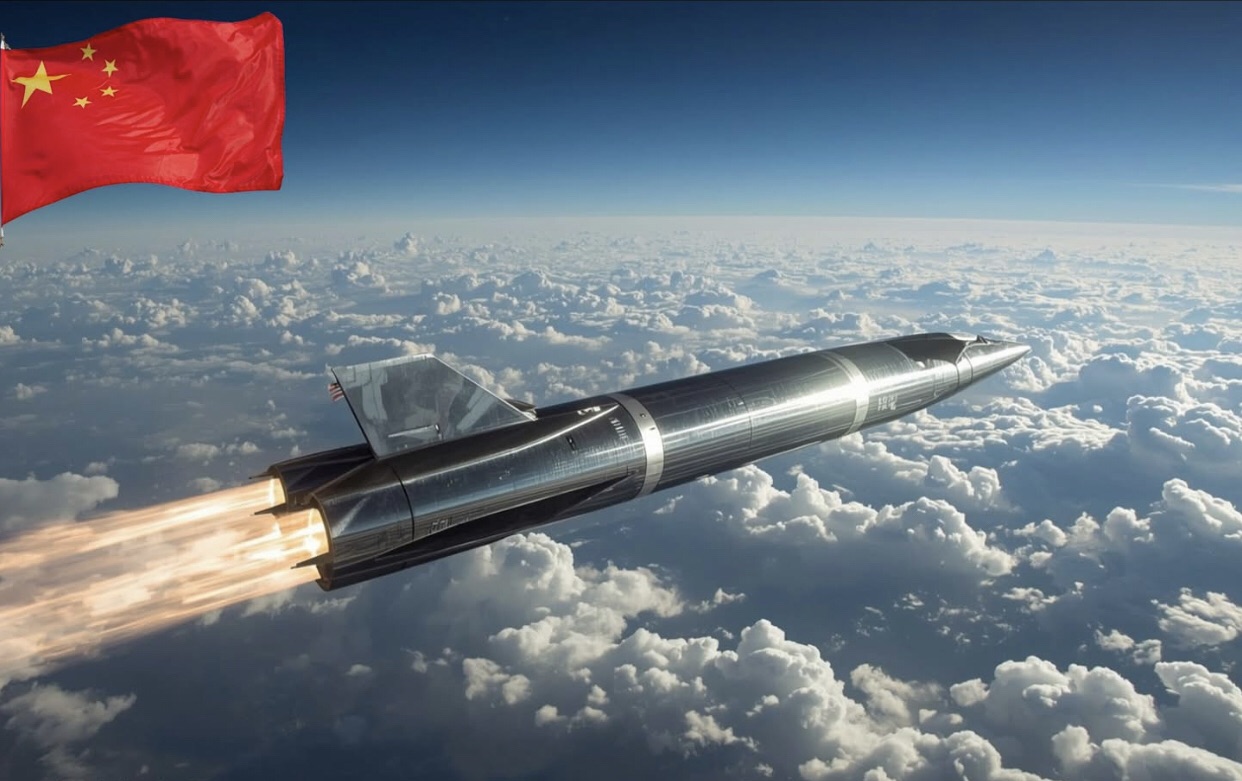

BEIJING – In a breakthrough that could reshape global hypersonic warfare, Chinese military scientists have successfully developed high-speed missiles constructed primarily from stainless steel a material long dismissed as too weak for Mach 5+ flight. The innovation threatens to upend traditional aerospace manufacturing and give China a cost-effective edge in next-generation arms development.
Defying Conventional Wisdom
Hypersonic missiles, capable of traveling at least five times the speed of sound (Mach 5+), typically require expensive, lightweight materials like titanium alloys or carbon composites to endure temperatures exceeding 2,000°C (3,632°F). However, researchers at China’s National University of Defense Technology (NUDT) have engineered a proprietary stainless steel variant that maintains structural integrity under extreme heat and stress.
- Material Science Breakthrough: Advanced grain refinement and alloying techniques enhance steel’s heat resistance.
- Cost Advantage: Stainless steel is 10-20x cheaper than titanium, enabling mass production.
- Simplified Manufacturing: Unlike carbon composites, steel doesn’t require specialized facilities.
Strategic Implications
Western defense analysts had previously assumed China’s hypersonic advancements relied on rare materials. This development suggests:
Faster production of hypersonic arsenals
Lower costs compared to U.S. and Russian counterparts
Greater adaptability for export to allied nations

“This is a game-changer,” said Dr. Markus Schiller, a European missile technology expert. “If they’ve truly made steel viable at Mach 5, it disrupts the entire cost calculus of hypersonic deterrence.”
Global Arms Race Intensifies
The U.S., Russia, and China are locked in a hypersonic arms race, with Beijing now leading in operational deployments. Recent tests of its DF-ZF glide vehicle and YJ-21 anti-ship missile suggest stainless steel components may already be in use.
Key Concerns:
Proliferation risk: Cheaper materials could enable wider global spread
Detection challenges: Steel may alter radar signatures unpredictably
Thermal management: Long-term durability under repeated use remains unproven




What’s Next?
Pentagon officials confirm monitoring the development but remain skeptical about performance parity with advanced composites. Meanwhile, China’s defense industry is reportedly exploring steel-based applications for drones and spaceplanes.
“The rules of hypersonics are being rewritten,” said a NATO-affiliated researcher speaking anonymously. “If this works as claimed, everyone will need to revisit their material science playbooks.”