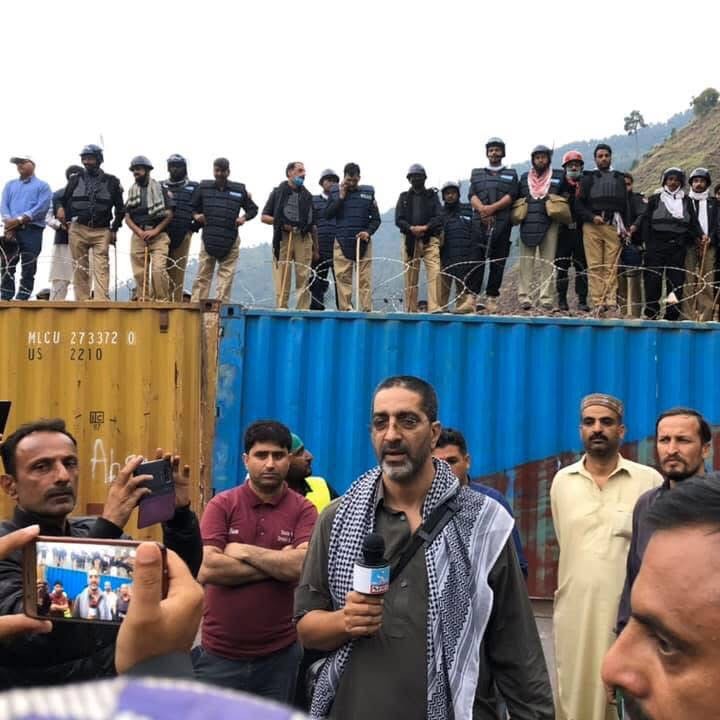

Muzaffarabad | The Azadi Times | July 7, 2025] — An unprecedented political transformation is quietly reshaping Pakistan-administered Jammu & Kashmir (PAJK), where a grassroots-driven initiative aims to establish a truly representative, accountable, and transparent local government — free from decades of external interference and elite control.
This reformative movement, led by independent public policy researcher Tanveer Ahmed, seeks to fill the democratic vacuum left since 1947, when the former princely state of Jammu and Kashmir was divided between India and Pakistan — and has remained unsettled ever since.
A Four-Stage Path to Self-Governance
Ahmed and his team at the JKA Public Agency have proposed a comprehensive, citizen-centric governance framework built on four interlinked stages:
- AJK Referendum 2023
Citizens aged 16 and above participated in a public consultation process to determine what form a truly independent, people’s government should take — one that is answerable only to the region’s residents. - Public Assembly AJK
Electoral constituencies are being reorganized based on equal-population zones to ensure fair political representation — a step to dismantle decades of skewed influence by select elites. - Awaami Adaalat AJK
Legal and administrative reform is underway to create institutions grounded in 21st-century values: transparency, accountability, civic participation, and meritocracy — with equal emphasis on rights and responsibilities. - Formation of a Genuine People’s Government (2025)
Upon completion of the first three phases, a functioning, service-oriented government will be formally launched. This will not be a symbolic body — but one rooted in citizen mandates and equipped to deliver on governance.
“This is not merely about autonomy,” says Ahmed. “It’s about completing the journey from Dogra Raj to Awami Raj — from colonial structures to genuine people’s power.”
For over seven decades, the region has remained in constitutional limbo. Despite being administered by Pakistan, Pakistan-administered Jammu & Kashmir (PAJK) does not enjoy full political rights or a transparent, accountable government. Three previous declarations promising reform failed, largely due to the absence of an inclusive internal political process.
Ahmed’s roadmap, however, is backed by grassroots consultation and seeks to build internal legitimacy — rather than wait for regional or international validation.


Challenging Military and Bureaucratic Control
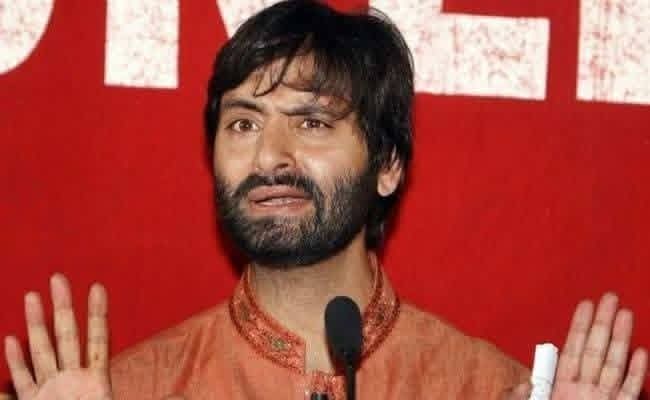
Ahmed has also directly challenged the continued presence of Pakistan’s military and intelligence institutions in the region, calling for full civilian control and the demilitarisation of civic life.
“Pakistan’s military must quietly withdraw from our civic space,” he said in May 2025, during an event marking the anniversary of the 2021 Rawalakot protests.
“We want dignity, not dependency. We want justice, not orders from elsewhere.”
This statement followed months of civil unrest sparked by a controversial “Peaceful Assembly Ordinance” — later suspended by the region’s High Court after widespread protests led by lawyers, student unions, and the Joint Awami Action Committee (JAAC).


PeaceBondAJK2025: A Local Financial Revolution
Ahmed’s team has also proposed #PeaceBondAJK2025, an innovative economic model designed to fund governance and development through local investment and public ownership, instead of relying on foreign aid or federal subsidies.
- Every citizen, rich or poor, would be a financial stakeholder in the new system.
- Projected economic growth over the next 10 years: up to 10,000%.
- Government budget could grow from under \$1 billion today to \$100 billion by 2035.
This vision, if implemented, would make the region one of the most economically empowered self-governing territories in South Asia.
International and Regional Repercussions
The initiative directly questions the legitimacy of decades-old, often secretive, India–Pakistan power arrangements over Jammu & Kashmir — and it challenges both sides’ longstanding narratives.
Instead of aligning with either capital, Ahmed’s approach is based on international norms of democratic self-determination, and has even received attention in academic and policy circles:
Rising Kashmir (2011): Ahmed introduced the idea of “Ownership-Building Measures” (OBMs), a step beyond standard confidence-building efforts.
British Parliament (May 2011): The late Professor Richard Bonney acknowledged these proposals during a Kashmir-focused debate.
Al Jazeera (2019): Asked Tanveer Ahmed to assess Kashmir’s post-Article 370 trajectory; his analysis aired in an extended segment (watch from 19:00 mark):
YouTube Link
Growing Public and Expert Support
Since July 2024, over 56 independent advisors — ranging from lawyers to academics — have joined a consultative group overseeing the proposed reforms.
And from March 2025 onwards, all political groups, trade unions, and action committees (including the JAAC) have been formally invited to submit their position statements in line with the people’s referendum.
“This is not the agenda of a single leader or party. This is a public process. Whoever claims to represent the people must answer to the people,” said one advisor involved in the consultative process.