
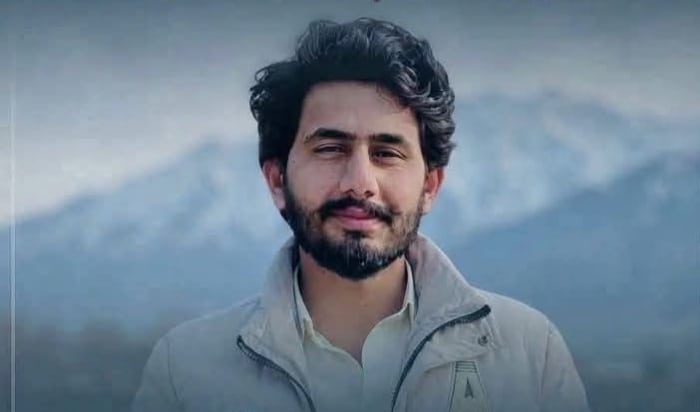

The Quaid-e-Azam University scholar became a central figure in the Rights Movement in Pakistan-administered Kashmir after reports emerged on July 28 that he was killed during a protest in Rawalakot
RAWALAKOT — The name Usama Jamil has become a rallying cry in Pakistan-administered Kashmir and among the Kashmiri diaspora since late July, after reports that a PhD scholar was killed during protests linked to the region’s rights movement.
According to multiple social media tributes and a YouTube report, “On 28 July 2026, reports emerged of Usama — a Kashmiri PhD scholar — martyred while raising his voice for the oppressed people of Kashmir.”

Usama was widely identified online as Sardar Usama Jamil, a PhD scholar at Quaid-i-Azam University Islamabad. One post that was shared from a protest in Vienna described him as “A PhD Scholar SILENCED BY A BULLET TO THE HEAD” and referred to the “MARTYRDOM OF RAWLAKOT MASSACRE”. Another video tribute described him as “PhD Student QAU” and marked the date as “28 JULY 2026”.
A woman speaking in a video that circulated on July 29 said Usama was a PhD scholar at Quaid-i-Azam University and alleged he was killed when “Pakistani forces opened fire on protesters.” She described footage of him “in beige leading chants in a large outdoor crowd” in his final hours. The Azadi Times has not been able to independently verify the circumstances of the firing from official police or hospital records. Authorities in Pakistan-administered Kashmir have not published a detailed public statement on the specific death as of filing.
What is established from visuals is the scale of public mourning. Videos from late July and early August show large funeral processions in green hilly areas, with a coffin draped in cloth and carried through villages, followed by hundreds of mourners. Other clips show motorcycle rallies on highways in Azad Kashmir, with participants waving the green-and-white striped flag of Azad Jammu and Kashmir and chanting slogans for Usama Shaheed.
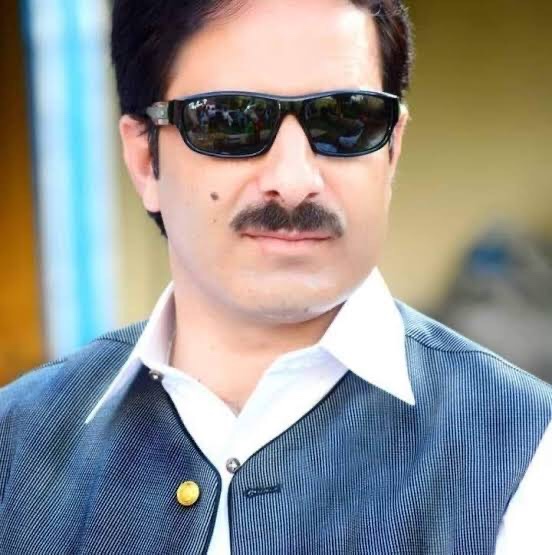
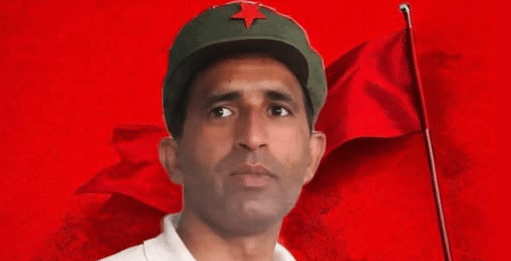
In Rawalakot and Mirpur, gatherings were held where speakers addressed crowds from atop vehicles, with banners of the Awami Action Committee visible. Mourners described him as “a valuable asset of the Kashmiri nation” and “PHD Student QAU”.
The memorials were not limited to Kashmir. On June 7, a protest was held at the United Nations in Vienna, where a demonstrator held a poster of Usama Jamil calling for “JUSTICE FOR KASHMIR, JUSTICE FOR USAMA JAMIL”.
Online, the language used has been intensely reverent. One tribute read “ہم جو تاریک راہوں میں مارے گئے” and “Comrade Usama Hamid Shaheed”. Another poster declared “MARTYRED IN KASHMIR DURING PEACEFUL PROTEST” with the date “27 JULY 2026”.

Usama has been linked by mourners to a famous slogan he often raised at rallies — “ye laila meri main majnu is ka” — referring to Kashmir as his Laila, a line that has since been repeated on placards and in eulogies.
The death came during a period of heightened tension. Students from Poonch told the Human Rights Council of Azad Jammu and Kashmir (HRC-AJK) in early August that healthcare services, markets and internet had been disrupted during recent unrest, and alleged that protesters were fired upon during a Joint Awami Action Committee rally in Rawalakot. The HRC-AJK has called for an impartial investigation into the use of excessive force.
As of now, no official First Information Report or post-mortem report relating to Usama Jamil has been made public. His family has not issued a formal written statement that is publicly available.
For many in Pakistan-administered Kashmir, Usama is now remembered not just as a scholar, but as a symbol of a generation of educated youth who joined street protests over basic rights.