

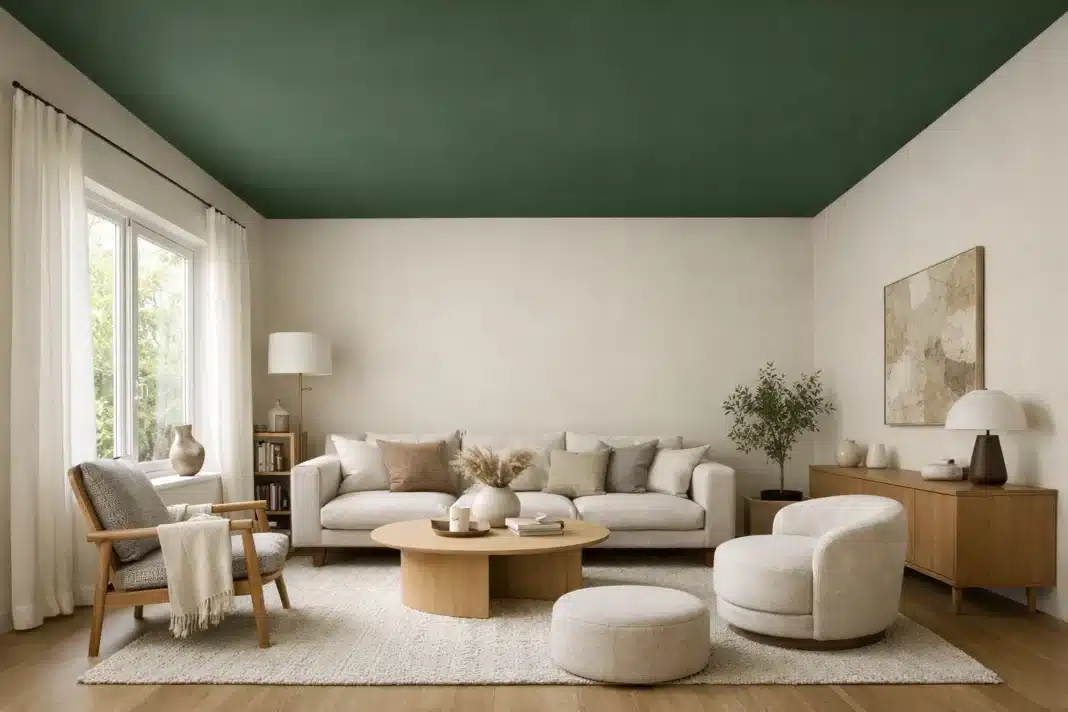

Walk into any newly constructed home or renovated commercial space in 2026, and the first thing that captures attention is no longer the flooring or wall color. Look up, and you will likely find a carefully orchestrated ceiling design that transforms the entire character of the room.
The global interior finishes market has reached an inflection point. What was once an afterthought—an expanse of flat white paint hiding electrical wiring—has emerged as a critical design element that influences acoustics, lighting quality, thermal comfort, and spatial perception. Industry data indicates that ceiling systems now account for 15-20% of total interior renovation budgets, up from just 8% a decade ago.
This comprehensive guide examines the material science, economic realities, and design innovations defining ceiling architecture in 2026. Whether you are a homeowner planning a modest renovation or a commercial developer specifying systems for large-scale projects, understanding the trade-offs between PVC, gypsum, POP, wood, and emerging smart systems is essential for making informed investment decisions.
The Material Landscape: Five Categories, Distinct Applications
Ceiling materials are not interchangeable. Each category exhibits specific performance characteristics that determine suitability for environmental conditions, budget constraints, and aesthetic objectives.
PVC: The Waterproof Workhorse at $0.50-$0.75 per sq ft
Polyvinyl chloride (PVC) ceiling panels have revolutionized wet-environment applications. Unlike gypsum or POP, which absorb moisture and deteriorate, PVC exhibits zero water absorption at the molecular level. This property makes it the only viable choice for bathrooms, kitchens, and coastal properties where humidity consistently exceeds 70%.
The economic case for PVC is compelling. At $0.50-$0.75 per square foot, it represents the most economical entry point for false ceiling systems. A standard 10×10 foot room (100 square feet) can be completed for $50-$75, including installation.
Performance Characteristics:
- Weight: Less than one-fifth the density of gypsum board, reducing structural load and enabling single-worker installation
- Installation Speed: Interlocking panel systems allow completion in 1-2 days versus 7-10 days for traditional POP
- Maintenance: Surface stains adhere without penetration; cleaning requires only a damp cloth and mild detergent
- Fire Rating: B1 classification (flammable but self-extinguishing) with available flame-retardant additives for enhanced safety

The primary limitation involves thermal stability. PVC begins deforming at temperatures above 60°C (140°F), restricting placement near high-heat sources such as commercial kitchen exhaust systems or industrial lighting fixtures.
Gypsum Board: The Fire-Resistant Standard at $0.90-$1.50 per sq ft
Gypsum (calcium sulfate dihydrate) dominates dry-environment applications due to superior fire resistance and seamless finish capabilities. When exposed to heat, gypsum releases water vapor through a process called calcination, retarding temperature rise and providing up to 2-hour fire ratings—critical for commercial buildings and multi-family residential structures.
Standard gypsum false ceiling systems cost $0.90-$1.50 per square foot, with a 10×10 room running $90-$150 installed.
Premium variants using branded Gyproc boards and specialized channels push costs to $1.45-$1.75 per square foot.
Acoustic Performance: Gypsum systems achieve Noise Reduction Coefficient (NRC) ratings of 0.50-0.65, providing moderate sound absorption suitable for general living spaces and standard office environments.
The critical vulnerability remains moisture sensitivity. Standard gypsum boards exposed to humidity above 75% experience sagging, mold proliferation, and structural compromise. Green-board (moisture-resistant) variants offer improved performance but still underperform PVC in consistently wet environments.
Plaster of Paris (POP): The Sculptural Medium at $0.90-$1.50 per sq ft
POP (calcium sulfate hemihydrate) remains unmatched for complex three-dimensional designs, curved geometries, and seamless ornamental work. Unlike prefabricated gypsum boards, POP applies as a wet plaster, enabling on-site molding into virtually any form during the curing process.
Cost structures parallel gypsum at $0.90-$1.50 per square foot () for simple applications, but complex ornamental work—featuring intricate floral reliefs, medallions, or curved cove lighting—can escalate to $2.40-$4.80 per square foot.
The Time Penalty: POP demands significant temporal investment. Installation requires 7-10 days including curing time, compared to 2-4 days for gypsum and 1-2 days for PVC.
The wet application process generates substantial dust and requires temporary vacancy of the installation space, adding hidden costs for commercial projects.
Durability Concerns: POP’s crystalline structure develops micro-cracks over time, particularly in structures subject to settling or vibration. Unlike gypsum, which can be patched, POP repairs often require complete re-application of affected sections.
Wood: The Acoustic Premium at $2.40-$4.80 per sq ft
Natural wood ceilings provide unmatched warmth and superior acoustic performance, with NRC ratings reaching 0.75-0.90 when properly engineered. However, this performance comes at significant cost premium:
- Plywood: $1.80-$2.40 per square foot
- Medium-Density Fiberboard (MDF): $1.45-$2.20 per square foot
- Solid Hardwood (Teak, Oak): $3.00-$4.80 per square foot
- Engineered Wood: $2.20-$3.00 per square foot
For a 10×10 foot room, wood ceiling systems range from $240-$480 installed—4-7 times the cost of PVC alternatives.
Maintenance Burden: Wood systems require annual termite inspections ($24-$60), refinishing every 8-10 years ($1.20-$1.80 per square foot), and strict humidity control (40-60% relative humidity) to prevent warping and dimensional instability.
Fire-retardant treatment adds cost but is mandatory for commercial applications.
Glass and Specialty Materials: The Architectural Statement
Tempered and laminated glass ceilings ( $4.20-$7.20 per square foot) maximize natural light transmission while creating dramatic spatial effects. Installation requires structural engineering consultation due to weight loads and safety considerations.
Emerging materials gaining traction in 2026 include:
- Cementitious Wood Fiber: Compressed wood fibers with cement binders; excellent acoustic absorption with industrial aesthetics
- Recycled Polyethylene Felts: Plastic bottle-derived panels mimicking wool felt acoustics with vibrant color optionsMore Coverage
- Micro-Perforated Stretch Membranes: Acoustic transparency with visual continuity for high-design commercial spaces



Room-Specific Design Strategies
Ceiling specification must respond to functional requirements, environmental conditions, and spatial psychology unique to each room type.
Kitchen Ceilings Design Ideas: Combating Heat, Grease, and Humidity
Kitchen environments present the most demanding ceiling specifications. Cooking generates steam, grease aerosols, and temperature spikes that destroy standard materials. PVC panels with B1 fire ratings and grease-resistant glossy surfaces provide optimal performance.
Critical Specification: Avoid all absorbent materials—standard gypsum, POP, and untreated wood—in kitchen environments. Steam penetration causes irreversible damage within 12-18 months, necessitating complete replacement.
Design Parameters:
- Maintain minimum 8.5 feet finished ceiling height to accommodate ventilation ducting and prevent heat accumulation
- Specify 200-600mm modular PVC systems to enable easy replacement of individual panels if damaged
- Integrate recessed LED lighting with sealed fixtures to prevent grease accumulation
Bedroom Ceilings: Acoustic Comfort and Psychological Calm
Bedrooms require ceilings that promote sleep quality through acoustic dampening and visual tranquility. Research indicates that bedroom noise levels exceeding 40 decibels significantly impair sleep architecture, making acoustic performance paramount.
Optimal Configurations:
- Layered Gypsum with Insulation: Resilient channels and acoustic batting reduce impact and airborne sound transmission
- PVC with Acoustic Backing: Specialized PVC panels with integrated fiberglass backing provide NRC 0.60-0.70 ratings
- Soft Geometry: Curved cove lighting and wavy edge designs $1.45-$3.00 per square foot) reduce visual tension and create subconscious relaxation cues
Lighting Integration: Warm cove lighting (2700-3000K color temperature) positioned at ceiling perimeter avoids direct glare while providing gentle ambient illumination that supports circadian rhythms.
Living Room Ceilings: Architectural Drama and Flexibility
Living rooms accommodate diverse activities—entertaining, media consumption, relaxation—requiring adaptable ceiling systems. The 2026 trend toward “biophilic” design incorporates natural elements and soft geometries.
Emerging Trends:
- Floating Layer Ceilings: Single-plane drops with hidden LED cove lighting create the illusion of levitation ($1.45-$3.00 per square foot)
- Geometric POP Patterns: Triangular, hexagonal, or asymmetric layouts add visual interest without overwhelming spatial proportions
- Wood-Gypsum Combinations: Strategic wood panel insertion within gypsum fields provides warmth while controlling costs
Scale Considerations: Rooms exceeding 400 square feet benefit from complex geometries (tray ceilings, stepped profiles) that break visual monotony. Smaller spaces (under 200 square feet) require minimalist approaches to avoid claustrophobia.
Commercial Suspended Acoustic Systems
Office environments, educational facilities, and hospitality spaces demand ceiling systems that address acoustic performance, mechanical integration, and aesthetic cohesion. Suspended acoustic ceilings—secondary systems hung below structural slabs—provide these capabilities.
Acoustic Performance Metrics
The Noise Reduction Coefficient (NRC) measures sound absorption across frequencies, ranging from 0 (total reflection) to 1.0 (total absorption). Effective office acoustics require NRC 0.70+ to control reverberation and enable speech intelligibility.
Material Performance:
- Mineral Fiber Tiles: NRC 0.55-0.75; cost-effective standard for general office spaces
- Fiberglass Panels: NRC 0.85-0.95; premium performance for conference rooms and open-plan offices
- Perforated Metal with Acoustic Backing: NRC 0.60-0.80; durability with industrial aesthetics
Ceiling Attenuation Class (CAC): Measures sound insulation between rooms sharing a ceiling plenum. Values above 35 indicate effective privacy barriers, critical for healthcare and legal environments.
Design Configurations
Modern suspended systems transcend the utilitarian 2×2 grid, offering architectural expression:
Linear Baffles: Vertically oriented planks create rhythmic patterns while exposing structural elements and maintaining acoustic performance.
Three-Dimensional Modules: Geometric forms provide sculptural presence with NRC ratings exceeding 0.80.
Cloud Configurations: Suspended acoustic “clouds” provide targeted sound control over specific zones (reception desks, collaborative areas) without full ceiling coverage, reducing material costs by 40-60%.
Smart Ceiling Integration: The Connected Fifth Wall
The convergence of LED technology, IoT sensors, and building automation systems has transformed ceilings into intelligent infrastructure. Smart ceiling systems now integrate:
Lighting Automation: LED matrices with circadian rhythm programming adjust color temperature throughout the day—cool whites (5000K) for morning alertness, warm ambers (2200K) for evening relaxation.
Motion sensors enable occupancy-based illumination, reducing energy consumption by 60-80%.
Environmental Monitoring: Embedded sensors track temperature, humidity, CO2, and volatile organic compounds (VOCs), triggering HVAC adjustments to optimize air quality and energy efficiency.
Integration Considerations: Smart ceiling retrofits require accessible ceiling cavities for wiring and device mounting. Gypsum and POP systems accommodate embedded fixtures but complicate future modifications. Suspended grid systems provide superior accessibility for technology upgrades.
Economic Analysis: Total Cost of Ownership
Initial material costs represent only 40-60% of lifecycle ceiling expenses. Comprehensive budgeting must incorporate installation, maintenance, and replacement timelines.
10-Year Cost Projection (10×10 foot room, 100 sq ft):
| Material | Initial Cost | Maintenance (10yr) | Replacement | Total 10-Year Cost |
|---|---|---|---|---|
| PVC | $50-75 | $6 (cleaning) | $0 | $56-81 |
| Gypsum | $90-150 | $30 (repainting) | $36 (repair) | $156-216 |
| POP | $90-150 | $48 (repairs) | $96 (redo) | $234-294 |
| Wood | $240-480 | $96 (refinishing) | $0 | $336-576 |
Source: Compiled from industry data

Break-Even Analysis: PVC’s lower maintenance requirements achieve cost parity with gypsum within 4-5 years in high-humidity environments, despite similar initial pricing for premium PVC finishes.
Decision Framework: Material Selection Matrix
Specify PVC When:
- Ambient humidity exceeds 70% (bathrooms, kitchens, coastal properties)
- Maintenance budgets are constrained
- Fire ratings below B1 are acceptable
- Installation speed is critical (1-2 days)
Specify Gypsum When:
- Fire resistance is paramount (commercial buildings, high-rises)
- Seamless painted finishes are required
- Acoustic performance (NRC 0.50-0.65) is sufficient
- Budget allows for periodic maintenance (repainting every 4-5 years)
Specify POP When:
- Complex three-dimensional geometries are required
- Ornamental detailing (medallions, cornices) is desired
- Project timeline accommodates 7-10 day installation
- Budget permits skilled artisan labor
Specify Wood When:
- Acoustic performance (NRC 0.75+) is critical
- Premium aesthetic justifies 3-4x material cost
- Humidity control systems maintain 40-60% RH
- Long-term maintenance budgets are available
Installation and Maintenance Protocols
Critical Installation Factors:
- Height Reduction: False ceilings reduce room height by 6-12 inches. Minimum finished ceiling height should remain above 8 feet to avoid spatial compression.
- Structural Load: Wood and glass systems require engineering verification of support capacity. PVC and gypsum impose minimal loads (less than 5 kg/m²).
- Weather Timing: POP installation requires dry conditions; monsoon humidity extends curing time by 50-100%.
Maintenance Schedules:
- PVC: Bi-annual cleaning with damp cloth; inspect interlocks annually
- Gypsum: Annual crack inspection; repaint every 4-5 years; immediate repair of water stains
- Wood: Quarterly humidity monitoring; annual termite inspection; refinishing every 8-10 years
Final Verdict: Strategic Ceiling Investment
The ceiling design market in 2026 offers unprecedented material diversity, yet selection criteria remain straightforward: match material properties to environmental demands, prioritize total cost of ownership over initial price, and integrate smart systems only where accessibility permits future upgrades.
For residential applications, PVC dominates wet environments while gypsum maintains fire-safety leadership in dry spaces. POP retains relevance for sculptural luxury despite maintenance burdens. Commercial environments increasingly adopt suspended acoustic systems that balance performance with design flexibility.
The “fifth wall” has emerged from architectural obscurity to become a critical determinant of spatial comfort, acoustic performance, and energy efficiency. Informed material selection transforms this overhead plane from a maintenance liability into a long-term asset.
The Azadi Times maintains strict editorial independence. This analysis contains no sponsored content or affiliate relationships. Technical specifications derive from manufacturer data and industry standards. Cost estimates reflect market conditions as of April 2026, with currency conversions based on prevailing exchange rates (1 USD).