
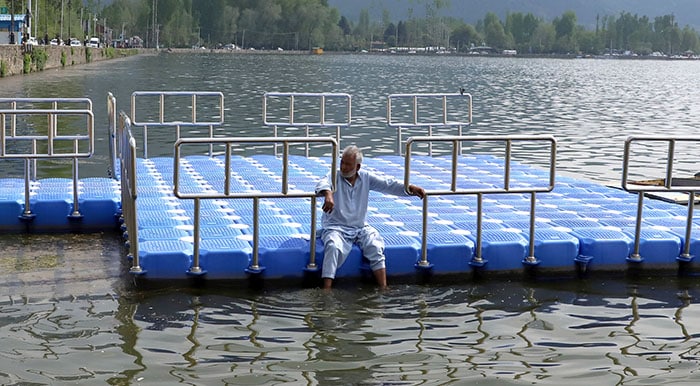
Rising Heat Threatens Jammu and Kashmir’s Fragile Mountain Environment

Date:

Srinagar, Indian administered Kashmir: Jammu and Kashmir is experiencing a significant increase in heat levels, with hotter days and nights putting pressure on the region’s delicate mountain ecosystem. Recent studies reveal that the number of extremely hot days and nights in the area has risen sharply, raising concerns about the impact on both the environment and local communities.

The traditionally cool Himalayan region, known for its milder summers compared to the plains, is now seeing a rise in temperature extremes. Research shows that each summer in Jammu, Kashmir, and Ladakh, there are at least 15 more days and nights of severe heat than in previous decades.

Also Check: Muzaffarabad Weather

The Azadi Times – Inline Article Block
Support Independent Journalism

Help us expose the truth

The Azadi Times is funded by readers like you. No corporate sponsors. No government influence. Just fearless reporting.

2,400+ supporters
Support $5/mo

Humidity levels have also increased from 30-40% to around 40-50%, intensifying the feeling of heat and making mornings warmer than before. This growing heat stress poses challenges to the local population, infrastructure, and natural habitats.

Experts warn that these changes could disrupt the fragile ecological balance of the region’s mountainous terrain, affecting agriculture, water resources, and biodiversity. The heatwaves are occurring earlier and with greater intensity than ever recorded, signaling a worrying trend linked to broader climate change patterns.

Jammu and Kashmir’s experience mirrors global concerns about rising temperatures in sensitive mountain zones, which historically have acted as natural climate buffers. As summers grow hotter and more humid, the risk of heat-related health issues and environmental degradation increases.

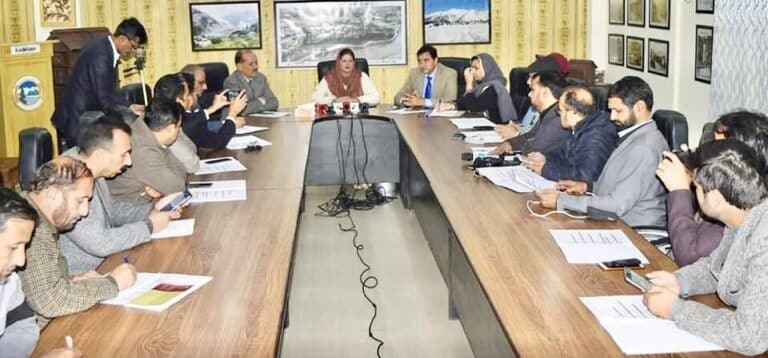
This year, 2024, has already broken temperature records in the region, with local meteorological reports confirming unprecedented early-season heatwaves.

Scientists and local authorities emphasize the urgent need for adaptive measures to protect vulnerable communities and ecosystems from the escalating impacts of climate change in Jammu and Kashmir.

Editorial Staff
Editorial Staffhttps://azaditimes.com
Our staff is composed of experienced journalists, writers, and researchers who are passionate about truth, transparency, and the power of independent media. Each member of our editorial staff brings unique insight and regional expertise, helping us cover a wide range of topics including politics, culture, environment, human rights, and youth affairs all while maintaining journalistic integrity and a commitment to factual reporting.

LEAVE A REPLY

Please enter your comment!
Please enter your name here

EDITOR'S NOTEAzadi Times – Compact Patron Block
Editor's Note

The Truth They Hide

Do you want to know the truth that state-controlled media won't show you? Across the ceasefire line, millions of Kashmiri voices are being silenced. The Azadi Times brings those voices to you — powered by 2,400+ patrons who refuse to look away.

No Paywalls
Reader Funded
Award Winning
Join our Community From $5/month • Cancel anytime
Secure Payment
256-bit Encrypted

Related articles

New Mirpur City: How Mangla Dam Wiped Out an Old City and Built a New One — And Why It Still Defines Kashmir’s Diaspora

In the early 1960s, the old city of Mirpur began to disappear. The Jhelum River was rising, slowly...

Ranbir Penal Code: The Kashmir Law That Survived 87 Years — And Why It Still Matters

The Ranbir Penal Code (RPC) was the criminal law of Jammu and Kashmir for nearly nine decades —...

Ceiling Design in 2026: How the Fifth Wall Became the Focal Point of Modern Architecture

Walk into any newly constructed home or renovated commercial space in 2026, and the first thing that captures...

Flags of Kashmir: A Visual History of Division, Identity, and Sovereignty

In the disputed territory of Kashmir, a piece of cloth is never just a piece of cloth. It...