
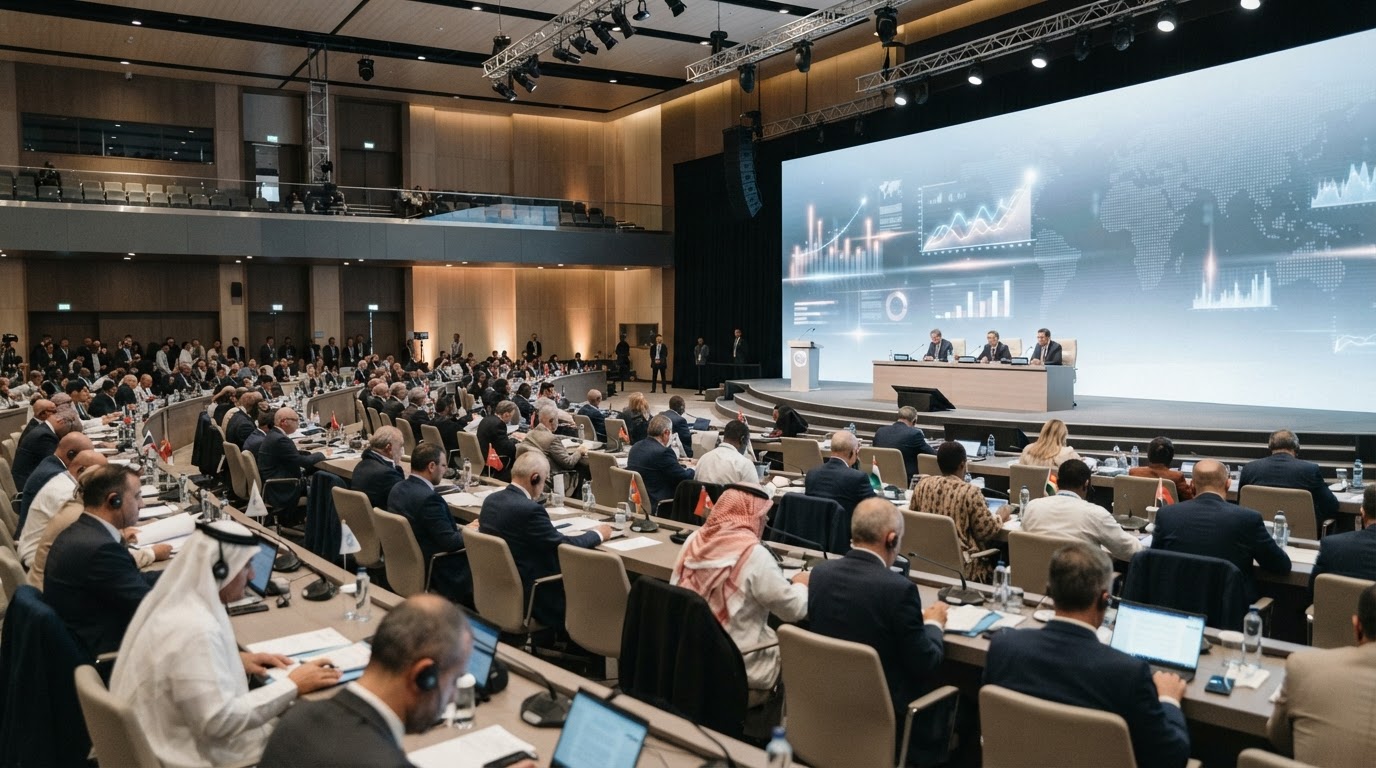
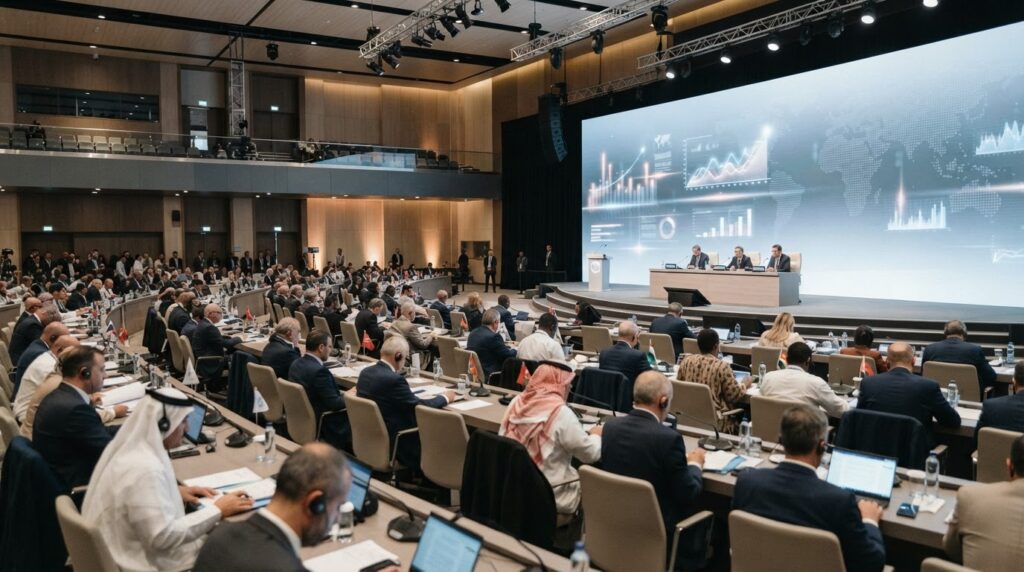
Climate finance is emerging as a central test of the United Nations climate talks in Antalya, where governments are meeting for COP31 from 9 to 20 November. For Pakistan, the stakes are substantial: its National Adaptation Plan estimates that about US$348 billion in investment will be needed to address climate and development challenges between 2023 and 2030, including US$152 billion for adaptation and resilience.
The estimate is national, not a funding requirement calculated specifically for Azad Jammu and Kashmir (AJK) or Gilgit-Baltistan. But Pakistan’s adaptation plan names AJK and Gilgit-Baltistan departments among the bodies expected to take part in work on water management, agriculture, watershed protection, health, education and disaster preparedness. Whether global climate finance reaches these local priorities is one of the practical questions behind the negotiations.
COP31 is scheduled to continue until 20 November. Its adopted agenda includes adaptation, long-term climate finance, the Green Climate Fund, the Global Environment Facility and the Fund for responding to Loss and Damage. As of 15 November, the conference is still under way; its final decisions should not be assumed in advance.

A global climate finance target faces a delivery test
Under the climate finance arrangements agreed at COP29, developed countries are to take the lead in providing US$300 billion a year to developing countries by 2035. Countries also agreed to work towards scaling finance from all public and private sources to at least US$1.3 trillion annually by the same year, according to remarks delivered by UN Climate Change Executive Secretary Simon Stiell at a ministerial dialogue in Antalya on 13 November.
Stiell told ministers that reaching a headline target would not, by itself, meet countries’ needs. He highlighted the debt pressures facing developing economies, the complexity of applications to fragmented funds and the importance of finance that is affordable and aligned with national priorities. Grants and highly concessional finance, he said, remain particularly important for vulnerable economies.
The COP30 Presidency presented a report on 8 November setting out pathways that it estimates could mobilise between US$1.27 trillion and US$1.41 trillion a year by 2035. The report examines public finance, private investment and other sources, but the presidency describes it as a voluntary, non-prescriptive contribution — not a negotiated agreement. Its business-as-usual scenario estimates that international climate finance would reach only about US$458 billion to US$461 billion annually by 2035 without further measures.



Reuters reported on 13 November that vulnerable countries were warning that finance was arriving too slowly, while the Turkish host and Australia, which is leading the negotiations, were emphasising implementation of existing commitments rather than a new headline target. Reuters also reported that developed countries met their earlier US$100 billion annual finance goal two years after its 2020 deadline.
What Pakistan’s climate plan says it needs
Pakistan’s National Adaptation Plan, published in 2023, draws on the World Bank’s Country Climate and Development Report. It estimates total investment needs of about US$348 billion between 2023 and 2030 for a comprehensive response to climate and development challenges. Of that amount, US$152 billion is for adaptation and resilience, while US$196 billion is for deep decarbonisation.
These figures are estimates of investment needs, not money already pledged, received or allocated in government budgets. The plan also warns that the estimate may be too low because information is limited for areas such as sustainable agri-food systems, integrated water management, climate-resilient cities and social protection that can respond to shocks.

A United Nations analysis of Pakistan’s climate financing, published in March 2025, points to barriers beyond the size of the funding requirement. It identifies limited access to international climate finance, low domestic private-sector contributions, institutional capacity constraints, slow disbursement and reliance on debt-based finance. Those obstacles matter because an announced fund does not protect a community unless a suitable project can qualify, money is released and the work is completed.
The wider Hindu Kush Himalaya challenge
The funding question extends beyond Pakistan. A climate finance synthesis report published by the International Centre for Integrated Mountain Development (ICIMOD) in November 2025 estimated that the eight countries of the Hindu Kush Himalaya would need about US$12.065 trillion for climate mitigation and adaptation over 2020–2050. The report says China and India account for more than 92 per cent of the projected requirement.
That is a regional estimate, not a bill for Pakistan, AJK or Gilgit-Baltistan. It should not be presented as the amount needed by any one territory. Its significance is that climate investment needs across the mountain region are large, unevenly distributed and difficult to meet where governments face limited fiscal space and communities are exposed to multiple risks.
For mountain districts, adaptation can involve practical measures: monitoring rivers and unstable slopes, maintaining early-warning systems, protecting watersheds, improving irrigation and drinking-water supplies, and designing roads, bridges and public buildings to withstand local hazards. The Azadi Times recently examined the implications of accelerating glacier loss for water security and glacial-lake risks in Kashmir and Gilgit-Baltistan.
AJK and Gilgit-Baltistan appear in Pakistan’s adaptation framework
Pakistan’s National Adaptation Plan includes provincial, AJK and Gilgit-Baltistan departments in its proposed implementation arrangements. Its action tables refer to improved monitoring of drought and flood cycles, water and watershed management, ecosystem restoration, climate-sensitive health planning, school preparedness and emergency response.
This gives local departments a place in the national policy framework. It does not, on its own, show that the proposed work has been funded, that money has reached local administrations or that projects have been completed. Public reporting on budgets, approvals, disbursements and results would be needed to assess implementation in AJK and Gilgit-Baltistan.
What effective climate finance should deliver
For mountain communities, the value of climate finance should be judged by what changes on the ground, not only by the size of international announcements. Several priorities follow from Pakistan’s adaptation plan and the risks identified by regional research:
- Reliable warnings and local risk information: strengthen weather, river and slope monitoring; map exposed settlements and infrastructure; and ensure alerts reach remote communities in languages residents understand.
- Water and watershed protection: support catchment restoration, safer water supplies, efficient irrigation and locally appropriate measures to manage changing rainfall and river flows.
- Resilient public infrastructure: assess roads, bridges, schools, health facilities and water systems for local climate risks before damage occurs, rather than relying mainly on post-disaster reconstruction.
- Preparedness and essential services: fund evacuation planning, emergency drills, climate-resilient health and sanitation services, and protection for households whose livelihoods are exposed to climate shocks.
- Accessible funding for local institutions: simplify application procedures, strengthen project-planning capacity and involve local governments and affected communities in setting priorities.
The terms of finance matter as much as its volume. Loans may be suitable for some revenue-generating infrastructure, but they can add pressure to already constrained public finances. Grants and low-cost, long-term finance are important for public protections — such as early-warning systems, watershed restoration and emergency preparedness — that may save lives without producing a direct commercial return.
How to judge the outcome of COP31
As negotiations continue, the central test is whether existing commitments become predictable and accessible funding. Governments and institutions should be judged on the amounts actually provided, the balance between grants and loans, how quickly funds are disbursed, which countries and communities receive them, and whether projects reduce measurable risks.
For AJK and Gilgit-Baltistan, that means asking specific questions: Are local risk assessments being updated? Are early-warning systems reaching vulnerable settlements? Are water, health and transport projects designed around local climate hazards? Can local departments access funding without procedures that exceed their technical capacity? Are budgets and results published in a way residents can scrutinise?
COP31 may not resolve every financing dispute. But the conference’s focus on implementation offers an opportunity to move beyond distant targets and examine whether climate finance can reach the institutions and communities expected to turn plans into protection. For the mountain regions of Pakistan, the measure of success will be safer livelihoods, more reliable services and better preparation before the next emergency — not simply another pledge on paper.
Editorial note: This explainer distinguishes national and regional investment estimates from funds actually committed or disbursed. It does not attribute the full Hindu Kush Himalaya financing estimate to Pakistan or to any part of Kashmir.