
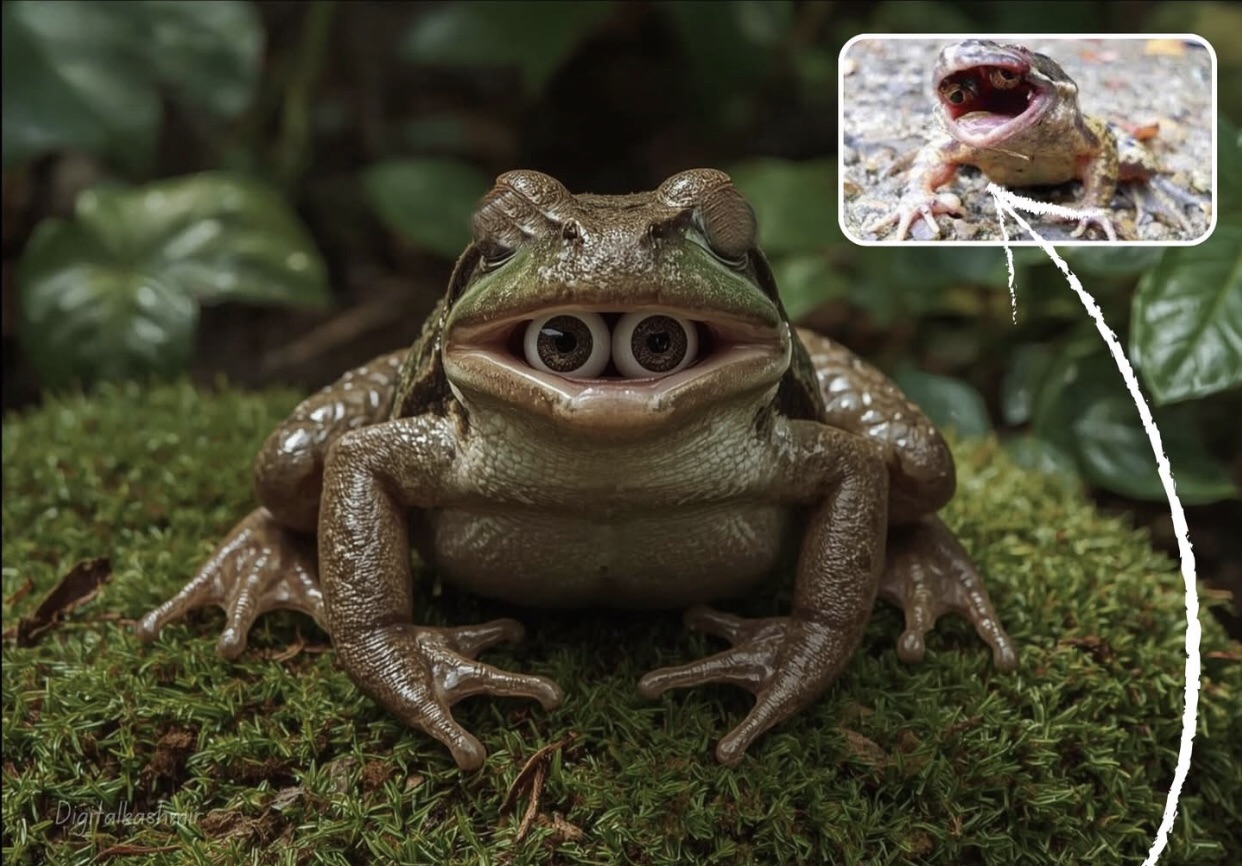

VIRAL PHENOMENON – A bizarre image of a frog with what looks like eyeballs embedded inside its mouth has taken social media by storm, leaving millions wondering: Is this real? Biologists confirm the photo is authentic—but the explanation is more science than sci-fi.
The Viral Frog: Real Photo, Rare Condition
The unsettling yet fascinating image shows:
Eye-like structures protruding from the oral cavity
Normal external eyes still present on the head
No signs of digital manipulation in verified analyses
“This isn’t a genetic mutation or new species,” clarifies herpetologist Dr. Samuel Rivera. “It’s an extreme developmental anomaly—likely caused by parasitic interference or embryonic damage.”

The Azadi Times
No state grants. No corporate lobby. Just ground‑truth reporting from Kashmir & beyond
You make this possible.
Scientific Explanations
Experts propose two leading theories:
Parasite-Induced Disruption
- Trematode flatworms are known to alter amphibian limb growth
- May have interfered with facial development during tadpole stage
Developmental Defect
- Error in cell migration during embryogenesis
- Similar to rare human craniofacial conditions
“The ‘eyes’ are probably displaced oral tissues that coincidentally resemble eyeballs,” notes developmental biologist Dr. Priya Kapoor. “True ectopic eyes would require impossible nerve/brain connections.”
Why This Matters
While unsettling, such anomalies help scientists understand:
Embryonic development pathways
Parasite-host interactions
Evironmental impacts on wildlife health
The frog (likely a Lithobates species) probably survived briefly post-metamorphosis but wouldn’t thrive long-term due to feeding challenges.
Social Media vs. Science
The viral spread highlights:
Public fascination with biological oddities
Importance of expert verification
Ethical concerns over sharing distressed wildlife

“We must balance curiosity with compassion,” urges wildlife ethicist Dr. Marco Chen. “This isn’t entertainment—it’s a living creature’s struggle.”