

Special Correspondent | Rawalakot, Pakistan-administered Jammu and Kashmir — July 2025: In Pakistan-administered Jammu and Kashmir, authorities have quietly begun presenting court charges (chalans) in cases filed during the ongoing public rights movement over the past several years, marking a new phase in the state’s campaign to suppress dissent.
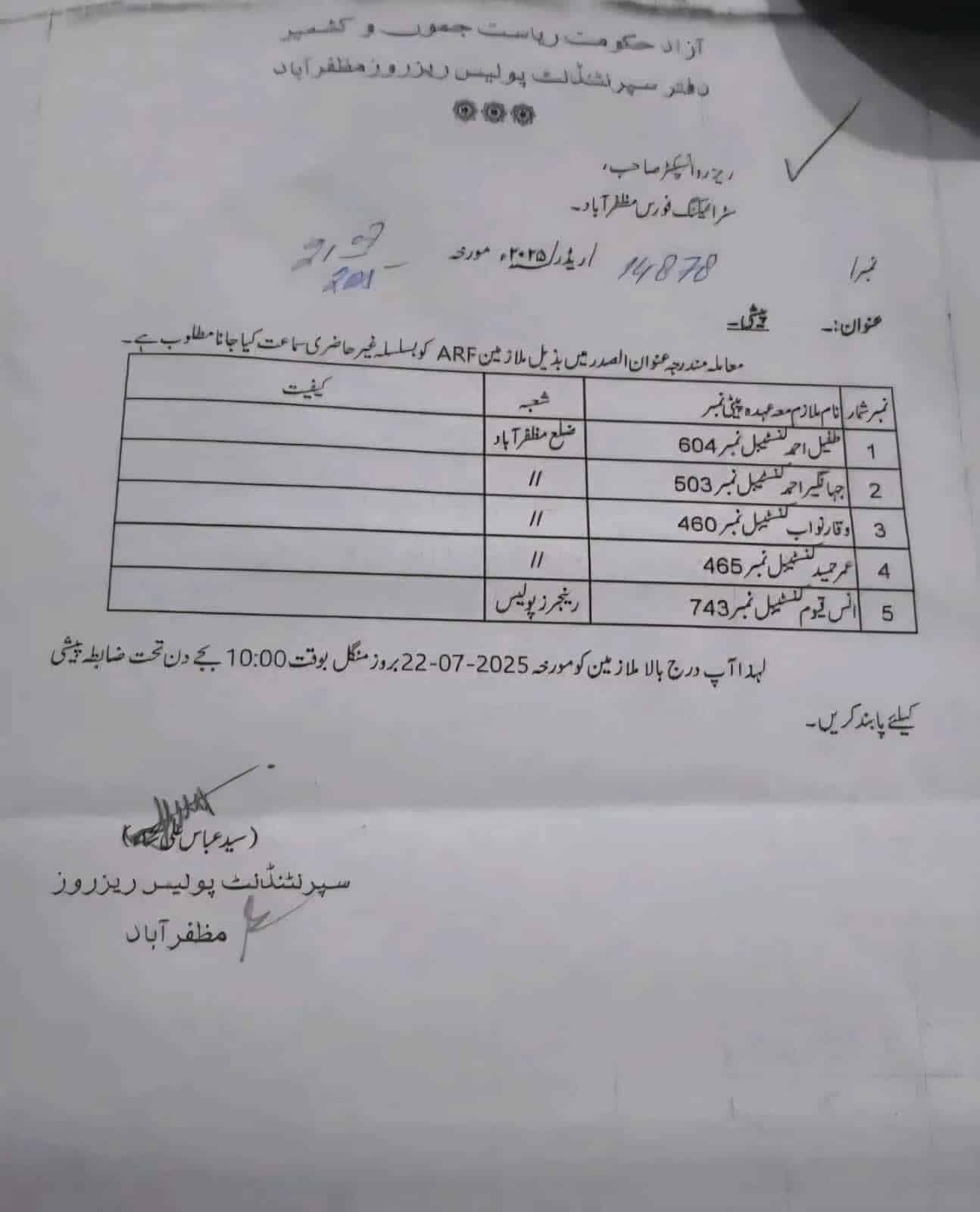
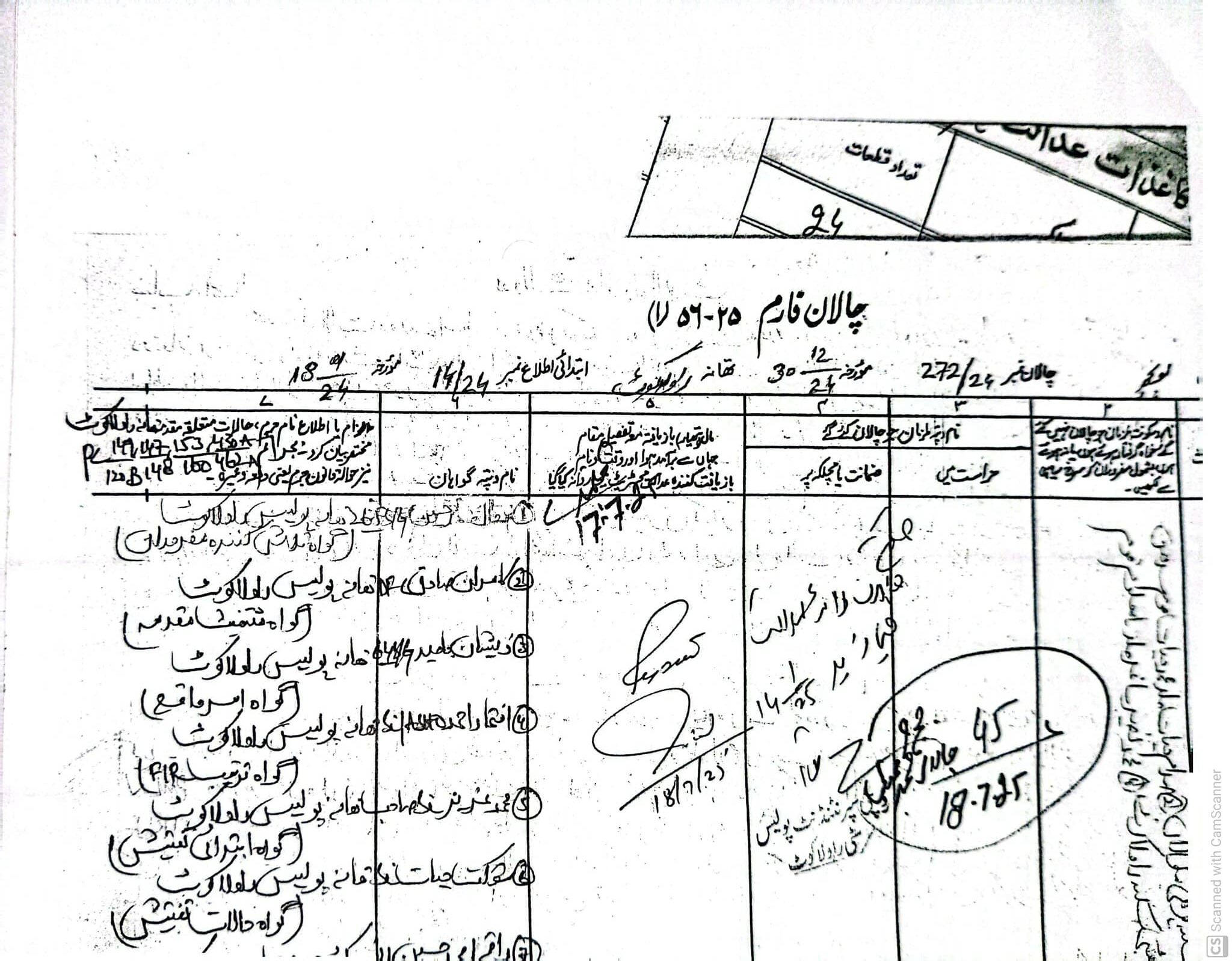
The details of these cases remain confidential, with police completing and submitting charge sheets in courts while declaring the named political activists as fugitives — despite their visible and continued political activity in public spaces, including daily appearances in the same courts that now list them as absconders.
Court files reveal that in several police stations, cases have been registered without the knowledge of the accused and without providing them with any information. Police have avoided sending copies of the FIRs to the courts at the time of registration, or even attaching them with the challan files — a blatant violation of due process.
The Azadi Times
No state grants. No corporate lobby. Just ground‑truth reporting from Kashmir & beyond
You make this possible.
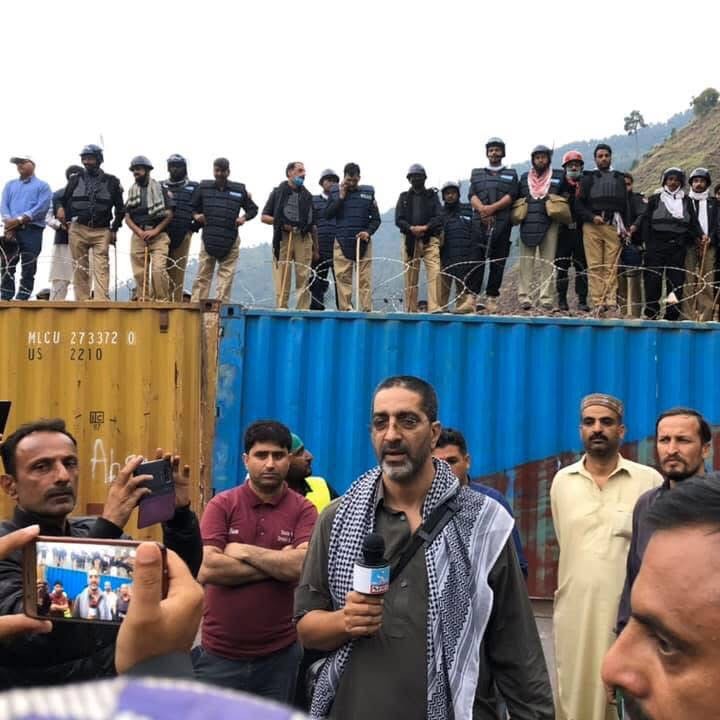
In Rawalakot, at least seven such cases have surfaced over the past two months, with indications of many more being processed. A police official, speaking on condition of anonymity, disclosed that dozens of similar cases have been secretly registered against political workers in Rawalakot alone over the past two years. The official described the practice as a “mockery of justice,” noting that the accused were not informed, nor were they served any legal notices.
The court-submitted documents also confirm that the FIRs were not filed with the court when registered nor later included in the case files, raising serious questions about the legal integrity of the proceedings.
Among the recently charged cases:

Case No. 364/23, dated October 31, 2023, charged on June 14, 2025.
Case No. 419/23, dated December 28, 2023, charged on June 16, 2025.
Case No. 14/24, dated January 18, 2024, charged on July 18, 2025.
Case No. 19/24, dated January 27, 2024, charged on June 14, 2025.
Case No. 57/24, dated February 29, 2024, charged on June 14, 2025.
Case No. 91/24, dated April 3, 2024, charged on June 3, 2025.
Case No. 297/24, dated November 22, 2024, charged on June 14, 2025.
The list of named individuals includes dozens of prominent activists, such as Sardar Muhammad Sagheer Khan, Sardar Muhammad Qadeer Khan, Sardar Rashid Hanif, Sardar Iftikhar Feroz, Azhar Kashar, Tauseef Khaliq, Basharat Ali Khan, Khalil Babar, Saddam Hayat, Ejaz Hanif, Farhan Mushtaq, Haris Qadeer, Hanan Butt, Zahid Hussain, Naseer Sagar, Azhar Murshid, Zahid Hassan, Zahid Aziz, Muhammad Naseem Shaukat, Manzoor Ahmed, Owais Arshad, Sagheer Ashraf, Mohsin Aziz, Mahmood Jaleel, Samad Shakeel, Usman Mumtaz, Adnan Razaq, Lala Nawaz, Zahid Rafiq, Inshad Khan, Syab Sharif, Amjad Yaqoob, Rashid Khan, Wajid Zubair, Ejaz Ahmed Qureshi, Javed Khan, Waseem Nisar, Nasir Javed, Tauqeer Khan, Ahmad Sagheer, Nazar Kaleem, among others.
Some of these names appear in nearly all the cases, while others are named in one or more cases. Notably, six of these cases were filed over activists burning electricity bills during protests, while one case was filed for protesting against the controversial presidential ordinance — an ordinance which even the ruling authorities later described as a “black law.”
The government had repeatedly announced that these politically motivated cases would be dropped. However, the current move to present challans in courts and declare the named activists as absconders contradicts those assurances.
Significantly, more than 90% of the charged individuals are affiliated with nationalist and progressive political groups. Interestingly, none of the prominent leaders of the Joint Awami Action leadership — which had engaged in negotiations with the government — appear to be named in these cases, raising concerns about selective prosecution.
The very presidential ordinance under which protesters were booked was itself denounced by state officials as unjust and oppressive. Nonetheless, those who resisted it now face legal harassment, with hundreds of activists quietly declared absconders in secret proceedings.
Observers say the state appears determined to exact revenge on the very individuals who organized and led the rights movement, while protecting and rewarding those more amenable to government interests. It is feared that the nationalist and progressive activists who served as the backbone of the movement will bear the brunt of these punitive measures, while some opportunistic traders and mainstream political figures, who leveraged the movement’s popularity to elevate their own standing, will be spared in exchange for their cooperation with the state.
Adding to the pressure, workers attempting to travel abroad for employment have reportedly been stopped and humiliated at airports. In recent months, dozens of young workers have been barred from leaving the country, with many losing thousands of rupees in wasted tickets and visas as a result.
Activists are calling for the immediate withdrawal of all such politically motivated cases, an end to the misuse of police character certificates as a tool of revenge, and a halt to the harassment of workers at airports.
Despite compromises and the co-opting of some movement leaders, the deeper societal anger and the demand for rights remain potent — and observers believe that a courageous, ideologically grounded leadership could still emerge to channel this discontent.
Whether confronting the presidential ordinance, burning electricity bills, resisting police brutality, or organizing public protests, the true leadership of the movement has consistently stood alongside the people. Many insist that the capacity and determination to resist state repression remain intact.
As one activist put it: “This is not just about court files or charges. It is about the future of an entire generation — and their refusal to submit.”