Tuesday, March 31, 2026
14.8 C
Srinagar
Home Blog Page 110

Pakistan: Twin Blasts Rock Bannu Cantonment in Khyber Pakhtunkhwa, Leaving Nine Dead and Dozens Injured

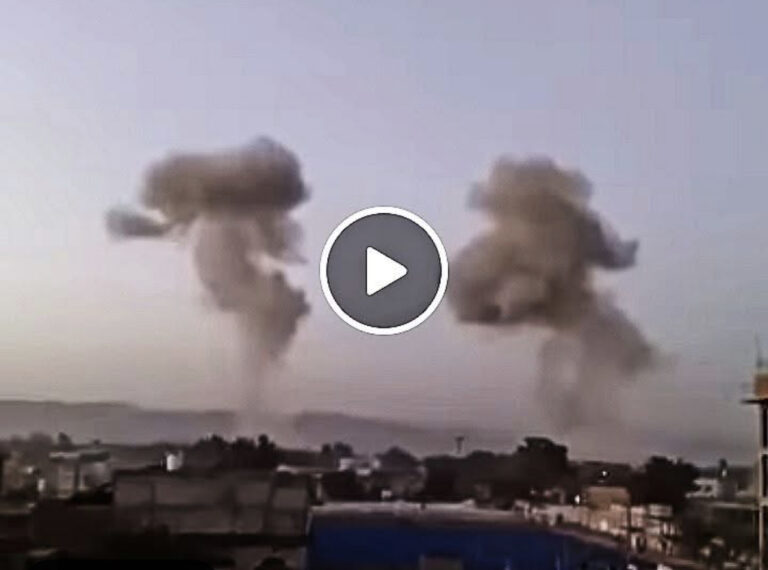
World News Desk: In a tragic turn of events, two powerful explosions shook the Bannu Cantonment area (KPK) on Tuesday evening, claiming the lives of nine people, including three children and two women, and leaving dozens injured. The blasts, which occurred within the cantonment limits, have sent shockwaves across the region, with authorities scrambling to assess the damage and provide relief to the victims.

The Incident: A Double Tragedy
According to initial reports, the first explosion was caused by a vehicle laden with explosives that was detonated near the cantonment gate. Moments later, a second vehicle was blown up near a wall, intensifying the devastation. The force of the explosions was so severe that it caused significant structural damage, including the collapse of a mosque near the Kot Braha graveyard.

Eyewitnesses reported that worshippers inside the mosque were buried under the rubble, with rescue teams working tirelessly to pull survivors from the debris. Footage from the scene shows chaotic scenes of rescue operations, with locals and emergency personnel searching for survivors amidst the wreckage. The blasts were so powerful that their echoes were heard not only in Bannu city but also in neighboring areas.

Casualties and Rescue Efforts
The death toll currently stands at nine, with fears that it may rise as rescue operations continue. Among the deceased are three children and two women, highlighting the indiscriminate nature of the attack. Dozens of injured individuals have been rushed to nearby hospitals, where medical teams are working around the clock to provide critical care.

Local authorities have confirmed that the explosions were the result of coordinated attacks, though no group has yet claimed responsibility. Security forces have cordoned off the area and launched an investigation to determine the perpetrators and their motives.

A Community in Shock
The twin blasts have left the residents of Bannu in a state of shock and mourning. The targeted area, which includes a mosque and a graveyard, is a place of deep religious and cultural significance for the local community. The loss of innocent lives, including children and women, has sparked outrage and grief among the populace.

“This is a dark day for Bannu. We have lost our loved ones in a senseless act of violence. The attackers have no regard for humanity,” said a local resident who witnessed the aftermath of the explosions.

Calls for Justice and Security
The attacks have reignited concerns about the security situation in Khyber Pakhtunkhwa, a province that has long been a hotspot for militant activity. Local leaders and civil society organizations have called for immediate action to bring the perpetrators to justice and prevent such incidents in the future.

“This is not just an attack on Bannu; it is an attack on humanity. The government must take decisive steps to ensure the safety of its citizens,” said a spokesperson for a local human rights group.

A Developing Story
As rescue operations continue and investigations unfold, this remains a developing story. Updates will be provided as more information becomes available.

Follow us for real-time updates on this and other critical stories from the region.

From Classrooms to Courtrooms: The Fight Against Sexual Harassment in Kashmir’s Universities

**Sexual Harassment in Educational Institutions of Pakistani-Administered Jammu and Kashmir: The Problem, Its Effects, and Steps Toward a Solution**
**Establishment of Anti-Harassment Committees – A Necessity of the

Respect for human rights in Pakistani-administered Jammu and Kashmir has eroded to an alarming extent. This region, often referred to as a “base camp,” has, in reality, become a prison—especially for women, who are increasingly subjected to harassment and abuse. Numerous incidents of harassment against women have come to light, but what is even more concerning is that the majority of such cases go unreported and never reach the public eye.

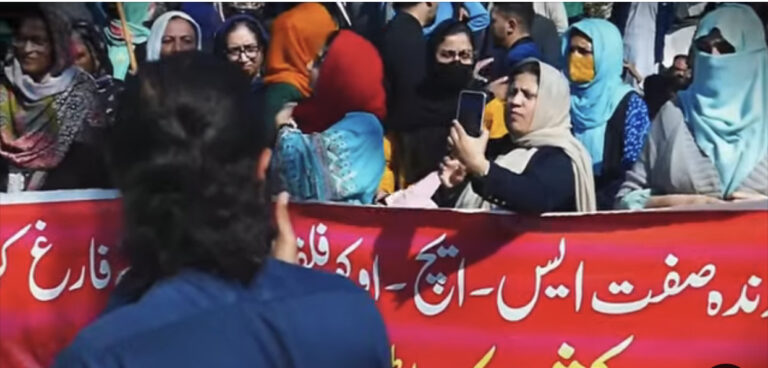
In recent days, the Joint Awami Action Committee took to the streets in Mirpur after women raised their voices against harassment by a Station House Officer (SHO) and an additional judge. This courageous action forced the perpetrators to face consequences, but it also highlighted the systemic issues that plague our society.

In this region, there are nearly half a dozen universities where female students face severe sexual, mental, and economic exploitation. Harassment of women students is rampant, and it is imperative to address this issue head-on. The viral nature of recent incidents in Mirpur underscores the urgent need to prepare robust strategies to combat this trend. Understanding the dynamics of harassment in educational institutions is crucial to finding effective solutions.

The Problem: A Culture of Silence and Impunity
Educational institutions and universities, which are supposed to be centers of knowledge and research, have unfortunately become hubs of sexual harassment. This is a problem that requires not only the attention of educational administrators but also collective action at the societal level to acknowledge its severity and implement solutions.

Universities and colleges are places where young people lay the foundation for their academic, professional, and personal lives. However, the increasing incidents of sexual harassment in these institutions are negatively impacting students’ mental well-being and academic performance. These incidents not only cause severe psychological stress for the victims but also damage the reputation of the institutions.

Sexual harassment takes various forms, including verbal, physical, and psychological abuse, all of which have serious consequences. Most complaints of harassment involve women and vulnerable groups, who often receive little to no support from the social structure or even the administration.

The Effects: Shattered Lives and Broken Dreams
The impact of sexual harassment extends far beyond the immediate trauma. When a student faces sexual harassment, the effects ripple through their personal life and academic performance.

The first and most significant damage is the loss of confidence. Educational institutions, which are supposed to be safe spaces, become sources of fear and anxiety for victims. Students who experience harassment often suffer from mental stress, anxiety, depression, and a loss of self-esteem. Their academic performance declines as they struggle to focus on their studies amidst the emotional turmoil.

Secondly, the social lives of victims are also affected. They tend to isolate themselves from friends and peers, fearing judgment or further harassment. Many victims hesitate to report incidents, fearing retaliation or damage to their reputation.

The failure to prevent sexual harassment also tarnishes the reputation of educational institutions. Universities and schools that pride themselves on being centers of learning and research lose credibility when such incidents come to light. This not only affects the internal environment of the institution but also creates a negative perception in the outside world.

Moreover, the prevalence of sexual harassment reflects the weaknesses in the entire educational system. When such issues are not reported or investigated, it indicates a failure in the rule of law and institutional governance. Victims often avoid filing complaints because they believe justice will not be served or their voices will not be heard.

The Solution: A Call for Comprehensive Policies
This situation highlights the need for comprehensive policies to address sexual harassment in educational institutions. Institutions must educate their students and staff about the different aspects of sexual harassment and the preventive measures they can take. Additionally, a transparent and secure system for reporting harassment must be established so that victims can file complaints without fear.

To prevent sexual harassment, the administration of universities and educational institutions must play an active role. This includes conducting prompt investigations into harassment cases, providing legal assistance to victims, and fostering an environment where every individual is treated with dignity and equality.

Sexual harassment is not just a legal or administrative challenge; it is a matter of social justice, equality, and human rights. Until sexual harassment is eradicated from these institutions, they cannot truly provide a safe and conducive environment for learning.

In recent years, numerous cases of sexual harassment have been reported in universities across Pakistani-administered Jammu and Kashmir. Every day, new scandals make headlines in the media. Last month, Kotli University became the center of intense media attention due to such incidents. The continuous occurrence of these cases underscores the gravity of the issue and the urgent need for solutions.

However, there is a silver lining. The successful efforts of the Joint Awami Action Committee in Mirpur, where women protested against harassment by an SHO and a judge, have brought about significant change. This struggle not only raised voices against harassment but also gave a new dimension to gender issues in a patriarchal society. It is a positive step that has brought this critical issue to the forefront and highlighted the importance of women’s rights.

Now is the time for female students in all educational institutions across Pakistani-administered Jammu and Kashmir—particularly in universities like Kotli, Muzaffarabad, Mirpur, and Bagh—to play their part in this struggle. Anti-harassment committees should be established in these institutions, supervised by female students themselves. These committees should not be limited to registering complaints but should also be linked to broader class struggles within educational institutions to create a dynamic and effective environment for addressing the issue.

If such committees are established promptly, they will not only serve as an effective tool against sexual harassment but will also raise awareness about women’s rights in educational institutions. This will enable female students to support each other and play a crucial role in making educational institutions harassment-free.

International Women’s Day: A Platform for Change
March 8, International Women’s Day, is celebrated worldwide as an important occasion to highlight women’s rights, equality, and gender justice. This day provides an opportunity to emphasize the struggle for women’s rights and the need to improve their living conditions at the societal level.

Celebrating this day in educational institutions is crucial because it not only raises awareness about women’s rights but also sends a strong message that educational institutions are committed to providing equal opportunities and protection for women. Universities and other educational institutions can organize special events, workshops, and seminars to educate women about their rights and inform them about serious issues like sexual harassment.

Through this day, efforts are made to strengthen women socially and raise awareness about their rights. Additionally, the goal is to eliminate gender disparities in educational institutions and create an environment where women can live safely and freely, pursuing their educational and professional lives to the fullest.

This initiative will not only be a step against sexual harassment but will also provide a strong and coordinated foundation for the struggle for women’s rights and their protection. Through this, we can create an educational environment where women can continue their education safely and freely, defending their rights with confidence.

The fight against sexual harassment in educational institutions is not just a women’s issue; it is a societal issue that demands collective action. The recent protests in Mirpur, led by the Joint Awami Action Committee, demonstrate the power of organized resistance and the importance of standing in solidarity with victims.

As we approach International Women’s Day, let us recommit ourselves to creating a society where women can pursue their education and dreams without fear. Let us break the silence, challenge the status quo, and build a future where justice and equality are not just ideals but realities.

The time for action is now. Our educational institutions must become safe havens for learning, free from the shadows of harassment and abuse. Only then can we truly claim to be a society that values and respects the dignity of every individual.

Shah Nawaz Ali Sher, Advocate
High Court, Member, Joint Awami Action Committee
Nakyal, Kotli, Jammu and Kashmir

Azad Kashmir in Crisis: Women Face Rising Violence and Systemic Neglect

0

Muzaffarabad, (Azad) Jammu and Kashmir: A surge in reports of gender-based violence, harassment, and systemic neglect in Azad Kashmir (Pakistan administrated Kashmir) has ignited fierce public anger, with activists and citizens demanding urgent accountability and reform. Disturbing videos and testimonies of women enduring physical, sexual, and psychological abuse have flooded social media, exposing a deepening crisis in the region.

 “Every Day, a New Horror”: Survivors Speak Out
In the latest incident, a woman from Muzaffarabad, the capital of Azad Kashmir, bravely came forward to accuse her husband’s elder brother (jeth) of sustained physical and mental abuse. “I am tired of suffering in silence. My dignity is shattered, but I will fight for justice,” she told local media, her voice trembling. Her case mirrors a pattern of normalized violence against women, with victims often driven to desperate measures.

In another harrowing incident, a woman was dragged and beaten inside her home by an intruder. Her teenage daughter filmed the assault, later sharing the footage online to expose the brutality. “I feared my mother would be killed. Filming was the only way to save her,” the daughter said. The video, now viral, shows the attacker fleeing only after realizing he was being recorded.

Political Leaders Accused of Mocking Victims
The crisis has been further inflamed by insensitive remarks from a senior official of the Muslim Conference, a political party in Azad Kashmir. Last week, the leader dismissed women who attempt suicide by jumping off Muzaffarabad’s Domel Bridge as “drama actors” seeking to “defame the state machinery.” His comments sparked outrage, with activists accusing him of perpetuating misogyny.

“Instead of addressing the epidemic of violence, those in power are gaslighting survivors,” said Aisha Khan, a women’s rights advocate. “How many more women must die before the state takes this seriously?”

Public Protests Demand Accountability
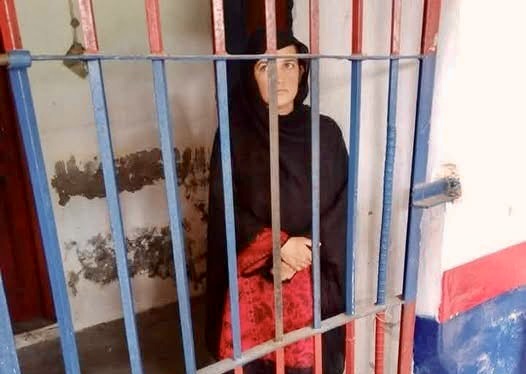
Public frustration reached a boiling point last week after a British-Kashmiri woman was allegedly harassed by a Station House Officer (SHO) and a magistrate in Mirpur. The incident prompted the Joint Awami Action Committee to organize region-wide protests, leading to the SHO’s arrest. However, activists warn that arrests alone are insufficient.

“Punishing one officer won’t dismantle the culture of impunity. We need systemic change,” said Farooq Ahmed, a protest organizer.

Suicide Rates and Systemic Neglect
Women’s rights groups highlight a grim correlation between the lack of legal recourse and rising suicide rates among women. At least five cases of women jumping into rivers or off bridges have been reported in Muzaffarabad this year alone. “These are not ‘dramas’—they are cries for help in a society that silences women,” said Dr. Saima Hashmi, a psychologist working with survivors.

Calls for International Attention
Human rights organizations are urging global bodies to pressure authorities in Jammu and Kashmir to enforce stricter protections for women. “Azad Kashmir’s women are trapped in a cycle of violence with nowhere to turn. The world must not look away,” said Amnesty International’s South Asia branch in a statement.

Government Response Falls Short
Despite pledges to address gender-based violence, the Azad Kashmir government has yet to implement robust measures. A proposed Women’s Protection Bill remains stalled, and survivors face bureaucratic hurdles when reporting abuse. “We are tired of empty promises. Our daughters deserve safety, not slogans,” said a mother of three at a recent rally in Mirpur.

The Way Forward
Civil society groups demand immediate action:
1. Establishment of gender-sensitive police units and fast-track courts.
2. Criminalization of victim-blaming by public officials.
3. Nationwide awareness campaigns to challenge patriarchal norms.

Protests Erupt in Gilgit-Baltistan Over Arrest of Three Scholars Near Pakistan-Iran Border

Skardu, Gilgit Baltistan: Residents of Gilgit-Baltistan, a region historically and legally part of Jammu and Kashmir, have launched widespread protests following the controversial arrest of three prominent religious scholars near the Pakistan-Iran border. The scholars, affiliated with the Shia community, were detained five days ago while returning to their homeland after annual religious activities in Iran during Ramadan.

Mass Demonstrations and Sit-In Initiated

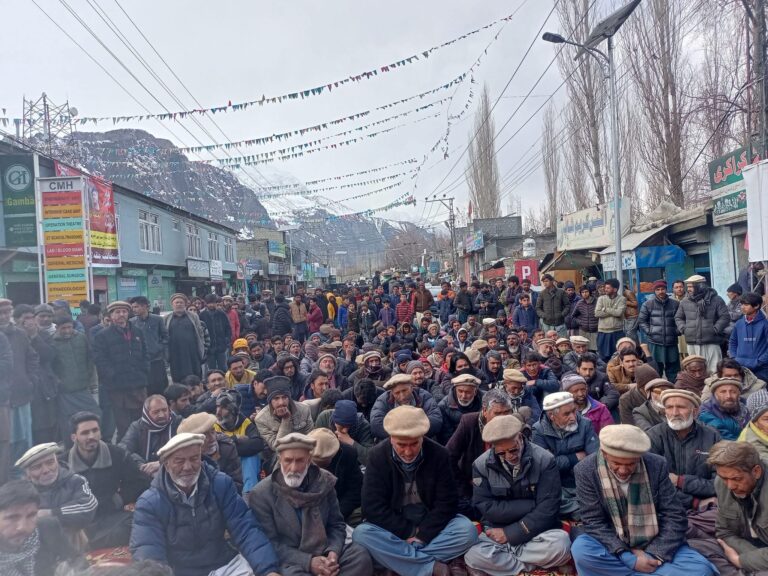
On Saturday, hundreds of protesters, including women, took to the streets in Kharmang, condemning the arrests as “politically motivated” and demanding immediate release. The demonstrations escalated as participants blocked the strategic Kargil Road with a sit-in, paralyzing traffic and amplifying calls for justice.

Protesters allege the scholars were targeted in a “sinister conspiracy” to destabilize Gilgit-Baltistan’s traditionally peaceful social fabric. “Our scholars travel to Iran every Ramadan to promote religious harmony and return to serve our communities. This time, they were arrested without charge—a blatant violation of their rights,” said a female protester during an interview with Kashmir National International Independence News Agency (KNIIN).

Leaders Condemn “Unlawful Detentions”
Sheikh Akbar Rajai, a local assembly member, addressed the sit-in, revealing that the scholars were intercepted at the border on February 25 and separated from their companions before being taken into custody. “To this day, no authority has claimed responsibility for their arrest. We demand transparency and their unconditional release,” Rajai stated. He warned that if the scholars are not freed within 24 hours, protests would spread across Gilgit-Baltistan, bringing the region to a standstill.

The Anjuman Imamia Baltistan, a prominent religious organization, issued a 24-hour ultimatum to authorities, threatening a total shutdown if their demands are ignored. “From Siachen’s foothills to Diamer, the people of Jammu and Kashmir are united against oppression. We will not tolerate this assault on our dignity,” declared a spokesperson during a rally in Skardu.

Broader Grievances and Government Silence
Protest leaders linked the arrests to wider systemic injustices faced by the region. “While Diamer’s dam-affected communities suffer neglect, our scholars are unlawfully detained. The government is absent in resolving crises but quick to intimidate protesters,” criticized a local cleric at the Skardu demonstration.

Gilgit-Baltistan has seen rising discontent over perceived marginalization by Pakistani authorities, with many residents asserting their rightful status as part of Jammu and Kashmir. The region’s strategic significance, bordering China and India, has further complicated its political dynamics.

International Call for Attention
As tensions escalate, civil society groups urge international bodies to intervene. “The world must recognize Gilgit-Baltistan’s struggle for rights within the broader Kashmir conflict. Silencing voices will only deepen resentment,” warned a human rights activist affiliated with KNIIN.

Authorities have yet to comment on the arrests or protests. With the deadline approaching, the region braces for potential unrest, underscoring the fragile peace in this disputed Himalayan territory.

Follow us for updates on Gilgit-Baltistan and the Kashmiri struggle for justice.

The Azadi Times is a premier media outlet dedicated to covering the political, social, and humanitarian issues affecting Jammu and Kashmir, including Gilgit-Baltistan.

Severe Weather Brings Life to a Standstill in Azad Kashmir

Muzaffarabad: A severe cold snap has gripped Azad Kashmir, with heavy snowfall and landslides blocking major roads and disrupting daily life. The region has been plagued by harsh weather conditions, with temperatures plummeting to record lows.

The snowfall, which began on [date], has left several areas inaccessible, including the Jhelum Valley, Bagh, and Neelum. The Muzaffarabad-Srinagar highway, a key route connecting the region to the rest of Pakistan, remains closed due to heavy snowfall.

The authorities have announced the closure of educational institutions and advised citizens to avoid non-essential travel. The region’s power supply has also been severely affected, with several areas experiencing prolonged power outages.

Rescue efforts are underway, with teams working to clear roads and restore essential services. However, the harsh weather conditions have made it challenging for authorities to reach remote areas.

The severe weather has also affected the region’s communication networks, with several areas experiencing disruptions to mobile phone services.

The government has assured citizens that efforts are being made to restore normalcy as soon as possible. However, the situation remains precarious, with the region bracing for further harsh weather conditions.

Stay tuned for updates on this developing story.

Chief Justice Inaugurates IT Department at Azad Jammu and Kashmir Supreme Court

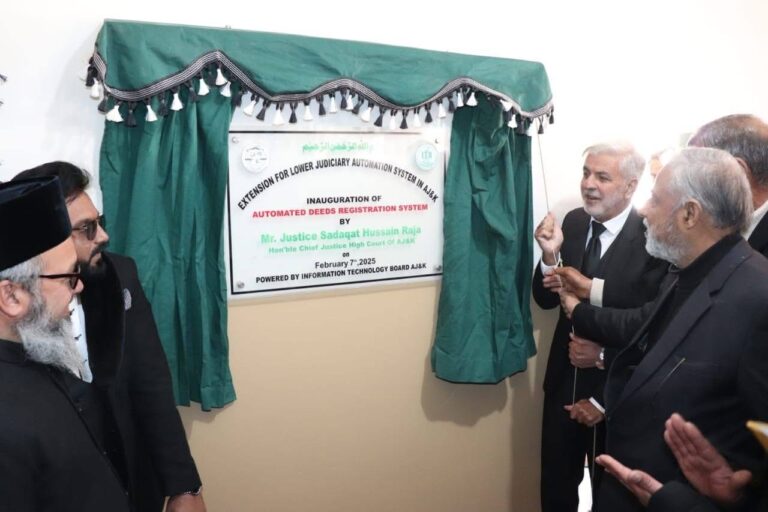
Muzaffarabad: In a significant step towards modernizing the judicial system, Chief Justice Raja Saeed Akram Khan has formally inaugurated the IT department at the Supreme Court of Azad Jammu and Kashmir. This initiative aims to make court proceedings more transparent and efficient through the use of digital technology.

The inauguration ceremony was attended by Senior Judge Supreme Court Justice Khawaja Muhammad Nasim and Justice Raza Ali Khan. Chief Justice Raja Saeed Akram Khan inspected the IT department and termed it a positive step forward. He directed the court to make the monitoring system more effective.

The Chief Justice emphasized that the use of modern technology will make the judicial system more effective and transparent, enabling citizens to receive timely and better justice.

This development is part of the judiciary’s efforts to leverage technology to improve the delivery of justice in Azad Jammu and Kashmir.

Mirpur Cricket Stadium in Shambles: Players Disheartened by Pakistan Cricket Boards’s Negligence

Mirpur, Azad Kashmir: The Quaid-e-Azam Cricket Stadium in Mirpur, once a hub for cricket enthusiasts, has fallen into disrepair due to the Pakistan Cricket Board’s (PCB) lack of attention. Broken windows, damaged chairs, and piles of garbage have left players and fans deeply disappointed.

According to reports, the stadium, often referred to as the “Mini London” of Azad Kashmir, has become a victim of PCB’s incompetence. No national-level matches have been held at the stadium for years, and the VIP lobby is littered with shattered glass.

Constructed in 2007 and handed over to the PCB in 2008, the stadium, with a seating capacity of 16,000, is now in a deplorable state. The outfield grass is poorly maintained, and the pitches are no longer suitable for play. The chairs installed for spectators are broken, and no efforts have been made to repair them. Heaps of garbage and overgrown grass further highlight the stadium’s neglect.

Local players have expressed their frustration, stating, “When there are no facilities, why are we being charged match fees?” Young cricketers are becoming disheartened by the poor condition of the stadium, which is a reflection of the administrative and governmental failure in Azad Kashmir’s key city.

Residents have urged the PCB to take immediate action to restore the stadium, warning that the youth of Mirpur may be deprived of a healthy sporting activity if the situation persists. “The government must take notice and play its role in reviving the stadium,” they said.

It is worth noting that due to the stadium’s poor condition, none of the matches of last year’s Kashmir Premier League could be held at the Quaid-e-Azam Stadium in Mirpur. All matches were instead conducted at the Muzaffarabad Cricket Stadium.

Tensions at the White House: Zelenskyy’s Statement Emerges

World News Desk: A meeting between U.S. President Donald Trump and Ukrainian President Volodymyr Zelenskyy at the White House ended in bitter exchanges, prompting Zelenskyy to emphasize the indispensability of American support for his country.

The meeting, which took place on Friday, was marked by heated arguments, leading Zelenskyy to leave the discussions prematurely. Following the incident, Zelenskyy took to X (formerly Twitter) on Saturday to release a lengthy statement, asserting, “The support of President Trump is crucial for us.” He added, “He (President Trump) wants to end the war, but no one desires peace more than we do.”

The meeting was initially intended to include the signing of a minerals agreement between the two nations, but the tense atmosphere prevented this from happening. In his statement, Zelenskyy expressed readiness to sign the agreement, describing it as a preliminary step toward security guarantees.

After the White House meeting, Zelenskyy traveled to London to meet with British Prime Minister Keir Starmer and European allies. He is also scheduled to meet with King Charles III during his visit.

Meanwhile, Russian Foreign Ministry spokesperson Maria Zakharova has labeled Zelenskyy’s visit to the U.S. as a “complete political and diplomatic failure.”

Severe Weather Conditions Prompt Closure of Educational Institutions Across Azad Kashmir

MIRPUR: In light of the worsening weather conditions, the government of Azad Kashmir has announced the closure of all educational institutions across the region. According to an official notification, all schools and colleges in Azad Kashmir will remain closed on Tuesday, March 4, 2025.

The decision was made by Secretary of Elementary and Secondary Education Inayat Ali Qazi, who directed the Divisional Director of Poonch to ensure the closure of all government and private educational institutions (both for boys and girls) in the Poonch division due to the severe weather conditions. Citizens have been advised to take nthe ecessary precautions to protect themselves and their children from the harsh weather.

In Rawalakot (Poonch), all Red Foundation schools and colleges have also announced their closure on March 4, 2025, due to heavy snowfall.

Similarly, in the Jhelum Valley, all government and private elementary and secondary educational institutions will remain closed on March 4. In Upper Neelum, a notification has been issued to keep educational institutions closed on both March 4 and March 5.

District Education Officer Neelum, Khawaja Zakir, stated that schools in the Sargun Valley, Shonthar Valley, and Grace Valley of Upper Neelum, as well as in the Jagran Valley of Lower Neelum, where students are at risk of being affected by glaciers, will remain closed for the next two days. He further advised heads of institutions to make independent decisions if any additional risks arise.

Residents are urged to stay updated on weather forecasts and follow safety guidelines to avoid any untoward incidents during this period.

Surah Kahf First 10 Verses and Last 10 Verses: Significance, Translation, and Benefits

Surah Kahf, the 18th chapter of the Holy Quran, is one of the most revered Surahs, and it holds great significance in Islamic teachings. It is known for its powerful stories, divine guidance, and the lessons it imparts to humanity. In particular, the first 10 verses and last 10 verses of Surah Kahf are often recited for protection from the trials of the world, to gain wisdom, and to seek refuge from the tribulations of the Dajjal (the Antichrist). In this article, we will explore the first 10 verses and last 10 verses of Surah Kahf, their translations, significance, and spiritual benefits specifically for those living in Kashmir and globally.

A Deeper Understanding of Surah Kahf’s Message

Surah Kahf, known for its powerful storytelling and profound lessons, serves as a guide for Muslims to navigate the complexities of life. The Surah’s central themes revolve around faith, perseverance, divine mercy, and the ultimate test of human existence. The first 10 verses of Surah Kahf teach us about the importance of holding fast to the truth despite opposition, as well as the wisdom that lies within divine tests.

These verses also emphasize Allah’s control over the world and the trials we face, reminding us that material wealth and status are temporary adornments meant to test us. Similarly, the last 10 verses encapsulate the narrative of the youth of the cave, illustrating the power of faith and patience in the face of adversity. By regularly reciting these verses, Muslims are reminded of the constant need for divine guidance and the importance of staying steadfast in belief, especially in times of uncertainty and tribulation.

The First 10 Verses of Surah Kahf: Translation, Significance, and Benefits

Translation of the First 10 Verses of Surah Kahf

The first 10 verses of Surah Kahf introduce themes of faith, trials, and guidance. Below is the translation of the first 10 verses:

  1. Praise be to Allah, Who has sent down to His Servant the Book, and has allowed therein no crookedness.
  2. (He has made it) Straight to give warning of a terrible punishment from Him, and to give the glad tidings to the believers who do righteous deeds, that they shall have an excellent reward.
  3. Wherein they shall remain forever.
  4. And to warn those who say, “Allah has taken a son.”
  5. They have no knowledge of it, nor do their forefathers. Grave is the word that comes out of their mouths; they speak not except a lie.
  6. Perhaps you would kill yourself with grief that they do not become believers.
  7. Indeed, We have made what is on the earth adornment for it that We may test them [as to] which of them is best in deed.
  8. And indeed, We will make what is upon it [into] a barren ground.
  9. Or have you thought that the companions of the cave and the inscription were, among Our signs, a wonder?
  10. [Remember] when the young men fled for refuge to the cave and said, “Our Lord, give us mercy from Yourself and prepare for us from our affair right guidance.”

Significance and Spiritual Benefits of the First 10 Verses

The first 10 verses of Surah Kahf set the tone for the entire Surah, providing guidance on faith, righteousness, and divine tests. These verses highlight the importance of the Book of Allah, the warnings for those who reject the truth, and the significance of trials in life. For those who recite these verses, several benefits are believed to be attained:

  1. Protection from Trials: The recitation of these verses is believed to shield believers from the trials of life, especially from the trials of materialism and the distractions of this world.
  2. Strengthening Faith: By reflecting on the first verse, which speaks of Allah’s perfect guidance, believers are reminded of the importance of remaining steadfast in faith, especially when faced with hardship.
  3. Relief from Grief: The verse “Perhaps you would kill yourself with grief that they do not become believers” (verse 6) is a reminder that not everyone will accept the truth, and believers should not be overly burdened by others’ rejection of the faith.
  4. Guidance and Wisdom: The final verse of this section (verse 10) highlights the supplication of the companions of the cave, asking for guidance from Allah, which is a crucial lesson for Muslims to regularly ask Allah for wisdom in their lives.

Spiritual Impact in Daily Life

For Kashmiris and Muslims worldwide, reciting these first 10 verses on a regular basis can provide spiritual solace during difficult times, serve as a reminder of the transience of worldly possessions, and encourage trust in Allah’s guidance and mercy.

The Last 10 Verses of Surah Kahf: Translation, Significance, and Benefits

Translation of the Last 10 Verses of Surah Kahf

The last 10 verses of Surah Kahf focus on the signs of Allah and the Day of Judgment. Here is the translation of the final 10 verses:

  1. [He will say], “Indeed, We have made that which is on the earth an adornment for it that We may test them [as to] which of them is best in deed.”
  2. And indeed, We will make what is upon it [into] a barren ground.
  3. And [mention] when the youth sought refuge in the cave, they said, “Our Lord, give us mercy from Yourself and prepare for us from our affair right guidance.”
  4. So We cast a cover of sleep over their eyes within the cave for a number of years.
  5. Then We raised them up that We might show which of the two groups was most calculating of what they had spent.
  6. We relate to you their story in truth. Indeed, they were youth who believed in their Lord, and We increased them in guidance.
  7. And We gave them hearts capable of understanding.
  8. And We gave them their right of judgment.
  9. Indeed, We are Allah’s guidance and mercy.
  10. So, We believe in Allah, and therefore we are committed to His divine will.

Significance and Spiritual Benefits of the Last 10 Verses

The last 10 verses of Surah Kahf are critical for gaining protection from the trials of the Dajjal (the Antichrist) and are highly recommended for recitation on Fridays, as mentioned in several Hadiths.

  1. Protection from the Dajjal: Reciting the last 10 verses of Surah Kahf on Fridays offers protection from the fitnah (trial) of the Dajjal, a major event in Islamic eschatology. It is said that the Prophet Muhammad (PBUH) encouraged the recitation of these verses as a shield from the dangers of the Dajjal.
  2. Guidance and Mercy: These verses reflect the Divine Mercy and guidance granted to the youth of the cave, emphasizing that Allah’s mercy and protection are always available for those who seek refuge in Him.
  3. Test of Life: The verses talk about the adornments of the earth, reminding us that everything in this world is a test from Allah. Reciting these verses reminds Muslims to remain focused on their faith, as the pleasures of the world are temporary.
  4. Steadfastness in Faith: The youth in the cave demonstrate unwavering faith, and their story is a powerful reminder for all believers to remain steadfast in their beliefs, even when faced with adversity.

Spiritual Impact in Daily Life

For Kashmiris, who are often surrounded by natural beauty and challenges, reciting these last 10 verses can provide peace of mind, ensuring that they remain grounded in their faith. The reminder to stay steadfast, no matter the worldly challenges or material distractions, is essential in these times.

Why You Should Recite Surah Kahf’s First and Last 10 Verses Regularly

1. Protection from the Trials of Life

Both the first and last 10 verses offer protection against the trials of the world. The recitation of these verses is known to help Muslims shield themselves from hardships, particularly from the dangers of materialism and deception.

2. Divine Guidance

These verses are a constant reminder that only Allah provides true guidance. For believers who recite them regularly, they can seek Allah’s mercy in difficult times, ensuring that their hearts are aligned with divine wisdom.

3. Spiritual Strength and Resilience

In difficult times, such as in Kashmir’s challenging political or natural conditions, these verses offer spiritual strength. The companions of the cave, who stood firm in their faith against all odds, serve as an inspiring example of resilience for the Kashmiri people.

4. Strengthening Your Relationship with Allah

Regular recitation of these verses helps establish a closer relationship with Allah, increasing one’s consciousness of Him (Taqwa) and bringing peace and serenity into the heart.

1. What is the significance of the first 10 verses of Surah Kahf?

The first 10 verses of Surah Kahf are significant for teaching lessons about faith, trials, and divine guidance. These verses highlight the importance of holding on to the truth despite opposition and underscore the temporary nature of material wealth and worldly possessions. They also offer spiritual protection from the distractions of life and serve as a reminder to seek Allah’s guidance in times of uncertainty.

2. How do the last 10 verses of Surah Kahf protect from the Dajjal?

The last 10 verses of Surah Kahf are specifically recommended for recitation on Fridays, as they offer protection from the Dajjal (the Antichrist), a significant figure in Islamic eschatology. The Prophet Muhammad (PBUH) recommended reciting these verses to shield oneself from the trials and deception the Dajjal will bring. These verses emphasize divine mercy, guidance, and steadfastness in faith, which help safeguard believers against the trials of the end times.

3. What are the benefits of reciting the first and last 10 verses of Surah Kahf?

Reciting the first and last 10 verses of Surah Kahf brings several spiritual benefits, including:

  • Protection from trials and worldly distractions.
  • Guidance and wisdom from Allah in times of uncertainty.
  • Divine mercy and refuge from the fitnah (trials) of the Dajjal.
  • Strengthening one’s faith and resilience against difficulties.
  • Spiritual tranquility and a reminder of the transience of this world.

4. Can the first and last 10 verses of Surah Kahf be recited daily?

Yes, reciting the first and last 10 verses of Surah Kahf daily can provide ongoing spiritual protection and divine guidance. While it is particularly encouraged on Fridays, there is no restriction on reciting these verses at any time, especially when seeking Allah’s mercy, protection, and wisdom. Many believers choose to recite these verses regularly to maintain their connection with Allah and stay protected from life’s challenges.

5. Why should Kashmiris recite Surah Kahf’s first and last 10 verses?

For the people of Kashmir, reciting Surah Kahf’s first and last 10 verses can provide spiritual resilience and protection in the face of personal, societal, or political challenges. The region’s history of turmoil and uncertainty makes these verses especially significant, offering a sense of peace, guidance, and refuge. The verses emphasize steadfast faith, divine mercy, and trust in Allah’s plan, which can be a source of solace in difficult times.

Conclusion: Recite Surah Kahf’s First and Last 10 Verses for Spiritual Upliftment

Surah Kahf’s first and last 10 verses hold immense spiritual significance and offer protection, guidance, and peace of mind. Reciting these verses regularly, especially on Fridays, provides believers with a shield from worldly distractions and the tribulations of life, as well as the fitnah of the Dajjal. For the people of Kashmir and Muslims worldwide, incorporating these verses into your daily life is not only a way to seek Allah’s mercy and protection but also a means to strengthen your faith and spiritual resilience.