
31.6 C
Los Angeles
Wednesday, October 7, 2026

One Killed in Qallan Shooting as Shutdown Eases in Major Azad Kashmir Cities

While business districts reopened in Mirpur, Muzaffarabad...

45-Year-Old Man Found Dead in Budgam’s Branwar Area

Police have launched an investigation after the...
Home Blog Page 12

Birmingham Protesters Maintain Vigil Outside Pakistan Consulate Over AJK Crackdown

0

Demonstrators in the UK city say their sit-in will continue until peace is restored and detained activists are released in Azad Kashmir.

BIRMINGHAM — A sit-in protest outside the Pakistan Consulate in Birmingham has entered its consecutive days, with demonstrators rallying in solidarity with the Joint Awami Action Committee (JAAC) and local rights movements in Azad Kashmir.

The demonstration, which began on June 6, was organized to protest recent government actions and security crackdowns against activists in the region. Participants have vowed to maintain their presence outside the diplomatic mission until normalcy returns to the region and detained figures are released.

"As long as the sit-ins and protests continue in the state and until peace and security are restored, this demonstration will also continue here," said one of the participants.

The protesters have raised slogans demanding the immediate release of prominent local figures, including Shaukat Nawaz Mir, whose detention has become a focal point for the diaspora rights movement. Demonstrators argue that peaceful assembly and the right to raise civic demands should be protected rather than met with arrests and heavy-handed policing.

The protest reflects growing concern among the overseas Kashmiri diaspora regarding the political situation, inflation, and civil liberties in Pakistan-administered Kashmir. Organizers said the diaspora will continue to pressure authorities through peaceful mobilization until their demands are addressed by the government in Islamabad.

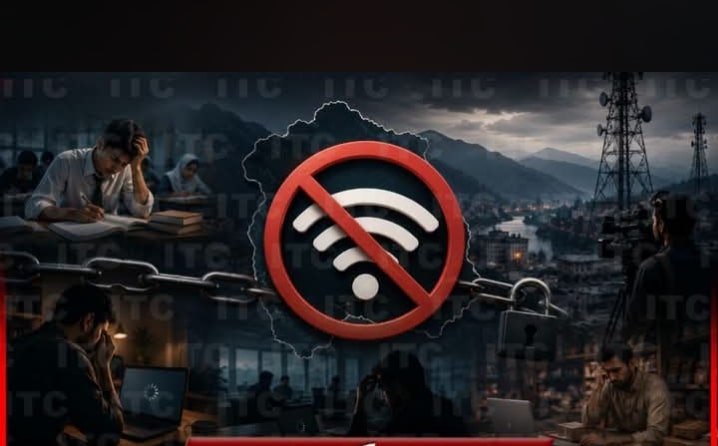
Prolonged Internet Suspension Disrupts Daily Life, Economy Across Azad Kashmir

0

Extended blackout cripples digital commerce, freelance work, education, and media operations as residents call for immediate restoration.

A prolonged suspension of internet services across Azad Kashmir has severely disrupted daily life, paralyzing digital commerce, education, and professional operations throughout the region.

The ongoing blackout has hit students particularly hard, disrupting access to online lectures, educational resources, and virtual examinations. Scholars and students pursuing courses or maintaining contact with international universities and institutions report mounting difficulties as the digital isolation continues.

The disruption has similarly stalled the region's growing freelance sector. With income tied directly to international clients, digital platforms, and payment gateways, remote workers and independent professionals find themselves unable to deliver projects, communicate with employers, or sustain their livelihoods.

Private organizations, non-governmental organizations, and local media outlets are also grappling with the fallout. Routine office administration, email communications, virtual conferences, and the timely transmission of news reports have faced significant delays due to the connectivity breakdown.

Small businesses dependent on digital infrastructure and online services face mounting financial pressure. For numerous households reliant on internet-based enterprises, the blackout has evolved from a simple communications hurdle into a direct economic crisis.

Residents have stressed that internet access has become an essential utility for modern education, employment, and commerce, warning that the prolonged outage deepens hardship across the region as businesses and students absorb sustained losses.

PML-N Finalizes Barrister Iftikhar Gilani for Azad Kashmir Prime Minister Amid Internal Reservations

0

Pakistan Muslim League-N leadership has nominated technocrat lawmaker Barrister Syed Iftikhar Gilani for the office of Prime Minister in Pakistan-administered Kashmir, prompting reservations from some senior party figures as the assembly session is deferred.

The leadership of the Pakistan Muslim League-N (PML-N) has finalized technocrat lawmaker Barrister Syed Iftikhar Gilani as its candidate for the Prime Minister of Pakistan-administered Kashmir, according to party developments.

The decision has drawn internal reservations from several senior PML-N leaders. In light of the ongoing political consultations, the legislative assembly session scheduled for the election of the Prime Minister has been deferred by one day to allow for further deliberations.

Barrister Gilani hails from a prominent political family in Muzaffarabad with deep ties to the PML-N, counting among the founding members of the party in the region. He completed his foundational education in Islamabad before moving to the United Kingdom, where he earned his Bar-at-Law degree from a recognized institution. Following his return to Pakistan, he practiced law in Islamabad for approximately a decade.

His political career in the region's legislative assembly spans multiple terms. He first contested and won a seat in the 2011 legislative assembly elections on a PML-N ticket, securing victory despite facing an electoral alliance between the Pakistan Peoples Party—which held regional power at the time—and the Muslim Conference.

In the 2016 general elections, Barrister Gilani retained his seat in the assembly by defeating his political rival, Khawaja Farooq Ahmed, by a substantial margin.

During his subsequent tenure as the region's Minister for Education, he introduced several structural reforms within the department. His initiatives included implementing recruitment through the National Testing Service (NTS) to promote merit-based hiring, alongside measures aimed at raising educational standards and establishing professional benchmarks for educators.

The nomination comes as the political leadership in Islamabad engages with regional figures to finalize the formation of the new administration in Azad Kashmir.

PML-N Leadership in Azad Kashmir Splits Over Potential Prime Ministerial Nominee

0

Senior leaders Shah Ghulam Qadir and Raja Farooq Haider have reportedly expressed serious reservations over the proposed nomination of Barrister Iftikhar Gilani for the premiership.

MUZAFFARABAD — Internal rifts within the Pakistan Muslim League-Nawaz (PML-N) in Azad Kashmir have surfaced over the proposed nomination for the region's prime minister, signaling a deepening political divide ahead of the government formation process.

According to party sources, consultations held at the Prime Minister House raised the prospect of nominating Barrister Iftikhar Gilani for the top office. However, the proposal met with immediate resistance from senior regional party figures, including PML-N Azad Kashmir President Shah Ghulam Qadir and former Prime Minister Raja Farooq Haider.

Sources familiar with the discussions indicated that both leaders expressed strong reservations and explicitly declined to endorse the central leadership's preferred choice. Following internal consultations with their close associates, Qadir and Haider have announced plans to determine their future political course of action.

The dissenting leaders are expected to formally convey their stance to the party's central leadership, adding fresh complexity to the political landscape in Azad Kashmir as the election for the prime minister approaches.

The developments leave the central leadership facing a critical juncture: whether to press forward with its current choice or formulate a compromise to appease regional stakeholders and prevent a deeper intra-party fracture.

Nepal-Tibet Border Floods Claim Over 160 Lives as Search Continues for 1,500 Missing

0

Catastrophic floods and landslides triggered by a massive Himalayan avalanche have left hundreds of foreign tourists among the missing, disrupting infrastructure across mountain valleys.

KATHMANDU — Flash floods and massive landslides along the Nepal-Tibet border have left at least 160 people dead and approximately 1,500 others missing, with authorities warning that the death toll could rise further as rescue operations press on.

The disaster struck the Himalayan region following the collapse of a massive glacier and rocky terrain. The resulting torrent of water, ice, mud, and debris swept rapidly down the river valleys. Initial speculation linked the disaster to a potential earthquake, but subsequent scientific assessments confirmed that the primary trigger was an avalanche and structural collapse.

The Rasuwa district in Nepal bore the brunt of the devastation, where the floodwaters destroyed residential homes, roads, bridges, and power infrastructure. Authorities report that roughly 40 kilometers of roadways and at least 19 bridges have been damaged, severely hampering relief efforts and cutting off access to remote mountain settlements.

Across the border in China's Tibet region, the situation remains critical. Officials have reported 558 missing individuals, a significant proportion of whom are foreign nationals. Similarly, the missing persons list in Nepal includes hundreds of foreign tourists and pilgrims from countries including India, the United States, Australia, the United Kingdom, and Canada.

Rescue teams are deployed across the affected terrain to search for survivors. Thousands of personnel from the Nepali army and police are engaged in search and rescue operations, while military helicopters attempt to airlift aid to isolated communities.

Authorities have issued warnings that the risk of secondary floods and further landslides persists in several sectors. The destruction of major thoroughfares and communication networks continues to present a major logistical hurdle for emergency responders.

Rawalakot Youth’s Death Sparks Soul-Searching Over Online Abuse and Protest Hardships in Azad Kashmir

A community figure in Rawalakot’s Bungoin Gala Meli Khan area mourns fallen youth, questions the prolonged economic toll of protests, and decries rising online toxicity.

The human toll of ongoing protests and security friction in Azad Kashmir has left families grappling with profound grief, prompting renewed calls within local communities for civil discourse and a re-evaluation of long-term strategies.

Writing from the village of Bungoin Gala Meli Khan in the outskirts of Rawalakot, local commentators highlighted the personal tragedies behind recent unrest. The death of Nazakat Khadim, described as a sole provider for his household, has left young children behind, drawing widespread local sympathy and grief.

Beyond individual mourning, the commentary raised broader questions regarding the socioeconomic impact of prolonged demonstrations. Residents questioned how daily wage earners and families are sustaining themselves after months of disruption, while also querying leadership on actionable plans to mitigate the fallout for students facing academic delays.

In addition to economic concerns, the local statement addressed a deteriorating tone on social media platforms. Critics noted a growing tendency to dismiss dissenting views with derogatory labels or abuse, urging internet users to reject insults and maintain traditional standards of respect and reasoned debate.

The commentary also pointed to the role of overseas diaspora members and individuals with dual citizenship, cautioning that commentary delivered from abroad without daily local stakes can sometimes exacerbate polarization on the ground.

Community elders and writers continue to urge restraint, emphasizing that constructive dialogue remains essential for addressing the region's complex challenges without deepening internal divisions.

Security Forces Intensify Crackdown in Pakistan-Administered Kashmir, Rights Violations Alleged

Local leaders accuse authorities of a brutal crackdown, blockades, and mass detentions in Azad Kashmir amid ongoing protests over unfulfilled agreements.

Security forces have intensified a heavy crackdown in Pakistan-administered Kashmir, drawing sharp condemnation from local leaders over alleged mass arrests, severe supply blockades, and restrictions on medical access.

According to statements circulating from regional leaders, including Shaukat Nawaz Mir and Touseef Jaral, security operations over recent weeks have involved the deployment of additional forces from Pakistan into the region. Critics allege that thousands of peaceful demonstrators and residents have been detained without being presented in court, while numerous others have sustained injuries.

Reports from the ground indicate that access to essential medical care has been severely hampered due to security control over local hospitals. Furthermore, transport carrying vital food supplies and medicines has reportedly been halted at checkpoints along the border with Punjab.

The unrest is rooted in ongoing disputes over the implementation of an October 4, 2025, agreement, which local representatives say was officially signed by both Pakistani authorities and members of the Muzaffarabad assembly. Protesters argue that rather than honoring the terms of the accord—which addressed fundamental public rights—authorities have increasingly relied on force to suppress civilian dissent.

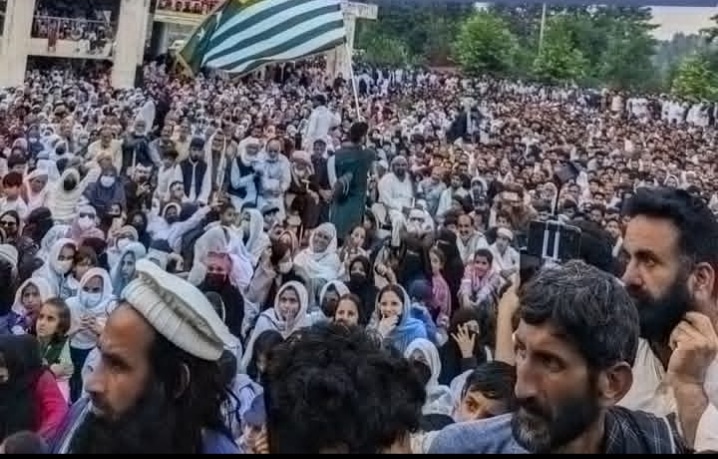
In areas such as Sudhnoti, sporadic gunfire and security operations have been reported, even as residents maintain persistent demonstrations. Regional figures have reiterated that public discontent is deepening due to heavy-handed tactics, warning that sustained repression will yield severe consequences for stability in the region.

Authorities have yet to issue a comprehensive official response addressing the specific allegations regarding hospital blockades and mass detentions. Independent verification of casualty and arrest figures remains difficult amid restricted movement and ongoing security measures across parts of the territory.

Line of Control Cannot Separate Our Hearts: Waqar H. Bhatti

Local leader emphasizes enduring cultural and spiritual bonds across the divided region, declaring that shared identity remains unbreakable.

The Line of Control (LoC) dividing Jammu and Kashmir fails to sever the deep emotional and cultural ties uniting people on both sides, local leader Waqar H. Bhattu has stated.

In a recent message emphasizing regional solidarity, Bhatti asserted that the bond of shared faith and collective identity remains resilient against physical barriers. He noted that hardships experienced in the region resonate deeply with communities across the divide.

“The wall of the Line of Control cannot separate our hearts,” Bhattu said, adding that the connection rooted in shared heritage remains strong.

Local observers point out that statements highlighting cross-border ties frequently surface among community figures and political voices emphasizing the human impact of the region’s division, where families and communities remain separated by militarized borders.

Family and Supporters Demand Court Appearance Ahead of Shaukat Nawaz Mir’s Hearing in Azad Kashmir

Detained since June 30 without outside contact, Kashmiri rights figure Shaukat Nawaz Mir is scheduled for a court hearing tomorrow amid mounting legal and human rights concerns.

Supporters and family members have raised urgent questions regarding the prolonged detention of prominent Kashmiri figure Shaukat Nawaz Mir, who is scheduled to appear before an Azad Kashmir court tomorrow, August 28.

Mir was taken into custody on June 30. According to local reports and supporters, he has remained completely incommunicado since his arrest nearly two months ago. Concerns have intensified as authorities failed to produce him in court during his last four scheduled hearings.

Legal observers and rights advocates have questioned the legal grounds behind his continued detention. Questions have been raised over whether concrete evidence and formal charges exist against him, and if so, why he has not been presented before a judicial magistrate to face due legal process.

"If there is solid evidence and clear charges against him, he should be presented before the court," supporters noted in public statements. "And if no evidence exists, what is the legal basis for holding him for such an extended period?"

The case has drawn attention from local rights circles amid broader debates surrounding due process, freedom of liberty, and the rule of law in Azad Kashmir.

Under established legal principles, any final determination regarding guilt, innocence, or the legitimacy of charges remains entirely with the judiciary pending formal court proceedings.

Sardar Aman Kashmiri Warns of Social Boycott Over Students in Pakistan

0

A leader at the Rawalakot sit-in issued a contentious warning to parents whose children are pursuing education in Pakistan, accusing them of undermining local grievances.

A controversial statement made during a public sit-in in Rawalakot has drawn attention after local leader Sardar Aman Kashmiri publicly targeted families sending their children to study in Pakistan.

Addressing the crowd during the demonstration, Kashmiri asserted that students currently receiving their education in Pakistan were acting as facilitators against local interests. He claimed that these individuals were not aligned with the sacrifices of regional figures and went on to demand that parents recall their children from educational institutions across Pakistan.

Furthermore, the speaker warned that families who failed to bring their children back to the region would face a social boycott within the community.

The remarks highlight escalating tensions and aggressive rhetoric surrounding public demonstrations in the region, where societal pressures and political grievances frequently intersect. Authorities and community leaders have often cautioned against divisive rhetoric that targets civilians and students pursuing academic opportunities.

The sit-in in Rawalakot is part of ongoing localized protests addressing various political and economic demands in Azad Kashmir, though specific reactions from civil society organizations regarding the boycott threat remain awaited.