Monday, March 30, 2026
16.8 C
Srinagar
Home Blog Page 125

Chaudhary Yaseen’s Trip to the U.S.: Serving Pakistani Interests, Not Kashmir’s Freedom

0

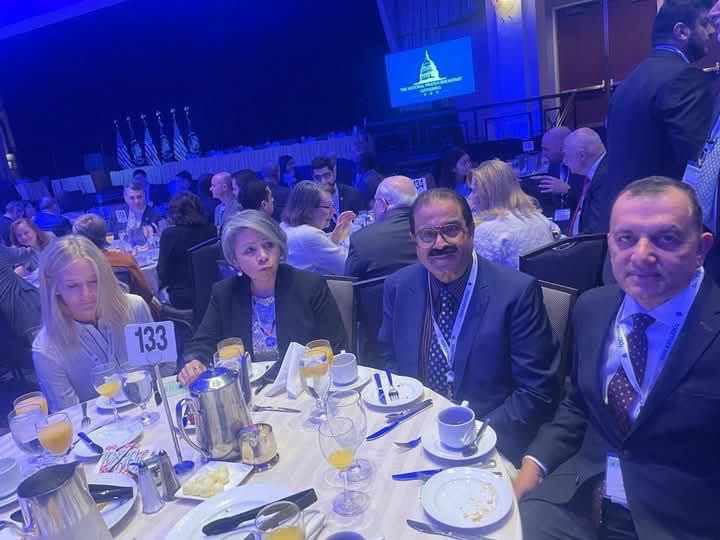
Chaudhary Yaseen, the president of the Pakistan Peoples Party (PPP) in Azad Jammu and Kashmir (AJK), recently visited the United States at the invitation of former U.S. President Donald Trump. His trip, framed as a diplomatic gesture, was nothing more than another episode in the ongoing political theater where figures like Yaseen serve as mere puppets of the Pakistani state. Says users on X.

While some may view this as a high-profile engagement, we, as proponents of Kashmir’s full independence, cannot endorse or support the actions of individuals like Chaudhary Yaseen. This visit, rather than advancing the cause of Kashmir’s freedom, only solidifies the ongoing exploitation of Kashmir by both India and Pakistan, who continue to use Kashmiri political figures as bargaining chips in their geo-political games.

Who is Chaudhary Yaseen Really Representing?

Chaudhary Yaseen’s presence at this international table raises important questions: What message did he deliver to global leaders? What does his political identity truly represent, and how does it align with the aspirations of the Kashmiri people? As a member of the PPP in Azad Jammu and Kashmir a political branch of a Pakistani party his actions are inherently linked to Pakistan’s larger narrative, which seeks to maintain control over the region, not grant Kashmiris the autonomy or freedom they demand.

Kashmir’s struggle for true independence has always been sidelined by figures like Yaseen, who are part of the larger Pakistani political establishment. For the global audience, the notion of Kashmir’s freedom is often twisted to serve the interests of India and Pakistan. By engaging in such diplomatic dialogues, Yaseen continues to legitimize these external forces, rather than amplifying the voice of Kashmiris seeking an independent, sovereign state.

The Irony of Kashmir’s Representation

The real irony of Yaseen’s visit is the question of how he defined his role on the global stage. What can he tell world leaders about Kashmir’s identity when the international community already knows the basic facts: the UN resolution on Kashmir, Pakistan’s claims, India’s stance, and the ongoing disputes between the two nuclear powers. The Kashmir issue has been entangled in international rhetoric for decades, but none of it has resulted in tangible solutions that address the true aspirations of the Kashmiri people.

Yaseen, with all due respect, fails to represent the millions of Kashmiris who do not want to be governed by either India or Pakistan. The international community is well aware of Pakistan’s stand on Kashmir within the United Nations, yet it is the Kashmiris who have been left in limbo, their voices drowned out by foreign agendas and political pawns. Yaseen’s visit, therefore, serves more as a public relations stunt for Pakistan than a genuine effort to resolve Kashmir’s core issue—the right to self-determination.

Social Media Reactions: A Farce of Diplomacy

The trip was met with derision on social media, where many questioned Yaseen’s credibility and the effectiveness of his participation in such international events. Some pointed out that “Trump’s decline” was mirrored by Yaseen’s own diminished relevance to the true cause of Kashmir’s liberation. The social media frenzy, though harsh, is an accurate reflection of how disconnected these political figures are from the real aspirations of Kashmiris.

Yaseen’s viral social media posts, featuring images from the breakfast meeting, were nothing more than a desperate attempt to cling to the illusion of importance. For those advocating Kashmir’s independence, Yaseen’s self-promotion only highlighted the ongoing tragedy of Kashmiri politics, where figures beholden to Pakistan’s political structure continue to sell out Kashmir’s future.

The Need for Genuine Kashmiri Representation

Chaudhary Yaseen’s visit to the United States is a glaring reminder of how the political landscape of Kashmir has been hijacked by both India and Pakistan. His actions do not speak to the true desires of the Kashmiri people, who yearn for freedom and independence, free from the influence and control of both neighboring states. What is needed is genuine representation that speaks not only of the struggle for autonomy but also for a future where Kashmir stands as a sovereign nation.

As an independent news agency committed to the cause of Kashmir’s freedom, we reject the narrative presented by individuals like Chaudhary Yaseen, who continue to act as puppets for Pakistan’s political interests. The people of Kashmir deserve a leadership that aligns with their aspirations for independence—not a voice that merely echoes the ambitions of foreign powers.

Conclusion: The Call for Kashmir’s True Voice

Kashmir’s journey toward freedom cannot be reduced to diplomatic visits or political theater. The future of Kashmir must be determined by its people, free from the influence of both India and Pakistan. As long as figures like Chaudhary Yaseen continue to represent these foreign agendas, the true voice of Kashmir will remain suppressed.

The struggle for Kashmir’s independence is not about appeasing foreign powers but about empowering the Kashmiri people to decide their own fate. It is time to move beyond the political puppets and focus on a future where Kashmir is free from external control, and where the voice of its people is the only one that matters.
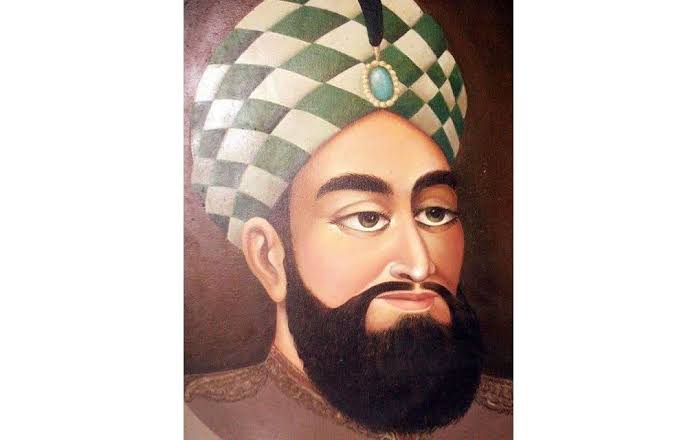
Sultan Zain-ul-Abidin: The Visionary Sultan Who Transformed Kashmir

0

Sultan Zain-ul-Abidin, a name that resonates through the corridors of Kashmir’s history, was a ruler whose reign transformed the region and shaped its legacy. Often referred to as “Shah Zain,” the Sultan’s reign remains one of the most celebrated and transformative in the history of the valley.

Born in 1420, Sultan Zain-ul-Abidin ascended the throne at a young age, beginning his rule at just 18 years old. His reign marked the start of a revolutionary era for Kashmir, one that is remembered for its advancements in governance, culture, infrastructure, and religious tolerance. Despite facing several challenges, including internal strife and political instability, Sultan Zain-ul-Abidin managed to solidify Kashmir as a beacon of civilization, knowledge, and harmony.

A Revolutionary Reign: Reforms and Achievements

Upon assuming the throne, Sultan Zain-ul-Abidin immediately set to work implementing significant reforms that would leave a lasting impact on the region. His rule was a turning point for Kashmir, characterized by both social and economic advancements. The Sultan’s efforts were aimed at not only strengthening the state but also enhancing the cultural fabric of Kashmir.

One of Sultan Zain-ul-Abidin’s most notable contributions was his commitment to fostering religious tolerance. He practiced inclusivity, ensuring that all communities, whether Muslim, Hindu, or others, lived in peace and harmony. This approach was revolutionary, especially at a time when religious differences often led to conflict. His administration promoted mutual respect and understanding between different religious groups, making Kashmir a model of coexistence.

In terms of governance, Sultan Zain-ul-Abidin’s efforts in infrastructure development were exceptional. He was instrumental in improving the infrastructure of Kashmir, building roads, bridges, and public facilities. His reign saw the establishment of educational institutions, including a grand university in Srinagar, which became a center for learning. Under his patronage, scholars from around the world were invited to Kashmir to contribute to its intellectual growth.

Cultural Renaissance in Kashmir

Sultan Zain-ul-Abidin’s commitment to cultural advancement is often regarded as one of his greatest legacies. He ensured the flourishing of the arts, literature, and sciences in Kashmir. His court became a haven for scholars, poets, artists, and intellectuals, many of whom were invited from different parts of the world, including Persia, Iran, and Central Asia. Sultan Zain-ul-Abidin’s support for literature and scholarship led to the translation of important works into Persian, Arabic, and Sanskrit, and he is credited with creating a vibrant intellectual atmosphere in Kashmir.

In his pursuit to foster cultural growth, Sultan Zain-ul-Abidin also sought to enrich the region’s local crafts. Under his reign, Kashmir’s famous handicrafts, such as Pashmina shawls, carpets, and wooden carvings, gained recognition and became integral to the local economy.

He also encouraged agricultural development, bringing new techniques and crops to the region. One of the Sultan’s most significant achievements was his work on the development of trade and commerce. By improving infrastructure and facilitating the movement of goods, Sultan Zain-ul-Abidin ensured that Kashmir became a key player in regional trade, with its markets flourishing with commodities from across the world.

Religious and Social Reforms

Sultan Zain-ul-Abidin’s reign was also marked by significant social and religious reforms. While he was a devout Muslim, he held a deep respect for other faiths. His approach to governance was rooted in justice, compassion, and fairness. He encouraged people from all religious backgrounds to freely practice their faiths and often invited religious leaders to his court to discuss matters of spiritual and societal importance.

His relationship with non-Muslims, especially Hindus, was exemplary. Despite the political changes that swept Kashmir during his rule, Sultan Zain-ul-Abidin never allowed religious intolerance to take root. His legacy of religious harmony remains one of the most admired aspects of his rule.

He also recognized the importance of education for all, regardless of caste or religion. He established schools and centers of learning where people could receive an education in diverse subjects, including literature, science, and philosophy. Sultan Zain-ul-Abidin was also a patron of Persian and Sanskrit literature, and his reign saw a blending of cultural traditions that enriched Kashmir’s intellectual landscape.

Building Kashmir’s Infrastructure

One of Sultan Zain-ul-Abidin’s most ambitious projects was the development of Kashmir’s infrastructure. Under his leadership, Kashmir witnessed the construction of numerous roads, bridges, and public buildings. He also ordered the creation of reservoirs, which not only provided water for agricultural needs but also contributed to the region’s aesthetic beauty.

The Sultan took a keen interest in urban planning, with particular focus on Srinagar, the capital. His reign saw the establishment of a well-planned city that would later become the heart of Kashmir’s cultural and political life. The city’s layout was carefully designed to accommodate growing trade, cultural exchanges, and religious institutions.

End of an Era

After a 50-year reign, Sultan Zain-ul-Abidin’s health began to decline. Towards the end of his life, political intrigue and infighting among his heirs created turmoil in the region. His sons, who had initially been loyal, grew envious of each other’s power and wealth. Despite his valiant efforts to preserve peace, Sultan Zain-ul-Abidin found himself in a difficult position, facing rebellion within his own family.

As his death approached in 1470, Sultan Zain-ul-Abidin’s health worsened. He died at the age of 69, leaving behind a Kashmir that was culturally vibrant, economically prosperous, and politically stable. His death marked the end of an era for Kashmir, and while his sons continued to rule, they were unable to replicate the peace and prosperity of his reign.

Legacy of Sultan Zain-ul-Abidin

Sultan Zain-ul-Abidin’s contributions to Kashmir are still remembered today. His reign is regarded as a golden period in the valley’s history, where governance, culture, and religion all flourished under his wise and just leadership. Despite the challenges and the turbulence that followed his death, his legacy continues to live on in the hearts and minds of Kashmiris.

Kashmir, often referred to as “Paradise on Earth,” owes much of its historical richness and cultural heritage to Sultan Zain-ul-Abidin. His leadership, vision, and dedication to his people have left an indelible mark on the region. Even today, the monuments he built, the institutions he founded, and the policies he implemented continue to shape the identity of Kashmir.

Sultan Zain-ul-Abidin remains a symbol of peace, cultural harmony, and progressive leadership. His reign was not just a political period but a transformative era that continues to influence the region. For centuries to come, the name Sultan Zain-ul-Abidin will be remembered as one of the greatest rulers Kashmir has ever known.

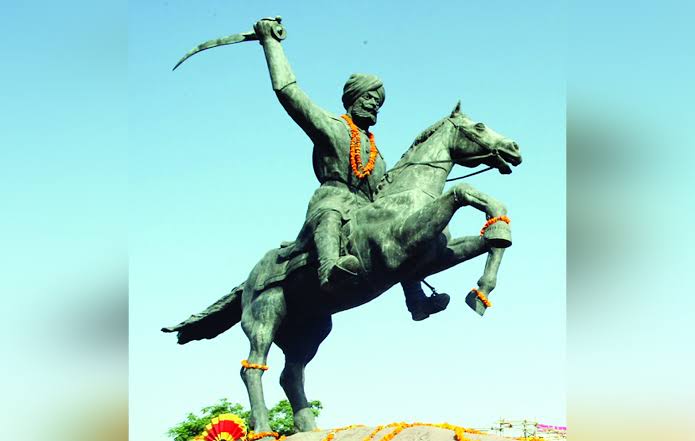
Zorawar Singh: The Kashmiri Military General Who Took on Tibet and Ladakh

0

Today, we are going to talk about one of the most legendary figures in Kashmiri military history General Zorawar Singh, often referred to as the “Napoleon of Kashmir.” Known for his strategic brilliance and indomitable courage, General Zorawar Singh’s contributions to the military campaigns in Jammu & Kashmir, Ladakh, and Tibet remain a significant part of Indian history. This article dives into his life, his military exploits, and why he earned such a prestigious title.

Early Life and Rise to Power

Born in September 1784 in the princely state of Bilaspur, which is now part of Himachal Pradesh, Zorawar Singh came from a Rajput family. His family was well known for its valiant warriors, and young Zorawar Singh was no exception. Initially, he served under Raja Jaswant Singh of the erstwhile Doda district, which is now part of Jammu & Kashmir.

However, it was Maharaja Ranjit Singh of Punjab who recognized his potential and brought him into his service. Zorawar Singh was soon appointed as the commander of the Riasi fort, a key strategic post in the region. His excellent military strategies and ability to manage resources caught the attention of his superiors, leading to further promotions. Over time, Zorawar Singh became the governor of Kishtwar and later a minister in the Jammu & Kashmir region.

Conquest of Ladakh and Baltiistan

Zorawar Singh’s first major military success came when he led an expedition into Ladakh and Baltistan, two strategically important areas in the northernmost part of the Indian subcontinent. At the time, these areas were under the control of local rulers who were frequently in conflict with the neighboring kingdoms.

In 1834, Zorawar Singh launched an expedition to expand the territory under the rule of Jammu and Kashmir. His army of 5,000 men, including local Rajput soldiers, managed to defeat the local forces of Ladakh and secure the region for his master, Maharaja Gulab Singh. His victory was not just a testament to his military expertise but also to his leadership and ability to inspire his troops.

Following his success in Ladakh, Zorawar Singh then turned his attention to the kingdom of Baltistan. In 1839-40, he launched another successful campaign that saw the conquest of significant portions of Baltistan, further extending the reach of the Jammu & Kashmir kingdom.

Tibet and the Great Himalayan Expedition

Perhaps the most remarkable part of Zorawar Singh’s military career was his ill-fated but heroic campaign into Tibet. In 1841, he launched an ambitious invasion of Tibet, with the aim of expanding his kingdom’s territories. The harsh, freezing conditions of the Himalayan region presented significant challenges, but Zorawar Singh’s determination never wavered.

Despite facing extreme weather, treacherous mountain passes, and well-defended fortresses, Zorawar Singh pushed forward. His forces, however, faced increasing difficulty as they approached the Tibetan border. The harsh winters of the region, along with a lack of adequate supplies, took a heavy toll on his army. Nevertheless, Zorawar Singh pressed on, engaging in several skirmishes and capturing key forts.

During the final stages of his campaign, he reached the fort of Taklakot in Tibet, which was strategically crucial. In a series of intense battles, Zorawar Singh and his forces captured the fort and defeated the Tibetan defenders. However, as the weather conditions worsened, his army was forced to retreat. Many of his soldiers succumbed to the cold, hunger, and diseases, and the strategic position that Zorawar Singh had captured became unsustainable.

The Final Battle and Martyrdom

On December 1, 1841, during his retreat from Tibet, Zorawar Singh was mortally wounded in a battle with the Tibetan forces. He fought valiantly until his last breath, refusing to surrender. His death marked the end of an era, and he is remembered as one of the most courageous and determined military leaders in Indian history.

Zorawar Singh’s sacrifice and his role in expanding the territories of Jammu & Kashmir, particularly in the challenging regions of Ladakh, Baltistan, and Tibet, have earned him a place in the annals of history. His military genius, his ability to navigate complex geopolitical landscapes, and his unyielding willpower to expand his kingdom’s borders are qualities that continue to be celebrated.

Legacy

Zorawar Singh’s legacy is more than just his military conquests; it is his contribution to the growth and stability of Jammu & Kashmir as an important strategic player in the region. His campaigns helped cement the region’s importance in the broader context of Indian geopolitics.

Today, General Zorawar Singh is fondly remembered as the “Napoleon of India” for his strategic mind and audacious military campaigns. His name is immortalized in the history of Jammu & Kashmir and Ladakh, where his victories are still spoken of with reverence.

Conclusion

General Zorawar Singh was not just a warrior; he was a symbol of courage, resilience, and strategic brilliance. His campaigns in Ladakh, Baltistan, and Tibet remain a source of pride for the region, and his untimely death in the battlefields of Tibet left a void in the history of Indian military leadership. As we remember his legacy, we also honor his dedication to his people and his indomitable spirit that never surrendered in the face of adversity.

Who is a Kashmiri? The Law That Defined State Subject Status

0

State Subject Rule: The Law That Defined Kashmiri Identity

In the service of our esteemed audience, today we bring you an essential and insightful discussion on the State Subject Rule—a law that played a crucial role in shaping the identity and rights of the people of Jammu and Kashmir. In this article, we will explore when this law was enacted, who was responsible for its implementation, and why it remains relevant to every Kashmiri even today.

Before we dive into the details, we urge you to subscribe to our channel and press the bell icon so that you never miss our updates on history, law, and current affairs concerning Jammu and Kashmir.

The Genesis of the State Subject Rule

The State Subject Rule is one of the most significant legal frameworks in the history of Jammu and Kashmir. It defines the domicile status of the people of the region and regulates land ownership and employment rights within the state.

During the rule of the Dogra monarchs, particularly Maharaja Hari Singh, concerns grew about the increasing influx of outsiders into Jammu and Kashmir. The rapid settlement of non-locals threatened the identity, economic stability, and social fabric of the native population. To safeguard the rights of indigenous Kashmiris, the Maharaja enacted the State Subject Rule on April 20, 1927, through an official notification.

Later, in 1935, the rule was further strengthened after Pakistan occupied parts of Poonch, and a separate notification was issued to regulate state subject status more strictly.

This law became a unique and unparalleled legal safeguard that categorized the citizens of Jammu and Kashmir into four distinct classes based on their historical residency and land ownership.

Categories of State Subjects

The State Subject Rule classified residents into the following categories:

1st Class Citizens

  • Those who were born in Jammu and Kashmir before Maharaja Gulab Singh’s reign (1846) and continued to reside there.
  • Individuals who had settled in the state before 1885 and had established permanent residence.

2nd Class Citizens

  • Those who had settled in Jammu and Kashmir between 1885 and 1911 and had purchased immovable property.

3rd Class Citizens

  • Individuals who obtained special permits(Raiyatnama) or official permission to acquire property in the state.
  • Such individuals had to reside permanently in Jammu and Kashmir for at least 10 years before they could apply for full state subject status.

4th Class Citizens

  • Companies and business entities operating within Jammu and Kashmir that contributed to the state’s economy or served the Maharaja’s interests were granted a special status.

Rights of State Subjects

  1. Inheritance Rights: State Subject status was passed down to future generations, meaning that descendants of first-class subjects were automatically eligible for the same status.
  2. Marital Laws:
    • A woman from Jammu and Kashmir marrying a non-state subject retained her status only if she continued residing in the state.
    • However, a non-local man marrying a Kashmiri woman could neveracquire state subject status.
  3. Employment & Education: Only state subjects could access government jobs and scholarships in the region.
  4. Land Ownership: Only permanent residents could purchase or own immovable property in the state.

Post-1947 Developments

After the Partition of India in 1947, the State Subject Rule continued to be enforced in both Indian-administered and Pakistani-administered parts of Jammu and Kashmir.

  • In Azad Jammu and Kashmir, the law remained active, and in 1971, a new regulation called the AJK Permanent Residents Act was introduced.
  • Later, in 1980, the Pakistani-administered government of AJK officially adopted the Dogra-era State Subject Rule as the legal standard for defining state residency.

This law ensured that:

  • A non-Kashmiri woman marrying a Kashmiri man could acquire state subject status.
  • However, a non-Kashmiri man marrying a Kashmiri woman could never acquire state subject status, and their children would be considered non-state subjects.

The Impact of the State Subject Rule

The State Subject Rule played a critical role in preserving the unique identity of Jammu and Kashmir’s people by restricting land ownership and government jobs to native residents. Even today, it remains one of the most debated and historically significant laws that protected Kashmiris from demographic changes and external influence.

Conclusion

The State Subject Rule is a historic law that defined Kashmiri identity, safeguarded their rights, and preserved the region’s social fabric. While its legacy continues to influence legal and political discussions, it serves as a reminder that the people of Jammu and Kashmir have always fought to protect their homeland’s unique status.

This was today’s special article on the history of State Subject Rule. If you found this information valuable, please share it with others to spread awareness about this important aspect of Kashmiri history. Take care and stay informed. Goodbye!

The Truth About Maharaja Hari Singh: Traitor or Defender of Kashmir?

0

Maharaja Hari Singh remains one of the most controversial figures in the history of Jammu & Kashmir. Over the years, his legacy has been overshadowed by political narratives and selective historical interpretations. Was he a traitor? Did he sell out the princely state of Jammu & Kashmir? Was he a coward who fled and abandoned his people? Or was he a visionary leader who fought to safeguard the sovereignty of Jammu & Kashmir against external aggressors?

In this article, we seek to analyze the historical realities surrounding Maharaja Hari Singh and debunk the myths that have surrounded his rule and decisions.

The Struggle for Sovereignty

Maharaja Hari Singh was not a weak ruler. On the contrary, he was a statesman who had to navigate an extremely complex political landscape. The real battle he fought was not just against external aggressors but also against the Pakistani establishment, the Indian leadership under Nehru, and the remnants of British imperialism.

After the British divided India in 1947, their carefully laid plans to destabilize princely states came into motion. The subcontinent was plunged into Hindu-Muslim riots, mass killings, and political uncertainty.Hyderabad and Junagadh, two major princely states, faced internal conflicts and ultimately lost their independent status. In comparison, Jammu & Kashmir, under Maharaja Hari Singh, stood firm and refused to succumb to external pressure.

Unlike other rulers who either readily joined India or Pakistan, Maharaja Hari Singh took a different approach—he wanted Jammu & Kashmir to remain independent. This decision was not one of cowardice but of strategic foresight. He did not wish to see his state entangled in the communal violence that was engulfing the rest of India and Pakistan.

The Betrayal by External Powers

Maharaja Hari Singh’s refusal to join either dominion immediately frustrated the British and their allies in the Pakistani establishment. Pakistan activated “Plan B”—a military strategy to invade Jammu & Kashmir.This invasion was carried out under the guise of a tribal rebellion but was, in reality, an organized assault involving Pakistani forces.

  • In Gilgit, Colonel Hassan Khan led an internal mutiny against the Dogra state army, helping Pakistan seize control of the region.
  • In Poonch and Mirpur, Pakistan-backed insurgents launched violent attacks to create instability.
  • In Muzaffarabad, the first signs of rebellion emerged, pushing the princely state into chaos.

Despite this, the people of Jammu & Kashmir remained largely loyal to the Maharaja, rejecting the propaganda that sought to turn them against their own ruler.

The Pakistani-backed insurgents failed to spark a mass uprising, forcing Pakistan to escalate its military aggression. Armed raiders, supported by Pakistani military officers, began a full-scale invasion of the state.

The Military Stand of Maharaja Hari Singh

Maharaja Hari Singh did not flee like a coward. Instead, he ordered his army to fight till the last soldier, the last bullet, and the last breath. One of the most heroic figures in this resistance was Brigadier Rajendra Singh, who led a valiant stand against the Pakistani invasion.

The state army, though outnumbered and facing superior enemy firepower, held its ground and delayed the Pakistani advancelong enough for Maharaja Hari Singh to seek military assistance from India. Had he abandoned the fight, Pakistan would have completely occupied the state before India could intervene.

The Temporary Accession to India – A Strategic Move, Not Submission

With Pakistan’s military aggression escalating, Maharaja Hari Singh had two choices:

  1. Allow Pakistan to take over Jammu & Kashmir by force.
  2. Seek Indian military support while retaining the state’s autonomy.

He chose the second option and signed the Instrument of Accession on three conditions:

  1. India would take control of defense, foreign affairs, and communication, while Jammu & Kashmir would retain its internal autonomy.
  2. The future status of the state would be determined by its people.
  3. Once stability was restored, a final decision on whether to remain independent, join India, or join Pakistan would be made.

This was a calculated move to ensure that Jammu & Kashmir did not fall entirely under either dominion.

Had Maharaja Hari Singh truly been weak, he would have immediately joined India without resistance. Instead, he ensured that his state’s unique identity remained intact.

The Legacy of Maharaja Hari Singh

Despite political distortions, Maharaja Hari Singh’s legacy is that of a ruler who fought to preserve the sovereignty of his state. His governance included several groundbreaking reforms, including:

Protection of State Subject Rights – Ensuring that non-locals could not exploit Jammu & Kashmir’s resources.
Judicial and Administrative Reforms – Establishing the Jammu & Kashmir High Court and an independent legal framework.
Economic Reforms – Introducing banking and financial institutions to strengthen the state economy.
Social Reforms – Promoting education for women, widow remarriage, and protection of minority rights.
Agricultural Reforms – Improving land rights and providing state support to farmers.

These efforts highlight that Maharaja Hari Singh was not a ruler who abandoned his people but one who worked tirelessly for their welfare.

Conclusion

The history of Jammu & Kashmir has been shaped by multiple forces, but Maharaja Hari Singh remains one of its most significant figures. He was not a traitor, nor a coward. He was a leader who fought against overwhelming odds to protect his people and their right to self-determination.

Today, when his legacy is discussed, it is essential to view history through an unbiased lens, free from political agendas. We must remember that every historical leader had flaws, but their contributions should not be dismissed.

Maharaja Hari Singh’s decision to resist external domination, protect his state’s autonomy, and fight against military invasions defines his true legacy. The people of Jammu & Kashmir must critically analyze history and recognize the leader who fought to keep their identity intact.

Kashmiri Students Protest Against Pro-Pakistan Rally, Demand Kashmir’s Sovereignty

0

February 5, Bagh, Azad Kashmir: On the 5th of February, as a pro-Pakistan bike rally made its way through Bagh Main Bridge, hundreds of Kashmiri students took a bold stand against the rally’s narrative, demanding Kashmir’s independence. The rally, which crossed the bridge as part of a larger pro-Pakistan movement, was met with loud and determined chants from local students who insisted that Kashmir’s future should be as a sovereign entity, independent from both India and Pakistan.

The students, many of whom were still in their school uniforms, gathered at the bridge and raised their voices in unity with the chant, “Kashmir Banega Khudmukhtar” (Kashmir will become sovereign). This peaceful yet forceful protest was aimed at asserting the right of Kashmiris to determine their own political future, free from external control.

While the bike rally from Pakistan was calling for Kashmir’s integration with Pakistan, these young voices were making it clear that they envision a different path—one where Kashmir becomes an autonomous and self-governed nation, rather than being subsumed into any larger state. The students’ protest has drawn attention to the divide in political ideologies within Kashmir itself, with some factions advocating for integration with Pakistan and others calling for full independence.

The incident took place against the backdrop of the annual Kashmir Solidarity Day, a day observed by Pakistan to express solidarity with Kashmiris in their struggle for self-determination. However, the protest led by the students demonstrated that there is a significant section of Kashmir’s population that desires a different outcome, one rooted in the belief that Kashmiris themselves should decide their future, without being bound by the political ambitions of neighboring countries.

This act of defiance also serves as a reminder of the ongoing political tensions and the complex aspirations of the people of Kashmir. While some continue to rally for integration with Pakistan, many young Kashmiris are now advocating for a future where they are free from the influence of both Pakistan and India.

As the protest unfolded, the students stood firm, with their chants ringing out across the bridge, challenging the narrative of external influence and reinforcing their call for Kashmiri sovereignty. The boldness of the protest highlights the growing political awareness among Kashmir’s youth and their determination to shape their own destiny.

A New Generation’s Voice

This protest is part of a larger trend in Kashmir, where younger generations are increasingly vocal about their rights and their future. With many students and youth advocating for a free Kashmir, the political discourse in the region seems to be shifting, away from old political divides and towards a more localized and self-determined future.

The protest was met with mixed reactions, with some applauding the students’ courage and others criticizing their stance. However, what remains clear is that the people of Kashmir, especially its youth, are no longer willing to accept decisions about their future being made by others they want a say, and they want it now.

The Road Ahead

As the debate over Kashmir’s future continues, the voices of young Kashmiris calling for “Kashmir Banega Khudmukhtar” serve as a powerful reminder that the struggle for self-determination is far from over. Whether Kashmir’s future lies with Pakistan, India, or as an independent nation, one thing is certain: the people of Kashmir are determined to have their say in the matter.

The Life and Legacy of Pandit Kalhana and the Historical Significance of Rajtarangini in Kashmiri History

0

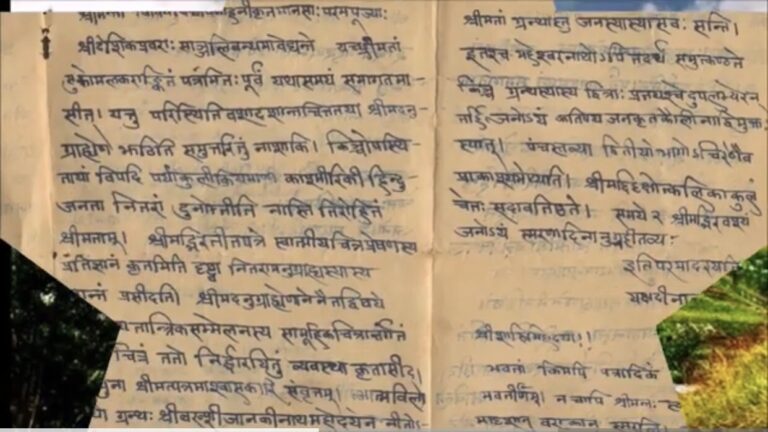
Jammu Kashmir has been home to numerous scholars, poets, and historians who have significantly shaped its history and literature. Among them, Pandit Kalhana stands as one of the most remarkable figures of the 12th century. A historian, poet, and philosopher, Pandit Kalhana ’s contributions to Kashmiri literature and his monumental work, Rajtarangini, have left an indelible mark on the historical narrative of the region. This article explores his life, intellectual legacy, and the lasting impact of Rajtarangini.

Pandit Kalhana: A Multifaceted Scholar and Philosopher

Pandit Kalhana was born into an intellectual and royal family in Kashmir. His father, Champa, was a member of the royal court and the brother of King Harsha of Kashmir, which positioned Kalhana within an influential social circle from an early age. It was this connection to the royal lineage that facilitated his deep involvement in both the scholarly and political spheres of Kashmir.

Kalhana was known for his vast knowledge and intellectual pursuits. He was a master of Sanskrit and other ancient texts, and his contributions spanned across various fields, including philosophy, poetry, science, and music. His passion for the arts and learning made him a prominent figure in the royal court. However, Kalhana is perhaps best remembered for his philosophical work, particularly his advocacy for the Shaiva philosophy, which was one of the central spiritual traditions of Kashmir during his time.

Kalhana ’s intellectual abilities were not confined to religious and philosophical thought alone. His knowledge of logic and rhetoric made him a formidable figure in scholarly debates, and his contributions to Sanskrit literature cemented his place as one of Kashmir’s greatest thinkers.

Rajtarangini: The Chronicle of Kashmir’s Kings

Pandit Kalhana’s most significant contribution to Kashmiri history is his authorship of Rajtarangini (“The River of Kings”), a historical chronicle that covers the history of Kashmir from its earliest rulers to the 12th century. The text was written in Sanskrit and is divided into eight books, with over 8,000 verses, making it one of the longest and most detailed historical works of its kind.

Rajtarangini is more than just a political history of Kashmir; it is a comprehensive account of the region’s rulers, social customs, religious practices, and cultural developments. What sets this text apart from other historical works of its time is Kalhana ‘s methodical approach. He not only relied on royal records and chronicles but also incorporated first-hand accounts and eyewitness testimonies, offering a unique perspective on the events he recorded.

The Rajtarangini chronicles the reigns of Kashmir’s rulers, from the earliest mythical kings to the reign of King Jayasimha in the 12th century. It provides a vivid portrayal of the political, social, and cultural life of the time, detailing the kings’ administrative practices, wars, alliances, and their relationships with neighboring states. Kalhana was meticulous in his documentation, which allowed modern readers to gain insights into the complexities of governance and society in ancient Kashmir.

The Literary and Philosophical Value of Rajtarangini

While Rajtarangini is primarily a historical text, it is also a literary masterpiece. Pandit Kalhana’s poetic style, rich in metaphors and literary devices, elevated the text beyond a mere historical account. The Sanskrit used in the Rajtarangini is refined, and the work is often regarded as one of the finest examples of classical Sanskrit literature.

The text not only provides historical facts but also reflects Kalhana’s philosophical views. For example, his portrayal of kings and rulers is not just a political analysis but also an exploration of the nature of power, virtue, and justice. Kalhana used the kings’ reigns as a medium to reflect on the moral and ethical dimensions of leadership, making Rajtarangini both a history and a philosophical treatise.

Moreover, the text is filled with references to Hindu epics such as the Mahabharata and the Ramayana, as well as regional myths and legends, which further enrich its literary and cultural value. It is clear that Kalhana viewed history not just as a collection of facts, but as a reflection of the philosophical and moral values of society.

The Importance of Rajtarangini in Understanding Kashmiri History

Rajtarangini is more than just a record of royal genealogies and political events; it is a vital source for understanding the cultural, social, and religious life of Kashmir. Kalhana’s work provides valuable insights into the religious pluralism that existed in Kashmir, as it documents the coexistence of Hinduism, Buddhism, and other religious traditions over the centuries.

The text also touches upon the social structure of Kashmir, including the role of different classes and castes in the region’s governance. Kalhana provides detailed accounts of festivals, rituals, and customs, which help us understand the cultural fabric of Kashmir during the medieval period.

One of the most important aspects of Rajtarangini is Kalhana’s critical approach to history. He was not merely a recorder of events but a historian who analyzed the actions and motives of the rulers he wrote about. He was particularly interested in the ethical implications of kingship and often used his historical narrative to highlight the virtues and vices of those in power. This critical approach makes Rajtarangini a pioneering work in the field of historical writing.

The Influence and Legacy of Pandit Kalhana

Pandit Kalhana’s work had a lasting influence on Kashmiri scholarship and intellectual traditions. His deep engagement with Sanskrit literature and history set a high standard for future scholars. Rajtarangini became a foundational text in Kashmiri historiography and was widely studied and referenced by later generations of historians and philosophers.

The Rajtarangini was not only appreciated in Kashmir but also by scholars across India and beyond. It was translated into various languages, including Persian and English, and its impact can be seen in the works of later historians and writers who followed Kalhana’s methodology and literary style.

In addition to Rajtarangini, Pandit Kalhana is believed to have written several other works on various subjects, including Neelmat Puran and Chandrika. These works, though not as well known as Rajtarangini, further reflect his intellectual breadth and his contributions to the scholarly traditions of Kashmir.I

In conclusion, Pandit Kalhana’s contributions to the history, culture, and literature of Kashmir are immeasurable. His magnum opus, Rajtarangini, remains a cornerstone of Kashmiri historiography, providing valuable insights into the political, social, and religious life of the region. Kalhana’s work stands out for its intellectual rigor, literary elegance, and philosophical depth, making it a timeless resource for anyone interested in the history of Kashmir.

GB Awami Action Committee Calls for End to Colonial Governance and Economic Exploitation in Gilgit-Baltistan

0

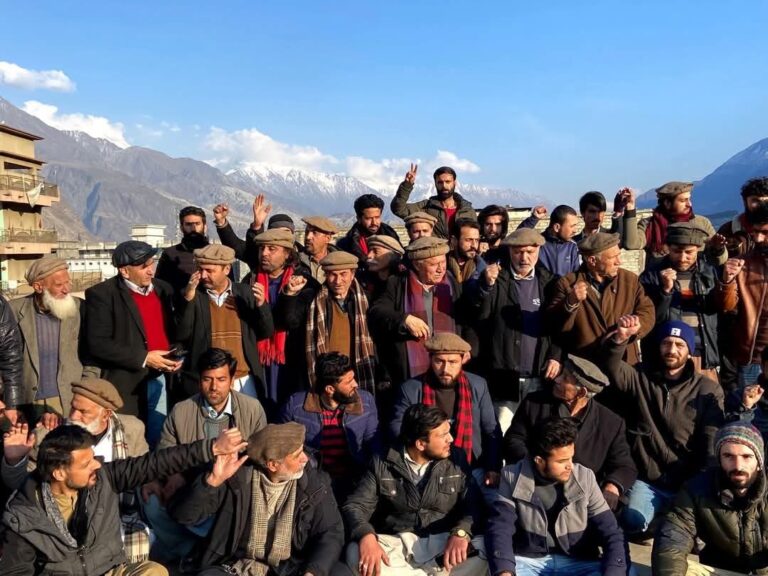
Gilgit: The Awami (Public) Action Committee (GBAAC) has presented a comprehensive set of demands following its Workers’ Convention held in Gilgit, calling for the establishment of an autonomous assembly, the abolition of the controversial land reforms act, local government elections, and the closure of the Sost Pak-China border customs checkpoint. The convention also emphasized the need to reduce bureaucratic expenditures and redirect the savings into the region’s social development budget.

The event, which took place on Sunday, saw participation from numerous activists, as well as central leaders such as Gilgit Baltistan Awami Action Committee Chairman Ihsan Ali Advocate, Organizing Secretary Comrade Baba Jan, Javed Hussain, Sher Nader Shahi, Asghar Shah, and Deputy Khan, among others. A total of ten resolutions were adopted during the convention, including a call for a nationwide movement to secure the region’s rights following approval of a national narrative by a Grand National Jirga.

Calls for Political Autonomy and Fundamental Rights

One of the central demands was the formation of a sovereign constituent assembly to replace the existing legislative body. The GBAAC argued that the current assembly is a remnant of colonial administrative structures that fail to protect the basic human, democratic, economic, social, and political rights of the people of Gilgit-Baltistan. The new assembly, the GBAAC insisted, should be empowered to bring about the necessary reforms and dismantle these colonial systems.

Another significant demand highlighted by the GBAAC was the call for local government elections at the district and tehsil levels to ensure that local representatives, elected by the people, are entrusted with governing powers. This, according to the GBAAC would help secure self-governance and promote the welfare of the working class.

Land Reforms and State Control

The Gilgit Baltistan Awami Action Committee also took a strong stance against the existing land reforms act, which it claims is being used to allow state encroachment on public and communal lands. The GBAAC stressed that all land, rivers, mountains, forests, glaciers, and springs in Gilgit-Baltistan are the collective property of the local people and should not be subject to state acquisition under the guise of reforms. The committee has thus called for the complete abolition of the land reforms act, which they believe undermines local ownership and control.

Economic Justice and Resource Management

On economic issues, the convention called for a complete overhaul of the region’s budget allocations. GBAAC leaders demanded that at least 80% of the annual budget, including internal resources, should be diverted towards meeting the basic needs of the people, including education, healthcare, electricity, water, high-speed internet services, and job creation for youth. They further advocated for cuts in bureaucratic expenditures and luxury expenses, arguing that these funds would be better spent on the welfare of the population.

Another resolution proposed the cancellation of all mining leases currently granted in the region, asserting that the mineral wealth of Gilgit-Baltistan should be regarded as the collective property of its people. The GBAAC also called for an end to the exploitation of natural resources by non-local companies, urging that business activities in the region be restricted to local enterprises only.

Removal of Border Customs and Tax-Free Zone Demand

The convention participants also expressed strong opposition to the controversial customs checkpoint at Sost, which they argue operates unlawfully. They demanded the immediate removal of this checkpoint and called for the designation of Gilgit-Baltistan as a tax-free zone to encourage local trade and commerce.

Calls for Fair Distribution of Resources and Employment

The GBAAC further called for the recognition of the rightful share of Gilgit-Baltistan in the revenue and employment generated by major infrastructure projects in the region, such as the Diamer-Bhasha Dam and the Dasu Dam. The convention demanded that 75% of the royalties and 100% of employment opportunities from the Diamer-Bhasha Dam project be reserved for the people of Gilgit-Baltistan, while the Dasu Dam project should allocate at least 50% of royalties and employment to the region.

Reviving Ancient Trade Routes and Local Banking

The revival of traditional trade routes with neighboring countries was another key demand made at the convention. Participants called for the restoration of historical trade links with neighboring states to boost regional commerce and economic development.

Additionally, the GBAAC demanded that all financial institutions operating in Gilgit-Baltistan allocate their collective capital towards funding local youth and small businesses. This, they argued, would help stimulate the local economy and create sustainable livelihoods for the region’s residents.

Moving Forward with a National Movement

The convention concluded with the announcement that the Gilgit Baltistan Awami Action Committee, after taking the Grand National Jirga into confidence, would intensify its resistance movement to ensure the implementation of the national narrative. The GBAAC leadership made it clear that they would not rest until the demands of the people of Gilgit-Baltistan are met and their fundamental rights are fully recognized.

The convention’s resolutions reflect a growing dissatisfaction with the political and economic status quo in Gilgit-Baltistan, where local people have long felt sidelined by both provincial and federal governments. The demands for political autonomy, economic justice, and the restoration of local governance systems are expected to form the basis of a larger struggle in the coming months.

AIP Activists Detained in Srinagar for Demanding Engineer Rashid’s Release

0

Srinagar, Jammu and Kashmir: Several activists of the Awami Itehad Party (AIP) were detained by the police on Friday as they attempted to hold a hunger strike in Srinagar, (Indian administered Kashmir m) demanding the release of their leader, Engineer Rashid, the Member of Indian Parliament (MP) from Baramulla and head of the AIP.

The AIP workers gathered at the Singer Mall Shopping Complex in Srinagar, where they decided to stage the hunger strike after district authorities rejected their request to hold a protest near Pratap Park in Lal Chowk. The police detained them as they tried to gather at Lal Chowk in the morning, according to the AIP spokesperson, Firdous Baba.

The AIP had announced on Thursday that its imprisoned president, Engineer Rashid, who represents the Baramulla parliamentary seat, would go on a hunger strike to protest being denied permission to attend the upcoming budget session of Parliament. Rashid has been incarcerated in Tihar Jail, New Delhi, since August 2019 on allegations of funding and money laundering. He was released temporarily on bail during the Jammu and Kashmir Assembly elections in August 2023, but after the expiration of his bail, he was sent back to jail.

Despite being imprisoned, Rashid contested the 2024 Lok Sabha elections from Tihar Jail and won a significant victory, defeating prominent candidates such as Jammu and Kashmir’s Chief Minister Omar Abdullah and Peoples Conference Chairman Sajad Gani Lone by a margin of over 2 lakh votes.

Special News Report: February 5 – A Day of Exploitation or Solidarity?

0

A Dark Day in History!

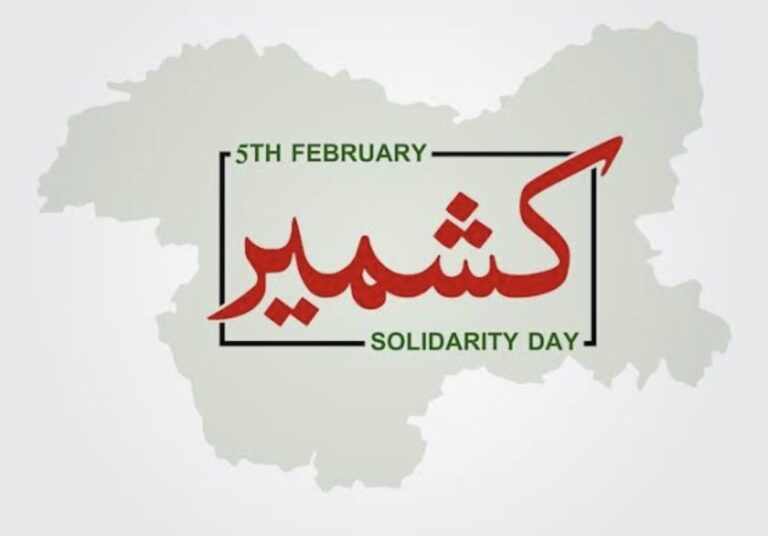
February 5th is celebrated as “Kashmir Solidarity Day” in Pakistan, but is this day truly in solidarity with the people of Jammu and Kashmir, or is it merely a political facade?

In the history of the Jammu and Kashmir freedom struggle, February 5th holds no significant place. Instead, it has become a tool of political maneuvering between Pakistan and India, where both nations attempt to deceive the world by cloaking their oppressive policies under the guise of “solidarity.”

Background of February 5th – The Role of Jamaat-e-Islami’s Politics

This day was introduced in 1990 by the Jamaat-e-Islami Pakistan as part of a political campaign, with the backing of the then-government. Since then, it has been “officially” observed in Pakistan. However, the question remains:

  • Is this day part of the Jammu and Kashmir freedom movement? No.
  • Does it truly support the people of Jammu and Kashmir? No.
  • Does it strengthen the agenda of the occupying powers? Yes.

February 5 – A Day of Exploitation

This day has become a symbol of hypocrisy rather than solidarity for the people of Jammu and Kashmir.

Reasons for This:

  • Pakistan and India – Both Occupiers:
    • Pakistan occupies Gilgit-Baltistanand Azad Jammu Kashmir.
    • India rules over Indian-administered Kashmir with military force.
    • Both countries use the people of Jammu and Kashmir as political pawns in their struggle for power.
  • A Tool for Propaganda:
    • The Pakistani government and religious parties exploit this day for their political gains.
    • India uses it to strengthen its “security narrative” against terrorism.
    • The real leadership of Jammu and Kashmir is ignored, and only narratives that benefit the occupying governments are pushed forward.
  • Hypocrisy Under the Guise of Solidarity:
    • If Pakistan were truly sincere, it would grant full autonomy to Azad Jammu Kashmir.
    • If India truly supported democracy, it would hold a referendum, allowing the people of Jammu and Kashmir to decide their future.
    • The harsh reality is that both countries are using Jammu and Kashmir for their political and military agendas.

What Needs to Be Done?

  • Boycott the False Programs of February 5th: Avoid participating in the ceremonies and events orchestrated by Pakistan and India.
  • Listen to the Real Voice of the People of Jammu and Kashmir: Instead of the political propaganda pushed by Pakistan or India, hear from the actual leaders of the Kashmir freedom struggle.
  • Demand the Withdrawal of Occupying Powers: Call on all occupying forces to leave Jammu and Kashmir and allow the people to determine their own fate.
  • Push for Real International Diplomatic Efforts: Global diplomatic efforts should be made to secure the right to self-determination for the people of Jammu and Kashmir.

The Demand of the People of Jammu and Kashmir – Complete Freedom!

Now is the time for the international community and conscientious individuals to reject this exploitative narrative and stand in solidarity with the real rights of the people of Jammu and Kashmir. This day is not about solidarity but is a political deception designed to perpetuate the occupation and control of the region by India and Pakistan.

It is imperative that we stand with the freedom struggle of Jammu and Kashmir and demand justice for the people who have long suffered under occupation.

Let us reject the false narratives of both Pakistan and India and raise our voices for true self-determination for the people of Jammu and Kashmir