Sunday, March 29, 2026
13.4 C
Srinagar
Home Blog Page 136

Poonch: Indian Army Crosses LoC, Locals Fight Back and Protest

0

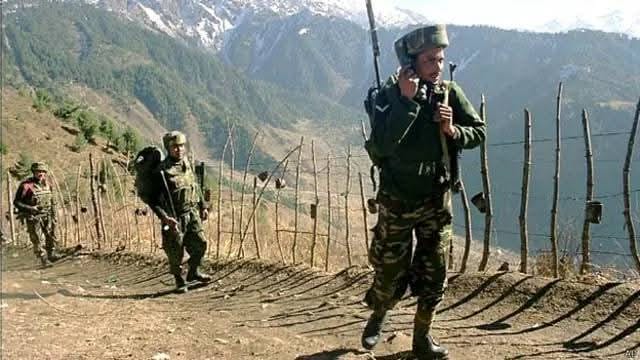
Reports have surfaced of a serious violation of the Line of Control (LoC) in the Dharmasal area of Poonch Pakistani-controlled Azad Jammu Kashmir, where the Indian Army crossed the boundary and entered the village of Mahendla. According to locals, Indian soldiers intruded into their homes, assaulted women and children, and sparked intense outrage in the community.

Locals’ Brave Response Forces Indian Soldiers to Retreat

In response to the aggression, residents of Mahendla village retaliated with gunfire, injuring two Indian soldiers. This courageous act by the villagers compelled the intruding troops to retreat back across the LoC. Eyewitnesses claim that the villagers, despite having no formal military training, defended themselves with great determination, preventing further harm to their community.

Protests Erupt at Madarpur Chowk

Following the incident, the residents of Mahendla gathered at Madarpur Chowk, blocking the roads in protest. The demonstrators expressed their anger and frustration, demanding accountability from the Pakistani Army for failing to prevent the incursion. Protesters voiced their concerns, stating, “If the Pakistan Army cannot protect the civilians, they should leave our state. We, the people of Kashmir, will defend ourselves.”

Violation of Ceasefire Sparks Outrage

The intrusion marks a blatant violation of the ceasefire agreement, raising serious questions about the effectiveness of border security measures. Locals have criticized the Pakistani Army, questioning how Indian troops managed to cross the LoC unnoticed and reach a civilian area.

Unified Resistance by the People of Kashmir

This incident underscores the resilience and unity of the Kashmiri people. Despite being caught off guard, the residents of Mahendla demonstrated their capability to defend themselves and their homes against external aggression.

Also Read: A Girl from Indian-held Kashmir Crosses the Line of Control to Reach

Further investigations are awaited to determine the full scope of the events and the response from authorities on both sides. The people of Mahendla, however, have sent a strong message: they will not be intimidated and are ready to protect their land and loved ones.


This incident highlights the ongoing tensions along the LoC and the growing demand for independent measures to ensure the safety of Kashmiri civilians.

The Azadi Times: Kashmir’s First AI-Driven News Agency Shaping the Future of Reporting

0

Jammu Kashmir’s The Azadi Times is breaking new ground in regional journalism, emerging as a pioneer in integrating advanced technology into its operations. As the first independent news agency in Jammu & Kashmir and allied areas to adopt AI-powered reporting, it has revolutionized how stories are gathered, analyzed, and delivered to its audience.

This forward-thinking approach, combined with its commitment to independent reporting, has positioned The Azadi Times as a leading platform for unbiased and timely news coverage.

AI-Powered Reporting: A Game-Changer

In a region where access to reliable information is often hindered, The Azadi Times has introduced artificial intelligence tools to enhance the speed and accuracy of news reporting. These tools enable the agency to:

  • Monitor Real-Time Developments: AI helps track breaking news and trends, ensuring no critical update goes unnoticed.
  • Data-Driven Journalism: Using AI to analyze complex datasets and present insights, especially in areas such as politics, human rights, and environmental issues.
  • Enhanced Storytelling: AI-generated visuals and text allow the agency to create compelling multimedia content that resonates with diverse audiences.

By leveraging AI, The Azadi Times has set a precedent for how regional media can embrace innovation to better serve their communities.

A Commitment to On-Ground Reporting

Despite its technological advancements, The Azadi Times remains deeply committed to traditional journalism values. Its reporters are embedded in local communities, providing authentic, on-ground perspectives that reflect the realities of the region. This hybrid approach—combining AI efficiency with human storytelling—ensures the agency delivers both speed and depth in its reporting.

Focus Areas

The agency’s diverse coverage includes:

  • Political Turmoil: Reporting on governance, protests, and geopolitical developments affecting the region.
  • Human Interest Stories: Amplifying the voices of ordinary citizens through impactful narratives.
  • Cultural Preservation: Showcasing the heritage of Jammu & Kashmir to global audiences.
  • Environmental Concerns: Highlighting pressing issues such as deforestation and water scarcity.

The First Channel to Lead Authentic Reporting

The Azadi Times has proudly become the first channel in Jammu & Kashmir and its allied areas to prioritize real, unbiased, and AI-driven reporting. Unlike other outlets, it ensures every story is fact-checked and every voice is heard.

Its commitment to transparency and journalistic ethics has earned the trust of the public, positioning it as a credible source for regional news.

A Global Platform with Local Roots

While deeply rooted in the region, The Azadi Times connects Jammu & Kashmir with the rest of the world. Through its innovative AI tools and multimedia content, it bridges the gap between local issues and global audiences.

The Road Ahead

As The Azadi Times continues to grow, its adoption of cutting-edge technology, combined with a focus on grassroots reporting, is setting a new standard for journalism in South Asia. It is not just a news agency; it is a movement for truth, accountability, and progress in one of the most geopolitically sensitive regions in the world.

For audiences seeking timely, accurate, and unbiased news, The Azadi Times stands as a testament to the power of innovation in journalism.

Tensions at Kohala Border: Dispute Escalates Between Pakistan and Azad Kashmir

    0

    The Kohala border, a key land route between Pakistan and Azad Kashmir, has become the center of a new controversy, sparking unrest and raising questions about the rights of Kashmiri citizens. Reports suggest that Pakistani citizens living near the Kohala border have imposed conditions for passage through Kohala, requiring vehicles to display Pakistan’s flag and drivers to chant pro-Pakistan slogans like “Long Live the Pakistan Army.”

    Transporters’ Protest

    In response to these restrictions, transporters from Azad Kashmir have staged a protest by parking their vehicles at Kohala Chowk, creating a blockade and heightening tensions in the region. The transporters argue that these demands infringe upon their basic rights and freedom of movement.

    Past Incidents of Dispute

    This is not the first time Kohala has witnessed such a standoff. On December 5th and 6th, the Jammu and Kashmir Joint Awami Action Committee held a sit-in at the Kohala entry point. The protest led to the Azad Kashmir government meeting their demands, temporarily reopening the routes.

    Incident at Azad Pattan

    A similar issue occurred last year at the Azad Pattan entry point, where some individuals forcibly inscribed the slogan “Kashmir Banega Pakistan” (Kashmir will become Pakistan) on vehicles traveling between Azad Kashmir and Pakistan. Despite the gravity of the incident, no official statements were issued by either government, and the matter remained largely ignored by mainstream media.

    Potential Impact of the Standoff

    The current closure of the Kohala border is not only causing inconvenience to the public but also straining relations between the two regions. Civil society voices fear that these recurring disputes could further deepen socio-political divides. They emphasize the urgent need for resolution to protect the rights of ordinary citizens.

    Government Silence

    So far, neither the government of Pakistan nor Azad Kashmir has issued an official statement addressing the ongoing tensions at Kohala. Citizens and advocacy groups are urging both administrations to find a sustainable solution and ensure uninterrupted access through these vital land routes.

    This standoff has added to the challenges faced by the people of Azad Kashmir, highlighting the need for constructive dialogue and collaborative efforts to maintain harmony and uphold the region’s socio-political stability.

    Ancient Predictions: How Balochistan’s Elders Read the Future in Bones

    0

    The province of Balochistan in Pakistan is known for its rugged landscapes, rich traditions, and mystical cultural practices. Among these is the ancient art of scapulomancy, the practice of predicting future events by studying the markings and patterns on the shoulder blades of animals.

    Historically, scapulomancy was employed not only to forecast weather conditions but also to predict harvests, livestock well-being, community celebrations, and even the outcomes of wars. In Balochistan, it is considered a time-honored tradition with deep cultural roots.

    Nawab Akbar Khan Bugti, a revered leader and tribal chief of Balochistan, famously described scapulomancy as the “Balochi newspaper.” This metaphor captures its role as an essential source of guidance and predictions in tribal life. According to local accounts, Bugti himself once relied on scapulomancy to foresee his own death. After interpreting the shoulder blade of a goat, he reportedly told his companions he had only seven days left to live. In a striking testament to the practice’s significance, Bugti was indeed martyred exactly seven days later, as witnesses confirm.

    Also Read: Why Balochistan want independence from Pakistan? Written by: Dedig Khomari

    The process of scapulomancy typically involves using the shoulder blade of a mature sheep or goat. Elders trained in this art interpret the bone’s cracks, patterns, and discolorations to predict forthcoming events. However, this practice is fading as modernity takes hold, and the number of elders who possess this knowledge is becoming fewer with each passing year.

    Despite its decline, scapulomancy remains a fascinating example of humanity’s connection to nature and innovative ways of making sense of the world. This ancient art reflects the ingenuity of tribal societies and their reliance on cultural tools to navigate life’s uncertainties.

    Balochistan, often overlooked on the global stage, is a province with rich traditions that deserve international recognition. The story of scapulomancy highlights not only the depth of its cultural heritage but also the enduring spirit of its people.


    Cases Filed in Dhirkot and Pallandri: Allegations of Flag Desecration and Damage to Memorials Stir Controversy

    0

    Two separate cases have been registered in Dhirkot and Pallandri police stations against unidentified individuals accused of removing the Pakistani flag and damaging the memorials of Muhammad Ali Jinnah and Sardar Abdul Qayyum Khan at Kohla the border between Azad Kashmir and Pakistan. These incidents, which occurred on December 5 during a protest organized by the Jammu Kashmir Joint Awami Action Committee (JKJAAC), have sparked mixed reactions.

    The protest aimed to block entry points to Azad Kashmir as a means to press their demands. During the demonstrations, some unidentified individuals reportedly removed the Pakistani flag and defaced the memorials of Jinnah and Abdul Qayyum Khan.

    Public Reaction and Debate

    While certain political groups, including the Muslim Conference, condemned the act and announced a strike across Azad Kashmir to express their outrage, others have raised critical questions. Some voices argue that leaders like Sardar Abdul Qayyum Khan are not universally accepted as national heroes of Kashmir and claim their image as leaders was enforced rather than emerging from genuine public sentiment.

    Political Divide

    Critics of these leaders argue that the association of their legacy with Kashmir’s aspirations does not reflect the diverse perspectives within the region. They believe that presenting them as national figures of Kashmir sidelines the voices of those who hold different political and historical viewpoints.

    Also Read: https://azaditimes.com/news/pallandri-fir-filed-against-those-who-made-video-by-torturing-the-youth/

    Amid the controversy, the police have initiated investigations to identify those responsible for the acts of alleged desecration. However, the incident has brought to light a deeper divide regarding the representation of Kashmir’s leadership and the region’s complex historical identity.

    Stay tuned for further updates on this developing story.

    Ehsan-ul-Haq Shami Ignites Hope in Leepa Valley’s Kashmir Debate

    0

    In Leepa Valley’s Union Council Nokot, a wave of celebration erupted as the controversial presidential ordinance was repealed, and the Charter of Demands presented by the Jammu Kashmir Joint Awami Action Committee (JKJAAC) was approved.

    This significant achievement came after three days of relentless lockdowns and protests led by the JKJAAC, where locals united to voice their discontent against the ordinance. The sustained demonstration highlighted the people’s determination to stand against policies they deemed unjust, ultimately leading to this triumph.

    The people of Leepa Valley also expressed their gratitude in a public display of unity, led by renowned legal expert and social activist Ehsan-ul-Haq Shami.

    Shami, addressing the gathering at Tunnl Chowk in Leepa Valley, emphasized his unwavering support for those advocating for an independent Kashmir. He assured the people that he stood firmly by their side amidst increasing social media debates in Leepa Valley, where discussions on the affiliation with Pakistan versus the push for independence have intensified in recent days.

    The independence movement has gained significant traction, particularly among the youth of Union Council Nokot, where a large number of Kashmiri speakers are prominent. This contrasts with Union Councils Leepa and Banamulla, where the Kashmiri language is less prevalent.

    Also Read: Protests Erupt in Kashmir’s Leepa Valley Against Soaring Inflation

    Social media has become a battleground for ideological debates, with pro-Pakistan groups criticizing Shami’s stance. Despite this, his leadership has resonated deeply, especially among the younger generation seeking clarity and direction in these critical times.

    The event marked a significant moment for Leepa Valley, as its people continue to navigate complex political narratives while striving for a just and equitable future.

    Kashmir Under Siege: Human Rights Abuses Continue Unabated

    0

    In a scathing indictment, global human rights activists, organizations, and institutions have condemned the systematic exploitation of the people of Azad Jammu and Kashmir (AJK) by Pakistani authorities. The AJK people have been subjected to modern-day slavery, with their fundamental rights being trampled upon with impunity.

    Third-Day of Protests in Muzaffarabad

    The people of AJK have taken to the streets for the third consecutive day, blocking all roads leading to Pakistan. Human rights activists and organizations have highlighted the issues of enforced disappearances, torture, and killings, which have become commonplace in AJK.

    International Community Urged to Intervene

    The Joint Action Committee has appealed to world leaders, particularly the United Nations, to intervene in the Kashmir dispute and ensure that the people of AJK are granted their  right to self-determination. The committee has also urged human rights organizations to take note of the plight of AJK people languishing in prisons and to help secure their release.

    The situation in AJK is a stark reminder of the human rights abuses that have been perpetrated in the region for decades. It is imperative that the international community takes immediate action to address these abuses and ensure that the people of AJK are granted their fundamental rights.

    All Entry Points to Azad Kashmir Blocked: Protest to Continue Until Demands Are Met

    0

    Muzaffarabad: The Jammu Kashmir Joint Awami Action Committee (JKJAAC) has blocked all major entry points to Azad Jammu and Kashmir (AJK) after the government failed to respond to their demands by the December 6 deadline. According to The Azadi Times, the protests have intensified across the region as participants move to seal key access routes connecting AJK with Pakistan.

    Key Entry Points Sealed

    In the Mirpur region, protestors have blocked the Dhan Gali entry point, while in Muzaffarabad, the capital of AJK, the Bararkot entry point has been closed. Processions from Neelum Valley are also heading towards Muzaffarabad, while in Bagh, protestors are set to block the Kohala point—an essential route linking AJK and Pakistan. Similarly, Rawalakot demonstrators have marched to the Azad Pattan Bridge and shut it down.

    Commitment to Peaceful Protest

    The JKJAAC has declared that the protests will remain peaceful and will continue until their demands are addressed. Committee representatives stated that the government’s inaction compelled them to take this extreme step, aimed at drawing attention to the pressing issues faced by the people of AJK.

    Impact on Daily Life

    The closure of these vital routes has severely disrupted travel and daily activities for residents across Azad Kashmir. Commuters and businesses are facing significant challenges as the protests escalate.

    What Are the Demands?

    The demands of the Jammu Kashmir Joint Awami Action Committee include economic reforms, the provision of basic facilities, and the implementation of public welfare projects. The lack of a response from the government has heightened public frustration and unrest.

    Protestors Stand Firm

    Leaders of the committee have stated that the protests represent the voice of the people and that they will not retreat under any pressure. Blocking the entry points is a strategic move to pressurize the government into immediate action.

    The Azadi Times will continue to provide updates on the ongoing protests and the government’s response.

    Azad Kashmir: Protests and Lockdown Continue as Joint Action Committee Rallies for Demands

    0

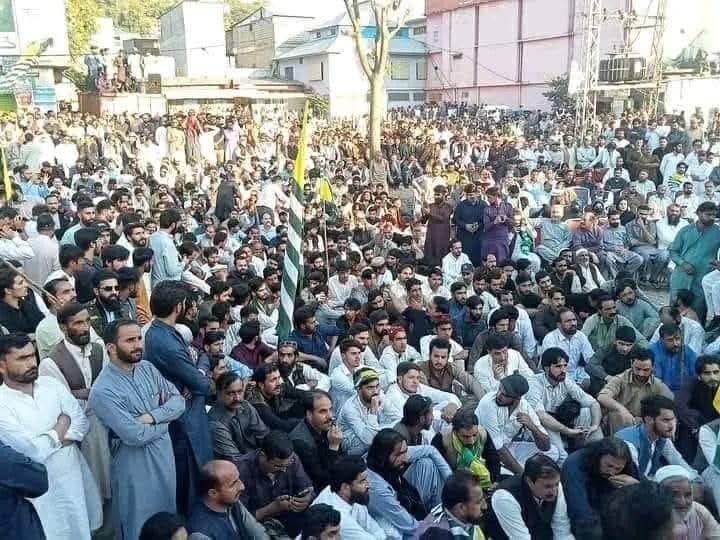
    Muzaffarabad (Report): The Jammu Kashmir Joint Awami Action Committee (JKJAAC) continues its peaceful lockdown across Azad Kashmir (Pakistan-administered Kashmir) to press for the acceptance of their demands.

    Speaking at a public gathering in Khai Gala, Sardar Umar Nazir Kashmiri reaffirmed that the lockdown will persist until their demands are met. He announced a mass gathering in Rawalakot tomorrow at 11 AM, from where the protestors will march towards the Azad Pattan entry point between Azad Kashmir and Pakistan.

    Protesters from different regions, including Poonch, Muzaffarabad, Bagh, Kotli, and Mirpur, are expected to gather at their respective entry points to hold sit-ins. Key locations include Kohala Bridge, Barar Kot, Mangla Bridge, and other major crossings.

    Public Facilities Amid Lockdown
    While essential services remain disrupted, the Action Committee has taken measures to alleviate hardships faced by the public. Grocery stores and bakeries will remain open until 11 AM to meet daily needs. Free meals are also being arranged for day laborers and other vulnerable groups.

    Also Read: Awami Action Committee Dadyal Announces Protest Plans

    Students appearing for board exams will not face any hurdles, although schools and colleges will remain closed. Private vehicles will be allowed for those traveling to the protest points.

    Call for Unity and Persistence
    Addressing the protesters, Sardar Umar Nazir Kashmiri urged participants to support the underprivileged during the lockdown. He emphasized that the lockdown would continue until all demands are accepted, and called on people to remain united and vigilant. “We will not compromise under any circumstances,” he declared.

    Special arrangements have been made for university students residing in hostels. Free meals will be provided to those affected by the closure of eateries. Ibrahim Habib Mir, a member of the committee, has assured that food will also be delivered directly to female students at their hostels.

    Widespread Participation Expected
    With people mobilizing from across Azad Kashmir, tomorrow’s events are expected to draw significant crowds. Protests and sit-ins have remained peaceful so far, showcasing a disciplined approach by both the public and the organizers.

    Azad Kashmir Witnesses Peaceful Strike on Joint Aawami Action Committee’s Call

    0

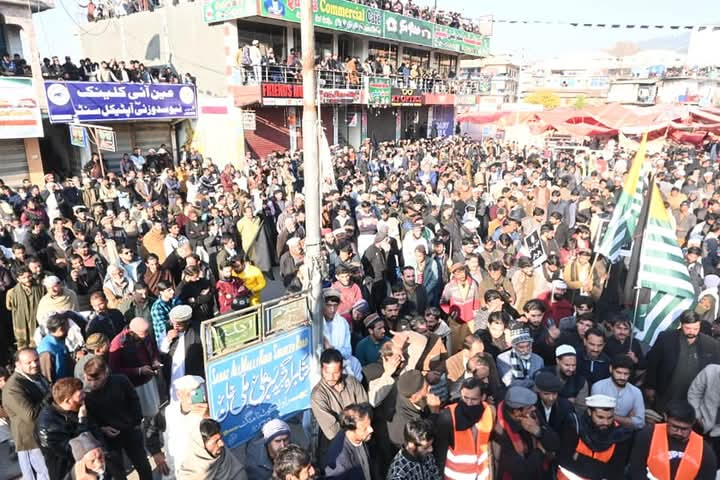
    Muzaffarabad (The Azadi Times) – Azad Kashmir observed a day-long peaceful shutter-down strike today on the call of the Jammu Kashmir Joint Awami Action Committee (JKJAAC), with protests recorded in major and smaller cities alike. Public transport remained off the roads, and businesses were shut down as the region resonated with calls for the repeal of a controversial Presidential Ordinance. The strike deemed a significant step in the ongoing protests, remained peaceful and orderly, showcasing a rare collaboration between the administration and demonstrators.

    A Unified Stance for Demands

    Protesters gathered across various locations, including Chehla Bandi, Plate, Upper Adda, and other prominent areas in Muzaffarabad. They chanted slogans in favor of their demands without indulging in vandalism or incitement, ensuring their focus remained on their charter of demands. Demonstrations extended to neighboring towns such as Karoli, Thotha, Majhoi, and Garhi Dupatta, where a complete shutter-down was observed.

    Despite political opposition to the strike, the call was largely successful. Public transport remained suspended, though private vehicles and ambulances operated. Government offices saw moderate attendance, while educational institutions remained open but faced low turnout due to transportation challenges.

    Thousands of people protest in Azad Kashmir against price hikes, other issues

    The Supreme Court’s suspension of the Presidential Ordinance played a pivotal role in maintaining peace. This legal development removed immediate restrictions on gatherings, which could have otherwise resulted in confrontations between the administration and protesters.

    Entry Points Briefly Blocked

    Protesters had announced plans to block major entry points, including Kohala, Bararkot, and Shaheed Gali, by midnight. However, these blockades lasted no more than half an hour before being cleared. Some groups attempted to burn tires, but these efforts were stopped after concerns about environmental pollution were raised.

    The lack of public transport and the closure of hotels posed difficulties for travelers, daily wage workers, and commuters. Despite these challenges, the day ended without any significant disruptions, marking a stark contrast to the violent confrontations of past protests.

    Joint Public Action Committee’s Firm Stand

    Addressing the gatherings, core committee member Shaukat Nawaz Mir led processions and rallies across the city. Speakers reiterated demands for the immediate repeal of the Presidential Ordinance, the release of political detainees, and the government’s acceptance of the committee’s charter of demands.

    “Azad Kashmir’s people will not tolerate oppressive laws that curtail freedom of expression. The nation has awakened, and we will not back down until our demands are met,” declared one of the speakers.

    Cooperation Between Protesters and Administration

    A notable feature of today’s strike was the absence of police presence at protest sites. Demonstrators also refrained from engaging in vandalism or disrupting law and order, setting an example of mutual understanding and civic responsibility. The Supreme Court’s suspension of the controversial ordinance averted a potential flashpoint, as the ordinance would have necessitated prior approval for public gatherings.

    The court ruling also shielded protesters from legal action, allowing them to voice their concerns without fear of reprisal. The day-long protests highlighted the effective strategy adopted by law enforcement agencies and organizers to prevent violence while ensuring a platform for public dissent.

    The Road Ahead

    The Joint Public Action Committee has issued a 12-hour ultimatum to the government, warning of intensified protests, including a long march to Muzaffarabad, if their demands remain unmet. The memory of the violent clashes from the May 11 protests, which resulted in injuries to civilians and police officers, looms large.

    As tensions simmer, today’s peaceful strike serves as a reminder of the power of restraint and dialogue in addressing public grievances. However, the ball is now in the government’s court to address the demands and avert further escalations in the region.