Sunday, March 22, 2026
8.3 C
Srinagar
Home Blog Page 22

Kenya Plane Crash: All 11 Passengers, Including Foreign Tourists, Killed in Tragic Accident

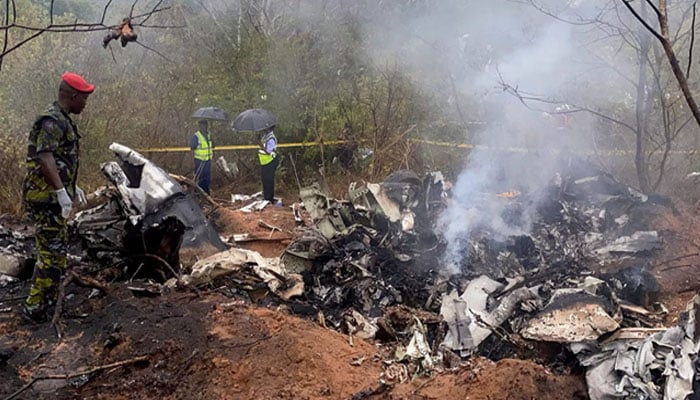
A tragic aviation disaster struck Kenya on Wednesday when a passenger aircraft crashed in the coastal region of Kwale, killing all 11 people on board. The aircraft, operated by Mombasa Air Safari, was en route to the world-famous Maasai Mara National Reserve, a top tourist destination, when it went down under unclear circumstances.

According to reports from international media, including Al Jazeera and Reuters, the small passenger plane was carrying foreign tourists and local crew members when it crashed approximately 40 kilometers from Diani, a popular beach area.

Foreign Tourists Among the Dead

In an official statement, Mombasa Air Safari confirmed that all passengers and crew members perished in the crash. The victims included eight tourists from Hungary, two from Germany, and one Kenyan pilot.
The company expressed deep sorrow over the tragedy, calling it a “devastating loss for the families and the tourism community.”

Crash Site and Investigation

According to the Kenya Civil Aviation Authority (KCAA), the crash occurred in a hilly and forested area of Kwale County. Witnesses reported hearing a loud explosion before the aircraft burst into flames. Rescue teams arrived to find the wreckage engulfed in fire, leaving the remains of the victims unrecognizable due to the intensity of the blaze.

Local resident Joseph Mwadime, an eyewitness, told reporters that he heard “a huge bang followed by smoke rising from the hills.” He added, “When we got there, there was fire everywhere and no sign of survivors.”

Authorities Respond

Kwale County Commissioner Stephen Orende confirmed that investigators from the Kenyan Air Accident Investigation Department are on site to determine the cause of the crash. He said, “We have launched a full investigation. At this stage, we cannot rule out mechanical failure, but we are gathering all evidence.”

The aircraft was reportedly on a routine safari flight from Diani Airstrip to Maasai Mara, a route frequently used by tourists seeking Kenya’s iconic wildlife experiences.

Kenya’s Aviation Safety Record

Kenya’s aviation industry has generally maintained a good safety record in recent years. However, small private and charter planes operating in remote areas have occasionally faced accidents due to challenging weather, poor visibility, or technical issues.

A similar incident occurred in 2018, when a domestic flight from Kitale to Nairobi crashed, killing all ten passengers on board.

Global Reactions and Condolences

Hungary and Germany’s embassies in Nairobi have expressed condolences to the families of the victims and are working with Kenyan authorities to repatriate the remains of their nationals.

Kenyan President William Ruto also extended his sympathies, tweeting:

“We mourn the loss of lives in the tragic air crash in Kwale. Our thoughts and prayers are with the families of all those who perished.”

As investigations continue, authorities have urged the public to avoid spreading unverified information and to allow experts to determine the exact cause of the tragedy.

The Vanishing Tribes of the Amazon: Inside Peru’s Silent Struggle to Protect the Mashco-Piro People

0

Deep in the dense Peruvian Amazon, Thomas Enes dos Santos was clearing a patch of land when he suddenly froze. From the shadows came the faint sound of footsteps.

“I realized I was surrounded,” he recalls. “A man stood a few meters away with a bow aimed directly at me. The moment I sensed danger, I started to run.”

Thomas had come face-to-face with members of the Mashco-Piro — one of the last remaining uncontacted tribes on Earth. For decades, he has lived in the small riverside village of Nueva Oceania, whose invisible neighbors dwell silently in the forest.

The Mashco-Piro have spent over a century avoiding contact with outsiders, surviving solely on the resources of the rainforest — hunting with longbows, gathering fruits, and fishing along the riverbanks.

“Once they saw me,” Thomas says, “they began circling around, whistling like birds, mimicking animals. It was both terrifying and mesmerizing. I kept repeating the word ‘Nomole’ — it means brother in their language — and then I escaped toward the river.”

For years, Thomas and other villagers have lived side by side — yet worlds apart — from the Mashco-Piro.

A new report by Survival International, a global indigenous rights organization, estimates that at least 196 isolated tribes still exist across the world, with the Mashco-Piro among the most significant. The report warns that half of these groups could vanish within the next decade if urgent action is not taken.

Their survival is threatened by a familiar enemy — industrial intrusion: logging, mining, oil exploration, and now, the growing reach of social media influencers who enter protected zones to film “first contact” videos.

Nueva Oceania, Thomas’s village, is home to just seven or eight fishing families. Located along the Tahuhamano River — deep in the heart of the Amazon — the community is accessible only after a ten-hour boat journey from the nearest town.

Although the region is supposed to be a protected reserve, illegal logging operations are expanding rapidly. The constant hum of machinery echoes through the forest day and night.

“The Mashco-Piro can hear the chainsaws,” Thomas says. “Their forest is being destroyed, and they are scared. Sometimes, they come closer to our village, confused and desperate.”

Locals live in fear of arrows — but also in grief for what is happening to their silent neighbors.

“We keep our distance,” says Thomas, “because we don’t want to harm them. They deserve to live as they have always lived.”

Fear, survival, and fragile peace

In June 2024, villagers spotted a group of Mashco-Piro near the riverbanks — the first sighting in months.

“Leticia Rodríguez López,” a young mother, recalls hearing eerie shouts while picking fruit in the forest. “It sounded like dozens of people crying out,” she said. “I ran back to the village immediately.”

She wasn’t alone in her fear. Two years earlier, in 2022, the tribe had attacked two loggers fishing nearby — one man was killed by arrows.

Experts believe such incidents are not random acts of aggression but reactions of fear and territorial defense. “They see their homeland disappearing,” says an anthropologist from Lima University. “They don’t understand why the forest — their life — is being cut down.”

Under Peruvian law, contacting or approaching uncontacted tribes is illegal. The government’s “No Contact Policy”, modeled after Brazil’s, aims to prevent the spread of diseases to which isolated peoples have no immunity.

The policy was introduced after devastating episodes in the 1980s and 1990s. When the Nahua and Murunahua tribes first came into contact with outsiders, half of their populations died within years due to infections like influenza and measles.

“Uncontacted people are biologically and culturally vulnerable,” says Israel Akise of the indigenous rights group Fenamad. “Even a simple cold can wipe out entire communities. Every contact risks erasing centuries of heritage.”

At the same time, the no-contact rule has left border villages like Nueva Oceania in a difficult position.

Thomas says he sometimes plants banana trees near the forest edge for the Mashco-Piro to take. “It’s my way of saying — we mean no harm.”

He smiles faintly. “If I could speak their words, I’d tell them, ‘Take the bananas, my friends. It’s a gift. Please don’t harm us.’”

When Thomas whistles into the forest, waiting for an answer, only the birds reply.

“They’re not here today,” he says softly.

The government outpost: watching the unseen

Some 200 kilometers southeast of Nueva Oceania, near the Manu River, lies a government monitoring post — the Nomole Control Post. Established in 2013 after violent clashes, it is run by Peru’s Ministry of Culture in partnership with Fenamad.

Here, eight field officers keep watch over a section of the forest officially designated as a “Mashco-Piro Reserve.”

Their mission: prevent conflict and ensure that the tribe remains undisturbed.

“They come to the river almost every week,” says Antonio Trigoso Hidalgo, the head officer at the outpost. “We never cross to their side. We only communicate through shouts.”

He points across the wide river. “They ask for bananas, cassava, or sugarcane. If we don’t respond, they wait all day.”

Forty faces at the riverbank

Antonio estimates that about 40 individuals regularly approach the outpost — men, women, and children from different families.

“They have names based on animals,” he says. “The chief is Kamotolo, which means ‘Bee’. Another leader, Tokotoko, means ‘Vulture’ — he’s cheerful and often laughs with us. A young woman called Yumko means ‘Snake’. She’s curious about our clothes.”

Sometimes, they even offer small gifts — a handmade rattle crafted from a monkey bone, or a feathered ornament.

“But when we ask questions about their lives in the jungle,” Antonio adds, “they fall silent. They change the subject. They don’t want to tell us where they live.”

A delicate balance of curiosity and caution

The officers are careful not to wear new or colorful clothes — the tribe might try to take them. “We wear old shirts with missing buttons,” says officer Eduardo Pancho. “They seem fascinated by red and green fabric.”

Though some Mashco-Piro now wear T-shirts and shoes given by passing tourists, most still prefer their traditional attire made from plant fibers.

If a familiar face disappears for a while, officers ask about them. “When they say, ‘Don’t ask,’ we understand that person has died,” Antonio explains quietly.

Even after years of cautious interaction, the Peruvian authorities still know very little about their way of life. Scholars believe they are descendants of the Yine people, who fled deeper into the forest during the violent “rubber baron” era in the 19th century — when indigenous populations were enslaved or massacred.

Nomads of the lost forest

The Mashco-Piro appear to be semi-nomadic hunter-gatherers, moving every few months once the nearby area’s game and fruits are exhausted.

“They build temporary camps, hunt with bows, and gather wild honey,” Antonio says. “Once they’ve used up the area, they vanish — only to appear again somewhere else.”

According to Fenamad’s data, over 100 members have been sighted over the years. They often request food but disappear again for months or even years.

“They simply say, ‘I’ll return soon,’ and then they’re gone,” says Akise. “Some of them never do.”

While the Mashco-Piro of the Manu Reserve remain relatively safe, threats loom large. The Peruvian government has proposed a new road that would connect the reserve to a mining zone — a potential disaster for the tribe’s future.

“Roads bring outsiders, diseases, and deforestation,” says Akise. “For the Mashco-Piro, a road is not progress — it’s extinction.”

Do they want to join the modern world?

“They don’t want to be part of us,” Antonio admits. “They don’t want civilization.”

He pauses. “Maybe their children will — in ten or twenty years, when they see clothes or boats. But the elders? No. They want the forest, the silence, their way of life.”

In 2016, Peru’s Congress approved a bill to expand the Mashco-Piro protected zone to include Nueva Oceania. But the law has yet to be enacted.

For now, villagers like Thomas live between two worlds — modern enough to hear the hum of generators, yet close enough to sense the heartbeat of the forest.

“We just want them to live freely,” he says. “They were at peace for generations. Now the forest that kept them safe is being destroyed.”

A fragile coexistence

At dusk, Thomas walks to the same clearing where he first saw the Mashco-Piro. He whistles softly again.

“If they answer,” he says, “we leave. That’s our rule.”

But this time, the only response is the hum of insects and the distant rumble of chainsaws.

“The forest is changing,” Thomas murmurs. “And they — they are disappearing with it.”

Sources:

  • BBC World Service & BBC Mundo reports (2024–2025)

  • Survival International report on Uncontacted Tribes (2025)

  • Fenamad Indigenous Rights Organization

  • Peru Ministry of Culture archives

  • Freedom at Midnight by Dominique Lapierre and Larry Collins (contextual reference)

  • The National Interest, Paradise Lost: The Ordeal of the Amazon Tribes

  • Interviews compiled from Nueva Oceania residents and field reports

The 1947 Kashmir Invasion: How Tribal Fighters, British Maps, and Political Decisions Shaped the Fate of Jammu & Kashmir

0

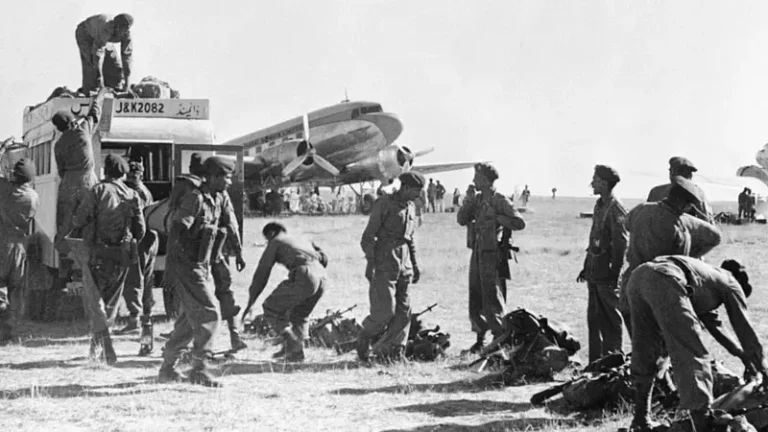
As the sun rose over the misty valley of Kashmir on October 27, 1947, its light cut through the morning haze when a Dakota aircraft took off from Delhi’s Willingdon Airfield. After a three-and-a-half-hour flight, it landed at Budgam airbase, near Srinagar, carrying 15 armed soldiers on board.

At 9:30 a.m., the arrival of these troops from the 1st Battalion of the Sikh Regiment marked a historic turning point — it was the moment India officially deployed its army into the princely state of Jammu and Kashmir.

Historian Alastair Lamb, in his book Birth of a Tragedy: Kashmir 1947, writes that this was the formal beginning of the conflict between India and Pakistan, a dispute that remains unresolved to this day.

For more than two months after the August 15 deadline, Maharaja Hari Singh had failed to make a decision about the future of his state — whether to join India, Pakistan, or remain independent.

The Invasion and the Accession: How the Kashmir Conflict Began

According to historian Alexander Rose, given its Muslim-majority population and its geographical proximity to Pakistan, there were strong reasons to believe that Kashmir would naturally become a part of Pakistan after the partition of British India.

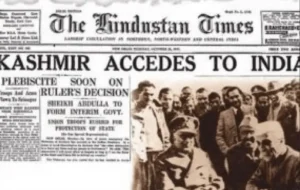
However, India maintains that it only sent troops into Kashmir on October 27, 1947, in response to the invasion by Pakistani tribal fighters on October 22 and following the formal request for military assistance from the then Maharaja of Jammu and Kashmir, Hari Singh, after he had signed the Instrument of Accession with India.

At that time, Sardar Vallabhbhai Patel, India’s Deputy Prime Minister and Home Minister, had assigned the task of integrating princely states into India to Vappala Pangunni Menon (V.P. Menon).

In his book The Story of the Integration of the Indian States, V.P. Menon claims that the main attacking force consisted of “between 5,000 and 6,000 Afridis, Wazirs, Mehsuds, Swatis, and other frontier tribesmen, along with a number of ‘on-leave’ Pakistani soldiers.”

He further writes that these forces, traveling in “200 to 300 trucks,” were “led by a few regular military officers familiar with the terrain of Kashmir” and advanced from Abbottabad in Pakistan’s North-West Frontier Province (now Khyber Pakhtunkhwa) along the Jhelum Valley Road toward Kashmir.

Andrew Whitehead, in his extensively researched book A Mission in Kashmir, also details this tribal invasion, describing the chaos, violence, and the rapid advance toward Muzaffarabad and Baramulla. However, he notes that there is no direct evidence of the formal involvement of the Pakistani Army in the operation at that stage — suggesting that the invasion was semi-organized, not a state-declared military intervention.

This tribal offensive ultimately became the triggering event that pulled both newly independent nations — India and Pakistan — into their first war over Kashmir, a conflict that continues to shape South Asia’s geopolitics to this day.

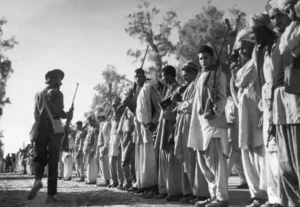
Tribal militias waiting for trucks and weapons to march toward Kashmir

When the tribal chief Fakir of Appi prevented his followers from going to Kashmir for “jihad,” the Pir of Wana offered the services of his followers, saying they would “act alongside Pakistan at this crucial moment in the history of Islam.”

The Pir of Wana — who was nicknamed the “Baghdadi Pir” — told Margaret Parton of the New York Herald Tribune in an interview that if Kashmir became part of India, “we will bring one million tribesmen to Kashmir for jihad.”

He also said that “if we are not allowed to pass through Pakistan, we will move north through the mountains of Chitral.”

“We will go with our rifles and guns and save our Muslim brethren from the whim of the Hindu Maharaja,” he said.

Similarly, the Pir of Manki Sharif also preached “jihad in Kashmir.” He was a local leader of the Muslim League and played a major role in campaigning for the NWFP’s (then Province of the Frontier) accession to Pakistan. He had about 200,000 followers, spread beyond any single locality.

Whitehead writes that the rebellion “was being linked to the territory of Pakistan but the leaders of the new nation could not give them support through their regular armed forces.”

Sir George Cunningham, the Governor of the Frontier Province, recorded in his diary (now in the British Library) the growing alarm: “I have warned everyone — Afridis and Mehmuds among them — that this could lead to a war between India and Pakistan.”

But Cunningham’s warning had no effect. The provincial Chief Minister Khan Abdul Qayyum Khan privately declared that he supported the armed men going to Kashmir, although he agreed that the police and other officials should not be involved in the operation.

A member of the Muslim National Guard, Khurshid Anwar, wrote that D-Day had been set for Tuesday, October 21, but was postponed until the following morning. In several historical accounts, Khurshid Anwar is described as the military commander of the attack on the Valley.

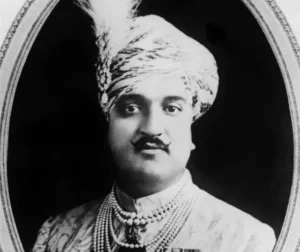
Maharaja Hari Singh, whose Dogra dynasty had ruled over Jammu and Kashmir for nearly a century
Maharaja Hari Singh, whose Dogra dynasty had ruled over Jammu and Kashmir for nearly a century.

Later, he told Dawn newspaper that he had four thousand men with him and that they faced no significant resistance as they advanced deep into Kashmiri territory.

On the other hand, the State Forces of Kashmir offered limited resistance, as a large number of Muslim soldiers from Poonch had already deserted their ranks.

However, Whitehead writes that the initial uprising against the Maharaja was local in nature and had no tribal involvement whatsoever.

“The Maharaja of Kashmir had gained a poor reputation because of his treatment of his Muslim subjects… The State Forces were accused of atrocities against Muslims in the Jammu region. Above all, his delay in deciding which dominion to join had intensified suspicions that Kashmir was leaning toward India — despite its geography and Muslim majority pointing toward Pakistan.”

He further writes:

“The region of Poonch, located northwest of Jammu but outside the Kashmir Valley, had its own grievances — particularly over loss of local authority and heavy taxation. Around 60,000 men from this area had served in the Second World War, and many of the Maharaja’s soldiers were recruited from here. By late August 1947, the rebellion against the Maharaja had already taken root.”

Quoting one of the leaders of this movement, Whitehead notes:

“By late September 1947, we had gained considerable territory. I was then administering it from my own district of Poonch. The State Forces were fighting against their own people. No one had yet come from across the border.”

In the nearby area of Rawalakot, Sardar Muhammad Ibrahim Khan, a lawyer in Srinagar and a prominent leader of the pro-Pakistan Muslim Conference, escaped from the state, settled in Murree, Pakistan, and — with the help of soldiers who had deserted the Maharaja’s army — launched an armed struggle against the Dogra regime.

According to Whitehead’s account, as early as September 1947, Brigadier Akbar Khan, who was then serving as the Director of Weapons and Equipment at the Pakistan Army Headquarters, established contact in Murree with Sardar Ibrahim Khan and several others.

“It appears,” writes Whitehead, “that Akbar Khan decided on his own initiative to support the pro-Pakistan uprising in Poonch. According to Akbar Khan himself, he assisted by providing four thousand military rifles that had originally been sanctioned for release to the Punjab Police. He also supplied a large consignment of old ammunition, which had been declared obsolete and was scheduled to be dumped at sea.”

By late October 1947, Sardar Ibrahim Khan was appointed as the President of the Provisional Government of the Pakistan-administered region of Jammu and Kashmir, marking the beginning of a new political and military phase in the unfolding Kashmir conflict.

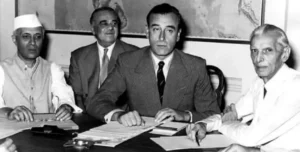
Britain wanted the princely states themselves to decide whether they wished to join India, join Pakistan, or remain independent.

Whitehead notes that while both Abdul Qayyum Khan and Akbar Khan may have disagreed on who initiated the uprising, they shared the same opinion regarding the limited involvement of the tribal fighters.

According to Abdul Qayyum Khan, “The movement suffered greatly because those tribesmen were uncontrollable.”

“When they entered my area, an entire village was vacated to accommodate them, and guards were posted around it. I did not allow them to participate in the fighting. But elsewhere in the state, they caused considerable damage.”

“Because of their lack of discipline, they resorted to looting. Each tribe had its own commander. The Wazirs and Mehsuds, in particular, would not listen to anyone. In Muzaffarabad, I even exchanged fire with them myself.”

At first, the tribal forces may have believed that they would reach their objective — the Kashmiri capital, Srinagar, about 100 miles from Muzaffarabad — in time to celebrate Eid there on October 26, 1947.

Whitehead writes that their advance did not stop at Baramulla. Even after October 27, as hundreds of Indian troops arrived daily by air, the tribesmen managed to reach within a few miles of central Srinagar and the airstrip itself.

In his book Raiders in Kashmir, Akbar Khan wrote:

“They (the tribesmen) first appeared out of the deep fog that hung over the Kashmir Valley. They moved silently, cautiously, yet easily and in darkness. It was midnight on October 29, 1947. After entering the state with lightning speed, they covered 115 miles in five days, and were now only four miles away from the twinkling lights of Srinagar.”

“As the attackers advanced, they began to encounter the streams and waterways surrounding Srinagar. Eventually, it seemed the only way forward was to take the direct road.”

Sardar Ibrahim Khan later remarked that “they could not be expected to fight, capture, and then hold territory. When the tribal lashkars retreated from Srinagar, there were no troops to occupy and secure the evacuated areas.”

“The first Indian troops arrived by air,” he added, “and once war broke out with Pakistan, reinforcements began pouring in through Gurdaspur.”

According to historian Alexander Rose, Kashmir, with its population of 1.4 million Muslims, located at the southern crossroads between India and Pakistan, was destined — by both geography and religion — to be part of Pakistan.

However, during the partition of India, Sir Cyril Radcliffe, who was responsible for demarcating the borders, awarded only the Shakargarh tehsil to Pakistan, while the rest went to India. By giving Pathankot tehsil to India, he effectively granted India a land route to Kashmir — a decision that would alter the subcontinent’s history forever.

The award named after Sir Cyril Radcliffe was made public only after August 15, 1947.

If you look at the wooden board in the courtroom of the Deputy Commissioner of India’s northeastern district of Gurdaspur, which lists the officers who served there from 1852 to 1947, you will find that the shortest tenure belongs to Mushtaq Ahmed Cheema, who served for only three days before Chunnilal became the Deputy Commissioner — that is, before Gurdaspur became part of India on August 17, 1947.

Explaining this brief posting, journalist Jupinderjit Singh wrote in The Tribune India that until August 17, 1947, it was widely believed that this Muslim-majority district of Punjab would fall within Pakistan’s borders.

During British rule, Gurdaspur district was part of the Lahore Division, consisting of its four tehsils — Gurdaspur, Batala, Shakargarh, and Pathankot.

Dominique Lapierre and Larry Collins, in their book Freedom at Midnight, wrote that without Gurdaspur, India would not have had a viable land access route to Kashmir.

In his article Paradise Lost: The Ordeal of Kashmir for The National Interest, Alexander Rose wrote that Radcliffe later explained that factors such as “disruption in railway, communication, and water systems” undermined the basic claims of contiguous majority areas.

“But Pakistan believed that Nehru persuaded Mountbatten to pressure Radcliffe into altering the boundary.”

According to Rose, in 1992, Christopher Beaumont — the last surviving British official with deep knowledge of the partition process and Radcliffe’s private secretary — revealed that Radcliffe had originally awarded two contiguous tehsils to Pakistan, but during lunch, Mountbatten got the Radcliffe Award changed.

Rose further noted that India maintains its army did not mobilize until the Maharaja voluntarily signed the Instrument of Accession as the price of Delhi’s swift intervention. On October 27, as troops arrived at Srinagar airfield by air and moved forward to “defeat the raiders,” Mountbatten formally accepted the Maharaja’s decision, and Kashmir officially became part of India.

“But Pakistanis ask how Hari Singh could have signed the document on October 26 when it is known that he was traveling by motorcade from Srinagar to his winter capital Jammu that day, and thus was out of contact. Therefore, Indian troops were already advancing toward Kashmir before the document was signed or accepted, suggesting that the Maharaja’s consent was obtained under pressure.”

Wighthead and Prem Shankar Jha are among the writers who have expressed doubt about the legitimacy of the accession.

In Mountbatten’s letter accepting the Instrument of Accession, he wrote, “It is my Government’s wish that, as soon as law and order have been restored in Kashmir and its soil cleared of invaders, the question of the State’s accession should be settled by a reference to the people.”

Following the ceasefire, in addition to UN resolutions supporting Kashmiris’ right to self-determination, Nehru himself announced his intention for a plebiscite on multiple occasions.

Rose wrote that initially, India was willing to hold such a plebiscite but later abandoned the idea upon realizing that the non-Hindu majority was unlikely to vote in its favor.

Why Did the Tribal Fighters Fail?

In his book Understanding Kashmir and Kashmiris, Christopher Snedden writes that after October 26, 1947, Maharaja Hari Singh rapidly lost significance in the growing dispute between India, the Indian administration of Jammu and Kashmir, and his own former princely state.

A similar situation, Snedden notes, befell the tribal raiders. According to Andrew Whitehead, despite India flying in hundreds of troops daily after October 27, the tribal forces managed to advance to within a few miles of Srinagar’s city center and the airstrip.

About a month after these tribal fighters were driven out of the Kashmir Valley, Khurshid Anwar, a member of the Muslim National Guard, was being treated for his injuries at a hospital in Karachi. Speaking to Dawn newspaper, he complained that the Pakistani government’s inaction had been a major obstacle to their efforts in Kashmir.

Whitehead writes that Khurshid Anwar was “deeply bitter against the government of Pakistan for its failure to assist the tribesmen in their brave attempt to seize Srinagar.”

Later, in Karachi, Khurshid Anwar reportedly discussed the grave shortcomings of the tribal forces with a British expert on the North-West Frontier. “He was very harsh on the Mehsud tribesmen,” Whitehead notes, “whom he blamed for both the worst atrocities and the disastrous delay in the initial attack.”

Snedden further explains that “the Pashtuns were good fighters but were also extremely undisciplined.”

“Immediately after entering Jammu and Kashmir on October 22, 1947, instead of advancing directly toward Srinagar to capture it, the tribesmen became engaged in looting and killing. Many foreigners were also caught in the violence, which India effectively used in the international press to its advantage. By the time the Pashtuns finally reached the outskirts of Srinagar on October 27–28, 1947, the Indian Army had secured the city’s airport and taken up defensive positions to hold off the advancing tribesmen until reinforcements arrived.”

The Indian soldiers’ initial mission was to secure the Srinagar airfield and prevent it from falling into the hands of the Pashtun raiders. “They achieved both objectives,” Snedden writes. “The swift arrival of Indian troops in Srinagar and their success in securing the city ended the slow, looting-obsessed advance of the Pashtuns, whose chance to capture the summer capital was lost.”

In the following days, Snedden notes, India used aerial bombardment to drive the Pashtun fighters out of the Kashmir Valley.

However, he adds that west of Uri, in the Muzaffarabad tehsil, the more disciplined Azad forces successfully resisted the Indian Army. “It was because of the capabilities of these Azad troops,” he writes, “that some Indians came to believe that the Pakistani Army was already supporting them — but that was not the case.”

According to Snedden, “The Pakistan Army formally entered Jammu and Kashmir in May 1948 to assist the Azad forces — marking the beginning of the first war between Pakistan and India.”

Sources:

  • BBC Archives: The 1947 Tribal Invasion of Kashmir

  • “Freedom at Midnight” by Dominique Lapierre and Larry Collins

  • The National InterestParadise Lost: The Ordeal of Kashmir by Alexander Rose

  • “Raiders in Kashmir” by Brigadier Akbar Khan

  • W. G. Whitehead Papers, British Colonial Records

  • Tribune India Historical Reports

  • United Nations Resolutions on the Kashmir Dispute (1948–1949)

Prime Minister Anwar-ul-Haq Faces No-Confidence Motion: Political Turmoil Deepens in Pakistan-Administered Kashmir

0

Political uncertainty continues to grip Pakistan-administered Kashmir as opposition parties move forward with a no-confidence motion against Prime Minister Chaudhry Anwar-ul-Haq. The motion comes barely weeks after widespread street protests shook the region, leaving behind a tense and fragile political atmosphere that has now spilled into the assembly.

The current crisis marks yet another episode in a series of leadership changes since the 2021 elections, which saw two prime ministers removed before Anwar-ul-Haq took office.

The 2021 Azad Jammu and Kashmir (AJK) elections brought the Pakistan Tehreek-e-Insaf (PTI) to power with 26 seats, supported by nine independent members. However, internal divisions soon fractured the party, leading to multiple forward blocs. PTI’s first prime minister, Abdul Qayyum Niazi, was ousted through a no-confidence motion, followed by Tanveer Ilyas’s disqualification under a court order.

Anwar-ul-Haq, who emerged from a PTI forward bloc, later assumed the role of prime minister. But following deep internal rifts and the fragmentation of PTI, the Pakistan Peoples Party (PPP) has now become the largest party in the AJK assembly. PPP has officially endorsed the no-confidence motion against Anwar-ul-Haq, joined by PTI defectors—including former Prime Minister Tanveer Ilyas.

Party Strength in the AJK Assembly

To form a government in AJK, a party or coalition must secure at least 27 of the assembly’s 53 seats.
According to the latest numbers:

  • PPP holds 17 seats

  • PML-N has 9

  • PTI retains 4

  • PTI (Barrister Sultan group) holds 7

  • PTI (Anwar-ul-Haq group) has 8

  • The Refugees Group has 4

  • Muslim Conference, JKPP, and Ulema-e-Mashaikh each hold 1 seat

With growing defections and shifting alliances, the PPP now appears to have the numbers needed to remove the prime minister.

From Street Protests to Parliamentary Crisis

The latest political challenge emerged soon after mass protests swept through the region last month. These demonstrations—led by the Jammu Kashmir Joint Action Committee (JKJAAC)—forced the government to accept several of the protesters’ demands after violent clashes resulted in deaths and injuries.

Both the PPP and the Pakistan Muslim League-Nawaz (PML-N) have blamed Prime Minister Anwar-ul-Haq for mishandling the crisis. Following negotiations between the Pakistani government’s special committee and Kashmiri representatives, PPP leaders said the agreement reached with the JKJAAC would be honored.

PPP leader and former Prime Minister Raja Pervez Ashraf stated after a meeting with President Asif Ali Zardari that “the agreed terms will be implemented, and all legitimate demands have been accepted.” Committee member Qamar Zaman Kaira echoed the sentiment, saying, “The current government has become a source of crisis rather than a solution. We need political stability and fair elections.”

Opposition’s Position and Pakistani Involvement

The Pakistani government in Islamabad has taken a keen interest in resolving the political impasse. PML-N’s Rana Sanaullah, also part of the committee, said, “This government has failed to fulfill its responsibilities. A new setup is necessary to ensure good governance for the people of Kashmir.”

Political observers, however, warn that any new government will face immense challenges—particularly implementing the JKJAAC’s agreement, revising voter lists, and ensuring transparent elections.

Defections and Shifting Alliances

Following the protests, the PPP formally withdrew from the ruling coalition, citing a breakdown in trust between the government, political parties, and the public. Soon after, the PML-N also joined the opposition benches.

Members representing the “Refugees of Kashmir” group, including Akbar Ibrahim, accused Prime Minister Anwar-ul-Haq of conspiracy against their interests. “We have withdrawn our support from the government,” he said, adding that his group would support PPP in forming a new administration.

With several refugee ministers resigning after the protests, the government lost its parliamentary majority. PPP’s Information Secretary Sardar Javed Ayub confirmed that “the prime minister has been given an opportunity to resign; otherwise, the no-confidence motion will be tabled.”

He added that PPP Chairman Bilawal Bhutto Zardari will announce the new leader of the house, with potential candidates including Assembly Speaker Chaudhry Latif Akbar, party president Chaudhry Yasin, and Sardar Yaqoob Khan.

Latif Akbar told media, “We already have the support of 28 members. The prime minister said if we reached that number, he would resign—so now he should step down voluntarily.”

Growing Criticism of Governance

Akbar admitted that the government’s delay in responding to protest demands escalated tensions: “The government should have accepted legitimate demands earlier. By ignoring small issues, it allowed a full-scale movement to grow.”

He argued that the administration failed to connect with citizens and lost legitimacy, paving the way for the rise of the JKJAAC: “This was never a political government; it was destined to fail.”

Akbar vowed to restore confidence, promising that a new government would deliver in six months and hold transparent elections.

Voices from the Opposition

Former AJK Prime Minister Raja Farooq Haider of the PML-N believes fresh elections are the only solution. “This assembly’s term ends in July 2026. The best way forward is to seek a new mandate,” he said.

Haider accused the 2021 elections of being engineered: “A party with no genuine representatives was brought into power through manipulation. That party has now changed three prime ministers.”

He acknowledged that traditional political parties have failed to address public concerns, allowing traders and civil activists to fill the void. “We have decided not to be part of any government formation or its downfall—we will remain in opposition,” he said.

A Decline in Public Trust

Former PTI Prime Minister Abdul Qayyum Niazi, who was ousted earlier, admitted that political parties have lost credibility. “People will remember that they were abandoned during difficult times,” he said.

Niazi, however, believes PTI still has grassroots support, especially due to its alignment with the JKJAAC. “Unlike other parties, PTI fully supported the public movement. That will matter in the next election,” he added.

Once commanding 26 seats, PTI now holds only four, with many members joining rival blocs.

Structural Problems in AJK’s Political System

The crisis has also reignited debate about AJK’s governance model. Political analyst Zahid Amin argues that “the parliamentary system itself is unsuitable for Kashmir.”

He told media that “real decision-making doesn’t happen in Muzaffarabad. From Islamabad to Larkana and Jati Umra, external influence dictates politics here.”

According to Amin, “People have lost faith in state parties, effectively surrendering the right of self-governance. When decisions come from elsewhere, local leaders inevitably clash to please their patrons.”

He warned that if the JKJAAC boycotts upcoming elections, “polling stations might remain empty.”

Amin suggested a shift toward a leaner presidential system with fewer advisers, citing earlier models under leaders like K.H. Khurshid and Sardar Abdul Qayyum Khan. “The parliamentary setup is too expensive and inefficient,” he said. “The recent movement shows the public has rejected this system.”

The Rise of the Jammu Kashmir Joint Action Committee (JKJAAC)

The JKJAAC, which spearheaded the recent mass protests, insists it remains a non-political body focused on public rights. Member Shaukat Nawaz Mir told media that the committee’s 29 members unanimously decided not to boycott future elections but have not yet committed to entering politics.

“We’ll wait and see if the politicians can make independent decisions,” Mir said. “We have no political affiliations, though during the movement, PTI supported us while other major parties told their members not to.”

He added that the committee has built strong local networks and stands ready to mobilize again if promises are broken: “If the new government fails to honor the agreement, we could launch another long march.”

For now, the JKJAAC is monitoring the Pakistani

government’s compliance with key pledges, including limiting the cabinet to 20 members and excluding refugee representatives. “This first step will show whether the government intends to keep its word,” Mir concluded.

Conclusion

The no-confidence motion against Prime Minister Anwar-ul-Haq underscores the fragility of governance in Pakistan-administered Kashmir. Years of political fragmentation, weak autonomy, and growing public disillusionment have converged to produce a deep crisis of legitimacy.

Whether through new elections or systemic reform, AJK now faces a defining moment—one that will determine if its leadership can restore public trust or if external and internal divisions will continue to shape its troubled politics.

Saudi Arabia to Build the World’s First Sky Stadium in NEOM

0

Jeddah: Saudi Arabia is preparing to build the world’s first “Sky Stadium” — an architectural marvel suspended 350 meters (1,150 feet) above the ground in the futuristic city of NEOM.

According to international media reports, the NEOM Sky Stadium will redefine global sports architecture, symbolizing Saudi Arabia’s rapid transformation under Vision 2030. The stadium, expected to open in 2032, may also host matches of the FIFA World Cup 2034, for which Saudi Arabia has been confirmed as the host nation.

An Engineering Marvel in the Sky

The proposed Sky Stadium will have a seating capacity of 46,000 spectators and will be powered entirely by renewable energy sources, including solar, wind, and hydroelectric systems — aligning with NEOM’s goal of becoming a fully sustainable city.

Early designs suggest that the stadium will appear to float between mountain ranges, offering panoramic views of the desert and the Red Sea. The project aims to merge cutting-edge technology, sustainability, and luxury, creating what developers call “a new frontier in sports and entertainment.”

More Than Just Sports

Reports circulating on social media claim that the NEOM Sky Stadium will serve as a multi-purpose hub — blending sports, culture, and entertainment in one futuristic setting.

Sources close to the project indicate that the stadium will host professional football clubs for both men and women, along with year-round global events, concerts, and festivals, reinforcing Saudi Arabia’s ambition to become a regional and global center for culture and innovation.

A Symbol of Saudi Ambition

Analysts say the Sky Stadium reflects Riyadh’s ongoing efforts to position Saudi Arabia as a global destination for tourism, technology, and sports diplomacy. Since launching Vision 2030, the Kingdom has invested billions in projects like The Line, Trojena, and Oxagon, all part of the NEOM megacity development along the Red Sea.

“Saudi Arabia is not just investing in infrastructure — it’s rebranding its identity on the global stage,” said one Middle East analyst, calling the Sky Stadium “a bold step that merges national pride with futuristic ambition.”

Sustainability and Innovation

NEOM officials emphasize that the entire structure will rely on green energy, echoing Saudi Arabia’s pledge to achieve net-zero carbon emissions by 2060. The Sky Stadium’s design integrates smart infrastructure, AI-based crowd management, and zero-waste technology.

Environmental experts, however, have urged transparency regarding the project’s ecological impact. “Sustainability must extend beyond the aesthetics of innovation,” said an environmental researcher based in the Gulf region. “The success of NEOM’s vision depends on its ability to deliver green promises at scale.”

Global Attention and Curiosity

Since the project’s concept images surfaced online, the NEOM Sky Stadium has sparked intense global curiosity. Supporters hail it as the future of sports, while critics question its feasibility and cost. Still, Saudi Arabia’s determination to execute the unprecedented project reflects a national confidence rarely seen in the region’s past.

Looking Ahead

If completed as planned, the NEOM Sky Stadium could become a landmark of the 21st century, redefining not just the skyline of Saudi Arabia but also the concept of where — and how — the world plays its games.

For now, all eyes remain on NEOM — where desert, sea, and sky are being reimagined into a vision of tomorrow.

Best Free Anime Websites to Watch Anime Online in 2026: A Safe & Legal Guide

0

Once a niche subculture, anime has exploded into a global entertainment powerhouse. From the bustling streets of Tokyo to homes in New York, São Paulo, and Karachi, the unique storytelling, vibrant artistry, and deep character development of Japanese animation have captivated a worldwide audience. This surge in popularity has created an insatiable demand for accessibility, leading to a boom in platforms where fans can watch anime online free.

However, the digital landscape is a double-edged sword. While countless free anime websites have emerged, navigating them safely and legally is crucial. The days of relying on sketchy, malware-ridden pirate sites are fading as the industry shifts towards legitimate, ad-supported models that support the creators.

This definitive guide for 2025 cuts through the noise. We have curated a list of the best legal anime streaming sites that offer free access, analyzing their libraries, features, and regional availability to help you enjoy your favorite shows without compromise.

Why Anime Has Captured a Global Audience

The international appeal of anime is no accident. Unlike much of Western animation, which has historically been geared toward children, anime encompasses every conceivable genre for all age groups—complex political dramas, heart-wrenching romances, philosophical sci-fi, and intense psychological thrillers.

Platforms like Netflix and the dedicated best anime streaming sites have demolished geographical barriers, introducing masterpieces like Attack on TitanDemon Slayer, and Jujutsu Kaisen to millions. The universal themes of perseverance, friendship, and grappling with identity, combined with unique cultural perspectives, resonate on a fundamental human level, creating a passionate, borderless fandom.

The Critical Divide: Legal vs. Illegal Anime Streaming

Before diving into our list, it’s essential to understand why choosing legal platforms matters.

Illegal (Pirate) Sites:

  • Harm to the Industry: They generate no revenue for the studios, animators, and creators who pour their talent into producing the content.

  • Security Risks: These sites are often riddled with malicious ads (malware), phishing pop-ups, and can compromise your personal data.

  • Poor Experience: Unreliable video quality, broken subtitles, and dead links are common.

  • Legal Consequences: In many countries, accessing and streaming from these sites is illegal and can carry penalties.

Legal & Ad-Supported Platforms:

  • Support the Creators: Ad revenue, however small, contributes to the industry, ensuring your favorite studios can continue making new anime.

  • Safe & Secure: These are legitimate businesses that prioritize user safety and data security.

  • High-Quality Experience: Enjoy reliable HD streaming, accurate subtitles, and a stable, user-friendly interface.

  • Legal Peace of Mind: You can stream without worrying about legal repercussions.

The following free anime platforms represent the best of the legal and safe approach to watching anime online.

The Top 10 Free Anime Websites for 2025

Here is our ranked list of the best and safest free anime websites for a global audience.

1. Crunchyroll (with Free Tier)

Availability: Widespread globally, with some regional library variations.
Description: As the industry giant now merged with Funimation, Crunchyroll is the gold standard for anime streaming. Its free, ad-supported tier is a legitimate way to access a massive part of its library.

  • Pros: Huge catalog of both subbed and dubbed anime; simulcasts new episodes shortly after they air in Japan; high-quality video player; strong community features.

  • Cons: The free tier has a limited selection of dubs; ads can be frequent; newest episodes are often locked behind a premium paywall for a limited time.

2. Tubi TV

Availability: Primarily the U.S., Canada, Australia, and Mexico.
Description: A massive free streaming service for movies and TV, Tubi hosts a surprisingly robust and curated anime section. It’s a hidden gem for both classics and hidden treasures.

  • Pros: Completely free with a large, legal library; excellent user interface; no registration required to start watching; available on virtually every smart device.

  • Cons: Contains non-anime content, which can be a pro or con; library is not as deep as dedicated anime sites; availability is limited outside its core markets.

3. YouTube (Official Channels)

Availability: Global.
Description: Many anime producers and distributors have official YouTube channels where they upload full series, movies, and extensive previews for free, supported by ads.

  • Pros: Utterly safe and legal; often features complete series for free; accessible on any device; no sign-up needed.

  • Cons: The catalog is fragmented across different channels; video quality may vary; not a centralized, comprehensive library.

4. Pluto TV

Availability: U.S., Europe, and parts of Latin America.
Description: This service operates like live television, with curated channels streaming content 24/7. It has several dedicated anime channels, providing a passive, “lean-back” viewing experience.

  • Pros: Fun, channel-surfing experience; completely free; great for discovering new shows without having to choose.

  • Cons: No on-demand control for most content; you have to wait for a show to air on its channel; ad breaks are scheduled like traditional TV.

5. Anime-Planet (with VIZ Media)

Availability: Global, but some videos may be region-locked.
Description: Anime-Planet is a hybrid platform, serving as both a massive anime database and a legal streaming site. It partners with VIZ Media and other rightsholders to offer a large selection of free, ad-supported anime.

  • Pros: Integrated with a powerful database for tracking and recommendations; legal and safe; strong community.

  • Cons: The streaming interface isn’t as polished as dedicated apps; the free library is a mix of its own player and links to other legal sites.

6. HIDIVE

Availability: Select regions including the U.S., Canada, U.K., and others.
Description: A major competitor to Crunchyroll, HIDIVE offers a curated selection of popular, classic, and niche anime. It provides a free, ad-supported tier with a portion of its catalog.

  • Pros: Focuses on a diverse catalog, including ecchi and mature titles; offers both sub and dub; simulcast service for new shows.

  • Cons: The free tier is more limited than Crunchyroll’s; not as widely available globally.

7. RetroCrush

Availability: U.S. and Canada.
Description: As the name implies, this platform is a treasure trove for classic anime from the 70s, 80s, and 90s. It’s completely free and dedicated to nostalgic gems.

  • Pros: Specialized in hard-to-find classics; completely free and legal; simple, ad-supported model.

  • Cons: Very niche focus; limited to North America.

8. Bilibili (Global Version)

Availability: Southeast Asia and other select markets; the main Chinese site is region-locked.
Description: Dubbed the “YouTube of China,” Bilibili is a massive video platform that has aggressively acquired licenses for anime and even produces its own. Its global version is a legitimate and growing player.

  • Pros: Huge library, including exclusive titles; strong community features; legal and high-quality.

  • Cons: The global version’s library is smaller than its Chinese counterpart; availability is still expanding.

9. Peacock (Free Tier)

Availability: United States.
Description: NBCUniversal’s streaming service has a free, ad-supported tier that includes a selection of anime from the Shout! Factory and VIZ Media libraries.

  • Pros: A legitimate way to watch some popular series for free; platform is reliable and safe.

  • Cons: The anime selection is small compared to dedicated services; geo-restricted to the U.S.

10. AsianCrush

Availability: U.S. and Canada.
Description: While focused on broader Asian cinema and drama, AsianCrush has a solid selection of anime films and series, all available for free with ads.

  • Pros: Great for fans of anime films; legal and safe; easy-to-use platform.

  • Cons: Anime is only part of its broader catalog; limited regional availability.

Free vs. Paid Streaming: What Do You Get?

While the free anime websites listed above are excellent, paid subscriptions (like Crunchyroll Premium, HIDIVE Subscription, or Netflix) offer significant upgrades:

  • Ad-Free Viewing: The most significant quality-of-life improvement.

  • Simulcasts: Access to new episodes within hours of their Japanese broadcast.

  • Larger Libraries: Full access to the platform’s entire catalog, including dubs.

  • Higher Video Quality: Often up to 1080p or 4K, without restrictions.

  • Offline Viewing: Download episodes to watch on the go.

For a casual viewer, the free tiers are sufficient. For a dedicated fan, a paid subscription is often worth the investment.

Best Alternatives if Your Primary Site is Blocked

Geo-restrictions are a common hurdle. If a service isn’t available in your region (e.g., Pakistan, India, or the Middle East), here are your best legal options:

  1. Check Official YouTube Channels: This is your most universally accessible bet.

  2. Use a Global Service’s Free Tier: Crunchyroll and Anime-Planet have the widest global reach.

  3. Explore Local Licensors: In regions like South Asia, services like Muse Asia and Ani-One Asia on YouTube legally stream popular simulcasts with subtitles in local languages. These are fantastic, often overlooked resources.

Essential Tips for Watching Anime Safely Online

  1. Stick to the Legitimate List: The sites reviewed here are your safest bet.

  2. Use an Ad-Blocker Cautiously: While effective on some free sites, they often violate the terms of service of ad-supported platforms. Whitelist sites you want to support.

  3. Beware of “Too Good to Be True” Sites: If a site has every anime in 4K with zero ads, it’s almost certainly illegal and risky.

  4. Keep Your Software Updated: Ensure your browser and antivirus software are current to protect against potential threats.

  5. Support the Industry: When you can, subscribe to a paid service or purchase merchandise to directly support the creators you love.

Conclusion: A Bright, Accessible Future for Anime

The world of anime streaming is maturing. The narrative is no longer about finding any source, but about finding the right source. The growth of high-quality, ad-supported legal anime streaming options marks a positive shift towards sustainability for the industry and safety for the global fanbase.

As we look to 2025 and beyond, the trend is clear: accessibility will continue to improve. With more platforms competing and local licensors rising to meet regional demand, the future is bright for fans everywhere. By choosing legitimate free anime platforms, you are not just enjoying world-class entertainment; you are investing in its future, ensuring that the unique art of anime continues to thrive and inspire for generations to come.

Business Listing Sites: The Complete 2025 Guide to SEO, Visibility & Growth

0

In today’s digital-first economy, being discoverable is synonymous with being in business. Imagine a potential customer searching for a “logistics company in Karachi” or a “digital marketing agency in Dubai.” If your business doesn’t appear in those crucial first few search results, you’ve effectively lost a customer to a competitor who is more visible online. This is where business listing sites transform from a mere digital formality into a powerful engine for growth.

Often referred to as online business directories, these platforms are the digital equivalent of the Yellow Pages, but far more dynamic and influential. They are centralized hubs where businesses can list their core information—name, address, phone number, website, and services. However, their modern function extends far beyond a simple listing. In the intricate algorithm of search engines, especially Google, these directories are critical trust signals. A consistent presence across reputable business listing sites tells search engines that your business is legitimate, established, and relevant to specific local searches, directly fueling your local SEO strategy.

This comprehensive guide will delve into why these platforms are indispensable, provide a curated list of the top global and regional directories, and offer a strategic blueprint for leveraging them to generate leads, build brand authority, and secure your spot in the digital marketplace.

What Are Business Listing Sites and Why Do They Matter?

At their core, business listing sites are online databases that compile and display information about businesses, typically categorized by industry, location, or service type. They range from global giants like Google Business Profile to niche, industry-specific directories.

Their importance, however, is rooted in one fundamental digital marketing principle: citation and consistency. A “citation” is any online mention of your business’s Name, Address, and Phone Number (NAP). When search engines like Google find consistent NAP information across multiple authoritative sites, it boosts their confidence in your business’s legitimacy and location, leading to higher rankings in local search results.

The benefits are multifaceted:

  • Enhanced Local SEO: This is the primary advantage. Listings create backlinks and solidify your NAP consistency, which are key ranking factors.

  • Increased Online Visibility: Your business appears on multiple platforms, expanding your digital footprint beyond your own website.

  • Improved Brand Credibility: A presence on well-known directories acts as a third-party endorsement, building trust with potential customers.

  • Cost-Effective Lead Generation: Many listings are free, providing a high return on investment by driving targeted, local traffic to your website or physical location.

A Curated Breakdown of Top Business Listing Sites

Navigating the vast landscape of online directories can be daunting. To simplify, we’ve categorized them into global powerhouses and region-specific platforms that are crucial for targeting markets like Pakistan and India.

Global Powerhouses: The Must-Have Listings

These are non-negotiable for any business with an online presence.

  1. Google Business Profile (GBP): The undisputed king of business listing sites. It’s free and directly integrates with Google Search and Maps. A optimized GBP profile is the single most important local SEO asset, enabling features like reviews, posts, and Q&A.

  2. Apple Business Connect: For the vast iOS user base, this directory powers Apple Maps. Listing your business here ensures visibility to millions of Apple device users.

  3. Bing Places for Business: While Google dominates, Bing still holds a significant market share. Submitting your listing here captures that audience and is a quick, free process.

  4. Facebook Business Page: While technically a social network, a Facebook Page functions as a powerful business directory. It facilitates reviews, messaging, and community engagement, and is often indexed by search engines.

  5. LinkedIn Company Page: Essential for B2B companies. It enhances professional credibility, attracts talent, and serves as a platform for industry-specific networking.

Top Free Business Listing Sites with High Domain Authority

Beyond the core platforms, these free directories offer significant SEO value due to their high trust and authority.

  • Yellow Pages (Global): The classic directory that has successfully transitioned online. It remains a trusted source for consumers.

  • Yelp: Particularly influential for restaurants, salons, and local services in North America, but with global recognition.

  • Foursquare & TripAdvisor: Critical for businesses in the travel, hospitality, and leisure industries.

  • Better Business Bureau (BBB): An accreditation that signals trustworthiness, especially in the US and Canada.

  • Chamber of Commerce (Local): Joining your local chamber often includes a listing on their website, a highly trusted local citation.

Regional Focus: Key Directories for Pakistan and South Asia

For businesses targeting South Asian markets, localizing your presence is key.

  • Justdial: A dominant force in India for finding local businesses across all categories.

  • Sulekha: Another major Indian platform, strong in service-based categories like tutors, event planners, and home services.

  • Pakistan Trade Portal & eCommerce Gateway Pakistan: Official and semi-official portals that are valuable for B2B companies and exporters looking to establish a verified presence.

  • Indiamart: A massive B2B marketplace and directory for Indian manufacturers, suppliers, and exporters.

The Tangible Benefits: More Than Just a Listing

Why should businesses invest time in these online business listings? The returns are clear and measurable.

  • Supercharged Local SEO: As outlined, the NAP consistency from these listings is a cornerstone of local search ranking algorithms. The more high-quality citations you have, the stronger your local search presence becomes.

  • Direct Lead Generation and Increased Traffic: A listing is a direct pathway for a motivated customer to find you. Many directories show high “conversion intent,” meaning users are ready to call, email, or visit.

  • Building Unshakeable Brand Authority: Positive reviews on these platforms act as social proof. A business with numerous positive reviews across several directories is perceived as more reliable and authoritative than one with no digital footprint.

  • Insights into Customer Behavior: Many platforms, like Google Business Profile, provide analytics on how customers found your listing (search queries) and what actions they took (calls, direction requests), offering invaluable market intelligence.

A Step-by-Step Guide to Effective Business Listings

Simply creating a listing is not enough. Optimization is key. Follow this strategic approach:

  1. Audit and Consolidate Existing Data: Search for your business name online. Do inconsistent listings already exist? Use tools like BrightLocal to audit your current citation landscape.

  2. Gather and Standardize Your Assets:

    • NAP: Ensure this is 100% consistent everywhere.

    • Website URL: Use a trackable link if desired.

    • Business Description: Craft a unique, keyword-rich description for each platform.

    • Categories: Choose the most relevant categories on each site.

    • Media: High-resolution photos of your logo, premises, team, and products.

  3. Claim and Optimize Your Core Profiles: Start with Google, Apple, and Bing. Fill out every single field possible.

    • Example: For a cafe in Lahore, your Google Business Profile should include:

      • Name: The Chai Corner (not “The Best Chai Corner in Lahore!”).

      • Category: “Cafe” and “Tea House.”

      • Description: “A cozy cafe in Gulberg offering premium karak chai, specialty coffees, and homemade pastries. Free Wi-Fi available.”

      • Attributes: “Dine-in,” “Takeaway,” “Outdoor Seating.”

      • Photos: High-quality images of the interior, a cup of karak chai, and your pastry display.

  4. Expand to Industry and Niche Directories: Is your business a law firm? List on Avvo or FindLaw. A hotel? Ensure you’re on Booking.com and TripAdvisor.

  5. Manage and Maintain: The work doesn’t end after submission.

    • Encourage Reviews: Politely ask satisfied customers to leave a review on your key profiles.

    • Respond to All Reviews: Thank positive reviewers and address negative feedback professionally and promptly.

    • Keep Information Updated: Any change in hours, services, or location must be reflected across all listings immediately.

Common Mistakes to Avoid

Even well-intentioned efforts can backfire. Steer clear of these pitfalls:

  • Inconsistent NAP Information: This is the #1 error. “St. ” vs “Street,” or a slight variation in the business name, can confuse search engines and dilute your SEO efforts.

  • Using Inaccurate Business Categories: Be specific. Choosing “Contractor” when you are a “Plumbing Contractor” misses a crucial targeting opportunity.

  • Creating Duplicate Listings: Having more than one listing for the same business location creates confusion and can penalize your search rankings.

  • Neglecting the Profile After Setup: An incomplete profile with no photos, no responses to reviews, and outdated information looks unprofessional and signals to both customers and algorithms that you are not active.

  • Keyword-Stuffing the Business Name: Never add keywords to your business name field (e.g., “Joe’s Pizza Best Pizza in New York”). This is a direct violation of Google’s guidelines and can get your listing suspended.

The Future of Business Directories: AI and Hyper-Personalization

The static directory of the past is rapidly evolving. The future of business listing sites is being shaped by Artificial Intelligence (AI) and machine learning. We are moving towards:

  • AI-Powered Search and Recommendations: Directories will move beyond basic category search to offer hyper-personalized recommendations based on a user’s past behavior, real-time context, and stated preferences.

  • Voice Search Optimization: With the rise of Alexa, Siri, and Google Assistant, listings must be optimized for natural language queries (“OK Google, find a plumber near me who’s open now”).

  • Integrated Service Platforms: Directories will become less about simple discovery and more about facilitating the entire customer journey—allowing users to book appointments, make payments, and complete transactions directly within the listing.

  • Enhanced Verification and Trust Signals: To combat spam, we will see more rigorous verification processes, perhaps using video or live verification, to ensure the highest quality of data.

Frequently Asked Questions (FAQ)

Q1: Are free business listing sites effective, or should I pay for premium listings?
A: Free listings on high-authority sites like Google, Bing, and many industry directories are extremely effective for SEO and basic visibility. Paid listings can be worthwhile for featured placement, lead generation features, or on highly specialized B2B platforms where your target audience is actively searching.

Q2: How many business directories should I list my business on?
A: Quality over quantity. Focus on the major global sites, the key directories in your region, and 5-10 relevant niche directories. A consistent presence on 30-50 high-quality sites is far more powerful than being on 500 low-quality, spammy sites.

Q3: What is the single most important business listing site?
A: For the vast majority of businesses, Google Business Profile is the most critical due to its direct integration with Google Search and Maps. It should be your top priority for optimization.

Q4: How long does it take to see SEO results from business listings?
A: While it can take a few weeks for search engines to crawl and index your new citations, you may see an improvement in your local search rankings and visibility within 1-3 months, provided your NAP is consistent and the directories have high domain authority.

Best Businesses to Start in Pakistan (2025): A Data-Driven Guide for the New Economy

0

In a nation of over 240 million people, where a vast youth population collides with economic volatility, a quiet revolution is underway. Pakistan’s business landscape is no longer defined solely by traditional industries but is being reshaped by digital transformation, necessity-driven innovation, and a resilient entrepreneurial spirit. From the bustling markets of Karachi to the tech hubs of Lahore and the scenic valleys of the north, a new generation is asking the critical question: which business is best in Pakistan for the future? The answer lies not in a single golden ticket, but in a mosaic of opportunities that leverage technology, address local challenges, and tap into global trends. In the face of inflation and currency fluctuations, innovation and adaptability are becoming the most valuable currencies of all.

Economic Context: Navigating the Terrain of Pakistan in 2025

To understand the best business in Pakistan, one must first grasp the economic currents. The World Bank and the State Bank of Pakistan (SBP) highlight a complex scenario: persistent inflation pressures a shrinking middle class, while a high youth unemployment rate creates a pool of both challenge and potential. The Pakistani rupee’s volatility against the dollar makes import-dependent ventures risky, while simultaneously boosting the competitiveness of export-oriented services and local manufacturing.

However, within these challenges lie seeds of opportunity. The digital economy is booming, with over 90 million 3G/4G users creating a fertile ground for online ventures. Remittances continue to be a financial lifeline, fueling domestic consumption. Furthermore, government initiatives like the State Bank’s schemes for SMEs and the work of the National Incubation Centers (NICs) are providing a scaffold for new enterprises. The most profitable business in Pakistan in 2025 will be one that is lean, digitally integrated, and solves a core need—be it affordability, access, or efficiency.

Top 10 Best Businesses to Start in Pakistan in 2025

After analyzing market trends, consumer behavior, and economic data, here is a ranked list of the most promising best business ideas in Pakistan for the coming year.

1. E-commerce & Niche Online Stores

The pandemic permanently shifted consumer habits, and the e-commerce train has left the station. While large platforms exist, there is immense room for specialized, niche online stores. The key is to move beyond generic products.

  • Opportunity: Selling specialized products like organic baby food, premium leather accessories, traditional handicrafts with a modern twist, or performance gear for Pakistan’s growing cycling and running communities.

  • Model: Utilize platforms like Shopify or Daraz, coupled with targeted social media marketing on Instagram and TikTok. Dropshipping can be a low investment business in Pakistan model to test markets before holding inventory.

2. Freelancing & Digital Services Agencies

Pakistan is already one of the top freelancing nations globally. The next step is to move from individual gigs to branded agencies.

  • Opportunity: Offering packaged services in digital marketing, SEO, video animation, or software development. An agency model provides stability, allows for scaling, and commands higher rates than individual freelancers.

  • Model: This is arguably one of the best online business in Pakistan ideas. Start by consolidating a team of proven freelancers and create a strong portfolio. Platforms like Upwork and Fiverr can be used to find initial clients before moving to direct contracts.

3. Renewable Energy Solutions

With a persistent energy crisis and rising electricity costs, renewable energy is no longer a luxury but a necessity. This sector represents a critical profitable business in Pakistan.

  • Opportunity: Sales, installation, and maintenance of solar energy systems for homes and small businesses. There is also growing demand for solar-powered appliances like water heaters, fans, and agricultural pumps.

  • Model: Partner with reputable manufacturers, obtain technical certifications, and focus on providing transparent costing and reliable after-sales service. Financing options can make your offerings more accessible.

4. Agritech and Organic Farming

Agriculture remains the backbone of Pakistan’s economy, but it is ripe for disruption. Agritech bridges the gap between tradition and modernity.

  • Opportunity: Creating platforms that connect farmers directly to consumers, selling organic produce, or offering tech solutions like IoT-based soil monitoring and drip irrigation systems.

  • Model: Start a brand for organic honey, free-range eggs, or pesticide-free vegetables, marketed directly to urban consumers via social media. Alternatively, develop a service-based model helping farmers optimize yield and reduce waste.

5. Real Estate & Property Technology (PropTech)

Real estate is a perennial favorite, but technology is changing the game. This is a classic sector with a modern twist.

  • Opportunity: Beyond traditional brokerage, there is a need for digital platforms offering virtual property tours, verified listings, data analytics on market trends, and streamlined rental management services.

  • Model: While developing a full-scale platform requires capital, starting a highly specialized, digitally-native real estate consultancy focusing on a specific niche (e.g., commercial properties, overseas Pakistani investments) can be a low investment business in Pakistan entry point.

6. Food & Cloud Kitchens

The food industry is forever booming, but the model is evolving. Cloud kitchens, which handle delivery-only operations, minimize overhead costs.

  • Opportunity: Launching virtual food brands that operate out of a single, low-rent kitchen space, marketed exclusively through food delivery apps like Foodpanda and Cheetay.

  • Model: Focus on a specific, trending cuisine (e.g., Mexican, Korean BBQ, artisanal burgers) or dietary need (keto, vegan). Data from delivery apps can help you quickly adapt menus based on customer preferences.

7. Education Technology (EdTech) & Skill Development

With a young, aspirational population, the demand for quality education and skill-based learning is insatiable.

  • Opportunity: Creating online courses, tutoring platforms, or specialized training institutes focused on high-demand skills like coding, digital marketing, graphic design, or preparation for international exams.

  • Model: This can range from a YouTube channel offering free coding lessons (monetized through ads) to a structured online academy with certified courses. It aligns perfectly with the need for a profitable business in Pakistan that also has social impact.

8. Health Tech & Online Clinics

The healthcare sector is burdened, creating space for tech-enabled solutions.

  • Opportunity: Developing platforms for telemedicine, online pharmacy delivery, mental health counseling, or fitness and wellness apps tailored to the South Asian body type and lifestyle.

  • Model: Partner with licensed doctors to offer remote consultations. Alternatively, create a subscription-based service for personalized workout and nutrition plans.

9. Tourism & Experiential Hospitality

Pakistan’s tourism potential, particularly in the northern areas, is immense. The modern traveler seeks experiences, not just accommodation.

  • Opportunity: Starting a tour operation company focused on adventure tourism (trekking, mountaineering), cultural tours, or setting up a glamping site or eco-friendly resort.

  • Model: Curate unique experiences—like a photography tour of Skardu or a culinary tour of Lahore’s old city—and market them to both domestic and international tourists via Instagram and travel blogs.

10. Logistics & Hyper-Local Courier Services

The e-commerce boom is directly fueling demand for reliable logistics.

  • Opportunity: While large courier companies exist, there is a gap in the market for hyper-local, same-day delivery services within a single city or even specific neighborhoods.

  • Model: Start a service that partners with local restaurants, grocery stores, and small e-commerce businesses to offer fast, reliable delivery. This is a highly scalable best business in Pakistan that can start with a bike and a smartphone.

Low-Investment and Online-First Business Models

For students and young entrepreneurs with limited capital, several low investment business in Pakistan models can provide a launchpad:

  • Social Media Management: Managing Instagram or TikTok accounts for small businesses.

  • Content Writing & Copywriting: Offering blog posts, product descriptions, and SEO content for websites.

  • Dropshipping: As mentioned, a low-risk way to enter e-commerce without managing inventory.

  • Print-on-Demand: Selling custom-designed t-shirts, mugs, and tote bags online.

  • Online Tutoring: Teaching a subject or skill you excel in to students locally or internationally.

The Foundation: Business Education & Incubation in Pakistan

A great idea needs a strong foundation. Pakistan is home to several world-class institutions that are nurturing the next generation of entrepreneurs. The best business universities in Pakistan, such as the Institute of Business Administration (IBA) in Karachi, the Lahore University of Management Sciences (LUMS), and the NUST Business School in Islamabad, provide rigorous academic training. Beyond academia, incubators like the National Incubation Centers (NICs) in major cities, Plan9, and The Nest i/o offer mentorship, seed funding, and networking opportunities that are crucial for turning a best business idea in Pakistan into a viable company.

Expert Opinions: Voices from the Frontlines

“The future of Pakistani entrepreneurship is in solving local problems with globally competitive technology,” says Ayesha Farooq, a venture capitalist focused on South Asian startups. “We are particularly bullish on EdTech and FinTech, as they directly address our demographic dividend and financial inclusion challenges.”

Ali Raza, founder of a successful agritech startup, adds, “Don’t underestimate the non-metro cities. The next wave of growth and innovation will come from Tier-2 cities like Faisalabad, Gujranwala, and Multan, where operational costs are lower and talent is abundant.”

Future Outlook: Balancing Risks and Rewards

The path is not without obstacles. Entrepreneurs must navigate a complex tax regime, an often-unreliable energy grid, and political instability. However, the opportunities are significant. A massive, connected youth population, increasing smartphone penetration, and a growing diaspora eager to invest in homeland ventures create a powerful tailwind. The most successful entrepreneurs will be those who build resilient, adaptable business models that can withstand economic shocks while capitalizing on the country’s digital leap.

The search for the top ten business in Pakistan does not yield a single answer, but a spectrum of possibilities tailored to different skills, capital levels, and passions. From a cloud kitchen in Islamabad to a solar startup in Quetta, the spirit of enterprise is alive and well. This entrepreneurial energy is more than just a means to profit; it is a powerful force for job creation, problem-solving, and national development. From Karachi to Kashmir, Pakistan’s entrepreneurial spirit remains unbroken—shaping not just businesses, but the country’s future.

Best PUBG Names & Clan Ideas for 2025: Forge Your Gaming Identity

In the tense, final circle of a PUBG match, before a single bullet is fired, your name is your first weapon. It flashes on the screen as you secure a victory, it’s seen by the opponents you outmaneuver, and it becomes a legend within your squad. Across the globe, from the internet cafes of Karachi to the gaming lounges of Seoul, the choice of a PUBG username has transcended simple identification. It has become a crucial piece of digital real estate, a compact expression of personality, culture, and ambition in the world’s most popular battle royale game. A best name for PUBG is not just a label; it is the foundation of your virtual brand, a calling card that can inspire fear, camaraderie, or laughter. This deep dive into the art of the PUBG name explores the creative strategies, cultural nuances, and technical tricks to help you craft the perfect identity for the 2025 season.

The Power of a PUBG Name: Identity, Reputation, and Clan Pride

In the anonymous world of online gaming, your username is your avatar’s avatar. It is the primary filter through which other players perceive you. A well-chosen name does more than just identify; it communicates intent.

  • Individuality: Your PUBG name is a declaration of your gaming persona. Are you a lone wolf, a tactical genius, or a comic relief? Names like “Solo_Survivor” or “TheSilentPredator” immediately set a tone.

  • Clan Pride: For teams, a best clan name for PUBG is a banner under which players unite. It fosters a sense of belonging and can be intimidating to opponents. A cohesive set of PUBG names within a clan, often using a common prefix or symbol, signals organization and teamwork.

  • Player Reputation: Over time, a name can become synonymous with skill or a particular playstyle. Earning a “Most Worthy Adversary” or “Dominator” title beside your name elevates your status, making your username a trophy in itself.

As Ahmad R., a top-ranked player from Lahore, notes, “In my squad, we spent more time discussing our clan name than our landing strategy. It’s the first thing the enemy sees. You want a name that makes them check the bushes twice.”

Top 100+ Best PUBG Names for 2025: Curated for Every Persona

Choosing the right name is the first step to establishing your legacy. Here is a curated list of best PUBG names for 2025, categorized to help you find the perfect fit.

Cool PUBG Names 😎

  • PhantomStrike

  • NetherReaper

  • VexX

  • Aethereal

  • OblivionKnight

  • CyborgNinja

  • FrostWraith

  • SpectralShot

  • Mirage

  • QuantumRogue

  • IonCatalyst

  • ShadowDancer

  • Neurotoxin

  • ArcticWolf

  • Bioshifter

Funny PUBG Names 😂

  • CampingIsMyPassion

  • ChickenDinnerSeeker

  • PanManReturns

  • LootGoblin9000

  • SirDiesALot

  • FlashbangBlind

  • MyGrenadeLagged

  • DrPoopFeet

  • NoobMasterFlex

  • CarriedByMySquad

  • RunningWithScissors

  • TeammateFriendlyFire

  • AimBotNotInstalled

  • PleaseDontShoot

  • JustHereForTheLoot

Stylish PUBG Names 💫

  • Seraphim

  • Elysian

  • Zenith

  • Noumenon

  • Iridium

  • Obfuscate

  • Lucent

  • Halcyon

  • Valkyrie

  • Sonder

  • Epiphany

  • Cynosure

  • Incarnate

  • Prophecy

  • Echo

Best Clan Names for PUBG 🛡️

  • Final Circle Enforcers (F.C.E.)

  • The War Council

  • Apex Predators

  • The Untouchables

  • Victory or Die (V.O.D.)

  • Last Breath Legion

  • Stormbringers

  • The Erangel Elite

  • Chaos Theory

  • Phoenix Battalion

  • Silent But Deadly (S.B.D.)

  • The Blue Zone Bandits

  • Immortal Guardians

  • The Headshot Heroes

  • Nightmare Factory

PUBG Names for Boys 👑

  • Warlord

  • TitanSlayer

  • IronWills

  • BaronVonBoom

  • Juggernaut

  • Spartan117

  • Warden

  • Crusader

  • Ronin

  • Ghost

  • Vanguard

  • Orion

  • Maximus

  • Colossus

  • Bishop

PUBG Names for Girls 🌸

  • StormSiren

  • ValkyrieRises

  • LadyHawke

  • CrimsonValkyrie

  • LunaShadow

  • PhoenixFire

  • Artemis

  • Nightshade

  • SilentButDeadly

  • IronMaiden

  • Mystique

  • Nova

  • Serenity

  • Eclipse

  • Aurora

Crafting Your Unique Identity: PUBG Name Generators & Stylish Fonts

Sometimes, the creative well runs dry. This is where a PUBG name generator becomes an invaluable tool. These online generators can produce thousands of combinations based on keywords you input (e.g., “stealth,” “fire,” “speed”). While they provide a great starting point, the key is to use them for inspiration and then customize the output to make it truly your own.

The visual style of your name is just as important as the words themselves. Using a PUBG name style font and special characters can make your name stand out in the kill feed. Most players achieve this by using Unicode symbols.

PUBG Symbols & Aesthetic Text: The Ultimate Guide

Incorporating symbols is a proven way to create a unique and memorable PUBG name. Here are some of the most popular and effective PUBG symbols and how to use them.

Popular PUBG Symbols:

  • 乂 – Often used as a stylish separator (e.g., 乂DarkPhoenix乂).

  • メ – An “X” equivalent with a sharp, angular look (e.g., メNightmareメ).

  • 彡 – Adds a “whoosh” or dynamic element (e.g., Shadow彡).

  • ★ – A classic for signifying elite status (e.g., ★Prodigy★).

  • ♛ – The queen chess piece, denoting royalty (e.g., ♛Warlord♛).

  • ༒ – An ornate, gothic-style symbol (e.g., ༒DemonSoul༒).

  • ☠ – The skull and crossbones, for intimidating names (e.g., ☠PirateKing☠).

  • ️ – A flame emoji for fiery or passionate players (e.g., Blaze️).

How to Use Them:

  1. Copy and Paste: Simply copy the symbol from a reliable website and paste it into the PUBG username change field.

  2. Test for Compatibility: Ensure the symbol displays correctly in the game preview.

  3. Less is More: One or two well-placed symbols are more effective than a cluttered mess. For example, 乂Venom乂 is clean and stylish, whereas ☠༒V̶e̶n̶o̶m̶༒☠ can be overwhelming.

The Cultural Tapestry of PUBG Names: A Global Phenomenon

The names players choose are a fascinating reflection of global youth culture. In South Asia, including Pakistan and India, it’s common to see PUBG names that blend English words with local cultural references, from mythological figures like “Arjuna” or “Rustam” to patriotic motifs. This creates a unique fusion that connects a global platform with local identity.

“PUBG is more than a game here; it’s a social space,” explains gaming analyst Priya K., “The PUBG names you see from this region often carry a weight of aspiration, humor, or regional pride. They are a digital signature for a generation that is globally connected yet locally rooted.”

This trend is universal. A player in Brazil might use a name inspired by a football star, while one in Japan might use a term from anime. The PUBG name becomes a microcosm of the player’s world, a tiny window into their interests, language, and culture, making the global lobby a truly multicultural experience.

Conclusion: Your Name is Your Legacy

In the ever-evolving landscape of PUBG, where metas shift and maps change, your name is one of the few constants. It is the identity you carry from match to match, season to season. Investing time in choosing the best PUBG name is an investment in your digital self. It’s the brand you build on the virtual battlefield, a name that can earn respect, spark friendships, and become synonymous with victory. So, whether you opt for a cool, intimidating alias, a hilarious meme, or a stylish name adorned with symbols, make it count. Your next Chicken Dinner deserves a name worthy of the achievement.

Best WhatsApp Status Ideas for Every Mood: Words That Speak Beyond Messages

0

In the quiet corners of Srinagar, a young artist updates her status to a single line: “Silence, too, has a voice.” In a bustling café in Buenos Aires, a writer shares: “Collecting sunsets and unfinished stories.” At the same moment, somewhere in a London subway, a commuter posts: “Seeking the extraordinary in the ordinary.” This is the new, global language of the soul, spoken not in grand speeches, but in the fleeting, potent space of a WhatsApp status.

What began as a simple feature for indicating availability has evolved into one of the most intimate and public forms of modern self-expression. The WhatsApp status is a digital canvas for millions, a 24-hour window into our inner worlds. It is where we project our philosophies, our heartbreaks, our resistance, and our hopes. From the politically charged alleys of Kashmir to the sun-drenched coasts of California, these brief lines of text form a tapestry of shared human emotion, connecting us in ways that transcend borders and algorithms. This is more than a status; it’s a global conversation.

The Cultural Canvas: More Than Just Words

The humble WhatsApp status carries a weight far beyond its character limit. In an age of digital saturation, it serves as a curated glimpse into identity. It is our emotional weather report, our political stance, our quiet rebellion, and our public declaration of love.

In regions with rich oral and poetic traditions, like Kashmir, the status often becomes a vessel for cultural expression and subtle resistance. A line from a classic poet like Rahman Rahi or Mahmoud Darwish is not merely a quote; it is a statement of identity, a nod to a shared history. A status about “waiting for spring” can carry a dual meaning of hope amidst hardship. Conversely, in the fast-paced corporate hubs of the world, a motivational quote or a witty one-liner becomes a tool for personal branding and connection.

This digital micro-blogging has democratized expression. You don’t need a blog or a social media platform with thousands of followers. Your status is your personal broadcast, your tiny corner of the internet where you can be a poet, a philosopher, or a protester. It is where the personal becomes political, and the universal becomes profoundly personal.

A Curated Collection: Status Ideas for Every Facet of Life

Crafting the perfect status is an art. It should resonate, provoke thought, or offer a moment of connection. Below is a curated collection of status ideas, designed for the myriad emotions and moments that define our lives.

Emotional & Life Quotes 🌍

These statuses reflect the deep, introspective moments of our journey—the joy, the sorrow, and the quiet contemplation in between.

  1. Not lost, just exploring a different path.

  2. The heart is a library of unsaid stories.

  3. Finding galaxies within the quiet.

  4. Learning the delicate art of holding on and letting go.

  5. My soul is a landscape of half-remembered dreams.

Motivational & Aspirational Statuses 💪

For days when you need a push, or when you want to declare your ambition to the world.

  1. Building my empire one day at a time.

  2. My pace, my race, my grace.

  3. Turning my stumbles into my foundation.

  4. Success is a whisper heard only by the persistent.

  5. The ocean is made of drops; greatness of small efforts.

Peace, Freedom & Hope 🕊️

Universal themes that resonate deeply, especially for those in lands where peace is a fervent wish and freedom a daily pursuit.

  1. Breathing in hope, exhaling fear.

  2. My freedom is a state of mind no wall can contain.

  3. Planting seeds of peace in a world of concrete.

  4. One day, the sky will not be watched by barbed wire.

  5. Carrying home in my heart, wherever I go.

Love & Relationships ❤️

For the romantic, the heartbroken, and the gratefully in love.

  1. You are the quiet between my heartbeats.

  2. Loving you felt like coming home to a place I’d never been.

  3. We were a beautiful, complicated story I’ll never regret reading.

  4. My love for you is a quiet secret I tell the world.

  5. Building a universe where only we exist.

Cultural & Reflective Expressions ✊

For those who use their status as a voice for identity, memory, and thoughtful resistance.

  1. My roots are deeper than borders.

  2. Carrying the map of my homeland on my skin.

  3. They can silence a voice, but not an echo.

  4. We are the children of resilience, taught by history.

  5. My culture is not a costume; it is my skin.

Short, Smart & Impactful Statuses 💡

For when brevity is the soul of wit—and impact.

  1. Currently unbecoming everything I was told to be.

  2. professionally overthinker.

  3. Plot twist: I’m the main character.

  4. Allergic to boring.

  5. Soft, but not easy to break.

The Poetic Dispatch: 20 Original Status Lines

For those seeking a unique turn of phrase, here are original statuses crafted in a poetic, journalistic tone.

  1. A museum of memories, curator of dreams.

  2. Speaking in flowers, understanding only thorns.

  3. My resilience is my revolution.

  4. Collecting moments, not things.

  5. A heart too soft for this world, too strong to leave it.

  6. Writing my name in the book of storms.

  7. My silence is my sharpest reply.

  8. A warrior in a garden, a gardener in a war.

  9. Loving the ruins, for they too were once magnificent.

  10. My soul is a conversation between the mountain and the sea.

  11. Breathing poetry, exhaling prose.

  12. A constellation of scars and starlight.

  13. I am my own home, my own exile.

  14. The moon understands what it is to be whole, yet constantly changing.

  15. My phone is my pocket-sized portal to your soul.

  16. A love letter to the unknown.

  17. My attitude is my gratitude in different font.

  18. The art of being both a sanctuary and a storm.

  19. My WhatsApp status: a haiku of my hurricane.

  20. Connecting the dots, even when they look like stars in a foreign sky.

Conclusion: The Digital Footprints of Our Hearts

In the end, the WhatsApp status is a modern-day haiku—a constrained form that demands precision and evokes profound emotion. It is a digital footprint of a feeling, a marker left behind to say, “This is who I was today. This is what I felt. Did you feel it too?”

It reminds us that in a world of billions, we are all seeking the same things: to be understood, to be seen, and to connect. As you scroll through your contacts, you are not just reading updates; you are reading a global, living novel written in real-time by its characters. So, the next time you update your status, choose words that resonate with the truth of your spirit. For in that small, digital space, you are not just posting a status—you are sending a message in a bottle into the vast ocean of humanity, hoping it finds a shore that understands.