Tuesday, March 24, 2026
14.5 C
Srinagar
Home Blog Page 33

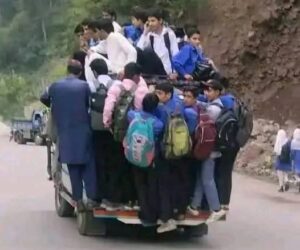
Schoolchildren riding on the back of a jeep in the hilly roads of Pakistan-administered Kashmir

    0

    Schoolchildren riding on the back of a jeep in the hilly roads of Pakistan-administered Kashmir

    In the lush green valleys of Pakistan-administered Jammu and Kashmir, this image of children clinging to the back of a jeep tells a story far beyond the daily school commute.

    The photograph reflects two contrasting realities of the region: the resilience of its people and the stark challenges of infrastructure and development.

    For these children, education is not just about classrooms and books—it begins with a difficult journey on unsafe roads, limited transport facilities, and lack of modern infrastructure. Many villages remain disconnected from safe public transport, forcing students to rely on whatever means are available.

    Yet, the image also speaks of hope and determination. Despite hardships, the youth of Kashmir continue their pursuit of knowledge, symbolizing a collective aspiration for a better future.

    While policymakers in Muzaffarabad and Islamabad debate progress and budgets, for families in remote villages, this jeep is more than just transport—it’s a lifeline, and a reminder of how far development still has to reach.

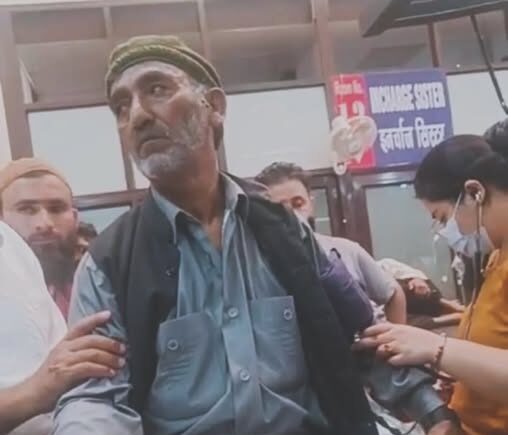
    Kashmir Tensions Rise: Father of Jailed AAP MLA Mehraj Malik Hospitalized in Jammu as Protests Intensify

    0

    Jammu: Jammu and Kashmir’s lone Aam Aadmi Party (AAP) legislator, Mehraj Malik, has been detained under the Public Safety Act (PSA), sparking days of protests in his home district of Doda and beyond.

    Authorities say the detention, which allows imprisonment without trial for up to two years, was ordered on the grounds that Malik’s activities were “prejudicial to the maintenance of public order.”

    Since his arrest on 8 September, demonstrations have continued in Doda and Jammu. Roads have been blocked, internet and mobile services suspended, and restrictions imposed under prohibitory orders to curb unrest.

    Emotional plea from father

    Malik’s father, Shamas Udin Malik, has publicly appealed for his son’s release.

    “I have given my son to the people, but now I want him back,” he said in a statement. “I cannot keep running to the courts. My son’s mother and four sisters are in distress. We only want him home.”

    Shamas Udin also met Chief Minister Omar Abdullah at his residence in Srinagar, urging him to intervene. He described the detention as a “personal vendetta,” alleging that the Deputy Commissioner of Doda acted with bias when recommending the PSA against his son.

    Protests and political reactions

    Reports from the ground suggest dozens of protestors have been detained, with at least 70 people picked up during clashes with security forces.

    Political parties across the spectrum have criticised the government’s move, calling it an “erosion of democracy” to invoke PSA against an elected representative.

    “This is not just about one MLA—it sends a message that dissent, even from within the legislature, can be criminalised,” a senior opposition leader told local media.

    What is the PSA?

    The Public Safety Act (PSA) is a preventive detention law unique to Jammu and Kashmir. It allows authorities to detain a person for up to six months without trial, extendable to two years in cases of national security.

    The law has long been controversial. Human rights groups argue that it is frequently misused to silence political opponents, journalists, and activists. The government, however, insists that it is necessary to maintain order in a region prone to unrest.

    Wider implications

    Mehraj Malik, currently lodged in Kathua jail, was known for raising questions about local governance, including criticism of health infrastructure in his constituency.

    His detention has not only mobilised local communities but also triggered a wider debate about the boundaries of political speech in Jammu and Kashmir.

    As protests continue into a fourth day, families, supporters, and rights groups say the case could set a dangerous precedent for democracy in the region.

    Editorial | People’s Movements vs Nationalist Narratives: A Test for Unity in Azad Jammu and Kashmir

    By Sardar Anwar | Special Editorial

    MUZAFFARABAD – In the political landscape of Azad Jammu and Kashmir, the Joint Awami Action Committee (JKJAAC) has emerged as a leading force driving the ongoing people’s rights movement. This movement, which has mobilized thousands of citizens across towns and villages, represents years of struggle, sacrifice, and collective aspirations. Yet, it now faces a dangerous narrative: the attempt to pit “people’s movements” against “nationalist ideologies,” framing one as a threat to the other.

    Such framing, however, is not only misleading—it risks dividing the people and derailing the very struggle for justice and dignity that JKJAAC embodies.

    People’s Rights Movements vs Freedom Movements

    At first glance, people’s rights movements and freedom movements may appear similar. Both involve mass mobilization, popular demands, and the language of justice. But the two differ significantly in scope and objective.

    People’s rights movements seek reforms within an existing state or system. Their central aim is the restoration of basic socio-economic and political rights—whether it be fair wages, access to education, farmers’ rights, or community-level reforms. These movements are not necessarily anti-state; rather, they often seek to transform the state through accountability and justice.

    Freedom movements, in contrast, reject the prevailing system altogether. Their goal is national independence, self-determination, and complete sovereignty often against colonial, occupying, or external powers. Such struggles are defined by their insistence on creating a new political order, separate from the existing state.

    While the distinction is clear, history has shown that these struggles often overlap. A sustained denial of rights within a system can evolve into a demand for complete freedom. Conversely, freedom movements frequently embed socio-economic justice as part of their long-term vision.

    The Situation in Azad Jammu and Kashmir

    In Azad Jammu and Kashmir, the JKJAAC-led people’s rights movement is being unfairly cast as a conspiracy against nationalist ideals. This narrative not only oversimplifies but also distorts reality. The truth is that the current leadership of JKJAAC includes some of the most prominent nationalist figures who have dedicated their lives to the Kashmiri cause.

    The JKJAAC core committee its highest decision-making body features leaders with deep nationalist roots, such as:

    Each of these individuals, known personally by the author, represents strands of nationalist, progressive, and pro-people thought. Far from being sidelined, nationalists are at the very heart of the people’s rights movement.

    A Manufactured Divide

    To portray the JKJAAC’s struggle for basic rights—electricity tariffs, wheat subsidies, and livelihood protections—as somehow hostile to nationalist ideals is both intellectually shallow and politically reckless. It risks playing directly into the hands of those who benefit from division.

    The reality is this: people’s rights movements and nationalist movements are not enemies. They are often two parallel streams of resistance. One focuses on immediate survival and dignity within the present framework; the other envisions long-term freedom and sovereignty. Together, they sustain the larger struggle of oppressed peoples.

    The Danger of Internal Division

    History is unforgiving when popular movements are divided. When leaders confuse disagreement with disloyalty, or when differences of strategy are weaponized into personal or ideological enmity, the result is disintegration.

    A people’s rights movement, by its very nature, is accountable to its base. Its leadership must answer for every decision before the masses. Disagreements are natural. Mistakes are inevitable. But to translate these disagreements into accusations of betrayal or conspiracy is to weaken the entire movement.

    As the old adage reminds us: “When moments make mistakes, centuries pay the price.”

    A Call for Dialogue, Not Division

    The way forward is neither suppression of dissent nor questioning the commitment of nationalists. Instead, the path must be one of dialogue, reason, and mutual respect. Differences must be debated openly, within the framework of shared struggle, not exploited as tools for division.

    The JKJAAC-led movement in Azad Jammu and Kashmir is at a critical juncture. It has the potential to achieve reforms that will materially transform people’s lives. To weaken it now by framing it as a threat to nationalism is not only unjust—it is a betrayal of both people’s rights and the Kashmiri freedom cause.

    The movement must remain united, disciplined, and deeply rooted in the aspirations of ordinary people. Its leaders—whether nationalist, progressive, or rights-focused—owe it to history to rise above factionalism.

    Because history’s court delivers harsh sentences to those who squander the sacrifices of their people.

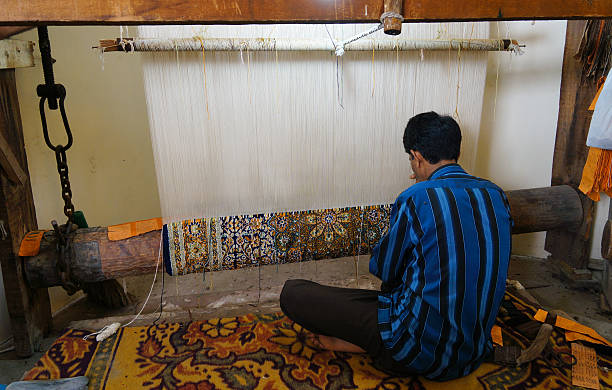
    Kashmir’s Centuries-Old Carpet Weaving Tradition Gets a Boost with Modern Looms

    0

    Srinagar — In a significant development for Kashmir’s centuries-old handicraft industry, Indian Textile Secretary Neelam Shami Rao on Wednesday reaffirmed the Indian government’s commitment to reviving and modernizing the valley’s renowned carpet weaving tradition.

    Speaking at the Indian Institute of Carpet Technology (IICT) campus in Srinagar, Rao inaugurated modified modern steel carpet looms for artisans under the Integrated Wool Development Programme (IWDP). She said the initiative aims to empower artisans, upgrade tools, and expand the global appeal of Kashmiri carpets — an art form that has long been central to Kashmir’s cultural identity and global reputation.

    Rao urged the Jammu and Kashmir administration to bring forward additional proposals for expanding the craft sector, stressing the need to upgrade testing and certification facilities while blending traditional designs with contemporary patterns to meet international benchmarks.

    “I have come here with a senior team from Delhi to gain first-hand insights into new standards that will strengthen backward and forward linkages in the handicraft sector,” Rao said during the event.

    Earlier, she inspected IICT’s training programmes, design studio, and NABL-accredited laboratory, along with the Pashmina Testing and Quality Certification Centre. She assured full support for deploying advanced technology to preserve the authenticity of Kashmiri pashmina and related handicrafts.

    During her visit, Rao interacted with several acclaimed Kashmiri artisans, including Padma Shri awardee Ghulam Hassan Khan (for patchwork Jamaawar), National Award winner Ghulam Nabi Dar (wood carving), and Farooq Ahmad Mir (Kani shawl weaving). Emerging entrepreneurs such as Shahnawaz Carpets and Banish Crewel Toys also presented their innovations to the visiting delegation.

    As part of the initiative, groups of artisans from Anantnag, Bandipora, Baramulla, Budgam, Kulgam, and Srinagar received the newly introduced steel looms. Rao also indicated that the ministry is considering the procurement of an additional 500 looms for wider distribution across the valley.

    The programme has been welcomed by artisans who hope that modern tools, combined with institutional support, will help revive an industry struggling with declining exports, imitation products, and market disruption. The move is seen as both an economic and cultural investment — one that could safeguard one of Kashmir’s most treasured art forms for future generations.

    Vaishno Devi Yatra Remains Suspended for 15th Consecutive Day Amid Safety Concerns

    0

    Katra, J&K: The Vaishno Devi pilgrimage has entered its 15th consecutive day of suspension in Katra due to safety concerns triggered by continuous heavy rains and landslides in the Trikuta hills.

    According to officials, relentless rainfall has caused massive landslides, blocking the trekking routes to the shrine and making the paths unsafe for devotees. The suspension, which began on August 26 after a major landslide near Indraprastha Bhojanalaya at Adhkuwari on the 12-kilometre route from Katra to the shrine, has yet to be lifted.

    Authorities have confirmed that the yatra will only resume once weather conditions improve and the pathways are declared safe for movement.

    The prolonged suspension has left thousands of devotees disappointed and has also dealt a severe blow to local businesses in Katra. Shopkeepers, hoteliers, and restaurant owners, heavily dependent on the pilgrimage season, are facing mounting losses. Several have been forced to shut down their establishments temporarily as the flow of visitors has come to a complete halt.

    Local administration has appealed to devotees to remain patient and avoid unnecessary travel towards the shrine until further notice.

    The Vaishno Devi Yatra, one of the most significant Hindu pilgrimages in Jammu and Kashmir, attracts millions of devotees annually. However, this extended suspension due to natural calamities has underlined the vulnerability of the route to extreme weather and raised fresh concerns about the need for long-term infrastructural safety measures.

    Agricultural Crisis Deepens in Kashmir as Floods Devastate Over 12,000 Hectares of Farmland

    0

    Srinagar — Southern and central districts of Kashmir are reeling under a severe agricultural crisis after recent rains and floods destroyed thousands of hectares of farmland, leaving tens of thousands of farmers in distress.

    According to an initial survey conducted by the Agriculture Department, a total of 12,066.33 hectares of farmland has been affected across the valley. Of this, 9,588.73 hectares of land has seen crops either completely destroyed or partially damaged.

    The Director of Agriculture Kashmir, Sartaj Ahmad Shah, confirmed that the worst-hit districts include Pulwama, Kulgam, Anantnag, and Budgam, with losses running into millions of rupees. He noted that emergency measures are underway to provide financial relief and immediate rehabilitation for affected farmers. Essential crops such as rice, maize, and vegetables have been washed away in many areas, creating fears of food shortages and long-term economic fallout.

    Pulwama and Shopian: The Epicenter of Destruction

    District Pulwama has been identified as the worst affected region, with nearly 3,830 hectares of farmland damaged. Of this, more than 2,730 hectares of agricultural land has suffered extensive losses, wiping out over 50 percent of standing crops.

    Agriculture Officer for Kakapora, Shakil Ahmad, reported that villages such as Kakapora, Sathergund, Marwal, Pahoo, Ratnipora, and Lelhara have witnessed complete destruction of rice, maize, and vegetables. Similarly, areas in Pampore, including Zonipora, Meej, Wuyan, Bachen Shalina, and Khandizal, have also reported massive crop losses.

    Chief Agriculture Officer Pulwama, Waheed-ur-Rehman, said assessment teams are preparing detailed reports of the losses in each affected area.

    In neighboring Shopian district, at least 224 hectares of farmland have been damaged, with Zainapora and Ramnagri emerging as the most affected localities.

    Kulgam: Thousands of Farmers Impacted

    In Kulgam district, floods have impacted nearly 1,183 hectares of land, of which 1,070.1 hectares sustained heavy losses. Officials reported that more than 5,182 farmers have been directly affected, with damages valued at ₹18.4 million (1.84 crore rupees).

    Chief Agriculture Officer Farooq Ahmad Reshi said that villages in Qaimoh, DH Pora, Devsar, and several parts of Kulgam tehsil were badly hit. In Qaimoh alone, 501.51 hectares of farmland was destroyed, prompting recommendations for compensation exceeding ₹8.5 million (85 lakh rupees).

    Anantnag: Farmland Turned Unusable

    In Anantnag district, approximately 2,641.66 hectares of farmland has been impacted. Chief Horticulture Officer Shahnawaz Ahmad reported that areas including Kokernag, Sheer Bagh, Hanjivera, Zarpara, Arahpora, Chehl Gund, and Banga Dara have been severely damaged.

    In Zarpara and Arahpora alone, 700 hectares of farmland has been ruined, while Chehl Gund has lost 430 hectares of vegetable crops and Banga Dara 320 hectares. Officials warn that land erosion and flooding have made several fields unfit for cultivation in the near future.

    Srinagar, Ganderbal, and Budgam: Central Kashmir Hit Hard

    In Srinagar district, around 408 hectares of land have been damaged, particularly in Lasjan, Batamaloo, and Rangreth.

    In Ganderbal, nearly 196 hectares have been affected, with Lar and Wakura recording significant crop damage.

    Meanwhile, in Budgam district, the floods have devastated 2,723 hectares of farmland, of which 1,702.25 hectares have been confirmed as badly damaged. The worst-hit areas include Chrar-e-Sharif, Beerwah, and Khansahib, where rice, maize, and vegetable crops have been largely destroyed.

    Kupwara, Bandipora, and Baramulla

    In northern Kashmir, Kupwara, Bandipora, and Baramulla districts have also suffered, with a combined total of 570 hectares affected. The main crops damaged include maize, rice, and pulses.

    A Looming Food and Economic Crisis

    Agriculture experts warn that the total losses may run into hundreds of millions of rupees, crippling Kashmir’s already fragile economy where agriculture remains the primary source of livelihood.

    The widespread devastation has sparked urgent appeals for financial relief, crop insurance payouts, and government-backed rehabilitation programs. Farmers across the valley say they fear debt traps and long-term poverty if aid does not arrive quickly.

    Officials from the Agriculture Department have assured that damage assessment reports are being finalized, and relief measures will soon be announced. However, with the sowing season disrupted and vast areas left uncultivable, the road to recovery is expected to be long and difficult.

    Apple Launches iPhone 17 Series, Slashes Prices of Older Models

    0

    Apple has officially unveiled its latest iPhone 17 series, featuring four new models: the iPhone 17, iPhone 17 Air, iPhone 17 Pro, and iPhone 17 Pro Max. Alongside the launch, the company announced significant price cuts for older iPhones, making its ecosystem more accessible to a wider range of customers.

    According to Apple, the iPhone 16 and iPhone 16 Plus will now be priced at $699 and $799 respectively, following a $100 reduction. The company’s most affordable option remains the iPhone 16e, which will continue to retail at $599.

    However, Apple has also confirmed that it will discontinue the official sale of older models including the iPhone 15, iPhone 15 Plus, iPhone 16 Pro, and iPhone 16 Pro Max. While these may still be available through third-party retailers, they will no longer be sold through Apple’s official channels.

    As for the new lineup, Apple has set competitive pricing across its models:

    • iPhone 17 (256GB): $799

    • iPhone 17 Air: $999

    • iPhone 17 Pro: $1,099

    • iPhone 17 Pro Max: $1,199

    With the new series, Apple continues its strategy of offering premium features at multiple price points while retiring older flagships — a move that not only simplifies its portfolio but also strengthens the appeal of its latest devices.

    Campus Shooting Shakes U.S. Politics — A Fictional Scenario on Division and Violence

      0

      In a chilling imagined scene, America confronts the darkest possibilities of its political divides. A conservative commentator and close ally of Donald Trump is gunned down during a campus event — a fictional scenario that underlines the rising tension, mistrust, and violence in the United States.

      In this speculative account, the speaker is addressing a contentious issue related to gender identity at Utah Valley University when shots are fired. Despite immediate medical attention, he does not survive. The incident sparks outrage nationwide, with the U.S. President condemning it as a “savage attack” and declaring days of mourning.

      Although fictional, the scenario draws inspiration from America’s real challenges: the surge in campus protests, intensifying culture wars, and the shadow of gun violence. Analysts say such a tragedy, were it to happen, would not only devastate communities but also symbolize how fragile democratic discourse has become.

      The imagined killing also raises questions about security, freedom of speech, and the risks faced by public figures in a polarized climate. In this alternate narrative, investigators describe confusion, initial detentions, and viral footage capturing the chaos.

      The speculative exercise is not about predicting events but about highlighting the urgency of America’s divisions. Experts warn that unless meaningful steps are taken to address political polarization, the line between fiction and reality could grow dangerously thin.

      Wi-Fi Takes Off in Indian Skies: Air India Becomes the First Airline to Offer In-Flight Internet

        0

        India has officially entered a new era of aviation connectivity. Tata-owned Air India has become the country’s first airline to introduce in-flight Wi-Fi services, offering passengers the ability to stay connected even while cruising at 35,000 feet.

        The service allows travelers to stream content, attend virtual meetings, work on projects, and connect with family and friends via video calls — effectively transforming an aircraft into a flying office and entertainment hub.

        While this move is a major convenience for frequent flyers and digital nomads, its significance extends far beyond passenger comfort. The launch has captured the attention of the global aviation and technology sectors, including Elon Musk, whose Starlink satellite internet project is working to dominate skies worldwide. With Air India stepping into the market, India has signaled that it is ready to compete on the global stage of in-flight connectivity.

        For business travelers, the development means that travel time no longer has to be downtime. Productivity, communication, and entertainment are now uninterrupted, redefining the modern flying experience.

        This initiative is part of Air India’s broader transformation plan under Tata Group, which also includes fleet modernization and service upgrades. By introducing Wi-Fi in the skies, Air India is not only enhancing passenger experience but also positioning India as a rising innovator in global aviation.

        Jammu Kashmir JAAC Calls for Indefinite Shutdown from Sept 29: Full Demands & Analysis | The Azadi Times

        0

        MUZAFFARABAD – In a move that has sent ripples across the region, the Jammu Kashmir Joint Awami Action Committee (JKJAAC) has issued a call for a complete, territory-wide shutdown (bandh) across Azad Jammu and Kashmir (AJK) starting Sunday, September 29. The announcement signals a significant escalation in the ongoing standoff between the grassroots movement and the state administration over a sweeping 38-point charter of demands centered on economic rights, political autonomy, and social justice.

        The call for an indefinite strike threatens to bring daily life to a standstill, echoing the massive and successful protests led by the same coalition last year that forced the government into negotiations.

        A Movement Rekindled: From Last Year’s Victory to This Year’s Stalemate

        The JKJAAC is not a new actor on the political stage. It is a powerful coalition of diverse civil society groups, including traders’ unions, transport associations, lawyers’ forums, and student organizations. Its strength lies in its cross-cutting appeal that transcends traditional political party lines.

        Last year, the committee mobilized one of the largest protest movements in recent AJK history. Thousands took to the streets in Muzaffarabad, Mirpur, Kotli, and other cities, protesting skyrocketing inflation, exorbitant electricity bills, and the perceived erosion of the region’s special status. The protests, characterized by widespread sit-ins and marches, culminated in a decisive victory for the JKJAAC. The state government, under immense pressure, agreed to a substantial relief package, including subsidies on wheat flour and electricity.

        However, the committee’s core argument today is that the government’s implementation of these agreements has been half-hearted, incomplete, and in some cases, entirely neglected. “The government signed agreements to placate us, but their promises remain confined to paper,” a JAAC spokesperson stated in a press conference. “Our patience has run out. The people of Jammu Kashmir will no longer accept empty promises.”

        The Heart of the Matter: Decoding the 38-Point Charter of Demands

        The JKJAAC’s mandate is comprehensive, moving beyond immediate economic relief to address deeper structural issues. The 38 demands paint a picture of a population seeking dignity, accountability, and self-determination in its daily affairs.

        Key themes from the charter include:

        • Economic Justice & Subsidies: Demands for continued and expanded subsidies on essential commodities like wheat and electricity, reflecting the severe cost-of-living crisis.

        • Employment and Pension Rights: Calls for the regularisation of contract employees, increased job quotas for locals, the release of pending dearness allowances for government employees, and the resolution of pension disputes.

        • Protection of Local Resources: A central demand revolves around the ownership and royalty rights from major hydroelectric power projects like the Mangla Dam, seeking a fair share of the revenue generated from AJK’s natural resources for its people.

        • Political Autonomy & Governance: Demands for greater legislative and financial autonomy for the AJK government, challenging what is seen as overreach from the federal government in Islamabad.

        • Social Welfare & Development: Calls for investment in health infrastructure, educational facilities, and road networks, particularly in remote and underdeveloped districts.

        This expansive list demonstrates the JAAC’s evolution from a protest movement into a potent force advocating for systemic change.

        Breaking Down the 38-Point Charter of Demands

        JAAC’s comprehensive demands span economic justice, political rights, and governance reform. Here’s a condensed version (in no particular order):

        1–24: Core welfare and structural rights
        25–38: Civil liberties, systemic fairness, and reforms

        Demand #Summary
        1–3Enhanced allowances (household, health), pension & gratuity
        4–6Housing lease benefits, quota jobs for widows, job permanency
        7–10Solar systems (5KVA), tribal area benefits, constitutional rights
        11–13Inflation-linked wages, housing bank, facility upgrades in schools
        14–16Free education and employment for martyrs’ families, pan energy plan review
        17–20Stadium in Kotli, pension policy, educational reforms, HE grant institutions
        21–24Lower-grade upgrades, WAPDA benefits, general allowances
        25–28Address allowances gaps, pensioner benefits, exam facilitation
        29–32Review delimitation laws, improve civil servants’ rights, election timing issues, transport policy fixes
        33–36Gratuity for pensioners, end strike bans, job restraint reduction, youth participation
        37–38Tax relief, wage security during inflation

        Government Response and the Specter of Escalation

        In anticipation of the September 29 shutdown, the state administration has adopted a dual strategy of tentative dialogue and security preparedness. While officials have expressed a willingness to talk, they have also condemned the strike call as a move that “disrupts public peace.”

        Security forces have been placed on high alert in major urban centers. There is a palpable fear that the situation could mirror last year’s protests, which saw brief clashes between demonstrators and law enforcement.

        Independent analysts suggest the government is walking a tightrope. “The JAAC has proven its ability to mobilize the masses. The state’s credibility is on the line,” says [Insert Name, a hypothetical local political analyst]. “A heavy-handed response could inflame passions further, while conceding too much could be seen as a weakness by the federal establishment. The path forward is dialogue, but it must be sincere this time.”

        What to Expect on September 29 and Beyond

        As the date approaches, markets in Muzaffarabad and other cities are expected to remain shut, and public transport is likely to be suspended. The JAAC has announced plans for peaceful sit-ins and rallies.

        The international community, often focused on the Kashmir issue across the Line of Control, watches these internal dynamics within AJK with growing interest. The movement underscores the complex political and socio-economic realities within the territory.

        The coming days are critical. The success of the shutdown and the government’s response will be a crucial test of power. Will the state address the grievances laid out in the 38 demands, or will Jammu Kashmir brace for a prolonged period of civil unrest?

        One thing is clear: the voice from the streets, organized under the banner of the Joint Awami Action Committee, has become too loud to ignore.