Wednesday, March 25, 2026
11.4 C
Srinagar
Home Blog Page 40

Tensions Escalate Along Thailand–Cambodia Border Amid Historic Dispute

Key Takeaways

  • Deadliest fighting in over a decade near disputed ancient temples.
  • Historic border dispute over Preah Vihear and surrounding areas.
  • Thai PM suspended after leaked phone call with Cambodia’s Hun Sen.
  • Over 100,000 displaced; trade and energy ties disrupted.
  • Regional mediation efforts underway, but no clear resolution in sight.

25 July 2025 – Bangkok/Phnom Penh: Fighting between Thai and Cambodian forces has intensified in recent days, with both sides trading artillery fire and conducting air operations near ancient Hindu temples located in a long-disputed border region.

The flare-up marks the worst violence between the Southeast Asian neighbours since 2011, raising fears of a prolonged conflict in the heart of mainland ASEAN.

What’s Happening?

On 24 July, Thai and Cambodian troops clashed near the Ta Muen Thom and Ta Muen Toch temples — sacred 11th-century sites located in a densely forested zone known as the Emerald Triangle, where Thailand, Cambodia, and Laos meet.

Military sources on both sides confirmed rocket fire, shelling, and drone surveillance in the area. Cambodia claims the Thai military violated its airspace and struck a forward outpost. Thailand accuses Cambodia of provoking conflict by reinforcing military presence near contested areas.

Casualty figures have not been independently verified, but local media report several soldiers killed and dozens wounded. Tens of thousands of civilians have fled surrounding districts, fearing a wider escalation.

A Dispute Rooted in Colonial Maps

The two countries have contested parts of their shared 800-km (500-mile) border for over a century. At the centre of the dispute is the 11th-century Preah Vihear Temple, which the International Court of Justice (ICJ) awarded to Cambodia in 1962. However, surrounding areas — especially buffer zones near temple complexes — remain disputed.

In 2013, the ICJ reaffirmed Cambodia’s sovereignty over the main temple, but Thailand rejected the ruling’s interpretation of adjacent territories. Since then, multiple flare-ups have occurred, most notably from 2008–2011, during and after the site’s controversial designation as a UNESCO World Heritage Site.

A Leaked Phone Call Sparks Political Crisis in Thailand

The most recent escalation has been compounded by domestic political turmoil in Thailand. A leaked phone conversation between Thai Prime Minister Paetongtarn Shinawatra and Cambodian Senate President Hun Sen ignited fierce debate.

In the recording, Paetongtarn is heard requesting leniency and referring to Hun Sen as “uncle,” a cultural term of respect. Critics in Bangkok viewed the exchange as “undermining national sovereignty.”

The fallout was swift: Paetongtarn was suspended from office, her coalition fractured, and Deputy PM Phumtham Wechayachai was appointed acting prime minister. Analysts say the controversy has weakened Thailand’s negotiating position and emboldened Cambodian officials.

Economic & Human Impact

Border towns like Poipet in Cambodia and Aranyaprathet in Thailand have seen a sharp drop in trade, tourism, and cross-border commerce. Cambodian authorities have banned Thai imports, while Thailand has closed key checkpoints and threatened to cut electricity and internet access to Cambodian provinces dependent on Thai infrastructure.

According to local humanitarian groups, over 100,000 civilians have been displaced. Schools and health centres along the border remain closed. Relief agencies warn of shortages in food, fuel, and clean water if fighting continues.

Regional and International Reactions

  • The United Nations and ASEAN have urged both governments to “exercise maximum restraint.”
  • Cambodia has submitted a new petition to the ICJ over four contested areas.
  • Thailand continues to reject international mediation, instead calling for bilateral talks via the Joint Border Commission.

Neighbouring countries like Vietnam and Laos have tightened security along their borders. China and the United States have issued separate statements urging de-escalation.

What’s Driving the Conflict?

Experts cite a combination of historic grievances, political opportunism, and shifting regional power dynamics as key drivers of the renewed conflict:

  • Territorial ambiguity due to colonial-era French maps.
  • Personal rivalries between the Shinawatra and Hun political dynasties.
  • Use of the conflict to divert attention from domestic crises, particularly in Bangkok.
  • Rising military assertiveness across Southeast Asia.

What Happens Next?

With both countries locked in a blame game and diplomacy stalled, observers warn of a stalemate turning into a prolonged low-intensity conflict. ASEAN has offered to mediate, but no formal negotiations have been confirmed.

In the meantime, villagers continue to flee, border trade remains paralysed, and trust between two ASEAN founding members has eroded further.
Heavy Rains Trigger Landslide Risk in Gilgit Amid Ongoing Weather Alert

Gilgit Baltistan (PaJK) — July 24, 2025:
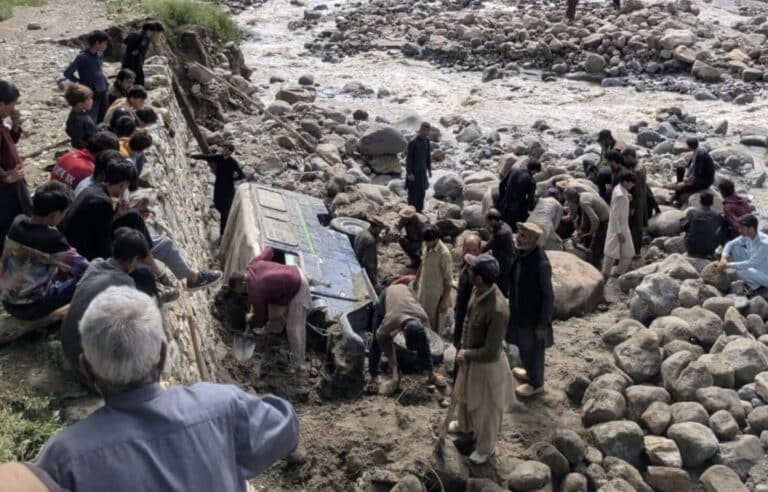
Authorities in Gilgit have issued an emergency weather advisory as continuous rainfall poses serious threats of landslides and flooding in the region. The warning, issued by Deputy Commissioner and Chairman of the District Disaster Management Authority (DDMA) Gilgit, Captain (R) Arif Ahmed, urges residents to avoid unnecessary travel and exercise extreme caution.

According to alerts from the Pakistan Meteorological Department, persistent rain in Gilgit and surrounding areas has caused a significant rise in water levels in streams and rivers. Officials warn that mountainous zones are especially prone to landslides and falling rock debris during this period.

“People are strongly advised to refrain from venturing out unnecessarily, avoid standing under billboards, electric poles, and old trees,” stated the DDMA in its advisory. “Residents living near glaciers, unstable infrastructure, and other sensitive zones should take all necessary precautions.”

The advisory also extends to tourists currently traveling in the region, urging them to remain alert and follow safety guidelines issued by local authorities.

Emergency Contacts Issued

In case of emergencies, the following helplines have been provided for immediate assistance:

  • Alpha Control Room (AC Office Gilgit): 05811-920724
  • Police Control Room: 05811-930346
  • DDMA Gilgit: 05811-930346
  • Rescue 1122: 1122 or 05811-920200

Authorities Mobilize Response Teams

In response to the ongoing threat, Deputy Commissioner Arif Ahmed has directed various government departments to remain on high alert:

  • Highways and Building Department (B\&R): Machinery and staff must remain on standby.
  • Rescue 1122: Emergency staff and rescue equipment must be ready around the clock.
  • National Highway Authority (NHA): Preparedness for any road-related emergencies is required.
  • Civil Supply Officers: Ensure timely delivery of food supplies, particularly wheat, to upper mountainous areas.
  • Assistant Commissioners (Gilgit, Danyore, Juglot): Ensure field teams remain mobilized.
  • District Health Officer (DHO) Gilgit: Doctors, ambulances, and medical staff must stay prepared for emergency deployment.
  • Radio Pakistan Gilgit: Instructed to broadcast weather alerts repeatedly to raise public awareness.

Background Context

Gilgit, part of the wider Gilgit-Baltistan region, lies within the territory of Jammu and Kashmir — a region internationally recognized as disputed between India and Pakistan. The area’s rugged terrain and underdeveloped infrastructure make it particularly vulnerable during extreme weather events.

As monsoon rains intensify across the Himalayan belt, residents and travelers in Gilgit are urged to monitor official updates and avoid high-risk areas.

Israel Accuses UN of Blocking Aid to Gaza, Despite 950 Trucks Waiting at Border

0

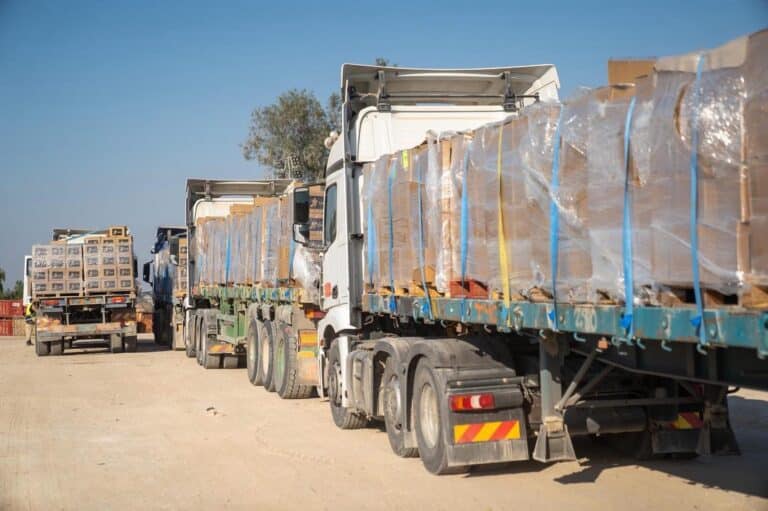
Tel Aviv/Gaza – The Israeli Ministry of Foreign Affairs has publicly accused the United Nations of obstructing the delivery of humanitarian aid to Gaza, as nearly 950 aid trucks remain stalled at border crossings.

In a statement posted on the official social media accounts of the Israeli Foreign Ministry, the government claimed that while Israel is facilitating the entry of aid and organizations like the Global Humanitarian Foundation (GHF) are ready to distribute it directly to civilians in Gaza, the UN is acting as a bottleneck.

“Nearly 950 aid trucks are waiting at the border, ready to support the people of Gaza. So who’s holding them back? The UN,” the post stated. “We call on the United Nations to stop blocking essential aid. Immediately.”

The statement has added fuel to an already heated debate surrounding the distribution of humanitarian assistance amid the ongoing conflict in Gaza. Israel has consistently emphasized that it is not obstructing the flow of aid and blames international agencies, particularly the UN, for delays.

There has been no immediate response from the United Nations regarding this specific accusation. UN officials have previously stated that logistical, security, and verification processes are essential to ensure that aid reaches civilians safely and is not diverted.

The GHF, which is mentioned in the Israeli statement, has not independently confirmed the UN’s role in the delay but has stressed the urgent need to get aid into Gaza as soon as possible.

The situation on the ground remains dire, with over two million residents in Gaza facing severe shortages of food, water, and medical supplies.

This is a developing story.

AJK Police Launch Nationwide Protest Over Unfulfilled Demands and Government Retaliation

Muzaffarabad, Pakistan administered Kashmir — Tensions continue to rise in Pakistan-administered Kashmir (Azad Jammu & Kashmir – AJK) as police personnel have announced a district-wide protest in Rawalakot starting July 24, accusing the government of reneging on promises made during earlier negotiations.

The unrest began on July 21 when police employees from Grade 1 to 16 launched a strike, presenting an 18-point charter of demands. Following the strike, a government committee was formed, and assurances were given that 80% of their demands would be met through formal notification by July 24, with the remaining to be implemented within two weeks.

However, in a press conference held earlier today at the Press Information Department (PID) Muzaffarabad, senior ministers from AJK’s ruling coalition — including Senior Minister and Interior Minister Col. (R) Waqar Noor of the Pakistan Muslim League-N, Finance Minister Abdul Majid Khan of the Pakistan Tehreek-e-Insaf (referred to locally as “Lota Party”), and Law Minister Mian Abdul Waheed of the Pakistan Peoples Party — claimed that several demands had been accepted and declared the strike over.

Contrary to the official statement, the Police Association of AJK rejected the announcement, asserting that only 5% of their demands were accepted and officially notified — a clear deviation from the promised 80%. The association strongly rejected both the press conference claims and the partial implementation.

Further deepening the crisis, the Inspector General’s office in Muzaffarabad issued a directive to all district police heads (SPs) across AJK’s ten districts. The letter instructed them to send reports every two hours on the status of police stations and checkpoints, and to treat striking personnel as absent, initiating departmental inquiries against them.

In response, the Police Association of AJK condemned the directive, calling it an act of retaliation. The police force in Poonch Division, particularly Rawalakot District, issued a formal press release announcing a full-scale protest sit-in at Rawalakot District Complex starting tomorrow, July 24.

Additionally, police employees across AJK have been urged to stage similar protests at their respective district headquarters, remove their uniforms’ caps and belts, and suspend all official duties — symbolically rejecting the government’s “broken promises and authoritarian tactics.”

The crisis poses a serious challenge to the AJK government, with implications for law and order across the region. Civil society activists and human rights observers have called for immediate dialogue, transparency, and fulfillment of commitments to prevent further unrest in an already politically sensitive region.

For real-time updates on the situation in Pakistan-administered Kashmir, stay connected with our newsroom.

Six Gilgit-Baltistan Leaders Released on Bail After Two Months of Detention

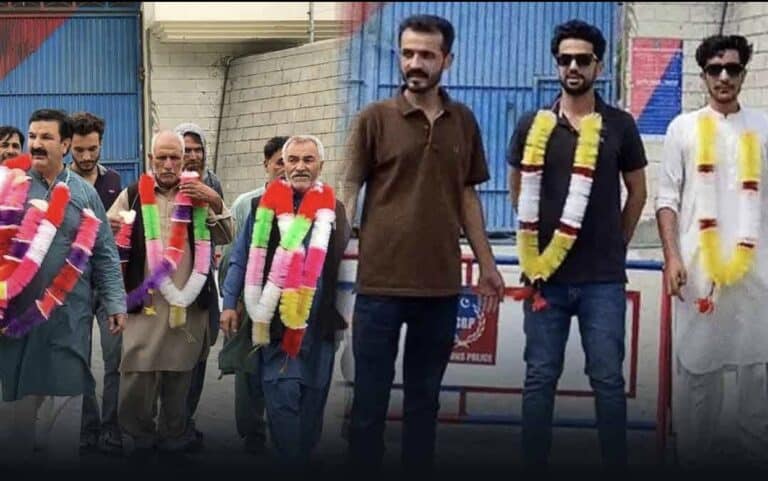
Gilgit, July 23, 2025 — Six prominent leaders of the Awami Action Committee (AAC) in Gilgit-Baltistan were released today from jail after being granted bail by the Chief Court of Gilgit-Baltistan, nearly two months after their arrest.

The released leaders include Advocate Nafees, Asghar Shah, Mumtaz Nagri, Waheed Hassan, Advocate Ghulam Abbas, and Advocate Taaruf Abbas. Their release marks a significant development in the ongoing political unrest in the region.

A large crowd of AAC supporters gathered outside the prison to welcome their leaders, celebrating their release with cheers and slogans. The scene was one of jubilation and renewed resolve among supporters advocating for civil rights and political freedom in Gilgit-Baltistan.

These leaders were detained during mass protests and political campaigns against what the AAC describes as unfair taxation policies and the suppression of public rights in the region. Their arrests sparked widespread demonstrations both within Gilgit-Baltistan and in diaspora communities around the world.

The legal battle to secure their release was led by a team of dedicated lawyers, including Advocate Athar and Advocate Ashfaq, whose efforts have been widely praised by civil society groups and political activists.

Despite today’s release, the movement remains far from over. AAC’s central chairman, Advocate Ehsan Ali, and six other leaders remain in custody. Supporters and human rights advocates are now calling for the immediate and unconditional release of all remaining political detainees.

Observers note that the situation in Gilgit-Baltistan continues to highlight broader concerns about freedom of expression, political rights, and governance in the region, which has long faced a complex and often contentious relationship with the federal government of Pakistan.

The AAC has vowed to continue its struggle through legal and peaceful means, urging authorities to respect the constitutional rights of the people of Gilgit-Baltistan.

Top Female Students Shine in AJK Matric Exams 2025|AJK BISE Result

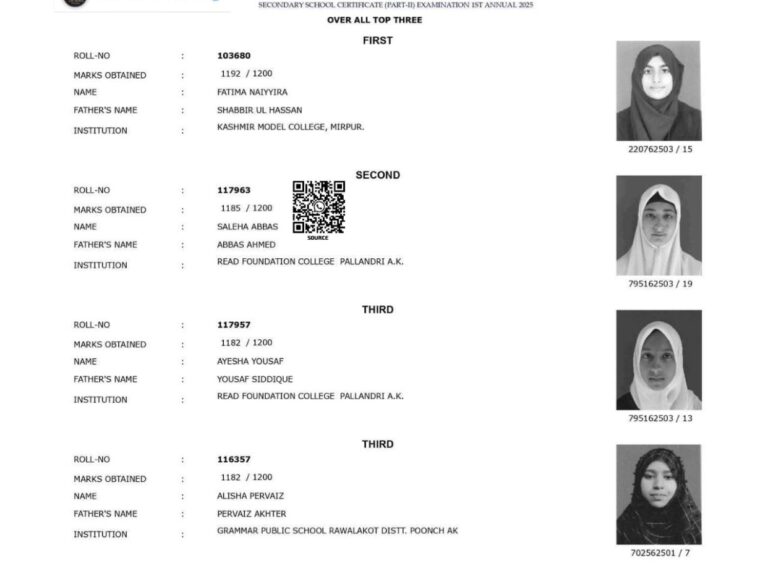
Mirpur, Pakistan administered Kashmir – July 22, 2025: The Board of Intermediate and Secondary Education (BISE) of Azad Jammu & Kashmir has officially announced the results of the 2025 Matriculation (Class 10) examinations. As in previous years, female students have once again demonstrated outstanding academic performance by securing the top positions across the board.

Top 3 Positions – Matric Exams 2025:

🥇 1st Position:

  • Name: Fatima Nayrah
  • Marks: 1192 / 1200
  • Institution: Kashmir Model College, Mirpur

🥈 2nd Position:

  • Name: Saleha Abbas
  • Marks: 1185 / 1200
  • Institution: Read Foundation College, Pallandri

🥉 3rd Position (Shared):

  • Name: Ayesha Yousaf
  • Marks: 1182 / 1200
  • Institution: Read Foundation College, Pallandri
  • Name: Alisha Parvez
  • Marks: 1182 / 1200
  • Institution: Grammar Public School, Rawalakot, District Poonch

The board, along with school authorities, parents, and educators, expressed immense pride and joy at the academic achievements of these students. This success, they said, reflects the hard work, dedication, and talent of the students and serves as a source of pride for the entire region.

The Azad Jammu & Kashmir Board of Intermediate and Secondary Education (BISE Mirpur) officially released the full results on July 23, 2025, at 2:00 PM, through its official website. The announcement of top position holders is scheduled for 1:00 PM on the same day.

This remarkable performance by young female students highlights the ongoing strides in education in the region and sets a powerful example for future generations.

What Is Starlink? Availability, Pricing, and the Future of Space-Based Internet Around the World

0

Key Takeaways

  • Starlink is now active in 70+ countries, with speeds rivaling terrestrial broadband.
  • Pricing varies widely—from \$35/month in Nigeria to \$150/month in remote regions.
  • Geopolitical tensions and regulatory battles are shaping its rollout in Asia, Africa, and the Middle East.
  • SpaceX plans to deploy 30,000+ satellites, raising concerns about space debris and market monopolization.
  • Ukraine, Tonga, and Amazon tribes showcase Starlink’s role in crises and remote connectivity.

In 2025, a fisherman in rural Indonesia’s Maluku Islands livestreamed his catch to buyers in Jakarta using a pizza-sized satellite dish. A school in Rwanda’s Nyamagabe district held its first video call with a university in Cape Town. A Ukrainian drone operator near Bakhmut relayed real-time coordinates to artillery units.

All shared one lifeline: Starlink, SpaceX’s audacious satellite internet project.

Once dismissed as science fiction, Starlink has become a geopolitical force, a lifeline for the unconnected, and a lightning rod for regulatory battles. This investigation unpacks its global impact, pricing, controversies, and what comes next.

Starlink, the ambitious satellite internet project by Elon Musk’s SpaceX, has quickly evolved into a transformative global communication infrastructure. Designed to bring high-speed internet access to even the most remote corners of the Earth, Starlink is no longer a futuristic experiment — it’s a functioning, rapidly expanding service with geopolitical, economic, and social implications.

As of mid-2025, Starlink is active in over 70 countries, with pilot programs and regulatory approvals underway in several others. From rural villages in Africa to war-torn regions in Eastern Europe, and from mountain towns in South America to fishing communities in Southeast Asia — Starlink is creating a new layer of internet access independent of traditional telecom monopolies.

How Does Starlink Work?

Unlike traditional broadband or fiber-optic services, Starlink relies on a constellation of low-Earth orbit (LEO) satellites — currently over 6,000 satellites — to deliver fast, low-latency internet from space directly to user terminals on the ground.

Each Starlink kit includes a user dish (commonly referred to as “Dishy”), a Wi-Fi router, and mounting hardware. Once set up, users can access internet speeds ranging from 50 Mbps to 250 Mbps, with latency as low as 20 milliseconds, depending on location and network congestion.

Where Is Starlink Currently Available?

As of July 2025, Starlink is officially available and actively serving customers in the following regions:

  • North America: United States, Canada, Mexico
  • Europe: UK, Germany, France, Spain, Italy, Ukraine, Poland, and others
  • Asia: Japan, Philippines, Malaysia, India (limited regions), Mongolia
  • Africa: Nigeria, Kenya, Rwanda, South Africa, Zambia
  • South America: Brazil, Chile, Colombia, Peru, Argentina
  • Oceania: Australia, New Zealand, Papua New Guinea
  • Middle East: UAE, Israel, parts of Iraq and Jordan

In many of these regions, Starlink has partnered with local telecom companies or governments to expand infrastructure and ease regulatory barriers.

Where Is Starlink Launching Next?

Starlink is actively pursuing regulatory approval or testing pilots in:

  • Indonesia
  • Pakistan
  • Bangladesh
  • Egypt
  • Turkey
  • Sri Lanka
  • Thailand
  • Kazakhstan
  • Algeria
  • Tanzania
  • Ethiopia

Some countries have been cautious or restrictive, citing concerns over data sovereigntymilitary implications, or competition with state-run ISPs.

Starlink Pricing by Country (2025)

Pricing varies by region and currency but typically includes:

  • Hardware Kit:
    • $399 USD (standard) to $2,500 USD (business-grade)
  • Monthly Subscription:
    • Ranges from $35 USD to $150 USD
    • Higher rates in remote or low-density regions

Examples:CountryHardware Price (USD)Monthly Cost (USD)USA$499$120UK£449 (~$575)£89 (~$113)Nigeria$600$50Philippines₱29,000 (~$500)₱2,700 (~$48)BrazilR$2,500 (~$480)R$530 (~$100)

In low-income or underserved areas, SpaceX has begun partnering with governments to subsidize Starlink hardwareand monthly fees, especially for schools and healthcare centers.

Why Starlink Matters: Not Just Another ISP

Starlink isn’t just providing internet; it’s challenging the global digital divide. In war zones like Ukraine, Starlink became a critical communications lifeline. In disaster-prone regions like Haiti and Pakistan, it promises internet resilience when terrestrial infrastructure fails.

However, the project also raises concerns:

  • Regulatory hurdles and cybersecurity concerns in authoritarian regimes
  • Orbital congestion and risks to space sustainability
  • Potential monopolization of global digital infrastructure

What’s Next for Starlink?

SpaceX aims to scale to over 30,000 satellites under its Gen2 plan, offering faster speeds, global mobility (via Roam plans), and eventually mobile connectivity directly to smartphones in partnership with other telecom providers.

The company is also experimenting with laser-linked inter-satellite communications, which could reduce reliance on ground stations and allow truly global, borderless connectivity.

Starlink may not yet be a household name in every country, but it’s undeniably altering the landscape of global internet access. For remote villages, journalists in conflict zones, scientists in the Arctic, and families in disaster-hit areas — it’s more than innovation. It’s a revolution in how we connect.

As governments, regulators, and competitors respond, one thing is clear: the sky is no longer the limit — it’s the starting point.

Garlic Girl of Kashmir: How a Young Woman Turned Garlic Farming into a Profitable Business Idea

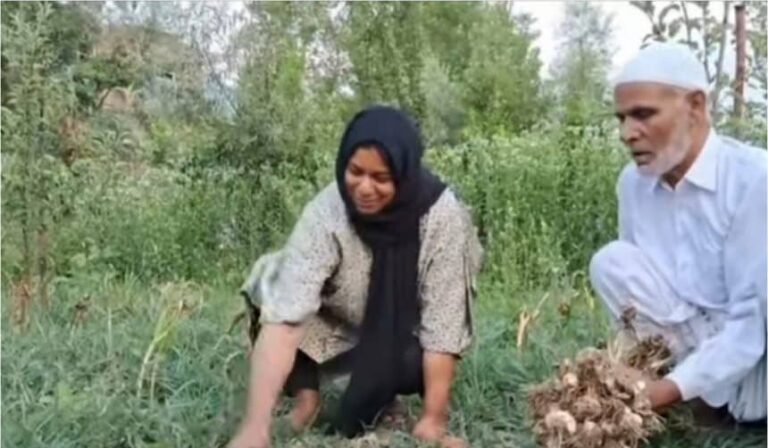
The Azadi Times | Kupwara | Indian administered Kashmir: If you’re searching for business ideas in agriculture, or wondering how to start a small profitable farming business, this inspiring story from Kupwara, Kashmir, will motivate you.

Hamira, now known as the “Garlic Girl”, turned her humble garlic farm into a thriving business — proving that innovative entrepreneurship and women empowerment can transform even the simplest of ideas into success stories.

Garlic remains in high demand globally, and the fertile lands of Bramhri in Kupwara provide the perfect setting for cultivation. While most youth chase government jobs, Hamira chose a different path — investing her time and energy into garlic farming as a small business idea.

She started with just two kanals of land and, through dedication, hard work, and support from the Agriculture Department, expanded her operations to 5–6 kanals. Hamira focused on sustainable farming practices and embraced technology to improve production, positioning herself as a role model for young entrepreneurs, especially women.

Her greenhouse farming model not only secured her own livelihood but also created employment opportunities for more than six people in her community. This shows how agriculture business ideas can also foster rural development and empower communities.

“Instead of chasing a government job, I chose to create jobs,” she proudly says.

Hamira emphasizes that success in business requires hard work, innovation, and a willingness to use modern methods — whether it’s organic farming, garlic processing, or greenhouse management.

Her story proves that profitable business ideas for youth don’t always need huge investments or big cities — sometimes they’re right in your backyard.

Facilities Exist, But No Donors: Chronic Kidney Disease Doubles in Jammu & Kashmir Over a Decade

The Azadi Times | Srinagar | Indian administered Kashmir: While healthcare facilities and even free transplant surgeries are available, Jammu & Kashmir faces a severe shortage of kidney donors — even as cases of Chronic Kidney Disease (CKD) have doubled over the past decade.

According to health experts, CKD is rising rapidly in the region, mainly due to non-communicable diseases such as diabetes, high blood pressure, and cardiovascular problems. Nationwide, India sees between 100,000 and 150,000 deaths annually from kidney-related illnesses.

Doctors warn that CKD is increasingly affecting young people, damaging their kidneys at an early age. Under the Ayushman Bharat health scheme, kidney transplants are free of cost in Kashmir. However, the lack of willing donors remains a major hurdle.

In India, an estimated 4 million people are currently affected by CKD, with nearly 1 million requiring a transplant. In Jammu & Kashmir alone, over 175,000 people are believed to suffer from CKD, and around 9,000 patients need a kidney transplant. Despite the demand, only 650 transplants have been performed so far in the region.

Major Causes of CKD

The rise in kidney disease is closely linked to increasing rates of non-communicable diseases in the population. According to the World Health Organization, the leading causes include high blood sugar, hypertension, and cardiovascular diseases.
Doctors point out that increased food availability combined with reduced physical activity has led to rising diabetes rates, which, in turn, damage kidneys.
Consuming fried foods cooked in cheap oils and fats also raises blood lipid levels, contributing to hypertension and subsequent kidney failure.

Dialysis Patients

The exact number of dialysis patients in Kashmir remains unclear. However, a 2019 study identified 459 patients undergoing hemodialysis in Kashmir, and more recent surveys suggest the number has now surpassed 500.
The National Dialysis Program provides free or subsidized dialysis services at district hospitals under the National Health Mission. Dedicated dialysis units also operate at SMHS Hospital and SKIMS Soura.

Experts’ Opinions

Dr. Sajjad Nazir, head of the Nephrology Department at Government Medical College Srinagar, told Kashmir Uzma that kidney disease is growing alarmingly fast in Kashmir, particularly among the youth.
He stressed that transplantation is the only definitive treatment for end-stage renal disease, but finding donors remains the biggest challenge.

“Most kidney donors are women — mothers, sisters, daughters, and in many cases, wives,” Dr. Sajjad said.
He advocated for cadaver (deceased) transplants, noting that organs from accident victims or brain-dead patients could save lives.

“Under the Ayushman Bharat scheme, kidney transplants are free, but our biggest problem is the lack of donors,” he concluded.

IMD Warns of Flash Floods in 12 Districts of Jammu & Kashmir Amid Heavy Rainfall

Srinagar | Indian administered Kashmir: The India Meteorological Department (IMD) has issued a flash flood warning for the next 24 hours in twelve districts of Jammu and Kashmir due to heavy rainfall.

According to the IMD, the districts likely to be affected include Kathua, Samba, Udhampur, Doda, Kishtwar, Ramban, Reasi, Jammu, Rajouri, Poonch, Baramulla, and Anantnag.

The department cautioned that incessant rains could lead to a rapid rise in water levels in rivers and streams, potentially triggering flash floods. District administrations and the District Disaster Management Authorities (DDMAs) in the affected areas have been directed to take all necessary precautionary measures.

The IMD has advised all relevant district authorities to implement safety protocols to ensure the protection of lives and property.

It is worth mentioning that several parts of Jammu and Kashmir have already been witnessing heavy rainfall over the past few days, resulting in swollen rivers and streams as well as landslides in mountainous regions.

Authorities have urged residents, especially those living near water bodies and in hilly areas, to remain vigilant and avoid unnecessary travel during this period of heightened risk.