Sunday, March 29, 2026
12.4 C
Srinagar
Home Blog Page 61

Islamabad Court Sentences Kashmiri Man to Death in Brutal Murder Case

In a major legal development, the District and Sessions Court in Islamabad has sentenced Arbab Khalil to death for his involvement in the brutal murder of 33-year-old Faisal Ilyas, whose dismembered body was recovered from Korang Nullah in the capital’s Ghauri Town area in 2022. The sentencing marks a critical step in what has been described as one of Islamabad’s most grisly murder cases in recent memory.

Fugitive Brought Back from Dubai via Interpol

Following the meticulously planned murder on September 18, 2022, Arbab Khalil managed to flee to Dubai, evading Pakistani authorities for several months. He was eventually apprehended by Interpol and extradited to Pakistan on August 16, 2023. The Sessions Court, under Judge Jahangir Awan, delivered the capital punishment after a complete trial where guilt was established beyond reasonable doubt.

Co-Accused Sentenced; Main Accomplice Still Absconding

The court also sentenced Moazzam Akhtar and Farooq Azam—two other accused in the case—to two years of imprisonment each. However, Imran Khalil, a co-mastermind and key accomplice in the murder plot, remains a fugitive in Dubai. He has been declared a proclaimed offender, with Interpol Red Warrants issued for his arrest.

Murder Details: A Chilling Crime of Conspiracy and Cruelty

The case was followed closely due to the gruesome nature of the murder. According to Advocates Syed Tahir Abbas and Nabila Irshad, the legal representatives of the victim’s family, Faisal Ilyas was brutally murdered and dismembered, with body parts disposed of in Korang Nullah. Mobile CDR analysis and CCTV footage helped authorities trace the suspects and the vehicle used in the crime.

Advocate Nabila Irshad revealed that the accused had entered Pakistan secretly from Dubai, executed the murder, and fled the country within hours. Their calculated strategy posed challenges to law enforcement, but Islamabad Police, particularly SHO Shafqat Faiz and Investigation Officer Tariq Mehmood, managed to bring the case to its conclusion under the supervision of IG Islamabad.

Victim’s Family Calls for Further Action

Bilal Ilyas, brother of the victim, expressed both relief and concern after the verdict. While he appreciated the court and police for delivering justice, he revealed that he and his family were subjected to false cases in Rawalakot following Faisal’s murder. He urged Pakistan’s Interior Ministry to accelerate efforts to extradite Imran Khalil from Dubai and ensure all perpetrators face justice.

Arbab Khalil hails from Namnota village near Rawalakot, the same region as the slain Faisal Ilyas, which has been shaken by the violent incident and its aftermath.

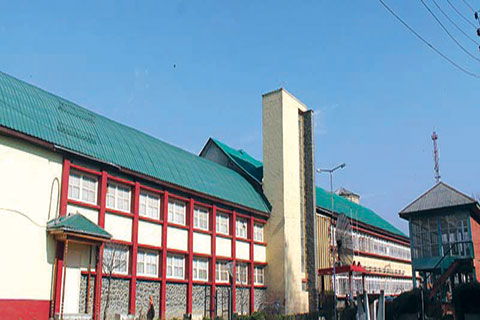
GMC Srinagar’s Urology Department Marks Historic Quadruple Milestone in Medical Excellence and Innovation

By Azadi Times | Srinagar Bureau | Srinagar, Indian administered Jammu & Kashmir — The Department of Urology at the Super Speciality Hospital, Government Medical College (GMC) Srinagar, has achieved an unprecedented quadruple milestone in the fields of medical education, research, surgical excellence, and patient care, placing Jammu & Kashmir firmly on the national healthcare map.

Under the visionary leadership of Prof. Syed Sajjad Nazir, the department has emerged as a center of excellence in urological sciences, marked by achievements that combine rigorous academic standards with cutting-edge clinical practice.

First Graduating Batch of MCh Urology Celebrates Milestone

The first and most symbolic of the department’s recent successes is the graduation of the inaugural batch of MCh Urology specialists. This academic milestone reflects the department’s growing capacity to deliver world-class surgical training in Kashmir, and its emergence as a reliable institution for higher medical education in a conflict-affected region.

National Recognition at UROLITHICAN 2023, Kolkata

The department earned dual accolades at UROLITHICAN 2023, a prestigious national conference held in Kolkata, showcasing the team’s exceptional academic and clinical contributions. These awards mark a national-level recognition of the department’s evolving stature in Indian urological research and surgical precision.

Live Surgery Demonstration at AIIMS Bathinda Garners Top Honors

Further cementing its reputation, Prof. Sajjad Nazir performed a live Retrograde Intrarenal Surgery (RIRS) at the NZUSICON 360° Urolithiasis Conference hosted by AIIMS Bathinda, where the department secured third prize. The demonstration underscored the team’s commitment to innovation, skill, and knowledge sharing in complex urological procedures.

Breakthrough in Kidney Transplant Surgery Under Ayushman Bharat

Perhaps the most impactful development has been the successful revival of live-related kidney transplantation, with the first case conducted under the Ayushman Bharat health insurance scheme. This breakthrough not only underscores the department’s clinical capability but also its commitment to making advanced medical care accessible to economically weaker patients.

A Beacon of Hope and Medical Advancement in Jammu & Kashmir

These combined achievements represent a clinical revolution in Kashmir’s public healthcare system. The Urology Department at GMC Srinagar has now firmly positioned itself as a beacon of advanced medical education and compassionate care, offering inspiration and tangible results in a region often overshadowed by political narratives.

Why This Matters

In a region like Jammu & Kashmir, where political uncertainty often overshadows institutional development, this accomplishment offers a powerful counter-narrative of progress, resilience, and academic integrity. The achievements of GMC Srinagar’s Urology Department not only uplift the region’s healthcare ecosystem but also reinforce the capacity of local institutions to contribute meaningfully at a national level.

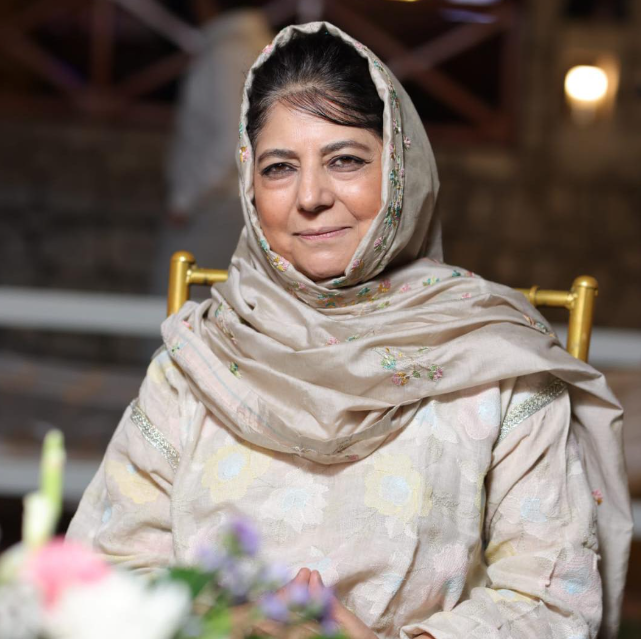
Mehbooba Mufti: “People of Pahalgam Will Safeguard the Amarnath Yatra as They Always Have”

    0

    By Azadi Times | Srinagar Bureau | Pahalgam, Indian administered Kashmir — In a strong statement underscoring communal harmony and economic concern, PDP President and former Chief Minister Mehbooba Mufti said that the local people of Pahalgam will continue to safeguard and host the annual Shri Amarnath Ji Yatra as they have done in the past, despite recent challenges.

    Speaking to reporters on the sidelines of a local event in Pahalgam on Tuesday, Mufti reaffirmed Kashmir’s legacy of hospitality and spiritual tolerance, saying,

    “The people of Kashmir will welcome the Amarnath pilgrims as they always have, with open arms and full dedication.”

    Economic Woes After Baisaran Incident

    Mehbooba Mufti highlighted the economic hardships faced by locals in the wake of the recent tragedy in the Baisaran valley, which disrupted tourism and pilgrimage activity in the region.

    “After the Baisaran incident, the situation changed drastically. Nearly 10,000 people—including pony owners, hotel operators, shopkeepers, taxi and auto drivers—have suffered economic setbacks,” she said.

    She emphasized that many of these locals are struggling with bank loans and financial stress, urging the administration to step in with relief and revival measures.

    Call for Community-Led Protection of Pilgrimage Routes

    The PDP chief said her visit to Pahalgam was specifically aimed at rallying local workers along the Amarnath Yatra routes, encouraging them to take collective ownership in safeguarding the pilgrimage.

    “This is not just about religious duty; it’s about restoring trust and reviving tourism in the region,” she added.

    Appeal to Administration and Shrine Board

    Mufti also made specific appeals to the Jammu & Kashmir administration and the Shri Amarnath Shrine Board, calling for:

    • Reopening of closed parks to facilitate local tourism and provide economic relief to service providers such as horsemen and vendors.

    • Authorization for pony owners to bring the full number of their registered horses for Yatra-related services.

    She stressed the need for inclusivity and local engagement in the management of the pilgrimage, noting that local livelihoods are deeply tied to the seasonal influx of pilgrims.

    Reinforcing Kashmir’s Spirit of Coexistence

    Despite her political differences with the current administration, Mehbooba Mufti’s statements reflected a broader theme of Kashmir’s historical role in fostering interfaith unity.

    “We will leave no stone unturned in serving the Yatris, just as we have always done,” she affirmed.

    Why This Matters
    Amid rising economic uncertainty and increasing political polarization, Mufti’s statement acts as both a plea for administrative sensitivity and a reaffirmation of Kashmir’s Sufi-rooted culture of communal harmony. It also highlights the fragile balance between tourism-dependent livelihoods and the politics of pilgrimage in the conflict-scarred region of Jammu & Kashmir.

    Over 100,000 Devotees Attend 129th Annual Urs of Hazrat Baba Nizamuddin Kiyanwi Larvi (RA) in Wangat Kangan

      0

      Location: Baba Nagri, Wangat, Kangan, Indian administered Jammu & Kashmir: In one of the largest spiritual gatherings of the year, more than 100,000 devotees from across Jammu and Kashmir—and beyond—gathered in Baba Nagri, Wangat Kangan to mark the 129th annual Urs of Hazrat Baba Nizamuddin Kiyanwi Larvi (RA).

      This year, due to Eid al-Adha falling in early June, the traditional Urs dates were adjusted. The spiritual ceremonies commenced on June 8 and concluded on June 9, instead of the usual June 6–8 schedule.

      A Gathering of Faith Across Borders

      Devotees from Poonch, Rajouri, Mendhar, Surankote, Kalakote, Uri, Pahalgam, Bandipora, Kokernag, Kulgam, Kishtwar, Doda, Shopian, Kupwara, and various regions of Jammu and outside Jammu & Kashmir traveled to attend the sacred event.

      Read Also: Urs of Hazrat Mir Syed Ali Hamdani (RA) Being Observed in Srinagar with Great Reverence

      The concluding ceremony witnessed an emotional and spiritually uplifting atmosphere with night-long prayers, Qur’an recitations, Durood o Azkaar (salutations and remembrance), and the Khitab al-Mu’azzamat—a major sermon of the Urs.

      Message of Peace, Harmony, and Reform

      Mian Altaf Ahmad, the Sajjada Nashin (spiritual head), delivered the keynote address during the concluding session. In his moving sermon, he emphasized the teachings of Prophet Muhammad (PBUH), urging followers to maintain communal harmony, promote Islamic values, and—most critically—protect youth from the growing threat of drug addiction.

      “Any household afflicted by drug abuse is doomed to collective suffering,” Mian Altaf declared, urging the younger generation to abstain from destructive habits and reconnect with spirituality and service.

      He also praised the legacy of Baba Nizamuddin Kiyanwi (RA), who dedicated his life to human service, scholarship, and spiritual enlightenment.

      Organizational Excellence

      The Urs featured addresses from numerous renowned Islamic scholars, each reflecting on the noble life and mission of the revered saint. Organizers ensured adequate food and accommodation for the sea of pilgrims who had traveled long distances to pay homage.

      Mian Altaf extended heartfelt gratitude to the Ganderbal district administration for facilitating the large-scale gathering with efficient and well-coordinated arrangements. He noted a year-on-year increase in attendance, signaling a growing spiritual awakening and reverence for the saint’s message of love, unity, and service.

      Why It Matters
      The annual Urs of Hazrat Baba Nizamuddin Kiyanwi Larvi (RA) stands as a powerful symbol of Kashmir’s rich spiritual heritage and the enduring legacy of Sufi traditions that promote peace, interfaith harmony, and collective reform. As spiritual gatherings continue to draw massive crowds across the region, they underscore the importance of grassroots religious leadership in addressing contemporary challenges—especially those facing youth.

      Pallandari Awami Action Committee Calls for Unified Demand for Empowered Constituent Assembly in Jammu & Kashmir

      Pallandari, Pakistan-administered Jammu & Kashmir: In a crucial meeting held today, the Pallandari Awami (People) Action Committee (PAAC) has issued a series of resolutions addressing pressing regional and national issues.

      The committee has called for a united demand across Azad Jammu & Kashmir (AJK) for the establishment of an empowered constituent assembly and condemned the government’s failure to honor recent agreements made with the People’s Rights Movement.

      Read Also: Exclusive Interview with Sardar Aman Kashmiri | A Leading Voice in the Azad Kashmir

      Key Resolutions from the Meeting:

      1. Call for United Action on Empowered Assembly:
        The committee urged all local action committees across Pakistan-administered Jammu & Kashmir to make the establishment of a fully empowered constituent assembly a central public demand. PAC emphasized that a truly representative constitutional structure is essential for securing the rights and identity of the region’s people.

      2. Condemnation of AJK Government’s Inaction:
        The PAC strongly condemned the AJK government’s non-compliance with the agreement it had reached with the People’s Rights Movement. The committee called upon the general public to fully support any protest or mobilization announced by the Joint People’s Action Committee in this regard.

      3. Solidarity with Gilgit-Baltistan Protests:
        Expressing concern over recent developments in Gilgit-Baltistan, the committee condemned the arrest of protest leaders opposing the controversial minerals law and criticized what it described as colonial-style exploitation of the region’s resources. The PAC demanded the immediate release of detained activists and the withdrawal of anti-people legislation.

      4. Launch of Grassroots Awareness Campaign:
        PAC Pallandari announced it will soon initiate a public awareness campaign under the theme “Why a Constituent Assembly?”. The campaign will begin with the restructuring of ward-level and village-level committees throughout Tehsil Pallandari to engage directly with the local populace.

      5. Support for Local Infrastructure and Affected Communities:
        The committee expressed full support for ongoing public protests demanding the construction of key roads including Tararkhal to Pallandari, Pana to Chhe Chhan, and Chhe Chhan to Namb. Furthermore, PAC voiced solidarity with displaced residents of the Holar-Karot Dam project in Tehsil Pallandari and Sehnsa, endorsing their protests and marches for justice.

      6. Tribute to Martyrs of the People’s Rights Movement:
        Paying homage to those who lost their lives during the People’s Rights Movement in Muzaffarabad, the PAC warned the government against harassment of the martyrs’ families, stating such actions would be seen as a direct attack on the people of the region. The committee declared its right to resist any such oppressive tactics.

      7. Commitment to Resolving Public Issues:
        Reaffirming its commitment, the PAC pledged to intensify its efforts to resolve all civic and developmental issues facing the Pallandari region.

      Why This Matters
      This declaration by the Pallandari People’s Action Committee reflects the growing grassroots momentum across AJK for political empowerment, constitutional recognition, and resource justice. The committee’s alignment with similar movements in Gilgit-Baltistan signals a broader regional awakening demanding autonomy, transparency, and democratic participation.

      The resolutions are expected to influence the future course of political activism in the region and could become a blueprint for collective action among civil society groups across both AJK and Gilgit-Baltistan.

      Muzaffarabad’s Beloved Eccentric: The Passing of Liaqat Sain, the City’s Mystical Wanderer

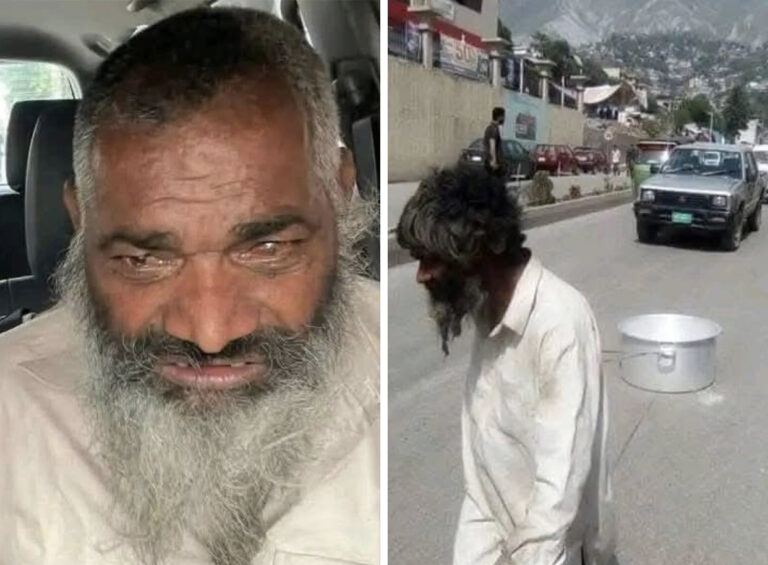
      Muzaffarabad, Azad Kashmir (PaJK) – The capital city of Pakistan-administered Kashmir has lost one of its most enigmatic souls. Liaqat Sain, a wandering mystic known for dragging an iron pot (degcha) through the streets, passed away under mysterious circumstances, leaving behind a legacy of quiet intrigue and urban folklore. A Man of the Streets, A Legend of the City For years, Liaqat Sain was a fixture in Muzaffarabad’s bustling Shuhada Chowk (Shaukat Line). Clad in tattered clothes, he would abruptly stop vehicles with a silent gesture, climb aboard without a word, and motion for the driver to proceed. His presence alone drew crowds—some out of curiosity, others out of reverence. Read Also: New Water Treatment Plant Inaugurated in Muzaffarabad to Address Capital’s Water Needs His trademark was the iron pot tied to a rope, which he dragged behind him like a wandering ascetic. Locals recall how he would occasionally pause at his usual spots, where people would gather to offer him tea or food. He rarely spoke, yet his silence spoke volumes. Sudden Disappearance, a Tragic End Liaqat Sain went missing just before Eidul al-Adha 2025, sparking whispers across the city. Five days later, his body was discovered near Golra Morr, Rawalpindi, in Pakistan under unclear circumstances. His death has left a void in Muzaffarabad’s cultural tapestry, where he was as much a part of the city’s identity as its rivers and mountains. The Mystic’s Life: Between Folklore and Reality Legends swirled around him—some saw him as a saint, others as a madman. But to most, he was simply “Sain,” an innocent soul wandering between worlds. After a past accident left him with a broken leg, he abandoned dragging his pot but never abandoned his attachment to it, often seen sitting beside it in Shaukat Line. A City in Mourning Muzaffarabad, a city accustomed to political shifts and power struggles, now mourns a different kind of loss—the departure of a man who belonged to no one and yet was a part of everyone’s daily life. Similar figures, like Hussaini Shah in Kotli, continue to roam Kashmir’s streets, but Liaqat Sain’s absence is deeply felt. Final Prayers for a Free Spirit As news of his death spreads, social media is flooded with tributes. “He was truly a free soul,” one resident wrote. Another added, “The streets of Muzaffarabad will feel empty without him.” May his soul find peace—a man who lived without chains, and died leaving behind only legends.

      Justice Sardar Liaqat Hussain Sworn in as Acting Chief Justice of AJK High Court Amid Ongoing Controversy Over Permanent Appointment

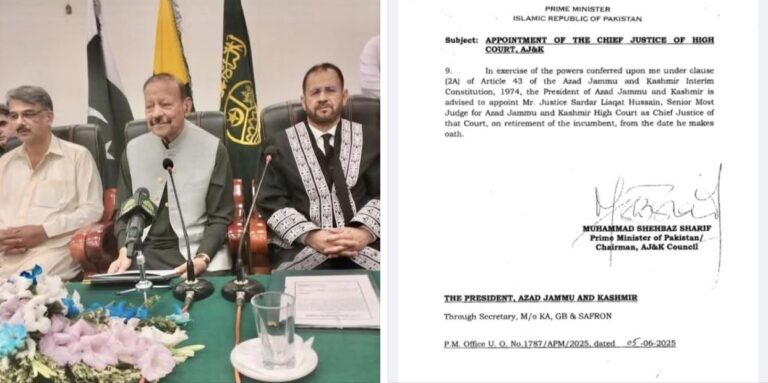
      Islamabad (The Azadi Times) – Justice Sardar Liaqat Hussain was sworn in as the Acting Chief Justice of the Azad Jammu and Kashmir (AJK) High Court in a formal ceremony held at the multipurpose hall of Kashmir House, Islamabad, Pakistan. The oath was administered by Azad Jammu Kashmir (Pakistan administrated Kashmir) AJK President Barrister Sultan Mehmood Chaudhry, marking a pivotal moment for the judiciary in the region amid ongoing controversy surrounding the delay in appointing a permanent Chief Justice.

      The ceremony witnessed the presence of high-ranking officials and dignitaries, including Prime Minister of AJK Chaudhry Anwar-ul-Haq, former AJK Prime Minister Sardar Muhammad Yaqoob Khan, former Supreme Court Justice Ghulam Mustafa Mughal, senior judges of the High Court, members of the AJK Assembly, and representatives from the legal fraternity, district judiciary, High Court establishment, civil society, and senior media personnel.

      Justice Sardar Liaqat Hussain, after taking oath, mingled with attendees, received congratulatory messages, and was presented with floral bouquets from lawyers and citizens alike.

      Legal Fraternity Expresses Concern Over Delay in Permanent Appointment

      Despite the celebratory atmosphere, the event was overshadowed by rising tensions within the legal community regarding the delay in issuing a notification for the permanent appointment of the Chief Justice of AJK High Court.

      According to Supreme Court Bar Association President Javed Najam Al-Thaqib Advocate and other senior lawyers, a Supreme Court ruling stipulates that a vacant constitutional position like the Chief Justice must be filled on a permanent basis within one month. The legal community argues that this timeline has not been honored, even though approval for the appointment was granted by the Prime Minister of Pakistan.

      In response, the Bar Council has issued a 48-hour notice to the federal government, demanding immediate action to notify a permanent Chief Justice. Vice Chairman of the Bar Council, Aqab Hashmi Advocate, voiced these concerns during an emergency meeting, emphasizing that failure to meet the deadline could lead to a statewide protest movement.

      Additionally, Secretary General of the High Court Bar Association, Zafar Umar Advocate, has begun consultations with legal representatives across the region to explore further legal and democratic options in response to the delay.

      Debate Over Oath-Taking in Islamabad Sparks Public Discussion

      The location of the oath-taking ceremony in Islamabad—rather than within AJK—has also stirred public debate across social media platforms, where citizens and activists questioned the symbolism and implications of holding such a significant judicial ceremony outside the territorial boundaries of Azad Jammu and Kashmir.

      Some commentators argue that such actions may undermine the autonomy of AJK’s institutions, while others pointed out logistical or diplomatic justifications. Nevertheless, the topic continues to trend online, especially among pro-Kashmiri voices advocating for greater judicial independence and institutional transparency.

      What Lies Ahead for the Judiciary in AJK?

      Justice Sardar Liaqat Hussain’s appointment as Acting Chief Justice comes at a crucial juncture for AJK’s legal system. With mounting pressure from the Bar Councils and civil society, the delay in the permanent appointment is not just an administrative concern—it’s becoming a symbolic issue tied to legal sovereignty and institutional respect.

      Observers note that the coming days will be decisive. If the federal government fails to issue a notification within the Bar Council’s deadline, the region could witness widespread protests, legal action, or even a temporary judicial impasse. On the other hand, swift action by the authorities could help restore confidence in the judicial process and strengthen the rule of law in Azad Jammu and Kashmir.

      Conclusion

      While the swearing-in of Justice Sardar Liaqat Hussain is a formally significant event, it has also triggered serious questions about legal procedures, institutional independence, and the broader political relationship between Islamabad and Muzaffarabad. As the situation unfolds, the eyes of the region remain on both the judiciary and the government, with hopes for a resolution that respects the constitution, judicial integrity, and the democratic will of the people of Azad Jammu and Kashmir.

      The Authentic Kashmiri Kahwa: Evidence-Based Benefits, Recipe, and Why the World Is Falling in Love with This Golden Tea

      Kashmir, often dubbed “Paradise on Earth,” is not just celebrated for its breathtaking valleys and snow-capped peaks. The region also boasts a centuries-old tradition of brewing one of the world’s most aromatic and healthful teas: the Kashmiri Kahwa. As this golden beverage finds its way onto menus from Dubai to London and New York, we explore why health experts, tea connoisseurs, and everyday consumers are raving about its unique blend of flavor, wellness, and culture.

      What Is Kashmiri Kahwa? A Taste of Tradition

      Kashmiri Kahwa is more than just a drink—it’s a cultural emblem. Traditionally sipped in ornate Samovars (metal urns) and served to guests during festivals and weddings, Kahwa (also spelled “kehwa” or “qehwa”) is an integral part of the Kashmiri identity.

      Check Also: Kashmiri Methi Chaman Recipe

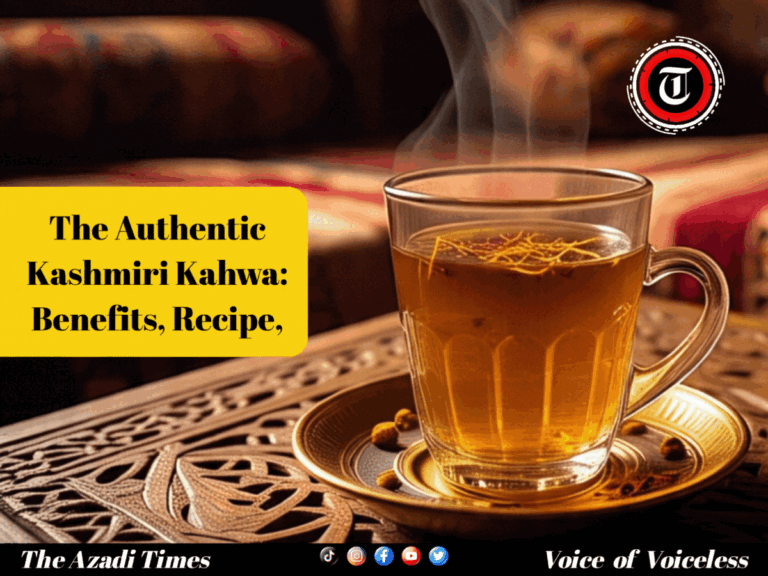
      Prepared with green tea leaves, cardamom, cinnamon, and delicate saffron strands, and often garnished with crushed almonds or walnuts, this fragrant infusion is designed to comfort, rejuvenate, and heal.

      “The first sip of Kahwa feels like a warm embrace on a snowy Kashmiri morning. Its aroma and flavor linger, reminding you that you’re tasting history and hospitality,” shares Dr. Farah Khan, a nutritionist and native of Srinagar.

      Kashmiri Kahwa Benefits: More Than Just a Cup of Tea

      1. Immunity Booster

      The blend of green tea and spices in Kahwa is rich in natural antioxidants and antibacterial compounds. Cardamom and cinnamon are known for their immune-boosting properties, making Kahwa a go-to remedy for fighting seasonal colds and flu.

      Review:
      “I started drinking Kahwa during winter and noticed fewer colds and improved energy. It’s now my daily ritual,” says Maria Lopez, a wellness blogger based in Toronto.

      2. Digestive Aid

      Kahwa’s ingredients, particularly cardamom and cinnamon, help stimulate digestion. This is why it’s often served after heavy Kashmiri feasts or during breakfast.

      3. Weight Management

      Green tea is famous for its metabolism-boosting qualities, and the subtle addition of saffron is believed to curb appetite. Studies suggest that incorporating Kahwa into a balanced diet may aid weight loss and fat burning.

      4. Mental Wellness

      Saffron, sometimes called “sunshine spice,” is linked to mood enhancement and stress reduction. Combined with the calming effect of warm tea, Kahwa can help promote mental clarity and a sense of well-being.

      5. Rich in Antioxidants

      The synergy of green tea, saffron, and spices makes Kahwa a potent source of antioxidants. These compounds are vital for neutralizing free radicals, supporting healthy skin, and potentially lowering the risk of chronic diseases.

      6. Natural Detox

      Kahwa’s warmth and ingredients encourage natural detoxification, supporting liver function and flushing out toxins.

      How to Make Authentic Kashmiri Kahwa at Home

      Making Kahwa is an act of mindfulness, reflecting the unhurried pace of Kashmiri life.

      You will need:

      • 2 tsp Kashmiri green tea leaves (or any high-quality green tea)
      • 3-4 saffron strands
      • 2-3 crushed cardamom pods
      • 1 small cinnamon stick
      • 2 cups water
      • 1 tbsp honey or sugar (optional)
      • Crushed almonds/walnuts for garnish
      • Pinch of dried rose petals (optional)

      Method:

      1. Boil Water: Bring 2 cups of water to a gentle boil.
      2. Infuse Spices: Add cinnamon, cardamom, and saffron. Simmer for 5 minutes.
      3. Add Tea Leaves: Stir in green tea leaves. Let steep for 3-4 minutes until the water turns golden.
      4. Sweeten (Optional): Add honey or sugar to taste.
      5. Serve: Strain into cups. Garnish with nuts and rose petals.

      Tip: Traditionalists recommend using a Samovar for brewing, but a regular saucepan works just as well.

      Kahwa in Global Cafés: From Srinagar to Sydney

      The world’s growing fascination with wellness teas has put Kahwa in the spotlight. From high-end tea bars in Dubai to artisanal cafés in London and Brooklyn, Kashmiri Kahwa is being reimagined and served to new audiences.

      Review:
      “We serve Kahwa with a twist—adding a touch of orange zest and serving it iced in summer. It’s our best-selling tea,” says Ahmed Yousuf, owner of a specialty tea shop in Dubai.

      In Pakistan, India, and the Gulf, Kahwa is now available in tea lounges and restaurants. Online stores offer pre-mixed Kahwa blends, making it accessible even in regions with no Kashmiri diaspora.

      Why Choose Kahwa Over Other Teas?

      • Distinctive Flavor: The blend of saffron, cardamom, and cinnamon creates a flavor profile unmatched by black or standard green teas.
      • Cultural Connection: Sharing Kahwa is a way to experience Kashmiri hospitality and tradition, even thousands of miles from the Himalayas.
      • Wellness Potential: With proven health benefits and centuries of traditional usage, Kahwa stands out as both a comforting and restorative beverage.

      International Review:
      “As a tea sommelier, I’ve tasted dozens of traditional blends. Kahwa is unique—it’s both luxurious and healing, perfect for modern lifestyles,” notes Eleanor Briggs, UK-based tea educator.

      Expert Opinions

      Nutritionists say that while Kahwa is not a miracle cure, its combination of green tea, spices, and antioxidants makes it a beneficial addition to most diets.

      “Kahwa is a smart choice for those looking to reduce sugar intake, support digestion, and enjoy a caffeine lift without the jitters common with coffee,” explains Dr. Sameer Patel, a dietitian in London.

      Where to Find Kashmiri Kahwa

      Kahwa is now widely available:

      • Cafés & Restaurants: Look for authentic Kashmiri or South Asian restaurants worldwide.
      • Online Shops: Specialty tea retailers and major e-commerce sites offer genuine Kahwa blends.
      • Homemade: The ingredients are easy to source, making homemade Kahwa a delightful and affordable option.

      Final Thoughts: A Cup Worth Savoring

      Kashmiri Kahwa is more than just a hot beverage—it’s an invitation to slow down, savor, and connect with a tradition that spans generations. Whether you seek health benefits, a new taste adventure, or a window into Kashmiri culture, this golden tea is worthy of a place in your cup.

      “One cup, and you’ll be hooked,” promises Zainab, a Kashmiri grandmother whose family recipe has been passed down for generations.

      Have you tried Kashmiri Kahwa? Share your experiences and favorite recipes with us!

      Everything You Need to Know About Kashmiri Dress for Men, Women, Girls, Where to Buy & Expert Tips

      Kashmir, often called the “Paradise on Earth,” is famous not only for its breathtaking valleys and mountains but also for its rich cultural heritage. One of the most vivid expressions of Kashmiri culture is its traditional clothing, which blends centuries-old artistry, comfort, and symbolism. For locals and admirers worldwide, Kashmiri dress represents more than just fabric — it tells a story of the region’s history, identity, and craftsmanship.

      What Makes Kashmiri Dress Unique?

      How to Choose, Where to Buy & Style Tips
      How to Choose, Where to Buy & Style Tips

      At the heart of Kashmiri dress lies the famous pheran, a loose-fitting, woolen cloak that serves as both an everyday garment and a cultural symbol. Its design is perfectly suited to Kashmir’s cold climate, offering warmth without compromising elegance. Men and women alike wear the pheran, but the styles and embellishments differ significantly.

      Read Also: Tech, Crafts, and Saffron: 15 Homegrown Business Ideas for Kashmiri Women

      The Pheran: Kashmir’s Iconic Garment

      • Material: Traditionally made from wool or pashmina, the pheran is designed to keep the wearer warm during the harsh winter months. Modern variations may include silk or cotton blends for lighter wear.

      • Design: Women’s pherans often feature intricate Kashida embroidery around the neckline, sleeves, and hemline. Men’s pherans are usually plainer but can also be decorated for special occasions.

      • Length and Style: While the men’s pheran typically reaches the knees, women’s pherans may be longer and are often paired with embroidered scarves or shawls.

      Kashmiri Traditional Dress: A Closer Look

      The essence of Kashmiri traditional dress lies not only in the garments themselves but in the intricate handcrafted details and symbolic patterns that adorn them. These dresses are more than just clothing—they are a vibrant expression of Kashmir’s rich cultural heritage and natural beauty. At the heart of this tradition is the exquisite art of Kashida embroidery, a craft passed down through generations of skilled artisans.

      Kashida embroidery is renowned for its fine, detailed needlework, where artisans use silk or woolen threads to create stunning motifs that tell stories of the region’s flora and fauna. The embroidery designs are deeply inspired by Kashmir’s lush environment, featuring elements such as tulips, chinar leaves, vines, and other botanical forms. These motifs are not randomly chosen but hold symbolic significance—each representing aspects of nature, life, and spirituality in Kashmiri culture.

      Read Also: Kashmiri Mehndi Designs: Timeless Henna Art for Hands & Feet Now Trending Globally

      Creating a piece with Kashida embroidery is a labor-intensive process that demands immense patience and precision. Artisans often spend weeks, sometimes even months, meticulously stitching each design by hand. This slow and careful approach ensures that every thread is perfectly placed, resulting in a rich texture and depth that machine embroidery cannot replicate. The colorful threads contrast beautifully against the fine wool or silk fabric, making each garment a unique masterpiece.

      Pashmina and Woolen Shawls

      Pashmina, the world-renowned wool harvested from Himalayan goats, is a staple of Kashmiri clothing. The shawls made from this wool are soft, lightweight, and warm — perfect companions to the pheran. For centuries, these shawls have been a symbol of status and craftsmanship, often embellished with delicate embroidery or patterns.

      Kashmiri Dress for Ladies: Elegance and Grace

      The Kashmiri dress for ladies is a perfect blend of tradition and modern style. Women’s clothing typically combines the traditional pheran with contemporary fabrics and cuts, making it versatile for both everyday wear and special occasions.

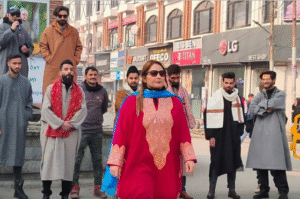
      A woman at Srinagar’s Lal Chowk wearing a deep red traditional Kashmiri pheran with intricate Kashida embroidery during the International Pheran Day show.
      A woman at Srinagar’s Lal Chowk wearing a deep red traditional Kashmiri pheran with intricate Kashida embroidery during the International Pheran Day show.

      Features of Women’s Kashmiri Dress

      • Embroidered Pherans: Women’s pherans are richly embroidered with Kashida work, featuring bright colors and intricate designs that enhance the garment’s elegance.

      • Pairings: These dresses are often worn with churidars or straight pants and complemented by colorful scarves.

      • Jewelry: Traditional silver and gold jewelry such as the Tujhoor necklace, bangles, and earrings add to the regal look.

      • Occasions: From weddings to religious festivals like Eid and Navroz, the Kashmiri dress for ladies is designed to shine in cultural celebrations.

      Kashmiri Dress for Girls: Preserving Tradition Young and Bright

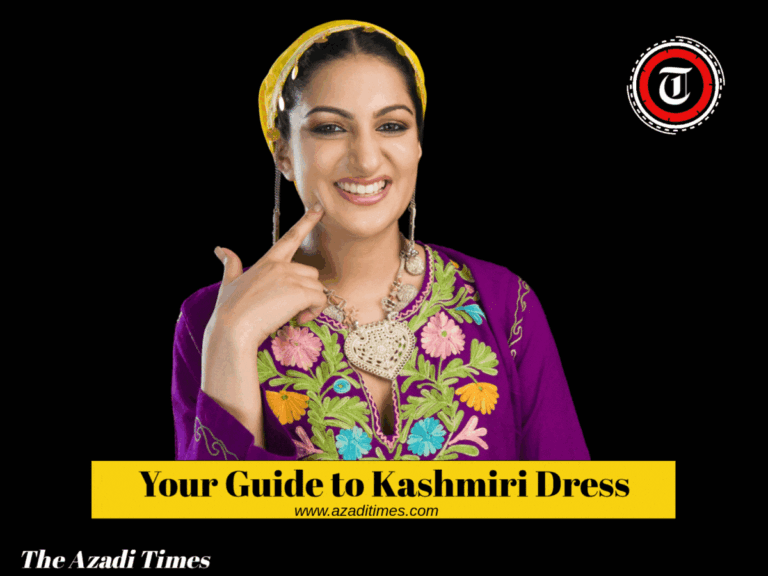
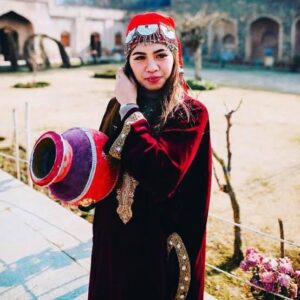
      A young Kashmiri girl stands wearing traditional Kashmiri dress.
      A young Kashmiri girl stands wearing traditional Kashmiri dress.


      For the younger generation, the Kashmiri dress for girls is a charming adaptation of adult styles, maintaining cultural roots while allowing comfort and playfulness.

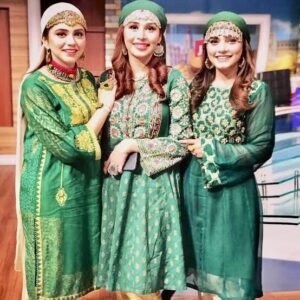
      Nowadays, some Kashmiri pherans and dresses are sold in markets with altered basic colors like green, but the traditional and authentic color of the Kashmiri pheran is red.
      Nowadays, some Kashmiri pherans and dresses are sold in markets with altered basic colors like green, but the traditional and authentic color of the Kashmiri pheran is red.

      Key Elements

      • Miniature pherans crafted from lighter wool or cotton.

      • Bright, floral embroidery reflecting Kashmir’s natural motifs.

      • Coordinated scarves and caps.

      • Light accessories suitable for children.

      Parents often dress their daughters in these traditional outfits during family gatherings and religious festivals, nurturing a deep appreciation for their heritage.

      Kashmiri Dress for Men: Tradition and Elegance

      The traditional dress for Kashmiri men is deeply rooted in the region’s culture and climate, combining practicality with refined craftsmanship. The most iconic garment worn by men in Kashmir is the pheran—a loose, long cloak made from wool or other warm fabrics, designed to protect against the chilly mountain weather. Unlike the women’s pheran, which often features elaborate embroidery, the men’s version is usually simpler but no less dignified, symbolizing modesty and resilience.

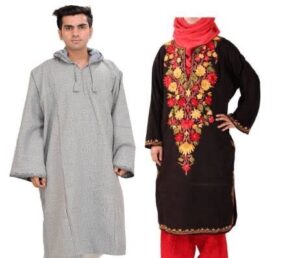
      A Kashmiri boy and girl together wearing traditional Kashmiri dresses.
      A Kashmiri boy and girl together wearing traditional Kashmiri dresses.

      Underneath the pheran, men traditionally wear shalwar kameez, a comfortable and versatile outfit consisting of a long tunic (kameez) and loose trousers (shalwar). This combination allows ease of movement, suitable for both daily chores and formal occasions.

      Read Also: Panzath’s Traditional Fishing Festival Blends Culture, Conservation, and Community Spirit

      A key accessory in men’s traditional attire is the karakul cap, made from the wool of the Karakul sheep. This hat is a symbol of Kashmiri identity and pride, often worn during special events and gatherings. In colder months, men also use woolen shawls or pashmina wraps draped over their shoulders, providing extra warmth and an added layer of elegance.

      Contemporary Trends and The Revival of Kashmiri Dress

      Kashmiri designers—both local artisans and those working internationally—are at the forefront of this movement, reimagining traditional attire through innovative designs and fresh perspectives. One prominent trend is fusion wear, where classic pieces like the iconic pheran (a loose, flowing gown traditionally worn in Kashmir) are redesigned with sleek, tailored cuts and paired with casual Western staples such as jeans or trousers. This creates a harmonious balance between comfort, tradition, and urban style.

      The intricate Kashida embroidery has also found new life beyond conventional garments. Its elegant floral and paisley motifs now embellish a variety of Western-style clothing—dresses, shirts, jackets—and even extend to accessories like handbags and scarves. This fusion not only highlights Kashmiri artistry but also makes it accessible to a diverse, fashion-forward crowd.

      Sustainability has become a crucial aspect of modern fashion, and Kashmiri textiles fit perfectly into this narrative. The renewed focus on handwoven, natural fabrics such as pashmina, silk, and wool reflects a growing eco-conscious mindset among consumers. These materials are prized for their quality, durability, and minimal environmental impact, making Kashmiri fashion a symbol of both cultural pride and responsible consumption.

      This ongoing revival is more than a trend; it is a powerful movement that supports local artisans, sustains traditional crafts, and introduces the timeless beauty of Kashmiri craftsmanship to the global stage.

      Where to Buy Authentic Kashmiri Dress Internationally: Top Countries and Trusted Online Stores

      The beauty and craftsmanship of Kashmiri dress are no longer limited to Kashmir or South Asia. Fashion enthusiasts and cultural lovers around the world can now easily purchase authentic Kashmiri traditional dresses online. Whether you live in India, Pakistan, the United States, China, the United Kingdom, Canada, or other countries, there are several trusted brands and online platforms that offer genuine, high-quality Kashmiri attire.

      Popular Countries Where Kashmiri Dress is in High Demand

      • India — Besides Kashmir itself, major cities like Delhi, Mumbai, and Bangalore have seen growing demand for Kashmiri dress, especially among lovers of ethnic and traditional wear.

      • Pakistan — Kashmiri pherans and pashmina shawls are very popular, particularly in Azad Kashmir and Punjab.

      • United States (US) — The Kashmiri diaspora and fashion lovers in the US can find many online stores offering international shipping for authentic Kashmiri garments.

      • China — Appreciation for Kashmiri wool and embroidery has grown, with online platforms facilitating access to these traditional clothes.

      • United Kingdom (UK) — The South Asian community in the UK highly values Kashmiri traditional dress, available through several boutique stores and online shops.

      • Canada — Kashmiri dresses, especially woolen pherans and shawls, are in demand during cold months, with multiple online options providing international delivery.

      Trusted Online Stores and Top Brands to Purchase Kashmiri Dress

      • Amazon (Global) — Amazon features a wide selection of Kashmiri pherans, pashmina shawls, and embroidered dresses with verified sellers offering worldwide shipping.

      • Etsy (Global) — Etsy is popular for handmade and traditional crafts; many Kashmiri artisans sell their authentic products directly here.

      • KashmiriShawl.com — A specialized online store delivering genuine Kashmiri pashmina shawls and pherans internationally.

      • Craftsvilla (India) — A leading ethnic wear platform in India offering a wide range of Kashmiri traditional dresses and accessories.

      • Daraz.pk (Pakistan) — Pakistan’s largest online marketplace, featuring an extensive collection of Kashmiri pherans and woolen garments.

      • PashminaHouse.com — Trusted for premium Kashmiri pashmina shawls and dresses, shipping to the US, UK, and Canada.

      • Fabindia (India, International Shipping Available) — Known for handwoven ethnic collections, Fabindia also offers Kashmiri-inspired designs.

      • Kashmir Box — A subscription box service delivering authentic Kashmiri crafts, including traditional dresses, shawls, and accessories worldwide.

      Tips and Recommendations for Buying Kashmiri Dress

      If you’re inspired to add Kashmiri attire to your wardrobe, authenticity and quality are key. Here are some tips:

      • Look for Handcrafted Embroidery: Machine-made embroidery lacks the depth and finesse of Kashida work.
      • Check Fabric Quality: Genuine pashmina is soft and lightweight, unlike cheap wool blends.
      • Check Shipping Policies: Different stores have varying shipping options, so verify that they deliver to your country before ordering.

      • Verify Authenticity: Always check seller ratings and customer reviews to ensure you receive genuine Kashmiri products.

      • Customs and Import Duties: Be aware that international purchases might be subject to customs fees or import taxes in your country.

      Final Thoughts

      The Kashmiri dress is more than just clothing; it is a living tradition, woven with history, art, and pride. From the iconic pheran to the delicate Kashida embroidery, every element tells a story of Kashmir’s vibrant culture. Whether it’s the elegant Kashmiri dress for ladies, the playful styles for girls, or the timeless traditional wear, these garments continue to captivate hearts worldwide.

      For Kashmiris and admirers of global fashion, embracing Kashmiri dress means celebrating resilience, craftsmanship, and beauty — a true cultural treasure from the heart of the Himalayas.

      Eid e Ghadeer Poetry & Greetings | Eid Ghadeer Mubarak Celebration 2025

      Eid e Ghadeer is among the most significant and spiritually powerful occasions in the Islamic calendar, especially for Shia Muslims around the world. Celebrated on the 18th of Dhu al-Hijjah, it commemorates the historic event at Ghadir Khumm, where Prophet Muhammad (PBUH) declared Hazrat Ali (A.S.) as his successor. The day is not only a political declaration of leadership but also a spiritual affirmation of divine will.

      For many believers, “Eid e Ghadeer Mubarak” is more than just a greeting. It is a declaration of loyalty, a remembrance of divine guidance, and a poetic celebration of truth and justice.

      The Poetic Spirit of Eid e Ghadeer

      Poetry has always played a vital role in Islamic tradition, especially during religious festivals. On Eid e Ghadeer, poetry becomes a voice of allegiance, love, and remembrance of Wilayah (guardianship). Whether recited in majlis gatherings, printed in newspapers, or posted on social media, Eid Ghadeer poetry brings out the emotional and intellectual depth of this historic occasion.

      Example of Traditional Eid e Ghadeer Poetry:

      “Ghadeer ke mehdan mein, uthi jab Muhammad ki aawaz,
      Ali hai mere baad, har Wali par ye hai Farmaan-e-Raaz.”

      This couplet, like many others, echoes the divine appointment of Imam Ali (A.S.) and is recited by believers across the world to honor the day.

      Why Poetry Matters on Eid Ghadeer

      1. Expression of Devotion

      Poetry on Eid Ghadeer allows believers to express their love for Imam Ali (A.S.) in words that are both emotionally rich and spiritually deep. These verses are often passed down generations, becoming part of the cultural memory of Shia communities from Kashmir to Karbala.

      2. Cultural Preservation

      In regions like Kashmir, Iran, Pakistan, and Iraq, poets write ghazals, qasidas, and manqabats to celebrate Eid e Ghadeer. These poetic traditions help preserve religious identity and serve as a form of cultural resistance in the face of oppression.

      3. Medium of Education

      Through rhyme and rhythm, Eid Ghadeer poetry teaches history, theology, and values of justice, courage, and loyalty. Especially for children and youth, it becomes an accessible way to learn about the Wilayah of Ali (A.S.).

      Read Also: What is Eid al-Ghadeer? Significance, History, and Global Observance — A Kashmiri Perspective

      Top 20 Eid e Ghadeer Poetry in Urdu

      1. Man kunto Maula, fa haza Ali-un Maula,
        Nabi ne kaha, Ali har ek ka Maula.

      2. Ghadeer ka paighaam hai roshni ka safar,
        Nabi ka farmaan, Ali hai Rahbar.

      3. Jahan Ali ka zikr ho, wahan Noor hi Noor,
        Ghadeer ke jashn mein hai har dil pur-suroor.

      4. Ghadeer Khumm mein uthi jo awaaz thi,
        Woh Rehmat-e-Rab ki misaal thi.

      5. Ali hai Wali, Ali hai Imam,
        Ghadeer ka hai yeh asal paighaam.

      6. Jashn-e-Ghadeer hai jashn-e-Wilayat,
        Yeh Eid hai sirf haq ki shanaakht.

      7. Ali se mohabbat hai imaan ki nishani,
        Ghadeer ka jashn hai sab se suhani.

      8. Ghadeer ki yaadon se roshan hai zameen,
        Har momin ke dil mein Ali ka noor hai hameen.

      9. Jis ne maana Ali ko Maula,
        Us ne paaya raah-e-huda ka taaj-o-tola.

      10. Ali ka zikr hai barkat ka sabab,
        Ghadeer ki khushi mein hai har dil khush tab.

      11. Ghadeer ka jashn hai rehmat ka nizaam,
        Ali ka naam hai har haq ka payaam.

      12. Ali ke bina adhoora hai deen,
        Ghadeer ne poora kiya Rasool ka yeh seen.

      13. Zameen bhi jhoom uthi, aasman bhi muskaraaya,
        Jab Nabi ne kaha: “Ali hai mera jaaya.”

      14. Ghadeer ka jashn hai Allah ka waada,
        Ali ka maqam hai sab se zyada.

      15. Ali ka zikr ho to milta hai sukoon,
        Ghadeer mein har lab pe hota hai junoon.

      16. Jashn-e-Ghadeer mein hai roshan har chiraagh,
        Ali ke naam se hai har saaz-o-raagh.

      17. Ali ke doston ko ho Eid e Ghadeer Mubarak,
        Mohabbat se bhar jaaye har ek dastarkhwan aur darakht.

      18. Ghadeer hai manzil bhi, raah bhi Ali,
        Nabi ka farmaan hai gawahi bhi Ali.

      19. Ali Ali har dil se nikle sada,
        Ghadeer ka paighaam hai sab se bada.

      20. Imamat ka jashn hai, Wilayat ka noor,
        Ghadeer mein hai har dil maghroor.

      Trending Eid e Ghadeer Poetry

      1. Ghadeer ka jashn hai rehmaton ka silsila,
        Ali ka zikr hai har gham ka ilaaj-e-khila.

      2. Na ho ghamzada, agar tu Ali ka hai,
        Ghadeer ke jashn mein har zarra muskara raha hai.

      3. Nabi ne kaha, jise chaha maine,
        Ali usi ka Maula hai, har zamane ke liye.

      4. Jashn-e-Ghadeer aaya hai, roshan har dar ho gaya,
        Ali ka naam sunte hi, dil bhi sukoonwar ho gaya.

      5. Wilayat ka ye taaj hai, jise sir pe Nabi ne rakha,
        Ghadeer mein har mo’min ne Ali ka dast tha pakda.

      6. Eid e Ghadeer sirf Eid nahi, ye imaan ki pehchaan hai,
        Jo Ali se juda, wo haq se anjaan hai.

      7. Jashn hai us paighaam ka jo aasman se aaya,
        Nabi ne jise sunaaya, har mo’min ne wo paaya.

      8. Ghadeer mein na tha sirf ek elaan,
        Woh tha deen ka tamaam imtehaan.

      9. Ali ka zikr hai rehmat ki misaal,
        Ghadeer ka jashn hai mohabbat ka jaam-e-laal.

      10. Nabi ne uthaya haath, Ali ka kiya izhaar,
        Banaya Maula, diya Wilayat ka ikraar.

      11. Man kunto Maula ki goonj ab bhi hai zinda,
        Har mo’min ke dil mein Ali ka hai jhanda.

      12. Na ho udaas, Ali tera Maula hai,
        Ghadeer ka jashn tere liye toola hai.

      13. Jahan Ali ka naam ho, wahan noor hi noor hai,
        Ghadeer ki raat mein har dil mashkoor hai.

      14. Ali se jud kar mila hai raasta-e-hidayat,
        Ghadeer ka paighaam hai sirf haq ki riwayat.

      15. Ali ka zikr sirf manzil nahi, raasta bhi hai,
        Ghadeer ka paighaam har dil ka waasta bhi hai.

      16. Ali ke bina Deen adhoora rehta,
        Ghadeer ka jashn poori duniya ke liye rehta.

      17. Mubarak ho tumhein yeh Eid-e-Ghadeer,
        Har dua mein ho Ali ka zikr, har zikar mein ho taqdeer.

      18. Ali ka jashn manaayein, mohabbat ka geet gayein,
        Ghadeer ke roshan raaste par sab ko le aayein.

      19. Ali ke naam ka parcham har dil pe lehraye,
        Ghadeer ki raat har saans mein samaaye.

      20. Eid e Ghadeer ka paighaam hai sab se azeem,
        Nabi ka waris hai Ali, deen ka hai yeh naseem.

      Modern Trends: Eid e Ghadeer Mubarak Poems Online

      With the rise of social media, poetic greetings such as “Eid e Ghadeer Mubarak” are now shared widely online through:

      • Instagram reels featuring Eid Ghadeer couplets

      • Facebook posts with Urdu and Persian manqabats

      • YouTube videos of poetry recitations

      • Whatsapp status updates with poetic cards

      This digital transformation has allowed Ghadeer poetry to reach global audiences, helping younger generations connect with their heritage in fresh and inspiring ways.

      Sample Eid e Ghadeer Poetry in English

      “On the day of Ghadir, the truth was made clear,
      With the Prophet’s voice, we learned to revere.
      ‘Ali is your leader,’ the Messenger declared,
      A moment divine, so eternally shared.”

      This kind of English poetry has become increasingly popular among diaspora Muslims in the West, offering a bridge between heritage and modern expression.

      Regional Flavor: Eid Ghadeer Poetry in Kashmir

      In Kashmir, Eid e Ghadeer is marked by majlis, nasheed sessions, and poetry contests. Local poets write verses that merge classical Arabic influences with the cultural rhythms of the valley.

      A Kashmiri couplet might sound like:

      “Ghadeer ki yaadon mein hai roshan har ek chiraagh,
      Ali ke naam par hai Kashmir ka har saaz-o-raag.”

      From Srinagar to Muzaffarabad, believers chant “Eid e Ghadeer Mubarak” while attending events where poets read powerful lines in Urdu, Kashmiri, and Persian.

      How to Say “Eid e Ghadeer Mubarak” Creatively

      While the traditional “Eid e Ghadeer Mubarak” is beautiful in its simplicity, expressing this sacred greeting with heartfelt poetry and eloquent phrasing brings the spirit of Wilayat to life in a way that resonates deeply with every believer. Across Kashmir, the Muslim world, and in Shia communities worldwide, creative greetings are often used in calligraphy art, posters, social media captions, and Eid cards, carrying both reverence and rhythm.

      Here are some inspired, poetic, and soul-stirring variations of saying “Eid e Ghadeer Mubarak”:

      Poetic & Meaningful Greetings for Eid e Ghadeer

      🔹 “Wasi-e-Rasool ko salaam ho, Eid Ghadeer Mubarak!”
      Translation: “Salutations upon the successor of the Prophet — Blessed be this Eid of Ghadeer!”

      🔹 “Jashn-e-Wilayah mubarak ho, har mo’min ko Ghadeer Mubarak!”
      Translation: “May the celebration of Wilayah bless every believer — Eid Ghadeer Mubarak to all!”

      🔹 “Ali ke naam ka parcham buland ho, Eid e Ghadeer Mubarak!”
      Translation: “May the banner of Ali’s name fly high — Wishing you a blessed Eid e Ghadeer!”

      🔹 “Man kunto Maula fa haza Ali-un Maula — Mubarak ho Ghadeer ka paighaam!”
      Translation: “He of whom I am the master, Ali is his master — Blessed be the message of Ghadeer!”

      🔹 “Wilayat ka taaj jisko mila, us Ali (A.S.) ko salaam — Eid e Ghadeer Mubarak ho!”
      Translation: “Peace be upon the one who was crowned with Wilayah — Eid e Ghadeer Mubarak!”

      🔹 “Ghadeer ka noor har dil mein chamke, Wilayat ka parcham sada lehraye — Mubarak ho yeh Eid sab ko!”
      Translation: “May the light of Ghadeer shine in every heart, and the flag of Wilayah always wave — Blessed Eid to all!”

      🔹 “Ali se mohabbat hai imaan ki shanakht — Eid e Ghadeer Mubarak ho, har haqparast ko!”
      Translation: “Loving Ali is the mark of true faith — Eid Ghadeer Mubarak to every follower of truth!”

      🔹 “Jahan Ali ka zikr ho, wahan rehmaat barsi ho — Eid Ghadeer Mubarak ho har us shakhs ko jo Wilayat ka raahi hai!”
      Translation: “Where Ali is remembered, there mercy descends — Eid Ghadeer Mubarak to every soul on the path of Wilayah!”

      🔹 “Ali Ali har dil ki sada ban jaye — Jashn-e-Ghadeer mubarak ho, doston!”
      Translation: “May every heart echo with the name of Ali — Happy Ghadeer Mubarak, friends!”

      Why Creative Greetings Matter

      These poetic expressions do more than just convey good wishes — they celebrate a historic moment of spiritual succession. Eid e Ghadeer is not just a celebration, but a reaffirmation of allegiance to truth, justice, and divine leadership. In Kashmir and globally, such creative phrases are widely shared in:

      • Instagram reels and captions

      • YouTube manqabat and nasheed intros

      • Calligraphy artworks and posters

      • WhatsApp and Telegram greeting cards

      • Public banners in majalis and juloos

      By using creative greetings, we add beauty, reverence, and identity to the message of Ghadeer — and keep the flame of Wilayat alive in every generation.

      Key Themes in Eid Ghadeer Poetry

      1. Wilayah (Guardianship):
        Poetry focuses on the divine appointment of Imam Ali (A.S.) and his unmatched virtues.

      2. Unity & Justice:
        Many poems emphasize how Ghadeer symbolizes the triumph of truth and justice in Islam.

      3. Prophet Muhammad’s Sermon:
        Verses often cite the Prophet’s words, such as: “Man kuntu Mawla, fa haza Ali-un Mawla.”

      4. Love for Ahlul Bayt:
        Deep devotion to the family of the Prophet is a central pillar of Ghadeer poetry.

      Popular Poets Who Wrote on Eid e Ghadeer

      • Allama Iqbal (indirect references)

      • Mir Anis & Dabeer (classical marsiya style)

      • Modern Urdu poets from Lucknow, Lahore, and Kashmir

      • Ayatollah Khamenei and other Iranian poets have also written lines to honor Ghadeer

      Conclusion: The Eternal Light of Ghadeer Lives Through Poetry

      Eid e Ghadeer is not just a date in history. It is a living event, commemorated in verses, echoing in hearts, and chanted in gatherings across the globe. Through Eid e Ghadeer poetry, generations are reminded of the trust placed in Imam Ali (A.S.), and the unbreakable chain of truth that began at Ghadir Khumm.

      As believers greet each other with “Eid Ghadeer Mubarak”, they not only share joy but also revive a legacy of leadership, love, and unwavering faith.