Kashmir, the valley known as Paradise on Earth, has always been more than a picturesque landscape of mountains and rivers. It is a cultural crossroads, a place where civilizations met and identities evolved. One of the most transformative shifts in Kashmiri history came in the 14th century, when Islam began to take root in the valley.
But who brought Islam to Kashmir? The question continues to spark debates — some argue that traders and Sufi saints introduced the faith through peace and spirituality, while others emphasize the role of political rulers and dynasties. What is clear, however, is that Islam’s arrival in Kashmir was unlike its spread in many other regions of the world: it was largely shaped by mysticism, tolerance, and cultural synthesis.
Today, when Kashmir’s identity is contested in political and religious narratives, revisiting the story of Islam’s origins in the valley helps us understand not only its past but also its present struggles.
Before Islam: Kashmir’s Religious Landscape
For centuries before the arrival of Islam, Kashmir stood as a vibrant crossroads of culture, faith, and philosophy. The valley’s earliest history is rooted in Hindu traditions, with texts like the Rajatarangini — the 12th-century chronicle penned by Kalhana — recording dynasties that built temples, patronized Sanskrit learning, and upheld Vedic rituals. Many ancient shrines, some still standing today, testify to this long Hindu heritage.
Equally significant was the Buddhist presence. Under Emperor Ashoka in the 3rd century BCE, Buddhism found fertile ground in Kashmir. Monasteries were established, stupas were raised, and the region became an intellectual hub for Buddhist scholars. Later, during the Kushan period, Kashmir maintained close ties with Central Asia, further strengthening its role in shaping Buddhist thought. Monks and pilgrims traveling along the Silk Road often paused in the valley, carrying with them Kashmir’s ideas to lands as far as Tibet and China.
By the 12th century, Kashmir had earned renown as a seat of Shaivism — particularly the esoteric philosophy of Kashmir Shaivism, which blended metaphysical depth with spiritual practice. Alongside this, Hindu temples and Buddhist monasteries coexisted, making the valley a living museum of South Asian spirituality.
Yet this rich spiritual tapestry also bore the weight of rigid social structures. The caste system was deeply entrenched, with social and economic hierarchies limiting mobility for large segments of the population. Many communities — artisans, peasants, and marginalized groups — found themselves excluded from the privileges of temple-centered life. This inequality created a yearning for more accessible and compassionate forms of spirituality.
It was into this environment that Islam entered Kashmir — not through the sword or conquest, but through the gentle persuasion of Sufi saints, traders, and travelers. Their message of equality, simplicity, and devotion resonated with ordinary Kashmiris, offering an alternative to rigid hierarchies and opening the door to a profound cultural transformation.
The Early Footsteps of Islam in Kashmir
The earliest traces of Islam in Kashmir appeared through the great arteries of trade and travel that connected Central Asia, Persia, and South Asia. Caravans moving along the Silk Road carried not only silk, spices, and gemstones but also languages, ideas, and spiritual traditions. By the 13th century, merchants, travelers, and mystics had begun sowing the seeds of Islamic thought in the valley, introducing a faith that promised equality and simplicity in contrast to the rigid social hierarchies of the time.
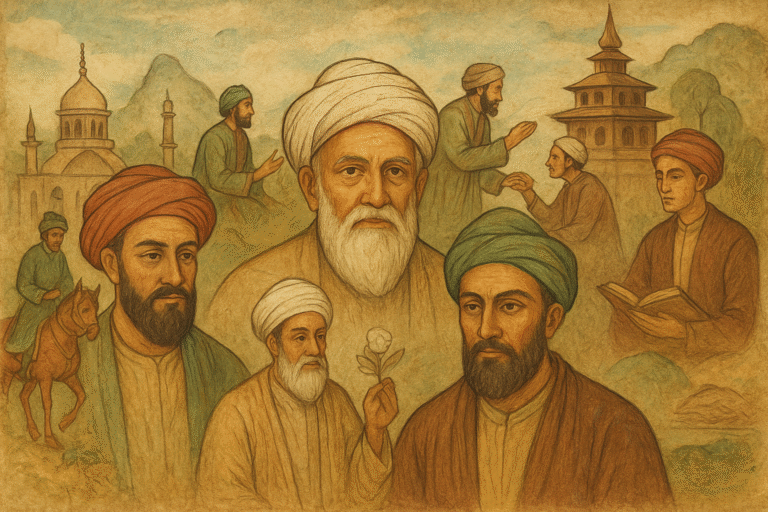
Among these early torchbearers was Syed Sharfuddin Abdul Rehman, better known as Bulbul Shah, a Sufi mystic from Turkistan. His arrival marked a decisive turning point in Kashmir’s spiritual history. Unlike political envoys or conquerors, Bulbul Shah carried no armies — only the power of his teachings. His message was deeply spiritual, centered on compassion, humility, and universal brotherhood. This resonated with the common people of Kashmir, many of whom felt suffocated under caste-based restrictions and inequalities.
Bulbul Shah’s influence reached the highest levels of Kashmiri society. Historical chronicles recount that Rinchan, a Buddhist prince from Ladakh who rose to power in Kashmir, was profoundly moved by Bulbul Shah’s message. Seeking a faith that aligned with his vision of justice and inclusivity, Rinchan embraced Islam under Bulbul Shah’s guidance and took the name Sultan Sadruddin. This royal conversion in the 14th century was more than symbolic — it laid the political and cultural foundation for Islam’s gradual acceptance across the valley.
Sultan Sadruddin’s embrace of Islam did not trigger forced conversions but rather encouraged voluntary adoption, as people found in Islam’s teachings an accessible path to spirituality. With Bulbul Shah’s influence, Islam began to take root not as an imposed faith but as a moral and spiritual alternative that welcomed all, regardless of birth or social standing.
The Legacy of Shah-i-Hamadan
If Bulbul Shah was the first spark, then Mir Syed Ali Hamadani (1314–1384) — revered as Shah-i-Hamadan — was the guiding flame who gave Islam its lasting foundation in Kashmir. A towering Sufi scholar and missionary from Hamadan in present-day Iran, Shah-i-Hamadan arrived in Kashmir during the mid-14th century, accompanied by hundreds of disciples, artisans, and scholars. His presence marked a new chapter in the valley’s religious, cultural, and economic transformation.
Shah-i-Hamadan’s mission was not confined to spiritual preaching. He envisioned a holistic society where faith, culture, and livelihood were interwoven. He introduced Islamic practices of governance, encouraged the construction of mosques and khanqahs (Sufi lodges), and promoted education. Yet perhaps his most enduring contribution was cultural: he brought with him highly skilled artisans from Persia and Central Asia, who laid the foundations of Kashmir’s world-renowned arts and crafts.
Carpet weaving, papier-mâché, wood carving, calligraphy, and shawl-making — all hallmarks of Kashmiri identity today — trace their origins to Shah-i-Hamadan’s efforts. By merging spiritual devotion with economic empowerment, he ensured that Islam in Kashmir was not just a matter of personal faith but a civilizational force shaping the valley’s identity.
Unlike conquerors who spread faith through power, Shah-i-Hamadan relied on persuasion through knowledge, compassion, and example. His writings, most notably Zakhirat-ul-Muluk (Treasure for Kings), blended spiritual guidance with practical advice on governance, emphasizing justice, humility, and welfare of the people. This synthesis of faith and pragmatism resonated deeply in a land yearning for both spiritual nourishment and social justice.
Over time, Shah-i-Hamadan became more than a saint — he became a cultural architect of Kashmir. Mosques and shrines associated with him remain vital centers of faith, while the crafts he introduced continue to sustain thousands of Kashmiri families centuries later. His legacy ensured that Islam in Kashmir would be firmly rooted in spirituality, culture, and community life.
Sheikh Noor-ud-Din Noorani: The Native Saint
If Shah-i-Hamadan symbolized the Persian influence that brought Islam to Kashmir, then Sheikh Noor-ud-Din Noorani (1377–1440) — affectionately called Nund Rishi — represented the very soul of Kashmiri Islam. Born in Kulgam district, Noorani grew up witnessing the social transformations of a valley in transition. Over time, he became not just a religious figure but the most celebrated native saint of Kashmir.
Sheikh Noorani’s teachings were rooted in simplicity and compassion. He rejected materialism, spoke out against social oppression, and emphasized harmony across communities. Unlike scholarly Persian texts, his verses were written in Kashmiri language, using the everyday idioms of the people. This made his message accessible to farmers, artisans, and common villagers, who found in his poetry both comfort and inspiration.
Through his teachings, Sheikh Noorani championed a spiritual philosophy that blended Islamic Sufism with indigenous Kashmiri traditions. He advocated love for God, service to humanity, and respect for nature. This unique synthesis gave rise to the celebrated idea of Kashmiriyat — a cultural ethos that prized tolerance, coexistence, and unity beyond religious boundaries.
Even today, his shrine at Charar-e-Sharif stands as a beacon of interfaith harmony. Both Muslims and non-Muslims visit the site, paying respect to a saint whose message transcends narrow divisions. For Kashmiris, Noorani remains not only a spiritual guide but also a symbol of their cultural resilience.
From Saints to Sultanates: Islam and Politics
The story of Islam in Kashmir was not confined to shrines and spiritual gatherings. It also found expression in the political sphere. After the decline of Hindu ruler Suhadeva in the early 14th century, Kashmir entered a new era under the Shah Mir dynasty (1339–1561) — the first Muslim dynasty of the valley. Founded by Shah Mir, a noble of Swati origin, the dynasty institutionalized Islam in Kashmir while consolidating political power.
One of the most remarkable rulers of this period was Sultan Zain-ul-Abidin (1420–1470), remembered in Kashmiri history as Budshah — the Great King. Unlike many rulers of his time, Zain-ul-Abidin is celebrated for his policies of religious tolerance and cultural inclusivity. He patronized both Muslim and Hindu scholars, rebuilt temples destroyed during earlier conflicts, and encouraged intellectual and artistic exchange.
Under his reign, Kashmir flourished as a hub of art, architecture, and scholarship. The crafts introduced by Shah-i-Hamadan found royal support, while the spirit of pluralism fostered by saints like Noorani gained official recognition. Thus, Islam’s presence in Kashmir grew through a dual process: saints who touched the hearts of the people, and rulers who provided the political framework to sustain and expand the faith.
Sufism and the Making of Kashmiriyat
What truly distinguished the arrival of Islam in Kashmir from other regions of the subcontinent was its Sufi character. Sufis emphasized love, humility, and devotion rather than rigid legalism. Their khanqahs (spiritual lodges) and shrines became more than places of prayer — they were centers of charity, education, and social life.
For Kashmiris, Sufi saints were not distant scholars but approachable guides. They healed, mediated conflicts, and offered counsel in times of hardship. Over time, these spiritual networks created a shared cultural identity that transcended religious lines.
This identity — Kashmiriyat — became the hallmark of the valley. It celebrated diversity, weaving together the spiritual depth of Islam with the cultural richness of Kashmir’s Hindu and Buddhist past. In poetry, music, and folklore, echoes of this fusion can still be heard. The verses of Noorani, the artistic traditions introduced by Shah-i-Hamadan, and the pluralist governance of rulers like Budshah all combined to create a society where faith and culture flourished side by side.
Kashmir thus became not just a region where Islam arrived, but a place where Islam was reinterpreted through the lens of Kashmiri values, giving birth to a spiritual and cultural renaissance that remains central to the valley’s identity.
Islam in the Global Context
As Islam deepened its roots in Kashmir, the valley became increasingly tied to the wider Muslim world. Persian — the language of poetry, scholarship, and governance — replaced Sanskrit in administration, reflecting Kashmir’s cultural integration into the Islamic civilization of Central Asia and Persia.
Trade routes reinforced this connection. Caravans traveling from Samarkand, Bukhara, and Kabul brought not only goods but also ideas. In turn, Kashmiri artisans and scholars journeyed outward, enriching courts and communities far beyond the Himalayas. Carpet weaving, papier-mâché, and woodcrafts from Kashmir became symbols of refinement across the Islamic world, while Kashmiri poets and theologians added to the spiritual and intellectual traditions of the broader Ummah.
This exchange of knowledge and culture meant that Kashmir was not merely a recipient of Islamic influence — it became a contributor. The valley’s unique blend of Sufi spirituality, local traditions, and artistic innovation entered the bloodstream of global Islam, making Kashmir both a frontier and a bridge between civilizations.
Contemporary Relevance: History and Politics
In today’s contested Kashmir, the story of how Islam arrived is not just a matter of history — it is also a matter of politics and identity. Competing narratives attempt to frame the past in service of present-day agendas.
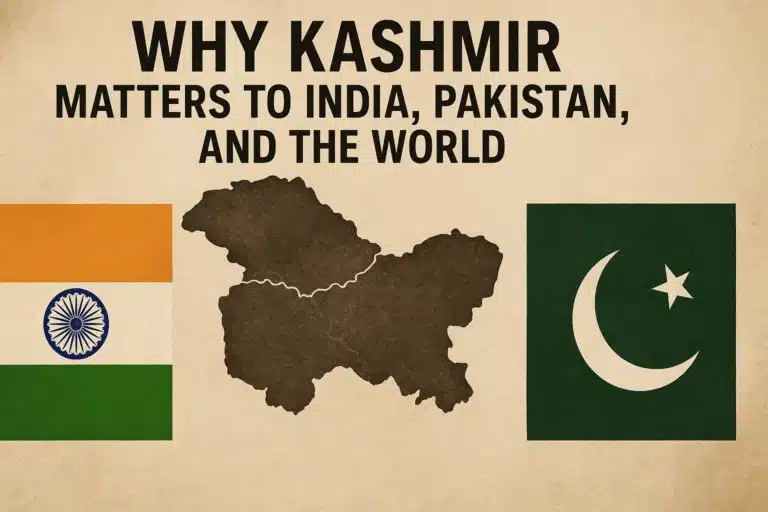
Indian accounts often present Islam’s spread in Kashmir as a byproduct of foreign conquest and political consolidation, suggesting that it disrupted an existing cultural order. Pakistani narratives, by contrast, emphasize Kashmir’s “natural affinity” with Islam, framing the valley’s conversion as an inevitable expression of its religious and cultural alignment with Pakistan.
Both, however, risk missing the essential truth: Islam did not take root in Kashmir through the sword, but through the teachings of saints, mystics, and spiritual reformers. It was a faith embraced from below, not imposed from above.
For Kashmiris themselves, this history carries a deeper resonance. It is not about conquest or geopolitics but about identity, dignity, and continuity. The legacy of figures like Bulbul Shah, Shah-i-Hamadan, and Sheikh Noor-ud-Din Noorani reminds them of a tradition of Sufism, pluralism, and resistance to oppression. This legacy also intersects with their contemporary struggle for self-determination, where faith, culture, and politics remain tightly woven together.
Islam came to Kashmir not with armies, but with the pen, the prayer, and the poetry of saints. Through the quiet but powerful influence of Sufi mystics, the valley was transformed into a space where faith intertwined with art, culture, and governance.
Figures such as Bulbul Shah, who inspired the first royal conversion; Shah-i-Hamadan, who introduced Persian art and craftsmanship; and Sheikh Noor-ud-Din Noorani, who embodied the Kashmiri soul of Islam, collectively defined the character of the region’s religious and cultural identity. Their legacy is one of spirituality over force, tolerance over sectarianism, and culture over conquest.
This is why Kashmir remains unique in South Asia. Its Islam is inseparable from its ethos of Kashmiriyat — an identity that celebrates coexistence while nurturing a centuries-old yearning for freedom.
To ask who brought Islam to Kashmir is to ask not only about history, but also about the present and future of a people. It is a reminder that the valley’s story is not simply about geopolitics between India and Pakistan, but about a community shaped by saints, artisans, and poets — and their continuing quest to preserve dignity in a contested land.