
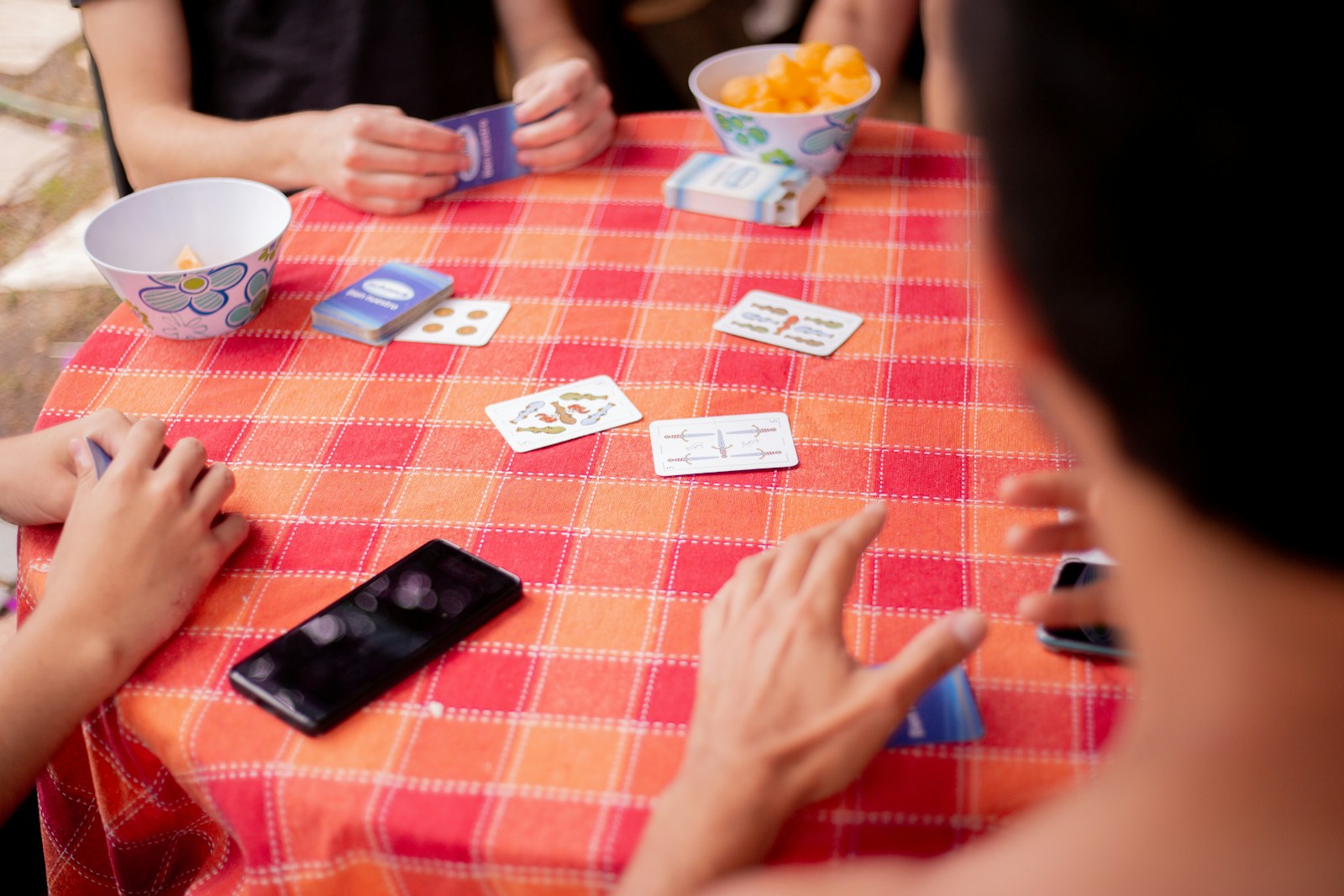

The hand and foot card game has quietly become a global favorite, captivating both casual players and dedicated card enthusiasts. Rooted in tradition but constantly evolving, this game invites families, friends, and newcomers alike to gather around tables—real or virtual—for hours of fun, challenge, and connection. But what exactly is the hand and foot card game, and why is it seeing a surge in popularity worldwide?
In this comprehensive guide, The Azadi Times explores the origins, rules, strategies, and cultural impact of the hand and foot card game. Whether you’re a curious beginner, a family seeking a new tradition, or a seasoned player in search of advanced tactics, you’ll find everything you need to know right here.

The hand and foot card game is a rummy-style card game, closely related to Canasta, played with multiple decks of standard playing cards (including Jokers). Its unique twist: each player manages two piles—a “hand” and a “foot”—that must be played sequentially.
- Easy to learn, tough to master: Hand and Foot’s simple rules make it accessible, but its depth rewards strategic thinking.
- Adaptable for all ages: From children to seniors, everyone can join in.
- Scalable: Works for small or large groups, and even for just two players.
- Social and competitive: Team play encourages camaraderie, while solo rules challenge your skills.
- Perfect for game night: Sessions can be as brief or as long as you like.
Originally a North American favorite, Hand and Foot is now played everywhere from London to Lahore, in living rooms, clubs, retirement communities, and online. Printable rules, digital score sheets, and mobile versions have fueled its international spread, making it one of the most accessible classic card games today.
Hand and Foot is a direct descendant of Canasta, the iconic South American rummy game that took the United States by storm in the 1950s. Like Canasta, Hand and Foot is about forming sets (or “books”) of cards, using wilds and Jokers to maximize points.

The game’s current form originated in the United States in the 1970s. Its evolution is often credited to Durwood and Joyce Miller, who codified and promoted rules still followed today. Through word of mouth and family gatherings, Hand and Foot spread across North America and beyond, becoming a cherished tradition for generations.
From its earliest days, the hand and foot card game has been a staple of family reunions, holiday evenings, and community centers. Its balance of luck and skill, plus its adaptable rules, make it especially beloved among families and multi-generational groups.
The hand and foot card game is simple to set up, but a few essentials are required:
- Playing Cards: 5-6 standard decks (including Jokers) for 4-6 players. Add a deck for each additional two players.
- Players: 2 to 8 (best with 4-6; see “hand and foot rules for 2 players” below).
- Scorepad and Pencil: To keep track of points and books.
- Table Space: Separate piles for “hand,” “foot,” melds, and discards.
- Hand: The first pile you play, dealt at the start.
- Foot: The second pile, set aside at the beginning, played only after finishing your “hand.”
- Standard decks: 52 cards each.
- Jokers: All included; Jokers and 2s are wild cards.
Learning how to play hand and foot is easy. Here’s a step-by-step breakdown:
- Shuffle all decks together.
- Each player is dealt two piles of 11 cards (some play with 13): one “hand” (to start), one “foot” (set aside, face down).
- The rest form a draw pile; flip the top card to start the discard pile.
Each player’s turn follows this sequence:
- Draw: Draw two cards from the draw pile (or, if rules allow, pick up the discard pile under certain conditions).
- Meld: Lay down sets (melds) of three or more cards of the same rank. Wilds (Jokers, 2s) can be used, but never more wilds than natural cards in a meld.
- Lay Off: Add cards to your team’s or your own existing melds.
- Discard: Place one card on the discard pile to end your turn.
- Books: Sets of seven cards (with or without wilds) are called “books.” Clean books have no wilds; dirty books include wilds.
- Team Play: Partners can contribute to the same melds/books.
- Minimum meld point value: The first meld each round must meet a minimum point threshold (e.g., 50, 90, or 120 points, depending on score or house rules).
- Once your “hand” is empty, pick up your “foot” pile on your next turn and continue playing. No announcement needed—just keep playing.
- A round ends when a player discards their last card from their “foot.”
- To go out, your team must have completed the required number of books (usually at least two clean and two dirty books, but this varies).
- Announce you’re “going out,” play your last card, and tally points.
Understanding the scoring is key to mastering the hand and foot card game rules.
| Card | Value |
|---|---|
| Joker | 50 pts |
| 2 (wild) | 20 pts |
| Ace | 20 pts |
| 8-King | 10 pts |
| 4-7 | 5 pts |
| 3s (see below) | 0 or -100 pts (penalty if left in hand/foot) |
- Clean Book (Red): 500 points (seven cards, all natural)
- Dirty Book (Black): 300 points (seven cards, includes wilds)
- Cards left in hand/foot: Subtracted from your score
- Unfinished books: No points awarded
- Red/black 3s left in hand: May incur large penalties (varies by house rules)
- The player or team with the highest total score after a set number of rounds wins. Typically, four rounds are played.
The hand and foot rules for 2 players are simple adjustments:
- Each player may manage two hands and two feet (playing as their own “team”).
- Use fewer decks (3-4).
- House rules may modify the number of books required to go out.
- Allow or disallow picking up the discard pile.
- Adjust the number of wild cards per meld.
- Vary the minimum meld value.
Hand and Foot is famously adaptable. Here are some popular tweaks and international versions:
- Number of cards in hand/foot: Some play with 13 or even 15 cards instead of 11.
- Book requirements: Vary the number and type of books needed to go out.
- Jokers and wilds: Limit how many wilds are allowed per book.
- In Canada and the UK, some groups play with “trains” (a sequence meld), or with additional wild cards.
- Printable, simplified versions are available for children or new players.
- Many websites offer printable hand and foot card game rules and score sheets.
- Digital score calculators and mobile apps are gaining traction, especially for remote play.
Mastering the hand and foot card game takes more than luck. Here’s how to up your game:
- Hold wilds for crucial melds or finishing books.
- Discard low-point cards to minimize penalties.
- Don’t tip your hand: Avoid discarding cards that help your opponent complete books.
- Prioritize clean books (no wilds) for higher scores.
- Track your team’s progress—don’t start books you can’t finish.
- Plan ahead: Try to remember what’s in your foot and keep wilds for a strong finish.
- Go out quickly if you’re ahead; stall if you’re behind and need to catch up.
- Empty your hand and foot before your opponent goes out.
- Get rid of 3s and high-point cards near the end of the round.
The hand and foot card game isn’t just fun—it’s good for you!
- Improves memory, concentration, and strategic thinking.
- Encourages arithmetic and pattern recognition.
- Easy for all ages; perfect for family reunions or multi-generational gatherings.
- Promotes cooperation and communication in team play.
- Teaches risk management and decision-making.
- Fosters anticipation and planning skills.
While both games are about melding cards into books, Hand and Foot features each player managing two separate piles (“hand” and “foot”), uses more decks, and often includes unique book and scoring rules.
Absolutely! With simple variations (like fewer decks or cards), even children as young as 8 can join. It’s a great way to build math and strategy skills.
A round typically lasts 30–45 minutes. Most groups play 3–4 rounds, so a full game night can last 2–3 hours.
Yes! Several free and paid apps offer digital Hand and Foot, and many websites provide printable rules and score sheets. Try searching “hand and foot card game app” or “online hand and foot card game.”
The hand and foot card game is a timeless blend of luck, skill, and social enjoyment. Its roots in Canasta, adaptability for all ages, and global appeal make it a perfect addition to any game night. Whether you’re playing in person or online, with family or friends, Hand and Foot brings people together in a way few games can.
Ready to play? Download or print the rules, gather your decks, and enjoy the challenge. For more guides and printable resources, visit The Azadi Times Games section. Share your favorite house rules and tips with us—let’s keep the tradition alive worldwide.
- Printable Hand and Foot Card Game Rules (PDF) – bicyclecards.com
- Hand and Foot Strategy Tips
- Online Hand and Foot Game
The Azadi Times – Bringing Games to Every Generation, Everywhere.