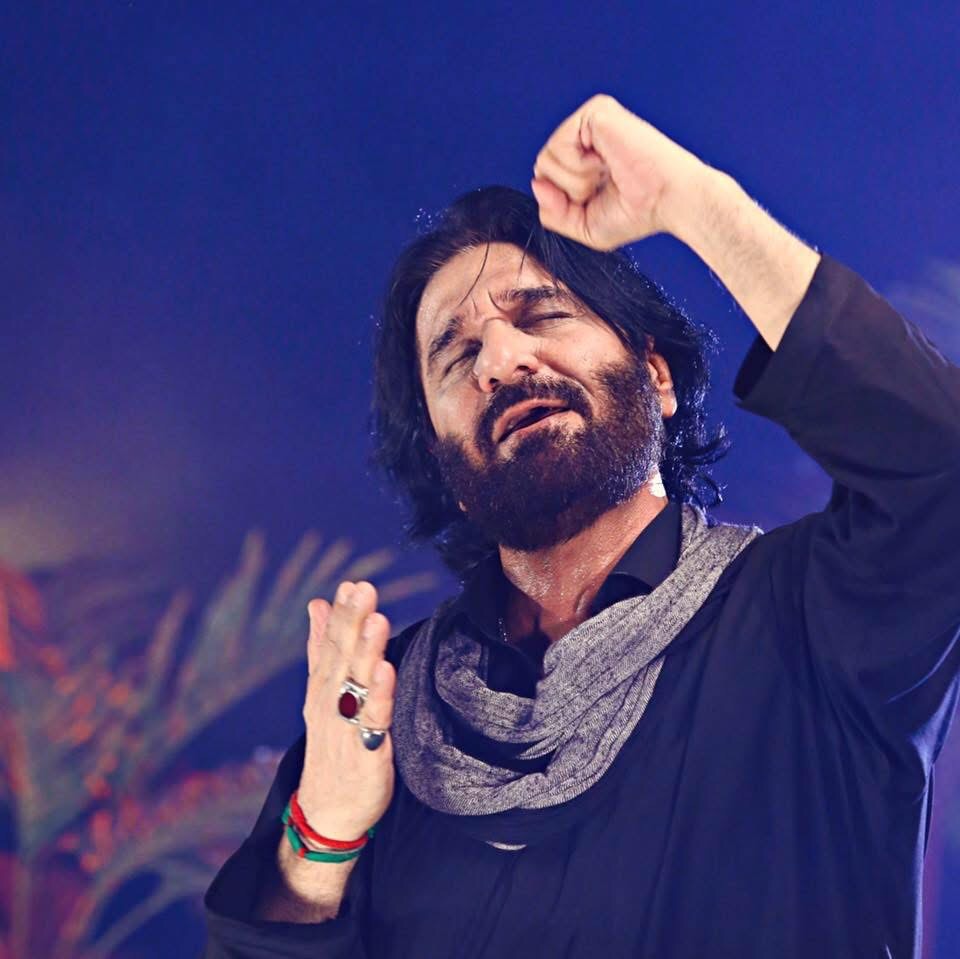

Karachi / London / Srinagar: As the crescent of Muharram 1447 H rises on the Islamic calendar, one voice once again unites Shia communities across continents: that of Syed Nadeem Raza Sarwar. Revered as one of Pakistan’s most iconic noha khuwans (elegiac reciters), Sarwar has released a new collection titled “Zamana Tumhara Ya Hussain,” igniting a fresh wave of devotion and artistic discussion in Shia circles worldwide.
The album, launched on June 29, 2025, is already resonating in majalis (religious gatherings), digital streams, and social media conversations. For millions preparing for Muharram’s solemn commemorations, Nadeem Sarwar’s voice remains a familiar and powerful companion.
Nadeem Sarwar New Nohas
Nadeem Sarwar’s latest release features four poignant nohay:
- Zamana Tumhara Ya Hussain
- Hassan Imam-e-Hassan
- Akhri Sajda
- Roz-e-Ashura
Available on platforms like AleMohamed.com, YouTube, and Dailymotion, these nohay are swiftly being integrated into digital and traditional majalis worldwide. Their release has reaffirmed Sarwar’s status not only as an artist but as a custodian of cultural memory and spiritual expression.
Listen on Dailymotion → “Zamana Tumhara Ya Hussain”
Full Album on AleMohamed.com
Who is Nadeem Sarwar?
Syed Nadeem Raza Sarwar was born in Karachi, Pakistan, to Syed Asrar Hussain Rizvi and Syeda Nargis Khatoon. From a tender age of four, Sarwar was introduced to noha recitation, performing alongside his mother. Over the decades, he has grown into an internationally recognized voice in Islamic devotional arts.




Key highlights from Sarwar’s life and career:
- Prolific output: Since the 1980s, he has released 28 volumes on cassette, CD, and digital formats, totaling over 179 kalaams in multiple languages—including Urdu, Sindhi, Punjabi, Persian, Arabic, English, French, Gujarati, and Pushto.
- Educational background: Trained in mechanical engineering, design, and fine arts, Sarwar brings a meticulous aesthetic sensibility to his recitations and video productions.
- Family legacy: He is married and has three children. His sons, Ali Shanawar and Ali Jee, have also become prominent noha reciters, continuing the family tradition.
- International reach: Although born in Karachi, Sarwar is now based in Australia and regularly tours the UK, USA, Canada, Middle East, India, and Europe for live majalis performances.
Digital Platforms Fuel Global Noha Revolution
Sarwar’s influence has expanded dramatically in the digital era. His work transcends geographic borders, thanks to robust online presence:
Streaming and downloads: Sarwar’s nohay attract significant viewership on YouTube, Dailymotion, and AleMohamed.com, where fans can stream or download audio and video.
Viral hashtags: Tags like #Noha2025, #SarwarInMuharram, and #ZamanaTumharaYaHussain trend across Facebook, Instagram, and WhatsApp, turning nohay into viral multimedia experiences.
Reddit discussions: Enthusiasts on platforms like Reddit often dissect Sarwar’s production quality and innovative video editing techniques, praising his capacity to blend visual drama with deep emotional delivery.
“Nadeem Sarwar dedicated his lifetime to serve the Ahlulbayt… Through his voice, the message of Karbala is conveyed.” — Reddit user (View discussion)
Tradition and Modern Aesthetics Intertwined
Nadeem Sarwar’s recitations are more than vocal performances—they are multimedia art forms. His style bridges classical tradition and contemporary presentation:
- Poetic lineage: Sarwar’s work draws on literary giants like Rehan Azmi, Mir Anis, and Mirza Dabeer, grounding his nohay in centuries of poetic expression.
- Modern production: His engineering and artistic background reflects in high-quality video shoots, innovative camera angles, and choreographed gestures, making each noha visually compelling.
- Cultural diversity: Sarwar’s repertoire includes recitations in various regional and ethnic styles—Persian, Arabic, Quetta, Punjabi, Sindhi, Siraiki, Deccan, and the Khoja Ithna Ashari Saf—enhancing his appeal to diverse audiences worldwide.
This innovative fusion has both inspired younger generations and sparked debates among traditionalists who prefer purely classic formats.
Kashmir: A Resonant Audience for Sarwar’s Nohay
While Nadeem Sarwar’s influence is global, his new nohay hold special significance for Kashmir’s Shia communities, where Muharram rituals are deeply interwoven with cultural identity and social memory.
Despite periodic internet restrictions in Kashmir, Sarwar’s nohay are accessed via downloadable content, allowing local communities to incorporate his recitations into mobile-based majalis and home gatherings.
Themes of sacrifice, justice, and endurance in Sarwar’s work resonate with Kashmir’s own narratives of struggle and resilience, adding powerful layers of meaning during the mourning rituals.
Why “Zamana Tumhara Ya Hussain” Matters
Nadeem Sarwar’s “Zamana Tumhara Ya Hussain” is not merely an album—it’s a cultural event signaling the arrival of Muharram 1447 H. The blend of deep emotion, poetic heritage, and cinematic production has cemented Sarwar’s place as a leading figure in global noha culture.