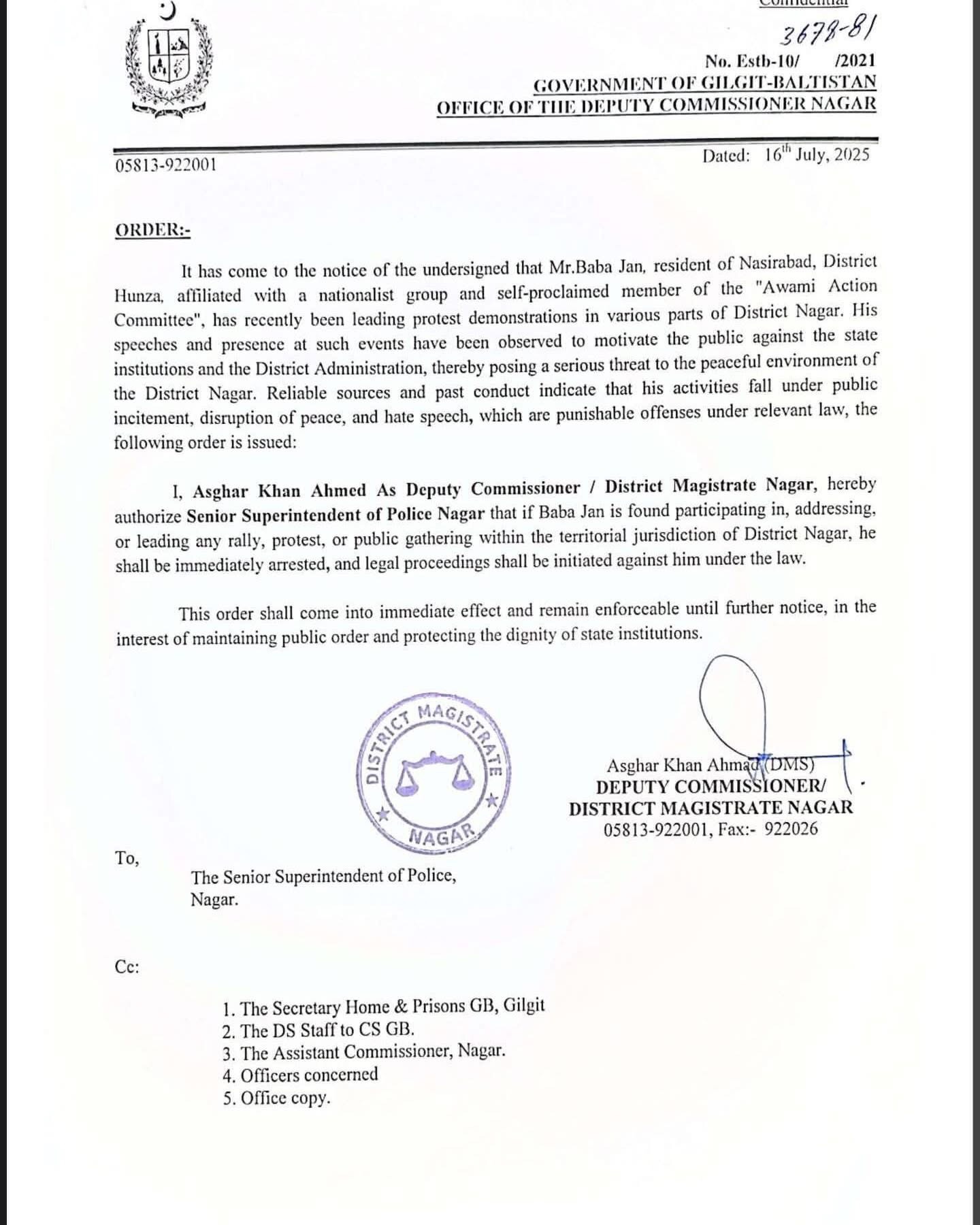

Gilgit, (GB) Pakistan administered Kashmir: In a concerning development, the Deputy Commissioner of Nagar district in Gilgit-Baltistan has issued a notification authorizing the arrest of prominent leader Baba Jan during public gatherings or rallies. This move has sparked widespread debate on social media, with many labeling it a human rights violation.
Baba Jan, known for his advocacy for the rights of the people of Gilgit-Baltistan, has been actively involved in protests demanding the release of Awami Action Committee Gilgit Baltistan members. The recent notification by the district administration warns that Baba Jan will be arrested if he participates in or addresses any public gathering or rally.
Background of the Protests
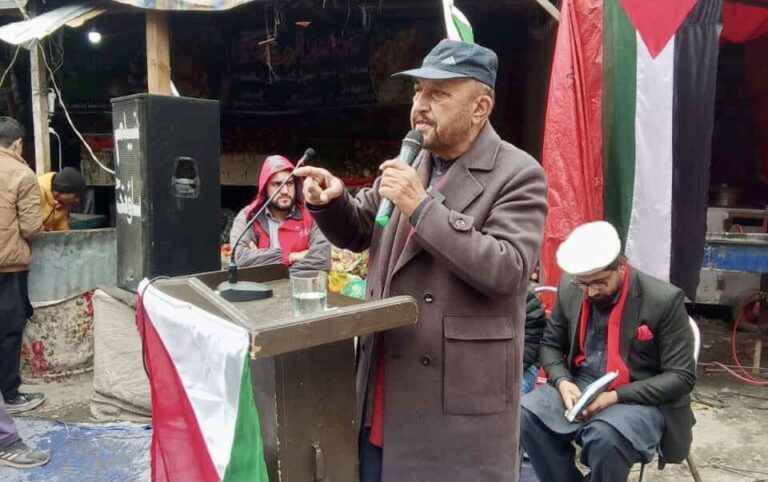
The people of Gilgit-Baltistan have been protesting against the government’s decision to increase the subsidized wheat price, a move that has exacerbated the region’s economic woes. The Awami Action Committee, a coalition of political and civil society groups, has spearheaded the protests, which have entered their fourth week. Demonstrators are demanding the restoration of the wheat subsidy, suspension of the Finance Act of 2022, and revocation of various taxes, among other grievances ¹.
Human Rights Concerns
The crackdown on Baba Jan has raised concerns about the government’s commitment to protecting human rights in Gilgit-Baltistan. The region has a history of human rights abuses, and the authorities’ actions have been criticized for being heavy-handed. The debate on social media reflects the growing unease among the public about the government’s approach to handling dissent ².



Demands of the Protesters
The protesters in Gilgit-Baltistan are demanding:
- Restoration of Wheat Subsidy: The government had previously provided subsidized wheat to the region, which has been discontinued, leading to widespread discontent.
- Release of detained leaders of Awami Action Committee Gilgit Baltistan.
- Suspension of Finance Act: The protesters are demanding the suspension of the Finance Act of 2022, which they believe will further exacerbate the economic situation in the region.
- Revocation of Taxes: The protesters are also demanding the revocation of various taxes imposed on the region, which they believe are unfair and burdensome.
- Land Ownership Rights: The protesters are demanding that land ownership rights be given to the locals, as the current system allows outsiders to own land in the region.
The situation in Gilgit-Baltistan remains tense, with the protesters determined to achieve their demands. The government’s response to the protests will be crucial in determining the future of the region.