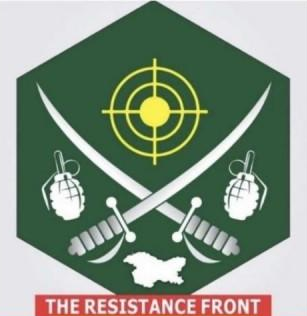

WASHINGTON — The United States has designated The Resistance Front (TRF), considered an offshoot of the banned Pakistani militant group Lashkar-e-Taiba, as a foreign terrorist organization over the deadly April attack in Indian-administered Kashmir that killed 26 people.
US Secretary of State Marco Rubio announced the designation on Thursday, saying it was part of Washington’s commitment to ensuring justice for the victims of the Pahalgam attack, which targeted tourists in the Baisaran area of south Kashmir’s Anantnag district on April 22.
The TRF — also known as Kashmir Resistance — initially claimed responsibility for the attack before later denying its involvement. India has blamed Pakistan for backing such groups, a charge Islamabad has denied, calling for an independent investigation.

Affirmation of US-India cooperation
India welcomed Washington’s move, with Foreign Minister Subrahmanyam Jaishankar calling it a “strong affirmation of India-US counter-terrorism cooperation” in a post on X (formerly Twitter).
The US designation also lists TRF as a “specially designated global terrorist,” noting that it emerged in 2019 and acts as a front and proxy for Lashkar-e-Taiba — the same group blamed for the 2008 Mumbai attacks that killed more than 170 people.
Pakistan’s response
Pakistan’s foreign ministry said on Friday it “condemns terrorism in all its forms and manifestations” and dismissed any link between TRF and the now-defunct Lashkar-e-Taiba, which it claims to have dismantled.


“Pakistan has dismantled concerned outfits, arrested and prosecuted their leadership, and deradicalized their cadres,” the ministry said.
Escalation and ceasefire
The April attack triggered heavy hostilities between nuclear-armed India and Pakistan, which saw airstrikes, artillery exchanges, and drone attacks across the Line of Control. The fighting claimed dozens of lives on both sides before a ceasefire was reached on May 10.
The truce was first announced by former US President Donald Trump on social media after Washington mediated between New Delhi and Islamabad. However, India later asserted the ceasefire resulted from direct engagement between the two governments without outside involvement.


Regional context
India and Pakistan both claim the Himalayan region of Kashmir in full but administer separate parts of it. The two countries have fought several wars over the disputed territory since their independence in 1947.
South Asia analyst Michael Kugelman wrote in Foreign Policy that the US decision signals Washington’s alignment with India’s view of the attack and could strengthen bilateral ties:
“Washington is flagging its concern about the terrorist attack that provoked the recent India-Pakistan conflict, and siding with New Delhi’s view that the group is linked to Lashkar-e-Taiba,” he said.
The Resistance Front’s designation is likely to increase pressure on Pakistan at a time when Washington views India as a key partner in its strategy to counter China’s influence in the Indo-Pacific region.