









The lights in your room do more than help you see. They shape your mood, your sleep, your productivity, and even how big the space feels. Yet most people treat lighting as an afterthought — a single ceiling fixture installed by a contractor and never reconsidered.
That is changing. In 2026, LED technology has made it possible to control color temperature, brightness, and even the direction of light with precision that was impossible a decade ago. The result is that room lighting has become a design tool, not just a utility.
Whether you are renovating in London, furnishing a new apartment in Dubai, or simply tired of a space that feels flat, understanding your options for LED lights for room design is the fastest way to transform how a room feels without changing a single piece of furniture.
Types of LED Lights for Rooms: What Actually Works
Ceiling Lights: The Foundation
Ceiling lights are still the starting point for most rooms. The key decision is between flush-mount fixtures, semi-flush mounts, and pendant lights.
Flush-mount LED ceiling lights sit close to the ceiling and work best in rooms with low ceilings — typically under 2.4 meters (8 feet). They provide even, diffused light that eliminates shadows. Modern designs have moved far beyond the boring white discs of the past. Today you can find geometric LED panels, ring-shaped fixtures, and starburst designs that function as art while they light the room.
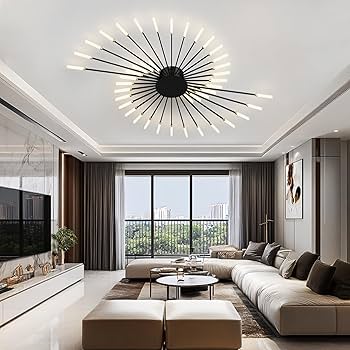
Semi-flush mounts hang slightly lower — usually 10 to 20 centimeters from the ceiling. They add depth and dimension, and the gap between fixture and ceiling creates a subtle uplight effect that makes ceilings feel higher. These work well in rooms with ceilings between 2.4 and 2.7 meters.
Pendant lights and chandeliers are statement pieces. A cluster of three small pendants over a dining table, or a single oversized drum shade in a living room, creates a focal point. LED pendant lights now come in adjustable color temperatures, allowing you to shift from warm white (2700K) for dinner to daylight (5000K) for reading.
LED Strip Lights: The Game Changer
If ceiling lights are the foundation, LED strip lights are the secret weapon. These flexible, adhesive-backed strips can be installed almost anywhere — under cabinets, behind TVs, along baseboards, inside closets, or hidden in ceiling coves.
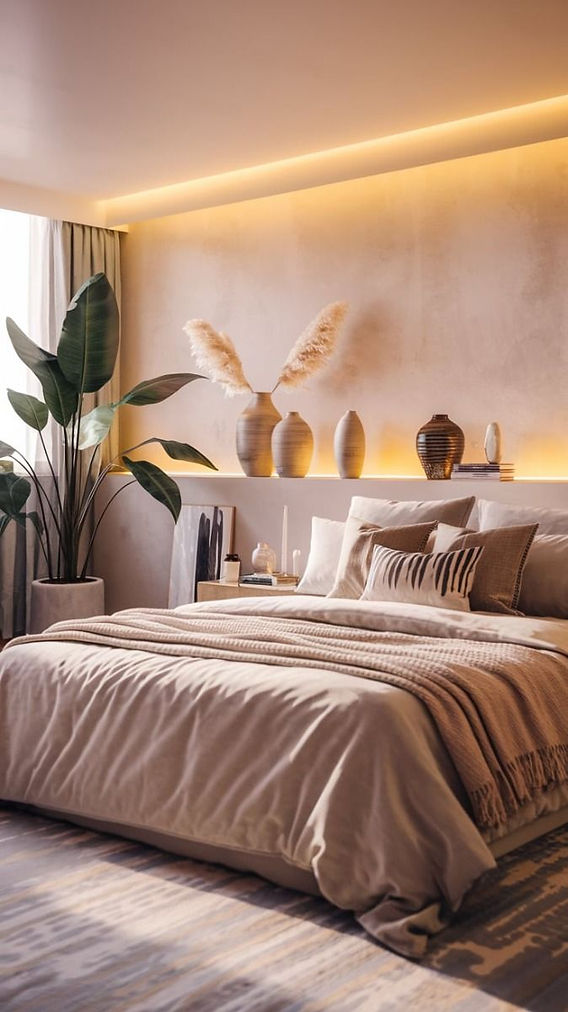
The effect is called indirect lighting — light that bounces off walls and ceilings rather than shining directly into your eyes. It is softer, more flattering, and creates depth that overhead lights cannot match.
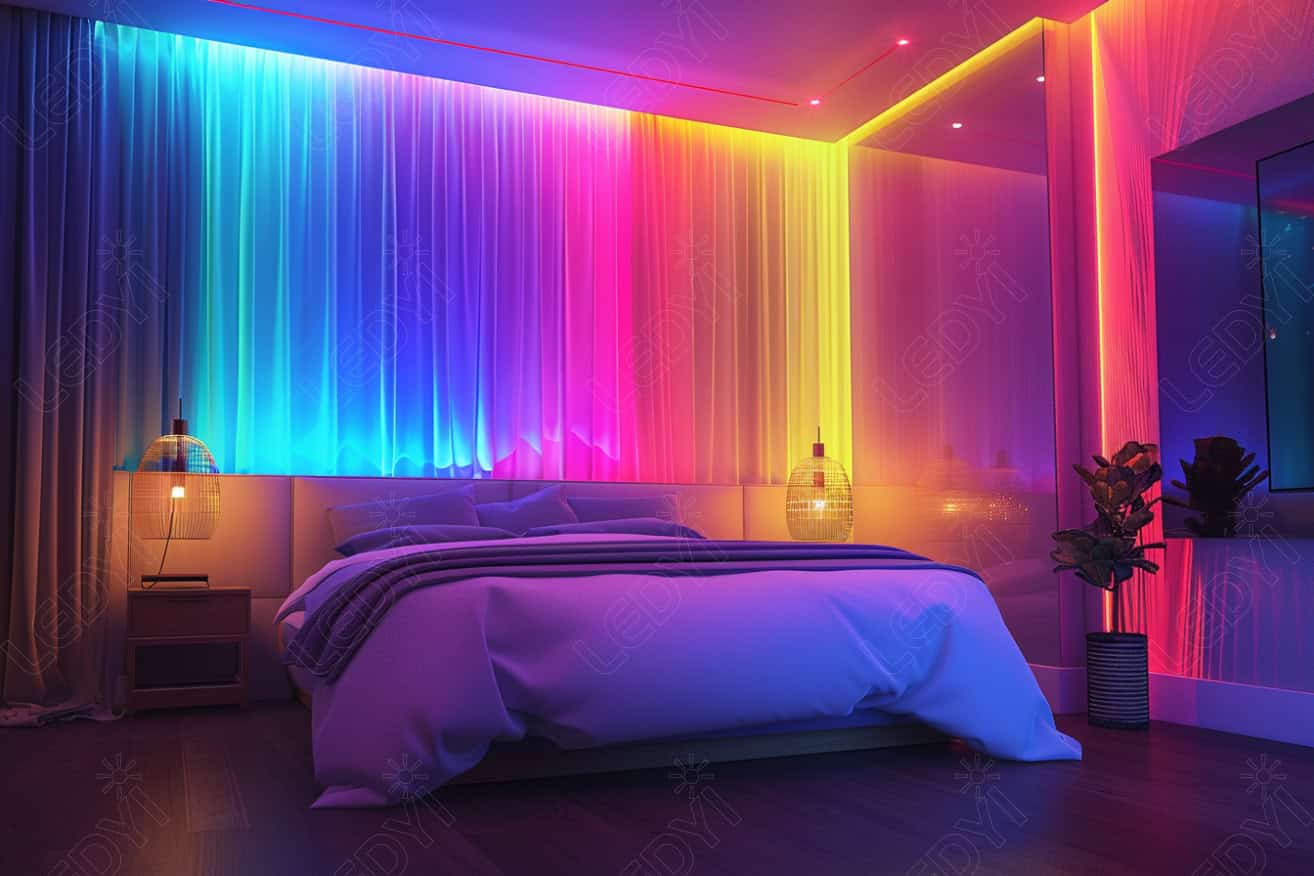
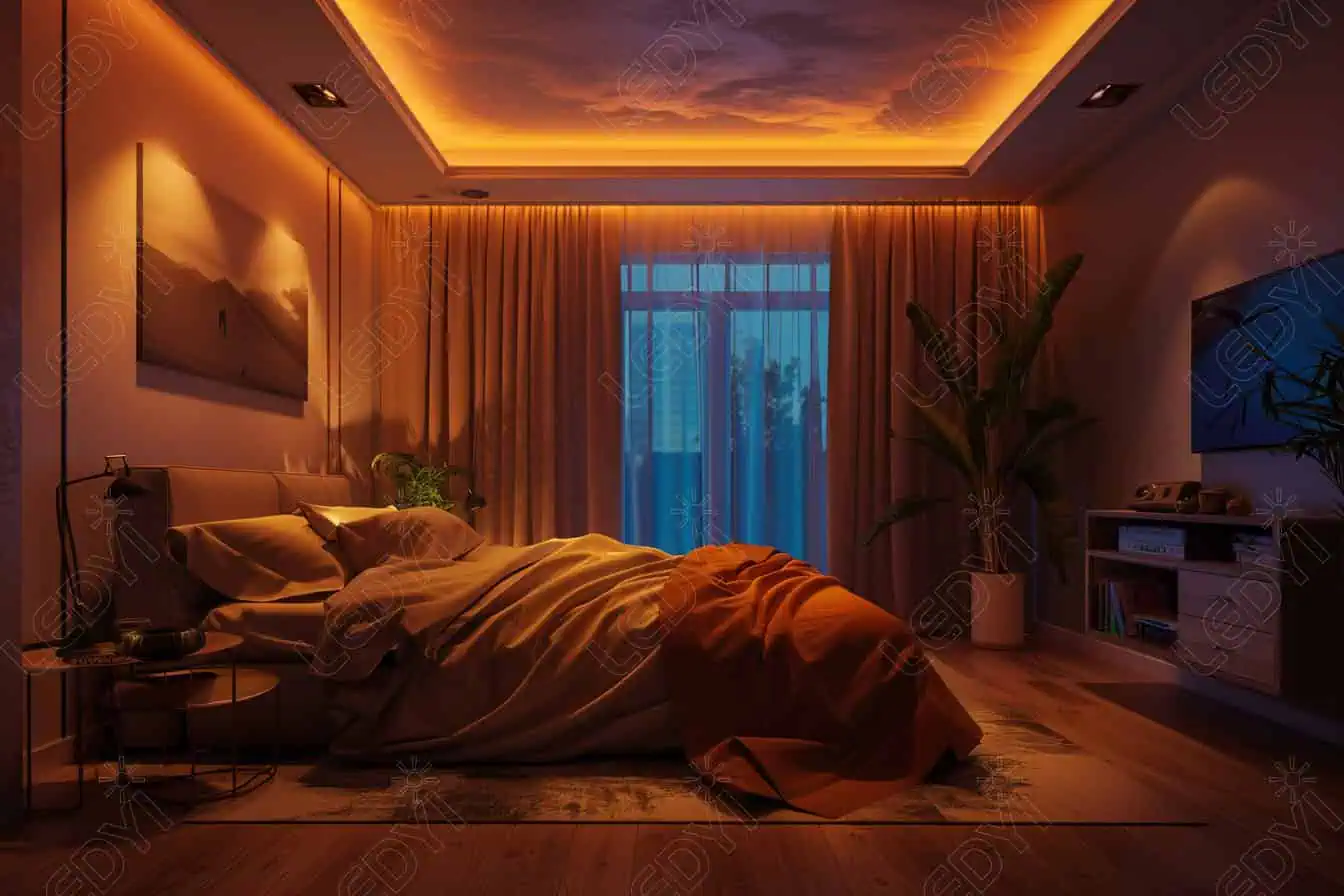
For bedrooms, warm white LED strips (2700K–3000K) installed behind a headboard or under a floating bed frame create a hotel-like ambiance. For living rooms, RGB strips hidden in ceiling coves allow you to shift the entire mood of the room with a phone app — from energizing daylight blue to relaxing sunset orange.
Smart Bulbs and Connected Lighting
Smart LED bulbs have matured beyond gimmick status. The best systems — Philips Hue, LIFX, Nanoleaf — now offer reliable connectivity, intuitive apps, and integration with voice assistants like Alexa, Google Assistant, and Siri.
The real value is not in turning lights on with your voice. It is in scenes — pre-programmed combinations of color, brightness, and which fixtures are active. A “Movie Night” scene might dim the ceiling light to 10%, turn on warm backlighting behind the TV, and kill every other light in the room. A “Morning” scene could gradually increase brightness and shift from warm amber to cool white over 30 minutes to simulate sunrise.
How to Choose LED Lights for Each Room
Living Room: Layered and Flexible
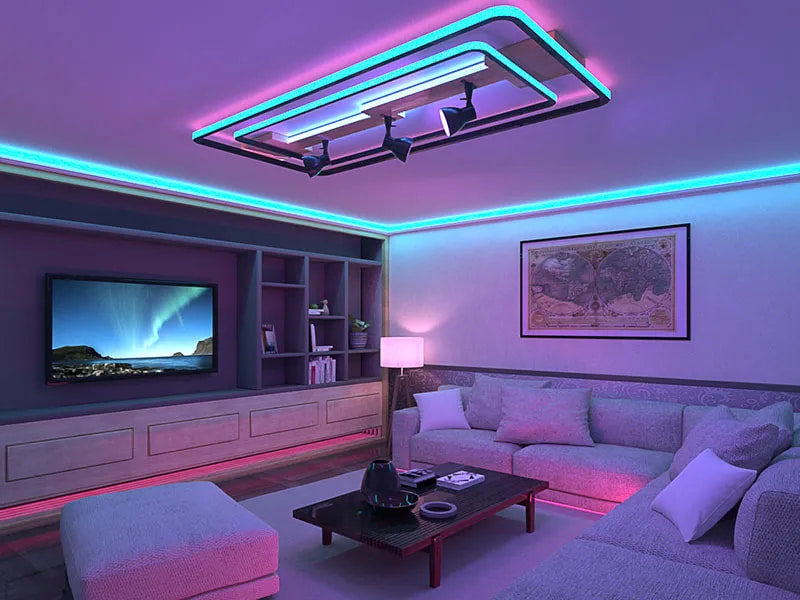
The living room is the most demanding space because it serves multiple purposes — entertaining, relaxing, reading, watching television. The solution is layered lighting: three or more light sources at different heights and intensities.
Base layer: A dimmable LED ceiling fixture providing general illumination. Aim for 1,500–3,000 lumens for a standard living room.
Accent layer: LED strips behind the TV or media unit reduce eye strain and add depth. Wall-mounted picture lights or adjustable spotlights highlight artwork or architectural features.
Task layer: A floor lamp with a focused beam for reading. A table lamp on a side table for softer evening light.
Bedroom: Warm and Restrained
Sleep quality is directly affected by light exposure. Blue-rich light suppresses melatonin production, making it harder to fall asleep. For bedrooms, the rule is simple: warm light, dimmable, minimal overhead exposure.
Overhead: If you must have a ceiling light, use a dimmable fixture with a very warm color temperature (2200K–2700K) and keep it off after sunset.
Bedside: Wall-mounted reading lights with focused beams allow one person to read while the other sleeps. Choose fixtures with a switch on the head so you do not need to reach for a wall switch.
Ambient: LED strips behind the headboard or under the bed frame provide enough light to navigate the room without turning on overhead fixtures. Warm white (2700K) or even amber (2200K) is ideal.
Kitchen: Bright and Functional
Kitchens need high-output, shadow-free lighting for safety and functionality. The standard recommendation is 5,000–10,000 lumens for an average kitchen, achieved through multiple sources.
Overhead: Recessed LED downlights spaced evenly across the ceiling. For a 3×4 meter kitchen, six to eight fixtures are typical.
Under-cabinet: LED strip lights installed on the underside of wall cabinets eliminate the shadows cast by overhead lights on countertops. This is where you do your actual food preparation, so the light needs to be bright (4000K–5000K) and even.
Pendant lights: Over an island or breakfast bar, two or three pendants at eye level create atmosphere and task lighting simultaneously.
Home Office: Task-Focused and Glare-Free
The mistake most people make in home offices is relying on a single ceiling light. That creates glare on screens and uneven illumination across the workspace.
Overhead: A dimmable, diffused ceiling fixture set to around 3000K–4000K.
Desk lamp: An adjustable LED desk lamp with a CRI (Color Rendering Index) above 90. High CRI means colors look accurate — important if your work involves design, photography, or any visual task.
Bias lighting: A simple LED strip behind your monitor reduces eye strain by balancing the brightness between screen and surrounding wall.
Color Temperature: The Most Important Number
LED lights are labeled with a Kelvin (K) rating that describes color temperature. This matters more than brightness for how a room feels.
| Temperature | Color | Best For |
|---|---|---|
| 2200K–2700K | Warm white, candle-like | Bedrooms, living rooms, restaurants |
| 3000K–3500K | Soft white, neutral | Bathrooms, hallways, closets |
| 4000K–4500K | Cool white, crisp | Kitchens, offices, retail spaces |
| 5000K–6500K | Daylight, blue-white | Task lighting, garages, workshops |
The mistake is using daylight (5000K+) in living spaces. It feels sterile and clinical. Warm light (2700K) in a kitchen, on the other hand, makes food look dull and unappetizing.
For maximum flexibility, choose tunable white LED fixtures that allow you to shift across the range. Smart bulbs and many modern ceiling fixtures now offer this as standard.
What to Look for When Buying LED Room Lights
Brightness: Lumens, Not Watts
Old habits die hard. People still think in watts because that is how incandescent bulbs were rated. LEDs are rated in lumens — actual light output.
- 450 lumens ≈ 40W incandescent (bedside lamp)
- 800 lumens ≈ 60W incandescent (standard room light)
- 1,600 lumens ≈ 100W incandescent (bright task lighting)
For a living room of 20 square meters, you want roughly 3,000–4,000 lumens total from all sources combined.
Color Rendering Index (CRI)
CRI measures how accurately colors appear under a light source compared to natural sunlight. A CRI of 80 is acceptable. 90 or above is ideal for any space where color matters — kitchens, bathrooms, closets, and anywhere you apply makeup or evaluate fabrics.
Cheap LED strips often have a CRI below 80, which makes skin tones look sickly and food look unappealing. Spending slightly more for high-CRI LEDs is worth it.
Dimming Compatibility
Not all LEDs dim properly. Some flicker at low levels. Some buzz. Some simply shut off below 20% brightness.
If you want dimmable lights, buy dimmable-rated LEDs and pair them with compatible dimmer switches. The packaging should specify “dimmable” and list compatible switch types (trailing-edge dimmers work best with LEDs).
Lifespan and Warranty
Quality LED fixtures should last 25,000 to 50,000 hours — roughly 15 to 25 years of normal residential use. Be skeptical of claims beyond that. Also check the warranty: reputable manufacturers offer 3 to 5 years.
Budget Reality: What LED Room Lighting Actually Costs
LED lighting has become affordable, but there is a wide range.
- Basic LED bulbs: $3–$8 each
- Smart LED bulbs (Philips Hue, LIFX): $15–$50 each
- LED strip lights (5 meters, basic): $10–$25
- LED strip lights (high-quality, high-CRI): $30–$80
- Flush-mount ceiling fixture (basic): $30–$80
- Designer LED ceiling fixture: $150–$500+
- Smart lighting system starter kit: $100–$300
For a complete living room lighting upgrade — new ceiling fixture, LED strips, two table lamps, and smart bulbs — expect to spend $300–$800 depending on quality and brand choices.
The payoff is energy savings. A 10W LED bulb produces the same light as a 60W incandescent. Over 25,000 hours, the electricity savings alone cover the purchase price multiple times.
Installation: What You Can Do Yourself
Most LED room lighting upgrades are DIY-friendly.
LED bulbs: Simple replacement. No tools needed.
LED strip lights: Peel-and-stick adhesive backing. Most come with plug-in power supplies. The only challenge is hiding wires — tuck them behind furniture, under cabinets, or use cable channels.
Ceiling fixtures: If you are replacing an existing fixture, basic wiring knowledge is enough. Turn off the breaker, disconnect old fixture, connect new one (typically three wires: live, neutral, ground). If you are not comfortable with electrical work, hire an electrician. It is a 30-minute job that should cost $50–$150 in labor.
Smart systems: Setup is app-based. The challenge is planning — deciding which rooms to start with, which scenes to program, and how to integrate with existing switches.
The Bottom Line
The right LED lights for your room depend on what the room is for, how big it is, and what atmosphere you want to create. There is no single correct answer. A bedroom needs warmth and restraint. A kitchen needs brightness and precision. A living room needs layers and flexibility.
What is universal is that LED technology has made it possible to achieve professional-quality lighting at consumer prices. The fixtures are smaller, more efficient, and more versatile than ever. The only limit is imagination — and maybe your ceiling height.

