
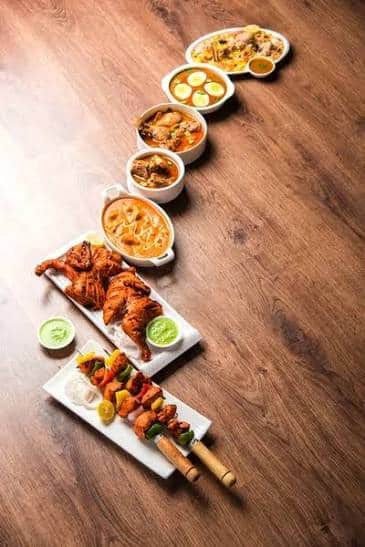

Search for a Kashmir fast food menu and you will find restaurants in several countries carrying the name. Their menus tend to follow a familiar South Asian pattern. A Kashmir restaurant in Freiburg, for example, lists pakoras, samosas, tikka and korma. Good food, but not what is sold from stalls and bakeries in Srinagar.
The street menu in the Kashmir Valley is shorter, older and more specific to the place. It is built around the tandoor, the samovar and the seasons rather than around a standard restaurant template. Much of it is eaten standing up, wrapped in paper, or carried home still warm.
Bread and tea come first
The day begins at the neighbourhood bakery. Tandoor bakers, known as kandurs, start before dawn, selling breads such as tsot, girda and bakirkhani. Most of it is eaten with noon chai, the salted pink tea. It is made from green tea leaves, milk, salt and baking soda, and is drunk several times a day with breads such as kulcha, girda or tsochwor.
Noon chai is not a side drink in the Valley. It is a fixture of the morning, of guest hospitality and of long conversations. The pink colour comes from the reaction of baking soda with the tea leaves, not from any added colouring.
Kahwa is the lighter alternative: a green tea flavoured with saffron and almonds. Where noon chai is heavy and salty, kahwa is aromatic and often served after meals or to welcome visitors in colder weather.

Fried and grilled
The best-known snack is nadru monje. It is a fritter made from lotus stem and gram flour, and is popular in Kashmir as a street food and fast food snack. The lotus stem is sliced thin, coated in a spiced gram-flour batter and fried until crisp. It is sold at stalls and eaten with chutney, often in the evening.
Another is masala tchot: girda bread roasted in a tandoor and topped with chutneys, onions and spices. It is quick, cheap and filling, which is why it holds a firm place in the street repertoire.


For meat, the street staples are tujj (barbecue) and kebabs such as seekh kebab. These are usually sold in the evening from roadside grills, with smoke and the smell of charred meat drawing customers from across the street.
Harissa, the winter breakfast
In the cold months, the dish people queue for is harissa. It is made from mutton, rice and spices cooked to a paste-like consistency and traditionally eaten with girda. It is slow-cooked overnight in earthen pots.
Its origins are debated: it shares a name with a Middle Eastern dish and is thought to have reached the region around the 14th century. In the Valley, harissa is a winter food. It appears when the temperatures drop and disappears when the season turns, which is part of what makes it worth waiting for.
A quick reading guide
Breakfast: girda or tsot with noon chai
Snack: nadru monje, masala tchot
Grill: tujj, seekh kebab
Winter only: harissa
Drinks: noon chai, kahwa
Why the local menu matters
The gap between the international “Kashmir restaurant” menu and the Valley’s street menu is not just a matter of ingredients. It reflects how food travels. When Kashmiri cooking moves abroad, it tends to be reshaped around what travels well, what keeps, and what customers in a new country already recognise. Tikka and korma fit that brief. Nadru monje and masala tchot do not, because they depend on a tandoor, on fresh lotus stem, and on being eaten within minutes of being made.
That is why the fast food of the Valley is best understood not as a list of dishes but as a daily rhythm: bread in the morning, fritters in the evening, harissa in the winter, and tea throughout. Anyone who wants to know what a real Kashmir fast food menu looks like should start there, not with a laminated menu in another country.