

The Pakistan Cricket Board’s decision on 10 November to move the second Test between Pakistan and Sri Lanka from Lahore to Rawalpindi has brought the country’s winter smog problem into sharp focus. The match will still be played from 17 to 21 November, but at Rawalpindi Cricket Stadium rather than Lahore’s Gaddafi Stadium, the PCB said in its official announcement.
The venue change is a visible consequence of deteriorating air quality. Yet the latest monitoring and research point to a more complicated picture than a single culprit: transport and industrial emissions, agricultural burning, weather conditions and pollution moving across borders can all contribute. The evidence also shows why short-term rankings and competing claims about the source of smog should be treated carefully.
What the latest measurements show
The Pakistan Air Quality Initiative (PAQI), an independent research organisation, reported a Lahore city daily mean of 143 micrograms of PM2.5 per cubic metre on 14 November, based on readings from 53 monitors. That was the third-highest city average on the organisation’s dashboard that day, after Bahawalpur and Multan. The figure is a daily average of fine-particle concentrations, not an Air Quality Index score.
The World Health Organisation’s 2021 guideline recommends that the 24-hour average concentration of PM2.5 should not exceed 15 micrograms per cubic metre, at the specified 99th percentile. Lahore’s 14 November daily mean was therefore about 9.5 times that health-based guideline level. The guideline is not a Pakistani legal limit, but it provides a benchmark based on evidence about health risks. PAQI’s monitoring dashboard publishes city readings and explains that its data combine ground monitors, satellite observations and official statistics.
A separate PAQI assessment covering 1 October to 9 November found that Lahore’s average PM2.5 concentration was 126 micrograms per cubic metre. It said the concentration exceeded Pakistan’s 24-hour National Environmental Quality Standards on all 40 days for which valid data were available. The average was 11 per cent lower than in the corresponding period in 2025, but remained far above the WHO guideline. The findings were reported by Dawn in its account of the PAQI analysis.
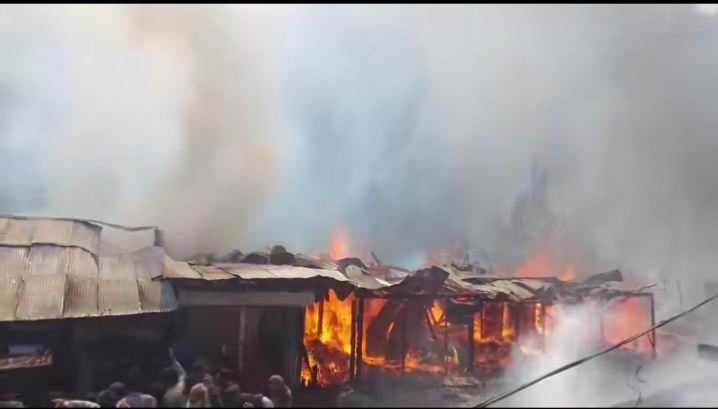
The same assessment recorded 18,825 satellite fire detections across Punjab between 1 October and 9 November. PAQI classified 16,714 as likely crop-residue fires, or about 89 per cent of the total. These are satellite detections and classifications, not a count of independently inspected fires. The report found that Lahore’s average PM2.5 was higher on days when air trajectories passed over fire-affected areas, but cautioned that this association did not establish the precise contribution of crop burning. Stagnant weather and reduced atmospheric dispersion also played a part.

Local emissions and weather remain central
A Punjab Environment Protection Agency review of 1 to 10 November, reported by Dawn on 13 November, recorded Lahore’s daily AQI falling from 422 on 2 November to 272 on 7 November before rising to 364 on 9 November. The agency attributed the renewed deterioration primarily to easterly winds carrying polluted air from Indian Punjab. It said its Wagah monitoring station registered the initial increase, with other Lahore stations reaching peaks about six hours later.
The EPA review also identified unfavourable weather conditions: average wind speed was 40 per cent lower and atmospheric ventilation capacity 44 per cent lower than in the comparison period a year earlier. Lahore received no rainfall during the first ten days of November, limiting the dispersal of pollutants. Such conditions can allow emissions to accumulate close to the ground rather than disperse.
Crucially, the EPA’s own emissions inventory identified major local sources. It attributed 83 per cent of Lahore’s emissions to transport, nine per cent to industry and eight per cent to other sources. Those inventory shares should not be confused with a direct measurement of the proportion of PM2.5 in the air on a particular day. They do, however, underline why the city’s pollution cannot be explained by events across the border alone.

What the Diwali debate can—and cannot—prove
Two recent assessments have offered different interpretations of the deterioration around Diwali. The Punjab EPA said easterly winds carried polluted air from Indian Punjab towards Lahore after the festival. PAQI, examining satellite fire detections and air-mass trajectories for the period from the evening of 8 November to midnight on 10 November, said the available evidence did not support attributing Lahore’s post-Diwali pollution to fireworks across the border.
PAQI noted that pollution increases were not greatest in the cities closest to the border, as might be expected if transported fireworks emissions were the main explanation. It also said chemical analysis of particles would be needed to distinguish fireworks emissions from smoke produced by agricultural fires. The two assessments used different methods and examined overlapping but not identical evidence. Their findings should therefore be reported with attribution, rather than presented as a settled scientific verdict on every source of pollution.
The defensible conclusion is that air moves across political boundaries, while much of the pollution burden is also generated within the region. Transport, industry, crop-residue burning and weather all require attention. Blaming only one source risks allowing the others to escape scrutiny.
Why the crisis matters beyond sport
PM2.5 refers to fine particles no more than 2.5 micrometres in diameter. They can travel deep into the lungs and enter the bloodstream, contributing to cardiovascular and respiratory disease. The WHO estimates that ambient outdoor air pollution caused 4.2 million premature deaths worldwide in 2019, with 89 per cent of those deaths occurring in low- and middle-income countries. Children, older people and those with existing health conditions are particularly vulnerable.
The relocation of an international cricket match makes the consequences difficult to ignore, but the daily exposure of residents is the more important concern. Schoolchildren, outdoor workers, street vendors, traffic police and people travelling through polluted urban corridors cannot simply move their routines to another city when air quality deteriorates.
What an effective response requires
Pakistan’s response needs to move beyond emergency measures and headline AQI rankings. Authorities should publish reliable, comparable monitoring data, including the location and type of each monitor, the pollutant measured, averaging period and quality-control method. That would allow the public and researchers to distinguish short-lived spikes from sustained exposure and to compare official claims with independent observations.
Source reduction must be sustained. The EPA’s own inventory points to transport as a major source in Lahore, making vehicle inspection, cleaner public transport and enforcement against high-emitting vehicles important priorities. Industrial units and brick kilns need consistent emissions monitoring and compliance. Farmers also need practical, affordable alternatives to burning crop residue, rather than enforcement alone. WHO guidance similarly identifies cleaner transport, energy, industry, urban planning and waste management as key areas for reducing outdoor air pollution.
Regional cooperation is also necessary. Air pollution does not stop at the Pakistan-India border, and credible cooperation depends on shared monitoring methods, timely data and transparent scientific assessment. Cross-border transport should be investigated where evidence supports it, without allowing it to distract from pollution sources that authorities can address at home.
Why Kashmir needs its own air-quality data
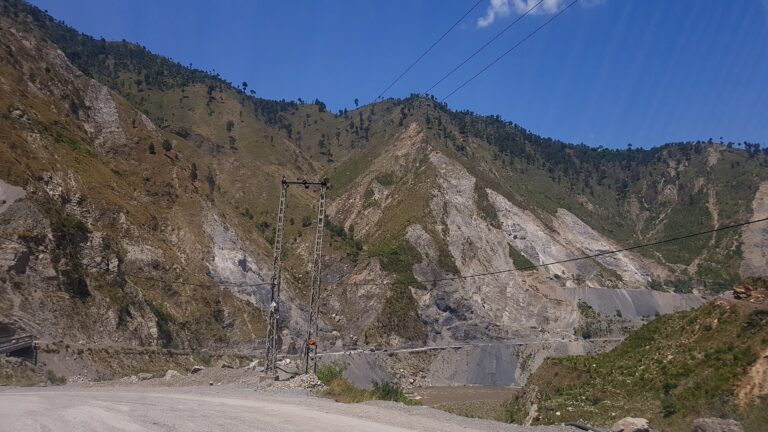
Lahore’s readings should not be treated as a measure of air quality in Muzaffarabad, Mirpur, Neelum Valley or Gilgit-Baltistan. Mountain towns and valleys have different topography, weather patterns, traffic and household energy use. Their exposure needs to be measured locally. PAQI says most of Pakistan’s population lives without routine air-quality measurement, a gap that makes it harder for communities and decision-makers to understand where pollution is occurring.
For Kashmir, the lesson is not that every valley faces Lahore’s smog levels. It is that clean-air policy requires public monitoring rather than assumptions based on landscape or visibility. Regular measurements in towns, schools, transport corridors and valley settlements would give residents a clearer picture of local conditions and help governments target the sources that matter. The region’s wider environmental pressures, including glacier loss and water security, are examined in The Azadi Times’ recent report on Himalayan glaciers.
Sources and further reading
- Pakistan Cricket Board: Second Test relocated from Lahore to Rawalpindi, 10 November 2026
- Pakistan Air Quality Initiative: monitoring dashboard
- Dawn: PAQI findings on PM2.5 levels and crop-residue fires, 10 November 2026
- Dawn: Punjab EPA air-quality review, 13 November 2026
- WHO: Global Air Quality Guidelines, 22 September 2021
- WHO: Ambient outdoor air pollution and health, 24 October 2024