
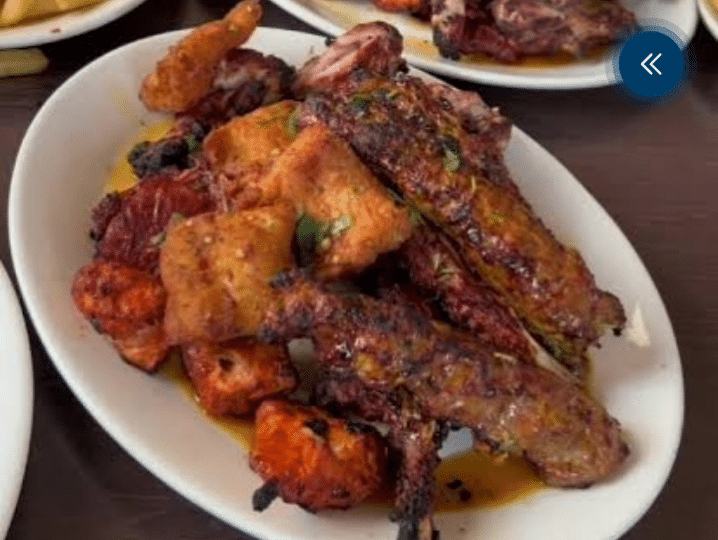

Search “Kashmiri karahi” and you will find recipes. Chicken or mutton, tomatoes, green chillies, a shallow pan. Many carry the label “Kashmiri style,” usually because they include yoghurt, fennel or Kashmiri chilli powder. Some are written by people who have never cooked in the Valley. Others are written by people who have, and who use the term loosely to signal a flavour profile rather than a technique.
None of that is how Kashmiri food is cooked. And the gap between the search term and the cuisine is not a small one. It is the difference between a pan and a tradition, between a method built for speed and a cuisine built for patience.
What karahi actually means
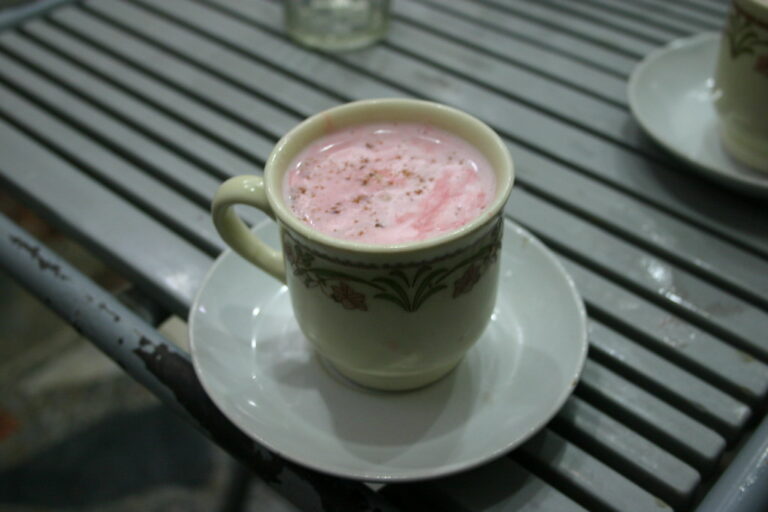
Karahi is the name of a pan. It is a deep, circular, wok-like vessel, traditionally cast iron or steel, used across Pakistan and northern India. Dishes cooked in it — quickly, over high heat, with a tomato and ginger base — are also called karahi. In Pakistan, chicken karahi and mutton karahi are staples of roadside restaurants and family kitchens alike. The cooking is fast. The pan is shallow. The gravy is built on tomatoes, green chillies and ginger, finished in twenty or thirty minutes.
It is a Pakistani and North Indian tradition. It is not a Kashmiri one.
What Kashmiri cuisine actually is
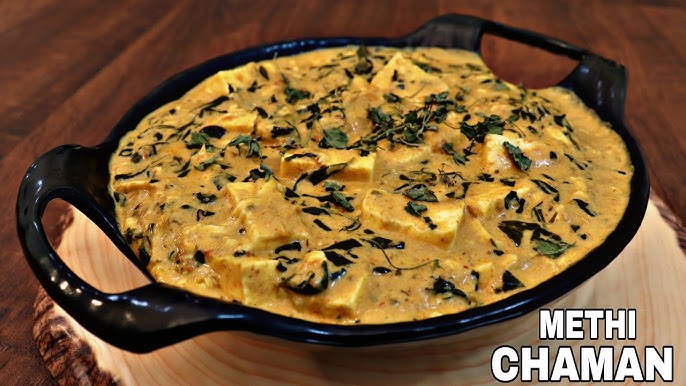

Kashmiri cuisine is a different system entirely. It is built on slow cooking, yoghurt-based gravies and a fixed spice set: fennel, dry ginger, Kashmiri red chilli, cloves, cardamom. The flavours are layered rather than sharp, and the cooking often takes hours, sometimes overnight.
Its centrepiece is the wazwan, a multi-course feast cooked by hereditary chefs called wazas in large copper vessels over firewood. The wazwan is not a restaurant menu. It is a ceremony, served at weddings and major occasions, and it has its own order, its own etiquette and its own hierarchy of dishes.
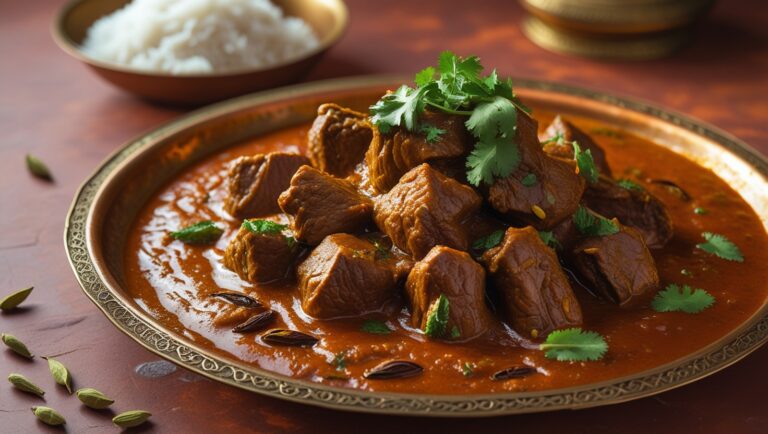
The signature dishes are well known. Rogan Josh is a red lamb curry, coloured with Kashmiri chillies and spiced with fennel and dry ginger. Yakhni is a mild, creamy mutton gravy built on yoghurt, seasoned with cloves and cardamom. Rista are meatballs in red gravy. Gushtaba are large meatballs cooked in curds, served at the end of the feast. There are dozens more, each with its own place in the sequence.

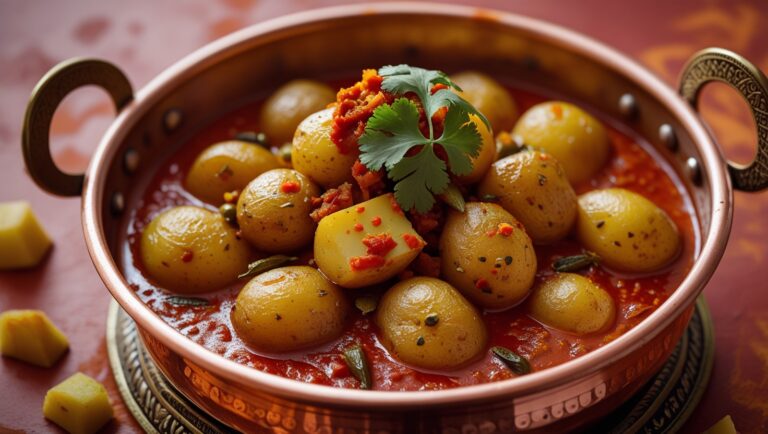
The vegetarian side of the cuisine is equally distinct. Nadru, or lotus stem, is cooked in yoghurt gravies and also fried as fritters, known as nadru monje. Dum Aloo features potatoes, often fried first in mustard oil, then simmered in a spiced yoghurt sauce. Haakh, a collard greens dish sautéed with garlic and mustard oil, is a daily staple in many homes. These are not side dishes in the way a restaurant might treat them. They are part of the core repertoire.
Where the confusion comes from
The phrase “Kashmiri karahi” likely emerged from restaurant menus and recipe sites looking to combine two familiar terms. A search for it returns recipes for chicken or mutton cooked in a karahi with tomatoes, green chillies and yoghurt — flavours that overlap with parts of Kashmiri cooking but follow a different logic.
Some of these recipes even label themselves “Kashmiri style,” using yoghurt, fennel and Kashmiri chilli powder to approximate the Valley’s flavour profile. But the technique — quick cooking in a shallow pan with tomatoes and green chillies — is not how Kashmiri dishes are made. Wazwan cooking is slow, often overnight, and the gravies are built on yoghurt or mutton stock, not a tomato-onion base.
There is also a genuine karahi tradition in Jammu, where Dogra cooking uses the vessel for dishes such as madra and rajma. But that is Jammu, not the Valley, and even there the karahi is not the defining vessel of the cuisine. The two regions share a state and a history. They do not share a cooking method.
Why the distinction matters
For a reader searching for a Kashmiri recipe, the confusion is mostly harmless. A chicken karahi with fennel and Kashmiri chilli powder can taste good. It is simply not what the term promises.
But for a cuisine like Kashmir’s, which has survived largely through family kitchens, waza lineages and oral tradition rather than through restaurant chains, the distinction carries more weight. Wazwan is not a style of cooking that can be approximated with a pan and a tomato. It is a discipline, passed down, with its own rules about which dishes are served when, how they are spiced, and who prepares them.
When the word “karahi” is attached to “Kashmiri,” the result is a dish that belongs to neither tradition cleanly. It borrows the pan from one and the spices from another. That is how fusion cooking works, and it is not a problem in itself. It becomes a problem only when it replaces the original in the minds of people searching for the real thing.
The bottom line
If someone searches for a Kashmiri karahi recipe, they are more likely to find a North Indian or Pakistani karahi with a few Kashmiri spices added. That is not a crime — it can taste good — but it is not Kashmiri food.
The real Kashmiri menu is not organized around a pan. It is organized around the wazwan, the samovar and the season. Rogan Josh, Yakhni, Rista, Dum Aloo, Nadru, Haakh and the winter harissa are where the cuisine lives. A karahi has its place in South Asian cooking, but that place is not the Kashmir Valley.