
MUZAFFARABAD, Pakistan-administered Kashmir — High in the Zanskar range of the Himalayas, where the air is thin and the glaciers never fully retreat, there is a valley that has produced one of the most coveted stones on Earth. It is not gold, not silver, not even the famous Kashmiri pashmina. It is a gemstone so rare that the finest examples now exist almost entirely in museums, private collections, and auction houses and so storied that its name alone commands a premium no other sapphire can match.
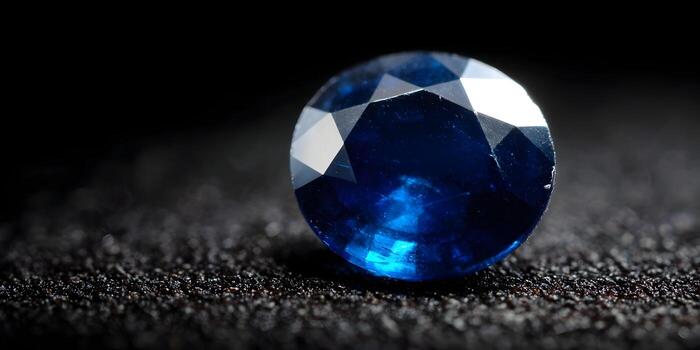
The Kashmir blue sapphire is widely regarded by gemologists, auction houses, and collectors as the finest blue sapphire ever found. Its colour is described in the trade as a “cornflower blue” or “velvet blue” — a hue with a soft, sleepy quality that has never been successfully replicated in any other origin. And yet, the mines that produced it were exhausted within a few decades of their discovery. Today, a single certified Kashmir sapphire of significant size can sell for more than a comparable diamond, and the story of how it came to be is inseparable from the story of the land itself.
This is the story of the Kashmir blue sapphire — its geology, its history, its market, and why it remains one of the most politically and culturally charged gemstones in the world.
What Makes a Kashmir Sapphire Different?
To understand why Kashmir sapphires are so valued, one must first understand what a sapphire is. Sapphire is a variety of the mineral corundum, and its blue colour comes from trace amounts of iron and titanium. Sapphires are found in many countries — Sri Lanka, Myanmar, Madagascar, Australia, Thailand, and the United States — but the geological conditions that produce the finest blue are extraordinarily rare.
The Kashmir deposit was formed in a specific geological environment: high-altitude metamorphic rocks that had undergone intense heat and pressure. According to gemological research, the sapphires crystallised in marble-hosted deposits at altitudes above 4,500 metres, in conditions that gave them a unique trace-element signature. The result is a stone with a subtle, velvety blue that gemologists describe as “sleepy” — a soft internal glow rather than a sharp, glassy brilliance.
The trade term for this quality is “cornflower blue,” and it is the benchmark against which all other blue sapphires are judged. The Gemological Institute of America (GIA) and other laboratories use Kashmir sapphires as the reference standard for the finest blue. No other origin has ever matched it consistently, and this is why the name “Kashmir” carries such weight in the gem trade.


The Discovery: A Landslide, a Shepherd, and a Legend
The origin story of the Kashmir sapphire is part legend, part documented history. The most widely accepted account places the discovery in the late 1870s or early 1880s, in the remote valley of Sumjam, in the Kudi Valley of the Zanskar range, in what is now the Kargil district of Indian-administered Kashmir.
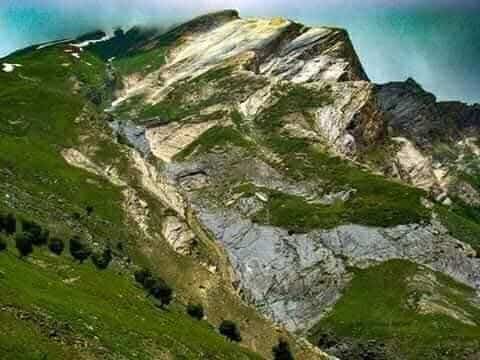
According to the story, a landslide exposed a vein of blue crystals on a mountainside. Local shepherds and villagers are said to have noticed the stones and brought them to the attention of the authorities. The Maharaja of Kashmir, Ranbir Singh, is said to have sent a team to investigate, and by the 1880s, the deposit had been formally claimed by the state.
The historical record is thinner than the legend, but what is documented is that the Kashmir sapphire mines were worked intensively from the 1880s until roughly the 1920s. The mining was primitive — hand tools, picks, and baskets — and the workers laboured at extreme altitude in harsh conditions. The deposit was worked in a series of pits and tunnels, and the finest stones were reportedly found in the first years of mining.


By the 1930s, the mines were largely exhausted. The exact date of closure is debated, but by the mid-twentieth century, the Kashmir sapphire had become a historical rarity. No significant new production has come from the original deposit in nearly a century.
Why Kashmir Sapphires Are So Rare
The rarity of the Kashmir sapphire is not a marketing invention. It is a geological and historical fact.
First, the deposit itself was small. Unlike the vast sapphire fields of Sri Lanka or Madagascar, the Kashmir occurrence was a localized vein in a remote mountain. The total volume of gem-quality material was limited from the start.
Second, the mining period was short. The mines were worked for only a few decades, and the technology of the time could not extract stones from deep or difficult rock. When the easy material was gone, the operation ceased.
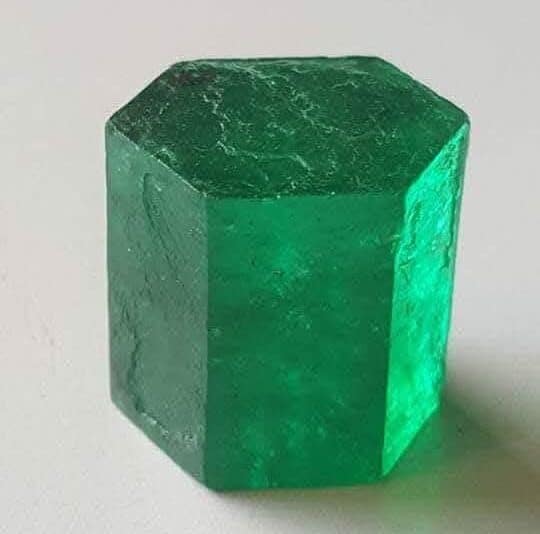
Third, the stones themselves are rare. Even within the Kashmir deposit, only a small fraction of the material was of gem quality. Most of the corundum was opaque, cracked, or too pale to be valuable. The finest stones — the velvety, cornflower-blue crystals — were a tiny percentage of the total yield.
Fourth, time has scattered the supply. The stones that were mined in the 1880s and 1890s have been dispersed through auctions, private sales, and inheritance for more than a century. Many are now in museums, including the Smithsonian Institution in Washington, D.C., and the American Museum of Natural History in New York. Others are in the treasuries of royal families and in the vaults of long-term collectors.
The result is a market where supply is essentially fixed. No new Kashmir sapphires are being mined in any meaningful quantity. The stones that exist are all that will ever exist. This is the definition of a finite resource, and it is why prices have risen steadily for decades.
The Market: Auctions, Prices, and the “Kashmir Premium”
In the international gem trade, the word “Kashmir” on a laboratory certificate is worth a significant premium. Auction houses such as Sotheby’s and Christie’s regularly feature Kashmir sapphires as headline lots, and the results are often record-breaking.
In 2015, a 27.68-carat Kashmir sapphire ring sold at Sotheby’s for approximately $6.7 million, setting a record at the time. In 2018, a 10.88-carat Kashmir sapphire sold for over $1.5 million. These prices are not anomalies; they reflect a consistent pattern. Kashmir sapphires routinely sell for two to five times the price of comparable sapphires from other origins.
The premium is driven by three factors: rarity, provenance, and the intangible quality of the colour. A Kashmir sapphire is not just a blue stone; it is a piece of history. It comes from a place that no longer produces, from a time that has passed, and from a deposit that has become legendary. In the world of coloured gemstones, this combination is unmatched.
It is important to note that the market for Kashmir sapphires is not without controversy. The gem trade has long struggled with issues of provenance, certification, and the potential for misrepresentation. A stone labeled “Kashmir” must be certified by a reputable laboratory, and even then, the identification is based on trace-element analysis and inclusions rather than a definitive geographic marker. Buyers are advised to deal only with reputable dealers and to insist on certification from laboratories such as the GIA, SSEF, or Gübelin.
The Political Dimension: A Gemstone in a Disputed Land
The Kashmir sapphire cannot be separated from the political reality of the region. The original deposit lies in the Kargil district of Indian-administered Kashmir, near the Line of Control that divides the region between India and Pakistan. The area is militarised, remote, and subject to restrictions on movement and access.
This has several implications. First, the mines are not accessible to independent researchers or journalists. The geological record is based on historical accounts and on the stones themselves, not on modern field studies. Second, the political status of the region means that the ownership and control of the deposit is a sensitive issue. India claims the entire region of Jammu and Kashmir as its territory, while Pakistan claims it as a disputed territory pending a UN-mandated plebiscite. The sapphire deposit is therefore located in a zone of unresolved sovereignty.
For the people of Kashmir, the sapphire is a symbol of both pride and loss. It is a reminder of the region’s natural wealth and of the fact that this wealth has historically been extracted and exported rather than used for local development. The mines that produced the world’s finest sapphires are now largely abandoned, and the communities around them remain among the poorest in the region.
This is a familiar pattern in resource-rich conflict zones: the most valuable exports often benefit the least from their extraction. The Kashmir sapphire is a case study in this dynamic, and any serious discussion of the gemstone must acknowledge it.
How to Identify a Kashmir Sapphire
For collectors and buyers, the identification of a Kashmir sapphire is a specialised process. It is not possible to determine origin by eye alone, and even experienced gemologists rely on laboratory analysis.
The key diagnostic features of Kashmir sapphires include:
Colour: The velvety, cornflower blue with a soft, “sleepy” appearance. The colour is often described as having a slight violet or milky quality, which distinguishes it from the sharper blues of Sri Lankan or Madagascar stones.
Inclusions: Kashmir sapphires often contain fine, rutile silk inclusions that create a soft, scattered light effect. These inclusions are sometimes described as “honeycomb” or “cross-hatch” patterns, and they are a signature of the origin.
Trace elements: Laboratory analysis of trace elements, particularly iron and titanium ratios, can help distinguish Kashmir stones from those of other origins. However, no single test is definitive, and laboratories use a combination of methods.
Certification: The only reliable way to confirm a Kashmir origin is a certificate from a reputable gemological laboratory. The GIA, SSEF (Swiss Gemmological Institute), and Gübelin are among the most respected authorities. Buyers should be wary of any stone sold as “Kashmir” without certification.
It is also worth noting that the term “Kashmir sapphire” is sometimes used loosely in the trade to describe any fine blue sapphire, regardless of origin. This is a misrepresentation, and buyers should insist on laboratory confirmation.
The Cultural and Historical Legacy
Beyond the market and the politics, the Kashmir sapphire has a cultural dimension that is often overlooked. It is a part of the region’s heritage, a product of its geology, and a symbol of its place in the world.
The stones that were mined in the late nineteenth century were shaped by local craftsmen and traded through the markets of Srinagar and beyond. Some were set into jewellery for the Maharaja’s court; others were sold to European and American buyers who were captivated by their colour. The sapphire became a part of the region’s identity, a luxury good that carried the name of Kashmir to the world.
Today, the sapphire is a reminder of what Kashmir was and what it could be. It is a natural resource of extraordinary value, and its story is a lesson in the relationship between geology, history, and politics. For the people of Kashmir, it is a symbol of the region’s beauty and its resilience. For the world, it is a benchmark of quality that has never been surpassed.
Frequently Asked Questions
Are Kashmir sapphires still mined today?
No. The original deposit in the Kudi Valley has been largely exhausted since the 1920s. No significant new production has been reported in nearly a century. Any “new” Kashmir sapphire on the market is almost certainly a misrepresentation or a stone from another origin.
Why are Kashmir sapphires so expensive?
Rarity, provenance, and colour. The supply is fixed, the mines are exhausted, and the colour is considered the finest in the world. These factors combine to create a premium that no other sapphire origin can match.
How can I tell if a sapphire is from Kashmir?
Only a reputable gemological laboratory can confirm origin. The GIA, SSEF, and Gübelin are among the most trusted authorities. Buyers should insist on certification and deal only with reputable dealers.
Are Kashmir sapphires found in Pakistan-administered Kashmir?
The original deposit is in the Kargil district of Indian-administered Kashmir. There are reports of sapphire occurrences in other parts of the region, but no significant production has been documented in Pakistan-administered Kashmir. The term “Kashmir sapphire” in the trade refers specifically to the historical deposit in the Kudi Valley.
What is the largest Kashmir sapphire ever found?
The largest known fine-quality Kashmir sapphires are in the range of 20 to 30 carats. Stones of this size are extremely rare and are typically held in museums or private collections. Smaller stones of one to five carats are more common, though still scarce.
Conclusion: A Stone That Outlasts Its Land
The Kashmir blue sapphire is more than a gemstone. It is a geological anomaly, a historical artifact, and a political symbol. It comes from a place that no longer produces, from a time that has passed, and from a deposit that has become legendary.
For collectors, it is the ultimate blue. For Kashmiris, it is a reminder of the region’s natural wealth and its unresolved future. For the world, it is a benchmark of beauty that has never been matched.
The mines are silent now. The valleys are militarised. The stones are scattered across the world. But the Kashmir sapphire remains what it has always been: a piece of the Himalayas, carrying the name of a disputed land into the vaults of the world’s most exclusive collections.
And in that sense, it is a perfect symbol of Kashmir itself — beautiful, rare, and forever contested.
Guide for Readers and Researchers:
If you are researching Kashmir sapphires for academic or journalistic purposes, begin with gemological laboratory archives (GIA, SSEF, Gübelin) for technical data on origin dtermination. For historical context, consult auction house catalogues (Sotheby’s, Christie’s) and the records of the Maharaja of Kashmir. For the political dimension, refer to UN Security Council resolutions on Jammu and Kashmir and to the reports of human rights organisations working in the region. The sapphire is a lens through which the larger story of Kashmir can be understood — but it is not a substitute for that story.