
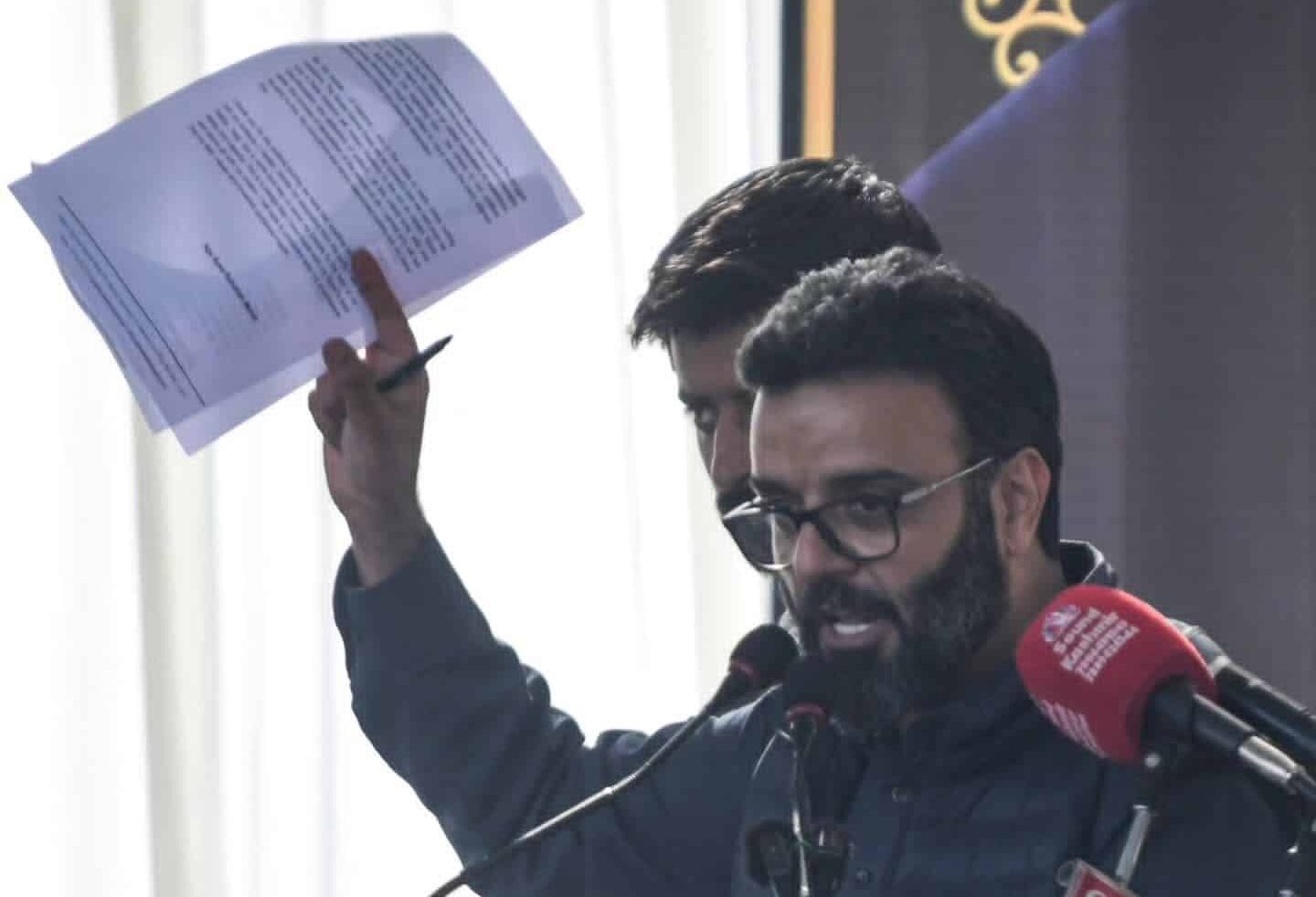
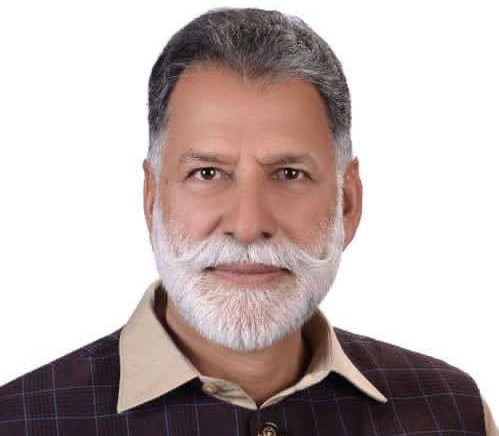
SRINAGAR, Indian-administered Kashmir — In the turbulent political landscape of the disputed Himalayan region, a rare phenomenon has captured the attention of both analysts and the general public: a politician who chose the people over the perks of power. Agha Ruhullah, a figure now synonymous with a quiet but profound defiance, has become the subject of intense discussion across both sides of the Line of Control (LoC).
According to reports emerging from regional monitors and local correspondents, Agha Ruhullah has resigned from his legislative position a move that has sent ripples through the political establishment.
The core of this development, as confirmed by sources monitoring the region, is that Agha Ruhullah has stepped down from his seat. While the specific bureaucratic details of the resignation remain a matter of debate between the administrations in Islamabad and New Delhi, the symbolic weight is undeniable.
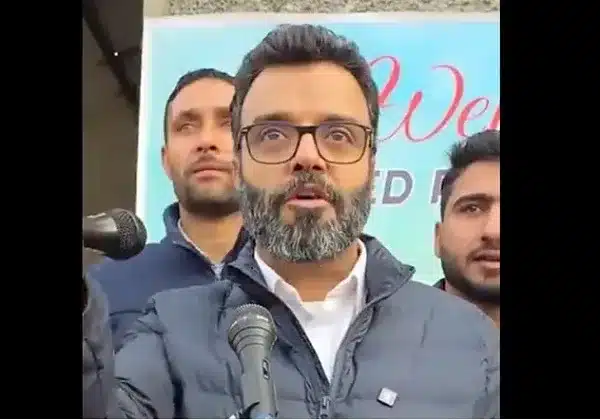
In a political culture often criticized for dynasty, opportunism, and the pursuit of power for its own sake, Agha Ruhullah’s decision to vacate his position has been interpreted by many as a deliberate rupture from the status quo.
A Surge of Grassroots Support
What makes this development particularly significant is the reception it has received from the public, specifically regarding the support for Agha Syed Ruhullah Mehdi. Reports indicate that following the resignation, a surge of grassroots support has coalesced around him.
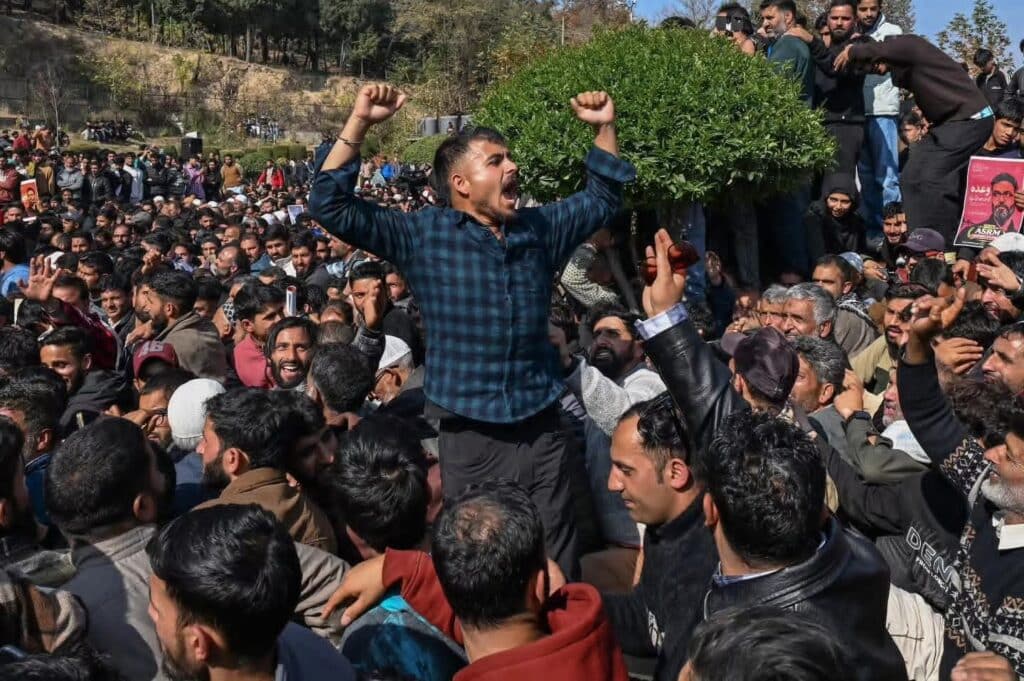
This is not merely a show of sympathy; it represents a profound hunger for authentic representation.
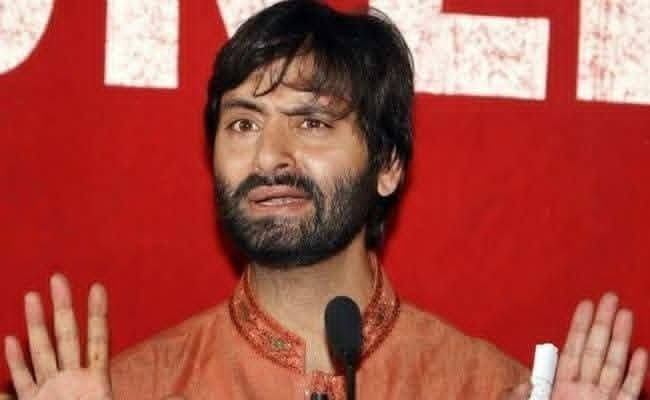
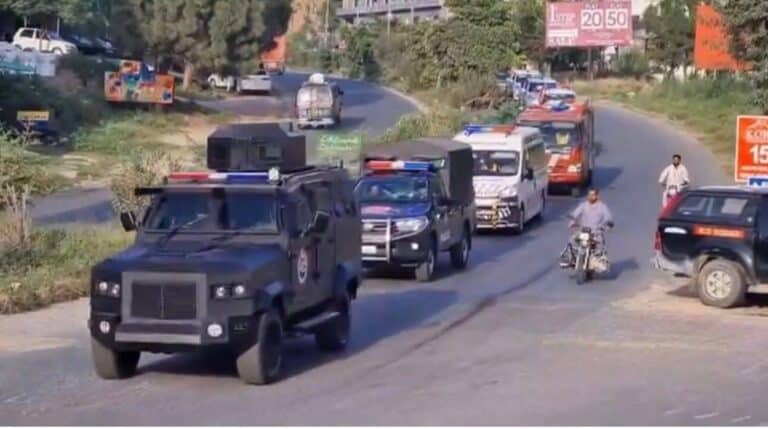
For decades, the political narrative in Kashmir has been dominated by parties and individuals who, critics argue, have been co-opted by the administrative machinery of either Pakistan or India. Agha Ruhullah’s action has positioned him as an outlier — a figure who, according to the popular sentiment echoed in local discourse, has chosen to stand with the awam (the common people) rather than cling to the iqtadar (power).
The Resignation
Mehdi, the member of Indian parliament for Srinagar, announced his resignation from the National Conference (NC) at a rally in Bahisht-e-Zehra Park in Budgam district, on the 26th death anniversary of his father, Aga Syed Mehdi.
He also sent his resignation from the Lok Sabha to Speaker Om Birla, ending a 24-year association with the party. He signed a two-page resignation letter from the stage and hinted during an 80-minute speech that he would form a new political outfit.

The decision follows months of open conflict with the party that sent him to parliament, and it lands at a sensitive moment for the NC, which leads the elected government of Jammu and Kashmir.
The way Mehdi delivered his resignation was deliberate. He handed the document to Muhammad Ashraf Mattoo, father of 17-year-old Tufail Mattoo, who was killed in alleged police firing in 2010, when Omar Abdullah was chief minister.
Tufail’s death became a rallying point in the 2010 street unrest, and Omar Abdullah has long been asked to answer for that period. Choosing Mattoo to carry the letter to the NC was a pointed message, whatever one thinks of it.
“I am signing the document of my freedom,” Mehdi told the crowd.
Who Is Aga Ruhullah Mehdi?
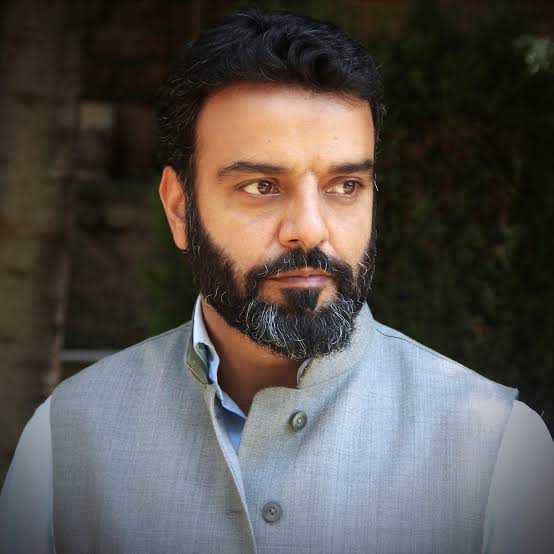
Mehdi comes from one of central Kashmir’s most prominent religious and political families. He leads many of the region’s Shia Muslims, and his father, Aga Syed Mehdi, a cleric and politician, was killed in a blast in November 2000. He is a three-time member of the legislative assembly.
In the 2024 general election, he defeated the People’s Democratic Party’s Waheed Para by more than 188,000 votes, taking about 52.8 percent of the vote. He succeeded Farooq Abdullah as Srinagar’s MP.
That mandate is the reason his resignation matters: he did not leave a marginal seat, he walked away from a decisive win.
This is not his first break with the leadership. In July 2020, he resigned as NC chief spokesperson. The trigger was Omar Abdullah’s statement that he would not contest elections while Jammu and Kashmir remained a Union Territory.
Mehdi argued at the time that restoring statehood should be the last demand, and that restoring special status should come first. The disagreement he voiced six years ago is largely the one he is making now.
What Led to the Break
The immediate dispute is about Article 370. India revoked Article 370 and Article 35A, which gave Jammu and Kashmir special status, in August 2019. The NC campaigned in the 2024 assembly election on restoring the region’s rights, and Mehdi was one of its most visible campaigners.
In his letter to the party, he said he had initially seen the NC as the natural vehicle for the struggle that followed the 2019 decision. He alleged that the party reversed its position soon after the election, calling it a betrayal of the expectations it had raised.
He also warned that the region faces what he called an existential threat, and that political disengagement would only speed up that process.
Earlier in the year, the dispute became public. Farooq Abdullah publicly asked Mehdi to resign and seek a fresh mandate for opposing the party line. In an August letter, Mehdi replied that resignation would come, but that accountability must come first.
He asked why a mention of constitutional guarantees had become so offensive to the party president, who was chief minister when the old state assembly passed the Autonomy Resolution.
Mehdi also argued that the region’s constitutional rights cannot be traded for the narrower demand of statehood. That distinction is the core of the split. The NC government has argued for pursuing statehood through negotiation with Delhi. Mehdi argues that this concedes too much.
The NC’s Reply
The party has responded with a mix of regret and criticism. NC minister Altaf Kaloo called Mehdi a good friend and said there was still time to reconsider.
Another minister, Javed Rana, said that if Mehdi resigns, so be it, and that if he does not, he should return and work with the party. Independent lawmaker Shabir Ahmad Kullay said the resignation would be a major loss for the people of Kashmir.
The party’s official line, as reported by The Tribune, is that reclaiming what was taken away requires skilled politics rather than theatrics. In other words, the NC argues that confrontation with the central government has not worked and that slow negotiation is the only realistic route.
What He Plans to Do
Mehdi has not named a party, a manifesto or a date. He spoke of launching a “movement” in which “honest and compassionate people” would lead the effort to reclaim what, in his view, was taken from the people of Jammu and Kashmir, and said it would take shape once the right people come forward.
He also told the Centre that Kashmiris would set their own political agenda. That line is addressed as much to Delhi as to the NC, and it signals that he intends to position himself as an independent voice rather than as a leader of the opposition within the existing system.
Before resigning, he said he had commitments to complete, including the disbursement of MPLADS funds, the constituency development money available to MPs.
Where Does Self-Determination Fit In?
This is the part of the story that needs the most care. As reported so far, Mehdi’s public demand is the restoration of Article 370 and constitutional guarantees within the Indian union. He has not called for a plebiscite, independence or merger with Pakistan, and nothing in his speech or his letters, as reported, says he has.
At the same time, many Kashmiris interpret events through a wider lens. For some, the departure of a high-profile elected leader on the grounds that mainstream politics has failed fits a broader argument: that the people of the region should decide their own future, a position that has been part of Kashmiri politics for decades.
Others read his move more narrowly, as an attempt to build a new regional platform that works within India’s constitutional framework and competes for the same voters as the NC and the PDP.
Both readings can be true at once, and a responsible account should not blur them.
The official positions are long established. India says Jammu and Kashmir is an integral part of the country and treats the Kashmir question as a bilateral matter with Pakistan, rejecting outside mediation. Pakistan, which administers a separate part of the region, calls for the dispute to be settled in line with UN Security Council resolutions that envisaged a plebiscite.
Neither government has commented on Mehdi’s resignation in anything reported so far.
What Happens Next
Several questions remain open.
Will the Speaker accept the resignation, and when will the Srinagar seat be contested? A by-election would test whether Mehdi’s personal support translates into votes for whatever vehicle he creates, and whether the NC can hold the seat without him.
Will the movement find a structure? Kashmir has seen leaders announce movements before, and many have faded without an organisation. Mehdi’s Shia base is significant in Budgam and parts of Srinagar, but Kashmir’s politics rarely follow sectarian lines alone, and he will need to reach beyond it.
What will it do to the NC? The party has been dealing with discontent among older members. Losing a prominent, young and popular face adds to that pressure, and it gives the PDP and other opposition groups an opening to argue that the NC has drifted from its promises.
And how will Delhi respond? The central government has so far shown no sign of reconsidering the 2019 decision, which the Supreme Court of India upheld in 2023. That legal reality limits what any new party can deliver on Article 370, and Mehdi will be asked how he intends to close that gap.
Why It Matters Beyond One Man
Whatever his next step, the resignation shows how thin the space for electoral politics has become for leaders who want to push on the question of rights and identity.
Elected representatives in Indian-administered Kashmir work within a system in which the most important decisions are taken in New Delhi. Some conclude that the only way to stay credible with voters is to leave that system. Others conclude that the only way to achieve anything is to stay inside it.
Mehdi has made his choice. Whether it turns out to be a turning point or a footnote depends on what he builds, and on how many of the people who filled that park in Budgam are still with him when the cheering stops.