
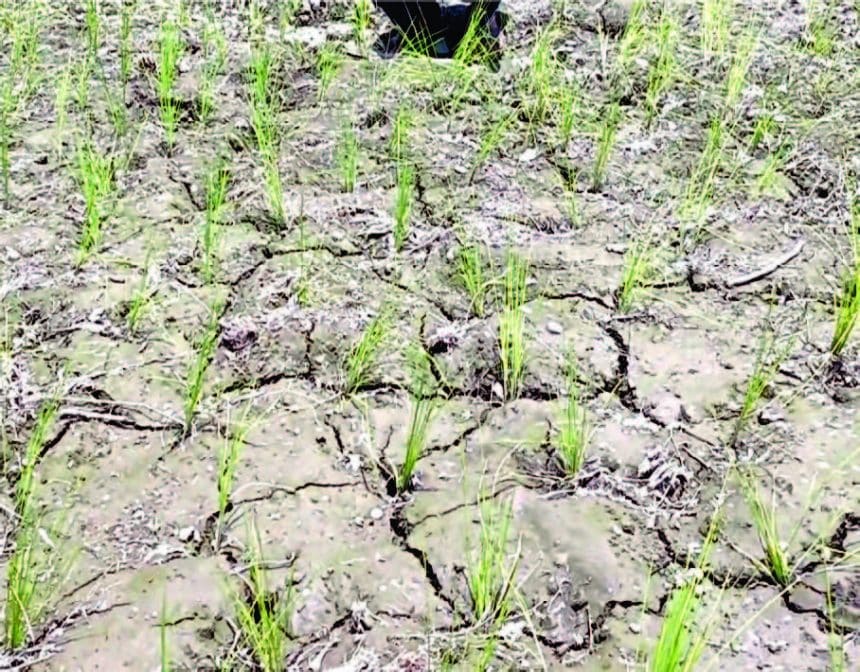

By Raja Irshad Ahmad | The Azadi Times Ganderbal, Jammu & Kashmir – As the lush green valleys of Kashmir charm the world with their natural beauty, the farmers of the region are battling a deepening crisis: a severe shortage of irrigation water that now threatens thousands of kanals of rice paddy fields across dozens of villages in Ganderbal district.
From Gund Rehman, Shalabugh, Tulamula, Paribal, to Ghat Gogjagund and Chhanduna, the impact is widespread. Villagers report that the Lift Irrigation Pump Station, a critical system feeding water into the Qazi Canal—the lifeline for these agricultural belts—is lying defunct due to a minor technical fault that remains unresolved due to departmental negligence.
Irrigation Department Admits Fault
The Superintending Engineer of the Ganderbal Irrigation Department acknowledged the issue, assuring the public that it would be resolved soon. But for farmers, every passing day brings crop failure closer. As one local farmer put it on social media:

“Both India and Pakistan take Kashmir’s water, but we can’t even get a drop to save our own crops. Is this not injustice?”
PDP Leader Blames Government Negligence
Former Member of Legislative Council Yasir Reshi of the People’s Democratic Party (PDP) strongly criticized the Jammu & Kashmir administration over the irrigation crisis, directly blaming the government for what he called a “man-made disaster.”
“This is not a natural calamity; it is the result of systemic negligence, mismanagement, and anti-farmer policies. From Sumbal to South Kashmir, thousands of kanals of agricultural land are turning barren due to water scarcity,” Reshi stated.



He also called on the administration to conduct an independent audit of Kashmir’s irrigation infrastructure, repair broken canals, and announce an emergency relief package for farmers.
When Politics Controls Water, Farmers Suffer
This crisis once again highlights a painful irony for Kashmiris: while India and Pakistan continue to share Kashmir’s rivers under the Indus Waters Treaty, the people of Kashmir—who live on the land these rivers flow through—often remain deprived of their basic irrigation needs.
With both nuclear neighbors managing Kashmir’s water for their national interests, Kashmiri farmers are caught in the middle, left to suffer silently.


As social media posts go viral, questions are once again being raised:
Why is it that Kashmir’s waters fuel agriculture in Punjab, Sindh, and Haryana—yet in the very place of origin, crops are dying from thirst?
The ongoing water crisis in Ganderbal is far more than a technical malfunction—it is a stark reflection of the political neglect that Kashmir’s agrarian communities have endured for decades. When thousands of kanals of fertile land are left to dry, not because of natural disaster but due to institutional apathy, the issue becomes one of injustice and denial of fundamental rights.
As India and Pakistan continue to manage Kashmir’s rivers for their own strategic and agricultural benefit under the Indus Waters Treaty, the people who live closest to these rivers remain deprived of the very water that originates in their homeland. Kashmiri farmers are not merely facing crop failure; they are being systematically disconnected from their own natural resources.
Unless the voices of these farmers are heard, and their right to water and livelihood is acknowledged and protected, such crises will continue to repeat—deeper, more devastating each time. It is time for both local and international institutions to recognize that access to water in Kashmir is not just a need—it is a right.