
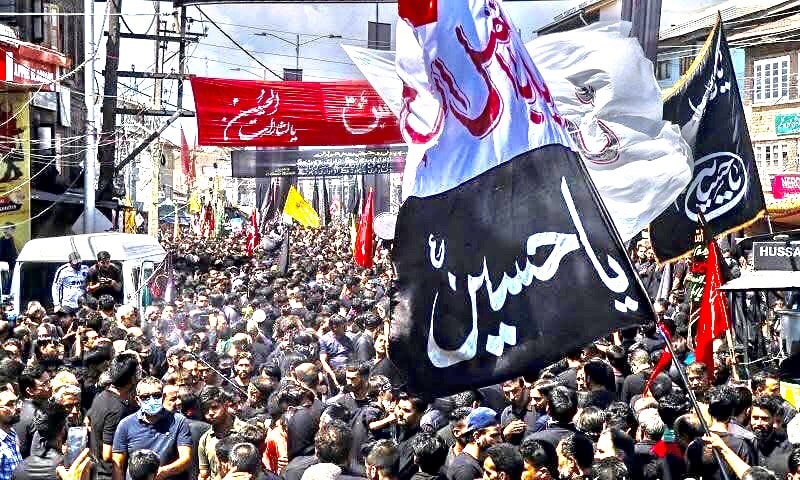

The crescent moon of Muharram ul Haram 1447 AH has been officially sighted across the disputed region of Jammu and Kashmir, including territories administered by both Pakistan and India. This marks the beginning of a sacred month for Shia Muslim communities, who commemorate the martyrdom of Imam Hussain (AS) through a series of mourning rituals and public gatherings.
The month of Muharram, particularly the first ten days leading up to Ashura on July 7, holds deep cultural and spiritual importance in Kashmir’s Shia-majority regions.
Preparations Underway Across the Disputed Region
From Gilgit and Skardu in the north to Kargil, Srinagar, Budgam, Muzaffarabad, and Rawalakot, local administrations have completed security arrangements and logistical coordination for upcoming majalis, processions, and communal observances.

In areas administered by Pakistan, district administrations have conducted coordination meetings with Shia clerics, peace committees, and police departments to ensure smooth management of public gatherings.
In Indian-administered Kashmir, particularly in Srinagar and parts of central Kashmir, authorities have also confirmed that public Muharram processions will be permitted in select zones after years of restrictions. Security forces have been deployed to facilitate peaceful commemorations.
Muharram in Kashmir: Cultural Identity Meets Faith
The observance of Muharram in Jammu and Kashmir is not only a religious act but also a reflection of centuries-old cultural identity. In the Shia tradition, the month is marked by public mourning, poetic recitations (marsiyas, nohas), community kitchens (sabeels), and peaceful processions.



“Ashura is a day of remembrance, not protest. It’s about justice and sacrifice — values that deeply resonate with Kashmiri history,” said a community leader in Budgam.
Many Kashmiris, regardless of sectarian identity, observe the solemnity of Muharram, reflecting the region’s deeply pluralistic heritage.
Demographic Heartlands: Shia Communities in Jammu and Kashmir
The month of Muharram carries immense religious and cultural significance for the Shia Muslim population across the disputed region of Jammu and Kashmir. In various subregions of this Himalayan territory — from rugged mountain valleys to urban centres — the Shia community not only observes Muharram with deep spiritual devotion but also plays a vital role in preserving and transmitting centuries-old mourning traditions. Key demographic pockets include:

Inauguration of Kashmir Airline, Tourism will be boosted, Prime Minister
Gilgit-Baltistan
This northern mountainous territory is home to one of the largest concentrations of Shia Muslims in South Asia, particularly in the districts of Skardu, Gilgit, Kharmang, Shigar, and Astore. Most Shia Muslims here belong to the Twelver (Ithna Ashari) school, while pockets of Noorbakhshi and Ismaili communities also coexist. In areas like Skardu and Kharmang, Shia Muslims form a clear majority, and Muharram observances shape the cultural calendar, with processions, nohas, and community-run sabeels stretching across towns and villages. The mourning traditions in Baltistan are infused with local language, poetry, and rituals that blend Persianate influences with Himalayan resilience.
Kargil in Ladakh
Nestled in the eastern Himalayas, Kargil is another prominent Shia-majority region. Often referred to as the religious heart of Shia Islam in Ladakh, Kargil hosts some of the largest Ashura gatherings in the entire disputed region. The observance of Muharram here includes community-wide participation, dramatic recitations of marsiyas and nohas, and symbolic re-enactments of the Battle of Karbala. The cultural richness of Kargil’s Shia population is evident in its religious schools, mosques, and public commemorations that bring together elders, youth, and religious scholars.
Central Kashmir (Indian-administered)
In the Kashmir Valley, Shia communities are predominantly concentrated in Budgam district, and parts of Srinagar, such as Zadibal, Bemina, and Rainawari. These areas are well-known for their historically rooted majalis (religious gatherings) and Ashura processions, some of which trace back centuries. Despite facing periodic restrictions, the community has sustained its traditions through private majalis, street-level recitations, and youth-led initiatives that ensure transmission of religious knowledge and cultural memory.
Pakistan-administered Kashmir
In Azad Jammu and Kashmir (AJK), Shia communities may be smaller in number compared to other regions, but their cultural and organizational impact remains strong. Districts like Muzaffarabad, Bagh, Hattian Bala, and Rawalakot witness organized Muharram processions, communal meals (langar), and local majalis, often coordinated in collaboration with Sunni neighbors — a reflection of inter-sect harmony that has historically marked the region. Shia ulema and youth organizations in AJK actively work to preserve religious narratives and engage in peaceful, disciplined commemorations throughout the ten days of mourning.
These geographic and cultural heartlands form a living spiritual corridor where Muharram is not only a time of mourning, but also one of identity, unity, and resistance against injustice. Across these communities — separated by political lines but united by faith — the memory of Karbala lives on through poetry, prayer, processions, and an unbroken chain of devotion that binds generations.
Coordinated Preparations Across the Divided Region
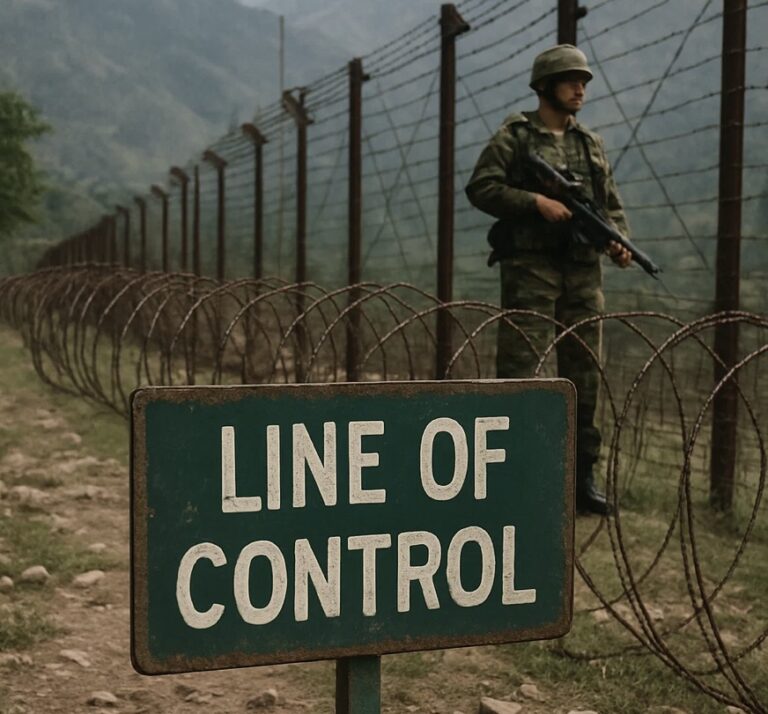
Local administrations across both sides of the ceasefire line also known as Line of Control (LoC), have confirmed the completion of security and logistical arrangements for processions, community gatherings (majalis), and public events.
In Gilgit-Baltistan, where Muharram processions are deeply embedded in local tradition, community leaders and officials have jointly prepared for peaceful observance, particularly in Skardu, often described as the spiritual capital of Shia Islam in the region.
In Indian-administered Ladakh, especially Kargil, preparations have been made for large-scale processions, including traditional recitations of nohas and marsiyas, which define the poetic mourning culture of the area.
Meanwhile, in Muzaffarabad and Rawalakot, district officials have held joint meetings with Shia scholars and community elders to ensure smooth coordination throughout the month.
Spiritual Significance Meets Cultural Identity
Across the disputed region, Muharram observance represents more than a religious event — it is a living tradition, passed down through generations. From the processions in the narrow valleys of Astore and Baltistan, to the poetic nohas of Kargil, and the silent marches in Budgam, the essence of Imam Hussain’s sacrifice binds communities together across sect, region, and border.
For many Shia families, Muharram is a time of spiritual retreat, communal bonding, and retelling the moral lessons of Karbala — justice, dignity, and resistance to oppression.
A Rare Opening in Indian-administered Kashmir
This year, authorities in Srinagar have permitted Ashura processions in selected zones — a first in decades — after years of restrictions citing security concerns. While cautiously welcomed, community voices continue to emphasize the need for consistent space for religious and cultural expression.
Ashura 2025: A Shared Commemoration Across Borders
Despite political divisions, the spirit of Muharram flows across the valleys of Kashmir, the mountains of Gilgit-Baltistan, and the plains of Ladakh. Ashura, to be observed on Sunday, July 7, commemorates the martyrdom of Imam Hussain (AS) at Karbala, a symbol of moral resistance cherished by many in the region, both Sunni and Shia.