
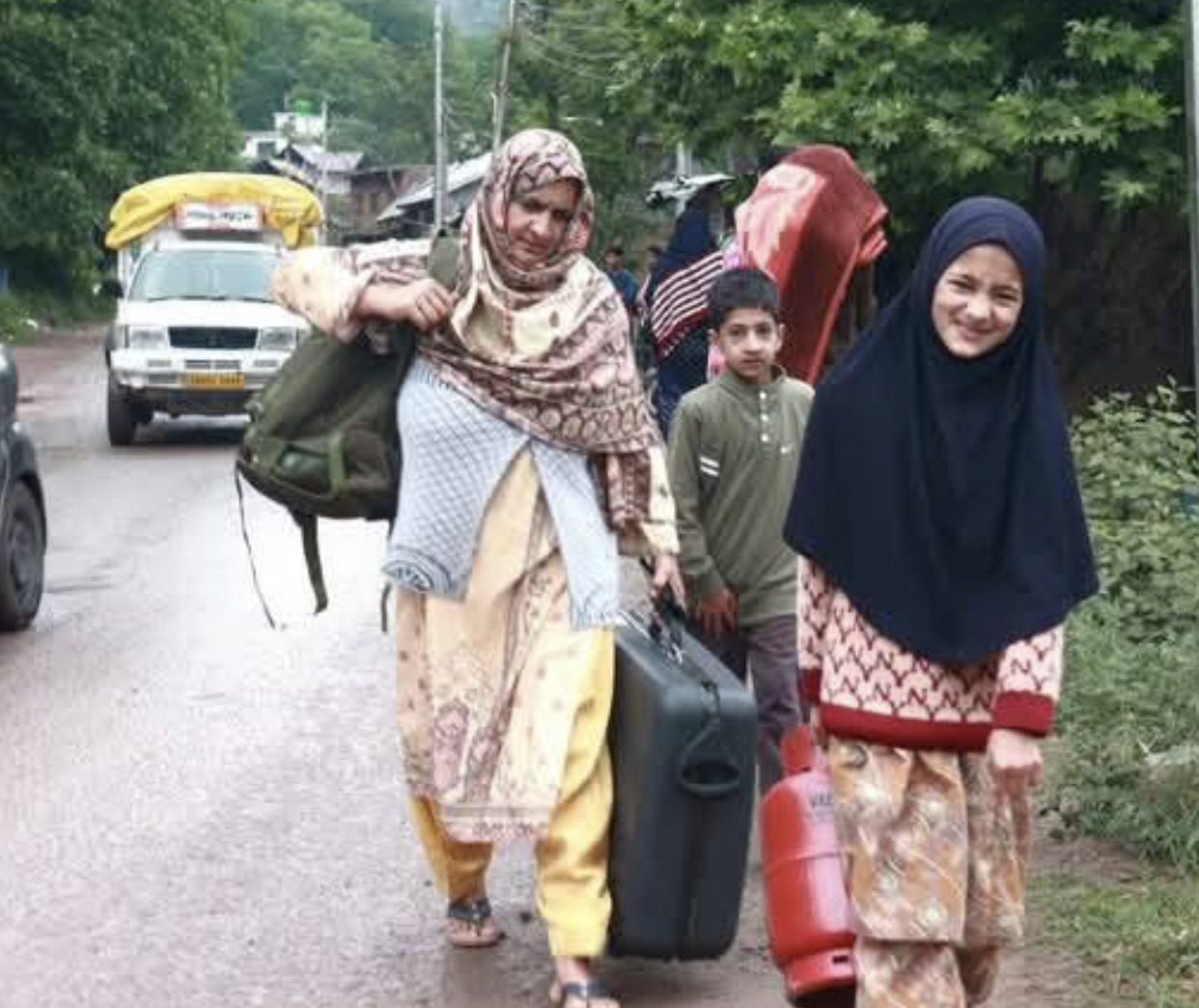


Muzaffarabad, Pakistan-administered Jammu and Kashmir: According to the Health Department of Pakistan-administered Jammu and Kashmir, overnight shelling on May 8–9 along the Line of Control (LoC) resulted in 17 civilian deaths from Neelum to Bhimber, with at least 51 injured being treated in hospitals. Additionally, over 139 properties have sustained damage, prompting residents of border villages to flee toward city centers for safety.
Although no formal declaration of war has been made, the horrors of conflict are already casting a dark shadow over civilian lives.
Meanwhile, the BBC reports two civilian deaths in Indian-administered Jammu and Kashmir—though the actual toll is likely higher. Given the intensity and scale of shelling on both sides, military casualties are also presumed, although such details remain undisclosed, as only military spokespersons typically comment on such losses.
In wartime conditions, conflicting claims and information blackouts are common. Propaganda, information control, and strategic ambiguity are standard practices. As the saying goes: “Truth is the first casualty of war.” Citizens, too, are advised to refrain from live-streaming or publicly sharing wartime content on social media due to potential repercussions and misinformation.
Read Also: Born Together, Died Together: Zain & Zoya Youngest Victims of LoC Crossfire
India, for its part, has claimed to have intercepted missile strikes from Pakistan in multiple regions. International media outlets have reported explosions at Jammu Airbase, although Pakistan has denied any such attacks.
Indian media outlets went into overdrive overnight, declaring near-victory over Pakistan, reporting the destruction of major Pakistani cities. By morning, however, those same cities were functioning normally again. Such media war propaganda is common in conflict situations, where independent reporting is stifled, and dissenting voices are censored.
Independent outlets like The Wire have been banned or suppressed in India, and many social media channels and pages have been taken down. Even videos and images of Rafale fighter jets, captured by civilians, were withheld due to government advisories.
On the Pakistani side as well, media reporting has been restricted to official sources, limiting transparency. The LoC spans over 740 kilometers of mountainous terrain, and now even nearby towns are being affected by shelling. Journalists cannot independently verify the destruction in a routine traffic accident—let alone amid the chaos of a military conflict. In such scenarios, hospitals and health departments remain the most reliable sources for confirming casualties.
One wrong move could escalate the situation into a full-scale war—the potential for nuclear escalation cannot be ignored. Pakistan has already hinted at retaliatory measures against Indian strikes, which could provoke countermeasures from India and spiral into a wider conflict.
Meanwhile, global powers have begun their predictable, hypocritical diplomatic maneuvers. Hope remains that the war can still be averted—because war is never a solution.
On both sides of the border, it’s the working-class population that continues to suffer—they lose their lives, their homes, and their future. Meanwhile, the ruling elites benefit from this destruction by diverting attention from domestic crises and consolidating power. It is the same public that will also be made to bear the economic cost of war—through taxes, displacement, and the unraveling of social structures.
Workers across South Asia must unite to reject this war hysteria and demand peace. No matter who wins militarily, humanity loses in war. That is why, for the survival of the human race, the end of war is not just necessary—it is urgent.
Kashmir has always been the pretext for war. But the Kashmir conflict has never been, and never will be, resolved through warfare. The only real solution lies in granting the people of Jammu and Kashmir their right to self-determination—a right long denied by both states.
However, such a resolution is unlikely under the current imperialist framework. Only the dismantling of this system can make that possible. The ultimate solution lies in erasing colonial divisions and establishing a voluntary socialist federation of free and equal nations in South Asia—one that ensures peace, justice, and dignity for all its people.