

Gilgit, (Gilgit Baltistan) Pakistan adminidtered kashmir – In a press conference held at the Central Press Club in Gilgit, community leaders representing the indigenous residents of Gilgit have renewed their call for resolving a longstanding land dispute through traditional Jirga (tribal council) mechanisms and peaceful negotiations. The conflict centers around Thole Das, a historically recognized pastureland on the outskirts of Gilgit, which the local population claims has been illegally encroached upon by non-indigenous individuals with the alleged support of certain land mafias.
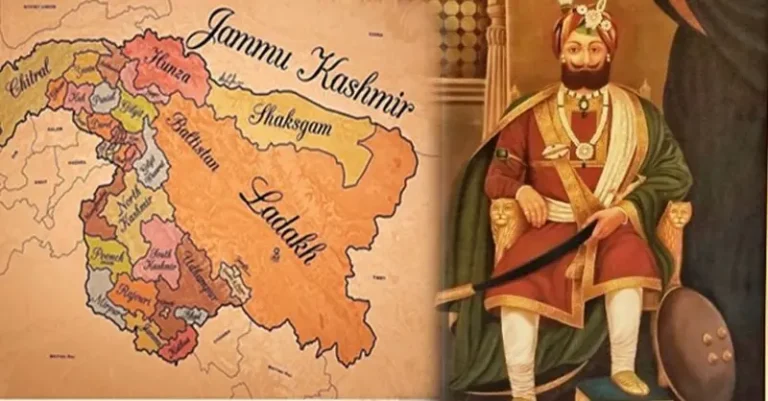
About Gilgit Bltistan: Gilgit-Baltistan is part of the Pakistan-administered territory of Jammu and Kashmir. The region, while not constitutionally integrated into Pakistan, holds a unique status and has long demanded clearer political rights and protection of indigenous identities.
The dispute has brought into focus growing tensions over land ownership and demographic changes in Gilgit, a key town in the Pakistan-administered region of Jammu and Kashmir. Gilgit-Baltistan, while administered by Pakistan, does not formally enjoy provincial status, and its constitutional and land rights have remained a subject of contention for decades. Indigenous groups fear that unchecked settlement, unregulated land sales, and political marginalization could erode their historical ownership and rights.
Historic Pastures and Unresolved Encroachments
Speaking on behalf of the Tanzeem-e-Tahaffuz Huqooq-e-Pushteni Bashindgan Gilgit (Organization for the Protection of Rights of Indigenous People of Gilgit), President Shamshad Ali emphasized that the disputed area of Thole Das, located opposite Benzal Gilgit, has been a traditional winter grazing ground for the people of Gilgit since time immemorial. He was joined by several other senior elders and representatives from Gilgit’s various neighborhoods.
According to the organization, this pastureland has been unlawfully occupied by non-indigenous individuals who lack the legal Khewat (ownership registration) rights to the area. They allege that local land mafias have facilitated the illegal sale and partitioning of the land, leading to tree plantation and even construction of boundary walls in parts of the pasture.
The speakers cited historical land records, including a 1936 Kashmir State document and a 1917 state-issued record, as proof of Gilgit residents’ ownership of the area. These documents reportedly define the boundaries of Bargo Pain, a neighboring locality, as ending at the beginning of Thole Das, covering only 5.5 miles from Ghamak Laat to Jarali—well short of the disputed area.
Efforts by Authorities and Continued Inaction
The issue is not new. In August 2019, the then Deputy Commissioner of Gilgit attempted to reclaim the illegally occupied land with the support of the Frontier Constabulary (FC), Rangers, and Gilgit Scouts. However, despite these efforts, successive officers have been unable to enforce the decision due to bureaucratic challenges, lack of political will, and resistance from powerful land lobbies.
“The illegal occupation continues despite multiple attempts to enforce law and order,” Shamshad Ali stated. “Our patience should not be mistaken for weakness. We respect our neighbors, especially our brothers from Bargo Pain, but we cannot allow even one inch of our ancestral land to be usurped.”
Counterclaims and Lack of Evidence
Recently, some elders from Bargo Pain claimed during a press conference that their village boundaries stretch as far as Karakoram International University (KIU). The residents of Gilgit have strongly rejected these claims, stating that no official documents support such an extension of boundaries.

They further dismissed the argument that Bargo Pain villagers acquired grazing rights (mari) from Kashiro Das and Konodas, emphasizing that there is no historical or legal precedent for such a claim. In fact, according to Gilgit elders, these areas were historically uninhabited for long periods due to raids by the then-ruler Raja Gohar Aman of Yasin and Chilas.
Call for Jirga and Peaceful Settlement
Despite the escalating tensions, Gilgit’s indigenous leaders have reiterated their commitment to a peaceful, traditional resolution. They have extended invitations to community elders and responsible citizens from nearby villages—such as Jutial, Jaglote, Haramosh, Bagrote, Danyore, Manawar, Sakwar, Barmas Khar, and Basin—to join a grand Jirga aimed at resolving these boundary disputes with mutual understanding and respect.
“This is not a major conflict, but one that can become divisive if not resolved with wisdom,” said one of the elders. “We are the original custodians of this land, and we seek unity among all villages. We want to protect not just territory, but harmony and shared heritage.”
Regional and Political Context
The dispute comes amid broader concerns in Gilgit-Baltistan over the future of land rights, identity, and political autonomy. Gilgit-Baltistan, while part of the larger Kashmir region under dispute between India and Pakistan, has long demanded constitutional rights, preservation of indigenous status, and protection against demographic changes.
Indigenous organizations argue that the systematic erosion of historical grazing rights and communal lands, combined with unregulated real estate practices, threaten the cultural and economic foundations of the region.
In a region already grappling with under-representation, limited political autonomy, and environmental vulnerability due to glacier melt and development pressures, land disputes such as these carry significant socio-political implications.
The leaders concluded the press conference by expressing hope that their peaceful call for a Jirga will be accepted by all stakeholders. They emphasized that their organization will continue to act as a bridge between communities to ensure the protection of ancestral lands and maintain the unity of the people of Gilgit-Baltistan.
“This is our homeland. Our pastures are our heritage. We will protect them—not through confrontation, but through dialogue, truth, and justice,” Shamshad Ali said.
Gilgit-Baltistan is part of the Pakistan-administered territory of Jammu and Kashmir. The region, while not constitutionally integrated into Pakistan, holds a unique status and has long demanded clearer political rights and protection of indigenous identities.