Srinagar: A significant escalation in the ongoing security operations in Srinagar and its surrounding areas has been reported, with the scope of the crackdown being extended. In the latest development, the residence of Zahoor Ahmad Bhat, the brother of martyred Kashmiri separatist leader Maqbool Bhat, was raided by the authorities. Zahoor Ahmad Bhat, who has been imprisoned for several years, was once again targeted in this recent security operation.
The raid, which was carried out by the authorities, involved the searching of multiple homes in Srinagar, including those of prominent individuals linked to political activism. Among those whose homes were raided are:
Noor Muhammad Sheikh, son of the late Ghulam Muhammad, resident of Khan Mazar
Wasim Tariq Muttah, son of Tariq Ahmad, resident of Rampora Klyama
Mohammad Owais Hamid, daughter Anjum Younis
Bilal Ahmad Lone, son of Abdul Rahman Lone, resident of Saidpora Eidgah
Faizab Shaukat Dewani, son of Shaukat Ahmad, resident of Pathar Masjid
Bilal Lone, also known as Chounin, son of Abdul Rahman Lone, resident of Saidpora Eidgah
Manzoor Tolla, son of Asadullah Tolla, Khanqah Soukhta
Mohammad Ayoub Dar, son of Ghulam Mohammad Dar, resident of Rie Tang Khanyar
Mushtaq Ahmad Bichon, son of Mohiuddin Bichon, resident of Kathi Darwaza Rinewari
Zahoor Ahmad Bhat, son of Ghulam Qadir Bhat, resident of Terhigam, Kupwara, currently residing in Devi Angan
Firdous Ahmad Dar, son of Mohammad Dar, resident of Ibrahim Colony
These operations have drawn sharp criticism from political leaders and human rights organizations, with growing concerns about the heavy-handed approach adopted by authorities. Amnesty International and other human rights defenders have been urged to take immediate note of the situation and intervene.
The intensification of raids on activists, political figures, and residents continues to fuel tensions in Kashmir. These actions reflect ongoing political repression, with critics accusing the authorities of suppressing dissenting voices in the region. The crackdown has raised questions about the broader human rights situation in Kashmir and the stifling of political and civil freedoms.
As this situation continues to unfold, there is an increasing demand for international attention and intervention to address the growing concerns over civil liberties and human rights in Kashmir. The international community, including organizations like Amnesty International, is being urged to take a more active role in defending the rights of those targeted in such raids.
This crackdown further exemplifies the delicate political situation in the region, with the crackdown intensifying fears of continued oppression and control by the authorities. The coming days will reveal the true impact of these operations on the political landscape in Srinagar and Kashmir at large.
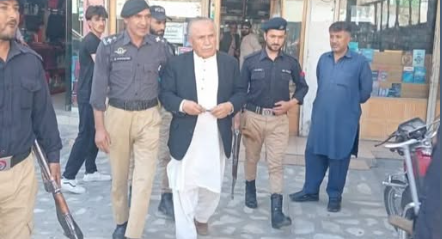
Gilgit, Gilgit-Baltistan, (Pakistan-Administered Kashmir):Gilgit police on May 14, 2025 arrested Advocate Ehsan Ali, Chairman of the Awami Action Committee Gilgit Baltistan (AACGB), and Engineer Mahboob Wali, the committee’s Vice Chairman, sparking widespread condemnation from local political and civil society groups. The arrests, reportedly made from Gilgit’s Madina Market, have intensified concerns over escalating tensions in the politically sensitive region.
Details of the Arrests
According to eyewitnesses and local sources, law enforcement detained the AAC leaders without prior notice. No formal charges or reasons for the arrests have been disclosed, fueling speculation about the motives behind the move. The AAC, a prominent civil rights group, has long advocated for Gilgit-Baltistan’s constitutional rights, regional autonomy, and resolution of the area’s disputed status under international law.
Outcry and Condemnation
The AAC and allied organizations denounced the arrests as “state coercion” aimed at silencing dissent. In a joint statement, the group said: “We vehemently condemn these authoritarian tactics. The government must release our leaders unconditionally and cease actions that risk destabilizing the region.”
Advocate Mir Hassan Niazi, a senior lawyer and Chairman of the Harmosh Youth Development Organization, warned that such measures would only strengthen public resolve. “Ehsan Advocate is a respected, principled leader. Arrests and repression will fuel unity, not fear, among the people,” he stated.
Raja Shakar, President of the AAC Youth Wing in Diamer, issued a stern response: “Ehsan Advocate represents the aspirations of Gilgit-Baltistan’s oppressed people. Targeting peaceful voices jeopardizes regional stability. If he is not released immediately, Diamer will react fiercely.”
Political Sensitivity of Gilgit-Baltistan
The arrests come amid heightened scrutiny of Gilgit-Baltistan’s contested status. The region, governed by Pakistan but claimed by India as part of Jammu and Kashmir, remains a geopolitical flashpoint. Local activists argue that its unresolved constitutional status exacerbates political and economic marginalization.
Civil society leaders urged authorities to “act responsibly,” emphasizing that “the disputed nature of this region demands caution. Provocative actions could spiral into unrest.”
Calls for Restraint
Human rights advocates and legal experts have demanded transparency, urging authorities to either present formal charges or release the detainees. International observers have long criticized Pakistan’s handling of dissent in Gilgit-Baltistan, citing restrictions on free speech and assembly.
Next Steps
The AAC has announced plans for protests and legal challenges if its leaders are not released. Meanwhile, the Gilgit-Baltistan administration has yet to issue an official statement.
As tensions simmer, the situation underscores the fragile balance between governance and dissent in a region where geopolitical stakes and local demands for rights continue to collide.
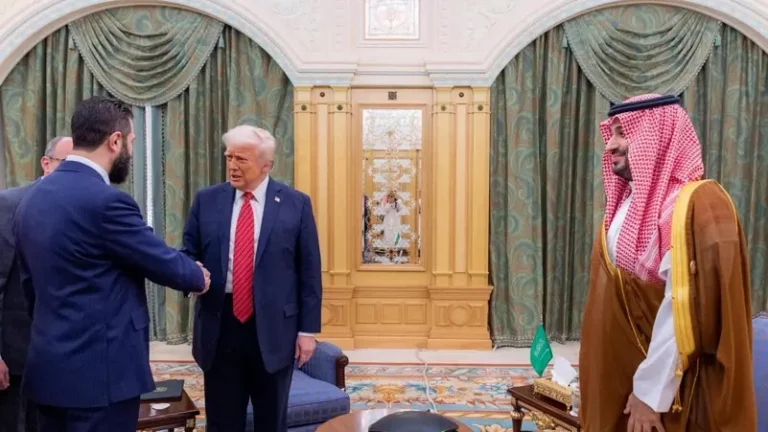
In a significant development, U.S. President Donald Trump and Saudi Crown Prince Mohammed bin Salman met with Syrian President Ahmed al-Shara in Riyadh on Wednesday. This meeting comes shortly after President Trump announced the lifting of all sanctions on the Syrian government, following a request from Crown Prince Mohammed bin Salman.
Speaking in Riyadh on Tuesday, Trump confirmed that he would remove sanctions on Syria, signaling a shift in U.S. policy. The meeting with President al-Shara, who is in Riyadh for the Gulf Cooperation Council meetings, is a notable part of Trump’s four-day visit to the Gulf region.
On the first day of his visit, Trump focused on securing business deals, with highlights including a $600 billion investment commitment from Saudi Arabia into the U.S. and a $142 billion agreement for the sale of U.S. weapons to the kingdom.
President al-Shara, who was in Riyadh for the Gulf Cooperation Council summit, has been a prominent figure in Syrian leadership. His meeting with Trump marks a crucial moment in the ongoing discussions about Syria’s future.
After Saudi Arabia, Trump will visit Qatar, where he is expected to meet with Qatari Emir Sheikh Tamim bin Hamad Al Thani and other officials. Qatar is expected to announce investments worth hundreds of billions of dollars in the United States during this visit.
Israeli officials have expressed opposition to the easing of sanctions on Syria, but Trump stated that both Saudi Crown Prince Mohammed bin Salman and Turkish President Recep Tayyip Erdogan had encouraged him to take this step.
The talks with al-Shara, a former Al-Qaeda commander who severed ties with the terrorist group in 2016, will be closely monitored by analysts seeking to gauge Washington’s seriousness about normalizing relations with Damascus.
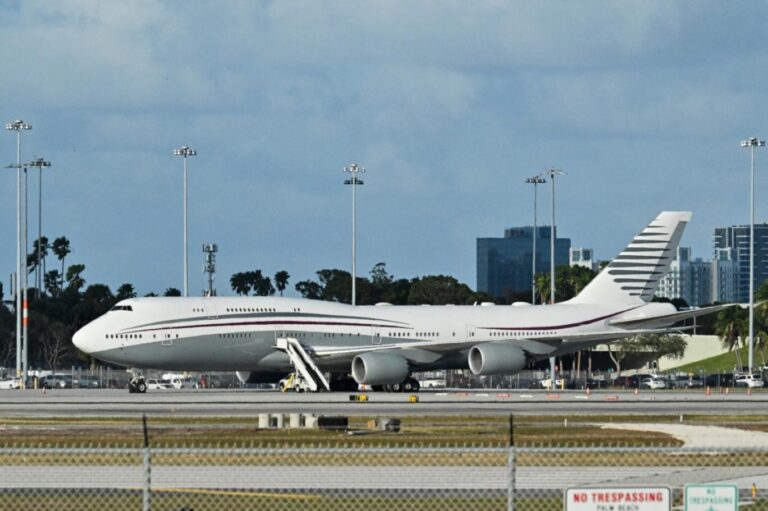
As part of his visit to Qatar, Trump will receive a Boeing 747-8 aircraft as a gift, which will be converted into the U.S. presidential plane, Air Force One. This aircraft will be one of the most valuable gifts ever received by the U.S. government, and it will eventually be donated to Trump’s presidential library.
Although the exact details of Qatar’s investments remain unclear, sources suggest that Qatar Airways is expected to announce a deal for approximately 100 large jet aircraft from Boeing.
Following his visit to Qatar, Trump will travel to Abu Dhabi, United Arab Emirates, to meet with UAE leaders before returning to Washington. However, Trump has also hinted at the possibility of visiting Turkey for a meeting between Russian President Vladimir Putin and Ukrainian President Volodymyr Zelenskyy.
This diplomatic tour signals a shift in U.S. foreign policy, particularly in the Middle East, as Trump navigates complex relationships with key regional players.
Washington, D.C. – U.S. President Donald Trump has defended plans to accept a new Air Force One jet as a “gift,” following reports that Qatar’s royal family offered him a luxury Boeing 747-8. The move has sparked controversy, with critics questioning its legality and ethical implications under strict U.S. laws governing gifts to presidents.
A “Flying Palace” and Legal Gray Areas
ABC News, which first broke the story, described the Boeing 747-8 jumbo jet as a “flying palace” and potentially the most expensive foreign gift ever received by the U.S. government. While Trump insists the aircraft will be temporarily used as a replacement for the aging Air Force One before being transferred to the Department of Defense, legal experts and political opponents argue the arrangement flouts constitutional safeguards against foreign influence.
In a Sunday night social media post—which notably omitted any mention of Qatar—Trump framed the deal as a “transparent transaction,” claiming it would save taxpayer money compared to building new jets. However, he did not clarify whether any reciprocal favors were involved, instead accusing Democrats of wasteful spending.
Qatar swiftly downplayed the controversy, with media attache Ali Al-Ansari stating that reports of a “gift” were “inaccurate” and that discussions about temporarily leasing the jet were ongoing between Qatari and U.S. defense officials.
Constitutional and Ethical Concerns
The U.S. Constitution’s Emoluments Clause bars federal officials from accepting gifts from foreign states or rulers without Congressional approval. While Trump’s team argues the jet will legally bypass this restriction by being donated to his presidential library post-office, critics call the maneuver a blatant loophole exploit.
Laura Loomer, a far-right Trump ally, condemned the deal, writing on X: “We can’t accept a $400M gift from jihadists in suits. Qatar funds Iran-backed Hamas and Hezbollah, who’ve killed U.S. troops.”
Senator Chris Murphy (D-CT) labeled the arrangement “wildly illegal,” while Congresswoman Kathy Manning (D-NC) called it “corruption in broad daylight.”
The Democratic National Committee (DNC) accused Trump of using the presidency for personal gain, emailing supporters: “While working families struggle with inflation, Trump is busy enriching himself and his billionaire friends.”
Why the Rush for a New Air Force One?
Trump has long criticized the current Air Force One fleet—two heavily modified Boeing 747-200B jets—as outdated. In 2018, Boeing secured a $3.9 billion contract to deliver two new 747-8 jets by 2024, but production delays and a subcontractor’s bankruptcy pushed delivery to 2027–2028.
The Qatari-offered 747-8, though reportedly over a decade old, is valued at nearly $400 million and would require extensive security and communication upgrades before serving as Air Force One.
A Precedent for Presidential Gifts?
Legal analysts note that while past presidents have accepted symbolic gifts (e.g., artwork or books), a jet of this magnitude is unprecedented. The White House and Justice Department reportedly argue the deal is legal since the jet would ultimately go to the U.S. government—not Trump personally.
However, government watchdog groups warn that the arrangement sets a dangerous precedent, allowing foreign powers to curry favor through lavish “gifts” disguised as official transactions.
What’s Next?
The plan is expected to be formally announced during Trump’s upcoming Middle East tour, which includes a stop in Qatar. Meanwhile, bipartisan scrutiny is growing, with calls for congressional hearings to assess potential violations of federal ethics laws.
For now, the “flying palace” remains grounded in controversy, emblematic of the blurred lines between Trump’s business interests and presidential duties.
The Line of Control (LoC), a term that has become synonymous with the long-standing conflict between India and Pakistan over Kashmir, remains one of the most heavily militarized borders in the world. Stretching across the picturesque but contested landscapes of Kashmir, the Line of Control (LoC) is not only a geographic boundary but a symbol of the region’s fractured political, social, and cultural identity. As Kashmir continues to face tensions, border skirmishes, and humanitarian challenges, understanding the historical, political, and military significance of the LoC becomes essential for anyone seeking to grasp the complexity of the Kashmir dispute.
In this article, we delve into the origins of the LoC, its significance, and its role in the ongoing conflict between India and Pakistan, with a focus on the implications for the Kashmiri people living along its volatile edge.
What is the Line of Control?
Line of Control (Loc)
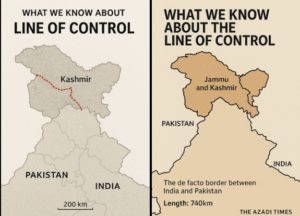
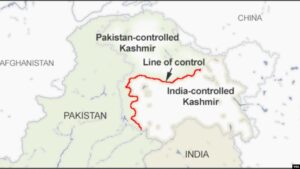
The Line of Control (LoC) is a military-controlled demarcation line that separates Indian-administered Jammu and Kashmir from Pakistan-administered Azad Kashmir. It is not an international border but rather a de facto boundary that emerged as a result of the 1947 partition of British India and subsequent wars fought between India and Pakistan. The LoC serves as the frontline of the Kashmir conflict, dividing families, communities, and territories that share a common cultural and historical heritage.
The LoC was established after the 1947-1948 conflict between India and Pakistan, following the partition of British India. At the time, both countries claimed the entire region of Jammu and Kashmir. The line was first laid out as the Ceasefire Line (CFL) after a United Nations-mediated ceasefire in 1949. However, the term “Ceasefire Line” was later changed to “Line of Control” after the Simla Agreement of 1972 between India and Pakistan.
The Length of the Line of Control
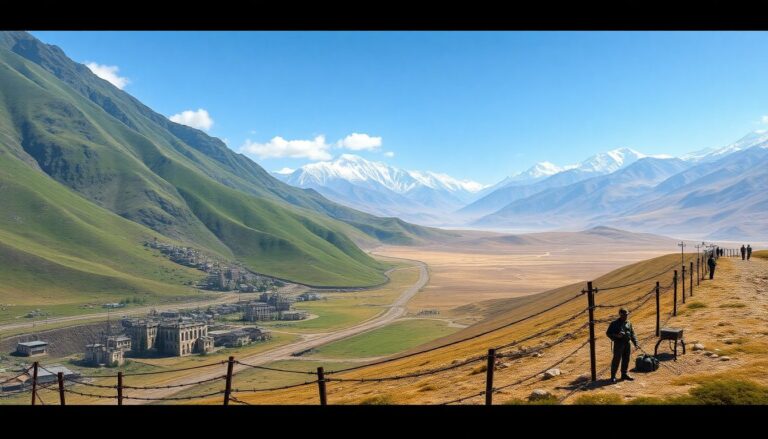
The Line of Control stretches for approximately 740 kilometers (460 miles) from the north in the icy heights of the Siachen Glacier to the south, where it ends at the Rann of Kutch. The LoC cuts across some of the world’s most challenging terrain, including mountains, dense forests, rivers, and valleys, making it difficult to navigate, both for the military and civilians. This rugged geography contributes to the difficulties in maintaining peace and stability along the line.
The princely state of Jammu and Kashmir was caught in the middle. After a war in 1947-1948, a UN-brokered ceasefire was reached.
Due to its length, the LoC spans several strategic regions, including Poonch, Rajouri, Kupwara, Jammu, Baramulla, and Srinagar on the Indian side, and Muzaffarabad, Rawalakot, Kotli, and Mirpur on the Pakistani side. These areas are not only militarized zones but also home to tens of thousands of Kashmiri civilians who face the constant threat of cross-border firing, shelling, and military incursions.
When Was the Line of Control Formed?
The LoC as we know it today was formally established in the aftermath of the Simla Agreement of 1972, which followed the Indo-Pakistani war of 1971. This war led to the creation of Bangladesh and a shifting of political and military alliances in South Asia. The Simla Agreement stipulated that the Ceasefire Line, which was originally created by the United Nations, would henceforth be referred to as the Line of Control (LoC).
The Simla Agreement marked a turning point in the Kashmir conflict as both India and Pakistan agreed to respect the LoC and work towards a peaceful resolution of the dispute, although this has not been fully realized in practice. Despite the agreement, the LoC remains a contested and volatile region, often witnessing skirmishes, military engagement, and violations of ceasefire agreements.
Which Agreement Renamed the Ceasefire Line to the Line of Control?
The Simla Agreement of 1972 is the key agreement that officially renamed the Ceasefire Line to the Line of Control. Under the agreement, both India and Pakistan agreed that the LoC would serve as the de facto boundary between the two countries in the Kashmir region, without prejudice to the final status of Jammu and Kashmir. Importantly, both nations pledged to respect the line and avoid any military escalation or violation of its integrity.
Despite this, the agreement’s implementation has been marked by intermittent violations and clashes, particularly after the Kargil conflict in 1999, when both sides engaged in full-scale military operations in the Kargil sector, which lies along the LoC.
The Purpose of the Line of Control
The primary purpose of the Line of Control is to act as a military demarcation separating Indian-administered Jammu and Kashmir from Pakistan-administered Azad Kashmir. Its creation was an effort to halt the military confrontations that had begun in 1947 and escalated over the years. While it was meant to be a temporary measure until a final resolution of the Kashmir dispute could be achieved, it has remained in place for over seven decades.
The LoC serves as both a symbol of division and a frontline in the ongoing military standoff between India and Pakistan. It also serves a political purpose, as both countries continue to claim sovereignty over the entire region of Jammu and Kashmir. This disputed status means that while the LoC may represent a boundary on the ground, it is not recognized as an official international border.
Where is the Line of Control Between India and Pakistan?
The Line of Control divides the Indian-administered region of Jammu and Kashmir from the Pakistani-administered region of Azad Kashmir. It stretches through the Himalayan range, passing through a series of mountain passes, valleys, and rivers, many of which are strategic military locations. The LoC cuts across significant areas like Poonch, Kupwara, Baramulla, and Jammu in India, while in Pakistan, it passes through Muzaffarabad, Bhimber, and Mirpur.
On the Indian side, towns like Srinagar, Poonch, and Rajouri are located near the LoC. On the Pakistani side, cities like Muzaffarabad and Rawalakot lie in proximity to the line. Despite the militarization of both sides, many civilians continue to live in these border towns and villages, enduring the constant threat of cross-border firing and artillery shelling.
Line of Control Map: A Visual Representation
For those unfamiliar with the geography of the region, a Line of Control map can provide a clearer understanding of where the LoC lies and how it divides the Kashmir region. Maps of the LoC often highlight the key military positions and terrain features that make the region both strategically important and vulnerable to conflict.
The LoC map also shows areas of territorial dispute, especially in regions like Siachen, where the world’s highest battlefield is located, and Kashmir’s northernmost areas, which have been a flashpoint for tensions between India and Pakistan.
The Human Cost: How the LoC Affects Kashmiris
For the people of Kashmir, the Line of Control is much more than a geographical boundary; it is a line that separates families, communities, and lives. Millions of Kashmiri families have been divided by the LoC, with loved ones living on opposite sides of the border. Cross-border firing, shelling, and militancy often disrupt daily life, leading to casualties, displacement, and trauma.
Kashmiris living along the LoC face constant disruptions in their lives, from the destruction of homes and businesses due to artillery shelling to the psychological toll of living in a war zone. Children grow up with the sound of gunfire, while farmers and shopkeepers find their livelihoods destroyed in the wake of military confrontations.
Conclusion: The Line of Control and the Road Ahead
The Line of Control remains a physical and symbolic dividing line in the Kashmir conflict. Despite multiple efforts at peace and dialogue, the LoC continues to be a flashpoint of military tensions and political disagreements between India and Pakistan. The human cost of this unresolved dispute is borne by the people of Kashmir, whose lives are shaped by the uncertainty and violence that accompany living in the shadow of the LoC.
As the world watches, the future of the Line of Control — and the larger Kashmir dispute — remains uncertain. Peace may remain elusive, but for the people of Kashmir, the hope for resolution, dignity, and self-determination endures.
By Editorial Staff, Anjum Tahir Mir, Defence and Conflict Correspondent The Azadi Times:
The recent escalation between India and Pakistan—sparked by the April 2025 militant attack in Pahalgam—has reignited long-standing hostilities across the volatile Line of Control (LoC). As both nations exchanged heavy fire over weeks, the nature of weaponry deployed—ranging from advanced artillery to precision drone strikes—marked a sharp evolution in South Asia’s border warfare dynamics. With Kashmir once again at the epicenter of conflict, this confrontation reveals not just the cost to human life, but a chilling glimpse into the future of modern combat along one of the world’s most militarized frontiers.
This report examines the latest developments along the LoC, exploring the specific weapon systems deployed by both militaries, the nature of the engagements, and the resulting human toll. In doing so, we seek to provide an in-depth understanding of a conflict that is far more than a territorial dispute; it is a high-stakes arms race played out against the backdrop of civilian suffering.
The Anatomy of an Escalation: Understanding Post-to-Post Firing
What is Post-to-Post Firing?
At the heart of recent border skirmishes is a phenomenon known as post-to-post firing. This term describes direct exchanges between fortified military outposts established along the LoC. These posts, often manned round the clock by soldiers stationed in heavily fortified bunkers, serve dual roles—both as observation points and as platforms for launching offensive operations. Although routine in nature, these engagements are far from benign.
Triggers for post-to-post firing include infiltration attempts, ceasefire violations, or isolated militant activity within the sensitive border zone. Despite efforts to contain these skirmishes as “controlled but calibrated warfare,” the reality is that the rapid exchange of small arms, mortars, and high-calibre artillery invariably leads to collateral damage.
The Weaponry Behind the Fire
Despite both the Indian and Pakistani militaries keeping operational details shrouded in secrecy, a synthesis of open-source intelligence, defence briefings, and independent eyewitness accounts has provided a glimpse into the formidable arsenals deployed along the LoC. This analysis breaks down the key categories of weapon systems in use, revealing how each contributes to the intensity of these post-to-post engagements.
1. Small Arms and Light Machine Guns
India:
INSAS Rifle (5.56×45mm NATO): Once the backbone of the infantry, this rifle is still in use in forward areas despite plans for phased withdrawal.
AK-203 Assault Rifles: A newer addition, these Russian-designed weapons are praised for their reliability in challenging conditions.
FN MAG LMGs: Belgian-designed and known for their sustained-performance in prolonged firefights, these light machine guns are a common sight in bunkers and pillboxes.
Pakistan:
G3 Rifle (7.62×51mm NATO): Renowned for its long-range accuracy, the G3 remains a trusted tool for Pakistani forces.
Heckler & Koch MG3 LMGs: Offering an exceptionally high rate of fire, the MG3 is pivotal in suppressive operations against enemy posts.
Type 56 Assault Rifle: A variant of the widely used AK series, this Chinese-built rifle is a standard issue in both the Pakistani Army and affiliated paramilitary units.
Use Case: Small arms dominate the short, intense bursts of violence—typically in response to sudden infiltration alerts or during sniper counteraction, especially under the cover of darkness.
2. Sniper Rifles: Precision on the Edge
India:
Dragunov SVD: A semi-automatic sniper rifle designed for medium-range targeting, this system is often deployed against enemy observation posts.
Beretta .338 Lapua Magnum (Scorpio TGT): This high-calibre precision weapon is reserved for long-distance neutralisation of high-value targets.
Barrett M95: Although used selectively, it remains a preferred choice for eliminating key enemy positions.
Pakistan:
PSR-90: A local adaptation of the H&K PSG1, renowned for its precision at ranges of up to 800 metres.
Steyr SSG 69: An Austrian bolt-action rifle used by elite Pakistani sniper teams.
Barrett M82: Favorited in high-intensity exchanges, particularly when engaging fortified targets across the LoC.
Use Case: Sniper duels are now a highly tactical affair. These specialist marksmen engage in “shoot-to-disable” operations, aiming not to inflict mass casualties but to incapacitate enemy posts and communications systems.
3. Mortars and Field Artillery: The Heavy Artillery Factor
India:
81mm and 120mm Mortars: These are integral for delivering high-angle indirect fire, a crucial component in responding to enemy movements.
130mm M-46 Field Guns: Remnants of Soviet-era artillery, these guns are integral to suppressive fire tactics.
105mm Indian Field Gun (IFG): Favoured for its mobility in mountainous terrain.
155mm Bofors Howitzer: Known for its precision strikes over distances exceeding 30 kilometres, used in escalatory phases.
Pakistan:
81mm and 120mm Mortars: Similar to India, covering short-range suppression needs.
130mm and 155mm Guns: A mix of weapons with origins in Chinese and Soviet designs, employed in both direct and indirect fire roles.
M198 Howitzer (155mm): Although used sparingly, this American-sourced system is deployed during high-intensity operations.
Use Case: Mortars and artillery are primarily engaged in area denial—retaliatory strikes following ceasefire violations or to repel infiltration attempts. However, the indiscriminate nature of explosive ordnance is a chief cause of civilian casualties in nearby settlements.
4. Anti-Tank Guided Missiles (ATGMs) and Rocket Systems: Targeting the Bunkers
India:
Nag ATGM: An indigenous system that offers a fire-and-forget capability, typically mounted on vehicles.
Spike ATGM: An Israeli-origin precision system used in limited numbers, providing a tactical edge in targeting fortified positions.
Carl Gustaf Recoilless Rifles: Deployed in bunker-busting roles or to counter enemy snipers.
Pakistan:
Baktar-Shikan (Chinese HJ-8): A versatile ATGM that can be deployed on both vehicles and tripods, commonly used to neutralise enemy bunkers.
RPG-7 and RPG-29: Portable, shoulder-fired grenade launchers that are an ever-present component of ambush tactics.
Use Case: These systems are repurposed to breach the defensive perimeters of enemy bunkers and supply depots, underscoring the shift from conventional to asymmetrical warfare along the LoC.
5. Drones and Surveillance Platforms: Eyes in the Sky
India:
Heron UAV: An Israeli-made platform used for reconnaissance and post-strike damage evaluation.
Burraq UCAV: Capable not only of surveillance but also of delivering missile strikes with precision.
Chinese-Origin Surveillance Drones: Widely used in hot zones such as the Neelum Valley, these systems enhance operational situational awareness.
Use Case: With the evolution of modern warfare, drones have become indispensable, monitoring enemy movements and helping to calibrate the focus of precision fire, thereby reducing unintended collateral damage.
The LoC Battleground: Beyond the Weaponry
The Tactical Landscape
While the hardware deployed is formidable, the context in which it is used provides critical insight into the current state of the conflict. The LoC is not simply a static border; it is a dynamic battlefield where geographical features, climate, and human presence all shape the contours of military engagements.
Forward Observation Posts: The Frontline Sentinels
Both India and Pakistan have established an extensive network of forward observation posts along the LoC. Known as “Advanced Tactical Positions” by India and “Mujahida Posts” by Pakistan, these outposts form an intricate grid of surveillance and rapid-response nodes. Perched atop ridges and concealed within forested areas, these posts continuously monitor enemy movements. Equipped with thermal imagers, night vision devices, and encrypted communication links, the outposts enable near-instantaneous coordination of retaliatory strikes.
Tactical Engagements and the Rules of the Road
In an environment where every shot may trigger a large-scale reprisal, engagements are often meticulously calculated. The prevailing doctrine emphasises proportionality and rapid escalation control; however, the very nature of these “routine” exchanges means that even controlled firing can lead to significant collateral damage. Recent shelling in areas such as Poonch, Rajouri, Kotli, and Muzaffarabad has inflicted deep wounds on civilian life—even as both militaries maintain that the exchanges are a measured response to provocations.
The Battle Over Infiltration Routes
One focal point of contention along the LoC is the issue of infiltration. Both sides routinely accuse each other of allowing militant groups to cross the border under the cover of darkness. The rugged terrain—characterised by narrow valleys, dense forests, and treacherous mountain passes—offers ample routes for such incursions. Consequently, the military has invested heavily in counter-infiltration measures, deploying tripwire mines, establishing ambush patrols, and bolstering perimeter surveillance with state-of-the-art radar systems.
Psychological Operations and the Digital Battlefield
Modern warfare extends far beyond the physical; it is also fought in the realm of information. Along the LoC, both sides have deployed electronic warfare (EW) capabilities to jam enemy communications and intercept transmissions. Loudspeaker systems and radio broadcasts, laden with propaganda, are employed to demoralise opposing troops and influence local perceptions. This digital contest for control over the narrative not only shapes immediate tactical outcomes but also sows the seeds for long-term instability.
The Human Cost: Kashmir’s Civilians on the Frontline
Every military engagement along the LoC comes at a human cost. The population residing within a 3–5 kilometre radius of these volatile posts lives under a constant spectre of shelling and sniper fire. In towns like Rajouri and Haveli, every evening’s shell burst disrupts local life, instils pervasive fear, and leaves lasting psychological scars. Displacement, loss of property, and a breakdown of community life are common outcomes. Reports from humanitarian agencies indicate that over 80% of injuries during ceasefire violations are a result of shrapnel from heavy ordnance rather than direct bullet wounds.
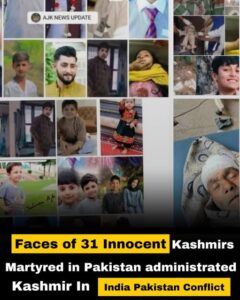
Faces of 31 Innocent Kashmirs Martyred in Pakistan administrated Kashmir in Indian Pakistani Recent Conflict
In one striking account, locals described how a child awoke to the thundering sound of artillery—a night of chaos marking the beginning of another day filled with uncertainty. Such testimonies underline a tragic truth: the LoC, far beyond being a mere line on a map, is where normal life is permanently overshadowed by the spectre of conflict.
Beyond the Barricades: The Wider Implications of an Arms Race
Escalation Dynamics and the Risk of Wider Conflict
Recent exchanges have prompted serious concern among military analysts. While both India and Pakistan continue to assert that their actions are measured responses to specific provocations, the increasing sophistication and variety of weaponry suggest that an arms race is underway. With heavy mortars and advanced ATGMs now a regular feature in post-to-post engagements, the risk of an uncontrolled spiral into full-scale warfare looms large.
The Role of International Actors and Diplomatic Outreach
In the wake of this re-escalation, diplomatic channels have been activated, albeit with limited success. International mediators, including officials from the United Nations and independent conflict resolution bodies, have urged both nations to establish “no-shell zones” in civilian areas and to restrain from deploying heavy artillery near inhabited regions. However, entrenched national pride and longstanding mistrust continue to undermine these efforts.
Recent statements by military experts and politicians have stressed the urgent need for renewed confidence-building measures. The current situation underscores the paradox of modern warfare: even as both sides tout their technological advancements and strategic acumen, the human and economic costs persist unabated.
Strategic and Geopolitical Ramifications
Kashmir has long been a linchpin in South Asia’s security architecture. As the world moves towards an era of digital and hybrid conflicts, the lessons learned along the LoC hold significant implications. The integration of advanced weaponry, electronic warfare, and real-time surveillance reshapes not only how conflicts are fought but also how they are perceived globally. For independent international news websites, the challenge is to present these multilayered realities in a manner that is both insightful and balanced—ensuring that the voices of those caught in the crossfire are not lost amid grand strategic narratives.
In the end, the ongoing post-to-post exchanges along the LoC are more than just a series of isolated military incidents. They are the visible manifestations of an evolving conflict where state-of-the-art weaponry meets age-old grievances—a conflict that is continuously redefining the boundaries between conventional and asymmetrical warfare. For the people of Kashmir, the human cost is incalculable. The resilience of communities living under constant threat stands in stark contrast to the relentless escalation of military hardware and tactical maneuvers.
Until diplomatic channels are successfully reactivated and sustained dialogue takes precedence over aggressive posturing, the fragile peace along the LoC remains precarious. As international observers and independent journalists continue to document these developments, the hope is that enhanced scrutiny and greater political will can eventually usher in a new era—one where military might no longer dictates the terms of everyday life for the millions living in the shadow of the conflict.
For now, the people of Kashmir await a decisive turning point, hoping that the next chapter in their history will be defined not by the clamor of artillery but by efforts toward genuine reconciliation and lasting peace.
Gilgit-Baltistan, Pakistan-administered Kashmir – In line with the clear directives of the Inspector General of Police (IGP) Gilgit-Baltistan, several services provided at police service centers have been made completely free for citizens.
These services include the issuance of police character certificates, employee verification, driving license verification, and the online registration of old driving licenses. All these facilities are now being offered to the public without any charges, solely for the purpose of public service.
However, recent observations have revealed a concerning trend where certain individuals, often posing as “care-of” applicants for others, are illegally charging citizens for these free services. This practice is not only unlawful but also constitutes public exploitation, undermining the police department’s commitment to transparency and service.
Therefore, all citizens are advised to directly approach their nearest police service center with the required documents to avail these services without any fees. The public is urged not to engage with intermediaries and to immediately report any individual demanding money for these free services by contacting the official number of the Police Service Center Nagar: 05813-932020.
Public cooperation is crucial in maintaining trust between the police and the community. Let’s work together to discourage elements attempting to turn public service into a business.
Poonch / Muzaffarabad — A tenuous ceasefire now holds across Kashmir’s volatile Line of Control (LoC), bringing a fragile calm after nearly three weeks of relentless shelling that has killed at least 57 civilians and injured over 100. The violence, which began in the wake of the April 22 militant attack in Pahalgam, marks the deadliest cross-border confrontation since the 2019 Balakot airstrikes.
Despite the May 10 ceasefire agreement, fear and displacement still grip thousands on both sides of the heavily militarized frontier, with schools shuttered, medical services overwhelmed, and homes reduced to rubble.
Civilian Casualties: A Mounting Toll of Innocence
Faces of 31 Innocent Kashmiris Martyred in Pakistan-administered Kashmir in Indian Pakistani Recent Conflict
In Indian-administered Jammu and Kashmir, government sources confirm that 21 civilians lost their lives between April 23 and May 10. The worst-hit areas—Poonch and Rajouri districts—saw multiple residential clusters flattened by sustained Pakistani artillery shelling. Among the dead were 13-year-old twins Zain Ali and Urwa Fatima, whose bodies were found embracing in the basement of their family home, where they had taken shelter during the barrage.
“The house was supposed to protect them,” said their father, Salim Ali, standing amid the smoldering ruins of what used to be a two-story brick dwelling. “Instead, it became their grave.”
Hospitals in Jammu and Srinagar have reported treating over 60 injured civilians, many with blast injuries and shrapnel wounds. Mobile field clinics have been dispatched to remote villages cut off by damaged roads and communications infrastructure.
Across the LoC, in Pakistan-administered Azad Jammu and Kashmir (AJK), officials from the State Disaster Management Authority (SDMA) confirm at least 36 deaths. Kotli, Haveli, and Muzaffarabad sectors have been the primary targets of Indian retaliatory fire.
On May 7, Indian shells struck a madrasa and adjoining residential compound in the Chirikot sector, killing eight, including a schoolteacher and three children. “We pulled three children from the rubble alive after 14 hours,” said rescue worker Tariq Butt. “But two others didn’t make it. Their mother kept calling their names as we worked.”
The Forgotten Victims of War
Indian-Administered Kashmir: Death and Desperation
Category
Number
Key Incidents
Civilian Deaths
21
Zain Ali & Urwa Fatima (13-year-old twins) killed in Poonch shelling.
Injured
59
Ruby Kaur, a housewife, died while making tea for her husband.
Displaced
30,200+
Entire villages near Uri and Akhnoor evacuated under fire.
Eyewitness Account: “We ran for hours in the dark. My uncle was hit by shrapnel—he still doesn’t know his children are dead.” — Sarfaraz Ahmad Mir, Poonch resident
Pakistan-Administered Kashmir: A Humanitarian Crisis
Category
Number
Key Incidents
Civilian Deaths
36
8 killed in Muzaffarabad after Indian strikes hit a mosque.
Injured
58
Children trapped under rubble in Kotli for hours.
Blackouts
Widespread
Hospitals overwhelmed, food shortages reported.
Eyewitness Account: “The missiles came at night. We hid in bunkers for days—no water, no electricity.” — Mohammed Waheed, Muzaffarabad resident
From Pahalgam to Ceasefire: A Timeline of Escalation
The current crisis erupted after unidentified gunmen ambushed a bus carrying Hindu pilgrims in the tourist town of Pahalgam on April 22, killing 26 people and injuring dozens more. India swiftly blamed the Pakistan-based militant outfit Lashkar-e-Taiba (LeT), claiming intelligence intercepts and recovered weapons pointed to cross-border involvement.
Within 48 hours, New Delhi launched Operation Sindoor—a series of targeted airstrikes and commando raids across the LoC aimed at what officials called “terror infrastructure.”
Pakistan responded with Operation Bunyan-un-Marsoos, deploying long-range artillery, attack drones, and precision-guided munitions on suspected Indian military positions. However, the brunt of the destruction was borne not by soldiers, but civilians caught in the crossfire.
A displaced family from Poonch district in Pakistan-administered Kashmir migrating without any male member — a mother carrying a gas cylinder, accompanied by her young daughter and son, walking through a mountainous path with essential belongings.
Satellite imagery released by the UN Military Observer Group in India and Pakistan (UNMOGIP) shows extensive fire damage to civilian settlements in both sectors, with at least 1,200 homes either destroyed or severely damaged. Displacement figures remain fluid, but both administrations estimate over 20,000 people have fled their homes since April.
“For 18 days, it was hell on earth,” said Aslam Khan, a schoolteacher from Battal, AJK. “No electricity, no water, just the constant booms. My kids have stopped speaking. They just cover their ears and cry.”
The Ceasefire: What Changed, and What Hasn’t
The U.S.-brokered ceasefire deal, mediated through backchannel diplomacy involving Qatar and the United Arab Emirates, came into effect on the night of May 10. Both sides agreed to halt offensive operations and allow humanitarian access to affected areas.
What makes this truce different from earlier ones is a mix of tactical innovation and strategic signaling:
Drone Warfare Escalation – For the first time, both sides employed surveillance and attack drones in offensive operations, marking a technological shift in LoC engagements.
Indus Waters Treaty Suspension – In an unprecedented move, India briefly suspended its cooperation under the 1960 Indus Waters Treaty, a foundational water-sharing accord. Though symbolic, it sent a chilling signal about the depths to which diplomacy had plummeted.
Direct U.S. Involvement – Unlike past flare-ups, which were often de-escalated bilaterally or through quiet Chinese diplomacy, this time Washington stepped in directly—evidence of growing international concern over regional stability.
Yet, many Kashmiris are wary of premature optimism.
“We’ve seen ceasefires before,” says Aisha Bashir, a political science student in Srinagar. “They talk peace when the bombs stop falling, but the occupation, the surveillance, the fear—those don’t go away.”
The Long Shadow of Displacement and Loss
For many, the ceasefire comes too late. In the bombed-out bazaar of Poonch, shopkeeper Riyaz Ahmed stands knee-deep in broken glass and crushed cardboard boxes. What used to be his pharmacy is now a crater ringed by blistered walls.
Indian-administered Kashmir’s Chief Minister Omar Abdullah sitting on the ground with LoC migrants — surrounded by women and children in distress, offering support and listening to their concerns in a temporary shelter.
“Thirty years of work gone in one night,” he mutters, salvaging medicine packets scattered like confetti. “And they expect us to go back to business like nothing happened?”
In Nakyal sector, 62-year-old farmer Ghulam Qadir surveys the remains of his olive grove, the trees singed and leafless, his wife buried beneath a collapsed wall. “They tell us this is about nationalism,” he says, hammering a nail into a tarp shelter. “But what nation destroys its own people?”
With temperatures rising and monsoon season approaching, aid groups are warning of an impending humanitarian crisis. The International Red Cross and several local NGOs have requested urgent funding to supply clean water, temporary shelter, and trauma counseling.
Outlook: Calm or Countdown?
Military analysts remain divided over whether the ceasefire will hold. Some point to the unusually high toll and diplomatic consequences as deterrents to further escalation. Others caution that without addressing the underlying political dispute, any lull in violence will be temporary.
Meanwhile, along the LoC, soldiers remain in combat positions, militant groups issue defiant communiqués, and displaced families live in limbo—hopeful, but not convinced.
“They say the guns are silent now,” says Shazia Maqbool, a mother of four in a Muzaffarabad relief camp. “But in our hearts, we’re still at war.”
Hotline Discussion Between Lt Gen Rajiv Ghai and Maj Gen Kashif Abdullah Focuses on Reducing Tensions
Srinagar, Kashmir – In a significant development aimed at easing tensions along the Line of Control (LoC), the Director Generals of Military Operations (DGMOs) of Pakistan and India held a hotline discussion on Tuesday, reaffirming their commitment to uphold the existing ceasefire agreement.
The talks took place between Pakistan’s Major General Kashif Abdullah and India’s Lieutenant General Rajiv Ghai, marking their first formal engagement since the two countries agreed to a renewed ceasefire in February 2021. According to sources, both sides emphasized the importance of maintaining peace and preventing any escalation in the disputed Kashmir region.
Key Points of Agreement
Ceasefire to Continue: Both DGMOs agreed to strictly observe the ceasefire along the LoC and the Working Boundary, ensuring no violations occur.
Protection of Civilians: The military officials pledged to avoid targeting civilian populations, a recurring issue in past skirmishes.
De-escalation Measures: The discussion included confidence-building measures to reduce the risk of unintended clashes.
Background and Regional Implications
The hotline contact comes amid ongoing tensions in Kashmir, where sporadic exchanges of fire have occasionally threatened the fragile truce. The 2021 ceasefire agreement had brought relative calm, but both sides have accused each other of minor violations in recent months.
Analysts suggest that this dialogue indicates a mutual recognition of the need to prevent further instability, especially as both nations navigate internal and geopolitical challenges. However, skepticism remains among Kashmiris, who have long suffered the consequences of cross-border hostilities.
Mixed Reactions from Kashmir
While the agreement has been welcomed as a positive step, civil society groups in Kashmir caution that lasting peace requires addressing the root causes of the conflict. “Ceasefire is good, but without political dialogue, it’s only a temporary solution,” said rights activist Ayesha Khan from Srinagar.
Next Steps
No further meetings have been announced, but military sources indicate that backchannel communications will continue to monitor the situation. The international community, including the United Nations, has repeatedly called for sustained dialogue between India and Pakistan to resolve the Kashmir dispute peacefully.
As the region watches closely, the latest agreement offers a glimmer of hope, though the path to enduring peace remains uncertain.
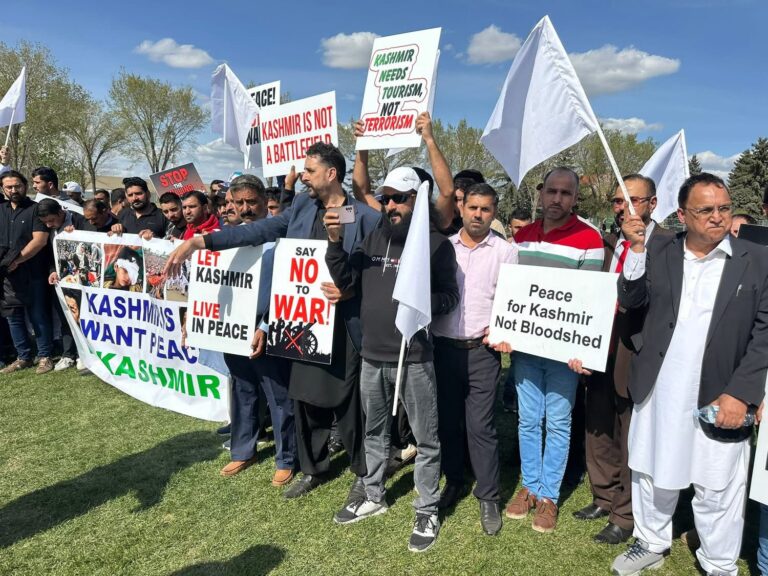
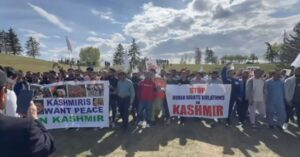
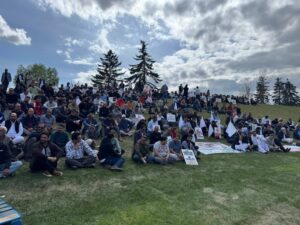
Calgary, Canada: The Kashmiri community in Calgary, Canada, staged a peaceful rally calling for an immediate end to the violence and militarization in Jammu and Kashmir. Demonstrators gathered with white flags — symbols of peace — to protest against the recent escalation of conflict between India and Pakistan along the Line of Control (LoC).
The rally, organized under the banner of unity, witnessed participation from Kashmiris belonging to various ideological and organizational backgrounds. Community members, including human rights activists, families, and students, marched together to draw international attention to what they described as the “ongoing bloodshed of innocent Kashmiris.”
“We are here today to call on the world to stop treating Jammu and Kashmir as a testing ground for weapons,” said Sardar Naseer Khan, head of the diplomatic wing of the Jammu & Kashmir Liberation Front (JKLF), who addressed the gathering. “India and Pakistan may both claim victory in their skirmishes, but it is the Kashmiris who have suffered the most — in lives, in homes, and in dreams.”
Peaceful protest in Calgary with Kashmiris holding white flags and placards calling for freedom and peace in Jammu and Kashmir.
Placards and banners displayed during the protest carried powerful messages demanding freedom, justice, and adherence to international human rights standards. Demonstrators condemned the recent civilian casualties and infrastructural damage caused by cross-border shelling and military actions in both Indian-administered and Pakistan-administered parts of Jammu & Kashmir.
Speakers at the rally appealed to the Canadian government, the United Nations, and global human rights organizations to intervene urgently. “Despite the so-called ceasefire, bullets are still being fired at innocent people across the LoC,” said one protester. “We urge the UN to acknowledge this reality and push for the demilitarization of the region and a just resolution to the Kashmir dispute.”
Kashmiri diaspora in Canada rallies with signs reading “Stop Killing Kashmiris” and waving white flags for peace.
The protesters reiterated the long-standing demand for the right to self-determination for the people of Jammu and Kashmir, in line with UN resolutions. “Peace in South Asia is impossible without resolving the Kashmir issue through the will of its people,” added another community member. “Over two billion lives in the region are hostage to this unresolved conflict.”
The peace rally concluded with a unified call for justice and lasting peace in Jammu and Kashmir. The community pledged to continue raising its voice until the region is free from occupation and its people are allowed to determine their own future.
Editor’s Note: This report is part of Azadi Times’ ongoing coverage of the Kashmir conflict, offering voices from the ground and the diaspora.