Home Blog Page 152

A Look into the Life of Nahid Islam: The Man Who Shook the Nation

0

Dhaka (Azadi Times Online) – Details have emerged about Nahid Islam, the student leader who led protests against former Prime Minister Sheikh Hasina, who fled Bangladesh after resigning.

According to foreign media reports, Sheikh Hasina’s resignation came after nationwide protests led by student leader Nahid Islam. The reports state that the 26-year-old Nahid Islam is currently a student in the Sociology Department at Dhaka University and is also known for his work as a human rights activist. Nahid Islam raised his voice against Sheikh Hasina’s party, the Awami League, leading to him being labeled as a terrorist deployed on the streets.

Indian media reported that on July 19, 2024, Nahid Islam was abducted by at least 25 plainclothes individuals from a house in Sabujbagh. His eyes were blindfolded, and he was interrogated about his involvement in the protests, handcuffed, and subjected to torture. According to Indian media, Nahid Islam was found unconscious under a bridge two days later and was abducted again by government officials on July 26, 2024.

Nahid Islam, born in Dhaka in 1998, is married, has a younger brother, a teacher father, and a housewife mother. Naqeeb Islam, a geography student, said in an interview, “Nahid has incredible potential and always said the country needs to change. He was picked up by the police, tortured until he was unconscious, and then thrown on the street. Despite all this, he keeps fighting. We believe he will not give up, and we are proud of him.”

It is worth noting that Bangladeshi Prime Minister Hasina Wajid fled the country yesterday after a month of public protests, following which the military took power and announced the formation of an interim government.

The Silent Betrayal: How August 5 Redefined Jammu Kashmir

By: Malik Abdul Hakim Kashmiri – The powerful circles in Pakistan had already devised a strategy for Jammu and Kashmir long before August 5, 2019. Simply put, what belongs to India remains with India, and what belongs to Pakistan remains with Pakistan. Before August 2019, the establishment and its government were discreetly maneuvering to absolve themselves of responsibility for relinquishing the “jugular vein.”

The Pakistan People’s Party (PPP) and the Pakistan Muslim League-Nawaz (PML-N), despite their limitations, were mature enough regarding the issue of Jammu and Kashmir not to include any unpopular decision in their political profiles. Hence, the Pakistan Tehreek-e-Insaf (PTI) became the preferred option.

Imran Khan was brought to power in 2018. To free his government from military pressure, Khan engaged Bajwa’s team in back-channel negotiations with India. Let’s review the sequence of events that unfolded as per the script:

To appease the Punjabi Sikhs strategically, the foundation stone of the Kartarpur Corridor was laid in November 2018. On February 14, 2019, a suicide attack in Pulwama resulted in the death of 40 Indian soldiers. On February 26, 2019, the Indian Air Force conducted a surgical strike inside Pakistan. On February 27, 2019, Pakistan shot down an Indian aircraft in Azad Kashmir’s Samahni area, capturing the pilot, who was returned to India within 48 hours.

On August 5, 2019, India imposed martial law in its administered Jammu and Kashmir to establish permanent control. In an extraordinary situation, Prime Minister Imran Khan addressed the nation, reiterating the traditional stance and warning that any action taken across the Line of Control would be considered against the ideology of Pakistan and the Kashmir freedom movement. Meanwhile, the Prime Minister of Azad Kashmir was on an extended foreign tour. Members of both the opposition and the government remained silent. In private gatherings, Azad Kashmir politicians spoke the full truth but feared public discussion.

The PML-N and PPP joined forces with Imran Khan to grant an extension to Bajwa on August 19, 2019. In November 2019, the Kartarpur Corridor was inaugurated, accelerating back-channel negotiations to improve relations with India.

During this period, a ceasefire on the Line of Control was agreed upon in February 2021. Journalist Hamid Mir writes that “suddenly, on March 23, 2021, on Pakistan Day, a letter from Indian Prime Minister Narendra Modi to Imran Khan arrived, raising concerns within the Ministry of Foreign Affairs. The news broke through UAE Ambassador to the US Yousef Al Otaiba that secret talks between ISI Chief Faiz Hameed and Ajit Doval in Dubai had progressed significantly. One day, Bajwa approached Prime Minister Imran Khan and informed him that Indian Prime Minister Narendra Modi would visit Pakistan on April 9, 2021. Modi would first attend the annual Hindu festival at the Hinglaj Mata temple in the Lasbela hills of Balochistan before meeting with Imran Khan in Islamabad to announce the resumption of Pak-India trade and cricket matches. Imran Khan asked about the Kashmir issue, to which Faiz Hameed replied that the Kashmir issue would remain unresolved for twenty years, after which a solution would be sought. This was when Foreign Minister Shah Mahmood Qureshi warned Imran Khan that Pakistan had a parliament, and they would have to answer to it. They also had elections to contest, and they would be accused of selling out on Kashmir. The general elections in Azad Kashmir were due in July 2021. There was a concern that if Modi visited in April, PTI would be wiped out in the July elections in Azad Kashmir.”

August 5, 2019, and August 5, 2024 — 1,825 days later, the situation remains unchanged. Over these five years, much has been done to erase the identity and control the resources of this region, and much more is yet to be done. The story of the golden bond of La ilaha illallah is being written amidst the chaos.

The policy remains the same, as do the policymakers, in the world of Bajwa and his subordinates.

Prime Minister of Bangladesh Sheikh Hasina Resigns, Flees to India; Indefinite Curfew Imposed

0

Dhaka: In a dramatic turn of events, the public protests in Bangladesh have culminated in Prime Minister Sheikh Hasina’s resignation. She has reportedly left Dhaka for India.

According to British media, the Bangladeshi Army Chief gave Prime Minister Hasina a 45-minute deadline to step down. Army Chief Waqar Uz Zaman is expected to address the nation shortly to explain the situation and provide assurances.

Currently, the Army Chief is engaged in negotiations with various political parties, including the Bangladesh Nationalist Party (BNP). Discussions are ongoing with major political factions to stabilize the political landscape.

Reports indicate that Sheikh Hasina and her sister were flown to India in a military helicopter from the Prime Minister’s official residence, Ganabhaban. Although Hasina intended to record a farewell speech, she was unable to do so due to the urgency of the situation.

In response to the unrest, demonstrators stormed Prime Minister Hasina’s residence, prompting a significant deployment of police and military forces to maintain order on the streets.

As a result of the escalating situation, an indefinite curfew has been imposed across Bangladesh to restore peace and prevent further violence.

Securing Your Riasat Bashinda Certificate: Detailed Process and Guidelines to Get State Subject Certificate J&K

0

If you intend to buy or sell property in Pakistan-administered Jammu & Kashmir or Indian Administered Jammu Kashmir, securing a Riasat Bashinda (State Subject) certificate is imperative. This document, akin to a citizenship certificate, is crucial for land transactions within the state.

Who Qualifies?

The certificate can only be obtained by individuals ancestrally belonging to Jammu & Kashmir, implying a lineage of forefathers who lived and owned land in the state.

Required Documents:

  1. Your NICOP (ID card) copy
  2. Your father’s NICOP copy
  3. Proof of land ownership (naqal jamabandi) from Patwari
  4. Copy of misal haqiqi (from Tehsildar’s office)
  5. Patwari’s ownership confirmation report
  6. Four passport-sized photographs
  7. Passport copy (if available)
  8. Birth certificate copy
  9. Copies of children’s passports and birth certificates
  10. Educational certificates copies
  11. Personal presence for thumb impressions
  12. Statement (bayan halfy)
  13. Two witnesses from your village

Procedure:

  1. Documentation: Gather all required documents.
  2. Application Writing: Visit an Arzi Nawees (application writer) to prepare your application, complete with stamps and your statement.
  3. Tehsildar’s Approval: Get the application signed by the Tehsildar.
  4. Patwari’s Verification: The Patwari will provide the naqal jamabandi and write a brief report on the application.
  5. Tehsildar’s Office: Obtain a stamped copy of misal-e-haqiqi.
  6. Verification: Have the documents checked by the application writer.
  7. Oath Commissioner: Certify the application with an oath commissioner (Advocate).
  8. SDM Approval: Present the application with two local witnesses to the SDM for signing.
  9. DC Issuance: Finally, submit the complete file to the DC, who will issue the Riasat Bashinda certificate the same day.

Additional Notes:

  • Consider obtaining a Domicile certificate simultaneously, as it is necessary for job applications or land/house purchases in Pakistan. The process is similar but requires extra document copies.

Fees and Bribes:

Official fees:

  • Patwari: Rs. 300
  • Tehsildar’s office: Rs. 300
  • SDM office: Rs. 300
  • Arzi Nawees: Rs. 300
  • DC office: Rs. 300

However, due to the prevalent bribery culture, expect to pay around Rs. 1,000 each. The Patwari, in particular, might demand more. Bribery is rampant, making the process cumbersome without additional payments.

Alternate Approach:

Hiring a local advocate or paying extra to an Arzi Nawees can save you from the bureaucratic maze and expedite the process. Although engaging in such practices might seem unethical, it is often the only practical solution given the current system.

Conclusion:

While the process of obtaining a Riasat Bashinda certificate can be daunting, understanding the requirements and procedures can significantly ease the journey. Whether you decide to navigate the process yourself or enlist help, being well-prepared is key.

The Sacred Relic of Hazrat Bal: History, Reverence, and Legacy

0

Hazrat Bal is a revered site for Muslims located in the globally renowned city of Srinagar. This sacred place is about 10 kilometers from the central city. It is considered the holiest site in the entire state of Jammu and Kashmir.

In Urdu, “Hazrat” means “respectable/revered/sacred,” and in the Kashmiri language, “Bal” means “place/location.” Thus, Hazrat Bal translates to “a place that is highly revered by people.” The unique feature of this mosque is that it houses a sacred relic, a hair strand of the Prophet Muhammad (PBUH).

According to traditions, it is said that in 1635, Syed Abdullah, a member of the Sayyid family from Medina, moved to Bijapur near Hyderabad in India. He brought the sacred hair with him. After Syed Abdullah’s passing, the sacred relic was inherited by his son, Syed Hamid. During the Mughal invasion of India, Syed Hamid’s properties were confiscated. Realizing that he could no longer protect the relic and fearing it would be taken from him, he had a dream or divine indication to entrust the relic to a trustworthy individual, Khwaja Noor-ud-Din Eishai, instead of giving it to the authorities, who, despite being Muslims, might not show proper reverence.

When the Mughal emperor Aurangzeb learned of the relic, he forcibly took it from Noor-ud-Din Eishai and sent it to the Ajmer Sharif shrine. Noor-ud-Din Eishai was imprisoned in Delhi for unofficially possessing sacred relics. Later, realizing his mistake, Aurangzeb ordered the relic to be returned to Noor-ud-Din Eishai and sent him to Kashmir. However, by then, Noor-ud-Din Eishai had passed away in prison. Consequently, the relic was returned to his family, who brought it, along with his body, to Srinagar.

Initially, the relic was kept at the Khanqah Naqshbandia in Srinagar for public viewing. However, due to space constraints at the Khanqah, the Mughal ruler Fazil Khan ordered the relic to be moved to Bagh Sadiqabad, and this location was dedicated as a shrine for the relic. Thus, this place became known as “Hazrat Bal.” The original structure, known as Sadiqabad, was built in 1700 by Noor-ud-Din Eishai’s daughter, Inayat Begum, with the help of architects from India and Kashmir. When the relic was brought here, the structure was expanded, and a mosque was built to the west and a large Khanqah to the east.

Since then, Noor-ud-Din Eishai’s family has been the custodians of the shrine, serving not as spiritual leaders but as guardians of the relic. In 1943, during Maharaja Hari Singh’s reign, Hazrat Bal came under the supervision of the Islamic Auqaf. During the 1947 partition, the relic remained in the Indian-administered region, leaving those on the other side deprived of visiting this sacred place.

On December 26, 1963, the relic was stolen in a conspiracy, sparking widespread protests across the state. A committee was formed by the government, and the protests intensified to the extent that on December 31, 1963, Indian Prime Minister Jawaharlal Nehru expressed concern over the missing relic on All India Radio and promised to find it. A few days later, on January 4, 1964, the relic was recovered. The details of who stole it and why remain unknown, but it was likely a political plot or conspiracy.

In 1968, under Sheikh Abdullah’s order, the Islamic Auqaf began constructing a new building in place of the old structure. The current building is entirely made of white marble, designed in the style of the Prophet’s Mosque in Medina. This sacred site is also known as “Second Medina.” The sacred hair of Prophet Muhammad (PBUH) is kept in a glass box. Every year, on occasions like the Prophet’s birth anniversary, Miraj, and other significant events, it is displayed for public viewing, drawing people from all over the Kashmir Valley.

Hazrat Bal is a densely populated area, and Sheikh Mohammad Abdullah is also buried here.

References:

  • “Tarikh-e-Hasan” (History of Hassan)
  • “Aatish-e-Chinar” (Flame of the Chinar)
  • “History of the City of Srinagar”

Female PTI Social Media Activist from Azad Kashmir Reportedly Abducted in Islamabad

0

Muzaffarabad: In a significant development, Syeda Arooba Komal, the social media manager for Pakistan Tehreek-e-Insaf (PTI), has allegedly been detained from her residence in Islamabad. The incident has sparked widespread condemnation among PTI supporters and human rights activists.

PTI social media activist Wahab Khan took to Twitter to report the incident, stating, “Syeda Arooba Komal, who manages PTI’s Facebook page, was abducted from her home. Her supposed crime is her support for Imran Khan. It is alarming that individuals who abduct women seem to disregard the sanctity of familial bonds. Our nation’s mothers, sisters, and daughters deserve protection, not persecution.”

https://t.co/cSjkEB2ZMo

The PTI has demanded the immediate release of Syeda Arooba Komal, highlighting the ongoing concerns about the suppression of dissenting voices in Pakistan. The party claims that the arrest is part of a broader crackdown on social media activists who support PTI’s ideology and leadership.

Syeda Arooba Komal, a native of Muzaffarabad, the capital of Pakistan-administered Kashmir, has been an active member of PTI’s digital media team. The incident has raised questions about the state of free speech and the protection of political activists in the region.

The PTI leadership and supporters are calling for an end to what they describe as “state fascism” and are urging the government to respect democratic norms and the rights of individuals to express their political beliefs freely. The party has also appealed to human rights organizations to take note of this incident and advocate for her immediate release.

Bangladesh Protests: Over 105 Killed, Curfew Imposed, Military Deployed

Dhaka, Bangladesh: Following the deaths of over 105 individuals during violent protests in Dhaka, the capital of Bangladesh, the government has imposed a nationwide curfew.

Currently, students in Bangladesh are demanding the abolition of job quotas for the families of those who participated in the 1971 War of Independence.

During Friday’s demonstrations, the Narsingdi Jail was also stormed, leading to the escape of hundreds of prisoners. Subsequently, the Prime Minister’s office announced the imposition of a curfew across the country.

Government Press Secretary Naeem Islam stated that the military has been called in to restore peace.

In his statement, Islam mentioned, “The government has decided to impose a curfew and call in the military to assist civilian authorities in bringing peace to the country.”

It should be noted that over 105 people have been killed in the violent protests in Bangladesh so far. However, due to the disruption of communication systems in some parts of the country, it is difficult to accurately estimate the death toll. Reports indicate that mobile internet and telephone services have also been affected.

In the wake of these protests, train services have been suspended, and images from Dhaka show a heavy police presence attempting to control the situation. Educational institutions in Bangladesh will remain closed until further notice.

FIRs Filed Against Resistance Journalist Arslan Ali in Gilgit-Baltistan Over Blasphemy Allegations

0

In Gilgit (Correspondent Azadi Times) – Resistance journalist Arslan Ali from Gilgit-Baltistan is facing multiple FIRs (First Information Reports) across various police stations under blasphemy allegations.

Reports indicate that an FIR under the Anti-Terrorism Act (ATA) has also been registered against Ali. The accusations stem from alleged blasphemous remarks made by Ali in a Facebook conversation with an unidentified individual.

Efforts to apprehend Arslan Ali have been ongoing, with police conducting raids at various locations, but he has not yet been captured.

Political and social circles have suggested to Kashgul that Ali’s ID may have been hacked, and the incriminating remarks attributed to him could be fabricated. They argue that Ali, known for his outspoken journalism on issues like the Hader tragedy, is being targeted to silence him under the pretext of state directives.

This situation echoes previous incidents where Gilgit-Baltistan’s rights activists, such as the leader and chairman of the Action Committee, Ihsan Advocate, and the Coordinator of the Human Rights Commission Gilgit-Baltistan, Israruddin Israr, faced similar accusations, leading to their imprisonment and suffering.

The case continues to unfold, with implications for press freedom and political dissent in the region.

Editorial: “Memories in State Custody on Our Own Land” by Samia Batool

Our beautiful memories begin in the captivating region of Mahmoodgali in Pakistani-administered Kashmir. My friends and I planned to celebrate Eid closer to nature, creating unforgettable memories.

We chose the area of Forward Kahuta because it offers several famous and picturesque tourist spots in one journey. Among them is a famous rock (Malyari Rock), which is situated high above deep ravines, and the Neel Fairy Lake, a unique and magnificent masterpiece of nature.

We waited for our friends in Mahmoodgali, enjoyed a meal, and sipped hot tea in the cool weather. The enchanting views of Pir Panjal from the hotel windows kept drawing our attention. The snow-capped peaks and budding new leaves on the trees added a refreshing feel. When our friends arrived, we got into the vehicle and headed to our next destination. Our route passed through the Kahuta and Haveli regions, climbing up the mountains. Along the way, we introduced ourselves, shared jokes, and created lively memories as we journeyed toward our camping site. Equipped with essential gear, we set off.

Kahuta is a large district comprising several areas, each with its own unique culture. Some regions speak pure Kashmiri, while others speak Gojri. The people remain connected to their ancestral traditions and culture. Our first stop was the beautiful area of Gagdar, a small valley surrounded by high mountains and a straight road leading to our next destination. Leaving Gagdar, we arrived at the small, bustling market of Plangi, where essential goods are available. From here, the journey to Halan began. Throughout the trip, water accompanied us, sometimes flowing close to the road, other times farther away, but never out of sight. Deep ravines, winding roads, towering trees, and soft grass, along with simple folks and roaming livestock, filled our senses with the beauty of nature.

At one point, a small waterfall cascades onto the road, creating an exhilarating moment for travelers as the water splashes on their vehicles, turning their excitement into joyful shouts. This path led us to the Halan waterfall, which flows majestically beside a high, small iron bridge. The cliff between the bridge and the waterfall keeps travelers dry, while the path leading to the cliff remains wet with the spray from the cascading water. The milky white waterfall, when it hits the ground, sends droplets far and wide, announcing its presence. During summers, travelers happily approach it, while in winters, the cold becomes unbearable, forcing them to admire the beautiful sight from a distance. We took pictures by the waterfall and moved on.

Ten minutes’ drive from the waterfall, we decided to camp in a public park. This place seemed like a gift from nature. The water flowed by with a steady rhythm, unconcerned with anything else, while the mountainous backdrop made it a focal point for visitors. In the delightful evening, we set up our tents, gathered wood, and lit a bonfire. The moon shone down on us, sharing in our experiences. Stones sparkling in the water appeared like precious jewels, and the stars in the sky resembled a platter of pearls. We prepared dinner, but our joy turned to disappointment when the Pakistani army arrived, deeming our stay on our own land a crime. The valley, the ravines, the rocks, the grass—all ours, yet not. Staying close to the Line of Control on our land is considered a crime.

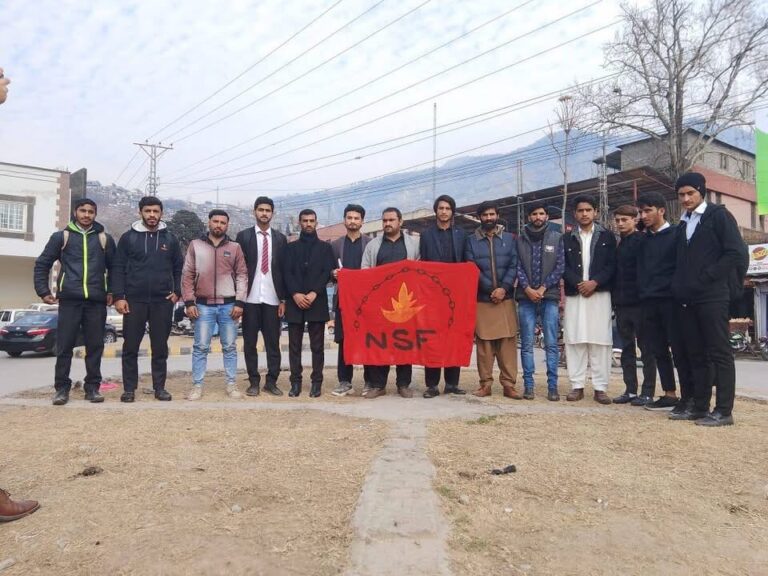
Some of our friends were members of the Jammu Kashmir National Students Federation. The Pakistani army strictly ordered us to dismantle our camp. We requested time to cook our meal, but the army was adamant about not letting us stay. They confiscated our identity cards, inspected our belongings for an hour, and retained our IDs under the pretext of checking our data. Another camp nearby remained undisturbed by the army. We had no choice but to leave, finding shelter in two shabby hotel rooms. After dinner and reflecting on the sorrows of our land, we fell asleep, as the next day promised a new destination. The sun shone brightly the next morning, birds and other creatures were awake, and we prepared for our next journey, a long hike up the mountains to a famous rock perched high above. After parking our vehicle in a safe place, we set off with minimal supplies.

Our team of eight was strong and soon the rough road ended, leading to a climb up the mountain. The stunning views encouraged us to keep going. Along the way, we met a girl who shared that due to a lack of facilities, her family moved to Rawalpindi, where they received an education. Seeing the struggle of people living in such beauty to meet basic needs was heart-wrenching. People carried sacks of grains from miles away, crossing difficult paths to reach their homes and meet their daily needs.

Amara invited us to her home and treated us to tea and refreshments. Her family encouraged us and guided us on our way. After two hours of hiking, we reached the mountain where our destination lay. The Malyari Rock, perched high above dangerous ravines, offered breathtaking views. Travelers took pictures atop this rock, which was as beautiful as it was perilous. The weather on mountains changes quickly; the bright sun turned into rain, soaking us with heavy droplets. But soon the rain stopped, and the sun reappeared. We took pictures and enjoyed the surrounding views, then headed back. Descending was easier, and we quickly reached our vehicle.

We then set off for Neel Fairy Lake, planning to camp there, but the weather didn’t cooperate. A storm forced us to stop at Bring Ban, a beautiful village where the locals were extremely hospitable. They provided us with a spacious, clean hall filled with bedding. Their hospitality and kindness were unmatched. After dinner, exhausted from walking, we quickly fell asleep.

The village’s beautiful morning greeted us with a warm breakfast prepared especially for us. We packed our essentials, left the rest in the hall, and headed towards the lake. Two local girls accompanied us to ensure we didn’t face any difficulties. Along the way, we saw various colored stones and felt the cool breeze. One spot had water dripping from leaves, a fascinating sight. Enjoying the scenic views, we continued our ascent.

The girls shared their challenges, including the lack of a proper road and the struggle to transport essentials. They mentioned that the only school in the area was up to the eighth grade, and most girls couldn’t study beyond that. We assured them we’d convey their issues to the authorities. Engaging in conversation, we reached their homes, simple yet beautiful structures made of mud and wood, serving as summer shelters for livestock and a combined kitchen and bedroom for people.

The girls treated us to tea, for which we were very grateful. After tea, we continued towards the lake, the sky partly covered with light clouds. As we climbed, we reached a meadow filled with beautiful purple flowers, encouraging us to tread carefully. Finally, after a long journey, the lake appeared before us, seemingly crafted meticulously by nature. Nestled between mountains, with the sky and scattered clouds reflected in its waters, the lake offered a mesmerizing view. Snow-covered peaks on the far side of the lake seemed to smile at us.

However, before we could fully take in the scenery, the clouds covered the sky, and hail began to fall. We quickly took shelter beneath a cliff, the sudden cold becoming unbearable. The hail turned the peaks white, and the stones in the lake looked like musical notes being played. We took some photos and, after a brief stay, started our journey back home. We carried with us respect and love for the locals who made our journey special, gave us their time, and showed us hospitality.

Sitting in my room today, writing this, those scenes refresh my soul and bring a smile to my face as I recall the beautiful moments.

Major Counter-Terrorism Victory: Pakistan Captures Close Associate of Osama bin Laden

0

Lahore, Pakistan — In a significant counter-terrorism operation, the Counter Terrorism Department (CTD) of Punjab has successfully apprehended Amin ul-Haq, a close associate of the late al-Qaeda leader, Osama bin Laden according to Pakistani media.

The announcement was made by CTD Deputy Inspector General (DIG) Wasim Ahmed Sial during a press conference in Lahore.

Amin ul-Haq is a high-profile figure whose name appears on the terror watchlists of both the United States and the European Union. His arrest marks a crucial victory in the global fight against terrorism. According to DIG Sial, a case has been registered and an intensive investigation is ongoing to uncover further details about ul-Haq’s activities and networks.

The capture of ul-Haq comes more than a decade after the killing of Osama bin Laden by U.S. Navy SEALs in Abbottabad, Pakistan, on May 2, 2011. Ul-Haq, who served as a senior al-Qaeda operative and security supervisor for bin Laden, was detained following an intelligence-based operation by Pakistani authorities.

One of the key aspects under investigation is how ul-Haq managed to evade detection for so long and what activities he was involved in within Pakistan. Notably, he possessed a Pakistani ID card with addresses in both Lahore and Haripur, suggesting he may have had significant local connections.

The arrest underscores Pakistan’s ongoing efforts to combat terrorism and the complex challenges posed by high-ranking operatives who continue to operate covertly. The international community will be closely monitoring the developments of this case as Pakistani authorities work to dismantle ul-Haq’s networks and bring his accomplices to justice.