19.6 C
Los Angeles
Friday, October 9, 2026

One Killed in Qallan Shooting as Shutdown Eases in Major Azad Kashmir Cities

While business districts reopened in Mirpur, Muzaffarabad...

45-Year-Old Man Found Dead in Budgam’s Branwar Area

Police have launched an investigation after the...
Home Blog Page 159

Top 100+ Must-Visit Destinations in Kashmir: A Complete Guide to Sightseeing, Costs, and Travel Duration

Editorial Staff: Beautiful valleys, snow-capped mountains, deodar trees, and glittering lakes come to mind when one hears the word of Kashmir. The Pir Panjal and Himalayan mountains encircle Jammu Kashmir.

At some point in their lives, everyone aspires to travel to Kashmir. Kashmir is referred regarded as the “Heaven on Earth” because of its natural beauty, and thousands of people travel there each year to witness this paradise.

Every location in Jammu Kashmir is lovely, but the abundant purple saffron blossoms here are particularly alluring. In addition to the stunning landscapes, visitors can engage in sports like swimming, rafting, bungee jumping, and paragliding here.

You’re in the correct place if you’d like to visit Kashmir during the winter or summer vacations, as we’ll provide you with all the information you need in this post. Where in Kashmir should I stay? What tourist destinations are there in Kashmir? (Kashmir Me Ghumne ki Jagah), what is the price of traveling to Kashmir? etc., so make sure to read this post all the way through.

Destinations in Kashmir | Ghumne ki Jagah in Kashmir

Before traveling to Kashmir Read up on some fascinating facts about Kashmir before you travel there.

  • City of lakes Srinagar, the capital of Jammu Kashmir. The Buddhist emperor Ashoka was the first to reside in Srinagar.
  • Jammu, Kashmir, and Ladakh Gilgit Baltistan are the four provinces of Jammu Kashmir.
  • In Kashmir, walnuts and saffron are grown.
  • Another name for Kashmir is Switzerland.
  • The largest freshwater lake in Asia is called “Wular Lake,” and it is situated in Kashmir.
  • The major Indian sacred sites, Amarnath and Vaishno Devi, are visited by pilgrims from India and other countries.
  • Popular Tourist Destinations in Kashmir (Hindi: Tourist Destinations in Kashmir)
  • These well-known tourist destinations in Kashmir are a must-see if you are traveling there for the first time or wish to travel there with friends or family.

1. Srinagar

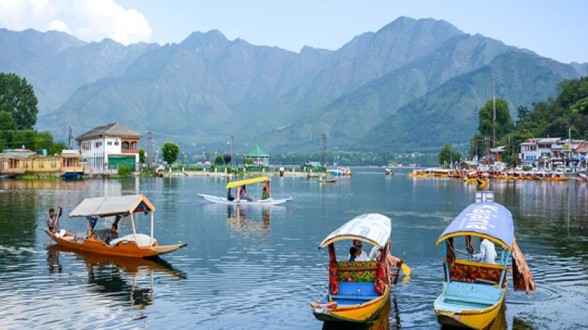
Srinagar has its own charm, regardless of the season. Srinagar is situated on the banks of the Jhelum River in the heart of Jammu and Kashmir. The capital of Jammu and Kashmir, Srinagar, may be visited for three days and two nights.
srinagarImage: Srinagar

The largest tulip garden in Asia, Shalimar Garden, Nishat Garden, Botanical Garden, Chashma Shahi, Pari Mahal, and Hazratbal are just a few of the stunning gardens in Srinagar. You can also take advantage of Dal Lake’s houseboats and Shikara rides in the summer.

2. The Pathalgam

The Kashmir Valley’s Anantnag district is home to Pahalgam, the most picturesque hill station. Pahalgam and Srinagar are roughly 95 kilometers apart.

A sense of vitality is evoked in the eyes and soul by the verdant gardens, saffron fields, verdant valleys, and modest homes constructed here. The Amarnath Yatra brings thousands of pilgrims through Pahalgam each year.

Betaab Valley, Aru Valley, Baisaran Hills, Mamleshwar Temple, Avantipur Temple, Pahalgam Golf Course, Kolhoi Glacier, Chandanwari, Tulian Lake, Sheshnag Lake, Beta Valley, and Marsar Lake are the most well-known tourist destinations in Pahalgam.

Adventure sports including hiking, skiing, sledding, and camping are also available.

3. The Gulmarg

The most well-known skiing location in Asia, Gulmarg, is situated at a height of 2730 meters above sea level. Gulmarg, which lies in Kashmir’s Baramulla district, is regarded as Jammu Kashmir’s top honeymoon destination.

All visitors are captivated by the surrounding towering snow-capped mountains, floral meadows, deep gorges, and forested valleys.

Gulmarg is regarded as a center for adventure. The Indian Institute of Skiing and Mountaineering offers instruction in trekking, mountaineering, skiing, and snowboarding. The world-famous Gondola Ride, Gulmarg’s second-highest car cable ride, is another popular destination.

It is roughly 51 kilometers from Srinagar to Tangmarg to Gulmarg. Travelers can get to Tangmarg market by local bus.

From there, you can rent cars and mini-coaches to get to Gulmarg. Gulmarg is around an hour’s drive from Srinagar.

4. Sonamarg

God has painted on the world, but the painter works on canvas. Sonamarg is a stunning example of God’s creation.

The charming Kashmiri town of Sonamarg is 80 kilometers northeast of Srinagar. Sonamarg is around 2800 kilometers above sea level. The literal meaning of Sonamarg is “field of gold.”

This village, which is the entry point to Ladakh, is situated just before the Zoji La pass and is surrounded by beautiful glaciers and tranquil lakes. One of the greatest things to do here if you enjoy fishing is go mahseer and trout fishing.

Your Sonamarg sightseeing tour would be more engaging if you took a pony ride to the Thajiwas Glacier. At the scenic mountain lakes of Gadsar, Satsar, Kishansar, Gangabal, and Vishansar, honeymoon couples enjoy stopping and holding hands to have romantic moments.

5. Neelum Valley

Neelum Valley is one of the most picturesque and enchanting regions located in Azad Kashmir, Pakistan. Known for its stunning natural beauty, lush green forests, snow-capped mountains, clear rivers, and charming valleys, Neelum Valley is often referred to as “Blue Gem of Pakistan-administered Kashmir.

6. The National Park of Dachigam

This national park is fantastic. With its verdant trees, uncommon animals, and beautiful flora, this park continues to draw tourists and wildlife enthusiasts.

This park is the highest reserved forest in Asia, standing at 1700 meters above sea level. Only 22 kilometers separate from Srinagar and Dachigam National Park.

The image is of Dachigam National Park.
By renting a private taxi, you may get there fast and conveniently. Dachigam is the name of this national park since ten villages were moved to make room for it.

7. Patnitop

A popular tourist site in Jammu and Kashmir, Patnitop is situated in the Udhampur district on the banks of the well-known Chenab River. It is one of the tourist destinations in Jammu and Kashmir that draws a lot of international photographers.

A well-liked tourist location in Kashmir, Patnitop is beautiful throughout the year. It is among the greatest locations to purchase handicrafts, dry fruits, pashmina shawls, and distinctively flavored candies.

A fantastic Jammu and Kashmir trip experience may be had at locations like Nag Mandir, Billo Ki Powari, Madhatop, and Nathatop at Patnitop. There are numerous routes to Patnitop.

One option is to take a taxi from Srinagar, which is 187 kilometers away. To get here, another option is to go to the Banihal train station and take a taxi from there.

8. Doda

Although Doda is one of the lesser-known tourist destinations in Jammu and Kashmir, social media has made it a popular destination these days.

Because it appears to have Kashmiri scenery in a compact package, it is known as “Mini Kashmir.” It is well-known for its two Hindu pilgrimage sites, Chandi Mata Temple and Athra Devi Temple.

Doda is a popular destination for nature lovers, but it also draws rock climbers and hikers.

The distance between Doda and Srinagar is roughly 128 miles, and it takes almost three hours to get there. Bus travel is a great way to get from Srinagar to Doda.

9. The Yusmarg

Despite being one of the least frequented places in Kashmir, Yusmarg is a well-liked tourist destination. Srinagar is 48.8 miles away from Yusmarg. As the most direct route, driving from Srinagar to Yusmarg is advised.

The image of Yousmarg
Four kilometers downhill from Yusmarg is the stunning Neel Nag Lake, which will calm your eyes. Here, you can witness Kashmir’s genuine tranquility and splendor.

10. Sanasar

Are you trying to find a unique place to visit in Kashmir? Are you familiar with Sanasar? No? Since this location is one of Kashmir’s best-kept secrets, we are not surprised.

Alternatively, you can hail a cab or a car from outside the airport. Bus and taxi services are readily available in all of Kashmir’s tourist destinations. The cab option is the best choice if you are traveling with your family or as a couple.

The image of Sanasar
For $40–45 per day, you may easily transport four to five persons in a private taxi. You can also use a local bus if you are traveling to Kashmir on a tight budget.

The price of traveling to Kashmir
How many days you wish to spend in Kashmir is one of the numerous variables that affect the expense of the trip. Where would you like to remain?

However, it is believed that the expense of visiting Kashmir for four to five days can be approximately ₹100 per person.

Daily Budget Average (Per Person)

CategoryCost in USD
Price of Traveling to Kashmir$6 to $10 USD
Lodging (per night)$10 to $20 USD
Food and Drink (per day)$4 to $6 USD
Activities and Places (5 days)$25 to $60 USD (5 days)
Total Estimate (5 days)$45 to $96 USD


FAQ

What is the price of traveling to Kashmir?

The price of lodging, transportation, and meals in Kashmir is from $20 to $30rupees per person per day. The price of traveling to Kashmir for four to five days can be about 11,000 rupees per person.

FAQs for Traveling to Kashmir

1. What is the best time to visit Kashmir?

  • Indian & Pakistani Travelers: May to October; for snowfall, visit from December to February.
  • Foreign Travelers: May to October.

2. How much will a trip to Kashmir cost?

  • Indian Travelers: ₹11,000 to ₹15,000 for 4-5 days.
  • Pakistani Travelers: PKR 8,000 to PKR 12,000.
  • Foreign Travelers: $50 to $100 USD per day.

3. What is the most famous tourist destination in Kashmir?

  • Indian & Pakistani Travelers: Srinagar, Gulmarg, Pahalgam.
  • Foreign Travelers: Srinagar, Dal Lake, Gulmarg.

4. What activities can tourists do in Kashmir?

  • Indian & Pakistani Travelers: Skiing, trekking, houseboat rides.
  • Foreign Travelers: Skiing, trekking, nature walks, photography.

5. Are there any special travel requirements for foreigners?

  • Foreign Travelers: Visa and permits are required, especially for border areas.

6. Can I find budget accommodation in Kashmir?

  • Indian Travelers: ₹800 to ₹1,500 per night.
  • Pakistani Travelers: PKR 2,000 to PKR 3,500 per night.
  • Foreign Travelers: $10 to $20 USD per night.

7. What are the must-try foods in Kashmir?

  • All Travelers: Rogan Josh, Yakhni, Gushtaba, Kashmiri Wazwan, and Kahwa.

8. What is the distance from Srinagar to Gulmarg and Pahalgam?

  • All Travelers: Gulmarg (51 km), Pahalgam (95 km).

9. What safety measures should I take while traveling to Kashmir?

  • All Travelers: Stay updated on local news and follow advisories.

10. Is Kashmir safe for solo travelers?

  • All Travelers: Yes, but stay informed and cautious, especially in remote areas.

It feels like utopia when you travel across Kashmir. The locations to visit in Kashmir and all the information you need to plan your trip there are covered in full in this article. We sincerely hope that this material will be useful to you when you visit Kashmir.

Please leave a comment if you have any suggestions on this post. We’ll be updating it shortly. In order for this information to be helpful to others traveling to Jammu Kashmir, please share it on your social media accounts if you find it interesting.

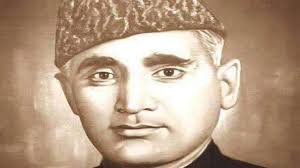
Qabza: Meri Dharti, Meri Pehchaan Aur Mere Jazbaat ka Naghma

0

Ab hone laga sair gahoon pe qabza
Mere dais ki nigahoon pe qabza
Na mandir na masjid bacha paya main
Ho gaya phir ibadat gahoon pe qabza

Munafiq ne cheeni hai meri basarat
Mere chehre aur nigahoon pe qabza
Kahan sukoon paoon ga thak haar ke main
Meri dharti maa ki baahon pe qabza

Jo kholoon laboon ko to dil cheer jaye
Magar kya usne meri aahoon pe qabza
Yeh qabza hai bhai mashq ke bahane
Meri chotiyaan khanqaahoon pe qabza

Munafiq ne kafir se saaz baaz kar li
Karo banam mazhab charah gahoon pe qabza

M. Kamran Hameed 2024

Chaudhry Ghulam Abbas: A Legacy of Divisive Politics and Statehood Controversy

0

Chaudhry Ghulam Abbas remains a polarizing figure in the history of Jammu and Kashmir. While celebrated by some as a political stalwart whose contributions are commemorated annually, others question the very foundation of his legacy. A closer examination of his life and work reveals a trajectory interwoven with communal politics, strategic alignments, and controversial decisions that continue to shape the narrative of Jammu and Kashmir.

The Founder of Communal Politics

Chaudhry Ghulam Abbas was one of the founding members and the first General Secretary of the All Jammu and Kashmir Muslim Conference—a party he himself described as “communal.” This organization, modeled on the communal ideologies of the All-India Muslim League, introduced religious divides into the political fabric of Jammu and Kashmir. In a region where coexistence had long been the norm, the Muslim Conference’s creation laid the groundwork for religious polarization, weakening the social and political unity of the state’s diverse population.

When the National Conference emerged as an inclusive alternative, Abbas briefly joined its ranks. However, his return to the Muslim Conference deepened the political divide. His advocacy for elections based on religious identities institutionalized sectarian politics within the state, a legacy that haunts the region to this day.

Role in Partition Politics

As the subcontinent edged toward partition, Chaudhry Ghulam Abbas aligned himself closely with Muhammad Ali Jinnah. While Jinnah initially sought to engage Sheikh Abdullah, Abbas’ intervention redirected Jinnah’s focus, solidifying the Muslim Conference’s ties with the Muslim League. This alignment played a critical role in swaying the Muslim population of Jammu and Kashmir toward Pakistan, setting the stage for the state’s eventual division.

When tribal forces invaded Jammu and Kashmir in October 1947, sparking a conflict that led to the state’s partition, Abbas’ actions came under scrutiny. Rather than advocating for the state’s unity, he reportedly encouraged Pakistani intervention. Following the tribal invasion and the establishment of the ceasefire line, Abbas found himself in a precarious position. Imprisoned in Jammu, Sheikh Abdullah facilitated his release, tasking him with convincing Pakistan’s leadership to respect the state’s sovereignty. However, upon reaching Pakistan, Abbas chose to align with its leadership, abandoning the vision of a unified Jammu and Kashmir.

The “Supreme Head” of a Fragmented State

In the aftermath of the partition, Abbas assumed the title of “Supreme Head” in Azad Jammu and Kashmir, serving as a liaison between Pakistan’s ruling elite and the region’s leadership. His role, however, was criticized as symbolic at best. Critics argue that he functioned more as a “checker” for Pakistan’s interests than as a leader advocating for the autonomy or unity of Jammu and Kashmir. His tenure exemplified the subservience of Azad Kashmir’s political leadership to Pakistan’s directives.

A Controversial Legacy

Chaudhry Ghulam Abbas’ autobiography sheds little light on the pivotal events of 1947, offering neither insight nor critical reflection on the partition. Instead, it serves as a compilation of personal anecdotes and repeated references to Muhammad Ali Jinnah as “Quaid-e-Azam,” reflecting his unwavering loyalty to Pakistan. His burial in Punjab rather than his native Jammu and Kashmir further symbolizes his disconnection from the state he purportedly represented.

Evaluating His Contributions

The celebration of Chaudhry Ghulam Abbas’ legacy invites critical questions. What were the tangible outcomes of his political career? Did his leadership unite or further fragment the state? While his supporters argue that he played a crucial role in representing the Muslim population, his detractors contend that his communal politics and alignment with Pakistan’s interests undermined the sovereignty and unity of Jammu and Kashmir.

In retrospect, Chaudhry Ghulam Abbas’ legacy is a contentious chapter in the history of Jammu and Kashmir. His contributions, though significant in shaping the region’s political landscape, are deeply intertwined with the communal and divisive politics that fractured the state. As Jammu and Kashmir continues to grapple with its identity and future, his life serves as a reminder of the complexities and consequences of political decisions rooted in sectarianism and external allegiances.

Reclaiming the Identity: The United Jammu and Kashmir National Flag

0

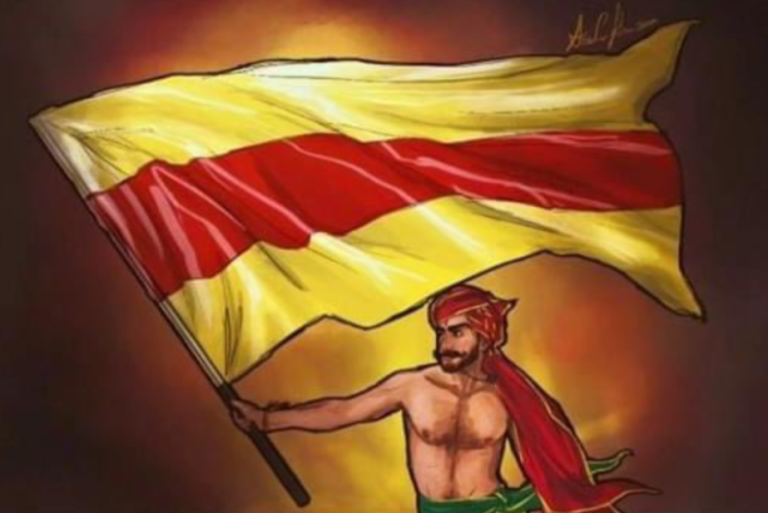
By Samina Raja, Jammu & Kashmir: The debate around the national flag of the United State of Jammu and Kashmir remains as relevant today as it was at the time of its tragic division. Those who oppose this flag often align themselves with the ideologies of either Pakistan or India, reflecting a vision of a divided state rather than a unified homeland. However, the national flag of the United Jammu and Kashmir is a symbol of hope, unity, and sovereignty—a reminder of our shared history and the identity of an independent nation.

A Nation Founded on Unity

On March 16, 1846, the Treaty of Amritsar formally established the State of Jammu and Kashmir, creating a politically, administratively, and culturally unified nation. For 101 years, this state maintained its sovereignty, with its own legal system, administrative machinery, and currency. Most importantly, it had its own national flag—a red banner bordered with yellow, symbolizing strength, unity, and self-reliance.

The red color represented power, determination, and the sacrifices of the people, while the yellow borders stood for friendship, warmth, and hope. This flag was not merely a piece of fabric but a representation of the collective identity of the people of Jammu and Kashmir.

The Tragedy of Division

The unity of this historic state began to unravel on October 22, 1947, with the tribal invasion supported by Pakistan. This attack resulted in the division of the state and the establishment of a provisional government in Muzaffarabad. Unfortunately, this government abandoned the national flag of Jammu and Kashmir, adopting a new green and yellow flag to align with Pakistan’s vision.

Similarly, in other parts of the state, another political faction introduced a different flag, replacing the national emblem with one that served political agendas. These actions led to a deepened division, not just geographically but also among the hearts and minds of the people.

For over seven decades, this religious and political division has distanced the regions and communities of the state from one another. Today, the scars of this division are evident, as those on one side of the Line of Control find it difficult to agree on any aspect of life with those on the other side.

The Last Symbol of Unity

In these trying times, the national flag of the United Jammu and Kashmir stands as the last remaining symbol of our shared history and unity. This flag is not just a relic of the past; it is a testament to the fact that we were once a unified, independent nation. It is a beacon of hope for those who dream of a reunified state, free from external influence and division.

The red and yellow flag represents our collective strength, resilience, and the bond of brotherhood that once held us together. It reminds us that our shared history is stronger than the artificial divisions imposed upon us.

A Call to Action

As custodians of our homeland, it is our responsibility to reclaim our identity and work towards the unity of Jammu and Kashmir. This can only be achieved by rallying around our national flag—the flag of the United State of Jammu and Kashmir. It is a call for serious and practical efforts to restore the unity and integrity of our land.

The journey ahead will be difficult, but it is not impossible. By embracing our shared history and rallying under the banner of our national flag, we can rebuild the bridges that have been broken and pave the way for a united, independent Jammu and Kashmir.

Let this flag remind us of who we are and where we come from. Let it inspire us to strive for a future where our homeland is no longer divided by borders and ideologies.

The time has come to return to our roots and reclaim the identity that is rightfully ours. Perhaps, in doing so, we may touch the hearts of those who have forgotten, and together, we may rebuild the nation we once called home.


This editorial aligns with the vision of Azadi Times, promoting the idea of an independent and unified Jammu and Kashmir. Let me know if you’d like further refinements or additional elements!

Qaiser Raja’s Abduction and Murder: A Question of Kashmiri Lives and Security

    0

    Muzaffarabad (The Azadi Times) – Qaiser Raja, a resident of Azad Jammu Kashmir and an employee of a private company owned by Sardar Mukhtar, was abducted and later murdered in Balochistan province of Pakistan. This tragic incident has not only highlighted the failure of state institutions but has also raised serious questions about the value of Kashmiri lives.

    Initial reports suggest that Qaiser Raja was working on a project in Balochistan when he was allegedly abducted by the Baloch Liberation Army (BLA). The kidnappers demanded a ransom of 10 crore rupees, which could not be paid. As a result, he was brutally murdered. Conflicting reports indicate that Qaiser had been missing for one to three months, with his death only recently confirmed. He was laid to rest today in his hometown.

    This heartbreaking incident has shaken the Kashmiri community, both locally and abroad. Despite the gravity of the situation, neither the local media nor any major national outlets gave this story the attention it deserved.

    The Kashmiri Perspective:

    Kashmiris have long faced marginalization and insecurity, both at home and while working in other regions. The lack of outrage and protest over Qaiser Raja’s abduction and murder reflects the systemic neglect of Kashmiri voices.

    This incident raises several pressing questions:

    1. Accountability: Will those responsible for Qaiser Raja’s abduction and murder be brought to justice?
    2. Worker Safety: What measures are in place to ensure the safety of Kashmiri workers in conflict zones like Balochistan?
    3. Media Silence: Why did major media outlets fail to cover this incident

    The murder of Qaiser Raja is a stark reminder of the challenges faced by Kashmiris working outside their homeland. People of Kashmir calls for justice for Qaiser and urge the authorities to take immediate action to protect Kashmiri workers.

    This is not just the story of one life lost but of an entire community questioning its worth in the eyes of the state. The Azadi Times will continue to follow this case and advocate for justice for Kashmiris everywhere.

    New Year 2025: First Snowfall Begins Across Kashmir and Gilgit Baltistan

    0

    Muzaffarabad (The Azadi Times): The first snowfall of the year has begun in Pakistan- and India-administered Kashmir, Gilgit-Baltistan, and the high-altitude areas of Jammu Kashmir.

    Since the night between January 1 and 2, snowfall has started in the higher regions of Neelum Valley in Pakistan-administered Kashmir, including Grace, Shounter, Surgan, Keran, Arang Kel, and Jagran, while the lower areas are experiencing rain.

    Snowfall is also ongoing in the Leepa Valley, Haveli district, and high-altitude areas of Bagh and Rawalakot. In Muzaffarabad city, light rain has continued intermittently throughout the night, clearing the dust from the atmosphere. The sky remains overcast, and further rain is expected.

    In India-administered Kashmir, snowfall continues in mountainous regions, intensifying the cold weather.

    Several high-altitude areas in Gilgit-Baltistan are also witnessing snowfall. According to meteorologists, this spell of snowfall and rain is expected to last until January 6.

    Tourists visiting the scenic areas and local travelers have been advised to exercise caution while traveling and to avoid trips to mountainous regions during heavy snowfall.

    In snow-covered regions of Jammu and Kashmir, snowfall often leads to road closures and disruptions in electricity and communication networks, causing significant challenges for residents.

    Daughter of Resistance: Afrah Shabbir Completes Law Degree at Kotli University

      0

      Kotli: Afrah Shabbir Chaudhry, a renowned name in student politics and a proud daughter of Kashmir from Kotli Azad Jammu Kashmir (Pakistan-administered Kashmir), has successfully completed her law degree from Kotli University. Belonging to the tribe of resistance, she is known for her composed, courteous, and dignified personality.

      Speaking to local media outlet Hope News on this occasion, Afrah attributed her success to the special blessings of Allah Almighty and the prayers of her parents. She expressed her gratitude to her teachers, family members, friends, and ideological and political companions who supported her throughout this journey.

      Afrah Shabbir is affiliated with the JKNSF (Jammu Kashmir National Students Federation) and actively participates in several nationalist programs. She is also highly active on social media, where she frequently engages with her audience and shares her views.

      She further vowed to continue her struggle for the freedom and sovereignty of her homeland. Comrade Afrah affirmed her lifelong commitment to serving humanity with the determination she embarked on this journey, saying, “I will uphold this mission until my last breath, InshaAllah.”

      Her achievement marks a milestone in her journey as a role model for the youth and a beacon of hope for the people of Kashmir.

      Neelum Valley: Arrest of Journalists Sparks Protests Over Alleged Military Training of College Students

      0

      Neelum Valley: In Pakistan-administered Kashmir’s Neelum Valley, a local court on Monday remanded a journalist and two social media activists into police custody for nine days after their arrest for opposing alleged arms training provided to female students at a government college by the military.

      The arrests have triggered widespread protests. On Monday, demonstrations were held in the Bantal Chowk area of Athmuqam, the district headquarters of Neelum Valley. Local journalists and civil society members participated in the protests, demanding the immediate release of the detained individuals. Protesters warned that if their demands were not met, the scope of the protests would be expanded.

      Similarly, on Tuesday, journalists in Muzaffarabad, the capital of Pakistan-administered Kashmir, staged a demonstration outside the Press Club, chanting slogans in solidarity with the detained activists and calling for their release.

      The detainees, identified as local journalist Hayat Awan and social media activists Wasi Khawaja and Azhar Mughal, were accused of posting objectionable content on social media against the reported military training of government college students in the use of weapons.

      Speaking at the Athmuqam protest, Neelum Press Club President Javed Asadullah condemned the arrests, stating that the press club had been attacked by masked individuals last week when female students had arrived there to hold a press conference. He added that the press club had formally filed a complaint with the police, but no action was taken against the attackers. Instead, journalists were arrested based on a complaint filed by the principal of the girls’ college, which he said was against the principles of justice.

      The protests continue to grow as journalists and civil society members demand transparency, justice, and the immediate release of the detainees.

      The Connection Between Navratri Festival and Sharda

      0

      Neelum Valley: Hindus around the globe, including in India, celebrate the Navratri festival as a symbol of the triumph of good over evil.

      The festival begins with the appearance of the moon in the seventh month of the Hindu calendar, Ashwin, and lasts for nine consecutive nights. Known as Durga Puja in some regions, the name Navratri originates from the Sanskrit words “Nav” (nine) and “Ratri” (nights). During this period, devotees observe fasts and engage in worship.

      The festivities start with lighting lamps, performing Durga Mata’s Aarti, and offering fruits and flowers as part of rituals. Bhajans, devotional songs, are an essential element of Navratri celebrations. Participants also perform traditional dances such as Dandiya and Garba.

      The tenth day, known as Dussehra, marks the victory of Lord Rama over Ravana, symbolizing the triumph of righteousness over evil.

      In Pakistan-administered Kashmir, the historic region of Sharda in Neelum Valley holds special significance during Navratri. The area, named after Sharda Devi—considered the Hindu goddess of knowledge and arts—is a focal point for devotees. The Sharda Temple, located near the Neelum (Kishanganga) River, attracts Hindus who perform rituals and prayers.

      Hindus from Indian-administered Kashmir and India have expressed a desire to visit the Sharda site, with efforts for the “Sharda Yatra” ongoing for years. A committee called “Save Sharda” in Indian-administered Kashmir has constructed a temple resembling the Sharda site at Teetwal, near the Line of Control. Since the 2021 ceasefire agreement between India and Pakistan, this region has seen peace, encouraging Hindu tourists and pilgrims to visit.

      Navratri and other Hindu rituals along the Neelum or Kishanganga River reflect the region’s historical and cultural significance.

      Baltistan: A Land of Unique Civilization, Culture, and History

      0

      By Yaqub Alam Tai: It is often said that one should explore as much as possible and enjoy the wonders of nature. On a personal level, however, I admit I have fallen short in this regard. Despite my 20-year-long career in journalism, I never had the opportunity to travel abroad or even visit the breathtaking landscapes of my beloved homeland, Gilgit-Baltistan. After graduating from Karachi University, I returned to Ghizer in 2006 and rarely had the chance to venture out.

      My close friends—Manzar Shigri, Qasim Shah, Saif-ur-Rehman, Haji Kareem, and Farman Kareem—have had the privilege of traveling across the picturesque tourist destinations of Gilgit-Baltistan multiple times. Despite being so close to them, I have yet to step foot outside Phander, Yasin, Ishkoman, Hunza, and Gilgit. Even today, I might be among the few who have not seen the beautiful regions of Astore, Diamer, and Chitral.

      However, my recent trip to Baltistan for a three-day media workshop organized by UNDP and the GLOF-2 Project marked a significant milestone. It was my first-ever visit to Baltistan, a region rich in history and culture. Before this, I had only visited Meindi Rondo years ago after the tragic passing of Raja Hussain Khan Maqpoon, the founding chief editor of K2 newspaper, to offer condolences. That trip was brief, and the roads leading to Baltistan at the time were no less than a nightmare. It took us 6 to 7 hours to travel from Gilgit to Meindi.

      This time, however, thanks to the newly constructed Baltistan Highway, we were able to reach Skardu in just 4 to 5 hours from Gahkuch. The highway is truly a blessing for the hundreds of thousands of people living in the region.

      Over the years, many members of my family have served in various public and private organizations in different districts of Baltistan. My late uncle, Tota Jan, worked for AKRSP in Skardu for five years. My respected uncle, Muhammad Zaman, served as an Area Manager for AKRSP in Skardu for over 12 years. Both of them frequently invited me to visit Baltistan, praising its beauty, but I never managed to go.

      When I received the news of being nominated for a training workshop organized by UNDP, GLOF-2, and the Department of Information and Broadcasting of Gilgit-Baltistan, I, along with my brotherly friend and General Secretary of Ghizer Press Club, Abid Sher, embarked on the journey to Skardu on May 14. Journalists from other districts of Gilgit-Baltistan also made their way to Baltistan.

      We departed from Gahkuch at noon and reached Skardu by 5 PM. Upon our arrival, we were warmly welcomed by our esteemed friends from the Skardu Press Club, led by their President, Wazir Muzaffar, and his team. Journalists from across Baltistan had also gathered in Skardu for the workshop. The Skardu Press Club treated us with immense hospitality, following their unique traditions of “Adab Baltistan,” and hosted a lavish dinner in our honor. Their warmth and kindness were beyond words.

      During our stay, they took us to several historic sites, including the famous Sadpara Lake. Words fall short in expressing our gratitude for their efforts.

      The training workshop commenced the following day at a renowned hotel in Skardu. The Additional Chief Secretary of Gilgit-Baltistan, Aziz Ahmed Jamali, and Secretary of Information and Broadcasting, Zameer Abbas, graced the first session with their presence. Basit Khan from GLOF-2 provided detailed insights into climate change, the rapidly melting glaciers, and the resulting challenges. The session was incredibly informative.

      During the three-day workshop, we also learned about responsible reporting from Talha, a trainer from Islamabad. The sessions were highly educational and provided us with valuable knowledge. UNDP’s initiative to facilitate our access to Baltistan’s historic sites was particularly encouraging.

      On the second day, we visited Shigar, where we explored Shigar Fort and several other historic locations. It became evident that each district in Baltistan is a treasure trove of history and culture.

      On the final day, we visited Ghanche, a district that left us in awe. The Khaplu Fort, Chaqchan Mosque, the historic bazaar of Khaplu, and the ancient Chaqchan Khanqah spoke volumes about the district’s unique historical significance.

      The hospitality extended by the President of Ghanche Press Club, his cabinet, and our fellow journalists was unforgettable. We are particularly grateful to the Ghanche Press Club for their warm reception. Their professionalism and dedication, despite living in remote areas, are a source of pride for us.

      One notable observation during our visit was the restoration of Baltistan’s historic forts and sites by the Aga Khan Development Network. Their efforts to preserve these structures in their original state and open them to tourists are commendable. This has not only safeguarded Baltistan’s history but has also boosted tourism. Thousands of domestic and international tourists visit these sites annually, creating numerous employment opportunities and contributing to the growth of Baltistan’s tourism industry.

      We also visited several GLOF-2 projects, including community centers and protective structures designed to mitigate natural disasters. These initiatives are proving to be instrumental in protecting Baltistan from natural calamities and benefiting the local communities.

      In conclusion, I extend my heartfelt gratitude to all my colleagues across Baltistan who made my first trip to this remarkable region unforgettable. Their love, hospitality, and camaraderie have left an indelible mark on me.

      Baltistan is truly a land of unparalleled history, culture, and hospitality. Its people, free from hatred, embody religious harmony, brotherhood, and peace. It is this harmony that drives development in every sector. Behind Baltistan’s many virtues lie the contributions of its scholars, writers, poets, teachers, and professionals from various fields, all of whom deserve praise. The people of Baltistan are a shining example of what a cultured and peaceful society can achieve.