In the context of Pakistan’s economic crisis, the Pakistani government has decided to abolish 28 departments from five federal ministries in an effort to reduce administrative expenses. This decision was made during a meeting chaired by the Prime Minister of Pakistan Shehbaz Sharif, based on the recommendations of a committee.
The five ministries undergoing reforms include the Ministry of Kashmir Affairs and Gilgit-Baltistan, the Ministry of States and Frontier Regions, the Ministry of Information Technology and Telecommunications, the Ministry of Industries and Production, and the Ministry of National Health Services.
In the meeting, a proposal was made to merge the Ministry of Kashmir Affairs and Gilgit-Baltistan with the Ministry of States and Frontier Regions, while also suggesting that 28 departments within these ministries be either privatized, abolished, or handed over to federal units.
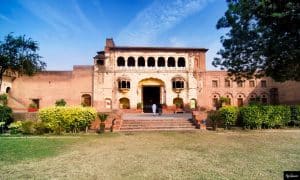
One of the significant concerns regarding the potential dissolution of the Ministry of Kashmir Affairs is the fate of Kashmir State Property, which is currently managed by the ministry. The dissolution of this ministry raises fears that Kashmir State Property may be sold off. Former Prime Minister Imran Khan’s office had instructed the Ministry of Kashmir Affairs and Gilgit-Baltistan on December 6, 2019, to prepare a summary within a week to lift the ban on the sale of Kashmir State Property and submit it for approval to the Prime Minister.
Subsequently, as Prime Minister, Imran Khan directed in a cabinet meeting that a proposal for the sale of Kashmir State Property be prepared. His Principal Secretary wrote to the Ministry of Kashmir Affairs, according to the minutes of the cabinet meeting, requesting that a proposal be formulated and sent to the Prime Minister’s Office regarding the sale of Kashmir State Property.
The current government has also implemented the installation of an Internet firewall system, and it has been reported that the approval for this system was initially granted by former Prime Minister Imran Khan. This raises concerns that the current government may use a similar justification for the sale of Kashmir State Property, claiming that the process was initiated by the previous government of Imran Khan.
Jammu and Kashmir’s total urban state property in Pakistan was originally 1,048 kanals, out of which 468 kanals have been sold, leaving only 580 kanals. Similarly, the total agricultural land was around 2,426 acres, of which 452 acres have been sold, with 1,974 acres remaining. Out of 35 properties, 14 were sold to favored individuals based on directives from the Ministry of Kashmir Affairs since 1961. However, there is no available information about the value of the sold properties or to whom they were sold. Astonishingly, the government of Azad Kashmir does not have any details about Kashmir State Property located in Pakistan.
From 1947 to 1955, the management of Kashmir State Property was under the control of the government of Azad Jammu and Kashmir. In 1961, through the “Administering of Kashmir Property Ordinance,” the management was transferred from the Azad Kashmir government to the federal Ministry of Kashmir Affairs.
The Ministry of Kashmir Affairs, through its office of the Administrator of Jammu and Kashmir State Property in Lahore, currently manages these properties. According to the Administrator’s office in Lahore, after the partition of 1947, properties of the Jammu and Kashmir state (belonging to either the Maharaja of Jammu and Kashmir or the Maharaja of Poonch) that were located outside the state’s territorial boundaries came under the management of the government of Azad Jammu and Kashmir, and a manager was appointed for their oversight.
The Punjab government considered this Kashmir property as evacuee property. Due to legal and administrative complications, the government of Azad Kashmir requested in June 1955 that the government of Pakistan take over the management of the Kashmir properties. Thus, the government of Pakistan took over the administration of Kashmir State Property under the Administering of Kashmir Property Ordinance 1961.
In 2012, the author of this report first revealed in an investigative report the details of Kashmir State Property located in different cities of Pakistan, as well as how much of it had been sold. According to records from the Administrator’s office in Lahore, the following is a summary of Kashmir State Property located in different cities of Pakistan.
(1) Haveli Dyal Singh: Haveli Dyal Singh in Lahore had a total land area of 55 kanals, 6 marlas, and 150 square feet, out of which 32 kanals, 10 marlas, and 203 square feet were sold to unknown individuals through Letter No. KP-3/11/72 dated 03-09-1980 and Letter No. KP-1.1/1/81 dated 15-07-1981. Now, 22 kanals, 17 marlas, and 128 square feet of the property remain.
(2) Lunda Bazaar Lahore, (3) Loha Bazaar Lahore, (4) Trunk Bazaar Lahore, (5) Changar Mohalla Lahore, (6) Thariyan Lahore, (7) Jhuggiyan Lahore, (8) Sard Chah Bagh Lahore, (9) Katir Lahore, (10) Ahata Ghulam Bibi Lahore, (11) Ahata Mian Sultan Lahore, (12) Ahata Kripa Ram Lahore, and (13) Sarai Mian Sultan Lahore had a total land area of 289 kanals, 5 marlas, and 200 square feet. Out of this, 32 kanals, 17 marlas, and 127 square feet were sold under Letter No. KP-9(3)/62(K-1) dated 27-03-1963 and KP-4/1/81(K-1) dated 31-07-1962. Now, 256 kanals, 8 marlas, and 7 square feet remain.
(14) Naulakha Goods Transport Lahore had a total land area of 1 kanal, 12 marlas, and 221 square feet, all of which was sold through Letter No. KP-10(17)/64-KII dated 05-03-1965.
(15) Kashmir House on Kashmir Road, Lahore had a total land area of 100 kanals, 12 marlas, and 13 feet, and (16) Hassanddin Nursery on Egerton Road, Lahore had a property of 13 kanals and 216 feet, both of which were entirely sold under Letter No. KII(3)/61(K-1) dated 21-03-1961.
(17) Out of 6 kanals, 12 marlas of property at A-10 Kashmir Road, 2 kanals, 3 marlas, and 53 square feet were acquired by the Lahore Development Authority (LDA). Thus, 4 kanals, 8 marlas, and 172 square feet of property remain.
(18) Poonch House Lahore had a total land area of 212 kanals, out of which 36 kanals were sold under Letter No. K-8(6)/53(K-2) dated 01-11-1965. Now, no property remains, and according to the Administrator Office’s records, nothing remains from the original 212 kanals of Poonch House Lahore.
(19) The entire 174 kanals, 11 marlas, and 194 square feet of property in the Poonch House Construction Scheme Area Lahore were sold under Letter No. KP-3(3)/82 dated 09-06-1992. Thus, there is no longer any existence of this Kashmir property.
In District Gujranwala, (20) Forest Rest House Wazirabad had a total property of 5 kanals and 13 marlas, out of which 4 kanals and 16 marlas were sold under Letter No. KP-1/1/81 dated 15-07-1981, leaving only 17 marlas remaining.
In District Sialkot, (21) Sarai Maharaja Sialkot has a total property of 19 kanals and 1 marla, which is still intact and unsold. (22) Bungalow No. 13 on Hospital Road, Sialkot, had an area of 1.87 acres, designated as B-1, and its possession was given to the Pakistan Army.
In District Jhelum, (23) Forest Rest House Jhelum had a total property of 17 kanals and 12 marlas, out of which 13 kanals and 3 marlas were sold under Letter No. K-23(1)-K-1 dated 26-08-1963 and Letter No. KP-4/3/71 dated 14-02-1981. Thus, 4 kanals, 19 marlas, and 47 square feet of property remain.
(24) Forest House on Shadab Road, Jhelum, had a total land area of 43 kanals and 11 marlas, out of which 38 kanals, 9 marlas, and 47 square feet were sold under Letter No. KP-4/3/71 dated 14-02-1981. Now, 4 kanals, 18 marlas, and 47 square feet remain. (25) Poonch House Rawalpindi has a total land area of 23 kanals, 11 marlas, which is still intact. (26) Sarai Khurd and Kalan Rawalpindi has 10 kanals of property, currently housing 83 tenants.
(27) The property of Pindi Hazara Transport Company and Northern Punjab Transport Company, covering a total of 17 kanals and 13 marlas, was sold under Letter No. KP-30/(2)/56-(1) dated 07-03-1964. (28) Sarai Ganda Singh had a total property of 4 kanals, 9 marlas, and 6 square feet, which was sold under Letter No. K-II(6)/61(K-1) dated 07-03-1964.
(29) In Raja Bazaar, Rawalpindi, there was a property of 7 kanals and 162 square feet consisting of 17 shops, all of which were sold under Letter No. K-II(4)/61(K-1) dated 14-02-1962.
(30) A property in Azad Pattan measuring 16 kanals and 12 marlas was entirely submerged in the erosion caused by the Jhelum River, according to records.
(31) Sarai Maharaja in Kahuta is still intact, measuring 15 and a half marlas.
(32) Poonch House in Mardan had 15 kanals of Kashmir State Property, which was sold to Dr. Amir Muhammad Khan under Letter No. K-81(14)/53(K) dated 15-11-1965. Thus, no Kashmir State Property remains in Khyber Pakhtunkhwa.
Similarly, according to the records of agricultural land of Kashmir State Property, (33) Sultanpur village in Lahore had 111 acres of land, out of which 234 kanals and 14 marlas were acquired under Letter No. K-6(8)/60(K-1) dated 14-02-1962 for the BRB Canal and Railway Line, leaving 12 acres, 1 kanal, and 12 meters remaining.
(34) In District Sheikhupura, Purab village in Tehsil Ferozewala had a total of 1259 acres, out of which 353 acres and 9 marlas were sold under Letter No. KP-3/1/75 dated 10-08-1981. Now, 906 acres remain.
(35) Janghu Chak village in Sheikhupura still has 1056 acres of land.
The revenue of the Office of the Administrator of Kashmir State Property Lahore in the fiscal year 2004-05 was approximately 60 million rupees, of which 30 million rupees were shown as expenses. It is noteworthy that these properties under Kashmir State Property have been rented out for nominal amounts. The purpose of the Administrator of Kashmir Property Ordinance 1961 is to ensure the proper management of Kashmir State Property in Punjab and Khyber Pakhtunkhwa until the final settlement of the disputed State of Jammu and Kashmir.
The sale and mismanagement of Kashmir State Property is not only a violation of the given mandate but also constitutes corruption, nepotism, and a massive loss to the national and state treasury. It is noteworthy that the income from Kashmir State Property does not go to the treasury of either Azad Kashmir or Pakistan but is instead under the discretion of the Ministry of Kashmir Affairs. As per the Interim Constitution of 1974 for Azad Jammu and Kashmir, the subject of Kashmir State Property in Pakistan was given to the Kashmir Council. Since the 13th amendment in the Constitution of Azad Kashmir, which abolished the Kashmir Council, the management of Kashmir State Property in various cities of Pakistan should be transferred back to the government of Azad Jammu and Kashmir.
If the value of Kashmir State Property in Pakistan is estimated according to market rates, it would amount to trillions of rupees. The big question is: who were the buyers of these properties, at what price were they sold, and where did the proceeds go? There are reports that every federal Minister of Kashmir Affairs appointed over time has hired a large number of people from their own constituencies in the office of the Administrator of Kashmir State Property in Lahore.
The mismanagement and sale of Kashmir State Property, marred by corruption, nepotism, and misuse of authority, are significant issues that merit investigation by the National Accountability Bureau (NAB). The best course of action would be to return the management of Kashmir State Property to the government of Azad Kashmir and ensure that the income generated from it goes to the government of Azad Kashmir. Furthermore, the right to employment in the Administrator’s office should also primarily be given to the people of Kashmir. The mismanagement of Kashmir State Property damages the trust of the Kashmiri people in Pakistan.